血液制品

Search documents
血制品9月月报:表现弱于大盘,继续关注头部企业浆站和研发进展-20251010
Wanlian Securities· 2025-10-10 08:10
Investment Rating - The industry investment rating is "Outperform the Market" [3][23]. Core Insights - The blood products sector underperformed the market in September, primarily due to short-term performance pressures and changes in market sentiment. Long-term focus should remain on leading companies' plasma stations and R&D progress [1][21]. Summary by Sections Market Review - In September, the pharmaceutical and biological index fell by 1.71%, underperforming the CSI 300 index. The blood products sector specifically declined by 4.86% [1][14]. - Year-to-date, the blood products sector has seen a decline of 7.32% [15]. - Key blood product companies experienced significant stock price drops in September, with declines ranging from 2.76% to 8.59% [19]. Monthly Perspective on Blood Products - The decline in blood product stock prices since the beginning of 2025 is attributed to short-term performance pressures and market sentiment shifts. Price reductions in blood products have led to decreased gross margins and cash flow pressures for companies [21]. - The industry is undergoing accelerated consolidation, with leading companies leveraging mergers and acquisitions to strengthen their market position [21]. - Key areas of focus for the blood products sector include: 1. Plasma station resources and integration capabilities, as upstream plasma resources remain a core barrier to entry [21]. 2. Upgrading product structures to increase the proportion of high-margin products like coagulation factors and new products such as recombinant products and subcutaneous immunoglobulin [21]. 3. Monitoring price changes in blood products over the coming months [21]. 4. Advancements in new technologies for recombinant human serum albumin production using plant or yeast expression systems [21].
回购增持带不动上海莱士股价
Bei Jing Shang Bao· 2025-09-22 16:31
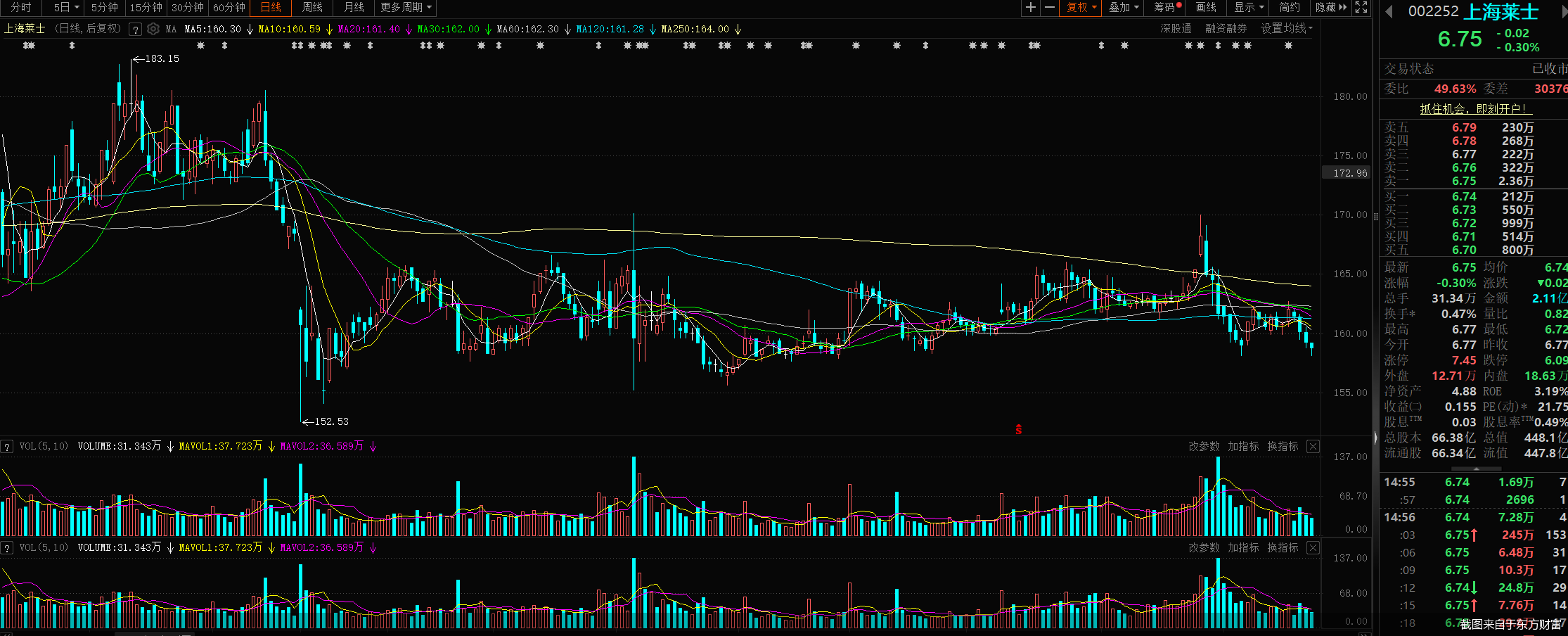
Core Viewpoint - Shanghai Laishi's stock price has underperformed the market despite multiple buyback and shareholding increase plans, with a significant decline in revenue and net profit in the first half of the year [1][5]. Stock Performance - As of September 22, Shanghai Laishi's stock closed at 6.75 yuan per share, marking a continuous decline for four trading days [2]. - Year-to-date, the stock has dropped by 5.72%, while the broader market has increased by 33.1% [2]. Shareholding and Buyback Plans - The controlling shareholder, Haiyingkang, completed a shareholding increase plan, acquiring 72.9353 million shares, representing 1.1% of the total share capital, with a total investment of approximately 500 million yuan [2][3]. - Company executives, including the vice chairman and several vice presidents, plan to increase their holdings by at least 6 million yuan over the next six months [3]. - The company has also repurchased 68.322 million shares, accounting for 1.03% of the total share capital, with a total expenditure of 470 million yuan [3]. Financial Performance - In the first half of the year, Shanghai Laishi reported revenue of approximately 3.952 billion yuan, a year-on-year decrease of 7.06%, and a net profit of about 1.03 billion yuan, down 17% [5]. - The decline in revenue is attributed to policy impacts and supply-demand dynamics affecting the sales of albumin and immunoglobulin products [5]. Market Position and Future Outlook - Despite short-term performance challenges, Shanghai Laishi maintains a strong position in the blood products industry, with plans to expand its product line and increase the number of plasma collection stations [6]. - The company is also exploring growth opportunities through strategic initiatives, although it faces significant market competition and industry changes [6].

回购、增持齐上阵,上海莱士股价表现仍疲软
Bei Jing Shang Bao· 2025-09-22 11:58
Core Viewpoint - Shanghai Laishi (002252) has been struggling with its stock price performance despite multiple share buyback and increase plans, with a notable decline in revenue and net profit in the first half of the year [1][6]. Group 1: Stock Performance - As of September 22, Shanghai Laishi's stock price closed at 6.75 yuan per share, marking a continuous decline for four trading days [3]. - Year-to-date, the stock has dropped by 5.72%, while the broader market has seen a gain of 33.1% during the same period [3]. Group 2: Shareholder Actions - The controlling shareholder, Haiyingkang (Qingdao) Medical Technology Co., Ltd., completed a share increase plan, acquiring 72.9353 million shares, representing 1.1% of the total share capital, with a total investment of approximately 500 million yuan [3][4]. - Senior management, including the vice chairman and several vice presidents, announced plans to collectively increase their holdings by at least 6 million yuan within six months [4]. - The company has also been actively repurchasing shares, having bought back 68.322 million shares for a total of 470 million yuan, with a planned repurchase amount between 250 million yuan and 500 million yuan [4]. Group 3: Financial Performance - In the first half of the year, Shanghai Laishi reported revenue of approximately 3.952 billion yuan, a year-on-year decrease of 7.06%, and a net profit of about 1.03 billion yuan, down 17% [7]. - The decline in revenue is attributed to policy impacts and supply-demand dynamics affecting the sales of albumin and immunoglobulin products [7]. - Despite the overall decline, sales of coagulation factor products showed significant growth, with human fibrinogen sales increasing by 29.7% and human factor VIII sales rising by 34.4% [7]. Group 4: Market Position and Future Outlook - Shanghai Laishi maintains a strong position in the blood products industry, being one of the largest producers in China, but faces challenges due to short-term performance declines [8]. - The company is exploring growth opportunities by increasing the number of plasma collection stations and expanding its product line [8]. - A planned merger with Haier Biomedical was announced but subsequently terminated earlier this year [8].

46.99亿入主派林生物 国药系血液制品版图再扩张
Xin Lang Zheng Quan· 2025-09-19 09:16
Group 1: Core Insights - The controlling shareholder of Palin Bio, Shengbang Yinghao, has signed a share transfer agreement with China National Biotechnology Group, transferring 21.03% of the company's shares for a total price of 4.699 billion yuan, making China National the new controlling shareholder [1] - Following the acquisition, China National's plasma resource total will exceed 30% of the national total, significantly enhancing its industry control [2] Group 2: Company Performance - Palin Bio, which transitioned to focus on blood products in 2021, reported a revenue of 2.655 billion yuan and a net profit of 745 million yuan in 2024, but experienced a decline in 2025 with revenue and net profit dropping by 13.18% and 27.89% respectively [3] - The performance decline is attributed to capacity expansion at subsidiaries, which temporarily reduced supply, although production capacity is expected to increase to over 3,000 tons annually [3] Group 3: Industry Dynamics - The blood product industry in China is undergoing consolidation, with leading companies strengthening their positions amid increasing competition [2] - The industry is facing short-term pressure, with most companies experiencing declines in revenue and profit, while product prices are generally decreasing [5] - Strict regulations and high barriers to entry in the blood product industry highlight the importance of plasma station resources as a core competitive advantage [6] Group 4: Competitive Landscape - Concerns about potential competition between Tian Tan Bio and Palin Bio have arisen due to overlapping product lines, prompting China National to commit to resolving these issues within five years through various strategies [4] - Leading companies are adopting multi-path strategies to navigate industry challenges, such as Shanghai Laishi's dual-track strategy and He Yuan Bio's innovative plant-based albumin product [5]

上海莱士血液制品股份有限公司关于控股股东增持公司股份计划实施完成的公告
Shang Hai Zheng Quan Bao· 2025-09-15 20:04
Core Viewpoint - The controlling shareholder of Shanghai Laishi Blood Products Co., Ltd., Haiyingkang (Qingdao) Medical Technology Co., Ltd., has successfully completed its shareholding increase plan, demonstrating confidence in the company's future development and long-term investment value [3][9]. Summary by Sections Shareholding Increase Plan - The plan was announced on May 22, 2025, with a commitment to increase shareholding by no less than RMB 250 million and no more than RMB 500 million within six months [3][7]. - The increase was executed through centralized bidding, with a total of 72,935,300 shares acquired, representing 1.10% of the total share capital, for approximately RMB 499.99 million (excluding transaction fees) [9]. Shareholder Information - Prior to the increase, Haiyingkang held 1,474,578,052 shares, accounting for 22.21% of the total share capital, and controlled an additional 437,069,656 shares through voting rights entrusted from Grifols, S.A., totaling 1,911,647,708 shares or 28.80% of the total [4]. Compliance and Commitments - The shareholding increase plan complies with relevant laws and regulations, ensuring that the company's shareholding structure remains within listing requirements [11]. - Haiyingkang has committed not to reduce its shareholding during the increase period and has adhered to regulations regarding insider trading and short-term trading [12].
医药生物行业周报(9月第2周):国内生物医药底层创新有望加速-20250915
Century Securities· 2025-09-15 00:44
Investment Rating - The report does not explicitly state an investment rating for the industry [1] Core Insights - The domestic biopharmaceutical innovation is expected to accelerate, driven by the approval of the "Regulations on the Management of Clinical Research and Clinical Translation Applications of Biomedical New Technologies (Draft)" by the State Council on September 12 [2][12] - The report highlights the importance of promoting biomedical technology innovation and the need for regulatory frameworks to ensure safety and quality in clinical applications [2][12] - The report expresses optimism towards companies focusing on new biomedical technologies, particularly in areas such as gene editing, cell therapy, and stem cell research [2] Weekly Market Review - The biopharmaceutical sector experienced a decline of 0.36% from September 8 to September 12, underperforming compared to the Wind All A index (2.12%) and the CSI 300 index (1.38%) [7] - Among sub-sectors, medical devices (3.02%), in vitro diagnostics (2.0%), and pharmaceutical distribution (1.44%) showed the highest gains, while chemical preparations (-2.83%), raw materials (-1.06%), and blood products (-0.72%) faced the largest declines [7][8] - Notable stock performances included Zhend Medical (41.3%), Haooubo (28.0%), and Jimin Health (25.9%) with significant gains, while Yuekang Pharmaceutical (-18.4%), Maiwei Biotech-U (-14.4%), and Yirui Biotech (-14.0%) saw substantial losses [10] Industry News and Key Company Announcements - The report mentions significant events such as the collaboration between Shiyao Group and Kangning Jiere to develop a new drug for HER2-positive gastric cancer, which has been accepted for review by the National Medical Products Administration [12] - The report also notes the approval of a new drug by Johnson & Johnson for treating non-muscle invasive bladder cancer, marking a significant advancement in bladder cancer treatment [14] - BioNTech and Bristol Myers Squibb reported promising mid-term data for their bispecific antibody in treating extensive-stage small cell lung cancer, showing an objective response rate of 76.3% [14]
派林生物又“卖身”,中国生物吞下血液制品龙头
Xin Jing Bao· 2025-09-12 13:54
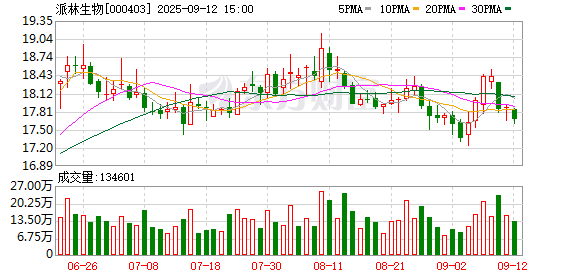
Core Viewpoint - The control of the domestic blood product company, Palin Bio (000403), is set to change hands as its controlling shareholder, Shengbang Yinghao Investment Partnership, has signed a share transfer agreement with China National Biotechnology Group, which will acquire 21.03% of the shares for approximately 4.699 billion yuan, making it the new controlling shareholder of the company [1][2]. Group 1: Share Transfer Details - Shengbang Yinghao will transfer a total of 199,878,656 shares, representing 21.03% of the total share capital, to China National Biotechnology Group at a price of approximately 46.99 billion yuan, equating to about 23.51 yuan per share, which reflects a premium of approximately 27.77% over the closing price of 18.4 yuan per share on September 9 [2][8]. - Following the completion of the share transfer, the controlling shareholder will shift from Shengbang Yinghao to China National Biotechnology Group, with the actual controller changing from the Shaanxi Provincial State-owned Assets Supervision and Administration Commission to China National Pharmaceutical Group [2][4]. Group 2: Company Performance and Industry Context - Palin Bio's main business involves the research, development, production, and sales of blood products, which are derived from human plasma and include human albumin, human immunoglobulin, and human coagulation factors [6][10]. - In the first half of 2025, Palin Bio reported a revenue of 986 million yuan, a year-on-year decrease of 13.18%, and a net profit attributable to shareholders of 236 million yuan, down 27.89% [8][9]. - The decline in performance is attributed to the growing pains of expansion, as the company has been increasing its plasma collection capacity, which has temporarily reduced product supply [9][10]. Group 3: Industry Dynamics and Competition - Since 2001, China has stopped approving new blood product manufacturing enterprises, leading to a competitive landscape dominated by major players such as Tian Tan Bio, Shanghai Lai Shi, Hualan Bio, and Palin Bio [1][10]. - The acquisition of Palin Bio by China National Biotechnology Group signifies a further increase in industry concentration, as the group already controls Tian Tan Bio, the largest blood product company in China [11][12]. - Post-acquisition, there will be potential competition issues as both Palin Bio and Tian Tan Bio produce overlapping blood product categories, which may lead to market competition concerns [12].
派林生物又“卖身” 中国生物吞下血液制品龙头
Xin Jing Bao· 2025-09-12 13:54
Core Viewpoint - The control of the blood product company, Pailin Biological, is set to change hands to China National Pharmaceutical Group (Sinopharm) through a share transfer agreement valued at approximately 4.699 billion yuan, marking a significant consolidation in the blood products industry in China [2][3][11]. Company Summary - Pailin Biological's major business involves the research, development, production, and sales of blood products, which are derived from healthy human plasma using biological processes [8]. - The company currently has three main product categories: human albumin, human immunoglobulin, and human coagulation factors, totaling 11 product varieties [8]. - Despite a decline in revenue and net profit in the first half of 2025 due to expansion pains, Pailin Biological's plasma collection volume exceeded 770 tons, reflecting an 11% year-on-year increase [9]. Industry Summary - Since 2001, China has halted the approval of new blood product manufacturing enterprises, leading to a controlled total output and a competitive landscape dominated by major players like Tian Tan Biological, Shanghai Lai Si, Hualan Biological, and Pailin Biological [10]. - The acquisition of Pailin Biological by Sinopharm signifies a rapid increase in market concentration, as Sinopharm already owns Tian Tan Biological, the largest blood product company in China [11]. - The combined plasma collection capacity of Tian Tan Biological and Pailin Biological is projected to exceed 4,000 tons in 2024, accounting for nearly 30% of the total plasma collection in the industry [12].
派林生物浆站数量38个居行业前三 中国生物拟47亿入主巩固龙头地位
Chang Jiang Shang Bao· 2025-09-11 00:05
Core Viewpoint - The control of Palin Biotech (000403.SZ) is set to change hands from its current major shareholder, Shengbang Yinghao Investment Partnership, to China National Biotechnology Group, marking a significant shift in ownership and control within the blood products industry [1][2][5]. Group 1: Share Transfer Details - Shengbang Yinghao plans to transfer approximately 200 million shares, representing 21.03% of the total share capital of Palin Biotech, to China National Biotechnology Group for a total consideration of about 4.7 billion yuan, equating to a per-share price of approximately 23.51 yuan, which is a 31.78% premium over the market price of 17.84 yuan as of September 10 [2][3][6]. - Following the completion of this transaction, China National Biotechnology will become the controlling shareholder of Palin Biotech, with China National Pharmaceutical Group as the actual controller [1][2]. Group 2: Strategic Implications - This acquisition is aimed at strengthening the reserve and supply of critical national strategic resources, thereby consolidating the leading position in the blood products industry [1][6][8]. - Following the acquisition, China National Biotechnology is expected to control over 30% of the blood plasma resources in China, with a total of nine blood product production licenses [1][7][8]. Group 3: Company Performance and Growth - Palin Biotech has expanded its plasma collection stations to a total of 38, ranking among the top three in the industry, and is projected to collect over 1,400 tons of plasma in 2024, maintaining its position in the top tier of blood products [1][7]. - Despite a decline in revenue and net profit in the first half of 2025, the company reported a year-on-year increase of approximately 11% in plasma collection volume, totaling over 770 tons [7].
江西前首富,拿股民的钱养明星女友?
阿尔法工场研究院· 2025-09-11 00:03
Core Viewpoint - The article discusses the dynamics of wealth and power among business leaders, highlighting instances of insider trading and the consequences that follow, ultimately leading to legal troubles for some individuals involved [4][64]. Group 1: Business Leaders and Their Strategies - Business leaders often have different approaches to wealth accumulation, with some choosing to involve family, friends, or employees in their financial ventures [5][6]. - An example is the plan by the chairman of Tonghuashun, who intended to reduce his holdings to allow others to benefit from market opportunities, but ultimately only reduced his stake by 0.13% [8][9][12]. Group 2: Insider Trading Case - A notable case involves a celebrity girlfriend of a chairman who received insider information about a planned acquisition, leading to significant financial losses when the deal was halted by authorities [21][24]. - The chairman, identified as Zheng Yuewen, had a net worth of 27 billion yuan and was involved with Shanghai Laishi, a blood products company that saw its market value increase dramatically over the years [29][30][36]. Group 3: Market Dynamics and Valuation - The market value of Shanghai Laishi surged from 6.7 billion yuan in December 2012 to 120 billion yuan by May 2015, attributed to strategic market management [36]. - The article mentions the involvement of a key figure, Wu Xu, who played a significant role in the company's market valuation strategies [37]. Group 4: Consequences of Insider Trading - The celebrity girlfriend faced a fine of 400,000 yuan and legal repercussions, while the chairman's actions raised concerns among investors about the ethical implications of using insider information for personal gain [25][26]. - The article suggests that the intertwining of personal relationships and business dealings can lead to significant risks and legal issues for those involved [64].