通信服务

Search documents
瑞银集团:将美国通信服务行业评级从“具有吸引力”下调至“中性评级”。
Jin Rong Jie· 2026-02-18 09:41
Group 1 - UBS Group has downgraded the rating of the US telecommunications services sector from "attractive" to "neutral" [1]

2025-2026年A股熊股名单曝光!这10只股票跌得最惨
Sou Hu Cai Jing· 2026-02-17 04:11
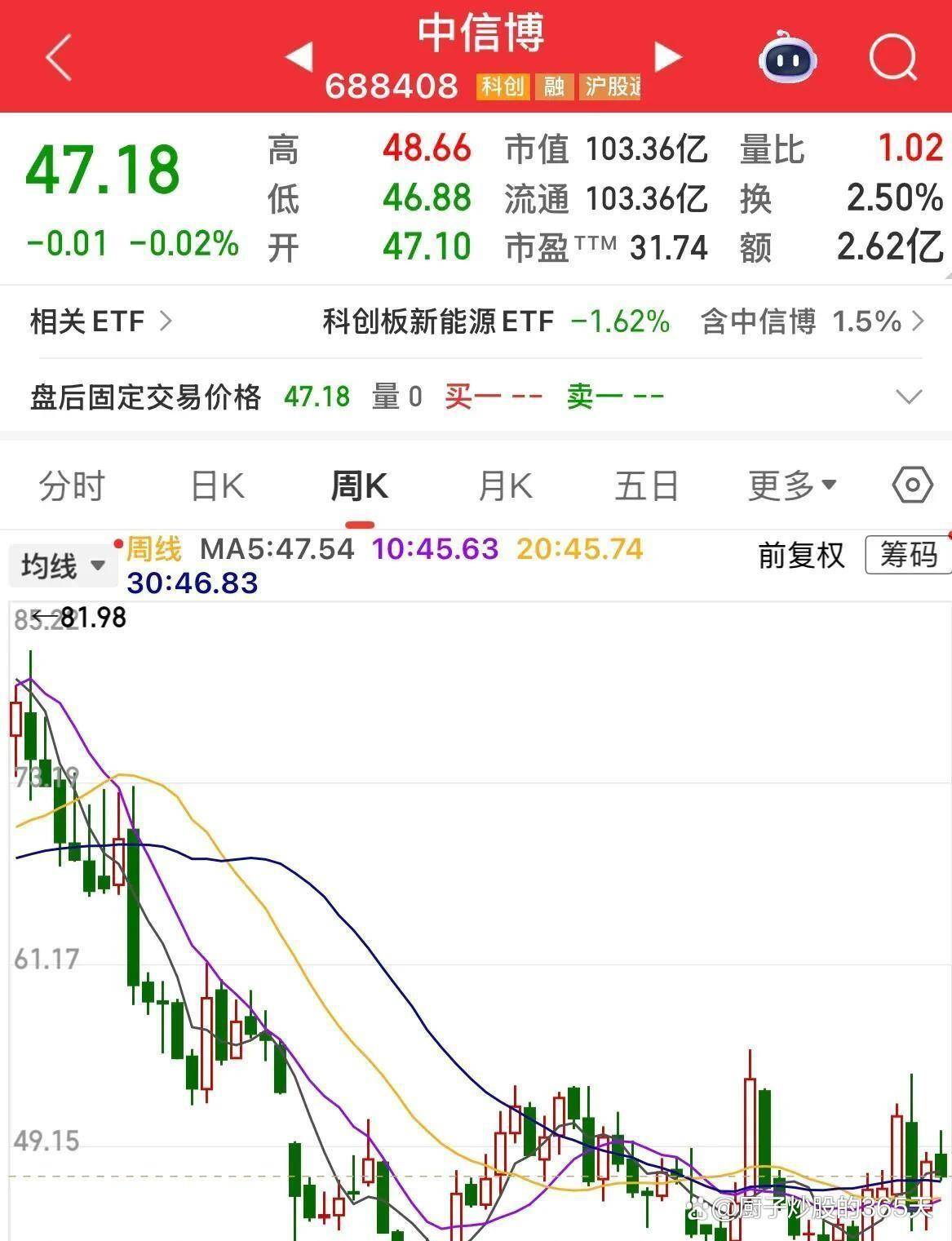
Market Performance - The A-share market experienced a strong rally from February 2025 to February 2026, with the Shanghai Composite Index rising from around 3200 points to over 4000 points, a cumulative increase of 25.58% [1] - The Shenzhen Component Index saw an impressive rise from approximately 11000 points to over 15000 points, achieving a growth of 38.84% [1] - The ChiNext Index surged from 2200 to 3500 points, marking a nearly 59% increase, while the Sci-Tech Innovation 50 Index rose over 64% [1] Stock Performance - Out of 5484 stocks in the market, 4788 stocks recorded gains, resulting in an upward ratio exceeding 87% [2] - A total of 869 stocks doubled in price, with over 100 stocks experiencing price increases between 2x to 20x [2] Investor Sentiment - Investors were seen celebrating their profits, sharing screenshots of earnings on social media, and queues formed at brokerage offices for new account openings [3] Declining Stocks - Despite the overall market rally, over 700 stocks declined, with the top 10 decliners experiencing significant drops, some nearly halving in value, and the smallest decline being 42% [4] - Specific companies like Huaxing Chuangye saw their stock price plummet from a high of 15.88 yuan to 6.18 yuan, a drop of 63%, with projected losses for 2024 and 2025 [5] - Shijin Technology's stock fell from 39.63 yuan to 14.90 yuan, a decline of 62.5%, with significant losses anticipated for 2025 due to overcapacity in the photovoltaic industry [7][8] - Other companies like Kang Le Wei Shi and Zhong Bai Group also faced severe declines, with stock prices dropping 60% and 55% respectively, alongside continuous losses and operational challenges [9][10] Industry Challenges - The photovoltaic industry is experiencing a downturn, with significant price drops in components and overcapacity issues affecting companies like Shijin Technology and Zhongxin Bo [31][32] - Traditional retail, represented by Zhong Bai Group, is struggling with declining foot traffic and profitability due to the rise of e-commerce and changing consumer habits [30] - The agricultural sector, particularly in pig farming, is facing challenges with prices below production costs, leading to substantial losses for companies like Longda Meishi [30] Conclusion - The market rally has been accompanied by significant disparities in stock performance, with many companies facing severe operational and financial challenges despite the overall positive market sentiment [33][34]





中国早有布局,美国能否能认清这一点
Sou Hu Cai Jing· 2026-02-17 02:12
Core Insights - The article highlights the disparity between individual data valuation and the lack of formal recognition of data as an economic asset at the national level in the U.S. [1][3][10] Group 1: Data Valuation and Recognition - The U.S. has not formally integrated data into its institutional framework despite recognizing its value, contrasting with China's approach of categorizing data as a production factor [3][4] - China's new regulations, effective in 2024, will allow data to be recognized as intangible assets or inventory, marking a significant shift in asset structure and information disclosure [3][9] - The U.S. regulatory framework has historically treated data as privacy and compliance issues, avoiding its economic resource aspect, while China acknowledges data's foundational role in the digital economy [3][4] Group 2: Market Dynamics and Economic Impact - The data brokerage industry generates over $200 billion annually, indicating that the market actively utilizes data despite regulatory uncertainties [4][6] - Historical cases, such as the Toysmart and RadioShack bankruptcy cases, illustrate the recognition of data as a valuable asset, yet the U.S. legal system has not established a stable governance framework for data [6][9] - The absence of a unified valuation framework for data in the U.S. leads to significant governance challenges, especially as data becomes a core element in AI and digital trade [4][9] Group 3: Future Implications and Governance - China's proactive approach to data assetization aims to create a governance framework that will support future developments in AI, digital trade, and public governance [9][10] - The U.S. reliance on market self-regulation is becoming increasingly inadequate as data emerges as a critical production factor, revealing systemic delays in governance [9][10] - The article suggests that the ongoing avoidance of data valuation in the U.S. could lead to significant long-term costs, emphasizing the need for institutional reform [10]
【2026新春走基层】海上“外卖”怎么做到的?
Xin Lang Cai Jing· 2026-02-16 05:22
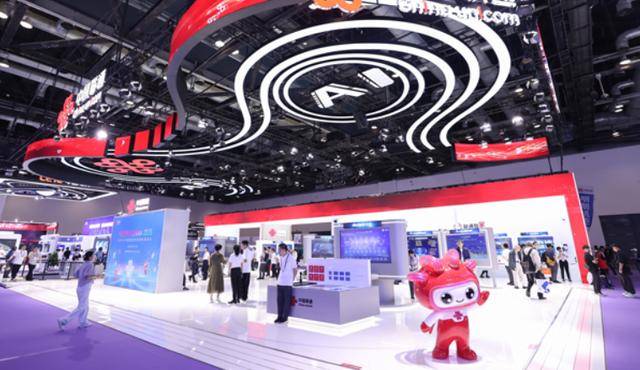
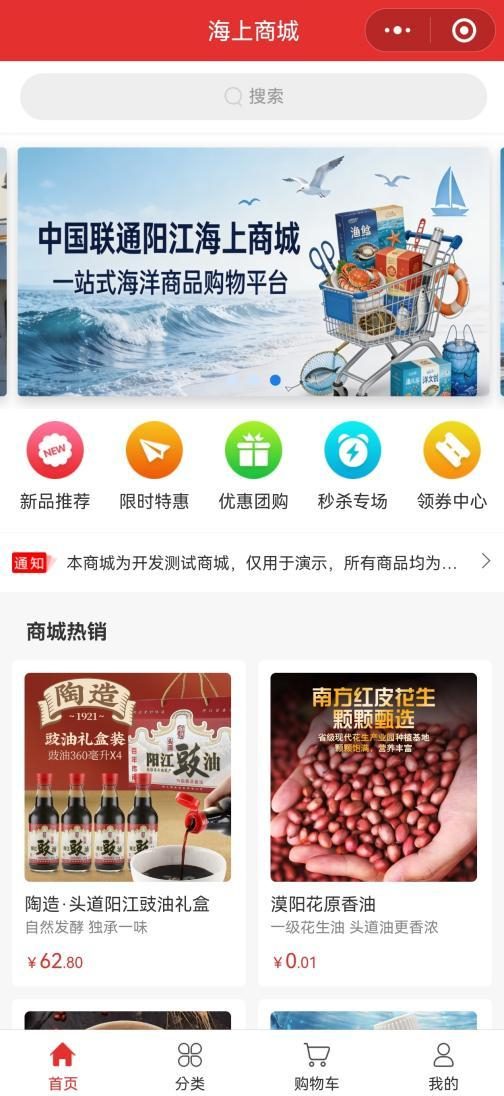
Core Viewpoint - The article highlights the transformation in supply methods for offshore workers in Guangdong Yangjiang, showcasing the launch of China's first "sea mall" smart instant supply platform, which utilizes drones for efficient delivery of essential goods [1][4]. Group 1: Supply Chain Innovation - The new platform allows offshore workers to order supplies like drinking water and fresh food via a mobile app, with delivery completed in approximately five minutes using drones [1][6]. - Previously, supply delivery required long boat trips, taking up to a day, especially under adverse weather conditions, but the new system enables "hour-level on-demand delivery" for various categories of goods [4][6]. Group 2: Technological Advancements - The "three networks and one platform" smart marine management system developed by China Unicom Yangjiang integrates a "sea and air vertical logistics network," allowing drones to deliver goods without the need for specialized landing platforms [6][8]. - During a test flight in February 2024, drones completed a round trip of three to four kilometers in about five minutes, significantly faster than traditional boat deliveries, which take 15-20 minutes and cost between 200-500 yuan [6][8]. Group 3: Economic Impact - Guangdong is accelerating the commercialization of low-altitude economy, with drone delivery capabilities being validated for wind resistance and long-distance flights, aiming to reduce costs through technological upgrades [8]. - The development of a low-altitude logistics network is gradually covering offshore ranches and anchored vessels, making the concept of a "sea supermarket" a reality, which represents a significant shift in the marine economy [8][9].

中国通信服务获机构增持,上半年业绩微增,AI业务成亮点
Jing Ji Guan Cha Wang· 2026-02-14 08:40
Group 1: Core Insights - The company has recently seen increased institutional investment, indicating growing interest from investors [2] - The company reported a slight revenue increase of 3.4% year-on-year, reaching 76.939 billion yuan, with a net profit of 2.129 billion yuan, reflecting a 0.2% growth [3] - Emerging businesses such as AI and other services are becoming key growth drivers, with a notable revenue growth of 11.7% in the applications, content, and other services segment [3][4] Group 2: Industry Trends - The telecommunications industry is undergoing structural changes, with traditional voice service revenues declining while new businesses like intelligent computing and security services are emerging as growth points [4] - Domestic operators are pushing for transformation through AI+ strategies, although the overall industry growth remains slow, with the telecommunications service sector underperforming compared to the telecommunications equipment sector in 2025 [4] - The company has made significant strides in AI and computing network sectors, signing new contracts worth over 1.3 billion yuan in the AI field in the first half of the year [4]
广脉科技股权激励目标明确 算力业务成增长新引擎
Jing Ji Guan Cha Wang· 2026-02-14 01:39
Core Viewpoint - The company has recently launched an equity incentive plan and is focusing on the development of high-speed rail information technology and computing power services, indicating a continuous optimization of its business structure [1]. Business Performance - The company announced an equity incentive plan on September 23, 2025, with a target of achieving a revenue growth rate of no less than 20% in 2026 compared to 2025, marking a key observation point for financial performance in 2026 [2]. Business Development - In a November 2025 investor survey, the company indicated plans to expand its focus on high-speed rail information technology and computing power services, including areas such as 5G new infrastructure and ICT industry applications, to optimize its business structure. Specific progress includes the implementation of computing power service projects and high-speed rail private network orders [3]. Technological Advancement - The company is actively establishing subsidiaries (e.g., Zhejiang Guangmai Zhikuan Technology Co., Ltd.) and forming partnerships (e.g., signing with Shanghai Suiruan Technology) to enhance its computing power services. In the first three quarters of 2025, revenue from asset operation services increased by 30.07% year-on-year, primarily driven by growth in computing power operations. Future project advancements may lead to dynamic business developments [4].
杭州纵横通信股份有限公司关于出售部分已回购股份计划的公告
Shang Hai Zheng Quan Bao· 2026-02-13 17:27
Core Viewpoint - The company plans to sell part of its repurchased shares to supplement its working capital, following a structured timeline and regulatory compliance [2][3][4]. Summary by Sections Share Repurchase Overview - The company repurchased 6,926,800 shares from February 2, 2024, to April 30, 2024, representing 3.00% of its total share capital [2][3]. Sale Plan Details - The board approved a plan to sell up to 4,500,000 repurchased shares, which is 1.95% of the total share capital, within six months after 15 trading days from the announcement date [3][4]. - The sale will be conducted through centralized bidding at market prices, with the proceeds aimed at enhancing the company's liquidity [3][4]. Company Structure and Financial Impact - Post-sale, the number of shares in the repurchase account will decrease from 6,926,800 to 2,426,800, changing the holding percentage from 3.00% to 1.05% [7]. - The difference between the sale price and the repurchase price will affect the company's capital reserve but will not impact current profits or future development significantly [7]. Compliance and Regulatory Requirements - The sale must adhere to specific regulations, including price restrictions and volume limits, to ensure compliance with the Shanghai Stock Exchange guidelines [9][10].

Optimum Q4 Earnings Miss Estimates, Revenues Decline Y/Y
ZACKS· 2026-02-13 14:36
Core Insights - Optimum Communications, Inc. (OPTU) reported mixed fourth-quarter 2025 results, with revenue exceeding expectations but net income falling short due to weak demand in the Residential segment [1][2] Financial Performance - The company reported a net loss of $71.2 million or 15 cents per share, compared to a net loss of $54.1 million or 12 cents per share in the prior-year quarter [2] - For the full year 2025, Optimum recorded a net loss of $1.86 billion or $4 per share, a significant increase from a net loss of $102.9 million or 22 cents per share in 2024 [3] Revenue Analysis - Total revenues for the fourth quarter were $2.18 billion, down 2.3% year over year, but above the consensus estimate of $2.14 billion [4] - In 2025, total revenue was $8.6 billion, reflecting a 4.1% decline year over year [4] - Residential revenues, which include Broadband, Video, and Telephony, were $1.61 billion, down from $1.68 billion in the previous year, primarily due to the loss of higher ARPU video customers [6] Customer Metrics - The company achieved 3.09 billion FTTH (Fiber to the Home) passings, with 43,000 added during the quarter, and FTTH broadband net additions exceeded 12,500 [5] - Total fiber broadband customers reached 715,900 by the end of the quarter [5] - Mobile line net additions were 38,000 during the quarter [7] Operational Efficiency - Operating income for the quarter was $397.6 million, up from $340.6 million in the year-ago quarter, while adjusted EBITDA increased to $902.1 million from $837.5 million [7] - Cash generated from operating activities in the fourth quarter was $481.56 million, compared to $439.92 million a year ago, but total cash generated for 2025 was $1.22 billion, down 22.4% year over year [8] Debt and Liquidity - As of December 31, 2025, the company's net debt stood at $25.29 billion [8]

三维通信:海卫通的业务通过运营服务的模式开展
Zheng Quan Ri Bao· 2026-02-13 09:40
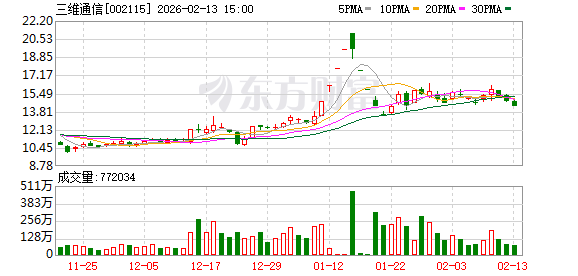
Group 1 - The core business of Haiwei Communication involves providing specialized maritime satellite communication services through the "Dynamic Communication" VSAT antenna and onboard information equipment for shipowners [2] - Haiwei Communication aims to create a global smart ocean service platform, offering high-quality satellite broadband access services along with diverse value-added services such as remote equipment monitoring, video surveillance, satellite phone broadcasting, and marine environmental monitoring [2] - The services provided by Haiwei Communication are designed to enhance the safety and efficiency of vessels, contributing to a better quality of life for seafarers [2]

(新春走基层)探访突破“不可能三角”的通信攻坚队:年轻骨干挑大梁
Zhong Guo Xin Wen Wang· 2026-02-13 08:33
Core Insights - The article highlights the efforts of a communication team at China Mobile Chongqing in overcoming the "impossible triangle" challenge of balancing performance, cost, and power consumption in communication technology [1][6]. Group 1: Project Overview - The project focuses on the innovation and application of low-cost phased array coverage enhancement technology based on intelligent ultra-surfaces, which is a potential core technology for 6G [1]. - The team has successfully developed the industry's first series of products that integrate "passive, distributed, and active" technologies, addressing long-standing issues in communication coverage [6][4]. Group 2: Team Dynamics and Challenges - The team faced significant challenges, including self-excitation interference from active integrated devices and interoperability between different manufacturers' equipment [1][3]. - The team worked intensively, often late into the night, to optimize data and validate algorithms, demonstrating a strong commitment to overcoming technical hurdles [3][4]. Group 3: Innovation and Learning - The experience has emphasized the importance of a complete closed loop from technology to value in corporate innovation, highlighting the need for practical application and benefit creation [6]. - The project has fostered a system-level innovation mindset among team members, illustrating that true technological breakthroughs often arise from interdisciplinary collaboration [6].