
养老服务

Search documents
“十四五”期间 山东一般公共预算收入突破7000亿元大关
Jing Ji Guan Cha Wang· 2025-12-25 09:13
Group 1: Fiscal Performance - During the "14th Five-Year Plan" period, Shandong's general public budget revenue exceeded 700 billion yuan, increasing from 656 billion yuan at the end of the "13th Five-Year Plan" to 771.2 billion yuan in 2024, with an average annual growth of 4.1% [1] - The general public budget expenditure rose from 1.12 trillion yuan at the end of the "13th Five-Year Plan" to 1.31 trillion yuan in 2024, with an average annual growth of 3.9% [1] - Shandong implemented tax reduction and refund policies, with a cumulative reduction of over 700 billion yuan from 2021 to 2024 [1] Group 2: Investment and Support for Private Sector - Shandong has established 208 provincial government investment funds, investing in 1,858 projects with a total investment of 236.8 billion yuan, which has attracted 576.7 billion yuan in social capital [2] - The provincial finance department has directly invested over 36 billion yuan in support of private economic development during the "14th Five-Year Plan" [2] - A total of 976 projects in private enterprises received 97.2 billion yuan in investment, leading to over 240 billion yuan in social capital financing [2] Group 3: Social Welfare and Employment Support - Social welfare expenditure increased from 891.4 billion yuan in 2020 to over 1 trillion yuan in 2024, maintaining an 80% share of the budget [3] - A total of 161.54 billion yuan was spent on employment support, including 18.16 billion yuan in one-time entrepreneurial subsidies and 978.65 billion yuan in entrepreneurial guarantee loans [3] - The minimum standard for basic pensions reached 208 yuan per person per month, a 46.5% increase since 2020 [3]
长护险新突破!明年起逐步覆盖全民,每年千亿资金入场
第一财经· 2025-12-25 06:34
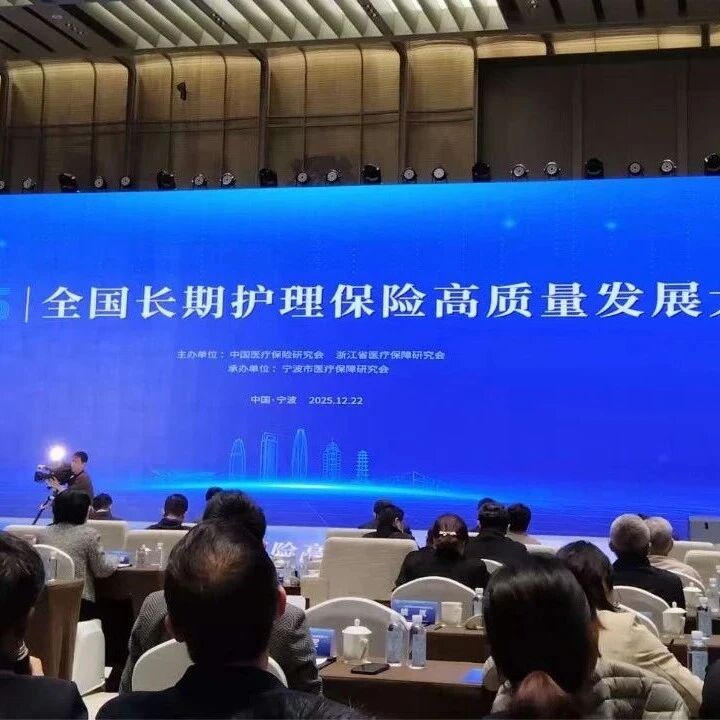
2025.12. 25 本文字数:2145,阅读时长大约4分钟 作者 | 第一财经 郭晋晖 封图 | 2025年全国长期护理保险高质量发展大会在浙江宁波召开。/郭晋晖摄 "十五五"时期,被称为社保"第六险"的长期护理保险(以下简称"长护险")将从试点转向全面建 立,在制度建设上实现新突破。"十五五"时期,各地将推动建立覆盖全民、统筹城乡、公平统一、 安全规范、可持续的长护险制度。 国家医保局党组书记、局长章轲12月22日在浙江宁波举行的2025年全国长期护理保险高质量发展大 会上表示,"十五五"时期,国家医保局将加快推动具有中国特色的长期护理保险制度建立,逐步覆 盖全民,起步阶段重点保障重度失能人员。制度落地过程中,实行筹资、待遇、支付等政策标准的规 范统一,夯实长期护理保险制度高质量、可持续的发展根基。 章轲表示,经过试点,长期护理保险制度覆盖近3亿人,累计惠及超330万失能群众,基金支出超千 亿元。 首个统筹城乡覆盖全民的社保制度 我国的社会保险制度一直存在城乡二元化的情况,养老保险分为城镇职工基本养老保险和城乡居民养 老保险,医疗保险分为职工医疗保险和城乡居民医疗保险。 长护险首次突破了城乡之间的社保分 ...

悦心健康股价涨5.33%,国泰基金旗下1只基金位居十大流通股东,持有196.29万股浮盈赚取49.07万元
Xin Lang Cai Jing· 2025-12-25 05:37
Group 1 - The core point of the article highlights the recent performance of Yueshen Health, with a stock price increase of 5.33% to 4.94 CNY per share, a trading volume of 140 million CNY, and a total market capitalization of 4.543 billion CNY [1] - Yueshen Health, established on June 8, 1993, and listed on August 23, 2007, operates in high-end ceramic tiles and ecological functional building materials, focusing on the "Yueshen Health" brand in healthcare and elderly services [1] - The revenue composition of Yueshen Health includes: 35.96% from marble tiles, 31.86% from antique tiles, 11.19% from health services, 8.71% from warehouse leasing, 6.71% from ceramic tiles, 5.09% from glass-ceramic tiles, and 0.48% from other tile products [1] Group 2 - The top circulating shareholder of Yueshen Health is the Guotai Fund, which holds 1.9629 million shares of the Guotai CSI All Index Building Materials ETF, accounting for 0.21% of the circulating shares [2] - The Guotai CSI All Index Building Materials ETF, established on June 9, 2021, has a current size of 1.102 billion CNY and has achieved a year-to-date return of 12.31% [2] - The fund manager, Huang Yue, has a tenure of 4 years and 325 days, with the fund's total asset size at 35.78 billion CNY, achieving a best return of 44.94% and a worst return of -60.42% during the tenure [3]

养老院有群年轻的认知障碍照护员
Xin Hua Wang· 2025-12-24 23:47
在北京六环外的"普乐时光"认知症照护中心里,"遗忘"是一件永远不需要抱歉的事。 一位老人答不上来老家在哪儿,负责人闫帅拍拍她的背:"不记得了不重要,开心就好。"有老人把 别人认成自己的老伴,踉跄着追上去险些摔倒,护工急得从背后抱住她;一位老人叫嚷着要见自己的儿 子,而她的儿子就在面前。 2023年,"普乐时光"开始专门收这样的老人——他们患上了认知症,除了记忆力减退,可能的症状 还包括思维能力下降、失语、情绪起伏等。 在这家位于房山区长阳镇佛满村的养老机构里,中青报·中青网记者近日目睹了一桩"纠纷":一位 老人坚持认为自己住的是旅店,他情绪激动,声称要结清一周的房钱回家。在大门前,北京时光智友科 技发展有限公司创始人宋先华正在和他"周旋"。宋先华并没有反驳,而是顺着老人的话,用"会计没来 上班"的理由,说服老人再等等。 宋先华是闫帅的合伙人,两年前,"时光智友"与由闫帅担任院长的北京长阳普乐园爱心养老院合作 创办"普乐时光"项目。从此,两个人可能在机构里走着走着,就要配合某个老人这样"随地大小演"。 创业者 让认知症老人有尊严 养老院有群年轻的认知障碍照护员 2024年,北京大学教授胡泳的自述文章《当一位北大 ...
今年全市完成3000户特困家庭适老化改造
Xin Lang Cai Jing· 2025-12-24 22:53
Group 1 - The core viewpoint of the article highlights that Zhangjiakou City has completed the home modification for 3,000 households of special difficulty elderly individuals this year, with all projects passing inspection [1] - Since the initiation of this work in 2022, a total of 39,300 households have undergone modifications [1] - The modifications are based on a precise identification process, involving data cross-checking with various departments and on-site verification to create a detailed information ledger for each household [1] Group 2 - The modification work focuses on enhancing the safety and convenience of elderly individuals' home lives, installing facilities such as non-slip mats, handrails, shower chairs, and assistive devices [1] - A subsidy incentive mechanism has been introduced, providing a 30% financial subsidy for families opting for six categories of upgraded modification products, ensuring basic needs are met while respecting individual choices [2] - The initiative aims to integrate hardware modifications with subsequent home care services, establishing a new model of community-based elderly care that combines environmental improvements with support services [2]
8个村集体经济收入达百万元
Xin Lang Cai Jing· 2025-12-24 19:52
Core Viewpoint - The agricultural economy in Chengxi District has shown significant growth, with collective income reaching 44.68 million yuan, a 21.36% increase compared to the same period in 2024 [1] Group 1: Economic Performance - As of the end of November, 12 villages in Chengxi District reported a collective economic income of 44.68 million yuan, marking a 21.36% increase year-on-year [1] - Eight villages achieved collective economic income exceeding 1 million yuan, while four villages reached 5 million yuan [1] Group 2: Policy Implementation - Chengxi District has deepened the implementation of rural revitalization strategies through policies such as the "Three Rural Projects" and "Strong Village Projects" [1] - A support fund of 10 million yuan for collective economic development has been established, along with management guidelines [1] Group 3: Project Development - The district has successfully completed various projects, including the renovation of Yangjiazai Village's Tiger Tai Hotel and nursing home, and the establishment of a comprehensive building for the elderly activity center in Pengjiazai Village [1] - Key collective economic projects, such as the Yinshan Tangshan Spring Water Plant and the Huodong Dahuang Planting Base, have been put into operation [1] Group 4: Future Plans - By 2025, the district aims to enhance the application of research findings through concentrated signing ceremonies for rural revitalization projects, leveraging a "regional coordination + village-enterprise co-construction" model [1] - The district has successfully attracted 180 million yuan in intended investments for key projects like the Linxie breeding in Huoxi Village and the logistics park in Yangjiabian [1]
养老服务迈向常态提质与系统治理新阶段
Xin Lang Cai Jing· 2025-12-24 19:51
Core Insights - The article highlights the efforts of Haibei Tibetan Autonomous Prefecture in improving elderly care services since the launch of a national special rectification initiative in 2025, focusing on systematic governance and enhancing the quality of services [1][2] Group 1: Problem Identification and Rectification - Haibei Prefecture has identified 101 issues related to elderly care services and reported 4 relevant clues, achieving a problem rectification rate of 91.08% [1] - The establishment of a joint regulatory mechanism for the distribution of elderly subsidies has led to the dynamic management and comprehensive verification of subsidy recipients, with 15,000 individuals checked and 71 cases of fraudulent claims identified, resulting in the recovery of over 80,000 yuan [1] Group 2: Service Improvement and Community Support - The implementation of the "Ten Have" project in villages and communities has resulted in the allocation of 11.31 million yuan in charitable assistance, establishing 133 meal service points that served 721,000 elderly individuals [2] - The use of provincial lottery funds amounting to 1.5 million yuan has facilitated home modifications for 325 economically disadvantaged elderly families, enhancing safety through the installation of 37 types of facilities [2] - An additional 16 million yuan in provincial lottery project funds has been secured to develop high-quality elderly care community demonstration models in Gangcha County and Haiyan County, exploring new pathways for elderly care services in high-altitude areas [2]
金维刚:养老服务师将推动养老服务向人才专业化转型
2 1 Shi Ji Jing Ji Bao Dao· 2025-12-24 14:38
Core Viewpoint - The aging population in China has surpassed 310 million, accounting for over 20% of the total population, necessitating a shift in the elderly care service system from basic security to high-quality supply [1][3]. Group 1: Current Situation and Challenges - China's aging population is accelerating, with over 31 million people aged 60 and above, marking the transition to a moderately aging society [3]. - The annual increase in elderly population exceeds 20 million, leading to significant pressures on pension payments and a growing demand for elderly care services [3]. - There are only about 40,000 elderly care institutions and less than 10,000 professional nursing institutions, which are insufficient to meet the diverse needs of the elderly [3][4]. Group 2: Future Development of Elderly Care Services - The transition from "universal coverage" to "quality service" in the elderly care industry faces obstacles primarily related to improving service quality [4]. - There is a pressing need to establish more specialized elderly care and nursing institutions and to develop a highly skilled workforce, including professional elderly care workers [4][5]. - A multi-layered and diversified elderly care service ecosystem is essential to meet the varying needs of different groups and to integrate institutional, community, and home care [5]. Group 3: Role of Elderly Care Workers - The establishment of the "Elderly Care Worker" profession signifies a shift towards professionalization in the industry, addressing the shortage of skilled personnel [2][9]. - The new profession aims to enhance the overall quality of elderly care services through systematic training and qualification standards [10]. - Elderly care workers are expected to possess comprehensive skills, including care techniques, geriatric psychology, and health management, to provide personalized service plans [8][10]. Group 4: Collaborative Support in Home Care - The new home care model emphasizes collaboration among families, communities, and social services, moving away from isolated family care [10][11]. - Smart devices and community support systems are being integrated to provide real-time assistance and safety for elderly individuals at home [10]. - Professional institutions play a crucial role in resource integration, offering diverse services to meet the complex needs of the elderly [11].

银发消费新业态崛起 多地出台措施激活“夕阳红”市场
Zheng Quan Ri Bao Wang· 2025-12-24 12:18
Core Viewpoint - The Chinese silver economy is being actively promoted through various policies aimed at enhancing the welfare of the elderly and creating new consumption scenarios, with recent measures introduced by multiple provinces to stimulate this sector [1][2]. Group 1: Policy Initiatives - Multiple provinces, including Shaanxi, Jilin, Guangdong, Sichuan, and Hunan, have implemented measures to promote elderly care service consumption, laying a foundation for the long-term development of the silver economy [1]. - The policies are expected to boost consumption, facilitate industrial transformation, and enhance the conversion of technological achievements [1]. Group 2: Characteristics of the Silver Economy - The silver economy is characterized by increasingly diverse supply, growing demand, and significant penetration of digital technology [2]. - Supply includes a variety of elderly care services such as home care, day care, short-term care, and wellness tourism, alongside a range of elderly-friendly products like fitness equipment and health supplements [2]. - Demand is driven by the elderly's willingness to spend on personal enjoyment, leading to increased sales in sectors like travel, health services, and cultural activities [2]. Group 3: Integration of Technology - The integration of advanced technologies like AI and big data with the silver economy is mutually beneficial, providing scalable application scenarios for technology while driving high-quality development in the silver economy [3]. - Smart elderly care devices and platforms are evolving to enhance service efficiency and user experience, indicating a trend towards practical applications in the sector [2][3]. Group 4: Challenges and Recommendations - Despite the growth, challenges such as supply-demand mismatches and inadequate support policies remain significant [3]. - Experts suggest that stakeholders should focus on precise policy implementation, investment attraction, standardization of products and services, and the cultivation of talent that understands both elderly care and digital technology [3].
21专访|金维刚:养老服务师将推动养老服务向人才专业化转型
2 1 Shi Ji Jing Ji Bao Dao· 2025-12-24 08:25
Core Insights - The aging population in China has surpassed 310 million, accounting for over 22% of the total population, marking the transition to a moderately aging society and moving towards deep aging [2][3] - The establishment of the "Elderly Care Service Specialist" as a new profession signifies a shift from labor-intensive to professionalized services in the elderly care industry [1][5] Group 1: Current State of Elderly Care - The rapid increase in the elderly population, particularly the baby boomer generation, adds significant pressure on pension systems and increases the demand for elderly care services [2][3] - There are currently over 40,000 elderly care institutions in China, with fewer than 10,000 being specialized nursing facilities, highlighting a mismatch between supply and demand [2][3] - The construction of a robust elderly care service system is essential, requiring both an expansion of service capacity and an enhancement of service quality to meet societal expectations [2][3] Group 2: Challenges and Future Directions - The primary obstacle to transitioning from "universal coverage" to "quality service" in elderly care is the need to improve service quality through the establishment of more specialized institutions and a highly skilled workforce [3][4] - A multi-tiered, diversified elderly care service ecosystem is necessary to meet the varied needs of different demographic groups, integrating institutional, community, and home care [4][10] Group 3: Role of Elderly Care Service Specialists - The introduction of the "Elderly Care Service Specialist" aims to address the talent shortage in the elderly care sector by creating a standardized training and certification system [8][9] - This new profession requires a higher level of professional skills and comprehensive qualities compared to traditional caregivers, including knowledge in geriatric psychology and health management [7][9] - The establishment of clear professional standards and qualification systems will help standardize service processes and elevate the overall professionalism in the elderly care industry [9][10] Group 4: Collaborative Support in Home-Based Elderly Care - The modern home-based elderly care model emphasizes collaboration among families, communities, and professional institutions, moving away from isolated self-care [10] - Smart devices and community service platforms play a crucial role in providing real-time support and safety for elderly individuals at home [10] - The integration of resources from professional institutions enhances the service quality and meets the diverse needs of the elderly population [10]