云计算

Search documents
顺网科技:目前公司云业务基础建设阶段基本完成
Zheng Quan Ri Bao Wang· 2026-02-04 13:40
证券日报网2月4日讯,顺网科技(300113)在接受调研者提问时表示,目前公司云业务基础建设阶段基 本完成,正稳步进入商业模式深化、规模建设加速的新阶段,业务上正加速机房建设与电竞场所云化, 同时深化算力运营、搭建线上线下(300959)融合云平台。截至2025年第三季度,公司已落地300多个 节点机房,覆盖近200个重点城市,为近80万台终端提供服务,可运营电竞级高品质算力达5万路。 ...

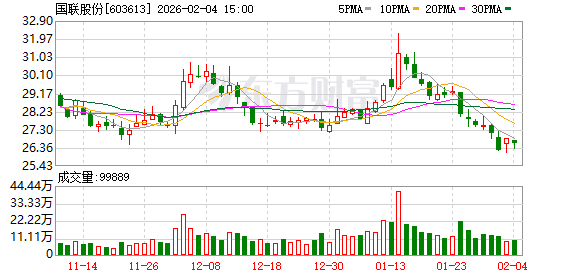
国联股份:公司去年已完成部分算力资源部署,各项工作正在有序推进
Mei Ri Jing Ji Xin Wen· 2026-02-04 13:11
Group 1 - The company has completed part of its computing power resource deployment last year [2] - Various tasks related to the computing power planning and operation are progressing in an orderly manner [2] - Specific progress updates will be provided in the company's announcements [2]


南兴股份:公司子公司唯一网络的业务范围涵盖云数据中心等服务,旗下拥有自有产品唯云
Zheng Quan Ri Bao Wang· 2026-02-04 12:51
Core Viewpoint - Naxing Co., Ltd. (002757) is focusing on deepening its cloud computing business through its subsidiary, Yiyun Network, which offers a range of services including cloud data centers, network security, and various cloud solutions [1] Group 1: Company Overview - Yiyun Network's business scope includes cloud data centers, network security, cloud dedicated lines, public cloud, and hybrid cloud services [1] - The company owns proprietary products under the brand Yiyun [1] Group 2: Future Strategy - Yiyun Network aims to continue its focus on the cloud computing sector [1] - The company is committed to building an integrated internet ecosystem platform that aligns with the new generation of network communication technologies, such as 5G, and digital transformation solutions [1]

外资企业深度参与中国云市场 超80%青睐多云服务部署
Zhong Guo Jing Ying Bao· 2026-02-04 10:17
中经记者 谭伦 北京报道 2025年以来,随着我国持续优化外资准入环境与数字基础设施建设,在华外商企业数字化转型进程加速 推进,云计算作为核心支撑技术,其采用模式与需求特征呈现显著变化。 日前,据弗若斯特沙利文(Frost & Sullivan)联合头豹研究院最新发布的《2025年在华外商企业云计算 服务采用研究报告》(以下简称《报告》)显示,截至2024年年底,外商在华设立企业总量达68万家以 上,超过80%的在华外企选择多供应商云服务方案,"本土云+国际云"协同部署占比超60%,行业化用 云特征日益凸显。 这也意味着,在多重政策红利与市场需求叠加下,中国云计算市场正迎来外资企业深度参与的新阶段。 在华外资积极上云 "当前外资正在优化其在中国的产业结构,第三产业新设企业数量占比虽高,但第二产业外资金额使用 占比持续提升,尤其是对高技术制造业的投资增速远超高技术服务业。"在日前举行的媒体沟通会上, 沙利文中国研究总监李庆如是表示。 《报告》数据显示,2023年中国吸引外商直接投资占全球跨国直接投资的21%,高技术产业外资投入占 比逐年上升,汽车制造、生命科学、消费零售等领域成为外资布局重点。 李庆指出,这一转 ...

国信证券:美元指数阶段性反弹持续性较弱 继续看好港股春季行情
智通财经网· 2026-02-04 08:41
Group 1 - The core view is that the rebound of the US dollar index is seen as temporary, with emerging markets expected to present greater opportunities in the first half of 2026, despite potential risks from rising oil prices and long-term bond yields [1][2] - In January, US stock market gains were significantly lower than those in emerging markets, reinforcing the view that the dollar index's rebound is short-term [1] - The report highlights two main themes in the domestic market: AI and PPI, with A-shares showing a historical high in trading volume and AI applications outperforming the market [2] Group 2 - The outlook for the Hong Kong stock market remains positive for the spring, supported by stable earnings revisions and the belief that the dollar index's rebound will not be sustained [3] - Key sectors to focus on include AI, where semiconductor and cloud computing segments are performing well, and PPI-related materials and industrials, particularly gold, which is expected to maintain its long-term allocation value [3][4] - The consumer sector is noted for its low valuation and potential for improvement, while energy assets are highlighted as being at low prices and capable of hedging against geopolitical uncertainties [3]

Prosus与亚马逊(AMZN.US)签署AI云服务大单 有望实现“两位数”成本节约
智通财经网· 2026-02-04 07:07
智通财经APP获悉,Prosus NV与亚马逊(AMZN.US)旗下云服务部门达成了一项多年期的云计算和人工 智能协议,该协议将整合这些领域的合同,从而实现两位数百分比的成本节约。Prosus 生态系统负责人 Igor Cardoso 在接受采访时表示,与亚马逊网络服务公司(AWS)达成的这项为期三年的协议价值"数亿美 元",但他拒绝透露交易的确切金额。 在首席执行官Fabricio Bloisi 的领导下,Prosus正在进行重组,专注于欧洲、印度和拉丁美洲,发展人工 智能能力,以加快和扩大其在这三个地区的业务,力争到 2028 年实现价值翻番。 Cardoso表示:"我们的战略是在整个拉丁美洲推广我们的大型商业模式。然后我们计划在欧洲也这样 做,之后再逐步扩展到印度。"该公司在拉丁美洲已经拥有巴西食品配送和物流运营商iFood、旅游公司 Despegar以及在线分类信息公司OLX。 Cardoso指出,虽然企业无法跨地区共享数据,但模型标准化使得在新司法管辖区构建模型变得更容 易、更快捷。Cardoso称,Prosus 拥有一支约 1000 名人工智能专家的团队,他们将与亚马逊的同行合 作,共同开发应用程 ...
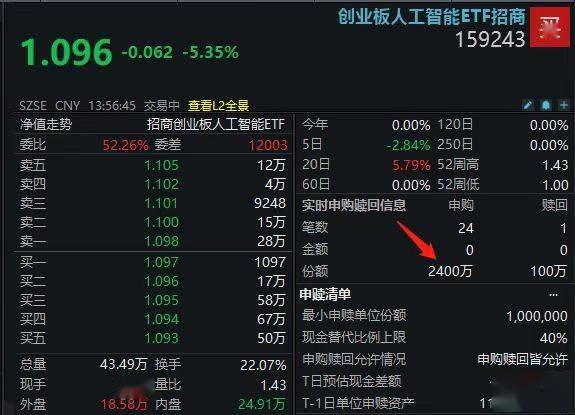
热门赛道惊魂一刻!创业板人工智能ETF招商(159243)惨烈杀跌超5%,聪明钱却逆势抢筹2600万!
Sou Hu Cai Jing· 2026-02-04 06:22
Core Viewpoint - The AI sector experienced a significant downturn, with the ChiNext AI ETF (159243) dropping by 5.27%, while major component stocks like Wangsu Science & Technology and Guanghui New Network fell over 9%. Despite this, the ETF saw a net inflow of approximately 26 million CNY, indicating a "buy the dip" mentality among investors [1][2]. Group 1: Market Dynamics - The recent sharp adjustment in the AI sector is attributed to a combination of external shocks, internal rotations, and changes in market ecology. A notable trigger was the collective plunge of AI tech stocks in the US market, raising concerns that emerging AI tools could disrupt traditional software business models [3][4]. - The market is witnessing extreme "high-low switching" and "risk aversion" characteristics, with funds moving away from high-valuation tech growth sectors to defensive assets amid macroeconomic volatility and geopolitical uncertainties [3][4]. Group 2: Investment Sentiment - The investment landscape for artificial intelligence has shifted to a new phase, where the focus is on the commercialization and actual performance of companies rather than speculative narratives. Stocks that require significant capital expenditure or are still in the investment phase are facing increased short-term profit pressures, leading to a drastic correction in valuations [3][4]. - The current extreme adjustment in the AI sector serves as a "stress test" influenced by short-term emotions, funding behaviors, and the evolution of the industry stage. This adjustment has not undermined the long-term value of the sector but has highlighted the certainty of industry trends and the support from policies [4].

美国因素下,韩股遭遇“过山车”
Huan Qiu Shi Bao· 2026-02-04 05:46
Core Viewpoint - The South Korean stock market has experienced significant volatility, characterized by a sharp decline followed by a strong rebound, highlighting the precarious nature of AI-driven investments in a high-valuation environment [1][2]. Market Performance - On February 2, the KOSPI index fell by 5.3%, marking the largest drop since April of the previous year, with major chip stocks like Samsung Electronics and SK Hynix each declining over 6% [2]. - The KOSPI index rebounded over 3% the following day, returning to above 5000 points, driven by a swift influx of bargain buying after the previous day's sell-off [2]. - The volatility in the market is attributed to external factors, including a downturn in the U.S. stock market and concerns over the Federal Reserve's interest rate policies [2]. AI Investment Sentiment - The sustainability of AI investments has been identified as a key factor influencing the South Korean stock market, which has seen a total market capitalization exceeding $3.3 trillion, recently surpassing Germany to become the world's tenth-largest stock market [4]. - The market's sensitivity to fluctuations in AI investment sentiment is heightened due to its concentration in semiconductor and AI-related companies [4]. Corporate Developments - Reports indicate that OpenAI has expressed dissatisfaction with some of NVIDIA's latest AI chips, complicating the relationship between the two leading companies in the AI sector [5]. - Despite a solid earnings report, Microsoft's stock plummeted by 10% due to stagnation in its Azure cloud business and projected capital expenditures exceeding $100 billion [5]. - Major tech companies, including Microsoft, Meta, Alphabet, and Amazon, are expected to collectively spend over $500 billion this year, primarily on AI computing infrastructure [6]. Market Outlook - Following recent turmoil, Asian stock markets, including South Korea, saw a significant rebound, with the KOSPI rising by 5% as investors began to regain confidence amid fears of an AI bubble [6]. - The upcoming earnings reports from major tech firms are highly anticipated, as they will be critical in determining market sentiment and expectations regarding AI investments [6].



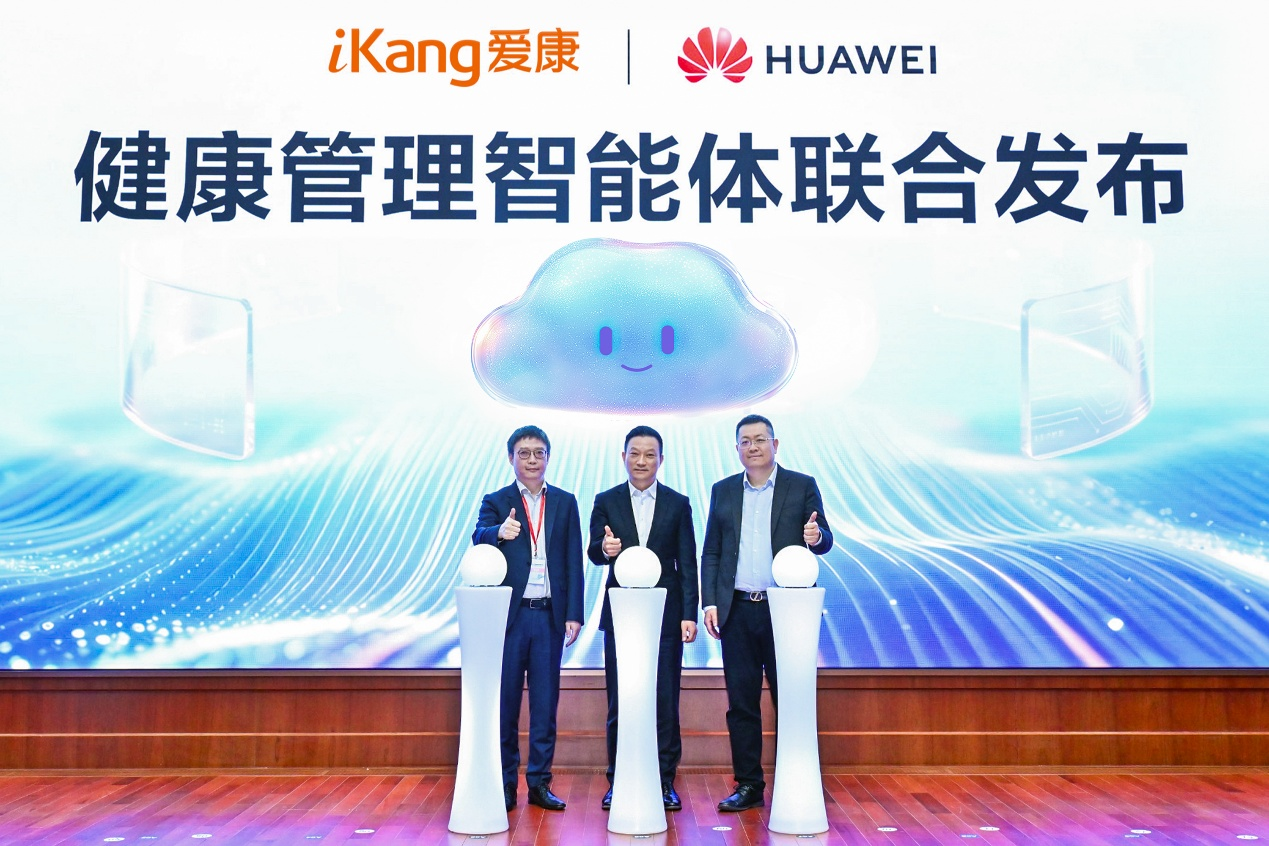
爱康集团与华为云联合发布健康管理智能体,携手打造AI健康管理新范式
Jin Rong Jie· 2026-02-04 04:22
Core Insights - The collaboration between iKang Healthcare Group and Huawei Cloud aims to launch an AI-driven health management system, enhancing personalized healthcare services [4][13] - Huawei Cloud is focusing on building a digital foundation for smart healthcare, utilizing AI technology to address core challenges in the medical industry [3][15] Group 1: Partnership Overview - iKang and Huawei Cloud have officially announced the launch of the health management AI system, with key executives from both companies participating in the unveiling ceremony [4] - The partnership is structured around a "three-layer interaction" cooperation system, which aims to enhance the capabilities and value across the entire health management chain [8] Group 2: AI Health Management Capabilities - iKang will provide its established AI health assistant "iKKie" as a service entry point, while Huawei Cloud will contribute general AI capabilities for health consultations and other services [11] - The collaboration will integrate online and offline health management services, combining iKang's extensive network with Huawei Cloud's advanced AI models for chronic disease management [11] Group 3: Mutual Benefits and Innovation - The partnership leverages iKang's vast health data from serving nearly ten million users annually, providing a real-world testing ground for Huawei Cloud's AI technologies [14] - The collaboration is expected to drive innovation in health management services, making them more efficient and accessible, thus setting a benchmark for the industry [15] Group 4: Future Outlook - The partnership is positioned to address the increasing demand for efficient and intelligent health management services due to aging populations and rising chronic disease rates [15] - Both companies aim to explore new health management services and reduce barriers to medical AI innovation, promoting widespread application and accessibility [15]
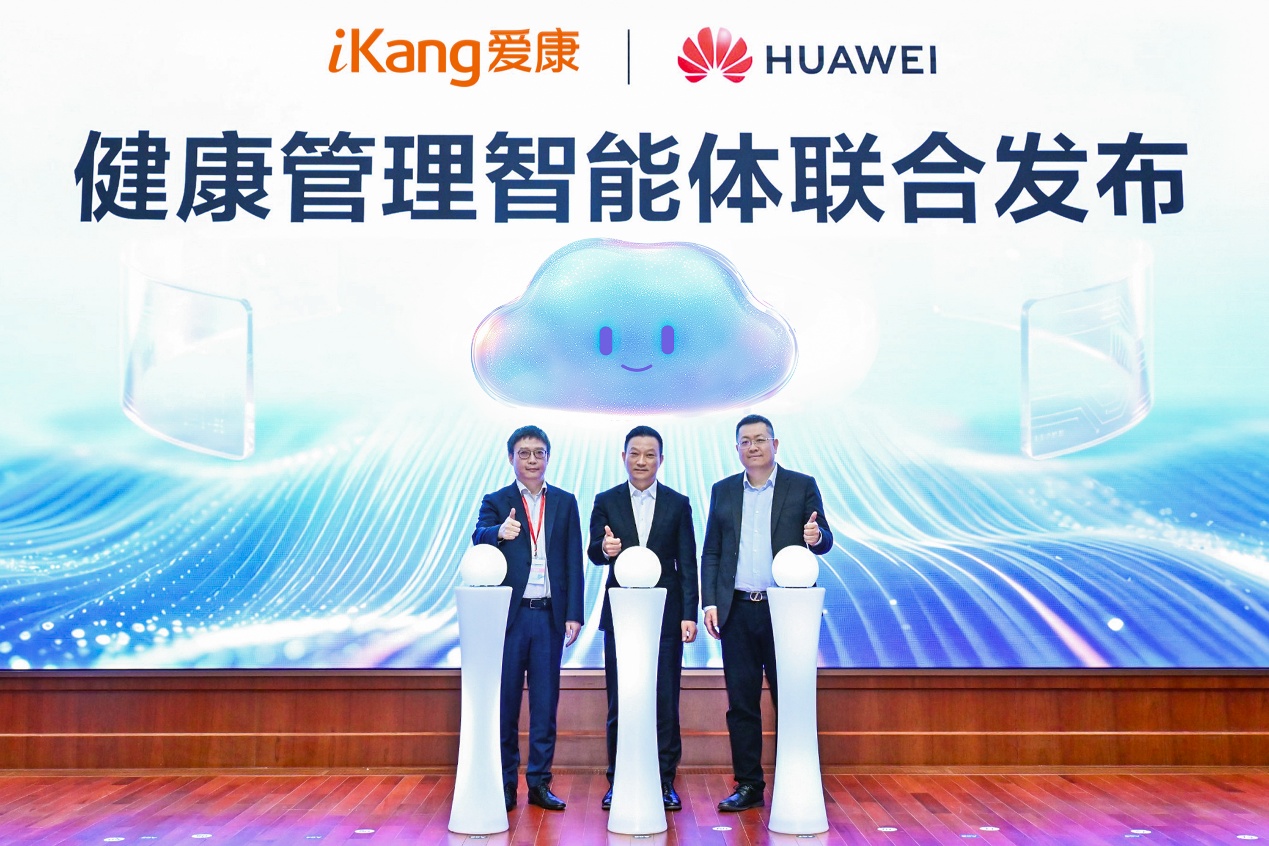
爱康集团与华为云联合发布健康管理智能体, 携手打造AI健康管理新范式
Zhong Jin Zai Xian· 2026-02-04 04:13
Core Insights - The collaboration between iKang Healthcare Group and Huawei Cloud aims to create a health management intelligent system that leverages AI technology to enhance the accessibility and efficiency of healthcare resources for everyone [1][4]. Group 1: Industry Consensus and AI Application - The healthcare industry is focusing on the practical implementation of AI to address common challenges, with Huawei Cloud emphasizing the construction of a digital foundation to facilitate the widespread application of medical AI [2]. - iKang's CEO highlighted the transition from standardized health check-ups to personalized health management driven by AI, positioning iKang as a digital health management group powered by AI and big data [2][6]. Group 2: Three-Tier Cooperation Framework - The partnership is structured around a "three-tier interaction" model that enhances the capabilities and value of health management across the entire chain [6]. - iKang will provide its AI health manager application, "iKKie," while Huawei Cloud will contribute general AI capabilities for health consultations and other services, improving user experience [6]. - The collaboration will also integrate offline health management services with advanced AI models from Huawei Cloud to create a comprehensive smart chronic disease management system [6]. Group 3: Complementary Strengths and Mutual Empowerment - The partnership is driven by the deep alignment of capabilities and resources, creating a feedback loop where real-world health data enhances AI technology, and AI technology improves service delivery [7]. - iKang's extensive health data from millions of users provides a valuable testing ground for Huawei Cloud's AI capabilities, enabling continuous optimization based on actual user needs [7]. Group 4: Future Outlook - The collaboration represents a significant step towards intelligent and accessible health management in China, addressing the growing demand for efficient healthcare services due to an aging population and rising chronic disease rates [8]. - Both companies aim to explore innovative health management services and reduce barriers to medical AI innovation, facilitating broader application and scalability in the healthcare sector [8].