
酒店业

Search documents
华住集团季琦:酒店业增长空间在连锁化、品牌化、县域市场
Jing Ji Guan Cha Wang· 2025-11-01 14:43
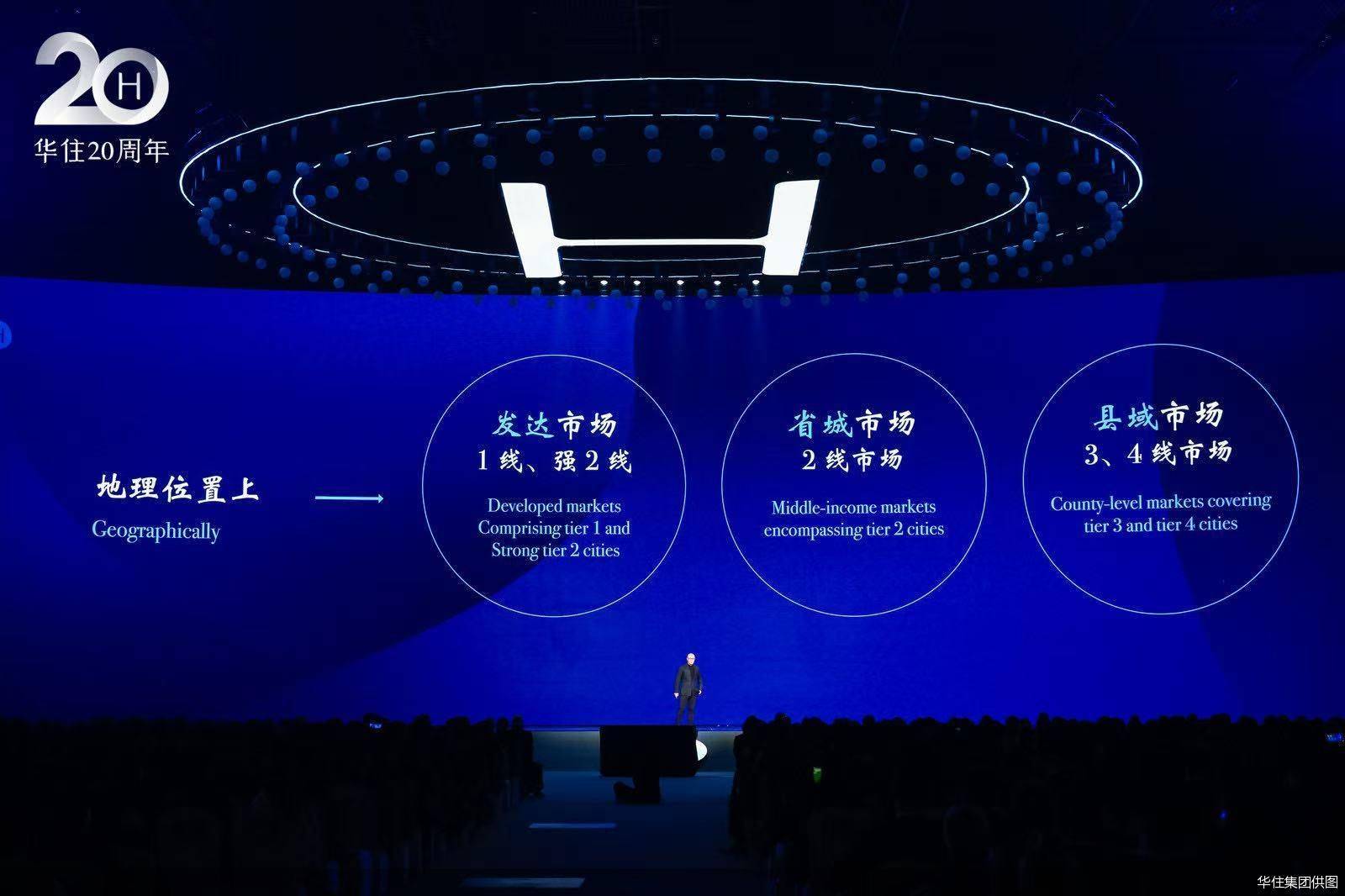
Core Insights - The founder and chairman of Huazhu Group, Ji Qi, expressed a strong bullish outlook on China's hotel industry, predicting that the largest hotel group will emerge from China in the future [2] - Ji Qi emphasized the need for supply-side reforms in the hotel industry, focusing on chain development, brand enhancement, and expansion into lower-tier markets [2] Industry Overview - The Chinese hotel industry faces a "large but weak" issue, characterized by a vast number of hotel rooms but a low percentage of large, chain hotels. As of December 31, 2024, there are over 340,000 hotels and more than 17.64 million rooms in China, with small hotels (fewer than 70 rooms) making up 48.09% of the total [2] - The chain hotel rate in China is 40.09%, significantly lower than the over 70% rate in the United States [2] Market Segmentation - Ji Qi categorized the Chinese market into three tiers: developed markets (first-tier and strong second-tier cities), provincial markets (second-tier cities), and county markets (third and fourth-tier cities), highlighting the significant growth potential in county markets due to low chain hotel rates [3] - The market is also segmented by consumer spending power into luxury, middle-class, and budget segments, with over 400 million middle-income individuals driving high-quality development in the hotel industry [3] - Age demographics are another segmentation factor, with distinct consumption characteristics among youth (18-35 years), middle-aged (36-59 years), and seniors (60 years and above), particularly noting the higher aesthetic demands of younger consumers [3] Opportunities and Trends - The industry is entering a period of overlapping opportunities, driven by increased market pressure, the return of assets to their investment essence, and the rise of franchise models [3] - AI technology is expected to enhance customer experience and operational efficiency, while a strong manufacturing base can provide high-quality, cost-effective supply chains [3] - The potential of county markets is significant, with lower reset costs for franchise hotels due to deflation and the new normal [3] Business Developments - Huazhu Group recently launched a new brand, "All Seasons Grand View," featuring a design that incorporates Eastern aesthetics [4] - The company introduced the "Haiyou Fully Self-Service Hotel," with a construction cost of 57,100 yuan per room and a total investment of approximately 3 million yuan for 45 rooms, achieving a human-to-room ratio of 0.1 [4] - Ji Qi previously indicated that the future growth of the hotel industry lies in the franchise model, moving away from traditional developer and landmark models [4] Company Performance - In the first half of 2025, Huazhu Group reported total revenue of 11.8 billion yuan, a year-on-year increase of 3.5%, and a net profit of approximately 2.4 billion yuan, up 41.2% [6] - Adjusted EBITDA for the same period was 3.8 billion yuan, reflecting a 9% year-on-year growth [6]


华住推出新品牌“全季大观”
Sou Hu Cai Jing· 2025-11-01 14:25
Core Insights - Huazhu Group launched a new brand "All Seasons Grand" at the 2025 Huazhu Partners Conference, integrating Eastern aesthetic travel experiences into its existing All Seasons hotel framework [2] - The founder and chairman, Ji Qi, introduced the concept of three markets in the Chinese hotel industry, highlighting distinct characteristics of developed markets, provincial capital markets, and county markets [2][3] Market Analysis - From a regional perspective, the Chinese hotel market exhibits clear gradient characteristics, with the county market showing a low chain hotel penetration rate below the national average, indicating significant growth potential [2] - Infrastructure in these markets is rapidly improving, and there is a noticeable trend of consumption upgrading, creating a favorable external environment for hotel investments [2] Consumer Behavior - The analysis of consumer capacity reveals three parallel markets: luxury consumption, middle-class consumption, and budget consumption, with the middle-income group driving high-quality development in the hotel industry [2] - The new generation of consumers has diverse and personalized demands, focusing not only on basic accommodation functions but also on experiential and aesthetic values [2] Demographic Insights - Observing age demographics, the youth market (18-35 years), middle-aged market (36-59 years), and senior market (60 years and above) display distinctly different consumption characteristics [3] - The younger generation, raised in affluent environments with good education and international exposure, has higher aesthetic demands for hotel products, significantly altering the competitive landscape of the hotel industry [3] Future Goals - Huazhu aims to lead with its brands over the next 20 years, aspiring to be a top player in each market segment and to make "Chinese service" resonate globally [3] - The vision is to transform hotels into significant "beautiful spaces" that enhance travel experiences, rather than merely serving as places to stay when away from home [3]

给错房卡?赤身大汉夜闯客房吓坏夫妻,希尔顿酒店回应:会赔偿
新浪财经· 2025-11-01 07:35
Core Viewpoint - The article discusses a serious incident at the Hilton Garden Inn in Suzhou, where a stranger entered a guest's room due to a hotel staff error in operating the room key, highlighting significant security and operational failures within the hotel [3][4][6]. Incident Summary - A guest, Mr. Sun, reported that a naked man entered his hotel room at midnight, which was attributed to a mistake by the hotel front desk in issuing the room key [3][4][7]. - Mr. Sun expressed strong anger towards the hotel, citing a malfunctioning door lock that did not alert them when the door was opened [4][8]. - The hotel staff acknowledged the incident but did not provide specific details or compensation amounts during inquiries [4][8]. Consumer Complaints - Hilton hotels have faced ongoing consumer complaints, with over 3,463 complaints reported, ranging from issues with membership rights to cleanliness and service delays [9][15]. - A specific incident involved a guest being charged $3000 for not occupying a room, raising concerns about privacy and customer rights [10][12]. Financial Performance - Hilton's Q3 2025 financial report showed mixed results, with total revenue of approximately $3.12 billion, a year-on-year increase of 8.82%, and a net profit of about $420 million, up 22.09% [16][17]. - However, key operational metrics showed declines, with occupancy rates down 0.5% to 74.5%, average daily rate (ADR) down 0.5% to $160.25, and revenue per available room (RevPAR) down 1.1% to $119.33 [18][19]. - The U.S. market underperformed, with RevPAR declining 2.3%, attributed to reduced international travel and unfavorable holiday arrangements [22].


房卡失误? 赤身大汉夜闯客房吓坏夫妻,希尔顿酒店回应:会赔偿
Xin Lang Cai Jing· 2025-11-01 06:46
Incident Overview - A serious incident occurred at the Hilton Garden Inn in Suzhou, where a stranger entered a guest's room at night due to a front desk error in issuing room keys [2][4] - The guest, Mr. Sun, expressed strong anger over the hotel's negligence, citing both the key card error and a malfunctioning door lock as contributing factors to the incident [5] Hotel's Response - The hotel acknowledged the incident and stated that a specialized team is handling the situation, confirming that compensation will be provided, although the specific amount is not yet determined [4][5] - The hotel staff avoided answering questions about the cause of the incident during inquiries from the media [5] Consumer Complaints and Issues - Hilton has faced ongoing consumer complaints, with over 3,463 complaints reported on platforms regarding issues such as membership rights, cleanliness, and unauthorized account registrations [6][11] - Recent incidents include a guest being charged for not occupying a room due to a monitoring issue, raising concerns about privacy violations [7][8] Financial Performance - Hilton's Q3 2025 financial report showed mixed results, with total revenue of approximately $3.12 billion, a year-on-year increase of 8.82%, and a net profit of about $420 million, up 22.09% [12] - However, key performance indicators in the hospitality sector showed declines, with occupancy rates at 74.5%, down 0.5%, and RevPAR down 1.1% to $119.33 [12][15] - The U.S. market specifically faced challenges, with RevPAR declining by 2.3%, attributed to reduced international travel and unfavorable holiday arrangements [15] Regional Performance - The Asia-Pacific region showed relatively stable performance with an occupancy rate of 72.8%, a slight increase of 0.5 percentage points, while the Middle East and Africa region reported the highest growth in RevPAR at $109.77, up 9.9% [13][14]

华星控股(08237) - 内幕消息申请就一间附属公司委任共同及各别清盘人之最新资料及有关实施行动计...
2025-10-31 11:02
Link Holdings Limited 華 星 控 股 有 限 公 司* 香 港 交 易 及 結 算 所 有 限 公 司 及 香 港 聯 合 交 易 所 有 限 公 司 對 本 公 告 之 內 容 概 不 負 責,對其準確性或完整性亦不發表任何聲明,並明確表示概不就因本公告全部或 任何部份內容而產生或因倚賴該等內容而引致之任何損失承擔任何責任。 (於開曼群島註冊成立之有限公司) (股份代號:8237) 內幕消息 申請就一間附屬公司委任共同及各別清盤人之最新資料 及 有關實施行動計劃以解決不發表意見之季度更新 茲提述(i)華星控股有限公司(「本公司」)於二零二五年四月七日刊發之截至二零二 四年十二月三十一日止財政年度之年報(「二零二四年年報」);(ii)本公司日期為二 零二五年七月三十日的公告,內容有關( 其中包括 )實施行動計劃以解決不發表意 見 之季 度更 新 ;及 (iii) 本 公司 日期 為二 零 二四 年十 二 月十 二日 、 二零 二五 年 八月 五日及二零二五年九月五日的公告,內容有關( 其中包括 )違反經修訂及重列融資 協議以 及Silverine 提交申請委任 其共同及各別 清盤人( 統 ...
华住季琦:中国酒店业未来最大的机会在于供给侧改革
Di Yi Cai Jing· 2025-10-31 10:49
Core Insights - The Chinese county-level hotel market has significant potential, driven by factors such as a large population base, infrastructure development, and a growing tourism market, with supply-side reform being the biggest opportunity for the hotel industry in the future [1][3] Industry Overview - The chain rate of the Chinese hotel market is projected to be around 40% in 2024, indicating substantial opportunities for growth in the chain hotel sector, particularly in third and fourth-tier cities [3] - The hotel industry is experiencing a shift from simple expansion to focusing on high-cost performance hotels, including mid-range and tech-integrated self-service hotels, to provide better emotional value and service to customers [5] Company Developments - Huazhu Group plans to launch a new brand called "Huazhu Daguan" and expand its self-service hotel brand "Haiyou," which operates with a low staff-to-room ratio, significantly reducing labor costs [4] - The investment return for self-service hotels is relatively short, with new construction costs starting at approximately 57,000 yuan per room and renovation costs at around 25,000 yuan per room, making it a low-cost investment option [4] Market Dynamics - The hotel industry is transitioning into a stock competition era, where key operational metrics such as occupancy rates and average room rates are increasingly linked to city tiers, necessitating a focus on both revenue enhancement and cost optimization [5] - The rise of AI technology is expected to further enhance customer experience and operational efficiency in the hotel sector [3][5]
澳门首3季酒店业场所的客房平均入住率同比升至89.3%
智通财经网· 2025-10-31 10:43
Group 1 - The average hotel occupancy rate in Macau for the first three quarters of 2025 increased by 3.9 percentage points to 89.3%, with a slight increase in total guests by 0.1% to 10.9 million [1] - The number of hotels providing accommodation services reached 147, an increase of 3 compared to the previous year, with total room availability rising by 2.4% to 45,000 [1] - The occupancy rates for five-star, four-star, and three-star hotels increased by 5.1, 2.5, and 2.3 percentage points respectively, with five-star hotels achieving a rate of 92.6% [1] Group 2 - The number of inbound group travelers decreased by 7.8% to 1.379 million, with a notable decline of 13.1% in mainland Chinese group travelers to 1.157 million, while international group travelers increased by 15.9% to 165,000 [2] - In September, the average hotel occupancy rate fell by 0.1 percentage points to 84.6%, with total guests remaining stable at 1.115 million and the average length of stay increasing by 0.1 nights to 1.7 nights [2] - The total number of inbound group travelers in September dropped by 20.2% to 106,000, while international group travelers saw a significant increase of 33.6% to 20,000 [2]
中汇集团:华商酒店与太阳城大酒店订立酒店经营合约
Zhi Tong Cai Jing· 2025-10-31 09:54
Core Viewpoint - Zhonghui Group (00382) announced a hotel management agreement between Huashang Hotel, a wholly-owned subsidiary, and Sun City Grand Hotel, indicating a strategic partnership to operate the Guangzhou Sun City Grand Hotel, enhancing educational and practical opportunities for students [1] Group 1: Agreement Details - The agreement was signed on October 31, 2025, and involves the management of the main building, staff dormitory, and staff canteen of the Guangzhou Sun City Grand Hotel [1] - The Guangzhou Sun City Grand Hotel is a 4-star hotel with a 30-year history, known for its unique foreign-related services and stable customer base [1] Group 2: Strategic Importance - The hotel is located in the city center of Guangzhou, providing convenient public transportation and proximity to the group's educational institution, benefiting students, faculty, and clients [1] - The long-term collaboration between the group and Sun City Grand Hotel has led to a deep understanding of the hotel's background, facilities, and services [1] Group 3: Educational Opportunities - The hotel is seen as an ideal location to promote and deepen the integration of industry and education, as well as school-enterprise cooperation, offering valuable practical learning opportunities for students [1]

希尔顿的“冰火两重天”:中东非狂飙,美国“拖后腿”?
Sou Hu Cai Jing· 2025-10-31 09:14
Core Insights - Hilton's Q3 2025 performance shows mixed results with total revenue of approximately $3.12 billion, an 8.82% year-over-year increase, exceeding market expectations of $2.99 billion [1] - Net profit attributable to the parent company reached about $420 million, a 22.09% increase year-over-year, with adjusted EPS of $2.11, surpassing analyst expectations of $2.05 [1] Revenue Breakdown - Franchise and licensing fee revenue was approximately $739 million, up 5.87% year-over-year [1] - Management fee revenue was about $93 million, increasing by 5.68% year-over-year [1] - Owned hotel revenue was approximately $322 million, down 2.42% year-over-year [1] Key Performance Indicators - Hilton's system-wide occupancy rate was 74.5%, a 0.5% decline year-over-year [2] - Average Daily Rate (ADR) was $160.25, also down 0.5% year-over-year [2] - Revenue Per Available Room (RevPAR) decreased by 1.1% to $119.33, although this was better than the expected 0.8% decline [2] Regional Performance - Asia-Pacific showed stable performance with an occupancy rate of 72.8%, up 0.5 percentage points year-over-year [3] - Europe maintained a high occupancy rate of 79.8%, down 0.1% year-over-year [3] - The Middle East and Africa were the standout regions with a RevPAR increase of 9.9% to $109.77, driven by a 4.5% rise in occupancy [3] Future Outlook - Hilton expects full-year RevPAR to be flat or increase by 1%, above the analyst forecast of 0.4% [5] - Projected net profit for the year is between $1.6 billion and $1.63 billion, with adjusted EBITDA expected to be between $3.69 billion and $3.72 billion [5] - CEO Christopher Nassetta expressed confidence in future growth driven by favorable economic conditions and limited supply growth in the industry [5] Market Reactions - Following the Q3 report, Hilton's stock price fell by 2.7% to $267.63, despite a prior week increase of 3.95% [4] - Barclays maintained a "buy" rating on Hilton's stock, raising the target price from $288 to $297, indicating confidence in the company's mid-term rebound potential [4]
建投能源:10月30日召开董事会会议
Mei Ri Jing Ji Xin Wen· 2025-10-30 14:45
Group 1 - The core point of the news is that JianTou Energy held its 8th meeting of the 10th Board of Directors on October 30, 2025, to review the Q3 2025 report and other documents [1] - For the first half of 2025, JianTou Energy's revenue composition was as follows: thermal power generation accounted for 90.99%, residential heating 6.11%, hotel industry 1.33%, photovoltaic power generation 0.86%, and others 0.43% [1] - As of the report date, JianTou Energy's market capitalization was 17.4 billion yuan [2]
