
AI应用

Search documents
A股震荡!创业板指午后跌超1%,早盘一度涨逾1%,深证成指现跌0.76%,AI应用、文化传媒板块跌幅居前
Ge Long Hui· 2025-12-03 06:42
格隆汇12月3日|创业板指午后跌超1%,早盘一度涨逾1%,深证成指现跌0.76%,AI应用、文化传媒板 块跌幅居前。 ...

ETF午评|A股冲高回落,AI应用领跌,影视ETF、线上消费ETF跌逾2%
Ge Long Hui· 2025-12-03 04:02
Market Overview - The three major A-share indices experienced a pullback after initially rising, with the Shanghai Composite Index down 0.09%, the Shenzhen Component down 0.19%, and the ChiNext Index down 0.5% at midday [1] - The total trading volume in the Shanghai, Shenzhen, and Beijing markets reached 10,756 billion yuan, an increase of 195 billion yuan compared to the previous day, with over 3,500 stocks declining across the market [1] Sector Performance - AI applications, e-commerce, lithium mining, consumer electronics, stablecoins, solid-state batteries, and computing power sectors showed weakness [1] - In contrast, sectors such as superhard materials, coal, and non-ferrous metals performed strongly [1] ETF Performance - The non-ferrous metals sector led the ETF gains, with Wanji Fund's Industrial Non-Ferrous ETF and Huaxia Fund's Non-Ferrous Metals ETF rising by 2.48% and 1.41% respectively [1] - Cross-border ETFs were all in the green, with Invesco Great Wall Fund's Nasdaq Technology ETF, Huaxia Fund's Brazil ETF, and Huitianfu Fund's Nasdaq 100 ETF increasing by 1.76%, 1.7%, and 1.6% respectively [1] - Cash strategy ETFs were active, with Huaxia Fund's Cash Flow 500 ETF rising by 1.37% [1] Weak Sectors - The AI application sector saw a broad decline, with the Film and Television ETF, Online Consumption ETF, and Media ETF falling by 2.31%, 2.3%, and 1.89% respectively [1] - The gaming sector also declined, with the Gaming ETF down by 1.65% [1] - The financial technology sector showed negative performance, with the Financial Technology ETF from Huitianfu down by 1.63% [1]
午评:创业板指半日跌0.5% 商业航天概念再度走强
Mei Ri Jing Ji Xin Wen· 2025-12-03 03:45
Group 1 - The market experienced fluctuations with the ChiNext index initially rising over 1% before retreating [1] - The commercial aerospace sector showed signs of recovery, with Aerospace Power hitting the daily limit and Shunhao Co. achieving four consecutive trading limits [1] - The coal sector saw a rapid increase, with Antai Group achieving two consecutive trading limits, and Dayou Energy and New Dazhou A hitting the daily limit [1] Group 2 - The Fujian sector was active, with Haixin Food reaching six consecutive trading limits and Sun Cable achieving two consecutive trading limits [1] - The superhard materials concept strengthened, with Huanghe Xuanfeng hitting the daily limit [1] - In contrast, the AI application sector collectively weakened, with Fushi Holdings dropping over 11% [1] Group 3 - By the end of the trading day, the Shanghai Composite Index fell by 0.09%, the Shenzhen Component Index decreased by 0.19%, and the ChiNext index dropped by 0.5% [1]
超硬材料板块表现活跃 AI应用方向走低
Zhong Guo Ji Jin Bao· 2025-12-03 03:25
【导读】超硬材料板块表现活跃,AI应用方向走低 | 名称 | 现价 | 涨跌幅 ▼ | 成交量 | 换手率 | 市盈率 | 总市值 | | --- | --- | --- | --- | --- | --- | --- | | 四方达 | 17.50 | 13.49% | 6429万 | 17.19% | 102 | 85亿 | | 惠丰钻石 | 37.43 | 12.33% | 585万 | 13.91% | -220 | 34亿 | | 黄河旋风 | 6.77 | 10.08% | 1.24亿 | 9.71% | -9.0 | 98亿 | | 力量钻石 | 40.25 | 7.62% | 1615万 | 8.30% | 149 | 105亿 | | 国机精工 | 34.38 | 5.27% | 2032万 | 3.84% | 65.5 | 184亿 | | 沃尔德 | 67.74 | 5.19% | 654万 | 4.34% | 109 | 102亿 | | 博云新材 | 9.99 | 2.46% | 5113万 | 8.92% | -281 | 57亿 | | 岱勒新材 | 11.70 | 1.56% ...

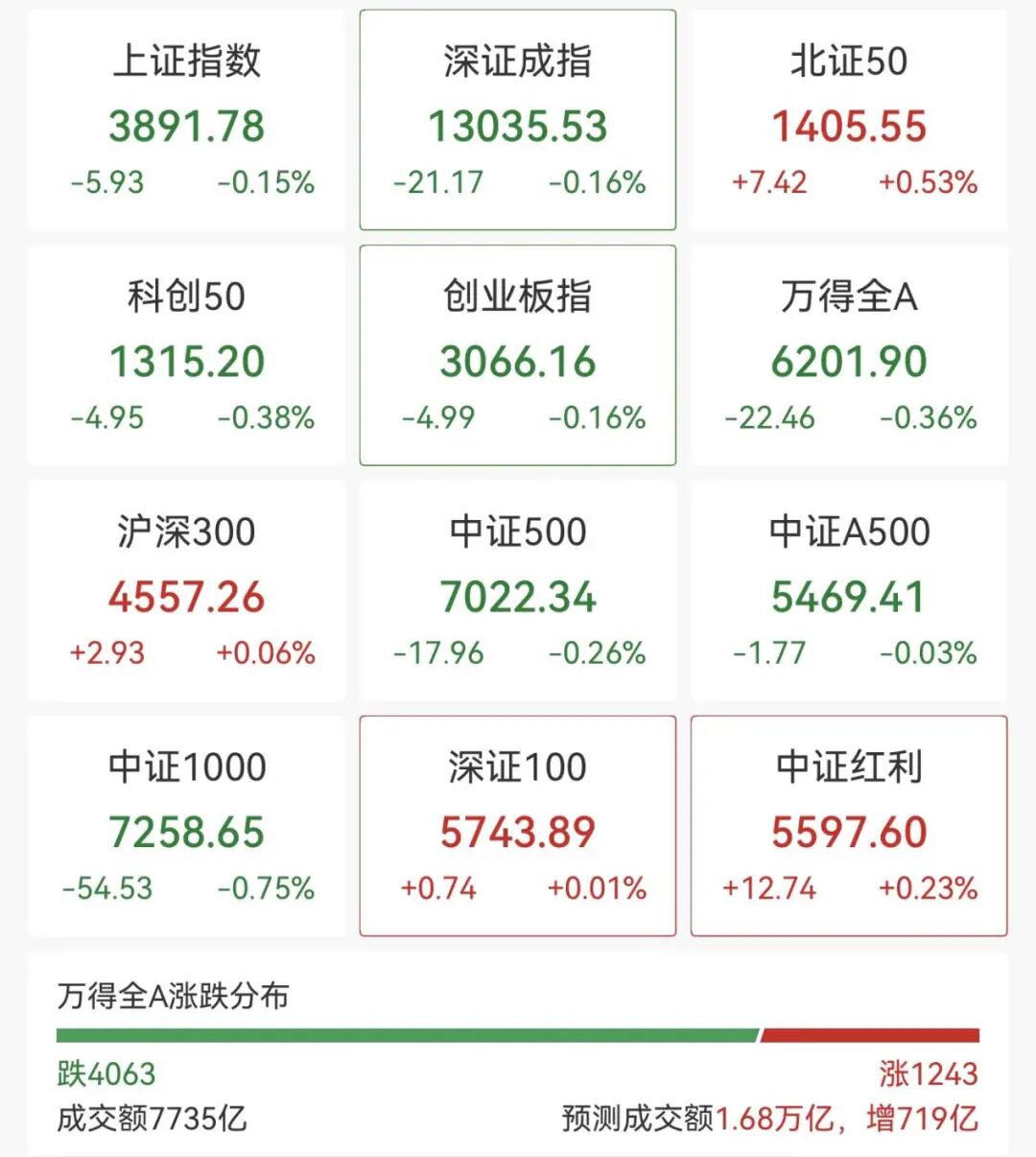
超4000股下跌
中国基金报· 2025-12-03 03:12
【导读】超硬材料板块表现活跃,AI应用方向走低 中国基金报记者 李智 一起来看下最新的市场情况及资讯。 12月3日早盘,A股三大指数震荡调整。截至发稿,沪指跌0.15%,深成指跌0.16%,创业板 指跌0.16%。 | Wind热门概念指数 | Wind中国行业指数 | | | | | | | | | | | | | | | | | | | | --- | --- | --- | --- | --- | --- | --- | --- | --- | --- | --- | --- | --- | --- | --- | --- | --- | --- | --- | --- | | 培育钻石 | 超硬材料 | 错家销墨 | 工业金属 | 海南自贸港 | 能源设备 | 摩托车 | 通信设备 | 化肥农药 | 工程机械 | 0.72% | 7.62% | 4.66% | 2.06% | 1.34% | 1.29% | 2.31% | 1.25% | 1.05% | 0.83% | | 稀土 | 光模块(CPO) | 央企煤炭 | 半导体设备 | 磷化工 | 石油化工 | 钢铁 | 海运 | 基本金属 | 航空 ...

深演智能再申请 二次递表港交所
Shen Zhen Shang Bao· 2025-12-02 17:05
Core Viewpoint - Shenyan Intelligent submitted its listing application to the Hong Kong Stock Exchange on December 1, after its prospectus submitted in the first half of the year became invalid at the end of November. The company faces significant performance fluctuations in 2024 due to high reliance on a single industry client, leading to pressure on gross margins and tightening cash flow [1]. Company Overview - Shenyan Intelligent, formerly known as "Pinyou Interactive," had previously applied for an A-share IPO in 2022 but withdrew the application in June 2024 after three rounds of inquiries. The company shifted its focus to the Hong Kong market, submitting its application in late May, which became invalid on August 28 [1]. - The company specializes in decision-making AI technology, focusing on AI applications in marketing and sales scenarios. According to its prospectus, it ranks first in the Chinese marketing and sales decision-making AI application market with a market share of 2.6% based on 2024 revenue, and fourth in the overall decision-making AI application market in China with a market share of 1.6% [1]. Financial Performance - In the first half of 2025, the company's revenue increased by 5.8% year-on-year to 277 million yuan, primarily driven by clients in the internet services industry. The revenue share from this sector rose from 24.2% in the same period last year to 43.2% [1]. - The prospectus indicates that the company is experiencing issues such as an imbalanced business structure, declining profitability, and tightening cash flow, along with some foreign exchange risks [1].
热议“春季躁动”行情!券商看好哪些方向?
Zhong Guo Zheng Quan Bao· 2025-12-02 14:18
Core Viewpoint - The A-share market is expected to see an early "spring rally" in 2026, driven by positive factors from policy, fundamentals, and liquidity, with a focus on balanced allocation across growth and cyclical sectors [1][2][4] Group 1: Market Trends - The "spring rally" in early 2025 was characterized by a rebound after a quick drop in January, with major indices showing upward trends for two months [2] - Analysts believe that the "spring rally" in 2026 may be advanced due to a "learning effect" in the market and the later timing of the 2026 Spring Festival, leading to potential early positioning by investors [2][3] - Historical analysis indicates that the performance of the "spring rally" is positively correlated with the overall market performance for the year, suggesting that sectors that perform well in December may underperform in the subsequent "spring rally" [3] Group 2: Sector Allocation - Institutions recommend a balanced allocation between growth and cyclical sectors, with a focus on military, AI applications, chemicals, and resource products [1][4] - Specific recommendations include focusing on high-value growth areas such as aerospace equipment and the AI industry chain, while also considering cyclical sectors like chemicals and energy metals [4] - The technology sector is expected to maintain a long-term advantage, with particular attention on military, media (gaming), AI applications, and core AI hardware for investment opportunities [4][5]
【华西策略】联储12月降息将至,反弹行情如何演绎?
Sou Hu Cai Jing· 2025-12-02 00:15
(一)市场回顾 本周全球股指普涨,纳斯达克指数、中国台湾加权指数和恒生科技指数领涨。A股市场方面,本周主要 指数多数收涨,微盘股、中证2000、创业板指涨幅居前。资金面来看,全A成交额已连续两周缩量,股 票型ETF资金整体净赎回,融资资金小幅买入。风格上,成长风格显著反弹,光模块、AI应用、锂电电 解液方向领涨;石油石化、银行、煤炭等红利板块下跌。大宗商品方面,金属价格上涨,伦敦现货白 银、LME铜创下历史新高;国内双焦弱势运行。 (二)市场展望:A股有望迎跨年行情布局期 展望12月,A股市场将步入国内外重要政策观察窗口,市场风险偏好或逐渐抬升,跨年行情迎来布局 期。海外方面,美联储降息概率较大,美元流动性担忧缓解和人民币汇率偏强运行,有利于外资增配中 国资产;国内方面,12月中上旬将召开政治局会议和中央经济工作会议,确定2026年经济发展目标和宏 观政策基调,反内卷、促消费、新质生产力等有望受益政策催化。以下几个方面是近期市场关注的重 点: 一、海外方面,12月美联储降息预期再起,美元流动性担忧缓解。一方面,上周五纽约联储主席威廉姆 斯表示"随着劳动力市场降温,近期仍有再次降息的空间",其鸽派声音显著提振市 ...
新股消息 深演智能年内二次递表港交所 2024年收入在中国整体决策型AI应用市场排名第四
Jin Rong Jie· 2025-12-02 00:06
Core Viewpoint - Beijing DeepYuan Intelligent Technology Co., Ltd. has submitted its application for listing on the Hong Kong Stock Exchange for the second time this year, focusing on AI applications in marketing and sales [1] Company Overview - The company is a leading decision-making AI technology firm in China, ranking first in the marketing and sales decision-making AI application market with a market share of 2.6% as of 2024 [1] - It ranks fourth in the overall decision-making AI application market in China with a market share of 1.6% [1] - The company has developed two flagship platforms, AlphaDesk and AlphaData, and plans to launch a new product line, DeepAgent, in 2025 [1][2] Product Details - AlphaDesk, developed since 2011, is an AI decision-making platform for digital advertising, enabling automated and optimized ad placements across multiple media platforms [2] - DeepAgent, set to launch in February 2025, will consist of a series of intelligent agent products aimed at enhancing marketing automation and decision-making quality [2] Client Base - The company has established a client base focused on large and medium-sized enterprises with complex decision-making needs, serving approximately 530 clients, including 89 Fortune Global 500 companies [3] - The company maintains high customer loyalty, reflected in a net revenue retention rate of over 85% for AlphaDesk and over 80% for AlphaData [3] Financial Performance - The company's revenue for the six months ending June 30 for the years 2022, 2023, 2024, and 2025 was approximately RMB 543 million, RMB 611 million, RMB 538 million, and RMB 277 million respectively [4] - The comprehensive income for the same periods was RMB 59.21 million, RMB 53.09 million, RMB 17.67 million, and RMB 6.50 million respectively [5] - The gross profit margins for these periods were 30.9%, 31.2%, 27.3%, and 27.1% respectively [6] Industry Overview - The AI application market in China is projected to grow from RMB 20 billion in 2020 to RMB 63.9 billion by 2024, with a compound annual growth rate (CAGR) of 33.7% [7] - The decision-making AI application market is expected to expand from RMB 10.6 billion in 2020 to RMB 34.5 billion by 2024, with a CAGR of 34.3% [7] - The marketing and sales decision-making AI application market is anticipated to grow from RMB 6.2 billion in 2020 to RMB 20.3 billion by 2024, with a CAGR of 35.0% [7]
深演智能更新招股书:决策AI应用市场先行者,2025收入利润双增长
Ge Long Hui· 2025-12-02 00:04
Group 1 - The core viewpoint of the articles highlights the significant growth and market position of DeepAI, a decision AI technology company in China, which ranks first in the marketing and sales decision AI application market with a market share of 2.6% as of 2024 [1][2] - As of June 30, 2025, DeepAI reported revenues of approximately 277 million yuan, with profits increasing by 134.3% compared to the same period in 2024, indicating the effectiveness of the company's business model and development strategy [1] - The company is actively embracing AI and focusing on technology development, transforming AI breakthroughs into commercially scalable products, thereby solidifying its position as a pioneer in the emerging field of decision AI [2] Group 2 - The product matrix of DeepAI includes AlphaDesk, which focuses on public domain traffic acquisition and maximizes advertising effectiveness, and AlphaData, which enhances private customer management through data integration and lifecycle value operations [2] - The recently launched enterprise AI intelligent system, Deep Agent, combines intelligent agent technology with industry expertise to strengthen enterprise-level decision-making capabilities [2] - The Chinese decision AI application market is experiencing rapid transformation, with a projected market size of 34.5 billion yuan in 2024, expected to grow to 161.5 billion yuan by 2029, reflecting a compound annual growth rate of 36.2% from 2024 to 2029 [2]