煤炭开采

Search documents
气温偏高需求疲弱,煤价延续下行走势
Soochow Securities· 2025-12-21 06:29
Investment Rating - The industry investment rating is maintained at "Overweight" [1] Core Views - The current high inventory levels at ports and the early release of downstream heating demand are contributing to a weak demand environment, leading to a downward trend in coal prices. The report anticipates that coal prices will maintain a fluctuating trend due to high temperatures across the country and competition from renewable energy sources [1][2] - The report emphasizes the importance of monitoring the incremental insurance funds and suggests a focus on resource stocks, particularly recommending elastic coal stocks such as Haohua Energy and Guanghui Energy [2][37] Summary by Sections Industry Overview - During the week of December 15 to December 19, the spot price of thermal coal at ports decreased by 42 CNY/ton, closing at 703 CNY/ton. The average daily inflow to the four ports in the Bohai Rim was 1.6371 million tons, a decrease of 200,000 tons week-on-week, representing a decline of 10.95% [1] - The average daily outflow from the four ports was 1.5317 million tons, down by 100,000 tons week-on-week, a decrease of 6.19%. The total inventory at the ports increased to 29.652 million tons, up by 500,000 tons, an increase of 1.7% [1][32] Price Trends - As of December 19, the price of 5500 kcal thermal coal at Datong South Suburb decreased by 60 CNY/ton, closing at 560 CNY/ton. The price of 4000 kcal thermal coal in Inner Mongolia remained stable at 430 CNY/ton, while the price of 6000 kcal thermal coal in Yanzhou remained unchanged at 980 CNY/ton [16] - The Bohai Rim thermal coal price index fell by 4 CNY/ton, closing at 699 CNY/ton, while the Qinhuangdao port price index for 5500 kcal thermal coal decreased by 7 CNY/ton, closing at 702 CNY/ton [19] Supply and Demand Dynamics - The report notes a decrease in both the inflow and outflow of coal at the Bohai Rim ports, indicating a weak demand environment. The number of anchored vessels in the area decreased by 16% to 63 vessels [27][32] - The report highlights that the current high inventory levels and limited demand release are contributing to the downward pressure on coal prices [1][2] Recommendations - The report suggests focusing on elastic coal stocks, particularly Haohua Energy and Guanghui Energy, which are considered undervalued [2][37]
信用利差周度跟踪20251221:利率回落信用利差被动走扩长久期弱资质城投承压-20251221
Huafu Securities· 2025-12-21 06:12
1. Report Industry Investment Rating The provided content does not mention the industry investment rating. 2. Core Viewpoints of the Report - The relaxation of funds has led to a decline in interest rates, and the performance of credit has lagged, resulting in an expansion of credit spreads. The yields of most credit bonds have declined, but the performance is relatively lagging, and most credit spreads have continued to widen [2][10]. - The spreads of most urban investment bonds have increased by 3 - 4BP, and the spreads of medium - and low - grade platforms have increased slightly more [3][14]. - The spreads of industrial bonds have generally increased. The spread of Vanke has converged, but the spread of private real - estate bonds has continued to widen [3][23]. - The yields of most Tier 2 and perpetual bonds have declined, but the spreads have all increased. The short - end performance is weaker than that of ordinary credit bonds [4][28]. - The change in the excess spread of industrial perpetual bonds is limited, while the excess spread of urban investment perpetual bonds has declined [31]. - It is recommended to be cautious about long - term and weak - quality urban investment bonds and continue to maintain a wait - and - see attitude towards real - estate bonds. Attention should be paid to the investment value of 3 - 5Y Tier 2 and perpetual bonds [4][33]. 3. Summary According to Relevant Catalogs 3.1 Funds Loosen, Interest Rates Fall, and Credit Spreads Expand - This week, the relaxation of funds has led to a significant decline in short - and medium - term interest rates. The yields of 1Y, 3Y, 5Y, 7Y, and 10Y China Development Bank bonds have decreased by 4BP, 5BP, 3BP, 1BP, and 2BP respectively compared with last week. Except for the medium - and low - grade 5Y bonds, the yields of most credit bonds have declined following the interest rates, but the performance is relatively lagging, and most credit spreads have continued to widen [2][10]. - In terms of credit spreads, the spreads of 1Y bonds of all grades have increased by 2 - 3BP; the spreads of 3Y bonds of all grades have increased by 3 - 5BP; the spread of AAA - grade 5Y credit bonds has increased by 2BP, and the spreads of other grades have increased by 5 - 6BP; the spreads of 7Y bonds of all grades have remained flat; the spread of AAA - grade 10Y bonds has increased by 3BP, and the spreads of other grades have increased by 1BP [2][10]. 3.2 Urban Investment Bond Spreads Mostly Increase - This week, the spreads of most urban investment bonds have increased by 3 - 4BP, and the spreads of medium - and low - grade platforms have increased slightly more. The credit spreads of externally rated AAA - grade platforms have generally increased by 3BP compared with last week, and the spreads of AA and AA + grade platforms have both increased by 4BP [3][14]. - By administrative level, the credit spreads of provincial and prefecture - level platforms have generally increased by 3BP compared with last week, and the spreads of county - level platforms have increased by 4BP [18]. 3.3 Industrial Bond Spreads Generally Increase - This week, the spreads of central and state - owned real - estate bonds have increased by 4 - 5BP, the spread of mixed - ownership real - estate bonds has decreased by 82BP, and the spread of private real - estate bonds has increased by 87BP. The spreads of coal bonds of all grades have increased by 2 - 3BP; the spread of AAA - grade steel bonds has increased by 2BP, and the spread of AA + grade has increased by 6BP; the spread of AAA - grade chemical bonds has increased by 3BP, and the spread of AA + grade has increased by 2BP [3][23]. 3.4 Tier 2 and Perpetual Bond Yields Mostly Decline, but Spreads Increase - This week, the yields of most Tier 2 and perpetual bonds have declined, but the spreads have all increased. The 3Y bonds have performed relatively strongly, and the short - end performance is weaker than that of ordinary credit bonds. Specifically, the yields of 1Y Tier 2 and perpetual bonds of all grades have remained flat or increased by 1BP, and the spreads have increased by 4 - 5BP. The yields of 3Y Tier 2 capital bonds of all grades have decreased by 3 - 4BP, and the spreads have increased by 1 - 2BP; the yields of 3Y perpetual bonds of all grades have decreased by 1 - 2BP, and the spreads have increased by 3 - 4BP. The yields of AA + and above grade 5Y Tier 2 capital bonds have decreased by 1 - 3BP, the yield of AA - grade has remained flat, and the spreads have generally remained flat or increased by 2 - 3BP; the yields of 5Y perpetual bonds of all grades have decreased by 1 - 2BP, but the spreads have increased by 1 - 2BP [4][28]. 3.5 Excess Spreads of Industrial and Urban Investment Perpetual Bonds - This week, the excess spread of industrial AAA - grade 3Y perpetual bonds has slightly decreased by 0.01BP to 15.36BP, at the 43.43% quantile since 2015. The excess spread of industrial 5Y perpetual bonds has remained flat at 11.90BP, at the 25.31% quantile since 2015. The excess spread of urban investment AAA - grade 3Y perpetual bonds has decreased by 1.28BP to 3.91BP, at the 1.39% quantile; the excess spread of urban investment 5Y perpetual bonds has decreased by 1.16BP to 10.87BP, at the 17.24% quantile [31]. 3.6 Investment Recommendations - Due to the impact of debt - resolution policies, the market has greater differences in long - term and weak - quality urban investment bonds. The spreads of 3 - 5Y weak - quality urban investment bonds have increased more. Considering their relatively weak liquidity, it is recommended to remain cautious at present [4][33]. - The impact of Vanke's extension event on the real - estate industry is still continuing, but the impact amplitude is relatively weakening. It is recommended to maintain a wait - and - see attitude in the short term and pay attention to the changes in subsequent real - estate policies and sales fundamentals [4][33]. - Against the background of the continued decline in market interest rates this week, the 3 - 5Y Tier 2 and perpetual bonds have performed better than short - term Tier 2 and perpetual bonds and ordinary credit bonds of the same period. The yield curve of high - grade Tier 2 capital bonds is relatively convex around the 4Y period, and it is recommended to pay attention to the investment value [4][33]. 3.7 Credit Spread Database Compilation Instructions - The overall market credit spreads, commercial bank Tier 2 and perpetual spreads, and the credit spreads of urban investment/industrial perpetual bonds are calculated based on the data of ChinaBond Medium - and Short - Term Notes and ChinaBond Perpetual Bonds. The historical quantiles are since the beginning of 2015. The relevant credit spreads of urban investment and industrial bonds are sorted out and statistically analyzed by the Huafu Securities Research Institute, and the historical quantiles are also since the beginning of 2015 [36]. - The credit spreads of industrial and urban investment individual bonds = the ChinaBond valuation (exercise) of individual bonds - the yield to maturity of the same - term China Development Bank bonds (calculated by the linear interpolation method), and finally the credit spreads of the industry or regional urban investment are obtained by the arithmetic average method [36]. - The excess spread of bank Tier 2 capital bonds/perpetual bonds = the credit spread of bank Tier 2 capital bonds/perpetual bonds - the credit spread of bank ordinary bonds of the same grade and term. The excess spread of industrial/urban investment perpetual bonds = the credit spread of industrial/urban investment perpetual bonds - the credit spread of medium - and short - term notes of the same grade and term [36]. - Sample screening criteria: For industrial and urban investment bonds, medium - and short - term notes and public - offering corporate bonds are selected, and guaranteed bonds and perpetual bonds are excluded. If the remaining term of an individual bond is less than 0.5 years or more than 5 years, it will be excluded from the statistical sample. Industrial and urban investment bonds are externally rated by the issuer, while commercial banks use ChinaBond implicit bond ratings [36].

上海能源:高度重视市值管理工作
Zheng Quan Ri Bao Wang· 2025-12-19 15:17
证券日报网讯 12月19日,上海能源(600508)在互动平台回答投资者提问时表示,公司高度重视市值 管理工作,已实施股东增持、董监高及中层增持、中期分红,并有序实施估值提升计划,相关工作进展 请以有关披露信息为准。公司将继续聚焦提高持续经营能力、核心竞争力、投资价值和股东回报能力, 综合运用多种方式促进公司投资价值合理反映公司质量。 ...

首钢资源(00639):焦煤资源得天独厚,高股息凸显价值
Guoyuan Securities2· 2025-12-19 12:59
Investment Rating - The report assigns a "Buy" rating to the company with a target price of HKD 3.52, indicating a potential upside of 22% from the current price of HKD 2.89 [6][81]. Core Insights - The company possesses unique coking coal resources with superior quality, being located in a major reserve area in Shanxi Province, China. The coking coal produced is highly valued and referred to as "Panda Coal" due to its scarcity and economic value [3][56]. - The financial health of the company is robust, with no interest-bearing debt and a significant cash flow, allowing for high dividend payouts. The company has a commitment to a minimum dividend payout ratio of 40%, with actual rates averaging around 80% in recent years [5][66][71]. - The company is expected to see a recovery in profitability in 2026 as coking coal prices stabilize and the approval for the Guojiaogou coal mine project is anticipated to provide additional growth opportunities [4][6][76]. Summary by Sections Company Overview - The company, established in 1985, is primarily engaged in the mining and production of coking coal in Shanxi Province, a key area for high-quality coking coal in China [12][13]. Coking Coal Market Dynamics - The coking coal market is experiencing limited new capacity due to strict safety regulations and a decrease in overseas imports. Domestic production is expected to stabilize, leading to a potential tightening of supply and upward price elasticity [32][41][52]. Company Highlights - The company has three operational coking coal mines with a total production capacity of 5.25 million tons per year, and it is actively pursuing the approval for the Guojiaogou coal mine, which could add significant capacity [3][16][76]. - The average selling price of coking coal has seen fluctuations, with a significant drop in 2025, but a recovery is expected in 2026 as market conditions improve [4][51][81]. Financial Performance and Forecast - The company reported a decline in revenue and profit in 2023 and 2024 due to lower coking coal prices and production disruptions. However, projections for 2026 indicate a recovery in both revenue and net profit, driven by improved market conditions and operational efficiencies [7][81].
12月19日深证国企股东回报(970064)指数涨0.98%,成份股云铝股份(000807)领涨
Sou Hu Cai Jing· 2025-12-19 11:08
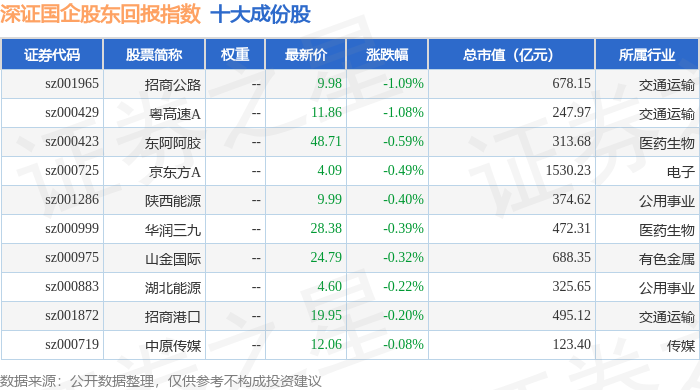
证券之星消息,12月19日,深证国企股东回报(970064)指数报收于1634.04点,涨0.98%,成交202.99 亿元,换手率0.82%。当日该指数成份股中,上涨的有39家,云铝股份以6.48%的涨幅领涨,下跌的有10 家,招商公路以1.09%的跌幅领跌。 | 代码 | 名称 | 主力净流入(元) | 主力净占比 游资净流入(元) | | 游资净占比 散户净流入(元) | | 散户净占比 | | --- | --- | --- | --- | --- | --- | --- | --- | | 000933 神火股份 | | 7890.41万 | 7.84% | 656.76万 | 0.65% | -8547.17万 | -8.50% | | 000878 云南铜业 | | 5698.62万 | 5.93% | -164.45万 | -0.17% | -5534.17万 | -5.76% | | 001979 招商蛇口 | | 5593.28万 | 13.50% | -5486.74万 | -13.24% | -106.54万 | -0.26% | | 000617 中油资本 | | 5438.61万 ...


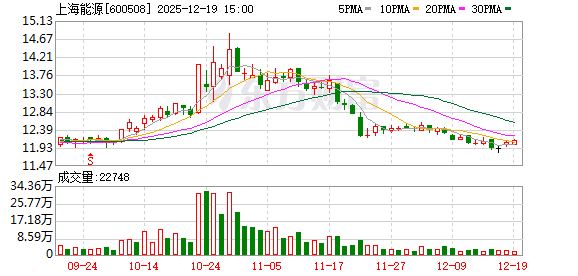
上海能源:截至2025年12月10日公司股东户数约为3.5万户
Zheng Quan Ri Bao· 2025-12-19 10:43
证券日报网讯 12月19日,上海能源在互动平台回答投资者提问时表示,截至2025年12月10日,公司股 东户数约为3.5万户。 (文章来源:证券日报) ...
煤炭开采板块12月19日跌0.55%,陕西煤业领跌,主力资金净流出1.83亿元
Zheng Xing Xing Ye Ri Bao· 2025-12-19 09:08
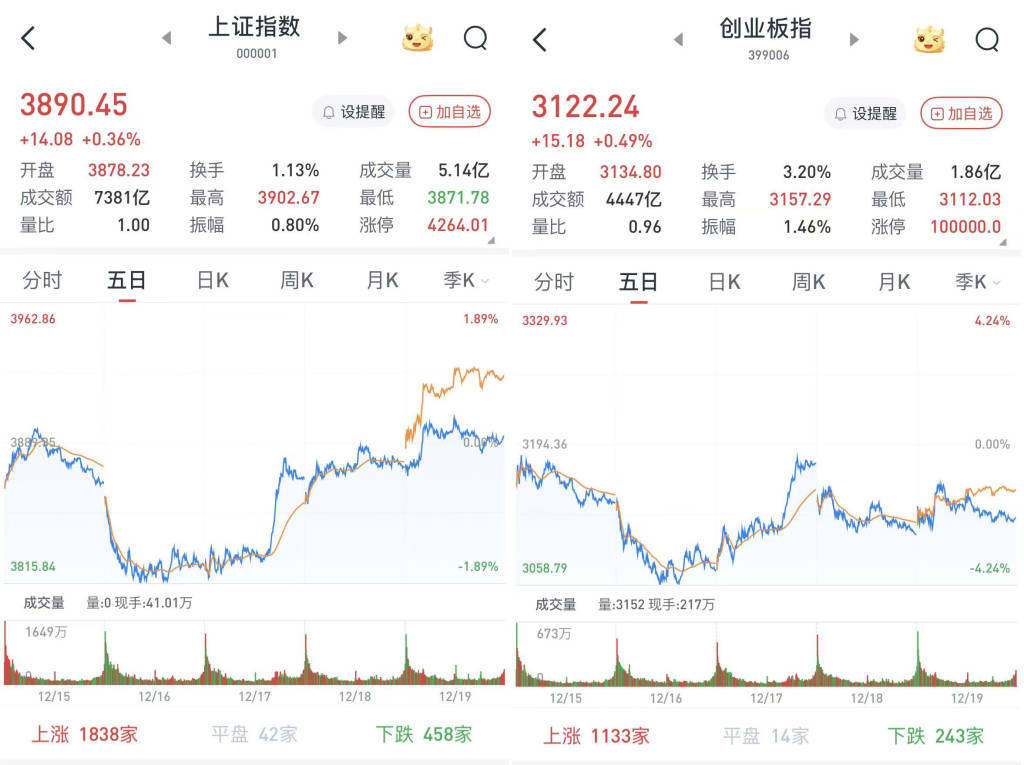
证券之星消息,12月19日煤炭开采板块较上一交易日下跌0.55%,陕西煤业领跌。当日上证指数报收于 3890.45,上涨0.36%。深证成指报收于13140.22,上涨0.66%。煤炭开采板块个股涨跌见下表: 从资金流向上来看,当日煤炭开采板块主力资金净流出1.83亿元,游资资金净流入5060.58万元,散户资 金净流入1.32亿元。煤炭开采板块个股资金流向见下表: 以上内容为证券之星据公开信息整理,由AI算法生成(网信算备310104345710301240019号),不构成投资建议。 ...


A股高开高走,三大股指收涨:大消费爆发,4476股飘红
Sou Hu Cai Jing· 2025-12-19 07:26
Market Overview - The three major A-share indices opened slightly higher on December 19, with the Shanghai Composite Index rising by 0.36% to 3890.45 points, the ChiNext Index up by 0.49% to 3122.24 points, and the Shenzhen Component Index increasing by 0.66% to 13140.21 points [2] - The total trading volume in the Shanghai and Shenzhen markets reached 17,259 billion yuan, an increase of 704 billion yuan from the previous trading day [2] Sector Performance - The consumer sector saw significant gains, with retail and duty-free stocks leading the charge. Notable stocks included Debi Group, He Bai Group, and Central Plaza, which either hit the daily limit or rose over 10% [4] - The Hainan Free Trade Zone concept stocks surged, with companies like Kangzhi Pharmaceutical and Hainan Haiyao also hitting the daily limit or rising over 10% [4] - Real estate stocks performed well, with Guangyu Group and Sanxiang Impression hitting the daily limit, and several others rising over 5% [5] - Conversely, banking and coal stocks experienced declines, with Shanghai Bank and Agricultural Bank of China dropping over 1% [6] Stock Movements - A total of 97 stocks in the markets saw price increases of over 9%, while 10 stocks experienced declines of over 9% [3] - Semiconductor stocks faced a downturn in the afternoon, with companies like Muxi Co. and Shenkong Co. dropping over 8% [7] Future Outlook - Dongguan Securities anticipates that the A-share market will see an early start to the cross-year configuration trend, driven by institutional reallocation and improved market liquidity [8] - Zhongyuan Securities notes that the A-share market has shown significant differentiation and volatility following recent domestic and international events, with expectations for the Shanghai Composite Index to stabilize around 4000 points [8] - Huatai Securities highlights the issuance of guidelines for fund management companies, which aims to align the interests of fund managers with long-term investor interests, supporting a steady upward trend in the capital market [9]
陕西煤业跌2.03%,成交额1.52亿元,主力资金净流出1694.39万元
Xin Lang Cai Jing· 2025-12-19 02:02
Core Viewpoint - Shaanxi Coal's stock price has experienced a decline, with a current trading price of 21.72 CNY per share, reflecting a decrease of 2.03% on December 19. The company has faced a net outflow of funds, indicating potential investor concerns about its performance and market position [1]. Group 1: Stock Performance - As of December 19, Shaanxi Coal's stock has decreased by 1.19% year-to-date, with a 0.64% drop over the last five trading days and a 5.15% decline over the past 20 days. However, there has been a 7.79% increase over the last 60 days [1]. - The total market capitalization of Shaanxi Coal is 210.575 billion CNY, with a trading volume of 1.52 billion CNY on December 19 [1]. Group 2: Financial Performance - For the period from January to September 2025, Shaanxi Coal reported a revenue of 118.083 billion CNY, representing a year-on-year decrease of 5.86%. The net profit attributable to shareholders was 12.713 billion CNY, down 20.26% compared to the previous year [2]. - Since its A-share listing, Shaanxi Coal has distributed a total of 81.645 billion CNY in dividends, with 47.331 billion CNY distributed over the last three years [3]. Group 3: Shareholder Structure - As of September 30, 2025, the number of shareholders for Shaanxi Coal has increased to 105,000, marking a 2.07% rise from the previous period. The average number of circulating shares per shareholder has decreased by 2.02% to 92,312 shares [2]. - Among the top ten circulating shareholders, China Securities Finance Corporation holds 195 million shares, remaining unchanged, while Hong Kong Central Clearing Limited has reduced its holdings by 107 million shares to 133 million shares [3].
中金2026年展望 | 煤炭:供给存在约束,煤价中枢平稳
中金点睛· 2025-12-18 23:58
Core Viewpoint - The coal price is expected to show a trend of low first and high later in 2026, with the annual average likely to remain similar to that of 2025. Demand may be a major drag, but supply-side constraints are relatively strong [2][9]. Supply and Demand Analysis - The coal industry is not facing overcapacity. The unexpected decline in coal prices this year is attributed to excessive production beyond approved capacity, which poses challenges to safety and environmental standards. If supply-demand conditions become overly loose, policies may tighten supply under reasonable and legal pretenses [2][11]. - The demand for thermal coal is expected to remain at a peak platform. During the "14th Five-Year Plan" period, green energy may start to squeeze existing coal power demand, but overall electricity demand is projected to grow steadily, maintaining thermal coal demand at a peak level with limited risk of significant decline [2][9]. Coking Coal Supply and Demand - The supply of domestic coking coal is expected to have limited upward elasticity in 2026, but imports from Mongolia may increase, leading to a relatively loose overall supply of coking coal. The uncertainty surrounding steel production cuts may affect actual reductions [3]. Historical Review of 2025 - The supply was rational in 2025, leading to a rebound in coal prices. From mid-2024 to July 2025, coal prices were under pressure due to weak demand and intensified competition. However, from July 2025 onwards, supply contraction and stabilizing demand led to a rebound in coal prices [6][5]. 2026 Outlook - Coal prices are expected to be low in the first half of 2026 and improve in the second half, with the average price likely to remain stable compared to 2025. The demand may be weak initially, but marginal improvements are anticipated later in the year [9][20]. Cost and Supply Constraints - The coal industry is experiencing rising costs due to resource depletion, safety investments, and increased labor costs. The average cost of coal for listed companies has been gradually increasing from 2016 to 2023, indicating that even low-cost leading companies are facing cost pressures [12][19]. - The overall debt pressure in the coal industry has decreased, providing a stronger basis for rejecting "involution-style" competition. The industry is transitioning from debt-driven production activities to profit-driven ones [19]. Non-Electric Coal Demand - The demand for coal in construction and steel is stabilizing at a low level due to weak real estate and infrastructure. However, chemical coal demand is a growth highlight, with significant increases driven by project launches and profitability [26]. Supply Outlook - Domestic coal production is expected to be released in a rational manner, with supply contraction as the main theme in the second half of 2025. The industry policies will likely focus on safe and orderly capacity release to avoid irrational price declines [28][30]. - New capacity additions are relatively limited, with a decrease in new projects and capacity increases observed in 2025 compared to 2024 [30].