
种植业

Search documents
“五年过渡期,再访脱贫村”系列报道 云南热水塘村党建引领特色产业发展促振兴
Xin Lang Cai Jing· 2025-12-25 08:10
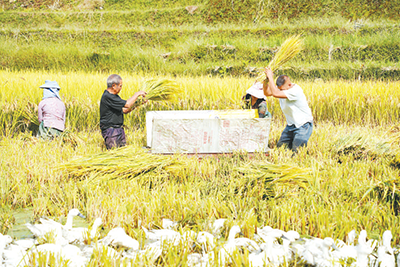
(来源:中国组织人事报) 转自:中国组织人事报 五年,一片梯田完成五次从青翠到金黄的轮回。在云南省红河州元阳县热水塘村,今年的水稻已收割归 仓。层层的梯田里蓄满了水,鱼影穿梭,白鸭成行——这幅哈尼人描摹了1300多年的农耕长卷,如今正 焕发出前所未有的生机。 2020年,元阳整县脱贫出列,热水塘村也依靠规模化种植土豆、玉米、香蕉等作物,输送青壮年外出务 工摘掉了穷帽子。 脱了贫摘了帽,如何进一步拓宽增收渠道,成为村党总支书记兰家兴心头最紧要的事。"光靠传统种 植,产值上不去。年轻人外出务工,要是连祖辈传下来的水田都荒了,脱贫成果怎么守得住?"看着冷 清的村寨和撂荒的梯田,兰家兴深感肩头担子不轻。 "守成"不是办法,"兴业"才是出路。要让脱贫成果稳得住、让乡村振兴有奔头,就需要把分散的农户重 新组织起来,健全紧密的联农带农机制。经过深入调研,红河州委制定出台《红河州农村基层党组织领 办合作社(公司)实施意见(试行)》,通过党组织领办合作社,发展特色产业,为乡村振兴注入源头 活水。 政策如一场"及时雨",很快传到了哈尼村寨的火塘边。热水塘村村民们围坐在一起,党员干部把文件里 的政策掰开揉碎讲给大家:"党组织领办合 ...

一图绘未来丨浙江宁波以“一张图”统筹耕林园空间治理
Zhong Guo Zi Ran Zi Yuan Bao· 2025-12-25 07:31
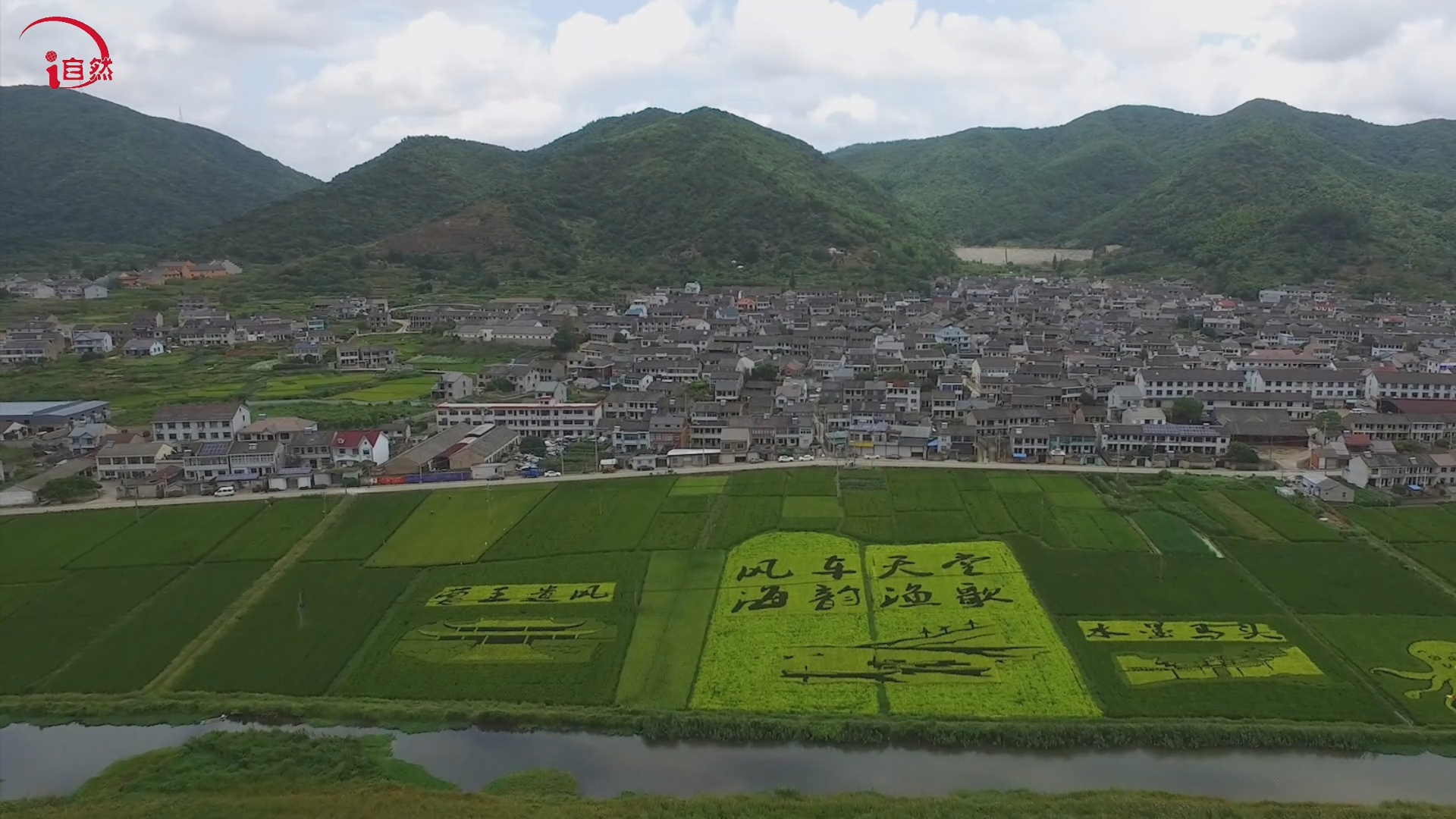
Core Viewpoint - The article discusses the implementation of a comprehensive spatial governance reform in Ningbo, Zhejiang Province, focusing on optimizing agricultural and forestry land use through the "One Map" initiative, which aims to enhance food security and ecological safety while promoting sustainable development [2][27]. Group 1: Overview of the "One Map" Initiative - Ningbo is set to be the first city in China to implement the "One Map" initiative by 2025, which integrates various data to optimize land use and resource allocation [2]. - The initiative has led to an increase in cultivated land area from 2.159 million acres to 2.225 million acres and forest coverage from 39.8% to 40.81% [2]. Group 2: Challenges in Land Use - Local farmers face challenges with land that is difficult to cultivate due to steep slopes, leading to abandonment of agricultural land [6]. - The region has seen a decline in the market for certain crops, prompting a need for diversification in agricultural practices [6]. Group 3: Spatial Governance Strategies - The governance strategy includes identifying mismatches in land use and implementing differentiated management for agricultural and forestry spaces [8][9]. - A total of 76 agricultural and 35 forestry protection areas have been designated to guide land use [8]. Group 4: Economic and Social Impact - The initiative has led to the establishment of high-quality agricultural practices, such as the cultivation of specialty crops like peaches, which have become significant income sources for local farmers [9][12]. - The integration of tourism and agriculture has resulted in increased visitor numbers and revenue for local communities, with one village generating over 500 million yuan during a holiday period [17]. Group 5: Monitoring and Feedback Mechanisms - Ningbo has developed a comprehensive monitoring system that includes satellite imagery, video surveillance, and on-the-ground inspections to ensure compliance with land use regulations [20][22]. - The system has successfully reduced illegal land use by 67% and improved response times for addressing violations [22]. Group 6: Future Directions - The governance model established in Ningbo is seen as a replicable framework for land management across other regions, emphasizing the balance between development and ecological preservation [23]. - Future plans include further optimizing land use and enhancing the economic value derived from agricultural and forestry resources [23][24].
中卫市沙坡头区玉米单产水平迈上新台阶
Xin Lang Cai Jing· 2025-12-25 01:00
Core Insights - The article highlights the significant advancements in corn yield in the Shapotou District of Zhongwei City, Ningxia Hui Autonomous Region, driven by a focus on national food security and high-quality agricultural development [1][2] Group 1: Agricultural Strategies - Shapotou District has prioritized corn yield enhancement as a core agricultural task, implementing comprehensive measures such as "government-industry-academia-research promotion" collaboration and technical integration [1] - A high-level technical team has been established, involving experts from the Ningxia Agricultural Technology Promotion Station and Agricultural Academy to provide technical consultation and decision support [1] Group 2: Crop Management Techniques - The district addresses the issue of diverse and mixed crop varieties by promoting leading varieties and issuing technical guidelines focused on resistance and yield [1] - Seed coating technology is being widely promoted to effectively control underground pests and seedling diseases, ensuring robust seedling growth [1] Group 3: Yield Achievements - In September 2025, corn demonstration fields in Shapotou District achieved record yields, with an average yield of 1,163.46 kg per mu for a thousand mu demonstration area and 1,154.23 kg per mu for a ten-thousand mu area, setting a historical best [2]

北大荒集团建设农场以"双融双促"绘就乡村振兴高质量发展画卷
Xin Lang Cai Jing· 2025-12-25 01:00
Core Insights - The company is focusing on the "Three Major and One Aircraft Carrier" strategic goals by 2025, utilizing the "Beian Model" and the "Torch Model" for integrated agricultural development [1][2] - The farm achieved impressive yields with soybeans at 567.4 jin per mu and corn at 1737 jin per mu, indicating a dual improvement in quality and efficiency [1] - The integration of technology in agriculture is emphasized, with practices such as precision planting, green pest control using fixed-wing aircraft, and efficient harvesting with combine harvesters [1] Group 1: Technological Integration - The farm implements a deep integration of "good fields, good seeds, good opportunities, good methods, and good systems" to enhance agricultural productivity [1] - The use of smart planting machines and collaborative pest control methods demonstrates a shift from traditional farming to technology-driven practices [1] - A grid management model ensures that each plot of land has a dedicated "technical steward," promoting a transition from experience-based farming to technology-based income generation [1] Group 2: Community Engagement and Support - The farm's "Torch Model" promotes high-standard demonstration fields in collaboration with surrounding towns, helping 60% of local farmers adopt high-yield technologies [2] - Investment of 13.49 million yuan in 15 livelihood projects reflects the farm's commitment to community welfare and support for farmers [2] - The farm's party committee is actively involved in addressing technical challenges faced by farmers, with training sessions reaching over 200 participants [2] Group 3: Future Development Goals - The farm aims to continue deepening the "Five Good Integration" and expanding the connotation of the "Torch Model" to further enhance rural revitalization efforts [2] - The focus on party leadership and technological innovation is seen as a foundation for sustainable agricultural development [2] - The ongoing commitment to community engagement and support is expected to yield significant benefits for local farmers and the agricultural sector as a whole [2]

沃土深耕结硕果 特色产业富乡亲
Xin Lang Cai Jing· 2025-12-24 23:57
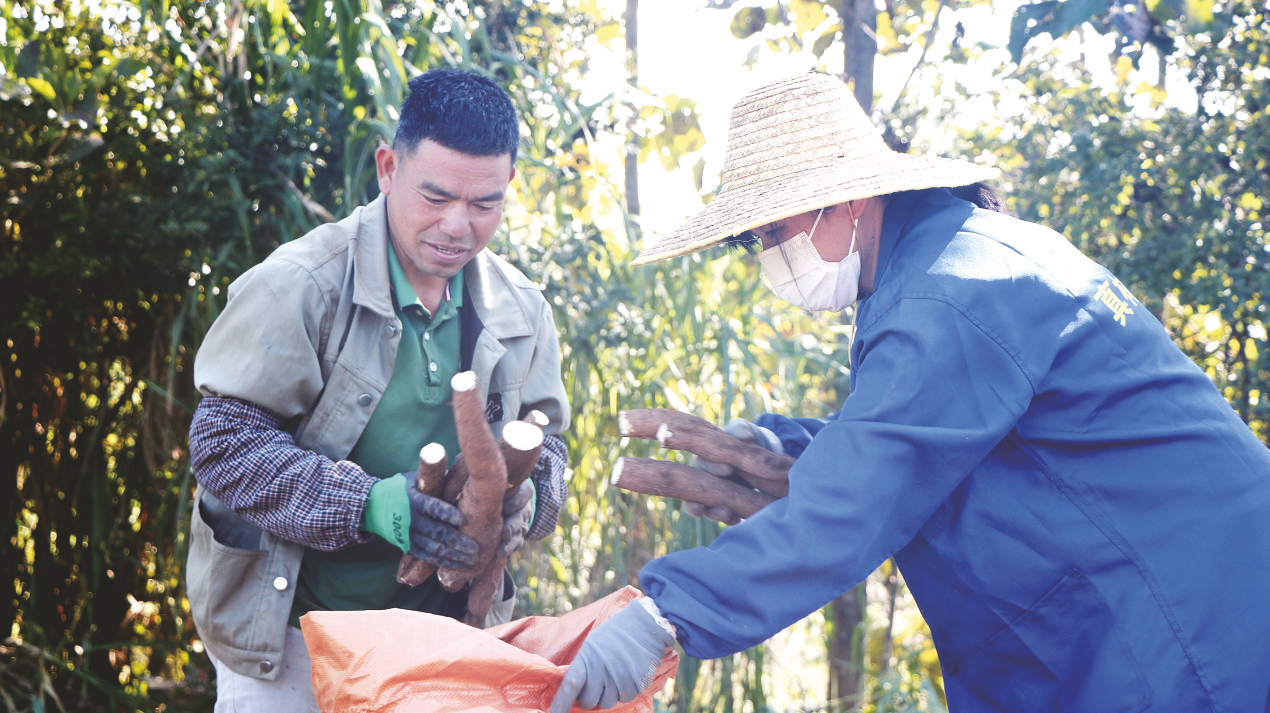
Core Insights - The trial cultivation of yellow heart cassava in Yongning District's Pumiaotown has entered the harvest phase, showcasing a successful model for rural revitalization [1] - The introduction of the "Huanan No. 9" high-quality yellow heart cassava variety has significantly increased the income potential for local farmers, with market prices several times higher than ordinary cassava [1][2] Group 1: Agricultural Development - The local terrain in Lian Tuan Village is suitable for cassava cultivation, with loose, fertile soil and good drainage, which has historically supported cassava farming [1] - The shift from traditional cassava varieties to yellow heart cassava is driven by rising health consciousness and demand for nutritious food, leading to a substantial increase in market prices [1][2] Group 2: Economic Impact - The cultivation of yellow heart cassava has created job opportunities for over 200 person-times within the year, effectively aiding poverty alleviation and increasing household incomes [2] - The current yield of yellow heart cassava is approximately 1,500 kg per acre, generating a value of 4,500 yuan per acre, which is significantly higher than that of ordinary cassava [2]
又是一年好收成
Xin Lang Cai Jing· 2025-12-24 22:53
Core Viewpoint - The province of Heilongjiang is set to achieve a total grain output of 1640.1 billion jin by 2025, marking the 22nd consecutive year of bumper harvests and maintaining its position as the top grain-producing region in China. The increase in grain output is attributed to favorable weather conditions, improved agricultural practices, and the implementation of high-standard farmland projects [3][4]. Group 1: Grain Production Achievements - Heilongjiang's grain output increased by 39.7 billion jin, accounting for 23.6% of the national increase, which is a 4.4 percentage point rise from the previous year [3]. - The province's grain production area has remained stable at over 220 million mu since 2022, laying a solid foundation for consistent grain output growth [4][5]. - The average yield per mu for rice reached over 1100 jin, with farmers experiencing significant income increases [3]. Group 2: Agricultural Infrastructure and Technology - The construction of high-standard farmland has been prioritized, with 150.37 million mu built, enhancing grain production capacity by over 15% compared to ordinary farmland [4][5]. - The province's agricultural technology contribution rate reached 70.8%, surpassing the national average by 7.6 percentage points, indicating a strong integration of technology in farming practices [6]. - The implementation of advanced irrigation techniques, such as drip irrigation, has led to water savings of over 30% and fertilizer savings of 20%, contributing to increased yields [6][7]. Group 3: Agricultural Management Innovations - The province has promoted agricultural socialization services, with 1.7 million mu of farmland under management, leading to cost savings and improved efficiency [8]. - The use of mechanization and drone technology in farming has significantly reduced labor requirements while increasing productivity, with some cooperatives achieving yields of over 2400 jin per mu [8][9]. - A shift towards precise agricultural management practices has been observed, focusing on reducing losses during harvesting and storage, thereby enhancing overall grain quality [9].

葱粮轮作绘“丰”景 沃土生金焕新颜
Xin Lang Cai Jing· 2025-12-24 14:46
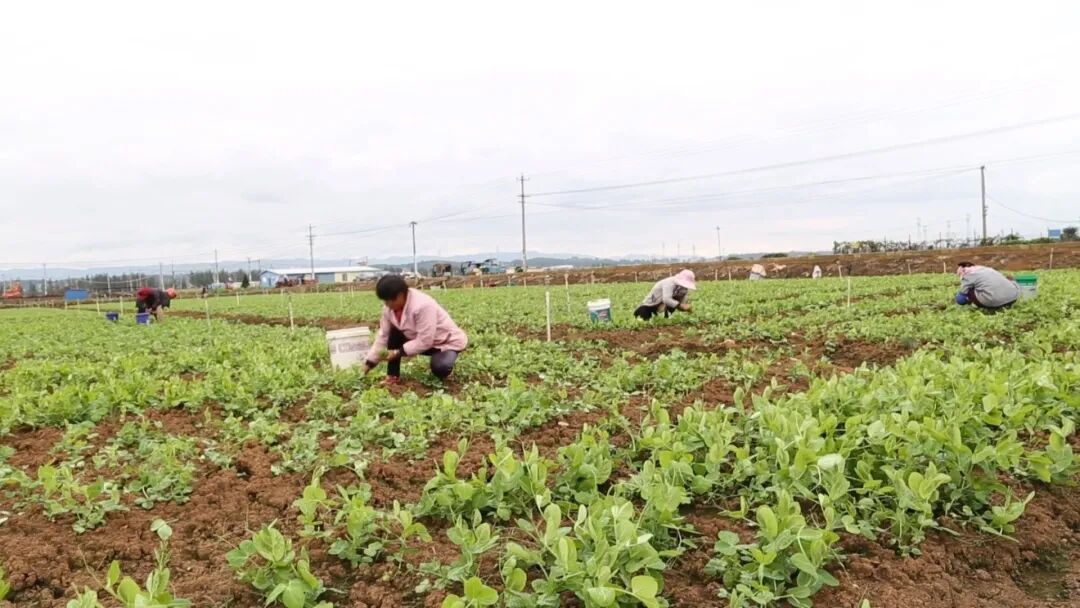
Core Insights - The article highlights the successful implementation of crop rotation practices in Jinma Town, particularly the "onion-grain rotation" and "tobacco + N" planting models, which have led to increased agricultural efficiency and farmer income [1][10]. Group 1: Agricultural Practices - Jinma Town has actively promoted diverse planting projects, enabling farmers to achieve continuous income throughout the seasons, thus enhancing agricultural productivity and farmer earnings [1][10]. - Farmers are transitioning from continuous onion planting to rotating with crops like peas and vegetables, which helps maintain soil health and improve yields [3][6]. Group 2: Economic Impact - A farmer reported that switching from onions to peas on 3 acres yields over 200 kilograms per harvest, with market prices reaching 18-19 yuan per kilogram, demonstrating a profitable shift in crop choice [3][5]. - Another farmer noted that by rotating vegetables like cauliflower on 40 acres, the expected income could reach 7,000 to 8,000 yuan per acre, significantly higher than the previous 3,000 yuan from onions [6]. Group 3: Government Initiatives - The local government has implemented effective land improvement projects, promoting crop rotation to transform previously idle land into productive agricultural areas, contributing to rural revitalization [8][10]. - Jinma Town has completed 5,043.5 acres of crop rotation and 4,718 acres of fallow land this year, exceeding the 2025 rotation targets, indicating strong governmental support for sustainable agricultural practices [8].
抗旱保粮创佳绩 宁夏实现粮食“二十二连丰”
Xin Lang Cai Jing· 2025-12-24 14:45
Group 1 - Ningxia's grain planting area is projected to reach 10.386 million acres by 2025, with a total output of 3.814 million tons, successfully achieving the national task and maintaining a "22 consecutive years of harvest" in grain production [1] - Despite adverse weather conditions such as strong winds and drought, Ningxia has implemented a series of measures including technical empowerment and policy support to ensure food security [1][3] - The region plans to construct 311 high-quality agricultural demonstration areas, integrating drought-resistant varieties and water-saving irrigation technologies [3] Group 2 - The average yield for corn in demonstration areas reached 1,154.2 kg per acre, while spring and winter wheat yields were 682 kg and 659.8 kg per acre respectively, setting new records for large-scale production [3] - Ningxia has built and renovated 874,300 acres of high-standard farmland and developed 369,600 acres of efficient water-saving irrigation, improving the effective utilization coefficient of irrigation water to 0.586, surpassing the national average [3] - In response to severe drought conditions from May to July, Ningxia established a three-tier service system and provided support to 1,128 large-scale planting entities, resulting in a 4.85% increase in yield per unit area compared to the previous year [3][4] Group 3 - Ningxia has strengthened policy and financial support, allocating 1.218 billion yuan for farmland fertility protection and providing additional subsidies for wheat and soybean-corn intercropping ranging from 50 to 150 yuan per acre, with a maximum subsidy of 450 yuan per acre [4] - In response to the drought, Ningxia pre-allocated 20 million yuan for disaster relief and secured an additional 53 million yuan for pest control and disaster reduction, enhancing farmers' confidence and ability to cope with drought [4]
一颗橙子的“数字人生”:褚橙从田间到云端的六年
2 1 Shi Ji Jing Ji Bao Dao· 2025-12-24 14:32
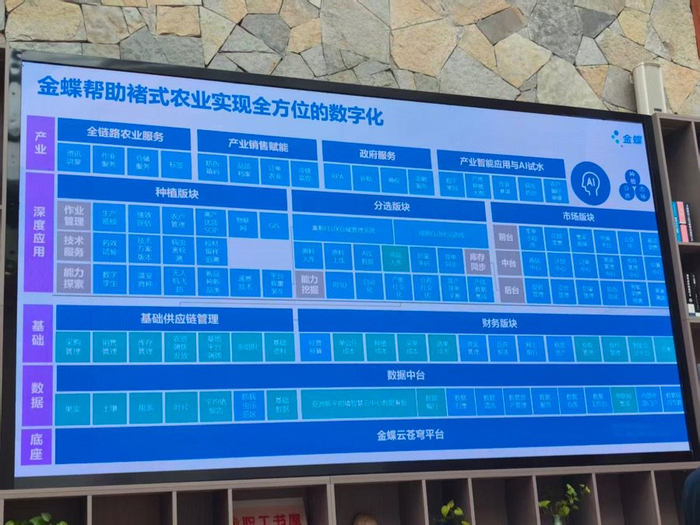
Core Insights - The article discusses the challenges and innovations in the orange cultivation industry, particularly focusing on the "Chucheng" brand and its digital transformation efforts in agriculture [1][8]. Group 1: Agricultural Challenges - The orange harvesting season in Yunnan's Ailao Mountain has been delayed by about half a month due to excessive rainfall affecting sugar accumulation [1] - The agricultural sector is heavily reliant on weather conditions, which is described as "interacting with the sky" by the general manager of Chucheng Agriculture, Chu Yibin [1] Group 2: Brand Development - "Chucheng" has evolved from a symbol of inspiration to a brand with multiple derivatives, including "Yunguan Orange" and "Chucheng Orchard," generating annual sales of 300-400 million yuan [1][2] - The brand's growth is attributed to its digital capabilities and a "long-term worker model" that integrates hundreds of farmers, providing them with technology, management, and brand support [3] Group 3: Digital Transformation - The digital transformation in agriculture is a gradual process, requiring careful planning and execution to avoid setbacks [1][6] - Chucheng Agriculture has established a comprehensive digital management system covering the entire production chain, from planting to sales, utilizing sensors and automated equipment for efficiency [6][7] Group 4: Market Positioning - The sales price of Chucheng and Yunguan oranges exceeds 10 yuan, significantly higher than the typical market price of 3-5 yuan for ordinary ice sugar oranges, due to their advanced digital management [4] - The "long-term worker model" allows for a transparent value distribution system, where income disparities for different quality grades can reach up to four times [3] Group 5: Future Directions - The integration of AI technology in agriculture is being explored, including image recognition for assessing tree health and real-time guidance for farmers [7] - The article emphasizes that the future of agriculture lies in balancing traditional practices with technological advancements, ensuring sustainable growth [8]

河南省方城县:香葱种出致富路 产业升级再提速
Zhong Guo Jing Ji Wang· 2025-12-24 13:20
Core Insights - The establishment of a cooperative for scallion cultivation in Fangcheng County has led to significant economic benefits and job creation for local residents [1][2] - The cooperative plans to expand its operations by building a deep processing plant for scallions, aiming to enhance product value and tap into the food industry market [2] Group 1: Economic Impact - The scallion planting area in Wuxing Village has reached over 600 acres, with a stable yield of approximately 6,000 pounds per acre [1] - The cooperative has signed price protection agreements with buyers, ensuring a market price of 1.1 yuan per pound, resulting in substantial income for farmers [1] - Employment peaks at over 1,000 workers during planting and harvesting seasons, with daily wages averaging 80 yuan, providing local residents with job opportunities [1] Group 2: Industry Development - The cooperative's strategy includes extending the industrial chain by processing fresh scallions into products like scallion flakes and dried scallions, targeting the domestic and international food ingredient markets [2] - The local government encourages the development of unique agricultural products, promoting the "one village, one product" strategy to enhance rural revitalization [2] - Plans are in place to expand scallion cultivation to 1,000 acres next year, further increasing local employment and economic prosperity [2]