健康饮食理念

Search documents
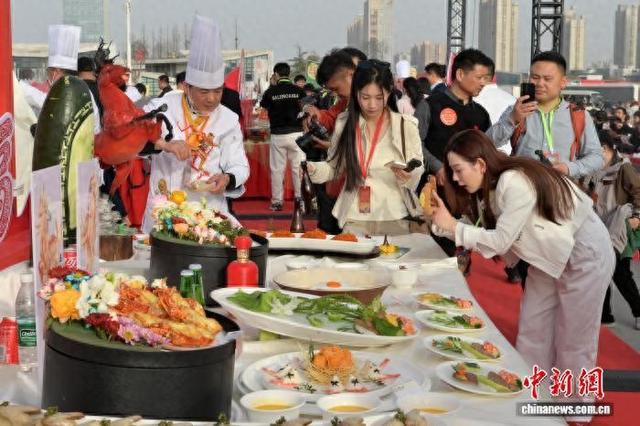
“超级皖”美食争霸赛总决赛收官 豆腐发源地淮南夺冠
Xin Lang Cai Jing· 2026-02-22 19:57
Core Viewpoint - The "Super Wan" culinary competition finals were held in Hefei, Anhui Province, with Huainan winning the championship, showcasing the rich culinary culture of Anhui [1][3][5] Group 1: Event Overview - The finals took place on February 22, featuring Huainan and Fuyang, each presenting a "Qiji Bunteng Feast" consisting of 10 dishes [1][3] - The event attracted large crowds, with chefs actively cooking and demonstrating their skills [3] Group 2: Cultural Significance - The competition highlights the diversity of Anhui cuisine, which combines flavors from different geographical regions, including the rich and simple tastes of the southern mountains and the fresh and delicate flavors of the river plains [3] - The event serves as a platform for deep exploration and contemporary expression of Anhui's culinary heritage [5] Group 3: Economic Impact - The "Super Wan" competition has become a catalyst for local consumption and cultural promotion, achieving over 13.7 billion RMB in direct consumer spending and over 138 billion online exposures by January 31, 2026 [5]

沃土深耕结硕果 特色产业富乡亲
Xin Lang Cai Jing· 2025-12-24 23:57
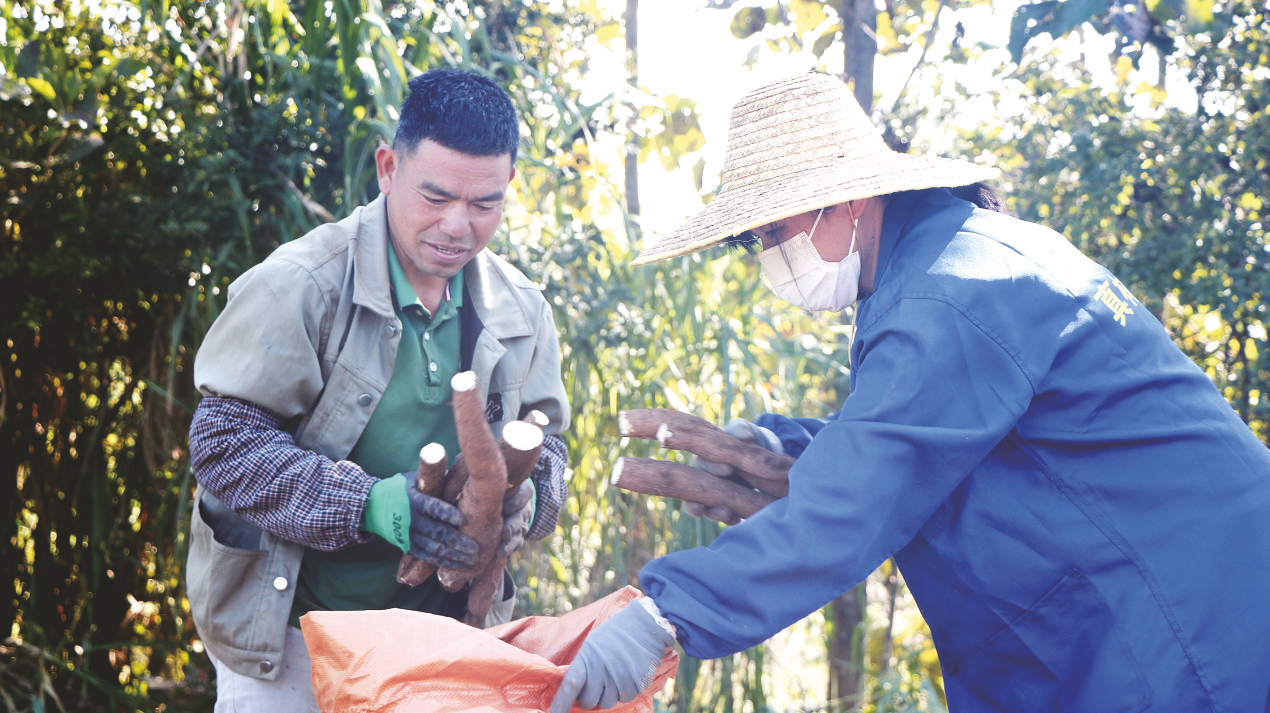
Core Insights - The trial cultivation of yellow heart cassava in Yongning District's Pumiaotown has entered the harvest phase, showcasing a successful model for rural revitalization [1] - The introduction of the "Huanan No. 9" high-quality yellow heart cassava variety has significantly increased the income potential for local farmers, with market prices several times higher than ordinary cassava [1][2] Group 1: Agricultural Development - The local terrain in Lian Tuan Village is suitable for cassava cultivation, with loose, fertile soil and good drainage, which has historically supported cassava farming [1] - The shift from traditional cassava varieties to yellow heart cassava is driven by rising health consciousness and demand for nutritious food, leading to a substantial increase in market prices [1][2] Group 2: Economic Impact - The cultivation of yellow heart cassava has created job opportunities for over 200 person-times within the year, effectively aiding poverty alleviation and increasing household incomes [2] - The current yield of yellow heart cassava is approximately 1,500 kg per acre, generating a value of 4,500 yuan per acre, which is significantly higher than that of ordinary cassava [2]
研判2025!中国意大利面行业发展历程、市场政策、产业链图谱、市场规模、竞争格局及发展趋势分析:即食、速煮型意大利面更受消费者欢迎[图]
Chan Ye Xin Xi Wang· 2025-11-28 01:42
Core Insights - The Italian pasta market in China is experiencing significant growth, with a projected market size of 13.57 billion yuan in 2024, reflecting a year-on-year increase of 7.3% [12] - The consumer base for Italian pasta is expanding beyond first-tier cities to second and third-tier cities, driven by the increasing demand for convenient meal options [12] Industry Overview - Italian pasta, known for its chewy texture and vibrant colors, is made from durum wheat and is categorized into dried and refrigerated instant pasta [2][4] - The industry has evolved through several stages: introduction, local development, rapid growth, brand enhancement, and diversified innovation [4] Market Trends - The demand for ready-to-eat and quick-cook pasta products is rising, particularly among busy professionals and families [12] - The market is seeing innovations such as plant-based and organic pasta, as well as products that incorporate local flavors and ingredients [4][16] Regulatory Environment - Recent regulatory policies aim to ensure food safety and quality in the pasta industry, promoting a shift towards standardized, green, and high-quality production [6] Industry Chain - The upstream of the pasta industry includes durum wheat flour, packaging materials, and production equipment, while the midstream consists of pasta manufacturers [8] - The downstream includes various sales channels such as supermarkets, convenience stores, and online platforms, with offline channels accounting for 58.4% of total sales in 2024 [10] Competitive Landscape - The market features a mix of international brands like Baileys, Moris, and Jasmine, alongside domestic brands such as Kongke and Fengweipai, with competition focused on quality and cost advantages [12][13] - Baileys Food Technology Co., Ltd. is a leading player in the instant pasta segment, achieving significant sales through both online and offline channels [13][14] Future Development - The trend towards health-conscious eating will drive the development of functional pasta products, including whole grain and low-GI options [16] - There is potential for further localization of flavors, incorporating elements from regional Chinese cuisines into pasta products [16]


2025年中国大豆油行业市场政策、产业链图谱、供需现状、进出口贸易、竞争格局及发展趋势研判:国产大豆油持续增产,进口量明显下滑[图]
Chan Ye Xin Xi Wang· 2025-11-10 01:12
Overview - The demand for soybean oil is steadily increasing due to rising living standards and dietary upgrades in China, with consumption expected to reach 17.45 million tons in 2024, while production is projected at 17.29 million tons [1][14] - The average market price of soybean oil in China is anticipated to drop to 7,962.6 yuan per ton in 2024, leading to a decrease in the market size of the soybean oil industry to 138.94 billion yuan [1][14] - The import volume of soybean oil is expected to decline significantly, with imports falling to 282,100 tons in 2024, and the import value decreasing to 267 million USD [14] Industry Development - Soybean oil is one of the most widely produced and consumed vegetable oils globally, known for its quality and low cost, making it a major source of edible oil [2][8] - The industry has evolved from a state-controlled supply system to a more market-oriented approach since the 1980s, with significant policy changes encouraging foreign investment and market liberalization [6][7] - Recent trends show a growing consumer preference for high-quality, health-oriented soybean oil products, such as non-GMO and organic certified oils, prompting companies to innovate and diversify their product offerings [7][9] Market Policies - The Chinese government has implemented various policies to enhance soybean self-sufficiency and ensure raw material supply, while also enforcing strict quality and safety standards for soybean oil production [9][10] Industry Chain - The soybean oil industry encompasses upstream activities like soybean planting and procurement, midstream production, and downstream consumption across households, restaurants, and food processing sectors [11][12] - The domestic soybean planting area reached 10.47 million hectares in 2023, with a production of 20.84 million tons, supporting the growth of the soybean oil industry [13] Competitive Landscape - The market concentration of the soybean oil industry has increased, with major players like Yihai Kerry, COFCO, and Shandong Luhua holding significant market shares [15][16] - Yihai Kerry's "Golden Dragon Fish" brand has a strong market presence, supported by extensive production capabilities and a wide distribution network [15][16] Future Trends - The market for refined soybean oil is expected to expand, with a growing demand for small-packaged products and customized blended oils [17][18] - The industry is likely to shift towards green and low-carbon practices, with increased adoption of renewable energy technologies and a focus on reducing carbon emissions [17][18]


蔬菜引领新“食”尚
Jing Ji Ri Bao· 2025-10-12 22:05
Core Insights - The vegetable market in China is experiencing significant growth, with a notable increase in transaction volume for seasonal vegetables compared to the previous year, reflecting diverse consumer demands [1] - China ranks first globally in vegetable production and exports, holding approximately 14% of the global market share, supported by a strong agricultural foundation and rapid advancements in modern agricultural technology [1] - The development of facility agriculture and improvements in mechanization have led to a stable supply of over 200 million tons of facility vegetables annually during the 14th Five-Year Plan period [1] - The enhancement of the vegetable distribution system, particularly through the development of cold chain logistics, has resolved previous challenges related to preservation and transportation, ensuring fresh vegetables reach consumers more efficiently [1] - Per capita vegetable consumption in China exceeds 500 kilograms annually, more than three times the global average, driven by rising living standards, health-conscious eating habits, and increased awareness of low-carbon lifestyles [1] Consumer Trends - There is a growing preference for certified green, organic, and geographically indicated vegetables, indicating a shift towards high-quality living standards among consumers [2] - Previously niche vegetables such as matsutake, morel mushrooms, and kale are becoming mainstream ingredients, leading a new trend in nutrition and health [2]
中国烘焙工厂系列⑬ · 三吉食品 | 健康烘焙专家,用低糖、高纤、无添加吐司为门店赋能
东京烘焙职业人· 2025-07-25 05:54
Core Viewpoint - The article emphasizes the transformation of the Chinese baking market towards healthier options, driven by consumer demand for nutritional value and ingredient transparency, particularly in first and second-tier cities [4]. Group 1: Industry Trends - The baking industry is witnessing a shift from sweet treats to daily staples, with a growing focus on health-oriented products such as low-sugar, low-fat, and high-fiber options [4]. - Consumers are increasingly concerned about ingredient quality, including raw material ratios and the use of additives, prompting brands to accelerate their transition to healthier products [4]. Group 2: Company Overview - Tengzhou Sanji Food Co., Ltd. specializes in bread processing and was established in 2021, located in Tengzhou, Shandong Province, covering an area of 2,500 square meters [7]. - The company has achieved ISO 22000 food safety management certification and collaborates with over 200 well-known enterprises, showcasing its leading position in the industry [7][43]. - Sanji Food focuses on innovation and quality, employing experienced R&D and inspection teams to ensure product excellence and customer satisfaction [7]. Group 3: Product Offerings - The product range includes various series such as butter series, high-protein low-carb series, additive-free series, low GI series, and whole grain series [9][19][28]. - The butter series features clean ingredients with New Zealand imported butter, enhancing flavor and texture [10]. - The high-protein low-carb series caters to fitness enthusiasts and athletes, using clean formulations with ingredients like wheat and pea protein [15]. - The additive-free series guarantees purity and health, suitable for fitness, weight loss, and for children and the elderly [19]. - The low GI series offers options with low glycemic index, ideal for those managing blood sugar levels [28]. - The whole grain series is rich in dietary fiber, promoting satiety and reducing the intake of high-calorie foods, making it suitable for fitness and weight loss [28].

新茶饮市场迎来消费旺季,头部品牌上新、开店动作不断
Zheng Quan Shi Bao Wang· 2025-06-12 13:22
Group 1 - The new tea beverage market is entering a traditional consumption peak with significant benefits from the recent "subsidy war" among delivery platforms [1][2] - Tea Baidao launched a new lychee series, achieving over 50,000 cups sold within an hour and surpassing 100,000 cups by noon on the launch day, marking it as a summer hit [1] - Tea Baidao has improved its supply chain, with approximately 92% of stores achieving next-day delivery and 95% receiving multiple deliveries weekly [2] Group 2 - Bawang Chaji is expanding its presence in campus markets, with a new store at Tsinghua University achieving over 2,200 cups sold on its opening day, ranking first among its nationwide stores [2][3] - The classic products of Bawang Chaji account for nearly 60% of sales in campus stores, indicating strong demand among students [3] - The tea beverage industry is experiencing a price war, but recent reports suggest a stabilization in the market, benefiting brands through delivery platform subsidies [3]
最近,欧美消费者在疯抢这款“东方神器”......
Nan Fang Du Shi Bao· 2025-04-28 09:16
Core Insights - The article discusses the success of Youchang Technology's nut milk machine, which has gained popularity through TikTok, highlighting the effectiveness of influencer marketing in driving sales [1][4][10]. Company Overview - Youchang Technology, a small appliance company from Guangdong, has successfully entered the European and American markets with its nut milk machine, leveraging TikTok for marketing [1][4]. - The company was founded in late 2021 by a team experienced in home appliances and cross-border e-commerce [4]. Market Trends - The global plant-based milk market is projected to reach $12.2 billion by 2024, with a compound annual growth rate (CAGR) exceeding 11% from 2024 to 2029 [5]. - The demand for nut milk is driven by health-conscious consumers, particularly in regions with high lactose intolerance [5]. Marketing Strategy - Youchang Technology adopted a strategy of "premium planning" and "premium operation" to adapt to changing market dynamics, moving away from a broad product approach to a more targeted one [5][10]. - The company utilized TikTok's platform to showcase the nut milk machine, which was previously unknown to many consumers, leading to increased visibility and sales [8][10]. Product Development - The nut milk machine's design and functionality cater to the convenience sought by overseas consumers, aligning with their lifestyle preferences [9]. - Youchang Technology has also focused on continuous product improvement based on consumer feedback, enhancing the machine's usability [11]. Operational Efficiency - The company benefits from a full-service model on TikTok Shop, which simplifies operations and reduces trial-and-error costs for merchants [11]. - Youchang Technology emphasizes the importance of localizing operations in overseas markets, combining Chinese manufacturing with local marketing strategies [12][13].