
种植业

Search documents
黑龙江绥棱:土地“入托” “钱景”广阔
Xin Hua She· 2025-12-23 13:22
Core Viewpoint - The article highlights the successful implementation of land trusteeship in Heilongjiang Province's Suiling County, which has significantly improved agricultural efficiency and farmer income through the consolidation of small plots into larger, more manageable units [1][2][3]. Group 1: Land Trusteeship Implementation - In 2024, the village of Shuanghe will promote a land trusteeship model covering 3,800 acres, allowing for more efficient farming practices [1]. - The average annual yield per hectare has increased by 2,000 to 3,000 jin, resulting in an additional profit of over 1,600 yuan based on current grain prices [1]. - The total area under trusteeship in the village has reached 15,412 acres, with a per-hectare dividend of 18,000 yuan, an increase of 3,000 yuan from the previous year [2]. Group 2: Economic Benefits and Efficiency - The consolidation of land has led to reduced costs for seeds, fertilizers, and pesticides by approximately 300 to 400 yuan per hectare compared to individual farming [2]. - Unified sales of grain post-harvest have allowed farmers to sell corn at prices 0.05 to 0.1 yuan higher than market rates [2]. - The village's collective income has exceeded 3 million yuan, with per capita annual income surpassing 30,000 yuan, and fixed assets exceeding 58 million yuan [3]. Group 3: Technological Advancements - The introduction of large machinery with automated driving systems has improved operational efficiency, with a precision error of less than 2 centimeters during spring plowing [3]. - The cooperative model has enabled access to technical support from research institutions and universities, enhancing agricultural practices [2][3]. Group 4: Policy Support and Future Plans - The 20th Central Committee's Fourth Plenary Session emphasizes the need for moderate-scale agricultural operations and improved agricultural service systems, aligning with Suiling County's initiatives [3][4]. - By 2025, the area under land trusteeship in Suiling County is projected to reach 1.431 million acres, accounting for over 68% of total arable land, with a goal of increasing grain production by 8.56 million jin [3][4].
种植业板块12月23日跌0.48%,亚盛集团领跌,主力资金净流出7.08亿元
Zheng Xing Xing Ye Ri Bao· 2025-12-23 09:01
证券之星消息,12月23日种植业板块较上一交易日下跌0.48%,亚盛集团领跌。当日上证指数报收于 3919.98,上涨0.07%。深证成指报收于13368.99,上涨0.27%。种植业板块个股涨跌见下表: 从资金流向上来看,当日种植业板块主力资金净流出7.08亿元,游资资金净流入1.89亿元,散户资金净 流入5.19亿元。种植业板块个股资金流向见下表: 以上内容为证券之星据公开信息整理,由AI算法生成(网信算备310104345710301240019号),不构成投资建议。 ...


经济大省挑大梁|“齐鲁粮仓”的“稳”与“进”
Xin Hua Wang· 2025-12-23 07:46
Core Viewpoint - Shandong province is advancing agricultural modernization through industry integration, technological empowerment, and supportive policies, ensuring food security while building a diversified food supply system. Group 1: Food Security and Agricultural Production - Shandong, with 6% of the nation's arable land and 1% of freshwater, produces 8% of the country's grain, 10% of meat, eggs, and milk, 11% of vegetables, and 13% of aquatic products, maintaining a grain output of over 110 billion jin for five consecutive years [1][2] - The province is implementing a "1+4" system focusing on grain yield improvement and exploring potential in facility agriculture, animal husbandry, marine fisheries, and saline-alkali land utilization [2] - High-standard farmland construction has reached 77.59 million acres, enhancing agricultural productivity [2] Group 2: Technological Advancements in Agriculture - Shandong is integrating smart technologies such as autonomous tractors and drones, moving towards intelligent and automated agriculture [3] - The province's main crop seed coverage has increased to over 98%, and the comprehensive mechanization rate for farming has reached 91.7%, surpassing national averages [3] Group 3: Economic Development and Industry Extension - Shandong has 151 national-level leading enterprises and over 11,600 regulated agricultural processing companies, leading the nation in both quantity and processing capacity [4] - The province is developing 13 advantageous specialty industries and has established 10 national advantage specialty industry clusters, 19 national modern agricultural industrial parks, and 122 national agricultural strong towns [4] - Agricultural products from Shandong have reached international markets, with exports projected at 164.82 billion yuan in 2024, accounting for 22.5% of the national total, marking 26 consecutive years of leading the nation in agricultural exports [4]
贵州威宁:“小魔芋”撬动亿元大产业
Zhong Guo Xin Wen Wang· 2025-12-23 06:20
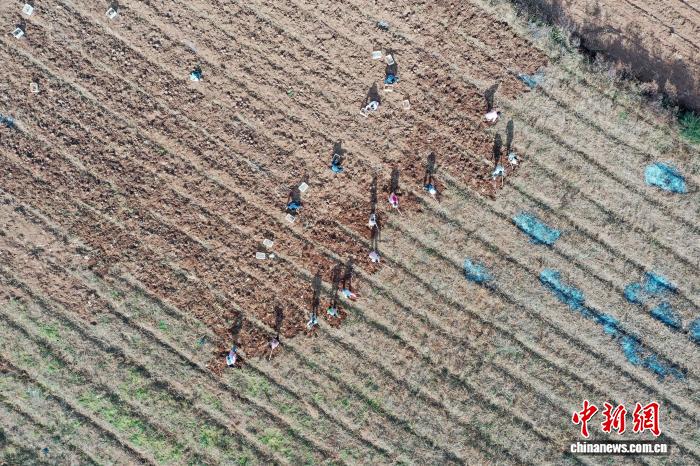
Core Viewpoint - The cultivation of konjac in Mazha Town, Weining County, Guizhou Province, is experiencing a concentrated harvest period, with local farmers actively participating to maximize their yield during favorable weather conditions [2]. Group 1: Economic Impact - By 2025, Mazha Town plans to develop 12,000 acres of konjac cultivation, which is expected to generate a total output value of 150 million RMB, effectively increasing the income of over 3,000 local households [2]. Group 2: Agricultural Activities - On December 22, farmers were seen harvesting konjac in the konjac planting base located in Songmukan Village, Mazha Town [3][5]. - Workers were also observed drying konjac seeds in the same area, indicating ongoing agricultural activities related to konjac production [5][7].
晚播小麦遇寒潮,德州种粮大户和农技人员出招应对
Da Zhong Ri Bao· 2025-12-23 03:13
Group 1 - The article discusses the challenges faced by wheat farmers in Texas due to late sowing and a recent cold wave, emphasizing the importance of field management for winter wheat [1][2] - Farmers are using plastic film to cover wheat seedlings to retain moisture and increase soil temperature by 1-3°C, which is crucial for promoting effective tillering before the Spring Festival [1][2] - The cost of applying plastic film is approximately 100 yuan per mu, with 80 yuan for the film and labor, and an additional 20 yuan for ventilation in March [1][2] Group 2 - The article highlights the benefits of snowfall, which acts as insulation for wheat fields, preventing frost damage and increasing surface moisture when it melts [2][3] - Recommendations include assessing soil moisture and temperature before deciding to irrigate, with caution advised against overwatering in freezing conditions to avoid root damage [3] - Farmers are advised to monitor for frost damage and consider applying urea to weak seedlings to promote recovery, while also keeping an eye on pest and disease threats [3]
未来十天冷空气活动频繁 设施农业及畜牧业需做好防寒保暖工作
Xin Lang Cai Jing· 2025-12-23 02:32
Group 1 - The core viewpoint of the articles highlights the impact of recent weather patterns on agricultural conditions across China, with temperature variations and precipitation levels affecting crop growth and farming practices [1][2][3] Group 2 - During the week of December 14-20, 2025, temperatures in most agricultural regions of China were 1°C to 4°C higher than the same period in previous years, with some areas experiencing increases of 4°C to 6°C [1] - Precipitation levels in regions such as northern Xinjiang, northeastern Liaoning, and eastern Hubei ranged from 5mm to 25mm, significantly exceeding historical averages by 50% to 400% [1] - The forecast for the next 10 days indicates frequent but weak cold air activity, leading to fluctuating temperatures that remain above historical averages, which is beneficial for winter wheat growth and winter survival [1] - From December 22 to 25, a cold air mass is expected to lower temperatures by 4°C to 6°C in most areas, with localized drops of 8°C to 10°C, potentially impacting agricultural production and livestock management [2] - Agricultural experts recommend specific management practices for winter wheat in northern regions, including soil moisture retention and organic fertilizer application to enhance cold resistance [2] - In southern regions, the warmer temperatures are favorable for the growth of winter wheat and oilseed rape, while rainfall is expected to help replenish soil moisture [2]
在黑土地上书写新时代致富经
Qi Huo Ri Bao Wang· 2025-12-23 02:14
Core Viewpoint - The article highlights the journey of Li Fuqiang, a successful farmer and cooperative leader, who transformed his agricultural practices through technology, financial tools, and community support, ultimately aiming to expand his farming operations significantly. Group 1: Personal Journey and Challenges - Li Fuqiang, known as the "King of Soybeans," initially struggled with farming after returning home in 2001, facing significant losses due to inexperience [2][3] - After a series of setbacks, including a major loss of over 4.6 million yuan in 2013 due to adverse weather, he learned the importance of technical knowledge and risk management in agriculture [3][4] - The traditional belief of "five-year cycles" in farming, where farmers expect to earn for three years, lose in one, and break even in another, was challenged as Li's cooperative grew larger and faced increasing risks [5] Group 2: Adoption of Financial Tools - Li Fuqiang adopted the "insurance + futures" model after experiencing significant losses, which provided him with a safety net and allowed him to recover from disasters without depleting his savings [6][8] - In 2019, he received over 16 million yuan in compensation through this model, which helped him pay salaries and loans, demonstrating the effectiveness of financial instruments in agriculture [6][8] - By 2023, he participated in the "Yinqi Bao" project, which allowed him to secure better prices for his soybeans and reduce costs associated with intermediaries [7][8] Group 3: Community Impact and Future Plans - Li Fuqiang's cooperative has created over 500 jobs and increased local farmers' income by more than 16 million yuan, showcasing the cooperative's role in community development [9][10] - He has implemented innovative models to support local farmers, such as "capital entry into the cooperative" and "joint operation," which have helped improve the livelihoods of many in his community [9][10] - Looking ahead, Li plans to expand his farming operations to 500,000 acres, leveraging partnerships with large state-owned enterprises and modern agricultural practices [11]
德州|晚播小麦遇寒潮,德州种粮大户和农技人员出招应对
Da Zhong Ri Bao· 2025-12-23 02:13
今年德州冬小麦普遍播期晚、出苗晚,田间管理尤为关键。几天前的一场寒潮与降雪,给小麦的保 温保墒、促弱转壮带来了一些新问题,德州种粮大户和农技人员及时出招应对。 日前,在武城县武城镇南北官庄村种粮大户刘凯的麦地里,工人分工协作,正有条不紊地为小麦幼 苗铺设地膜,一派繁忙的冬管景象。"铺地膜的作用首先是保墒,能锁住田间水分,能提高地温,地温 能提高到1~3℃。"刘凯介绍。 晚播小麦遇寒潮,德州种粮大户和农技人员出招应对 麦田盖上"保温被" 最近这轮降雪导致表墒增加,是否还需要浇越冬水?"不能急,需依土壤墒情与气温具体情况来作 决定。"寒潮降雪后,乐陵市农业农村局成立技术指导组,深入孔镇、丁坞等乡镇,实地查看了积雪厚 度和土壤墒情,认为不能一概而论。具体如何判断呢?罗凯说,若耕层土壤相对湿度低,且未来几日平 均气温稳定在3~5℃、无冰冻,可适时浇灌以补充水分;若气温降至0℃以下,土壤易结冰,严禁浇 水,以防冻伤根系、造成土壤板结,影响麦苗安全越冬,"即使浇也是浇小水,切忌大水漫灌"。 麦苗受冻情况也应该及时关注。夏津县农业农村局高级农艺师郑日英到香赵庄镇查看苗情后提醒种 粮户,雪后应及时关注麦苗受冻情况,重点关注叶 ...
五指山市水满乡打造全域“五零”绿色生态农业示范区
Hai Nan Ri Bao· 2025-12-23 01:48
Core Viewpoint - Wuzhishan City is implementing a "Five Zero" agricultural production model in Shuiman Township, focusing on ecological sustainability and transforming ecological advantages into economic benefits [7][10][20]. Group A: Conceptual Innovation - The "Five Zero" model emphasizes zero hormones, zero fertilizers, zero plastic film, zero chemical pesticides, and zero herbicides, aiming to enhance agricultural quality while protecting the environment [8][20]. - Farmers have shifted their attitudes towards agricultural transformation, recognizing the support from the government and the potential for higher prices for organic products [8][12]. Group B: Policy Support - A comprehensive policy framework has been established to support the "Five Zero" agricultural model, including management norms, subsidy incentives, and access control [11]. - The "1+6" policy system includes a main plan and six implementation details to ensure effective execution of the agricultural model [11]. Group C: Technological Support - Collaboration with research institutions and universities is crucial for addressing technical challenges in the "Five Zero" model, focusing on maintaining yield and quality without chemical inputs [13][14]. - The introduction of ecological monitoring and data collection will help assess the ecological and economic benefits of the "Five Zero" model [14]. Group D: Implementation Progress - The initiative has made significant strides in land transfer, agricultural resource assurance, and stakeholder cultivation, ensuring a solid foundation for transformation [16]. - The establishment of a "Five Zero" agricultural supermarket will provide farmers with compliant inputs, ensuring quality control from the start [16]. Group E: Future Vision - The goal is to fully implement the "Five Zero" model by January 2026, creating a national ecological agriculture demonstration zone within three years [10][20]. - Continuous improvement in policy, technology, and market channels will be essential for achieving high-quality regional development and providing a replicable model for ecological agriculture nationwide [19].

政策“扶上马” 青春“创未来”
Sou Hu Cai Jing· 2025-12-23 01:42
Core Insights - Nanning City is promoting entrepreneurship among college graduates as a key strategy for achieving high-quality and full employment, providing financial support and comprehensive services to help young entrepreneurs realize their dreams [1][2] Group 1: Entrepreneurship Support - The local government has introduced a startup funding policy for college graduates, offering financial support ranging from 10,000 to 200,000 yuan for quality projects evaluated by experts [2] - Since the implementation of this policy in 2022, Nanning has supported 64 entrepreneurial projects from college graduates, distributing a total of 2.94 million yuan in funding [2] Group 2: Case Study of Zhang Zuyu - Zhang Zuyu, a recent graduate from Guangxi Agricultural Vocational and Technical University, has successfully integrated her studies in artificial intelligence with agricultural development, focusing on pumpkin variety resource development and promotion [1] - She received 150,000 yuan as her initial startup capital, which she plans to use for building greenhouses and developing smart agricultural technologies to enhance pumpkin quality [1] Group 3: Collaborative Innovation - Zhang's farm has become a hub for innovation, attracting 16 different college student teams to work on various agricultural challenges, including soil health management [2] - The farm serves as a practical platform for students to conduct experiments and develop solutions, fostering a collaborative environment for agricultural innovation [2]