Smartphones

Search documents
Apple's Foldable iPhone Could Land In 2026, And Leave Samsung Playing Catch-Up
Benzinga· 2025-07-10 20:38
Core Viewpoint - Apple Inc is set to launch a foldable smartphone, the iPhone Fold, expected in 2026, after ensuring specifications and production readiness [1][4]. Group 1: Production and Market Strategy - Apple has developed a production line capable of producing twice the number of foldable iPhones it anticipates selling [2]. - The company adheres to a "best, not first" philosophy, prioritizing quality over being first to market [2]. - Initial production capabilities are aimed at manufacturing six million to eight million foldable iPhones in the first year [6]. Group 2: Product Features and Partnerships - Key considerations for the foldable iPhone include addressing dust and minimizing the visible crease when the screen is unfolded [3]. - Samsung is a partner for the display technology, and the iPhone Fold's display may surpass the current technology used in Samsung's foldable phones [5]. Group 3: Pricing and Demand - The expected retail price for the iPhone Fold is around $2,000, which may limit initial consumer demand [5]. - Apple is preparing for the possibility of higher demand than initially projected by increasing production capabilities [6]. Group 4: Stock Performance - As of the latest report, Apple stock is trading at $212.81, with a year-to-date decline of 13% in 2025 [6].



手机卖不动了?或许不全是坏事
Xin Lang Cai Jing· 2025-07-10 19:07
Core Insights - The average smartphone replacement cycle is extending globally to approximately 3.5 years, with China seeing an increase to about 3.7 years, indicating a shift in consumer behavior towards longer device usage [1][3] - The rise of the repair and refurbishment market is contributing to this trend, as consumers are increasingly opting for repairs and refurbished devices rather than purchasing new ones [3][5] Repair and Refurbishment Market - In China, 73% of respondents reported having repaired old phones, significantly higher than the global average of 60%, highlighting the effectiveness of local repair services [3] - 90% of respondents consider durability an important factor for their next purchase, and 75% prioritize product sustainability [3] - The sales of refurbished smartphones in China are on the rise, with a projected growth of 6% in 2024, and refurbished devices currently account for 20% of the smartphone market [3] Consumer Preferences - Consumers are increasingly focused on durability, battery life, software update longevity, and resale value when making purchasing decisions [5][9] - The demand for performance upgrades through repairs, such as expanding storage and RAM, is reducing the inclination to buy new devices [5] Manufacturer Responses - Smartphone manufacturers are adapting to changing consumer preferences by emphasizing product durability and repairability [7] - Apple has been showcasing its durability testing processes, including drop tests and vibration tests, to assure consumers of product resilience [7] - Companies like Google and Samsung are committing to extended software support, with Google promising up to 7 years for Pixel devices and Samsung offering 7 years for Galaxy S25 series [9] - Qualcomm is also extending support for Android updates to 8 years for devices using its latest processors, indicating a broader industry shift towards longer product lifespans [9]
华为内部资料曝光,一英寸技术泄密,友商也要用,专利防不住
Xin Lang Cai Jing· 2025-07-10 14:06
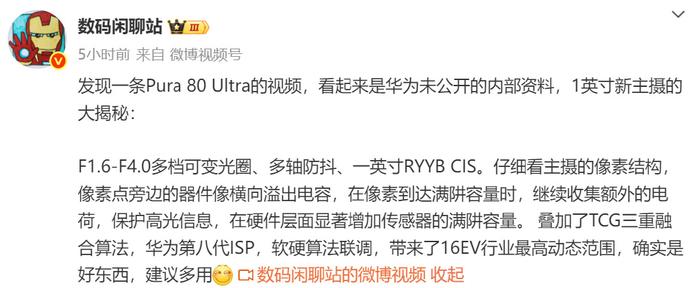
Core Viewpoint - Huawei's Pura80 Ultra imaging system showcases significant technological advancements, yet the company remains understated in its marketing approach, leading to speculation about its competitive edge and patent strategies [1][5][11]. Group 1: Technological Advancements - The Pura80 Ultra features a one-inch main camera, which is claimed to be the strongest in the industry, supporting a variable aperture from F1.6 to F4.0 and multi-axis stabilization, along with Huawei's exclusive RYYB pixel arrangement [5]. - Huawei has achieved an industry-leading dynamic range of 16EV, enhancing performance in low-light conditions, a feat that is currently unique to Huawei [5]. - The device also introduces a "dual-lens" long-focus camera, which allows for adjustable periscope zoom, although there are predictions that this technology may not be continued in future models [13]. Group 2: Competitive Landscape - There is a perception that Huawei is tightening its technology patent sharing, which could hinder innovation among competitors; however, many competitors may not pursue certain technologies due to risk aversion rather than capability [7]. - Competitors often follow Huawei's lead in technology development, waiting for Huawei to validate a direction before investing in similar research and development [9]. - The trend of competitors adopting similar technologies after Huawei has proven their effectiveness is seen as beneficial for the overall domestic smartphone industry, as it allows other companies to achieve breakthroughs without the same level of R&D investment [11].
Better "Magnificent Seven" Stock: Apple or Amazon?
The Motley Fool· 2025-07-08 17:15
Core Viewpoint - Apple and Amazon, both part of the "Magnificent Seven," have shown strong long-term returns, but current growth rates raise questions about their investment appeal [1] Group 1: Revenue Growth - Both Apple and Amazon have experienced relatively slow revenue growth, with each company growing less than 10% in their most recent quarter [3][5] - Apple's growth issues stem from a lack of innovative products and a lengthening smartphone turnover cycle, leading to less frequent consumer upgrades [6][7] - Amazon's e-commerce segments, while significant, are the slowest-growing parts of its business, impacting overall growth rates [8] Group 2: Profitability - Amazon's high-margin segments, such as AWS and advertising, are growing rapidly, with AWS generating 63% of operating profits despite only accounting for 19% of total sales [10] - In Q1, Amazon's operating profits increased by 20% year over year, significantly outperforming Apple's 6% growth in operating profits [11] - Amazon's profit growth is driven by its strong-performing segments, providing a catalyst for earnings growth that Apple currently lacks [12]


刚买半年就过气,你手里的安卓旗舰被偷偷“OTA阉割”了
3 6 Ke· 2025-07-08 12:22
Core Viewpoint - The article discusses the phenomenon of "OTA castration" in the smartphone industry, where manufacturers limit the functionality of older models despite their hardware capabilities, leading to a subpar user experience [2][5][40]. Group 1: OTA Castration Phenomenon - Manufacturers often restrict features on older devices to differentiate product lines and maintain exclusivity for newer models [2][5]. - The "OTA castration" results in older flagship models receiving fewer software updates and features compared to newer mid-range devices, despite having similar hardware [5][23]. - Examples include Vivo's X200 series, which lacks certain features available on the mid-range S30 series, despite being marketed as a flagship [15][17]. Group 2: Specific Manufacturer Cases - Vivo's X200 Pro mini received limited functionality for new filters compared to the X200 Ultra, despite both devices having similar hardware [11][13]. - OPPO's Find X8 series introduced new imaging algorithms that older models like Find X7 Ultra do not support, despite having the necessary hardware [24][29]. - Xiaomi's latest flagship, the Xiaomi 15 Ultra, lacks certain features that are available on the Redmi K80 Ultra, raising concerns about prioritization in software updates [30][35]. Group 3: Industry Implications - The trend of limiting software updates to newer models creates dissatisfaction among users who expect longevity and full functionality from their devices [40]. - The smartphone industry’s focus on rapid product releases and feature differentiation often leads to inadequate support for older models, undermining user trust [40].


三星“暴雷”,预计Q2净利润暴跌56%!
Hua Er Jie Jian Wen· 2025-07-08 06:23
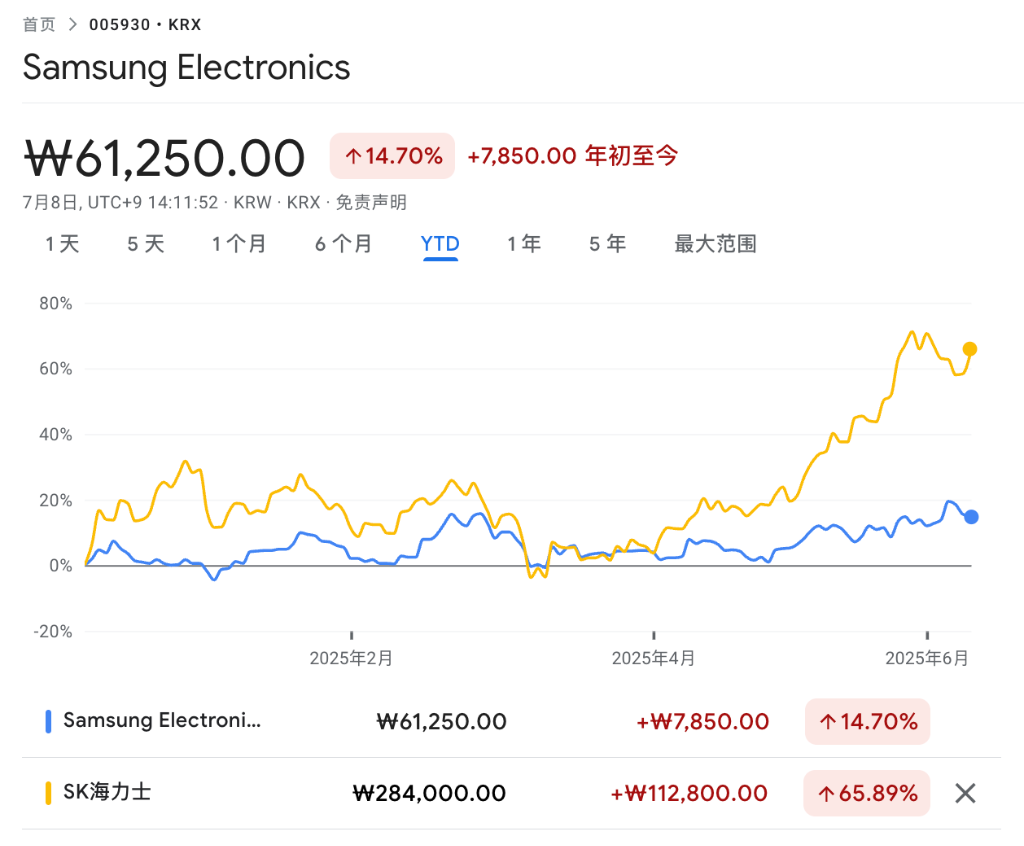
Core Viewpoint - Samsung Electronics is expected to report a significant decline in second-quarter profit, projected to drop by 56% to 4.6 trillion KRW (approximately 3.3 billion USD), marking the lowest level in six quarters [1] Group 1: Financial Performance - The company's second-quarter sales are anticipated to remain flat at 74 trillion KRW, with the operating profit declining sharply compared to the previous year [1] - This profit level is substantially lower than the LSEG SmartEstimate prediction of a 39% decline to 6.3 trillion KRW [1] - Samsung's semiconductor business is identified as the primary factor for the profit drop, impacted by inventory value adjustments and uncertainties in trade conditions [3] Group 2: Competitive Position - Samsung faces increasing competitive disadvantages in the AI chip sector, having failed to secure performance certification for its latest HBM3E chip from key customer Nvidia, resulting in missed opportunities during the AI boom [1][4] - Competitors SK Hynix and Micron Technology are benefiting from strong demand for advanced HBM chips, with SK Hynix expected to report record quarterly earnings [4] - Analysts estimate that Samsung's HBM revenue for the second quarter may remain flat, with limited shipments of new chips to Nvidia anticipated for the year [4] Group 3: Business Outlook - Despite the bleak second-quarter performance, Samsung expresses cautious optimism for the second half of the year, expecting a narrowing of operating losses in its foundry business as demand gradually recovers [6] - Analysts suggest that Samsung's profitability may rebound in the third quarter, contingent on progress in HBM supply to Nvidia and an overall recovery in chip demand [6] - In the smartphone sector, Samsung aims to revitalize market performance with the launch of a thinner foldable smartphone, although its market share in foldable phones has decreased from 54% to 45% [6]
荣耀IPO有了新进展!双引擎驱动或将引爆A股
Sou Hu Cai Jing· 2025-07-07 22:51
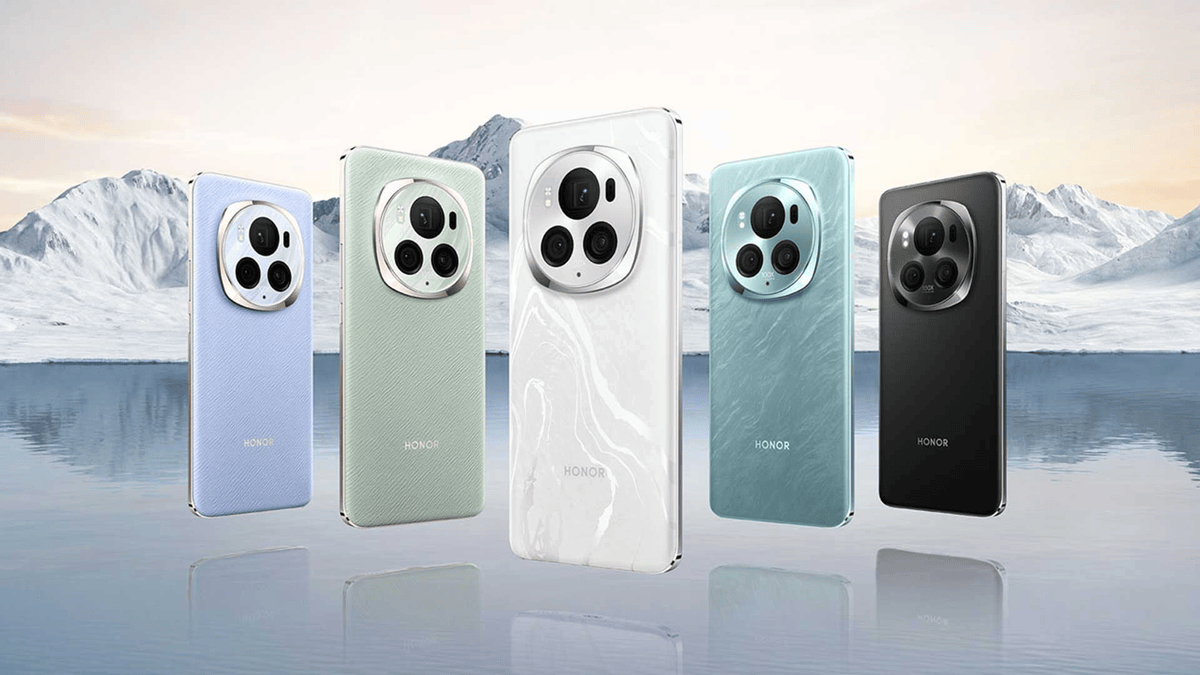
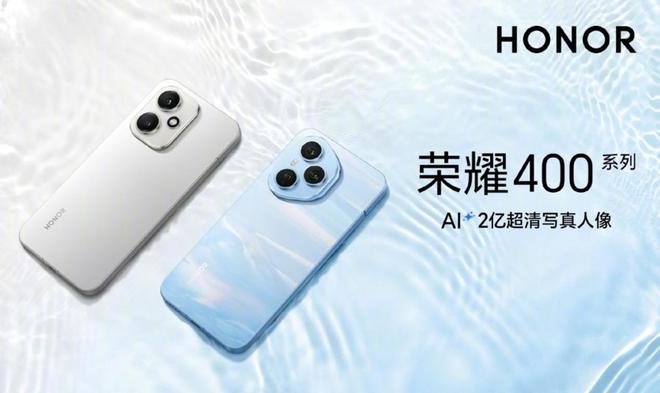
Core Viewpoint - Honor has officially initiated its A-share IPO process, with the potential to become the first AI terminal ecosystem company listed in the A-share market, marking a significant milestone for both the company and the smartphone industry [1][2]. Company Development - Honor was established in 2013 as a sub-brand of Huawei, targeting young consumers with high-cost performance products, quickly gaining market traction [3][4]. - The launch of the Honor 6 series, featuring Huawei's self-developed Kirin 920 chip, led to significant sales, with over 500,000 units sold within the first hour [6]. - By 2019, Honor's global shipment reached 180 million units, placing it among the top five smartphone brands worldwide [8]. Challenges and Strategic Response - Following U.S. sanctions in November 2020, Huawei sold Honor to ensure its survival, forcing the brand to operate independently and rebuild its supply chain and market presence [8]. - Honor's management demonstrated strategic resilience, achieving a 90% recovery rate in its supply chain by the end of 2021 through partnerships with Qualcomm, Samsung, and BOE [8]. Brand and Market Positioning - Honor has undergone a comprehensive brand transformation, moving from a "cost-effective" image to positioning itself as a "global iconic technology brand" [9][10]. - The launch of the Honor Magic4 series marked its entry into the high-end market, with first-day global sales exceeding 1 million units [10]. Ecosystem Development - In 2023, Honor launched its "All-Scenario Smart Life Strategy," expanding its product range to include laptops, tablets, smartwatches, and smart home devices, supported by its self-developed MagicOS [12]. - By the end of 2024, Honor's ecosystem had integrated over 1,000 brands and 5,000 products, with ecosystem device shipments surpassing 50 million units and ecosystem user numbers reaching 120 million [12]. Technological Innovation - Honor has consistently invested in technology R&D, focusing on AI and hardware collaboration, leading to significant advancements in mobile photography and voice interaction [15][17]. - The introduction of the 200-megapixel camera in the Honor 400 series exemplifies its commitment to leveraging AI for enhanced user experience [15]. Market Performance - As of Q3 2023, Honor held a 19.3% market share in the domestic smartphone market, ranking first [19]. - The Honor 400 series achieved a first-day sales increase of 195% compared to the previous series, setting a new record for the brand [19]. - Honor has also made significant strides in international markets, particularly in Europe, Southeast Asia, and the Middle East, with growth rates exceeding 50% in various regions [21]. Conclusion - Honor's IPO represents a critical juncture in its evolution and reflects broader trends in the Chinese smartphone industry, showcasing its robust market performance and innovative capabilities [22].
荣耀的无限战争
Tai Mei Ti A P P· 2025-07-07 11:29
Group 1 - The core viewpoint of the article revolves around Honor's transition under new leadership, focusing on the need for a significant move to shift from mere survival to growth in the competitive smartphone market [1][2][4] - Honor's recent product launches, including the Magic V5 and the 400 series, are seen as crucial steps to stabilize its market position and regain momentum after a challenging period [2][4][5] - The 400 series has shown impressive market feedback, with a 195% year-on-year increase in first sales and over one million activations within a month, indicating a successful re-engagement with the mid-range market [5][7] Group 2 - The article highlights the importance of the foldable screen flagship, Magic V5, as a critical product for Honor to establish its high-end image, despite the current challenges in the foldable market [9][10][11] - Honor's strategy involves leveraging the foldable screen to create a narrative of high-end positioning, while also addressing the need for tangible sales data to support its upcoming IPO [10][14] - The company is currently in the second phase of its IPO process, with expectations to enhance its valuation through a focus on AI, overseas markets, and high-end products [14][15][16] Group 3 - The article emphasizes that while the 400 series addresses immediate sales concerns, the foldable series is aimed at brand positioning, and future products like the Magic 8 series will target high-end market share [13] - Honor's future success hinges on creating a cohesive narrative that integrates AI, international growth, and high-end branding into a self-sustaining ecosystem [15][16] - The company must prove that its AI initiatives are not just ambitious ideas but can translate into real market value and consumer acceptance [16]
从技术闭环到生态开放 荣耀以“三叶草战略”重构AI核心竞争力
Zheng Quan Ri Bao Wang· 2025-07-07 09:08
Core Insights - Honor has launched its new foldable flagship Magic V5, marking a significant step in its AI strategy and its preparation for an A-share IPO, expected to be completed between January and March 2026 [1] - The IPO funds will be allocated to various key areas of AI research and development, with a focus on creating an open ecosystem through the "Clover Strategy" [1][2] - The Clover Strategy aims to address the challenges of AI implementation by connecting three key loops: scenario, performance, and trust [2][3] Group 1 - The Clover Strategy represents a shift in AI focus from models to practical applications, emphasizing the importance of user experience and trust in technology [2][3] - Honor's AI capabilities in the Magic V5 include features like automatic document classification and intelligent route planning, showcasing the practical application of its strategy [2] - The company aims to enhance performance through collaboration across cloud, hardware, and network, while building user trust through co-creation and ethical governance [2] Group 2 - Honor's ambition extends to creating an AI terminal ecosystem, positioning itself as a central player that connects various stakeholders, including AI model companies and internet enterprises [4] - Collaborations with brands like Alibaba, BYD, and Midea highlight Honor's strategy of deep integration rather than mere functional additions [4] - The company has established partnerships with nearly 100 universities and research institutions, facilitating rapid technology transfer to enhance user experience [4] Group 3 - Honor's AI strategy aims to foster an open and collaborative ecosystem, moving away from a closed model to a vibrant "tropical rainforest" of innovation [5] - The strategic shift from hardware competition to ecosystem capability is expected to reshape the industry landscape, with Honor positioning itself as a key driver of this transformation [6] - The ongoing competition in AI terminals is increasingly focused on ecosystem capabilities rather than just hardware specifications [6]
对话荣耀高管:以AI充分释放用户潜能,期待与苹果“竞技”折叠屏
Huan Qiu Wang Zi Xun· 2025-07-05 04:50
Group 1: Industry Overview - The foldable smartphone market is seen as a test for manufacturers' material science capabilities, user experience insights, and future design imagination [1] - Apple's recent acceleration in foldable screen development has heightened competition in the market, with the foldable iPhone expected to begin production by late Q3 or early Q4 2025 [1] - Existing players, such as Honor, welcome Apple's entry, believing it will stimulate consumer interest and enhance the overall market experience [1] Group 2: Technological Advancements - The foldable screen technology is transitioning from the 1.0 era, which focused on basic issues like weight and battery life, to the 2.0 era, emphasizing innovative use cases and productivity [3] - Honor's Magic V5 is positioned as an "AI PC-level productivity tool," featuring an AI assistant that enhances user experience through various applications [3][4] - The Magic V5 boasts a thickness of 8.8mm and weight of 217g, incorporating a high-density battery with an energy density of 901Wh/L, marking a significant advancement in battery technology [5][6] Group 3: Market Positioning and Strategy - Honor emphasizes a dual-driven approach to product development, focusing on consumer needs and continuous technological innovation [6][9] - The company aims to break the "impossible triangle" of lightweight design, battery life, and performance, ensuring that users do not have to compromise on any aspect [6][9] - Honor's strategy includes a commitment to open ecosystems and partnerships with industry leaders to enhance AI integration and user experience [4][9] Group 4: Future Outlook - Honor's CEO expressed confidence in the Magic V5's market performance, anticipating strong sales in Europe and globally, following the success of previous models [8][9] - The company is in the process of preparing for an IPO, which is expected to further bolster its market position [8] - Honor aims to redefine the foldable smartphone segment and enhance user creativity and productivity through innovative technology [9]