
资本市场

Search documents
时报观察 | 改革是资本市场最好的稳定器
Zheng Quan Shi Bao· 2025-07-27 17:08
Group 1 - The core viewpoint emphasizes the importance of reform as a stabilizer for the capital market, with a focus on enhancing market vitality and regulatory effectiveness [1] - The A-share market has shown resilience, with total market capitalization exceeding 100 trillion yuan on multiple trading days and the Shanghai Composite Index rising from 3347 points at the beginning of the year to 3593 points currently [1] - Future efforts will concentrate on promoting reforms to enhance the value and attractiveness of Chinese assets, with a focus on collaborative efforts in both investment and financing [1] Group 2 - Establishing a stable, transparent, and predictable regulatory environment is crucial for the healthy development of the market, which includes strengthening market monitoring and risk response mechanisms [2] - There is a need to combat illegal activities in the capital market, ensuring that violators face significant consequences, while also promoting a comprehensive approach to prevent financial fraud [2] - Despite complex internal and external challenges, the direction for high-quality economic development in China remains clear, with ongoing asset valuation recovery and the potential for a more stable and effective regulatory environment [2]
21现场|中国资本市场学会成立!与会专家:建立国际级交流平台
2 1 Shi Ji Jing Ji Bao Dao· 2025-07-27 13:50
Group 1 - The establishment of the China Capital Market Society marks the creation of an official think tank and advisory group for the Chinese capital market [2][3] - The society aims to enhance academic research and provide recommendations for national capital market decision-making, focusing on the essence of China's capital market [6][8] - The society will serve as a national, non-profit organization that brings together resources from various sectors, including financial institutions, universities, and regulatory bodies [6][7] Group 2 - Direct financing has surpassed 100 trillion RMB, accounting for over 30% of social financing as of 2022, highlighting the increasing importance of capital markets in national economic development [5] - The society will establish a new academic journal titled "Capital Market Research" to address the lack of high-standard publications in the capital market field [8][9] - The chairman of the China Securities Regulatory Commission emphasized the importance of maintaining financial stability and security within the capital market [9]
重磅会议召开!事关资本市场
证券时报· 2025-07-27 02:52
Core Viewpoint - The establishment of the China Capital Market Society is a significant step in implementing the important financial work directives of General Secretary Xi Jinping and the decisions of the Central Committee and the State Council, aimed at addressing development challenges and enhancing regulatory and developmental standards [1][2]. Group 1 - The society aims to conduct extensive research on major national strategies, forefront areas of the capital market, and significant regulatory issues, establishing itself as a key platform for capital market research [2]. - It plans to create a digital research exchange platform, publish academic journals, host high-level academic annual meetings, and build a repository of authoritative experts in the capital market [2]. - The society emphasizes the importance of theoretical research and practical application, encouraging collaboration among members and engagement with small and medium investors to enhance the influence of China's capital market narrative [2]. Group 2 - The society has established seven professional committees focusing on various aspects such as macro and industrial research, market stability, innovation development, and international market openness [1]. - The first council of the society was elected, with the Chairman of the China Securities Regulatory Commission, Wu Qing, serving as the president and Vice Chairman Li Chao as the executive vice president [1][3]. - The society's formation is seen as a crucial measure for promoting high-quality development in the capital market [1].


中国资本市场学会成立大会暨第一届第一次会员代表大会圆满召开
证监会发布· 2025-07-27 02:21
Core Viewpoint - The establishment of the China Capital Market Society is a significant measure to implement the important financial work discourse of General Secretary Xi Jinping and the decisions of the Party Central Committee and the State Council, aimed at promoting high-quality development of the capital market [2][3] Group 1 - The founding conference of the China Capital Market Society was held on July 26, 2025, in Shanghai, attended by over 100 representatives and guests from various sectors [2] - The conference approved important systems such as the "Charter of the China Capital Market Society" and established seven professional committees focusing on macro and industrial research, market stability and risk prevention, innovation development, market microstructure, futures and derivatives, international markets and openness, and legal protection for investors [2][3] - The conference emphasized the need for the society to conduct extensive research on national strategic issues, forefront areas of the capital market, and significant regulatory problems, aiming to become an important platform for capital market research [3] Group 2 - The society aims to build a digital research exchange platform, publish academic journals, hold high-level academic annual meetings, and create a pool of authoritative experts in the capital market [3] - Members are encouraged to focus on theoretical research, strengthen collaboration, and enhance communication among members to improve the influence of China's capital market narrative [3] - The society held a plaque unveiling ceremony and appointed directors and deputy directors for the professional committees [4]
全力巩固市场回稳向好态势 精准防控重点领域风险
Shang Hai Zheng Quan Bao· 2025-07-25 18:29
Group 1 - The article emphasizes the importance of enhancing the investment value of listed companies and implementing major asset restructuring management methods while preventing profit transfer and financial fraud [1] - It highlights the need for stronger regulatory enforcement, focusing on significant violations and improving technological regulatory capabilities to effectively punish illegal activities in the capital market [1] - The article discusses the necessity of precise risk prevention in key areas of the capital market, including addressing real estate company bond defaults and illegal activities in private equity and securities [1] Group 2 - The article outlines the importance of enhancing the authority and influence of research on major capital market issues to better serve national strategies and regulatory needs [2] - It stresses the need for continuous improvement in political construction within the regulatory body, emphasizing political awareness and capability [2] - The article calls for a comprehensive approach to strengthen the leadership and workforce of the regulatory body, ensuring proper guidance in personnel selection and encouraging accountability among staff [2]
深圳:预计年内将有包括“在港上市的大湾区企业回深交所上市”等一系列改革成果落地
news flash· 2025-07-22 06:26
Core Viewpoint - The article discusses the ongoing efforts by Shenzhen authorities to enhance communication with central government departments and to support the capital market in facilitating the comprehensive reform and innovation in the Guangdong-Hong Kong-Macao Greater Bay Area [1] Group 1: Government Initiatives - Shenzhen departments have strengthened communication with central ministries and commissions since the issuance of the reform opinions [1] - A regular communication mechanism has been established with the China Securities Regulatory Commission regarding capital market support for Shenzhen's comprehensive reform [1] Group 2: Market Developments - It is expected that within the year, several enterprises listed in the Guangdong-Hong Kong-Macao Greater Bay Area, including those listed on the Hong Kong Stock Exchange, will return to the Shenzhen Stock Exchange in accordance with policy regulations [1] - The authorities will actively conduct research and widely collect enterprise demands to enhance the cultivation of quality listing resources [1] Group 3: Future Plans - There are plans to deepen cooperation in the capital market and continue to support the development of high-quality listing resources [1]
行业ETF风向标丨互联网龙头持续反弹,中概互联网ETF半日成交达23亿元
Sou Hu Cai Jing· 2025-07-16 05:36
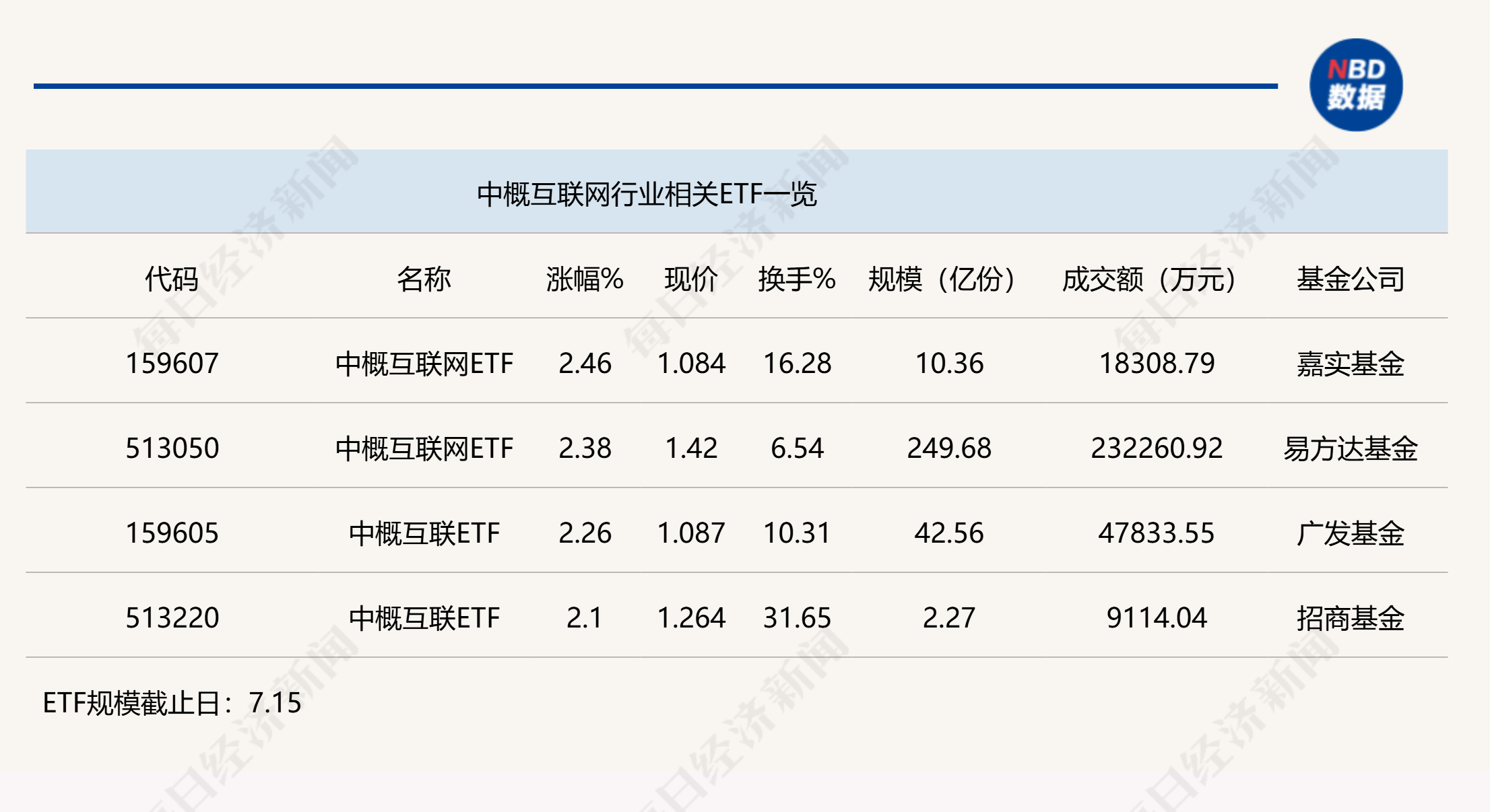
Core Viewpoint - The Chinese internet sector is experiencing a rebound, with significant increases in related ETFs, driven by ongoing digital transformation and the adoption of new technologies such as AI and cloud computing [1][2]. Group 1: ETF Performance - The Chinese internet ETFs showed notable gains, with the Chinese Internet ETF (159607) rising by 2.46% and the Chinese Internet ETF (159605) increasing by 2.26% [2][5]. - The trading volume for the Chinese Internet ETF (513050) reached 2.32 billion yuan, indicating active market participation [1][5]. - The Chinese Internet ETF (159605) has a scale of 4.256 billion units, with a half-day transaction amount of 478 million yuan [2]. Group 2: Industry Drivers - The Chinese internet industry is in a deepening phase of digital transformation, with growth driven by new technologies such as AI, cloud computing, and smart vehicles [2]. - Companies like Tencent and Alibaba are seeing rapid growth in AI-related revenues and applications in various sectors, including e-commerce and manufacturing [2]. Group 3: Index Composition - The CSI Overseas China Internet 30 Index includes 30 Chinese internet companies listed on overseas exchanges, reflecting investment opportunities in well-known Chinese internet firms [3]. - Major weighted stocks in the CSI Overseas China Internet 30 Index include Tencent Holdings (14.99%), Alibaba (14.04%), and Xiaomi (12.58%) [4]. - The CSI Overseas China Internet 50 Index, which tracks 50 Chinese internet companies, has Tencent and Alibaba as its top weighted stocks, with weights of 30.26% and 20.57% respectively [6]. Group 4: Market Outlook - The market for the Chinese internet sector is expanding due to consumer recovery and globalization efforts, which further open up market space [2]. - The CSI Global China Internet Index focuses on leading internet companies, indicating a trend of "the strong getting stronger" in the industry [7].



江小涓最新演讲全文:科技和金融“双向赋能”正当时
Bei Ke Cai Jing· 2025-07-14 01:04
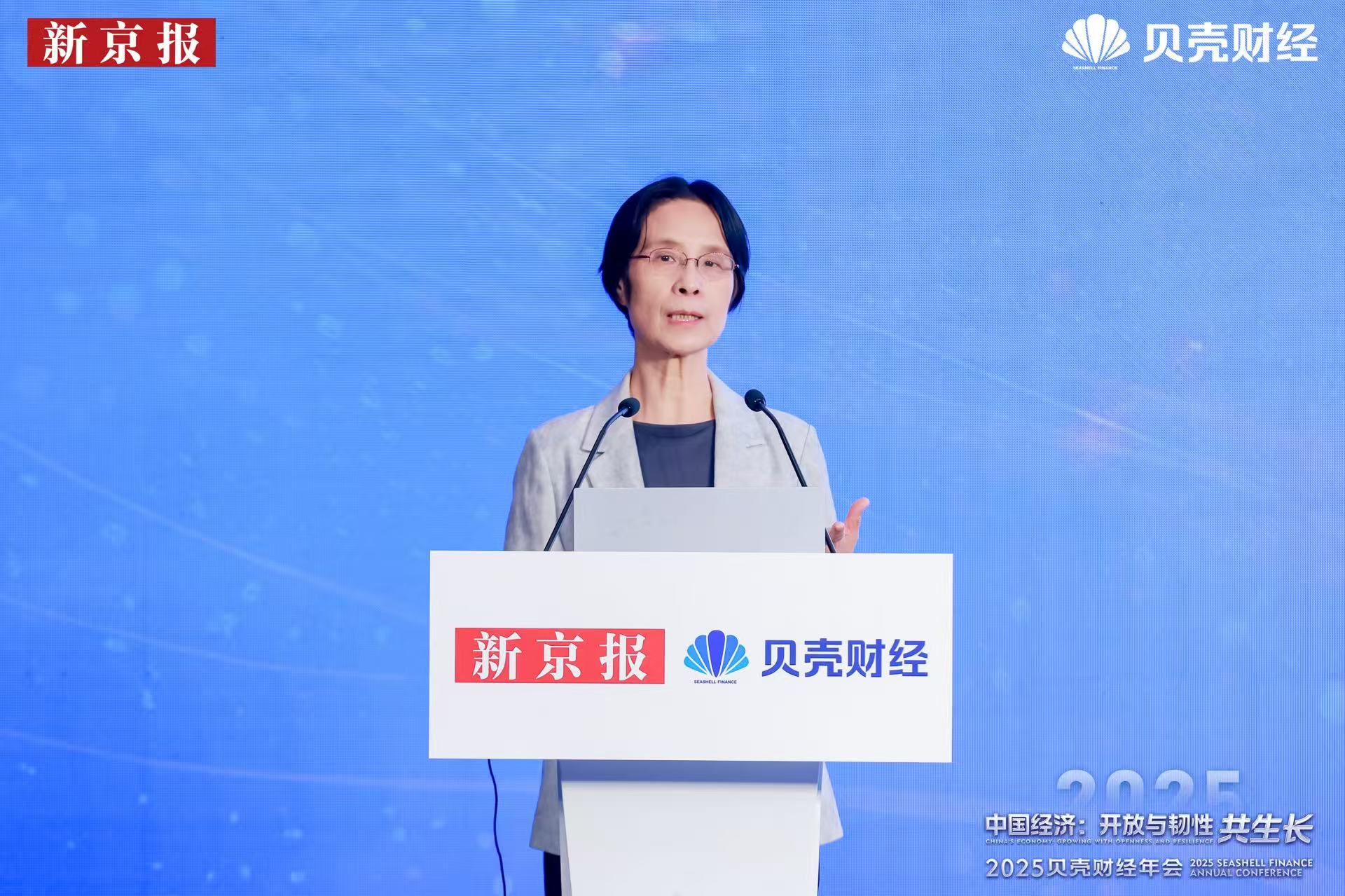
7月11日,主题为"中国经济:开放与韧性共生"的2025贝壳财经年会在北京召开。中国社会科学院大学教授、国务院原副秘书长江小涓出席,并在金融大会 分论坛"推动金融与实体经济融合发展"中发表演讲,对金融和科技的"双向赋能"发表自己的独到见解。 江小涓指出,目前CVC(企业创投)在科技创新领域扮演着至关重要的角色。随着技术的迭代加速,识别、找准高潜力企业愈发困难,但大平台凭借独特 的数据优势,对创新趋势的敏锐把握,以及强大的投资能力和庞大的产业生态,成为科创投资非常重要的生力军。 江小涓还指出,近年来,政府引导基金持续扩容,其总规模已超1.5万亿元人民币,全国累计设立基金数量逾2000只,且国有资金占比超过75%。但如何用 好这些资金至关重要,未来,国资创投可以通过AI赋能提升技术和商业洞察力,助力科创金融可持续发展,同时可以关注和跟随市场化基金,以提高成功 率。 中国社会科学院大学教授、国务院原副秘书长江小涓。 以下附演讲全文: 多年来,我们一直强调科技创新的重要性。我是做产业的,深知产业创新对金融的依赖性很大,产业发展离不开金融的支持,金融环境越好,产业的发展机 会就越多。经过不懈努力,中国的产业创新已经进入 ...
资本市场改革显效 各路资金投下信任票丨2025年中经济观察
证券时报· 2025-07-14 00:26
Group 1 - The core viewpoint of the article emphasizes the steady and rapid reforms in the capital market, highlighting the significant increase in A-share market capitalization, which has surpassed one trillion yuan, and the continuous improvement of mechanisms to stabilize the market [1][2][3] - The article notes that technology innovation has become a key focus for China's high-quality economic development, with policies aimed at enhancing the integration of financial capital and technological innovation [1][2] - The article discusses the substantial growth in the number of technology companies listed on the A-share market, with 27% of companies exceeding a market value of 100 billion yuan being technology firms, indicating a clear trend towards increased "hard technology" mergers and acquisitions [2][3] Group 2 - The investment reforms this year aim to facilitate long-term capital inflows into the market, encouraging institutional investors like pension funds and insurance companies to adopt longer investment horizons [3][4] - The article highlights the increasing participation of foreign capital in the A-share market, with foreign investments stabilizing around 3 trillion yuan, driven by China's stable policy environment and the appeal of its technology sector [4][5] - The ongoing reforms are expected to create a more robust and resilient capital market, which will further support the real economy and enhance the overall market ecosystem [5]

杨涛:做好科技金融要在体制机制创新方面有所创新和突破
Xin Jing Bao· 2025-07-12 07:19
Core Viewpoint - The current focus on technology finance should not only involve increasing the scale of products or services but also require genuine innovation and breakthroughs in institutional mechanisms [1] Group 1: Institutional Mechanism Innovation - There is a need for institutional innovation to address multiple pain points in financial support for technology innovation, particularly in the venture capital sector [2] - Banks are crucial support entities and should explore the establishment of specialized institutions to better meet the needs of technology finance [2][3] - Despite banks enhancing support for technology enterprises, there are still significant shortcomings in institutional innovation [2] Group 2: Lifecycle and Risk Management - The lifecycle of technology enterprises is characterized by significant uncertainty, making it challenging for banks to maintain comprehensive cooperation throughout all stages [3] - Financial institutions must develop organizational, talent, product, risk control, patience, and ecological capabilities to effectively serve technology enterprises [3] - The future role of capital markets in supporting technology enterprise financing is a critical area that requires re-evaluation and positioning [3] Group 3: Demand-Side Reform - There is a need to actively promote demand-side reforms in technology finance to strengthen its endogenous development momentum [4] - Technology enterprises often have strong innovative capabilities but may lack management and financial resource utilization skills, particularly among small and medium-sized enterprises [4] - Financial institutions should establish efficient risk management mechanisms to enhance the effective financial demand of technology enterprises [4][5] Group 4: Open and Collaborative Ecosystem - Constructing an open and collaborative ecosystem for technology finance is essential for optimizing the allocation of domestic and international resources [6] - The sharing of experiences and resources among various experimental zones can facilitate the development of technology finance [6] - There is a need for improved policy coherence and consistency at both macro and specific levels to support technology finance [6] Group 5: Future Development Trends - Four key areas are expected to experience rapid development: financing for small and medium technology enterprises, mergers and acquisitions financing for larger technology firms, technology innovation bonds, and AIC equity investments [7] - Financial regulatory bodies should accept a certain level of financial risk while being cautious about the bottom line of risk tolerance [8] - There is a need to enhance the understanding and assessment of the success probability of technology innovation, recognizing that significant technological innovations may be low-probability events [8]