
医疗设备

Search documents
尚荣医疗(002551)披露公开发行可转换公司债券募集资金专户销户完成公告,11月27日股价上涨0.26%
Sou Hu Cai Jing· 2025-11-27 14:49
Group 1 - The stock of Shangrong Medical (002551) closed at 3.86 yuan on November 27, 2025, with a market capitalization of 3.264 billion yuan, reflecting a 0.26% increase from the previous trading day [1] - The company announced the completion of the public issuance of convertible bonds on February 20, 2019, raising a total of 750 million yuan, with a net amount of 733 million yuan allocated for a "high-end medical consumables industrialization project" [1] - The board and shareholders approved the termination of the project on August 23 and September 12, 2025, with approximately 359 million yuan of the remaining funds being permanently allocated to supplement working capital [1] Group 2 - All funds from the five special accounts for the raised capital have been fully utilized, and the related accounts have been closed, with the tripartite supervision agreement also terminated [1]

平安基金周思聪:创新药行情将步入分化期 未来超额收益将更多来源于个股选择
Zhong Zheng Wang· 2025-11-27 13:44
Core Viewpoint - The phase of broad increases in the innovative drug sector may be over, and the next two years will be a critical period for differentiation among innovative drug companies, making selective stock picking and focusing on true leaders a more suitable investment strategy [1] Group 1: Investment Strategy - The company will continue to focus on domestic commercialization and international expansion, prioritizing companies that excel in both areas rather than solely betting on business development (BD) transactions [1] - Valuations driven solely by BD are considered fragile, necessitating a careful assessment of associated risks [1] - The market tends to factor in potential total value (including milestone payments) into stock prices at the announcement of BD transactions, but the realization of milestone payments is uncertain and depends on clinical and regulatory success [1] Group 2: Sector Outlook - The company is optimistic about specific segments within innovative drugs, including Antibody-Drug Conjugates (ADC), multi-antibodies, cell and gene therapy, and autoimmune products [2] - Beyond innovative drugs, the company also sees potential in medical devices, Contract Research Organizations (CRO), and medical services [2] - The medical device sector is expected to experience significant growth in orders and inventory digestion due to increased procurement data amid a replacement trend [2] - The CRO sector is likely to benefit from the global shift towards research outsourcing, maintaining steady growth [2] - Economic recovery is anticipated to boost demand for medical services, particularly in high-end and specialized medical services [2]
11月27日重要资讯一览
Zheng Quan Shi Bao Wang· 2025-11-27 13:40
Group 1 - In the first ten months of 2023, the total profit of industrial enterprises above designated size reached 59,502.9 billion yuan, a year-on-year increase of 1.9%. However, in October alone, profits decreased by 5.5% compared to the same month last year due to high base effects and rising financial costs [2] - The National Development and Reform Commission (NDRC) has expanded the scope of infrastructure Real Estate Investment Trusts (REITs) to include 12 major industries and 52 asset types, with 18 asset types from 10 industries having completed their first issuance [2] - The NDRC is addressing issues of disorderly price competition in various industries, emphasizing the need for compliance with price competition regulations to maintain market order and support high-quality development [3] - The Ministry of Commerce plans to promote reforms in the automotive consumption sector, including expanding the second-hand car market and enhancing automotive aftermarket services [4] Group 2 - The State Administration for Market Regulation is enhancing antitrust enforcement and fair competition reviews, aiming to create a market-oriented and law-based business environment [4] - Shaanxi Province has introduced 16 measures to deepen capital market reforms, focusing on the role of state-controlled listed companies in resource integration and industry chain improvement [6] - Chongqing's government has implemented policies to support the development of the low-altitude economy, including financial support for recognized enterprises in this sector [5] - The National Press and Publication Administration approved 178 domestic online games and 6 imported online games in November 2023 [5] Group 3 - More Thread initiated a mechanism that resulted in a final online issuance success rate of 0.03635054%, with online investors subscribing for 16.77 million shares totaling 1.917 billion yuan [7] - FAW Jiefang plans to increase its capital by 191 million yuan, with investments from Ningde Times and Telepower [7] - Mindray Medical's chairman intends to increase his stake in the company by 200 million yuan [7] - Dongxin Co. signed a strategic cooperation framework agreement with a cloud service provider [7] - Jinfu Technology is planning to acquire equity in Lanyuan Technology, which involves risks related to industry consolidation [7] - Tianpu Co. will suspend trading for stock verification starting tomorrow [7] - Changan Technology is planning to issue shares to specific investors, which may lead to a change in control, resulting in a trading suspension [7] - *ST Songfa's subsidiary signed shipbuilding contracts worth approximately 1.1 to 1.6 billion US dollars [7]





海泰新光涨0.33%,成交额3264.24万元,后市是否有机会?
Xin Lang Cai Jing· 2025-11-27 07:39
Core Viewpoint - The company, Haitai New Light, is experiencing growth in revenue and profit, benefiting from the depreciation of the RMB and its status as a "specialized, refined, distinctive, and innovative" enterprise in the medical device sector [2][3][7]. Group 1: Company Performance - Haitai New Light's stock price increased by 0.33% on November 27, with a trading volume of 32.64 million yuan and a market capitalization of 5.446 billion yuan [1]. - For the period from January to September 2025, the company achieved a revenue of 448 million yuan, representing a year-on-year growth of 40.47%, and a net profit attributable to shareholders of 136 million yuan, also showing a growth of 40.03% [7]. - The company's revenue from medical endoscope devices accounts for 64.86% of total revenue, while optical products contribute 21.63% [7]. Group 2: Market Position and Recognition - Haitai New Light is recognized as a "specialized, refined, distinctive, and innovative" small giant enterprise, which is a prestigious title in China for companies excelling in niche markets and possessing strong innovation capabilities [3]. - The company has a vertical integration capability in the medical device industry, covering core components, key equipment, and system integration [2]. Group 3: Financial Metrics and Shareholder Information - As of September 30, the company had 5,188 shareholders, a decrease of 1.84% from the previous period, with an average of 23,106 circulating shares per shareholder, an increase of 1.87% [7]. - The company has distributed a total of 277 million yuan in dividends since its A-share listing, with 207 million yuan distributed over the past three years [8]. - Major shareholders include various funds, with the top ten shareholders holding significant stakes, indicating a stable institutional presence [8][9].

2025「F40中国青年投资人」揭晓
投资界· 2025-11-27 07:17
Core Insights - The "F40 China Young Investors" initiative aims to identify outstanding investors under 40 years old, highlighting the generational shift in the investment landscape and the emergence of new players in niche sectors [2][4]. Group 1: Industry Trends - The investment industry is undergoing a significant generational transition, with younger investors becoming the backbone of leading institutions [3]. - Corporate Venture Capital (CVC) is increasingly recognized as a vital force within the venture capital ecosystem [3]. - Technology investments have become the dominant narrative, with educational and industry backgrounds gaining unprecedented importance [4]. Group 2: Investment Focus Areas - The AI wave is creating opportunities for a new generation of investors, while the healthcare sector is witnessing a resurgence for those who remain committed [4]. - Consumer sectors are regaining prominence, leading to unexpected high returns for certain investors [4]. Group 3: Notable Young Investors - The article lists several notable young investors and their typical investment cases, showcasing their contributions to various sectors [5][6][8][9][11][13][15][19][21][23][25][27][29][31][33][35][37][39][41][43][45][47][49][51][53][55][57][59][61][63][64][65][67][69][71][73][75].

理邦仪器涨2.04%,成交额7579.30万元,主力资金净流入592.80万元
Xin Lang Cai Jing· 2025-11-27 05:26
Core Viewpoint - The stock of Lifesense Instruments has shown a positive trend, with a year-to-date increase of 27.68% and a market capitalization of 8.121 billion yuan as of November 27 [1]. Financial Performance - For the period from January to September 2025, Lifesense Instruments reported a revenue of 1.446 billion yuan, representing a year-on-year growth of 4.63%. The net profit attributable to shareholders was 257 million yuan, marking a significant increase of 49.29% compared to the previous year [2]. Shareholder Information - As of November 10, 2025, the number of shareholders for Lifesense Instruments was 23,500, a decrease of 3.61% from the previous period. The average number of tradable shares per person increased by 3.74% to 14,407 shares [2]. - The company has distributed a total of 1.128 billion yuan in dividends since its A-share listing, with 360 million yuan distributed over the past three years [3]. Stock Market Activity - On November 27, 2025, Lifesense Instruments experienced a stock price increase of 2.04%, reaching 14.01 yuan per share, with a trading volume of 75.793 million yuan and a turnover rate of 1.63% [1]. - The net inflow of main funds was 5.928 million yuan, with significant buying activity from large orders [1]. Business Overview - Lifesense Instruments, established on August 2, 1995, and listed on April 21, 2011, specializes in the research, production, sales, and service of medical electronic devices and in vitro diagnostic products. The main revenue sources include patient monitoring (29.38%), in vitro diagnostics (20.94%), ultrasound imaging (16.26%), maternal and child health (15.36%), and electrocardiogram diagnostics (15.25%) [1].

港通医疗11月26日获融资买入311.63万元,融资余额3248.55万元
Xin Lang Cai Jing· 2025-11-27 04:54
Group 1 - The core viewpoint of the news highlights the recent performance of Kangtong Medical, including a decline in stock price and trading volume, as well as financing activities indicating a net outflow [1][2] - As of November 26, Kangtong Medical's stock price fell by 1.47%, with a trading volume of 23.76 million yuan, and a net financing outflow of 1.52 million yuan [1] - The financing balance of Kangtong Medical is 32.49 million yuan, which accounts for 2.17% of its market capitalization, indicating a low financing level compared to the past year [1] Group 2 - Kangtong Medical, established on January 13, 1998, specializes in providing medical gas systems and clean operating room solutions, with main revenue sources being clean equipment and systems (55.69%) and medical gas equipment (37.30%) [2] - For the period from January to September 2025, Kangtong Medical reported a revenue of 344 million yuan, a year-on-year decrease of 30.06%, and a net profit of -10.21 million yuan, a decline of 150.92% [2] - As of November 20, 2025, the number of shareholders in Kangtong Medical was 7,895, a decrease of 2.64%, with an average of 7,984 circulating shares per person, an increase of 2.71% [2] Group 3 - Since its A-share listing, Kangtong Medical has distributed a total of 48.99 million yuan in dividends [3] - As of September 30, 2025, among the top ten circulating shareholders, Nuoan Multi-Strategy Mixed A (320016) is the eighth largest shareholder, holding 725,100 shares as a new investor [3]
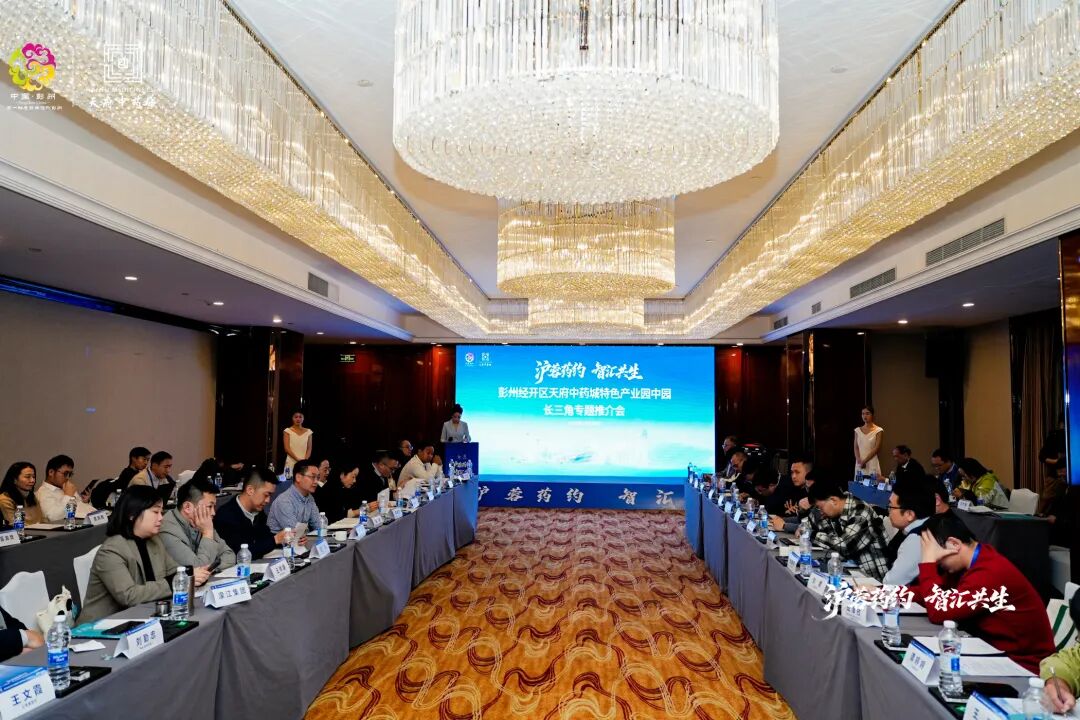
以药为媒,以产聚势 | 彭州经开区天府中药城特色产业园中园长三角专题推介会在沪成功举行
Xin Lang Cai Jing· 2025-11-27 04:51
Core Insights - The "Tianfu Medicine Market" made its debut in the Yangtze River Delta, showcasing significant market opportunities and a comprehensive investment matrix [1][3][17] - The event highlighted the collaboration between the Chengdu Tianfu Traditional Chinese Medicine City and various elite enterprises in the biomedicine and high-end manufacturing sectors [3][10] Industry Overview - The Tianfu Medicine Market is positioned as a unique intellectual property (IP) that emphasizes the innovation and cultural heritage of traditional Chinese medicine [3][4] - Chengdu's Tianfu Traditional Chinese Medicine City has attracted over 300 health enterprises and holds nearly 40% of the market share in Sichuan, with 10 products generating over 100 million yuan in sales [4][6] Development Strategy - The "Garden-in-Garden" development strategy has been implemented, creating a three-tier system that includes specialized parks for various sectors such as pharmaceutical innovation and digital healthcare [6][10] - The Tianfu Traditional Chinese Medicine Innovation Port has established 38 high-quality research and development platforms, facilitating the development and transformation of 103 research projects [8] Investment Landscape - The event attracted nearly 40 high-quality enterprises from the Yangtze River Delta, focusing on biomedicine and intelligent manufacturing, showcasing their technological strengths and collaboration needs [10][12] - A matrix of billion-level funds was established, involving several well-known investment institutions, indicating a new collaborative pattern between capital forces in the Chengdu-Chongqing area and the Yangtze River Delta [17][18] Future Outlook - The successful hosting of the event is seen as a significant step for Chengdu to integrate into the national industrial cycle, with plans to deepen regional cooperation and optimize the business environment [18]
迈瑞医疗涨2.02%,成交额8.37亿元,主力资金净流入646.59万元
Xin Lang Zheng Quan· 2025-11-27 03:21
Company Overview - Mindray Medical is a leading company in the medical device industry, focusing on the research, manufacturing, marketing, and service of medical instruments [1][2] - The company was established on January 25, 1999, and went public on October 16, 2018 [1] Financial Performance - For the period from January to September 2025, Mindray Medical reported a revenue of 25.834 billion yuan, a year-on-year decrease of 12.38% [2] - The net profit attributable to the parent company for the same period was 7.570 billion yuan, down 28.83% year-on-year [2] - Since its A-share listing, the company has distributed a total of 35.336 billion yuan in dividends, with 25.025 billion yuan distributed over the past three years [3] Stock Performance - As of November 27, Mindray Medical's stock price increased by 2.02% to 197.31 yuan per share, with a total market capitalization of 239.227 billion yuan [1] - The stock has experienced a decline of 21.19% year-to-date, with a 0.77% drop over the last five trading days and an 8.37% decrease over the last 20 days [1] Shareholder Information - As of September 30, 2025, the number of shareholders increased by 18.86% to 108,800, while the average number of circulating shares per person decreased by 15.87% to 11,139 shares [2] - The top ten circulating shareholders include significant institutional investors, with notable reductions in holdings among several ETFs [3]
万东医疗涨2.04%,成交额6971.67万元,主力资金净流出84.00万元
Xin Lang Cai Jing· 2025-11-27 03:16
Core Viewpoint - WanDong Medical's stock price has shown a mixed performance in recent trading sessions, with a year-to-date increase of 10.02% and a recent decline over the past 60 days [1][2]. Group 1: Stock Performance - As of November 27, WanDong Medical's stock price increased by 2.04%, reaching 16.47 CNY per share, with a total market capitalization of 11.579 billion CNY [1]. - The stock has experienced a trading volume of 69.7167 million CNY, with a turnover rate of 0.61% [1]. - Year-to-date, the stock has risen by 10.02%, with a slight increase of 0.43% over the last five trading days, a 5.17% increase over the last 20 days, and a decline of 7.05% over the last 60 days [1]. Group 2: Financial Performance - For the period from January to September 2025, WanDong Medical reported a revenue of 1.189 billion CNY, reflecting a year-on-year growth of 8.73% [2]. - The company recorded a net profit attributable to shareholders of -27.2098 million CNY, representing a year-on-year decrease of 123.51% [2]. Group 3: Shareholder Information - As of September 30, 2025, the number of shareholders for WanDong Medical increased to 27,200, up by 1.23% from the previous period [2]. - The average number of circulating shares per shareholder decreased by 1.22% to 25,882 shares [2]. - The company has distributed a total of 769 million CNY in dividends since its A-share listing, with 267 million CNY distributed over the past three years [3]. Group 4: Institutional Holdings - As of September 30, 2025, the third-largest circulating shareholder is HuaBao ZhongZheng Medical ETF, holding 11.9198 million shares, a decrease of 2.0986 million shares from the previous period [3]. - The fifth-largest shareholder is Hong Kong Central Clearing Limited, which increased its holdings by 2.5364 million shares to 7.0349 million shares [3]. - The tenth-largest shareholder is NanFang ZhongZheng 1000 ETF, holding 3.8619 million shares, a decrease of 31,900 shares from the previous period [3].
