电池制造

Search documents
一颗电池的全球之旅
21世纪经济报道· 2025-12-28 23:14
Core Viewpoint - The article highlights the success and growth of Tiger Head Battery Company, emphasizing its strong presence in both domestic and international markets, particularly in Africa and emerging markets, while adapting to changing consumer demands and technological advancements [3][4][5]. Group 1: Company Overview - Tiger Head Battery Company, established in 1928, is a leading battery manufacturer in China, with products sold in over 100 countries and regions, achieving a market share of over 80% in many areas [4][9]. - The company has a long history of participation in the Canton Fair, showcasing its commitment to international trade and customer relationships [7][9]. Group 2: Market Performance - In the first 11 months of the year, Guangdong's foreign trade reached 8.61 trillion yuan, a 4.2% increase year-on-year, with Tiger Head contributing significantly to this growth [5]. - The company has been actively expanding its product offerings, with an 8% new product rate at the recent Canton Fair, and is currently focused on securing orders for the upcoming year [4][5]. Group 3: Technological Advancements - Tiger Head has undergone significant technological upgrades, transitioning from manual processes to automated systems, enhancing product quality and reliability, particularly for international markets [8][12]. - The company has developed a comprehensive supply chain system that integrates research, production, quality control, and delivery, allowing for efficient responses to market demands [12]. Group 4: International Expansion - The company has successfully penetrated the African market, with annual sales exceeding 6 billion dry batteries, and has established a strong brand presence, with local consumers often requesting "Tiger" batteries directly [9][11]. - Tiger Head is focusing on expanding into emerging markets and countries involved in the Belt and Road Initiative, with increased interest from international buyers at trade shows [15]. Group 5: Future Outlook - The battery industry is shifting towards high-energy density and long-life products, with solid-state battery market size projected to reach $15.07 billion by 2030, indicating a significant growth opportunity for Tiger Head [14]. - The company is adapting its strategy to meet the evolving demands of international markets, emphasizing long-term partnerships and comprehensive support systems to attract foreign clients [15].


宁德时代:吴映明获委任为执行董事
Zhi Tong Cai Jing· 2025-12-28 13:49
宁德时代(300750)(03750)发布公告,于临时股东会上,吴映明先生获委任为执行董事;及吴映明先生 获委任为董事会战略委员会成员的任命生效,任期均由2025年12月25日起至第四届董事会任期届满为 止。于本公告日期,由于公司治理结构调整,吴先生不再担任公司监事会主席。 在公司于2025年12月25日召开的职工代表大会上,职工代表决议委任欧阳楚英博士为第四届董事会职工 代表董事,任期自2025年12月25日起至第四届董事会任期届满为止。同时,欧阳楚英博士将继续担任第 四届董事会执行董事。 ...

宁德时代:2026年钠电池将开启全领域大规模应用
Xin Lang Cai Jing· 2025-12-28 08:39
12月28日,宁德时代供应商大会在宁德举行。2026年宁德时代将在换电、乘用车、商用车、储能等领域 大规模应用钠电池,有望形成"钠锂双星闪耀"的新趋势。 ...
48亿磷酸锰铁锂项目落地宁夏
起点锂电· 2025-12-28 06:53
Core Viewpoint - The signing of the 130,000-ton lithium manganese iron phosphate (LMFP) cathode material project by Jiangsu Hengchuang Nano Technology Co., Ltd. in Yinchuan Economic Development Zone represents a significant step in establishing a new battery manufacturing base in Yinchuan, with a total investment of approximately 4.8 billion yuan [2][3]. Group 1 - The project will have a total investment of about 4.8 billion yuan, with the first phase involving an investment of 1 billion yuan and an annual production capacity of 25,000 tons, expected to generate an annual output value of no less than 1 billion yuan and create over 100 new jobs [2]. - LMFP is viewed as the "next-generation mainstream cathode material" due to its safety and energy density advantages, with a potential energy density increase of 15%-20% compared to traditional lithium iron phosphate [2][3]. - Hengchuang Nano is the only company globally with core patents for LMFP and is among the few that master the core preparation technology, utilizing a unique "solid-liquid mixing one-step method" to address industry challenges [2][3]. Group 2 - The project aims to become the largest LMFP production base in Northwest China, with the first phase focusing on applications in power batteries, while future capacity will be released based on market demand and technological advancements [3]. - The local abundance of manganese and phosphorus resources, along with green electricity advantages, will significantly reduce raw material transportation and energy costs, creating a localized closed-loop from resources to applications [3]. - The Yinchuan Economic Development Zone has innovatively introduced a "pre-financing investment attraction" model, facilitating rapid due diligence and investment assessments by over 30 financial institutions during a special roadshow [3][4]. Group 3 - The development of the new battery manufacturing base is part of Yinchuan's broader strategy to attract leading enterprises and create a diverse technology matrix that includes lithium-rich manganese-based materials, LMFP, and sodium-ion battery materials [4]. - The economic zone aims to form a complete ecosystem for new battery materials by attracting supporting enterprises in electrolyte, conductive agents, and battery recycling [4].

电池厂商“抢滩”新能源物流车市场
中国能源报· 2025-12-28 00:40
Core Viewpoint - The logistics sector is undergoing a rapid transition towards electrification, driven by the need for green and low-carbon solutions, although challenges such as battery performance and charging infrastructure remain significant [3][8]. Group 1: Industry Trends - The traditional models in the logistics sector are accelerating their transition to new energy vehicles, with increasing applications of green transport vehicles [3]. - Major battery manufacturers, including CATL and EVE Energy, are strategically entering the logistics sector, leveraging their technological expertise in commercial vehicle batteries [3][5]. - The demand for electric vehicles in logistics is rising, with companies like JD.com and SF Express actively pursuing partnerships to enhance their electric vehicle fleets [5][6]. Group 2: Battery Performance and Requirements - The performance requirements for batteries in logistics vehicles are becoming more stringent, necessitating faster charging speeds, lighter weights, and longer lifespans [9][11]. - Current challenges include limited range, inconvenient charging, and heavy battery weights, which hinder the widespread adoption of electric heavy-duty trucks in long-distance transport [9][11]. - Battery companies are developing tailored products for logistics, such as EVE Energy's LM254 battery for light trucks, which offers a range of 400 kilometers [11]. Group 3: Infrastructure Development - The establishment of a robust charging infrastructure is critical for the efficient operation of electric logistics vehicles, with calls for improved charging networks at logistics hubs and distribution centers [11][12]. - The National Development and Reform Commission has emphasized the need for planning and constructing high-power charging facilities specifically for logistics and heavy-duty transport [12]. - The logistics industry's green transition is viewed as a long-term process that requires collaboration across the entire supply chain to address issues like charging convenience and range anxiety [12].


重大利空!突然宣布:取消!
券商中国· 2025-12-27 15:34
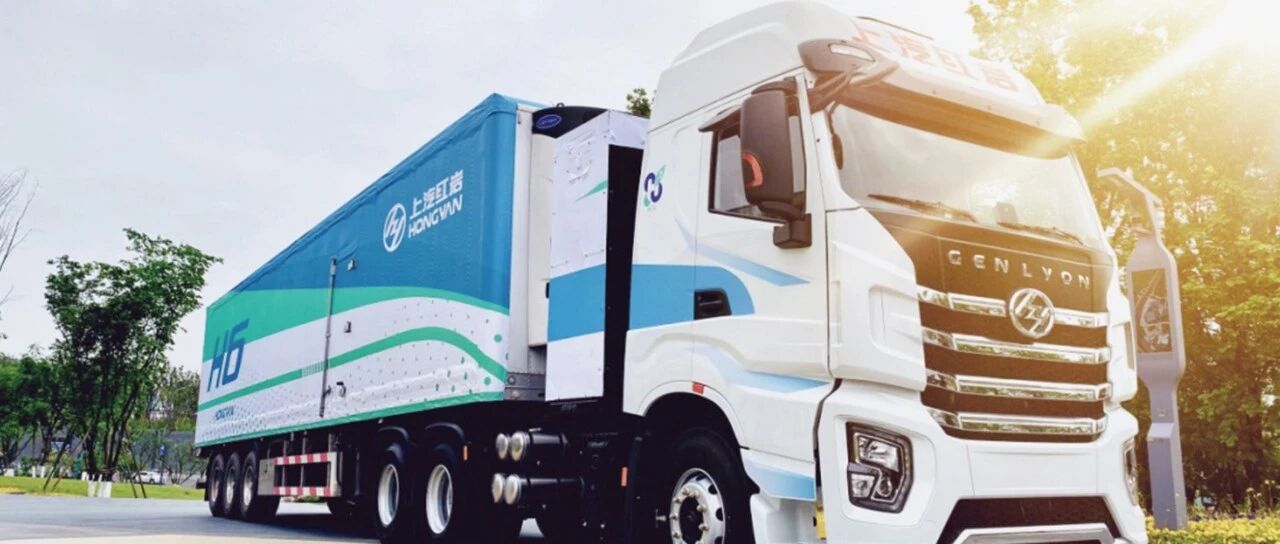
Core Viewpoint - LG Energy Solution, a leading South Korean battery manufacturer, has faced significant contract cancellations, resulting in a loss of approximately 13.5 trillion KRW (around 650 million RMB) in expected revenue within ten days, which exceeds half of its total revenue from the previous year [1][4]. Group 1: Contract Cancellations - LG Energy Solution announced the cancellation of a 3.9 trillion KRW contract with Freudenberg Battery Power Systems, which is part of the Kordel Group [3]. - Prior to this, LG Energy lost a contract worth 9.6 trillion KRW with Ford, which accounted for 37.5% of the company's total revenue last year [4]. - The cumulative loss from these cancellations highlights the volatility in the electric vehicle battery supply chain and the challenges faced by LG Energy in maintaining stable revenue streams [4]. Group 2: Financial Impact and Market Response - Following the contract cancellations, LG Energy's stock price dropped nearly 9% in a single day, and as of December 26, the stock was down 1.79%, with a market capitalization of 89.74 trillion KRW (approximately 4.35 billion RMB) [1][4]. - The company stated that the cancellations would not result in financial losses due to the nature of the contracts and the lack of specialized investments tied to them [4]. Group 3: Strategic Adjustments - In response to the cancellations and market uncertainties, LG Energy is shifting its focus from pursuing large orders to enhancing profitability and cash flow health [6]. - The company plans to optimize its customer structure and concentrate resources on more stable growth areas, such as energy storage systems (ESS) [6]. - LG Energy aims to increase its ESS battery production capacity in North America to 50 GWh, significantly up from the initial target of 30 GWh, driven by rising demand in the region [6].

德尔股份:公司固态电池目前以氧化物电解质技术路线为主
Zheng Quan Ri Bao Wang· 2025-12-26 12:43
证券日报网12月26日讯,德尔股份(300473)在接受投资者提问时表示,公司固态电池目前以氧化物电 解质技术路线为主。公司固态电池具有较高的安全性,已经通过了第三方检测机构的针刺、加热和过充 电试验,以及锂电池国际航运和陆运所需的UN38.3认证。另外,公司固态电池耐高温性能方面表现突 出,依靠自然散热,即可在较高温度条件下连续正常工作。同时,公司固态电池制备采用成熟的涂布工 艺,流程简单、易于批量生产。 ...

【储能】中伟股份与欣旺达签署固态电池战略合作协议
Xin Lang Cai Jing· 2025-12-26 12:26
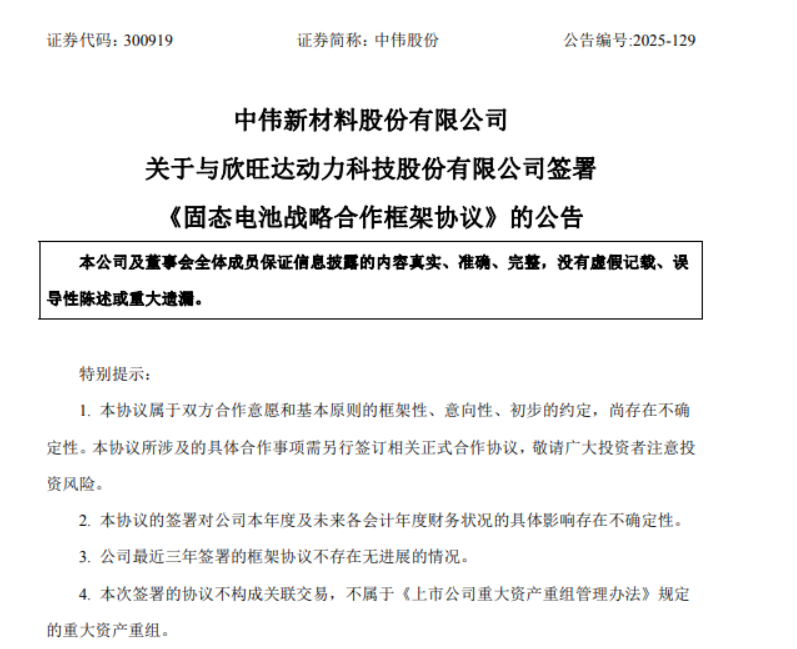
Core Viewpoint - Zhongwei New Materials Co., Ltd. has signed a strategic cooperation framework agreement with Xinwanda Power Technology Co., Ltd. to collaborate on the research and industrialization of key materials for solid-state batteries, focusing on applications in electric vehicles and energy storage systems [1][4]. Group 1: Cooperation Focus - The cooperation will concentrate on three main areas: 1. Joint development of new precursor materials for solid-state batteries, which must exhibit high energy density, safety, and long cycle life [3][6]. 2. Xinwanda will lead the development of cathode materials and complete cells based on the precursors provided by Zhongwei, facilitating practical applications in energy storage [3][6]. 3. Both companies will explore mass production pathways to scale up solid-state battery materials [3][6]. Group 2: Company Background - Zhongwei is a leading global supplier of ternary precursors, with significant expertise in high-nickel and single-crystal precursor technologies [3][6]. - Xinwanda has been investing in semi-solid and all-solid-state battery research and has established a product line specifically for energy storage batteries [3][6]. Group 3: Strategic Importance - The collaboration aims to bridge the "materials - cells - applications" chain, particularly addressing the stringent safety and cycle life requirements for large-scale energy storage projects, thereby accelerating the transition of solid-state battery technology from laboratory to engineering [3][6]. - Solid-state batteries are expected to offer advantages in energy storage, including reduced risk of thermal runaway, extended lifespan, and simplified thermal management systems [3][6]. Group 4: Future Plans - A joint technical team will be established to advance material validation and pilot testing, as well as to assess the feasibility of building complementary production capacity [4][7]. - This signing marks a significant step for both companies in the next-generation battery technology landscape and provides a new collaborative model for exploring high safety and long-duration energy storage technologies in the domestic energy storage industry [4][7].

华视集团曹国平谈精密智造:从1%抽检到100%全检,电池制造重新定标
高工锂电· 2025-12-26 10:28
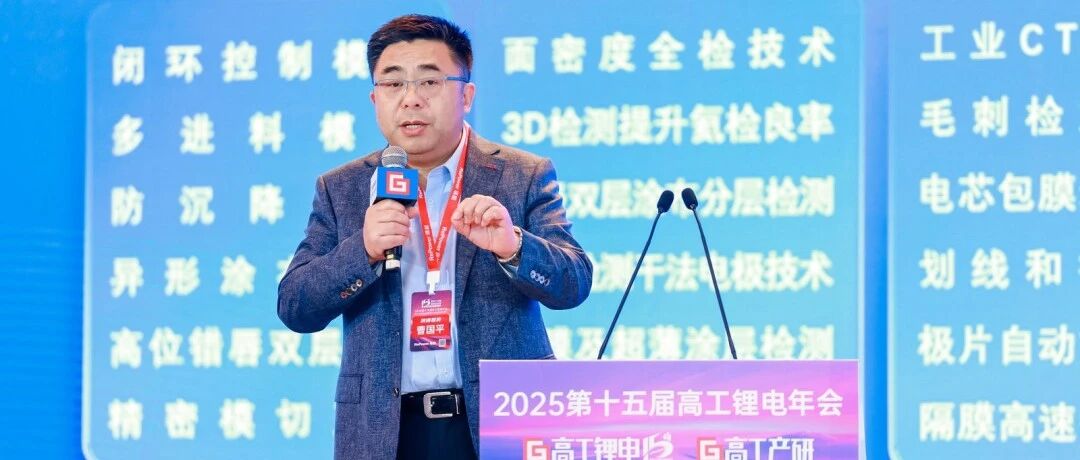
Core Viewpoint - Precision manufacturing and industrial testing are becoming the foundational infrastructure that defines the upper limits of product quality and the lower limits of cost in battery manufacturing [1][20]. Group 1: Manufacturing and Testing Innovations - The core of battery manufacturing is understanding the areal density of electrode materials, which is crucial for quality control [2][4]. - The industry has shifted from 1% sampling to 100% inspection of electrode materials, enabling comprehensive quality assurance [5][7]. - The implementation of full-width density inspection allows for real-time feedback and optimization of manufacturing processes, significantly reducing machine adjustment times and waste [9][10]. Group 2: Cost Reduction Strategies - By optimizing the N/P ratio from 1.15 to 1.10 through precise density measurements, significant cost savings of approximately 6.6 million yuan per production line annually can be achieved [10]. - The use of full inspection data allows for better capacity consistency management, moving the quality control process upstream in the manufacturing workflow [11][12]. Group 3: Advanced Detection Technologies - Industrial CT technology is being developed to address internal structural inspections, although its current application is limited due to time and cost constraints [13][14]. - Innovations in offline and online CT systems aim to enhance defect detection while reducing inspection times to as low as 4 seconds [15][16]. - The development of a semiconductor gas sensor for leak detection significantly lowers costs and improves efficiency compared to traditional methods [18]. Group 4: Market Positioning and Future Trends - The integration of precision manufacturing and industrial testing is becoming essential for maintaining competitive advantages in a diversifying battery technology landscape [20]. - Companies that excel in establishing robust quality and cost control infrastructures will be better positioned in the evolving market dynamics of safety, cost, and technological diversity [20].
特斯拉计划从2027年起在德国工厂开始电芯生产
起点锂电· 2025-12-26 10:05
Group 1 - Tesla announced plans to start battery cell production at its Gigafactory Berlin-Brandenburg in Grünheide from 2027, with an investment of €100 million and a target annual capacity of approximately 8 GWh to enhance European battery production capacity [2] - Since the launch of the Grünheide electric vehicle factory in 2022, Tesla has invested several billion euros and plans to inject hundreds of millions more to upgrade existing production infrastructure for full-scale battery production [3] - Tesla aims to create a vertically integrated production range at the Grünheide factory, completing all stages from battery to vehicle in one location, which is unique in Europe and enhances supply chain resilience [3] Group 2 - The Grünheide factory employs around 11,500 workers and is Tesla's only Gigafactory in Europe [3] - Despite the investment and plans for vertical integration, European battery production faces challenges in profitability compared to Chinese and American manufacturers, making large-scale battery production in Europe currently difficult [3]