中医医疗

Search documents
香港知名企业家郑志刚成立新集团 聚焦新兴市场革新产业
Zhong Guo Xin Wen Wang· 2025-09-21 10:52
Core Insights - The establishment of ALMAD Group in Hong Kong aims to focus on innovative industries in emerging markets, including culture, entertainment, sports, and traditional Chinese medicine globalization [1][3] - The founder, Zheng Zhigang, emphasizes Hong Kong's strategic position as a hub for capital, talent, and projects, facilitating business expansion into mainland China and overseas markets [3] Group Focus Areas - The group will concentrate on three main directions: investment in innovative industries in emerging markets, breakthroughs in innovation and finance, and global expansion of the K11 by AC cultural ecosystem [3] - Zheng Zhigang expresses a clear vision to create new economic patterns for the next generation and inject more possibilities into future economic development [3]



规范涉企执法司法,给民营经济发展吃下"定心丸"
Ren Min Wang· 2025-09-18 00:53
Core Viewpoint - The private economy is a vital force in advancing Chinese-style modernization, and regulating enterprise-related law enforcement and judicial actions is crucial for protecting the rights of private enterprises and boosting market confidence [1][10]. Group 1: Regulatory Actions and Legal Cases - On September 17, the Supreme People's Court and the Ministry of Justice jointly released 10 typical cases aimed at standardizing enterprise-related law enforcement and judicial review, covering various administrative management areas such as administrative licensing and penalties [1][10]. - A case involving 103 companies in Jiangsu Province highlighted the importance of ensuring that administrative decisions do not violate procedural laws, leading to the annulment of a decision that revoked building qualifications due to "major procedural violations" [2][3]. - Another case from Heilongjiang Province addressed the issue of administrative bodies unlawfully adding conditions, emphasizing the principle that "no action without authorization" must be adhered to by administrative enforcement agencies [3][4]. Group 2: Principles of Fair Enforcement - The principle of proportionality in penalties was exemplified in a case involving a traditional Chinese medicine clinic, where the administrative review body reduced penalties based on the clinic's status as a first-time offender and its proactive rectification efforts [4][5]. - A construction company case in Sichuan Province illustrated the necessity of reasonable enforcement actions, where the administrative body was found to have overstepped by equating registration behavior with collusion in bidding, leading to the annulment of the penalty [5][6]. Group 3: Commitment to Promises and Compensation - A landmark case involving a real estate company in Henan Province established that administrative bodies must honor their commitments, resulting in a ruling that mandated the government to pay over 8.41 million yuan in compensation for unfulfilled promises [6][7]. - The case involving a public transport group in Jilin Province reinforced the requirement for administrative bodies to fulfill contractual obligations, with the court ordering the government to continue fulfilling its agreement or face compensation [8][9]. Group 4: Overall Impact and Future Directions - The series of cases collectively signal a strong commitment to supervising administrative bodies to ensure lawful conduct and adherence to promises, aiming to create a stable, fair, and transparent legal environment for private enterprises [10][11]. - The ongoing efforts by courts and administrative review bodies will focus on deepening the regulation of enterprise-related law enforcement and promoting substantive resolutions to administrative disputes, thereby supporting the healthy development of the private economy [10][11].
四川为个体工商户助攻:分型“加点”、精准“回血”、助推转型 600多万“小老板”做大做强有门道
Si Chuan Ri Bao· 2025-09-18 00:28
Core Viewpoint - The Sichuan government is implementing various measures to support the development of over 6.36 million individual businesses, which constitute approximately 70% of the total operating entities in the province, through classification, targeted assistance, and the "individual to enterprise" reform [1] Classification and Targeted Support - Individual businesses are categorized into three types: "survival type," "growth type," and "development type," based on indicators such as operational duration, business scale, tax status, and number of employees [2] - High-performing and high-potential individual businesses are included in the "Famous, Special, Excellent, and New" directory for focused cultivation [2] - The Sichuan Market Supervision Bureau conducts comprehensive analysis and monitoring of individual businesses to identify their operational status and challenges, establishing a development monitoring index [2] Case Studies of Successful Support - The Cuiyuan Spring Tea Business in Chengdu was recognized as a "growth type" individual business and received hands-on training and support from local market supervision authorities to achieve recognition as a "Famous, Special, Excellent" business [3] - In 2024, the market supervision bureau in Jinniu District supported 30 tea businesses in standardization and compliance, resulting in an 80% reduction in consumer complaints compared to the previous year [4] Financial Assistance and Insurance Programs - The introduction of an insurance program for individual businesses in Ziyang, covering operational continuity and property loss, has provided financial support to 556 businesses, with total compensation reaching 1.6464 million yuan [5] - In Dazhou, individual businesses recognized as "Famous, Special, Excellent" receive a financial incentive of 4,000 yuan each, with 346 businesses successfully applying for a total of 138,400 yuan in incentives through an online process [6] "Individual to Enterprise" Reform - The government encourages individual businesses to transition into enterprises through policy promotion, guidance, and financial incentives, facilitating their adaptation during the transition period [8] - The Lu Family Sesame Cake Shop successfully transitioned from an individual business to a company, leveraging modern management practices and expanding its sales channels, achieving over 40,000 sales on Douyin in the first month post-transition [8][9] - The provincial government has allocated financial incentives for four consecutive years to support the transition of individual businesses to enterprises, enhancing their growth potential [9]
滨州市中医医院再获自然科学基金科研项目立项
Qi Lu Wan Bao Wang· 2025-09-17 02:42
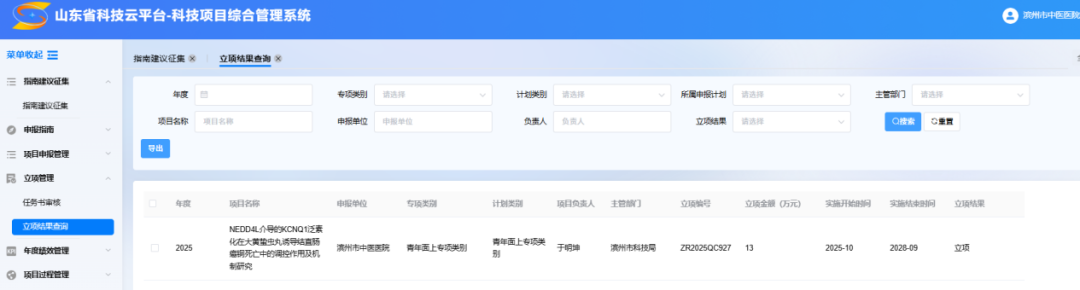
Core Insights - The National Natural Science Foundation of China and Shandong Provincial Science and Technology Department announced the funding results for 2025, with significant projects from Binzhou Traditional Chinese Medicine Hospital being approved [1][3] - The successful projects include a study on the role of NEDD4L-mediated KCNQ1 ubiquitination in inducing copper death in colorectal cancer and a project exploring the mechanism of Huangqi fermented bacteria in lowering uric acid levels [1][3] Funding Results - The project led by Dr. Yin Kunkun from the oncology department received approval for the Shandong Provincial Natural Youth Science Fund [1] - A joint project application with the Binzhou Medical College's Traditional Chinese Medicine College achieved a breakthrough by securing funding from the National Natural Science Foundation [1] Strategic Development - The funding success reflects the hospital's long-term strategy of "science and technology invigorating the hospital and talent strengthening the hospital," positioning scientific innovation as a core driver of high-quality development [1][3] - The hospital aims to enhance its research capabilities and talent cultivation, providing comprehensive support for project applications, including policy interpretation and expert consultation [1][3]
最高人民法院、司法部联合发布规范涉企执法司法行政复议、行政诉讼典型案例
Yang Shi Wang· 2025-09-17 02:30
Core Viewpoint - The Supreme People's Court and the Ministry of Justice have selected and published 10 typical cases of administrative review and litigation to promote the implementation of the Private Economy Promotion Law and enhance the protection of private enterprises' rights and interests [1][2][3] Group 1: Administrative Review Cases - Case 1: 103 companies challenged the withdrawal of construction qualifications by a housing and urban-rural development department in Jiangsu Province, arguing that their rights to be informed and to defend themselves were not adequately protected [5][6] - Case 2: A development company contested the collection of a penalty by a natural resources and planning bureau in Zhejiang Province, emphasizing that supervision should be conducted on a per-lot basis [9][10] - Case 3: A traditional Chinese medicine clinic disputed an administrative penalty imposed by a market supervision bureau in Shanghai, claiming the punishment was excessive compared to the violations [13][14] - Case 4: A real estate company filed a review against a housing and urban-rural development bureau in Heilongjiang Province for failing to perform statutory duties regarding project completion verification [17][18] - Case 5: A construction company opposed an administrative penalty from a city management bureau in Sichuan Province, arguing that the determination of collusion in bidding should be based on comprehensive judgment [20][21] Group 2: Administrative Agreements and Compensation - Case 6: A real estate company sought compensation from a municipal government for unfulfilled promises regarding land compensation, resulting in a court ruling that mandated the government to pay over 8.41 million yuan [24][26] - Case 7: A passenger transport group sued a municipal government for not fulfilling an administrative agreement related to the transformation of intercity bus services, leading to a court ruling that required the government to comply with the agreement [28][30] - Case 8: An investment company challenged a police bureau's refusal to issue a special industry license, arguing that the bureau's regulations violated higher laws [33][34] - Case 9: A machinery company sought to enforce a meeting record regarding capacity replacement, resulting in a court ruling that emphasized the protection of trust interests in administrative actions [36][39] - Case 10: A mining company requested compensation from a county government due to the overlap of its mining rights with a newly designated water source protection area, leading to a court ruling for compensation of over 5.83 million yuan [40][42]
问止中医发布“中医大脑”最新研发成果
Zheng Quan Ri Bao Wang· 2025-09-12 06:14
Core Insights - The traditional Chinese medicine (TCM) artificial intelligence sector is experiencing rapid development, highlighted by the recent media event themed "AI Brain - Renewing the Art of Traditional Chinese Medicine" held in Beijing [1] - Shenzhen Wenzhi TCM Health Technology Co., Ltd. has officially submitted its prospectus to the Hong Kong Stock Exchange, indicating its growth and expansion plans [1][3] Company Developments - Wenzhi TCM has established 12 self-operated clinics across the country, with its first clinic in Beijing opening in August 2023 [1][3] - The company operates 4 self-owned herbal medicine preparation centers and employs over 100 full-time physicians, having served more than 100,000 patients cumulatively [1][3] Technological Advancements - The "TCM Brain" system has created the largest clinical knowledge graph in the global TCM field, accumulating billions of parameters and over 10,000 prescriptions, covering more than 3,000 types of diseases [2] - The system integrates multi-dimensional data, including patient profiles, clinical cases, and traditional Chinese medicine databases, providing precise and personalized diagnostic solutions for TCM practitioners [2] Industry Impact - The development and application of the "TCM Brain" system represent an innovative practice of integrating artificial intelligence with traditional Chinese medicine, supporting the modernization and intelligent development of TCM [2] - The system has been implemented in over 2,000 medical institutions nationwide and has passed clinical consistency studies and expert reviews [2]
徐州市重点民生工程投入使用 助力徐州医疗卫生事业创新发展
Yang Shi Wang· 2025-09-05 10:54
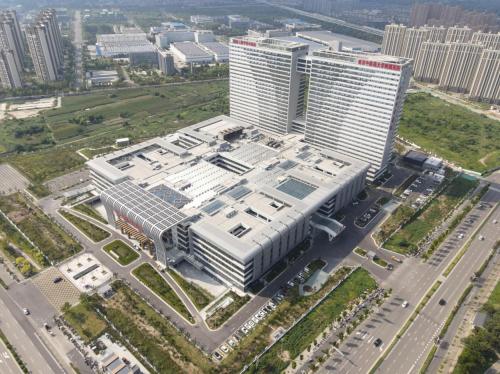
近日,徐州市重点民生工程徐州市中医院新院区正式开诊投入使用。该院的建成标志着徐州区域医 疗卫生事业发展迈出关键一步。将满足徐州乃至淮海经济区广大群众对中医特色诊疗服务的需求,有效 优化全市医疗资源布局,增强徐州作为淮海经济区中心城市在医疗卫生领域的辐射力和影响力,进一步 推动中医药事业的传承、创新与发展。 徐州市中医院新院区总投资18.5亿元,总建筑面积达33万平方米。作为国家中医药传承创新项目重 点中医院建设单位,将充分发挥中医药特色优势,提供集医疗、教学、科研、预防、保健于一体的综合 性健康服务。 近年来,徐州市始终将人民群众健康需求放在优先发展位置,持续加大医疗卫生领域投入,通过优 化医疗资源配置、推进重点医疗项目建设、加强医疗人才队伍培育等一系列举措,推动卫生健康事业高 质量发展,"徐州医疗"正在造福更多百姓,"到徐州看病"已成为淮海经济区内百姓就医的共识与首选。 据了解,该项目由中建八局第三建设有限公司承建,自项目开工以来,项目管理团队严格落实各项 制度和施工规范,针对目标节点,精心组织、科学策划。克服了施工场地小、高温多雨等诸多不利因 素,确保推进项目高质量建设。 ...
固生堂(02273.HK):2025上半年业绩稳健增长 盈利能力持续提升
Ge Long Hui· 2025-09-04 03:57
Core Insights - The company achieved a revenue of 1.495 billion yuan in the first half of 2025, representing a year-on-year growth of 9.5% [1] - The gross profit reached 458 million yuan, with a growth of 14.1%, and the net profit was 152 million yuan, increasing by 41.6% [1] - The gross margin improved to 30.63%, up by 1.24 percentage points [1] Business Performance - The revenue from healthcare solutions was 1.485 billion yuan, growing by 10.4%, primarily due to the growth in offline medical institutions [2] - Revenue from medical health products was 10 million yuan, declining by 50.9%, as the company strategically focused on healthcare solutions [2] - Offline medical institution revenue was 1.467 billion yuan, up by 11.1%, while online healthcare platform revenue was 127 million yuan, down by 5.2% [2] - The company acquired 452,600 new clients, a growth of 7.77%, with a total of 250 million client visits, increasing by 29.53% [2] - The client retention rate was 69.3%, and member visits totaled 1.08 million, growing by 15.14%, with a member retention rate of 85% [2] Strategic Developments - The company launched its first national AI medical avatar in June 2025, with a total of 10 AI avatars covering eight core specialties by August [3] - In the first half of 2025, the company added five offline medical institutions and acquired several entities, bringing the total to 83 medical institutions in China and one in Singapore [3] - The company received traditional Chinese medicine preparation licenses for its internal preparation center, which has completed construction and trial production [3]
年轻人的一杯中药奶茶,带火中医经济
吴晓波频道· 2025-09-03 00:30
Core Viewpoint - The article highlights the significant growth and increasing popularity of traditional Chinese medicine (TCM) and its integration into modern health management, particularly among younger generations, driven by rising health awareness and supportive policies [3][10][30]. Group 1: Growth of TCM Institutions - The number of TCM clinics has surged from over 3,000 in 2015 to 42,000 by 2024, representing an approximate 13-fold increase over nine years [13]. - The overall number of TCM healthcare institutions in China has nearly doubled from 54,243 in 2017 to 92,531 in 2023 [13]. - In 2024, the total number of TCM consultations in China is expected to exceed 1.6 billion, following a 67.4% year-on-year growth in 2023 [13]. Group 2: Popularity of TCM Products - Sales of "Sanfu Ties" (a TCM patch) increased by 176% year-on-year before the summer of 2023, with major cities like Shanghai and Guangzhou leading in sales [4]. - The popularity of "Wu Mei Tang" (a TCM drink) surged, with over 200,000 packets sold within three days of its launch, and 1.15 million packets sold within 24 hours of the second version's release [8]. - The trend of TCM beverages, such as "Chinese herbal milk tea," is gaining traction among young consumers, reflecting a shift towards integrating TCM into daily life [9]. Group 3: Young Consumer Engagement - Over 50% of the consumers of TCM products are aged between 18 and 35, indicating a strong engagement from younger demographics [7][14]. - The topic of "TCM health management" has garnered significant attention on social media platforms, with over 6.9 billion views on Xiaohongshu [10]. Group 4: Economic Impact and Market Trends - The market for Chinese herbal drinks is projected to grow at a compound annual growth rate (CAGR) of over 88% from 2024 to 2028, with expectations of surpassing 10 billion yuan in sales by 2024 [16]. - The overall TCM health industry is expected to exceed 1.8 trillion yuan by 2025, with TCM's share of the health service industry projected to be between 30% and 40% by 2030 [28]. Group 5: Policy Support and Health Awareness - The rise of TCM is supported by government initiatives aimed at enhancing TCM services, with a target of achieving 99.6% community coverage of TCM clinics by 2025 [38]. - Increasing health concerns among the population, with 84.4% reporting various health issues, have driven demand for TCM as a viable solution for chronic health management [32].

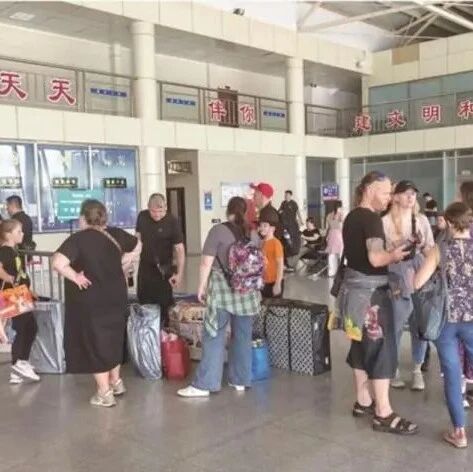
“中俄双子城”火了!大批俄罗斯游客经常来看中医,小针刀疗法是首选……
证券时报· 2025-09-02 09:23
Core Viewpoint - The article highlights the growing trend of "Traditional Chinese Medicine (TCM) health tourism" in Heihe City, which is attracting an increasing number of Russian tourists seeking TCM treatments and experiences [3][10]. Group 1: Tourism Development - Heihe City is enhancing its cultural and tourism activities, leading to closer exchanges with various Russian cities, which has significantly increased the number of Russian visitors [3][13]. - The city has established a mechanism of "government platform, state-owned enterprise support, private sector involvement, and market operation" to position itself as a preferred destination for cross-border tourism and international health tourism [14]. - The opening of the first cross-river highway bridge between China and Russia in 2022 has improved connectivity, facilitating cross-border tourism [14]. Group 2: TCM Popularity - The Heihe City TCM Hospital has seen a rise in Russian patients, with an expected annual patient volume of 2,000, up from 700 in the first seven months of the current year [10]. - TCM treatments such as acupuncture, moxibustion, and cupping are particularly favored by Russian patients, who are increasingly seeking preventive care through TCM [10][11]. - The hospital has set up a dedicated international medical department to cater to Russian patients, ensuring language barriers are minimized with bilingual staff [10]. Group 3: Market Dynamics - The Heihe International Night Market and Morning Market have become popular destinations for Russian tourists, showcasing a variety of goods and local cuisine [6][5]. - The daily entry and exit numbers at the Heihe port can reach up to 4,000 during peak seasons, with a significant portion of visitors coming for leisure and shopping [6]. - The local economy is benefiting from the influx of Russian tourists, who are drawn to the unique blend of Chinese and Russian cultural experiences available in Heihe [14].