交通建设

Search documents
长春:织密路网促畅通 城市发展动能足
Xin Lang Cai Jing· 2026-01-15 05:03
Core Viewpoint - The article highlights the significant improvements in urban transportation in Changchun, driven by major municipal traffic projects that enhance the city's road network and support the broader goal of revitalizing Northeast China [3][8]. Group 1: Transportation Developments - The North Ring City Road, a major urban artery, has been fully opened, measuring approximately 6.1 kilometers in length, with a design speed of 50 km/h and a dual eight-lane configuration [3][4]. - The total length of rapid roads in Changchun has increased from 85.5 kilometers in 2021 to 122.4 kilometers, exceeding the targets set for the 14th Five-Year Plan [6]. Group 2: Impact on Daily Life - The completion of new roads has significantly reduced commuting times, such as the travel time from the main urban area to Changchun Longjia International Airport, which has decreased from 1 hour to 40 minutes [6]. - Citizens have expressed satisfaction with the improved commuting experience, noting that the new infrastructure has alleviated previous traffic congestion issues [3][6]. Group 3: Economic and Social Benefits - The North Ring City Road serves as a development link, connecting various educational parks, large communities, commercial complexes, and clusters of enterprises, thereby stimulating economic growth in the northern urban area [4][8]. - The ongoing road improvement projects are not only addressing citizens' travel difficulties but also enhancing the infrastructure conditions in surrounding areas, injecting new vitality into urban development [6][8].


陕西一批重点项目取得实质性进展
Shan Xi Ri Bao· 2026-01-15 00:39
Group 1: Energy and Chemical Industry Developments - Shaanxi Energy and Chemical, transportation, and livelihood sectors have achieved key breakthroughs, injecting strong momentum into the province's economy at the start of 2026 [1] - The second phase of the Shaanxi Coal Group's Yulin Chemical 15 million tons/year coal-to-chemical project has reached several milestones, including the completion of the main traffic artery and the arrival of the first methanol synthesis low-pressure tower [1] - The project focuses on coal quality utilization technology, producing high-value-added materials, battery electrolyte solvents, biodegradable materials, and specialty oils, thereby extending the industrial chain and enhancing the value chain [1] Group 2: Renewable Energy Initiatives - Shaanxi Yanchang Petroleum's 100,000 kW wind power project has successfully connected its first unit to the grid, expected to save approximately 60,000 tons of standard coal and reduce CO2 emissions by about 170,000 tons annually [1] - The project team has innovatively used special vehicles and segmented traction solutions to transport wind turbine equipment across complex terrains [1] - Shaanxi Yanchang Zhongmei Yulin Energy Chemical Co. has commenced a 15,000 tons/year EVA project, with construction of 5,300 sand piles completed, aiming for import substitution of key materials used in photovoltaic films and high-end footwear [1] Group 3: Infrastructure and Transportation Projects - The Qinlong Power Lintong North 10MW/7.28MWh flywheel energy storage project has successfully connected to the grid, significantly enhancing the frequency modulation performance of thermal power units [2] - The Hu-Zhou-Mei Expressway, aimed at achieving a "half-hour commute" from Xi'an to Zhou County, is in the later stages of construction, with bridge works nearly completed [2] - The completion of this project is expected to effectively divert traffic from the Jingkun Expressway south of Xi'an, alleviating long-standing congestion on the Xihan Expressway [2] Group 4: Livelihood and Industry Integration Projects - The Shaanxi Xianyang Jinli Sunshine International Agricultural Trade City project, with a total investment of nearly 2 billion yuan, has entered the debugging phase for its west area, while the east area is nearing completion [2] - This project integrates trading, processing, research and development, and cold chain logistics, playing a crucial role in ensuring regional agricultural product circulation and stabilizing market supply [2]

新疆交建:截至2026年1月9日公司股东户数为84350户
Zheng Quan Ri Bao Wang· 2026-01-12 14:15
Group 1 - The core point of the article is that Xinjiang Jiaojian (002941) reported its shareholder count as of January 9, 2026, which stands at 84,350 households [1]

海南“第一长隧”鹦哥岭隧道全线贯通
Hai Nan Ri Bao· 2026-01-09 23:19
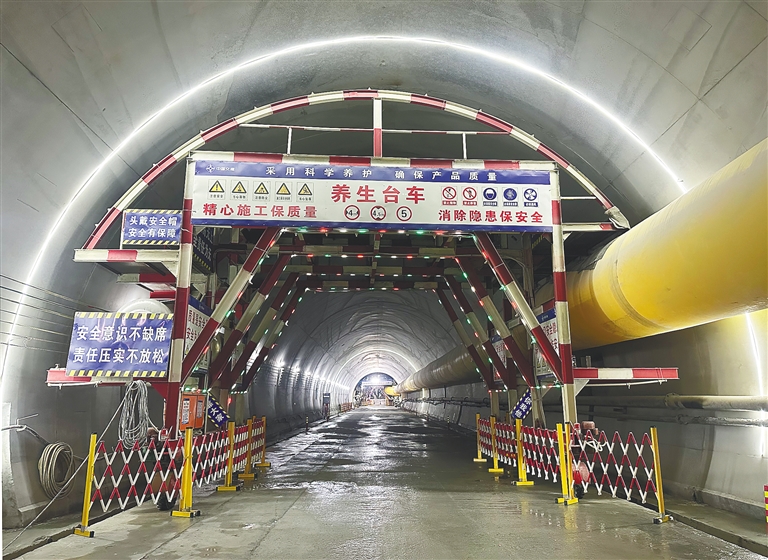
Core Viewpoint - The completion of the Yinggeling Tunnel marks a significant milestone in the construction of the Shiyun to Baisha Expressway, enhancing transportation infrastructure in Hainan Province and supporting the development of the Hainan Free Trade Port [1][2]. Group 1: Project Overview - The Yinggeling Tunnel is the longest highway tunnel in Hainan, with a total length of over 8.2 kilometers, featuring dual four-lane construction standards and a design speed of 80 km/h [1]. - The project is a key control project for the Shiyun to Baisha Expressway, funded and constructed by Hainan Provincial Transportation Investment Group [1]. Group 2: Environmental Considerations - The project adheres to the "ecological priority, green construction" principle, implementing measures to protect the regional ecological environment, including a wastewater purification system and real-time noise monitoring devices [1][2]. - Efforts include full closure management of temporary sites, recycling of tunnel spoil, and the relocation and protection of precious trees, aiming for a construction model that minimizes ecological disruption [1][2]. Group 3: Technological Innovations - The construction process employs new technologies, processes, materials, and equipment, promoting full mechanization of tunnel operations and utilizing multi-source data for precise geological assessments [2]. - Advanced techniques such as digital twin modeling and rapid rock strength acquisition are applied to enhance safety and efficiency in blasting operations [2]. Group 4: Regional Impact - The tunnel's completion will improve the road network in central Hainan, accelerate the development of ecological tourism resources and specialty agricultural products, and provide new momentum for rural revitalization [3].
马杜罗垮台,中国在委内瑞拉的“那些大投资”,会有怎样的风险?
Sou Hu Cai Jing· 2026-01-08 22:55
Core Viewpoint - The political upheaval in Venezuela, marked by the abduction of President Maduro by U.S. forces, poses significant implications for China's extensive investments in the country, which have spanned over two decades [1]. Investment Overview - China is Venezuela's largest creditor, oil trading partner, and investor, with investments spanning energy, infrastructure, and public welfare sectors [1]. - As of the end of 2025, China has lent approximately $68 billion to Venezuela, with about $50 billion repaid through oil, leaving a remaining debt of around $10 billion [3][5]. Energy Cooperation - The "loan-for-oil" model has been beneficial for both parties, allowing Venezuela to leverage its vast oil reserves while China benefits from low-priced oil and interest from loans [5]. - Venezuela's oil is sold to China at prices $10-15 lower than international rates, creating a dual profit opportunity for China [5]. Risks from Political Change - The potential rise of a pro-U.S. government may lead to a renegotiation of debts or even a freeze on repayment obligations, posing a risk of default on the $10 billion debt [6]. - The new government may also reconsider existing contracts, which could threaten China's investments in key oil projects [12]. Strategic Importance of Oil Projects - Major projects include: - Orinoco Heavy Oil Belt, with a production capacity of 400,000 barrels per day, primarily for China [12]. - Sumano Oilfield, producing 60,000 barrels per day, all directed to China [12]. - Maracaibo Lake Oilfield, facing uncertainty due to the political transition [12]. Infrastructure Investments - Chinese companies dominate Venezuela's infrastructure sector, with significant contributions in electricity, transportation, housing, and telecommunications [14]. - Projects include eight power plants providing 60% of the national electricity, railway expansions, and 5G network construction [14]. Opportunities Amidst Risks - Despite the political uncertainties, there are potential opportunities for China, such as: - Energy infrastructure reconstruction, requiring $80 billion for repairs [17]. - Development of strategic minerals, particularly rare earths [17]. - Agricultural integration and digital payment systems [17]. - Renewable energy projects, with plans for 200 GW of new capacity by 2030 [17].

建筑垃圾暂存难、处置难、管理难问题怎么破解?
Zhong Guo Huan Jing Bao· 2026-01-08 05:52
Core Viewpoint - The article highlights the significant challenges faced in the legal disposal and management of construction waste, emphasizing the need for improved infrastructure and regulatory measures to address these issues [1][2][3]. Group 1: Challenges in Construction Waste Management - There are three main difficulties in managing construction waste: storage, disposal, and management [2]. - Storage challenges arise from the long construction cycles of projects, leading to difficulties in finding suitable temporary storage locations for construction waste [1]. - Disposal difficulties stem from insufficient capacity at compliant waste disposal centers and the high costs associated with resource recycling, which require significant investment from construction companies [2]. - Management issues include the lack of effective supervision over waste transportation, often due to the geographical separation of construction units and local transport companies, leading to accountability problems [2]. Group 2: Recommendations for Improvement - Local governments should invest in the construction of waste management facilities to address both existing and future waste disposal needs, taking into account local infrastructure projects and consulting with local construction companies [3]. - A coordinated regulatory approach is necessary to combat illegal disposal practices, requiring collaboration among various departments and the involvement of disciplinary inspection agencies to prevent corruption [3]. - The government should promote the resource utilization of construction waste, treating it as a valuable resource, and provide policy guidance and financial support to encourage market development for recycled products [3].
从交通基础的网络完善到城市更新的品质升级,从医疗服务的普惠到教育事业的走心
Nan Jing Ri Bao· 2026-01-08 03:42
Group 1: Urban Development and Infrastructure - The opening of the elevated main line of National Highway 312 between Ningzhen and Qixianghe has improved connectivity between the two areas, reducing travel time by nearly 20 minutes for residents [1] - Nanjing has been selected as one of the first pilot cities for urban renewal during the 14th Five-Year Plan, launching 48 urban renewal pilot projects, enhancing the quality of urban life [2][3] - The city has implemented micro-transformation plans to alleviate traffic congestion, resulting in a 30% decrease in congestion index and a 20% increase in average vehicle speed on key road segments [3] Group 2: Transportation Enhancements - The newly opened 2-kilometer dual six-lane expressway has significantly reduced travel time from 90 minutes to 40 minutes for drivers traveling to Zhenjiang [5] - Nanjing's urban rail transit system has expanded to 524.4 kilometers, adding 129.7 kilometers since the end of the 13th Five-Year Plan, enhancing commuting convenience for residents [6] - The introduction of the "Little Blue Whale" micro-circulation bus brand has improved access to public transportation, addressing the "last mile" issue for residents [6] Group 3: Social Services and Welfare - Nanjing has implemented a high-quality, inclusive elderly care service strategy, achieving 100% coverage of district-level elderly service centers and over 1,400 community care centers [9] - The city has introduced a "zero out-of-pocket" policy for hospitalization expenses related to childbirth, significantly reducing financial burdens for families [10] - The establishment of "Ninghai Shiguangli," an all-age dining facility, exemplifies the city's commitment to enhancing elderly care services [7][8] Group 4: Education Improvements - Nanjing has launched 24 educational projects during the 14th Five-Year Plan, including the installation of air conditioning in all ordinary classrooms, improving the learning environment for students [11][12] - The city has added approximately 120,000 new compulsory education seats and over 40,000 high school seats, facilitating access to quality education [12] - Comprehensive health monitoring and nutritional standards have been established for students, ensuring their well-being and academic performance [12]
“圈”出三秦大地新图景
Shan Xi Ri Bao· 2026-01-08 00:28
Core Viewpoint - The development of the Xi'an metropolitan area has significantly enhanced regional collaboration, resource sharing, and innovation, leading to economic growth and improved living standards. Group 1: Economic Development - The Xi'an metropolitan area has a permanent population of 18.75 million and an economic output exceeding 1.67 trillion yuan [4] - The area has established a collaborative innovation network that integrates various industrial chains, promoting deep integration of technological and industrial innovation [2] Group 2: Infrastructure and Transportation - A preliminary network of commuting infrastructure has been formed, facilitating a spatial development pattern of "one core, two axes, and multiple groups" [2] - The total investment for the newly announced Xi'an Fourth Ring Road project is 15.361 billion yuan, surpassing the initial investment scale of the Sixth Ring Road [12] - The opening of the Xi'an Metro Line 15 and the Ma Jing Expressway has significantly improved commuting times and connectivity within the metropolitan area [13] Group 3: Healthcare and Social Services - The establishment of 25 specialized medical alliances has enhanced specialized medical service capabilities across the province and neighboring regions [3] - The Xi'an metropolitan area has implemented a medical alliance framework that allows for the sharing of medical resources, benefiting not only local residents but also those from surrounding provinces [18] Group 4: Innovation and Technology - In 2023, Xi'an was approved to build a national comprehensive science center, injecting strong momentum into the high-quality development of the metropolitan area [10] - The total R&D investment during the 14th Five-Year Plan period reached 71.749 billion yuan, a 41.8% increase compared to the end of the 13th Five-Year Plan [10] - The number of high-tech enterprises in Xi'an has surpassed 12,000, with the number of companies listed on the Sci-Tech Innovation Board ranking eighth nationwide [10]
秀洲以项目攻坚吹响“十五五”开局号角
Xin Lang Cai Jing· 2026-01-07 23:22
Group 1 - The Xiuzhou District is leveraging the opening of Jiaxing Nanhu Airport to accelerate project construction and enhance its economic development, particularly through the establishment of a logistics hub [1] - The construction of the Oriental Tiandi Port MRO maintenance hangar is a key project aimed at filling the gap for large civil aviation maintenance bases in the Yangtze River Delta, providing comprehensive aviation maintenance services [1] - The project is in a critical construction phase, with completion expected by the end of March this year, which will significantly boost the high-quality development of Xiuzhou's air economy [1] Group 2 - Zhejiang Huatian Optoelectronics Co., Ltd. is expanding its production capacity by launching five new production lines to meet increasing market demand, with a total investment of 250 million yuan [2] - The new production base will be relocated to Xiuzhou District, with plans to build 12 new LCD module production lines, aiming for an annual output value of 250 million to 300 million yuan upon full capacity [2] - The ongoing construction of the Zhajiasu Expressway expansion project is crucial for regional connectivity and is expected to enhance the transportation infrastructure, facilitating industrial upgrades and urban-rural integration [3] Group 3 - The SG01 section of the Zhajiasu Expressway, a vital link between Zhejiang and Jiangsu provinces, has a total estimated cost of 2.467 billion yuan and is currently ahead of schedule with a 21.5% progress rate [3] - The project is expected to optimize the regional traffic pattern and support the development of Xiuzhou's industries and urban-rural integration [3] - The Xiuzhou District government is focusing on project-driven growth strategies to achieve new breakthroughs in investment expansion and efficiency for 2026 [3]
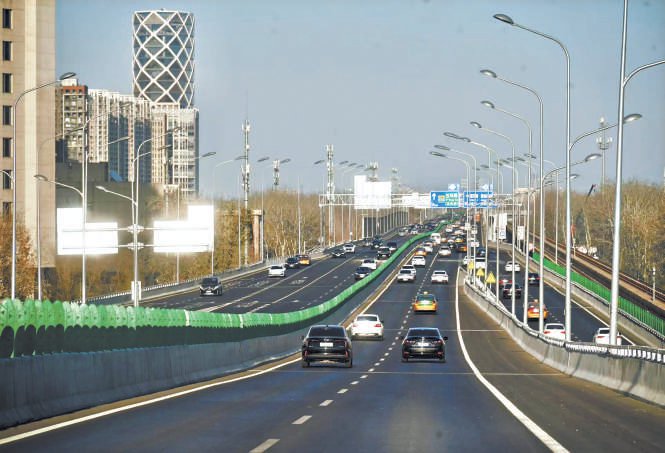
强经络惠民生 北京路网再添主干道
Bei Jing Wan Bao· 2026-01-07 06:21
Core Insights - The article discusses the development and impact of Beijing's urban expressways, specifically the Jingmi Expressway, Beiqing Expressway, and Tongma Road, which significantly enhance traffic efficiency and connectivity in the city. Group 1: Jingmi Expressway - The Jingmi Expressway, completed in July last year, spans approximately 10.3 kilometers and connects key areas, reducing travel time significantly, with a reported 70% decrease in congestion during peak hours [3][4]. - The expressway features a dual-layer design, allowing for efficient traffic flow by separating long-distance and local traffic, effectively alleviating congestion at major intersections [4][6]. - Future expansions of the Jingmi Expressway are planned, with phases two and three extending towards Miyun District, enhancing connectivity to important scientific and industrial zones [7]. Group 2: Beiqing Expressway - The Beiqing Expressway, measuring 8.9 kilometers, serves as a crucial link in the transportation network, significantly reducing travel time for residents in the Huaitai area [9][10]. - The expressway's design includes a dual-layer structure, which helps manage increasing traffic demands and connects various key industrial and technological hubs [10][12]. - Upgrades to the Xinzhang Bridge have improved traffic flow, reducing congestion during peak hours and enhancing overall connectivity [12]. Group 3: Tongma Road - The Tongma Road, which underwent significant upgrades, now features a dual 10-lane configuration, cutting travel time by 40% for commuters between the city center and Yizhuang [14][16]. - This road serves as a vital corridor for the transportation of fresh agricultural products, with dedicated high-access routes facilitating efficient logistics for the Beijing Fresh Agricultural Products Distribution Center [16]. - The improvements have not only enhanced traffic efficiency but also positively impacted local communities by reducing travel times for residents and businesses [14][16].