
军事装备

Search documents
日本防卫费13连增,本财年防卫开支占GDP的比例提升到2%!加速部署中程地对空导弹,或大幅增加杀伤性武器出口
Ge Long Hui· 2025-12-02 03:40
Group 1 - The Japanese government has approved a supplementary budget for the fiscal year 2025, increasing defense spending to 2% of GDP, raising concerns among various sectors in Japan [1] - Japan's defense budget has been increasing for 13 consecutive years, indicating a growing ambition for military expansion with geopolitical implications [1] - Analysts suggest that Japan's military expansion should raise alarms among neighboring countries due to its multifaceted geopolitical calculations [1] Group 2 - The supplementary budget includes 847.2 billion yen (approximately 39.8 billion RMB) for the acquisition of destroyers, submarines, and missiles, including the upgraded Type 03 medium-range surface-to-air missile [3] - Japan's Defense Minister, Kono Taro, has announced plans to deploy Type 03 missiles to Yonaguni Island, with progress being made on this initiative [3] - The Japanese government is also promoting the export of lethal weapons, having engaged in informal discussions with the Philippines regarding the export of the Type 03 missile, and has recently exported Patriot surface-to-air missiles to the United States for the first time [3]


“高市早苗政府有新动作”
券商中国· 2025-12-01 13:01
Core Points - The Japanese government is in informal discussions with the Philippines regarding the export of the "03 type medium-range surface-to-air missile" [1] - The Philippines has expressed interest in acquiring this missile, which is designed to intercept aircraft and cruise missiles [1] - Japan aims to complete the development of an upgraded version of the missile by the fiscal year 2028, capable of intercepting ballistic missiles and hypersonic glide weapons [1] - Discussions are also ongoing regarding the export of "Abukuma" class frigates, with the Philippine Navy expressing a desire to acquire at least three [1] - The Japanese government plans to abolish current restrictions on defense equipment exports, which are limited to five non-combat purposes, indicating a strong push for defense exports [1] - Japan's defense spending is set to reach approximately 11 trillion yen (about 498.3 billion RMB) in the fiscal year 2025, achieving the goal of 2% of GDP ahead of schedule [1] - The supplementary budget includes 847.2 billion yen allocated for the purchase of frigates, submarines, and surface-to-air missiles, with total defense-related expenses exceeding 1 trillion yen (about 45.3 billion RMB) [2] - Concerns have been raised by the Chinese Foreign Ministry regarding Japan's increasing defense budget and the loosening of weapon export restrictions, questioning Japan's commitment to peaceful development [2]

高市早苗政府有新动作
中国能源报· 2025-12-01 11:23
Core Points - The Japanese government is in informal discussions with the Philippines regarding the export of the "03 type medium-range surface-to-air missile" and the "Abukuma" class frigates [1] - Japan plans to abolish the current restrictions on defense equipment exports, which are limited to five non-combat purposes, indicating a strong push for defense exports [1] - The Japanese government approved a supplementary budget for the fiscal year 2025, aiming to achieve a defense spending target of 2% of GDP ahead of schedule, with total defense-related expenses reaching approximately 11 trillion yen (about 498.3 billion RMB) [1] Summary by Sections Japan's Defense Export Policy - Japan is negotiating with the Philippines to export defense equipment, including missiles and frigates, reflecting a shift in its defense export policy [1] - The Japanese government intends to remove existing export restrictions, which will facilitate the export of military equipment [1] Defense Budget and Spending - The supplementary budget approved by the Japanese government includes allocations for purchasing frigates, submarines, and surface-to-air missiles, with total defense-related expenses exceeding 1 trillion yen (approximately 45.3 billion RMB) [1] - The overall defense budget for 2025 is projected to reach around 11 trillion yen, indicating a significant increase in defense spending [1]

德国联邦议院批准2026年预算 国防开支大幅增加
Yang Shi Xin Wen· 2025-11-28 16:06
Core Points - The German Federal Diet approved the 2026 budget law with a total expenditure of approximately €525 billion and new debt of about €180 billion [1] - The budget includes significant increases in defense spending, reaching €108 billion, the highest level since the end of the Cold War [2] - Germany plans to provide €11.5 billion in aid to Ukraine, an increase of €3 billion from 2025, primarily for military equipment [2] Budget Overview - The 2026 federal budget expenditure is set at approximately €525 billion [1] - New debt is projected to total around €180 billion [1] Defense Spending - Defense spending is expected to reach €108 billion, marking the highest level since the Cold War [2] - The majority of this funding will be allocated for military equipment and ammunition [2] Aid to Ukraine - Germany will provide €11.5 billion in aid to Ukraine, up from €8.5 billion in 2025, representing a €3 billion increase [2] - The aid will focus on purchasing artillery, drones, armored vehicles, and other military equipment [2] Opposition Response - Opposition parties expressed concerns over high debt levels and the allocation of funds, suggesting a need for more investment in infrastructure and community services [2]
距离中国台湾仅110公里,日本宣布在敏感区域部署导弹
第一财经· 2025-11-24 07:00
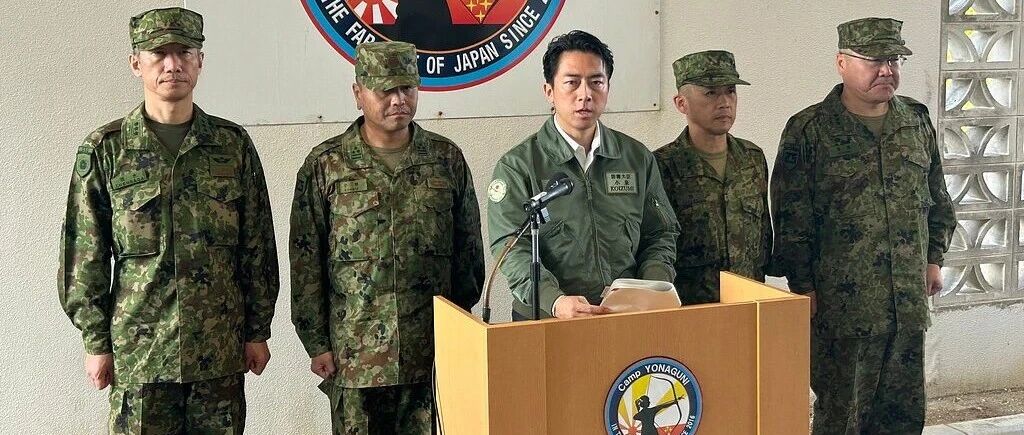
Core Viewpoint - Japan's Defense Minister, Kono Taro, confirmed the scheduled deployment of medium-range air defense missiles at a Self-Defense Force base on Yonaguni Island, which is located only 110 kilometers from Taiwan [1]. Group 1 - Yonaguni Island is Japan's westernmost point and the closest island to Taiwan, highlighting its strategic importance in regional security [1]. - Since 2015, Japan has been stationing Self-Defense Forces and deploying various weapons on Yonaguni Island, indicating a long-term military commitment to the area [1]. - The Japanese Defense Ministry plans to deploy the Type 03 medium-range air defense missile, designed to counter aerial threats at a range of approximately 50 kilometers [1].

距离中国台湾仅110公里,日本宣布在敏感区域部署导弹
财联社· 2025-11-24 06:55
Core Viewpoint - Japan is set to deploy medium-range air defense missiles at a Self-Defense Force base located on Yonaguni Island, which is only 110 kilometers away from Taiwan, indicating a strategic military positioning in response to regional threats [1]. Summary by Sections - **Deployment Details** - The Japanese Defense Minister, Kono Shinjiro, confirmed the timely deployment of medium-range air defense missiles at the Self-Defense Force base on Yonaguni Island [1]. - **Geographical Significance** - Yonaguni Island is the westernmost point of Japan and the closest Japanese island to Taiwan, highlighting its strategic importance in the region [1]. - **Historical Context** - Since 2015, Japan has been stationing Self-Defense Forces and deploying various types of weapons on Yonaguni Island, reflecting an ongoing military buildup [1]. - **Missile Specifications** - The 03-type medium-range air defense missile, which is planned for deployment, is designed to counter aerial threats at a range of approximately 50 kilometers [1].
盟友关系出现裂痕?加拿大抗住美国的胁迫,要搞合作多元化贸易!
Sou Hu Cai Jing· 2025-11-23 08:56
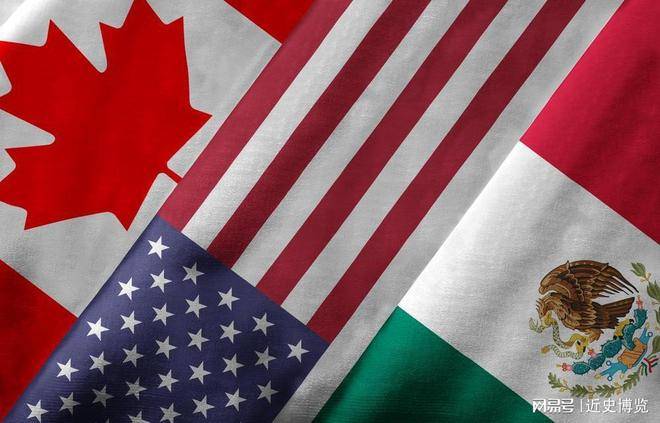
Group 1 - The trade negotiations between the US and Canada have been interrupted for nearly a month due to a tariff advertisement from Ontario, which has led to a political backlash from the US [3] - The annual trade volume between the US and Canada is significant, with 30% of US auto parts relying on Canadian supplies, highlighting the interconnectedness of their supply chains [3] - The US is pressuring Canada to include the dairy industry in a 10% baseline tariff tier, aiming to dismantle Canada's long-standing protectionist policies in this sector [5] Group 2 - The timing of the negotiation suspension coincides with the statutory review phase of the USMCA, with the US leveraging the advertisement incident to extract concessions from Canada [6] - Economic losses are already being felt due to the negotiation pause, with delayed orders and increased logistics costs affecting businesses, particularly small and medium-sized enterprises reliant on cross-border supply chains [6] - Concerns are rising in Canada regarding the potential "nationalization" of its auto industry by the US, which is critical to its manufacturing sector and employment [7] Group 3 - Canada is accelerating its "de-reliance" strategy in response to US pressure, notably by seeking to procure military equipment from Sweden instead of the US, which could create 10,000 jobs in Canada [9] - This shift in defense procurement aims to reduce Canada's dependency on US military equipment and could alter the dynamics of bilateral cooperation [11] - Despite significant disagreements, the deep-rooted cooperation and interdependence between the US and Canada suggest that a zero-sum game is unsustainable [12] Group 4 - Recent agreements, such as the icebreaker cooperation deal, symbolize a step towards breaking the deadlock and indicate potential for pragmatic collaboration [13] - High-level dialogue is crucial for resuming negotiations, with the possibility of resolving core disputes through mutual concessions [13] - The ongoing trade friction serves as a strategic reminder for both countries, potentially leading to a shift from high dependency to balanced cooperation in the future [15]
以色列国防部:自新一轮巴以冲突爆发以来,已收到超过12万吨军事物资
Huan Qiu Shi Bao· 2025-11-20 22:55
Group 1 - The Israeli Defense Ministry reported that since the outbreak of the latest round of the Israel-Palestine conflict, over 1,000 aircraft and 150 ships have delivered more than 120,000 tons of military supplies to Israel [1] - The 1,000th aircraft landed at Ben Gurion International Airport, marking a critical point in Israel's strategic supply chain [1] - The military equipment received includes armored vehicles, ammunition, personal protective gear, and medical supplies, primarily sourced from the United States [1] Group 2 - Since the ceasefire agreement on October 10, Israeli military actions in Gaza have resulted in 312 deaths and 760 injuries [2] - Since the conflict began in October 2023, nearly 70,000 deaths have occurred in Gaza, with a significant number being women and children, and over 170,000 injuries reported [2] - The ongoing military support from the U.S. contrasts with criticism from some Western governments regarding Israel's actions, leading to arms export restrictions from countries like Spain, the UK, Germany, and Canada [1]
美国将沙特列为非北约主要盟友三问
Xin Hua She· 2025-11-20 11:14
北大西洋公约组织(北约)目前共有32个成员国,《北大西洋公约》第五条规定了缔约国的集体防 御义务。 1987年,美国国会通过法案,为一些非北约成员国的美国盟友创设"非北约主要盟友"地位。1996 年, 美国将非北约主要盟友纳入对外援助和军售法律,使其进一步成为美国政府一个标准化、可扩展的 地缘政治工具。 据美国国务院网站发布的名单,目前美国的非北约主要盟友包括阿根廷、澳大利亚、巴林、巴西、 哥伦比亚、埃及、以色列、日本、约旦、肯尼亚、科威特、摩洛哥、新西兰、巴基斯坦、菲律宾、卡塔 尔、韩国、泰国和突尼斯。 新华社华盛顿11月19日电 热点问答|美国将沙特列为非北约主要盟友三问 新华社记者徐剑梅 沙特阿拉伯王储兼首相穆罕默德日前访美,与美国总统特朗普会晤。特朗普18日晚宣布,将沙特列 为美国的非北约主要盟友。何谓美国的非北约主要盟友?沙特将因此获得何种待遇?对地区局势有何影 响? 何谓非北约主要盟友 除沙特外,美国在中东的非北约主要盟友还有巴林、埃及、以色列、约旦等。有分析人士认为,这 些国家采购美制武器装备,武器体系趋于统一,综合防空和反导能力得以提高。美国则通过给予这些国 家非北约主要盟友地位,拥有波斯湾前 ...
俄乌互相打击对方能源设施
Yang Shi Xin Wen Ke Hu Duan· 2025-11-14 22:55
Core Points - The Russian Ministry of Defense reported a large-scale attack on Ukrainian industrial and energy facilities in response to Ukrainian strikes on Russian civilian infrastructure [1] - Over the past week, Russian forces have conducted six rounds of significant strikes targeting Ukrainian military facilities, energy infrastructure, and transportation systems [1] - The Ukrainian Armed Forces reported successful strikes on strategic Russian facilities using domestically produced weapons, including Neptune missiles and attack drones [1] Group 1 - The Russian military utilized high-precision weapons, including Kinzhal hypersonic missiles and attack drones, to target Ukrainian energy and industrial facilities [1] - Ukrainian forces targeted the Novorossiysk port and oil storage facilities, as well as a Russian S-400 air defense system, resulting in explosions and fires [1] - Ukrainian strikes also included attacks on a refinery and fuel storage facilities in Saratov Oblast, Russia [1]