合成生物学

Search documents
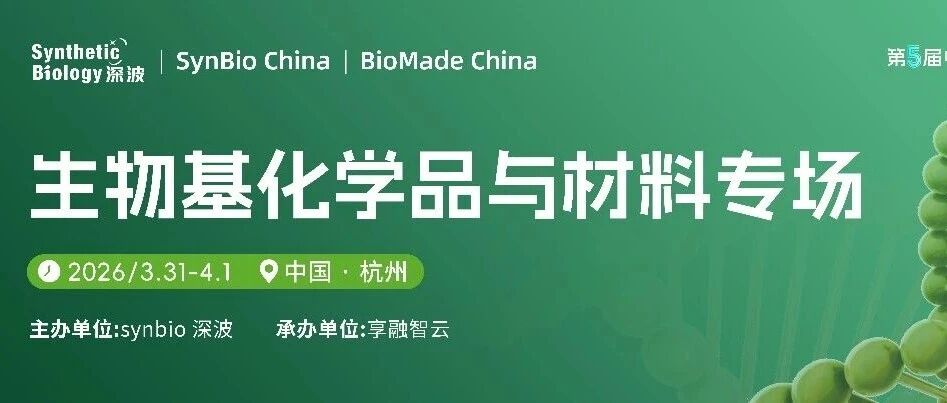
免费报名【生物基化学品与材料专场】,SynBio China第五届中国合成生物学及生物制造大会!
synbio新材料· 2026-01-15 02:09
Core Insights - The article emphasizes the importance of bio-based chemicals and materials as a key pillar of the bio-manufacturing industry, highlighting their advantages such as renewable raw materials and low carbon emissions throughout their lifecycle, which positions them to replace traditional petroleum-based products in various sectors like packaging, textiles, and automotive [2] - The Chinese government prioritizes the development of bio-based new materials, categorizing them as strategic materials, and has implemented multiple supportive policies for the industry [2] - Despite the growth potential, the industry faces challenges including cost competitiveness, stability of raw material supply chains, product performance optimization, and market acceptance [2] Event Details - The "5th China Synthetic Biology and Bio-Manufacturing Conference" will be held in Hangzhou from March 31 to April 1, 2026, with an expected attendance of 1,000 participants [4] - The conference aims to gather insights from various sectors including industry, academia, and research to address challenges in the bio-based chemicals and materials industry [2][4] Forum Setup - The conference will feature multiple sessions, including a dedicated session on bio-based chemicals and materials, along with other topics such as bio-manufacturing technology and applications, functional food and nutrition science, and skincare [8]

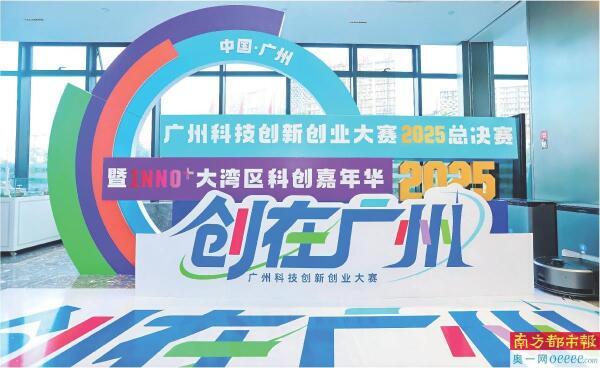
14家上市 55家登陆资本市场 广州双创大赛助产业新星破茧飞
Nan Fang Du Shi Bao· 2026-01-06 23:08
Core Insights - The Guangzhou Innovation and Entrepreneurship Competition has established a comprehensive service system integrating "platform, scenario, capital, and service" over the past decade, evolving from a small-scale event to a significant platform attracting thousands of companies annually [2] - The competition has successfully nurtured 205 national-level specialized and innovative "little giant" enterprises and 14 listed companies, forming a clear "nurturing—growth—listing" technology innovation chain [2][12] Group 1: Competition Development - The competition has attracted over 30,000 companies and has helped 360 Guangzhou enterprises win national awards, with 26 companies receiving national third prize or higher [7] - Initially, awareness of the competition was low, with less than 5% of companies aware of it, but it has grown to become a vital platform for government support and funding [7][8] - The competition has shifted from a broad approach to nearly 20 specialized industry tracks, focusing on in-depth exploration of specific sectors [9] Group 2: Case Studies - Chengxing Communications, which won first place in the new generation information technology sector in 2017, attracted over 50 investment institutions and completed 12 rounds of financing, now holding a 60% market share in high-end satellite communication amplifiers and phased array antennas [3][8] - Tianjiang High-tech Materials received 1 million yuan in prize money from the competition to overcome challenges during the pandemic and secured credit through patent pledges to resolve cash flow issues [4][11] - Ruizhen Regenerative Medicine Technology won awards in both 2020 and 2023 and achieved first place in the synthetic biology track in 2024, gaining strategic investment from the Guangzhou Science and Technology Fund [5][10] Group 3: Financial Ecosystem - The competition has facilitated nearly 1,000 participating companies to secure over 50 billion yuan in financing and around 1,800 companies to obtain bank credit of approximately 16 billion yuan [10] - The integration of venture capital, credit risk compensation funds, and the Science and Technology Fund has created a comprehensive technology finance ecosystem [10] Group 4: Market Application and Growth - Guangzhou has organized resource matching events and opened urban application scenarios to help companies effectively connect technology with market needs, resulting in 55 companies entering the capital market, including 14 that have successfully gone public [12] - The competition has provided a platform for companies to showcase their products and connect with resources, exemplified by the success of companies like Wenyan Zhixing and Zhongke Aerospace Technology [12][13]
2025年度盘点 | 国内合成生物学领域Nature子刊论文
合成生物学与绿色生物制造· 2026-01-05 03:54
Core Viewpoint - The article highlights significant advancements in the field of synthetic biology in China, showcasing 18 high-quality research papers published in Nature sub-journals in 2025, reflecting the country's research strength and innovation level in this domain [2]. Group 1: Research Highlights - A study published in Nature Sustainability presents a tandem electro-biosystem that upgrades surplus acetone from the phenol industry into high-value long-chain chemicals, achieving nearly 100% conversion to pure isopropanol (IPA) [3][38]. - Research in Nature Biotechnology introduces a microchip-based massively parallel DNA synthesis system, significantly increasing the concentration of synthetic products and improving assembly success rates by 4-6 orders of magnitude [4][6]. - Another Nature Biotechnology paper discusses a plug-and-play system for producing scalable secondary metabolites in Streptomyces, achieving a titration of 8.4 g/L for a specific antibiotic in industrial fermentation [7]. Group 2: Innovative Techniques - A study in Nature Catalysis reveals a new catalytic route using small molecule reductants for haem peroxygenases, avoiding irreversible enzyme inactivation and demonstrating high production rates of valuable chiral products [10]. - Research in Nature Synthesis introduces an iMECS strategy for the efficient conversion of lignin into various additive-type natural products, achieving a conversion rate exceeding 90% without external cofactors [12][17]. - A dual-channel energy pathway combining energy molecule supply and electron transfer in an E. coli-thylakoid hybrid system is reported, significantly enhancing hydrogen production rates [15]. Group 3: Applications and Implications - The development of an artificial ocean carbon cycling system is presented in Nature Catalysis, which captures CO2 from seawater and converts it into bioplastic monomers, contributing to sustainable material production [11]. - A study in Nature Chemical Biology outlines a programmable biological communication system between distinct membraneless compartments, providing insights into cellular interactions and potential applications in synthetic biology [23][26]. - Research on engineered spores for producing biodegradable living plastics demonstrates a novel approach to sustainable material development, with potential applications in environmental conservation [31][35].

华赛生物完成近亿元A轮融资,加速绿色合成产品商业、产能落地
IPO早知道· 2026-01-04 09:33
Core Viewpoint - Suzhou Huasai Biotechnology Co., Ltd. has completed nearly 100 million RMB in Series A financing, focusing on innovative and green development in the field of synthetic biology [4][6]. Group 1: Company Overview - Huasai Biotechnology is led by Dr. Hu Zhihao, a recipient of the "Green Chemistry Challenge Award" in the U.S., and has developed a synthetic biology and metabolic engineering platform [4]. - The company aims to address high energy consumption and emissions in traditional chemical synthesis or fermentation processes, aligning with the national "dual carbon" strategy [4]. Group 2: Product and Market Focus - The products of Huasai Biotechnology cover areas such as flavor and fragrance, health and nutrition products, raw materials and intermediates, feed additives, and material monomers [5]. - The funds raised will be primarily used for the construction and implementation of green production capacity, which is crucial for transforming laboratory innovations into large-scale market supply [5]. Group 3: Strategic Goals - Huasai Biotechnology expresses gratitude to investors for their recognition and support, emphasizing the strategic synergy brought by the deep layout of capital in emerging industries like biological manufacturing [6]. - The company aims to solidify its technological moat, accelerate capacity construction, and expand market development, aspiring to become a leading force in the industrialization of synthetic biology globally [6].
擎科生物推出"siRNA裸序列定制合成服务",创新实现最快3天交付
Huan Qiu Wang Zi Xun· 2026-01-04 06:25
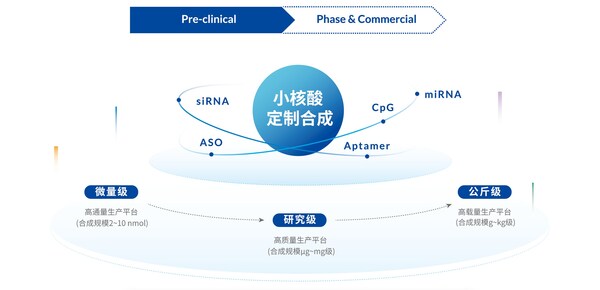
Core Insights - Beijing Qingtian Biotechnology Co., Ltd. has launched a "siRNA naked sequence custom synthesis service" aimed at accelerating early research and drug discovery processes by significantly reducing delivery time to 3-4 calendar days [1][8] Group 1: Service Features - The service addresses early-stage research challenges by enabling rapid target validation, high-throughput in vitro screening, candidate sequence evaluation, and preparation for in-depth mechanistic studies [2][3][4] - Delivery time for standard specifications (5 nmol/2 OD) is reduced by approximately 30%-50% compared to industry norms, with the fastest delivery reaching 3 calendar days [5] - Each sequence undergoes strict quality control via mass spectrometry (MS), ensuring consistent knockdown efficiency comparable to conventionally synthesized products [5] - The service offers flexible specifications ranging from micro (5 nmol) to large quantities (1000 nmol), catering to various experimental stages [5] Group 2: Platform Capabilities - The launch of the rapid synthesis service showcases Qingtian's capabilities within its oligonucleotide CRDMO platform, which has over 20 years of technical experience [6] - The platform provides a comprehensive range of services from research-grade synthesis to GMP-compliant active pharmaceutical ingredient production [6] - The ability to compress delivery time to "as fast as 3 calendar days" highlights the company's strong integration capabilities in process optimization and production scheduling, providing a competitive edge in the small nucleic acid drug CRDMO sector [6] Group 3: Market Implications - The rapid development of RNAi therapies and small nucleic acid drugs has increased market demands for speed, quality, and cost in early research tools [8] - The introduction of the "fastest 3 calendar days delivery" service directly addresses the urgent needs of domestic research institutions and new drug development companies, potentially prompting a reevaluation of overall response standards in the R&D supply chain [8]
光伏硅片价格回升,出光兴产、三井化学整合千叶乙烯业务 | 投研报告
Zhong Guo Neng Yuan Wang· 2025-12-30 02:02
Industry Overview - The chemical sector's overall performance ranked 7th this week (2025/12/22-2025/12/26) with a fluctuation of 4.23%, outperforming the Shanghai Composite Index by 2.35 percentage points and the ChiNext Index by 0.34 percentage points [1] - The chemical industry is expected to continue its differentiated trend in 2025, with a focus on synthetic biology, pesticides, chromatography media, sweeteners, vitamins, light hydrocarbon chemicals, COC polymers, and MDI [1] Synthetic Biology - The arrival of a pivotal moment in synthetic biology is anticipated, driven by the adjustment of energy structures, which may disrupt fossil-based materials and favor low-energy products [1] - Traditional chemical companies are expected to compete based on energy consumption and carbon tax costs, with successful firms leveraging green energy alternatives and integrated advantages to reduce costs [1] - The demand for bio-based materials is projected to surge, leading to potential profitability and valuation increases for leading companies in the synthetic biology sector, such as Kasei Bio and Huaheng Bio [1] Refrigerants - The implementation of quota policies is expected to usher in a high-growth cycle for third-generation refrigerants, with supply entering a "quota + continuous reduction" phase starting in 2024 [2] - The demand for refrigerants is anticipated to grow steadily due to the development of heat pumps, cold chain markets, and the expansion of the air conditioning market in Southeast Asia [2] - Companies with a high quota share, such as Juhua Co., Sanmei Co., Haohua Technology, and Yonghe Co., are expected to benefit significantly from this trend [2] Electronic Specialty Gases - Electronic specialty gases are critical to the electronics industry and represent a core component of domestic industrial chain localization [2] - The domestic market faces a contradiction between rapid upgrades in wafer manufacturing and insufficient high-end electronic specialty gas capacity, presenting significant domestic substitution opportunities [2] - Key players like Jinhong Gas, Huate Gas, and China Shipbuilding Gas are positioned to capitalize on the growing demand driven by integrated circuits, panels, and photovoltaics [2] Light Hydrocarbon Chemicals - The trend towards light raw materials in the global olefin industry is becoming increasingly significant, with a shift from heavy naphtha to lighter low-carbon alkanes like ethane and propane [3] - Light hydrocarbon chemicals are characterized by low carbon emissions, low energy consumption, and low water usage, aligning with global carbon neutrality goals [3] - Companies in the light hydrocarbon sector, such as Satellite Chemical, are expected to see a revaluation of their value as this trend continues [3] COC Polymers - The industrialization process of COC/COP (cyclic olefin copolymer) is accelerating in China, driven by domestic companies achieving breakthroughs and the shift of downstream industries to domestic sources [4] - COC/COP materials are increasingly used in various applications, including mobile camera lenses and medical packaging, with a focus on high-end applications [4] - Companies like Acolyte are recommended for their potential in the COC polymer production segment [4] Potash Fertilizers - Potash fertilizer prices are expected to rebound as the industry enters a destocking cycle, with supply constraints due to Canpotex withdrawing new quotes and Nutrien announcing production cuts [5] - The demand for potash fertilizers is likely to increase as farmers respond to rising grain prices, leading to a potential reversal in potash prices [5] - Leading companies in the potash sector, such as Yara International, Salt Lake Potash, and Zangge Mining, are recommended for investment [5] MDI Market - The MDI market is characterized by oligopoly, with demand steadily improving due to the expansion of polyurethane applications [6] - The global MDI production capacity is concentrated among five major chemical giants, which control approximately 90.85% of the market [6] - Companies like Wanhua Chemical are expected to benefit from the favorable supply dynamics and demand recovery in the MDI sector [6] Chemical Price Tracking - The top five price increases this week included NYMEX natural gas (9.59%), PTA (8.95%), and butadiene (6.83%) [6] - The top five price decreases included pure MDI (-4.23%) and acrylic fiber (-3.45%) [6] - A total of 170 chemical companies reported production capacity impacts this week, with 6 new repairs and 10 restarts [6]


光伏硅片价格回升,出光兴产、三井化学整合千叶乙烯业务
Huaan Securities· 2025-12-29 10:02
Investment Rating - The industry investment rating is "Overweight" [1] Core Insights - The report highlights a recovery in the price of photovoltaic silicon wafers, indicating a positive trend in the solar energy sector. Additionally, major companies such as Mitsui Chemicals are consolidating their ethylene businesses, which may enhance operational efficiencies [1][34]. Summary by Sections Industry Performance - The chemical sector ranked 7th in overall performance for the week of December 22-26, 2025, with a gain of 4.23%. This performance outpaced the Shanghai Composite Index by 2.35 percentage points [3][20]. Key Industry Trends - The report notes a continued divergence in the chemical industry’s prosperity, with recommendations to focus on synthetic biology, pesticides, chromatography media, sweeteners, vitamins, light hydrocarbon chemicals, COC polymers, and MDI [4][5]. Synthetic Biology - The report emphasizes the arrival of a pivotal moment for synthetic biology, driven by energy structure adjustments. Traditional chemical companies are expected to face competition based on energy consumption and carbon tax costs. Companies that leverage green energy and scale advantages are likely to thrive [5]. Refrigerants - The upcoming quota policy for third-generation refrigerants is expected to lead to a high-growth cycle. The supply of second-generation refrigerants is being reduced, while demand remains stable due to market expansions in heat pumps and cold chains [6]. Electronic Specialty Gases - The electronic specialty gas market is characterized by high technical barriers and value addition. The domestic market is facing a mismatch between rapid upgrades in wafer manufacturing and insufficient high-end electronic specialty gas capacity, presenting opportunities for domestic replacements [7][8]. Light Hydrocarbon Chemicals - The trend towards light raw materials in the global olefin industry is highlighted, with a shift from heavy naphtha to lighter alkanes like ethane and propane. This transition is expected to enhance production efficiency and align with global carbon neutrality goals [8]. COC Polymers - The report discusses the accelerated industrialization of COC/COP materials in China, driven by domestic companies achieving breakthroughs and the increasing demand from downstream industries [9]. Potash Fertilizers - Potash fertilizer prices are anticipated to rebound as major producers reduce output, alleviating inventory pressures. The report suggests that the market is entering a destocking phase, which could lead to price stabilization [10]. MDI Market - The MDI market is characterized by oligopolistic supply dynamics, with major players controlling over 90% of global capacity. Despite current price pressures, the long-term outlook remains positive as demand recovers [11].
印度叫停对华钛白粉反倾销税,西湖集团关停在美4家工厂 | 投研报告
Zhong Guo Neng Yuan Wang· 2025-12-23 03:02
Industry Overview - The chemical sector showed a weekly performance ranking of 5th with a change of 2.58% from December 15 to December 19, 2025, outperforming the Shanghai Composite Index by 2.55 percentage points and the ChiNext Index by 4.83 percentage points [1] Key Insights - The chemical industry is expected to continue its differentiated trend in 2025, with a focus on synthetic biology, pesticides, chromatography media, sugar substitutes, vitamins, light hydrocarbon chemicals, COC polymers, and MDI [1] Synthetic Biology - The arrival of a pivotal moment in synthetic biology is anticipated, driven by energy structure adjustments. Traditional chemical companies will face competition based on energy consumption and carbon tax costs, with a shift towards green energy solutions and integrated advantages to reduce costs [2] - Companies like Kasei Bio and Huaheng Bio are highlighted as leaders in the synthetic biology sector [1] Refrigerants - The third-generation refrigerants are expected to enter a high prosperity cycle starting in 2024, with supply entering a "quota + continuous reduction" phase. The demand for refrigerants is projected to grow due to the development of heat pumps and the cold chain market [2] - Companies such as Juhua Co., Sanmei Co., Haohua Technology, and Yonghe Co. are positioned to benefit from this trend [2] Electronic Specialty Gases - Electronic specialty gases are critical for the electronics industry, with high technical barriers and added value. The domestic market is facing a mismatch between rapid upgrades in wafer manufacturing and insufficient high-end electronic specialty gas capacity [2] - Companies like Jinhong Gas, Huate Gas, and China Shipbuilding Gas are expected to capitalize on the domestic substitution opportunities [2] Light Hydrocarbon Chemicals - The trend towards light raw materials in the olefin industry is becoming global, with a shift from heavy naphtha to lighter low-carbon alkanes like ethane and propane. This shift is characterized by lower carbon emissions and energy consumption [3] - Satellite Chemical is recommended for investment in the light hydrocarbon chemical sector [3] COC Polymers - The industrialization of COC/COP (cyclic olefin copolymer) is accelerating in China, driven by domestic companies achieving breakthroughs and the shift of downstream industries to domestic sources [4] - Akolai is identified as a key player in the COC polymer production segment [4] Potash Fertilizers - Potash fertilizer prices are expected to rebound as the industry enters a destocking cycle, with supply constraints due to Canpotex withdrawing new quotes and Nutrien announcing production cuts [5] - Companies like Yara International, Salt Lake Potash, and Cangge Mining are noted as leading firms in the potash sector [5] MDI Market - The MDI market is characterized by oligopoly, with demand steadily increasing due to the expansion of polyurethane applications. The supply structure is expected to improve as major producers like Wanhua Chemical and BASF maintain significant market shares [6] - Wanhua Chemical is highlighted as a key company to watch in the polyurethane sector [6] Price Tracking - The top five price increases this week included SBS (4.52%), PTA (3.04%), and others, while the largest decreases were seen in nitric acid (-14.29%) and sulfur (-5.06%) [6] Supply Side Tracking - A total of 168 chemical enterprises had their production capacities affected this week, with 6 new repairs and 3 restarts reported [7]

印度叫停对华钛白粉反倾销税,西湖集团关停在美4家工厂
Huaan Securities· 2025-12-22 11:11
Investment Rating - The industry investment rating is "Overweight" [1] Core Insights - The chemical sector is expected to continue its differentiated trend in 2025, with recommendations to focus on synthetic biology, pesticides, chromatography media, sweeteners, vitamins, light hydrocarbon chemicals, COC polymers, and MDI [4][5] - The recent suspension of anti-dumping duties on titanium dioxide by India is anticipated to allow Chinese companies to regain market share lost to competitors during the duty period [35] - The closure of four factories by Westlake Group in the U.S. is a strategic move to enhance profitability in high-performance and basic materials [35] Industry Performance - The chemical sector ranked 5th in overall performance for the week of December 15-19, 2025, with a gain of 2.58%, outperforming the Shanghai Composite Index by 2.55 percentage points [3][20] - The polyurethane sub-sector showed the highest increase at 9.04%, while non-metallic materials III experienced a decline of 2.29% [21] Specific Industry Trends - Synthetic biology is at a pivotal moment, with low-energy products expected to see significant growth due to energy structure adjustments [5] - The third-generation refrigerants are entering a high prosperity cycle as supply constraints tighten and demand remains stable [6] - The electronic specialty gases market presents substantial opportunities for domestic companies due to high technical barriers and increasing demand from semiconductor and photovoltaic sectors [7][8] - The trend towards light hydrocarbon chemicals is becoming global, with a shift from heavy naphtha to lighter feedstocks like ethane and propane [8] - The COC polymer industry is accelerating its domestic industrialization, driven by local demand and supply chain security concerns [9] - Potash prices are expected to rebound as major producers reduce output, leading to a tightening supply situation [10] - The MDI market is characterized by oligopoly, with a favorable supply structure anticipated as demand recovers [11]
合成生物2025:资本退烧、技术落地,万亿赛道迈向“成年期”
Xin Lang Cai Jing· 2025-12-22 06:00
Core Insights - The synthetic biology industry is experiencing significant growth, with the global market expected to reach $24.58 billion in 2023 and potentially exceed $100 billion by 2032, while China's market is projected to surpass $70 billion this year [3][9][10] - The industry is transitioning from a story-driven phase to a focus on profitability and commercial viability, marking a maturation process [3][32] - The integration of AI into synthetic biology is reshaping the entire research and production process, enhancing efficiency and reducing development cycles [24][25] Market Overview - The global synthetic biology market was valued at approximately $14 billion in 2022 and is projected to grow to $38.7 billion by 2027 [9][10] - China's synthetic biology market has shown a steep growth trajectory, increasing from $9 million in 2016 to an estimated $70 billion in 2023 [10][11] - The A-share market features over 160 synthetic biology concept companies, collectively valued at around $1.69 trillion, indicating a robust ecosystem [17] Investment Trends - Investment in synthetic biology is shifting from a broad approach to a more targeted strategy, focusing on companies with clear commercialization pathways [11][12] - In 2025, the capital flow in the synthetic biology sector is characterized by a significant concentration in the healthcare field, with major investments in companies like Yikole Biotechnology [11][12] - The beauty sector is emerging as a hot investment area, with over 46.5% of financing events in the cosmetics field related to synthetic biology [11] Policy and Regulatory Environment - The Chinese government is actively supporting the synthetic biology industry through comprehensive policies, including the "14th Five-Year Plan" which emphasizes biomanufacturing [14][33] - Policies are being implemented to enhance the development of biomanufacturing capabilities, with a goal to establish over 20 pilot platforms by 2027 [31][33] Industry Dynamics - The synthetic biology sector is witnessing a diversification of applications beyond healthcare, extending into chemicals, materials, and agriculture [7][9] - The healthcare segment remains the largest market, with a projected size of $10.3 billion by 2027, driven by innovations like CAR-T therapies [17][18] - The food and agriculture sectors are expected to see the fastest growth rates, with annual compound growth rates of 45.4% and 56.4% respectively from 2022 to 2027 [18] Technological Innovations - AI is becoming a core driver in synthetic biology, moving from a supportive role to a central engine in research and production processes [24][25] - Significant advancements in AI and synthetic biology are enabling the design of complex biological systems and enhancing production efficiency [24][25] - Companies are leveraging AI to optimize fermentation processes and improve product quality, demonstrating the practical applications of these technologies [26][27] Challenges and Future Outlook - The industry faces challenges in scaling from laboratory results to commercial production, with a significant drop in success rates without pilot testing [29][31] - The need for a robust ecosystem that supports innovation and commercialization is critical for overcoming existing barriers [32][33] - The future of the synthetic biology industry is promising, with expectations for continued growth driven by technological advancements and supportive policies [32][33]