基础教育

Search documents
不“掐尖”、能退出,打破学段壁垒给成长松绑 “贯通式培养”试点如何缓解“升学焦虑”?
Xin Hua She· 2025-11-17 08:27
Core Perspective - The article discusses the implementation of a "12-year integrated training model" in Chengdu, aimed at alleviating "academic anxiety" among parents and students by breaking down educational barriers and focusing on holistic development rather than mere knowledge transfer [1][3][6]. Group 1: Educational Reform Initiatives - Chengdu is launching a pilot program for a "12-year integrated training model" starting in 2025, which will encompass primary, middle, and high school education [1][3]. - The pilot emphasizes a shift from "score-oriented" education to "student-centered" learning, focusing on comprehensive development and individual growth [3][4]. - The program includes a mechanism for students to voluntarily exit the integrated classes, ensuring flexibility and reducing pressure on students [3][5]. Group 2: Classroom Experience and Student Engagement - In the integrated classes, students engage in tasks that promote self-directed learning, such as acting as tour guides and creating projects, which enhances their confidence and learning autonomy [2][4]. - Parents have reported a positive impact on their children's learning experience, noting increased autonomy and opportunities for personal interests [2][5]. Group 3: Broader Educational Context - The integrated training model in Chengdu is part of a larger trend across China, with other cities like Beijing and Shanghai also exploring similar educational reforms [5][6]. - The initiative aims to create a more supportive educational environment that prioritizes student well-being and reduces the competitive pressure associated with traditional exam-oriented systems [6][7].
“十四五”期间济南开工新建改扩建中小学幼儿园316所 新增学位23万余个
Feng Huang Wang Cai Jing· 2025-11-13 00:23
Core Points - The Jinan government is focused on high-quality education development during the 14th Five-Year Plan, with plans to construct and expand 316 primary and secondary schools and kindergartens, adding over 230,000 new student places [1][3] - The city aims to enhance educational quality and equity, promoting a high-quality education system that supports both early childhood and basic education [1][3] Group 1: Educational Infrastructure Development - Jinan will start the construction and expansion of 316 schools and kindergartens during the 14th Five-Year Plan, resulting in over 230,000 new student places [1][3] - The coverage rates for inclusive kindergartens and public kindergartens have increased by 6 percentage points and 8 percentage points, respectively [3] - The city has established 181 urban-rural education communities and education groups to ensure comprehensive coverage of compulsory education schools [3] Group 2: Holistic Child Development - Jinan is implementing a five-dimensional education approach to foster well-rounded development in children, focusing on physical, mental, and artistic growth [2] - The city has created 100 "one school, one feature" party-building brands and 100 ideological and political education practice bases [2] - The student health monitoring shows a continuous decline in myopia rates over three years, while physical health levels have improved for five consecutive years [2] Group 3: Integration with Economic Development - Education is positioned as a core driver of urban development, with initiatives to integrate education, technology, and talent [4] - Jinan has been selected as a national pilot city for industry-education integration, supporting over 300 projects with a total investment of 300 million yuan [4] - The city has established international educational partnerships, promoting over 20 international course standards in Belt and Road countries [4] Group 4: Teacher Development and Support - The city is reforming the principal responsibility system and implementing a teacher incentive mechanism to enhance educational leadership [5] - Jinan has initiated four major projects to support the development of teachers, including the cultivation of rural backbone teachers [5] - The city has introduced a dual-choice system for teacher recruitment and evaluation, aiming to invigorate the teaching workforce [5] Group 5: Educational Reform Initiatives - Jinan is advancing educational reforms from a passive to an active approach, focusing on internal motivation and continuous improvement [6][7] - The city is a pioneer in various educational reform initiatives, including local standards for kindergarten education and family education guidelines [7] - Jinan is developing a series of regional educational brands to enhance community engagement and educational quality [7]
滨江宣布2030年将实现“三个百分百”
Mei Ri Shang Bao· 2025-11-11 22:26
Core Insights - The "Bingjiang Paradigm" for AI-enabled education aims to achieve 100% coverage in smart classrooms, AI teaching terminals, and teacher AI training by 2030, providing a replicable model for digital education transformation nationwide [1][3][5] Group 1: AI Integration in Education - The white paper outlines a new classroom structure where AI assists in grading and providing personalized feedback, allowing teachers to focus on precise teaching and emotional support, creating a "human-machine collaboration" model [2][3] - The demonstration class showcased AI tools that evaluated student writing and provided instant feedback, addressing the challenge of individualized attention in traditional teaching [2] Group 2: Development Goals and Framework - The white paper establishes a quantitative goal system "1+5+N," aiming for a comprehensive digital education foundation by 2027, with key indicators targeting 100% in smart classroom coverage and AI terminal penetration [3][4] - Seven major initiatives, including the "AI + Smart IoT" model school, are planned to achieve these goals, emphasizing a dual-driven innovation approach [3][4] Group 3: Teacher Development and Training - A new action plan for enhancing teachers' AI literacy is introduced, focusing on a closed-loop mechanism of learning, research, application, and competition, transitioning teachers from tool users to ecosystem designers [4] - By 2027, the goal is to establish a comprehensive educational model that integrates classroom, assignments, evaluation, and training, with a vision to become a national model for AI-enabled basic education by 2030 [4] Group 4: Educational Philosophy Shift - The introduction of the "Bingjiang Paradigm" signifies not just a technological innovation but a profound transformation in educational philosophy, positioning Bingjiang as a leader in the AI education wave [5]
各学段生源依次达峰,多地小学和初中共享校舍
Di Yi Cai Jing· 2025-11-11 11:14
当前人口结构变化,教育资源的配置也需要随之调整。解读文章称,人口是教育资源配置的重要依据。 当前和今后一个时期,我国人口发展呈现少子化、老龄化、区域人口增减分化等明显的趋势性特征,学 龄人口呈现"梯次变动、错位达峰、区域分化"的特点,构成了教育强国建设的基本人口背景,决定着教 育资源需求的时空结构。 教育资源的配置也需要随之调整。 当前,人口结构变化,教育资源的配置也随之改变。 《中共中央关于制定国民经济和社会发展第十五个五年规划的建议》(下称《建议》)提出,健全与人 口变化相适应的教育资源配置机制。 近日出版发行的《党的二十届四中全会〈建议〉学习辅导百问》一书中,对"怎样理解健全与人口变化 相适应的教育资源配置机制"作出了详细解读。 解读文章认为,《建议》提出"健全与人口变化相适应的教育资源配置机制",这一部署对于促进教育公 平、顺应人口发展趋势、促进人口高质量发展具有重要意义。 根据2024年全国教育事业发展统计公报,2024年,全国初中招生人数比上一年增加了94.12万人,这也 是初中招生人数连续四年增长。初中招生持续增加的同时,小学招生人数下降较为明显。2024年,全国 小学招生1616.63万人,较 ...
越来越多的学校,正在集团化
3 6 Ke· 2025-10-30 09:04
Group 1 - The phenomenon of increasing numbers of primary and secondary schools becoming affiliated with educational groups indicates a larger trend in the education sector, which is more complex than it appears [1][4] - The establishment of educational groups is rapidly spreading across regions, with significant developments in areas like Beijing and Hebei, where numerous schools are being integrated into educational groups to enhance resource sharing and management [4][25] - The Beijing Municipal Education Commission's 2018 guidelines encourage the establishment of cross-district educational groups, leading to the formation of 42 educational groups in Haidian District by early 2024, covering nearly 150 schools [4][24] Group 2 - The concept of educational group management aims to address educational imbalances and improve the quality of education by uniting prestigious schools with less advantaged ones, facilitating resource sharing and collaborative development [17][16] - The educational landscape is evolving from merely ensuring access to education ("whether or not") to focusing on the quality of education ("how good") as the country becomes more affluent [10][11] - The competition for quality education resources has intensified, leading to a market dynamic where students migrate from less developed areas to urban centers for better educational opportunities [12][13] Group 3 - The introduction of educational groups is seen as a response to the disparities in educational quality across different regions, with the aim of promoting equitable access to quality education [16][30] - The group management model is similar to Japan's teacher rotation system, which was implemented to mitigate educational quality disparities between urban and rural areas [18][20] - The success of educational groups in improving local education quality is evidenced by increased satisfaction rates and reduced population outflow in areas where these groups have been established [29][30] Group 4 - The high school education sector operates under different dynamics compared to compulsory education, with a focus on performance metrics such as college entrance exam results, leading to a more competitive environment [31][39] - Private high schools are increasingly capitalizing on the demand for quality education, with examples of successful private institutions achieving significant revenue growth [43][44] - The regulatory landscape for private education is evolving, with stricter guidelines distinguishing between for-profit and non-profit educational institutions, impacting the operational strategies of private high schools [32][34] Group 5 - The rapid expansion of educational groups has raised concerns about the potential for homogenization of educational philosophies and practices, as well as the risk of superficial management without genuine improvement in educational quality [53][54] - The need for a robust regulatory framework is emphasized to ensure that private educational institutions can provide high-quality services while also being held accountable for their practices [55][56] - The complexities of the educational landscape in China highlight the ongoing challenges in achieving not just access to education but also ensuring that all students receive a high-quality education [57][58]

南京多所小学“无作业日”已实践8年
Nan Jing Ri Bao· 2025-10-27 02:46
Core Viewpoint - The Ministry of Education has introduced measures to address the psychological health of middle and primary school students, including the encouragement of a "no homework day" each week, reflecting a shift in educational practices aimed at reducing student stress and enhancing learning experiences [1][2]. Group 1: Policy Initiatives - In 2017, Jiangsu Province's Education Department issued a "reduction order" to control homework volume and time, introducing the concept of a "no homework day" [2]. - Several schools in Nanjing, such as Youfu West Street Primary School and Confucius Temple Primary School, adopted Wednesday as a "no homework day," replacing traditional assignments with a list of optional activities including sports, reading, and arts [2]. - The Nanjing Teaching Research Office released a guideline in 2021 to further support homework reform, promoting the "no homework day" and introducing a "homework exemption" system for students who excel [2]. Group 2: Implementation in Schools - Youfu West Street Primary School has implemented a "self-directed homework day" for nearly eight years, allowing students to choose their activities, which can include rest or leisure [3]. - The school faced initial resistance from teachers and parents but has since established the "no homework day" as a common practice embraced by the community [3]. - Other schools, like Tianrun City Primary School, have also adopted the "no homework day," encouraging hands-on activities such as scientific experiments and creative projects [3][5]. Group 3: Parental and Expert Perspectives - Some parents express concerns about their children falling behind academically due to the absence of traditional homework, fearing a widening gap with peers [5][6]. - Educational experts advocate for a shift in parental attitudes towards education, emphasizing that learning can occur through various activities beyond traditional homework, promoting a balanced approach to education [5][6]. - The focus should be on fostering children's interests and well-being rather than solely on academic performance, suggesting that diverse learning experiences can lead to more holistic development [6].
让优质教育人人可享
Jing Ji Ri Bao· 2025-10-25 23:28
Core Viewpoint - The 20th Central Committee of the Communist Party emphasizes the importance of providing satisfactory education for the people, indicating a shift from merely having access to education to ensuring quality education [1] Group 1: Educational Reforms - There is a growing demand from the public for educational equity and quality, prompting continuous curriculum reform and teaching innovation [1] - The school has established deep partnerships with several schools in Xinjiang, facilitating the exchange of teachers and management staff for on-the-job learning [1] - Collaborative online research activities are conducted to develop region-specific courses, enhancing educational philosophies and methods among teachers [1] Group 2: Future Initiatives - The school aims to strengthen its educational foundation by integrating moral education into all teaching processes [1] - Plans include deepening classroom reforms, promoting project-based learning, and interdisciplinary teaching [1] - The school is exploring digital transformation and the use of artificial intelligence to tailor education to individual needs [1] - There is a focus on leading and supporting other schools through shared experiences and management assistance to foster collective development [1]
济南市历下区燕山小学举办第五届航天科技节
Qi Lu Wan Bao· 2025-10-23 09:21
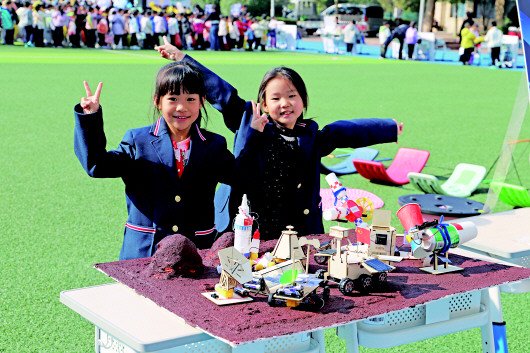
Core Points - The "Three Navigation" advanced curriculum map was officially released at Yanshan Primary School, marking a new stage in the systematic and progressive development of aerospace education [2] - The curriculum includes three modules: "Initiation," "Leadership," and "Exploration," aimed at enhancing students' scientific literacy and fostering innovative talents [2] - The school has achieved notable success in various national science competitions, reflecting the effectiveness of its science education efforts [2] Group 1 - The opening ceremony featured performances that highlighted the spirit of aerospace exploration, engaging students and attendees alike [2] - The event was attended by local officials who praised the school's commitment to science education and promised to provide more resources for students' scientific exploration [3] - A science drama titled "The Wonderful Journey of the Space Detective" was performed, integrating aerospace knowledge into an engaging narrative [4] Group 2 - An awards ceremony recognized students who excelled in national science competitions, celebrating their achievements and encouraging continued pursuit of scientific exploration [5] - The science festival included various student projects displayed in exhibition areas, showcasing a range of creative works from different grade levels [6] - The festival aimed to instill the spirit of perseverance and dedication in students, preparing them for future challenges in the field of science [6] Group 3 - The fifth Aerospace Science and Technology Festival was inaugurated at Yanshan Primary School, emphasizing the school's focus on scientific education and aerospace specialization [7] - Students showcased their aerospace projects, symbolizing the planting of dreams related to aerospace exploration [8]

广东部署深化“双减”工作下一阶段重点任务 “双减”政策不变、力度不减
Nan Fang Ri Bao Wang Luo Ban· 2025-10-21 08:17
Core Insights - The Guangdong province is committed to deepening the "double reduction" policy, focusing on addressing deeper issues while maintaining consistent policies and efforts to reform and improve the educational system [1][2] Group 1: Progress and Achievements - Over the past four years, the "double reduction" initiative has led to a significant decrease in extracurricular training, an improvement in school services, and a gradual reduction in the overall burden on students and parents [1] - The scientific education level has been continuously enhanced as a result of these efforts [1] Group 2: Future Focus Areas - The next phase of the "double reduction" work will prioritize improving the quality of in-school education, enhancing homework management, reducing the burden of school bags, and diversifying after-school services [2] - There will be a push to establish a basic education enrollment system that aligns with population trends and to actively promote middle school entrance examination reforms [2] - The governance of extracurricular training will be strengthened, with a focus on regulating and developing non-academic training while preventing hidden variations in academic training [2] - The launch of the "National Extracurricular Education Training One Code Pass (Guangdong)" will facilitate parents in selecting compliant training courses through a comprehensive regulatory platform [2]
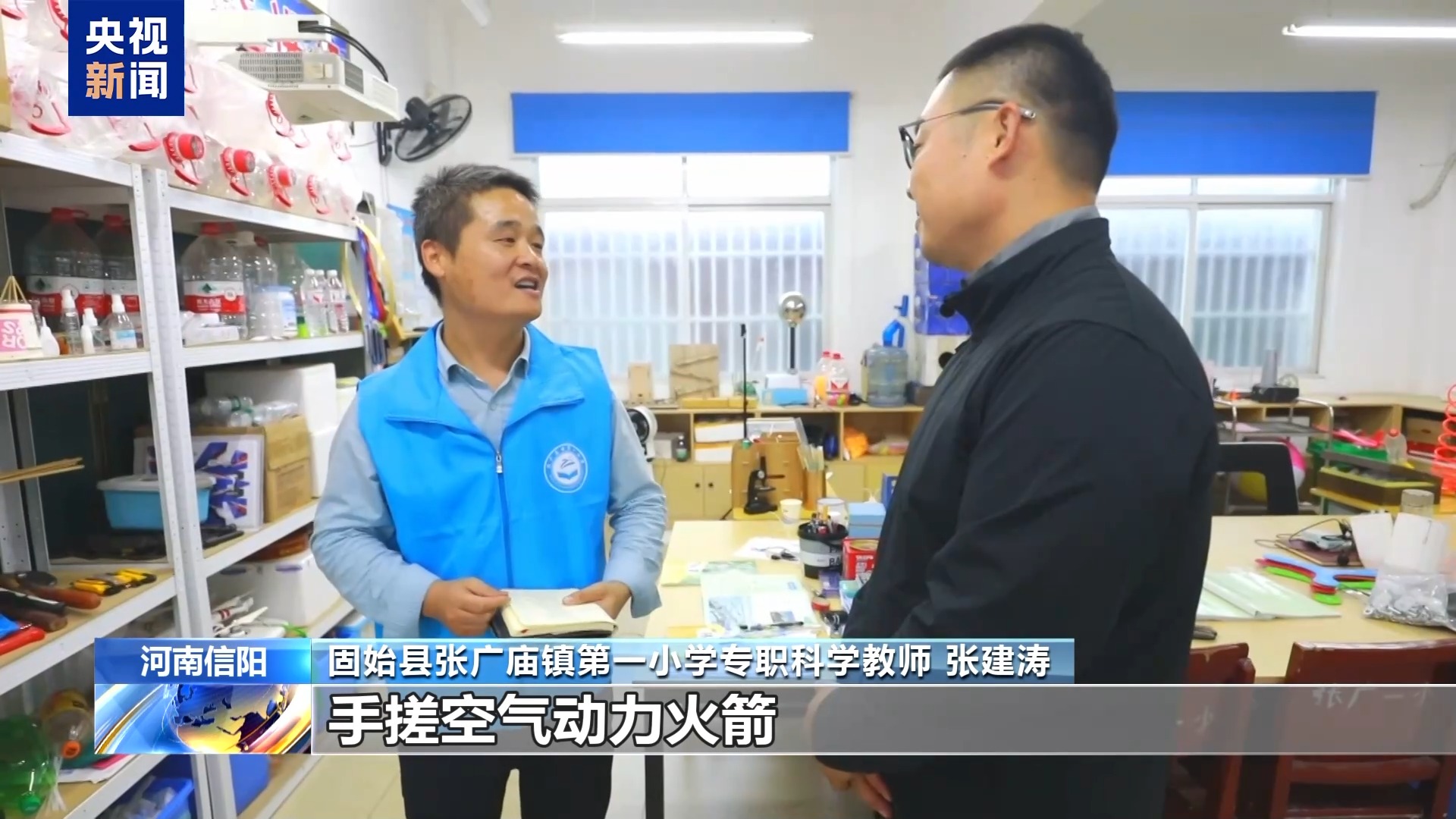
手搓实验教具 这所乡村小学5年发射“火箭”超520次
Yang Shi Xin Wen· 2025-10-21 04:40
Core Viewpoint - The article highlights the transformative impact of science education at Zhangguangmiao Primary School in Gushi County, Henan, where innovative hands-on experiments have fostered a love for science among students over the past five years [1][5]. Group 1: Science Education Initiatives - The school established a "Chuying Science Museum" five years ago, which has become a hub for hands-on scientific experiments using recycled materials [1][8]. - Students have conducted over 520 launches of water rockets, showcasing the practical application of scientific principles [1][11]. - The school has participated in county science sports events for five consecutive years and has even reached the national stage in science experiment competitions [5]. Group 2: Cost-Effective Experimentation - The cost of scientific equipment for a recent science sports event was only 53 yuan, with some components costing as little as 0.06 yuan [8]. - The science teacher has compiled a list of 180 completed experiments, encouraging other teachers to engage students in practical science [8][10]. Group 3: Community Engagement - The school invites parents to participate in science experiments, fostering a community atmosphere where both parents and children enjoy learning together [7]. - The overall emphasis on science education has increased among teachers, students, and parents, reflecting a broader national focus on scientific literacy [7]. Group 4: Student Aspirations - Students express aspirations to explore outer space and become scientists, indicating the positive influence of the school's science programs on their future ambitions [12][13].