
建筑业

Search documents
2.5犀牛财经晚报:上交所公布2026年春节休市安排
Xi Niu Cai Jing· 2026-02-05 10:22
Group 1: Smartphone Market - The global smartphone market revenue reached $143 billion in Q4 2025, marking a 13% year-on-year increase and setting a record for single-quarter revenue [2] - The average selling price (ASP) of smartphones surpassed $400 for the first time, reflecting an 8% year-on-year growth, driven by a trend towards higher-end devices and rising material costs [2] - Smartphone shipment volume grew by 5% year-on-year, indicating a market growth driven by "value expansion" rather than "scale expansion" [2] Group 2: MLCC Market - The global MLCC market is experiencing polarization, with high-end demand driven by AI applications, while the mid-to-low-end market faces pressure due to rising raw material costs and weak demand [2] - Major manufacturers in Japan and South Korea are operating at full capacity due to increased orders for high-end MLCCs, while the consumer electronics sector is struggling [2] - The supply chain is expected to reflect a trend of "AI heat, consumer cold" in Q1 2026, necessitating suppliers to focus on high-end AI products and manage traditional product inventory and cost risks [2] Group 3: 3D Printing Industry - The domestic 3D printing industry has seen a positive start in 2026, with numerous companies reporting increased performance and ongoing mergers and acquisitions [4] - The application of 3D printing technology is expanding into various fields, including aerospace, consumer electronics, and biomedicine, highlighting its value in customization and efficiency [4] Group 4: NAND Flash Market - NAND flash memory prices surged by 80%-90% in Q1 2026, driven by a sharp increase in general server DRAM prices and a similar rise in NAND prices after a relatively stable Q4 [3] - The overall market is experiencing a comprehensive price increase, influenced by rising prices of certain HBM3e products [3] Group 5: Financial and Investment Activities - New City Development raised HKD 473 million by placing 198 million shares at HKD 2.39 each, with funds aimed at business development and improving liquidity [7] - The China Securities Regulatory Commission approved the IPO registration of Aitec, a company specializing in automotive electronics [7] - Hengwei Technology reported a 30.13% year-on-year increase in net profit for 2025, despite a 6.31% decline in revenue [14]
从超4%到1%:俄罗斯经济增速下降,普京表态
Di Yi Cai Jing Zi Xun· 2026-02-05 09:20
Economic Growth and Inflation - Russia's GDP growth for 2025 is projected at 1%, a slowdown from 4.1% in 2023 and 4.3% in 2024, primarily due to measures aimed at reducing inflation [2] - The inflation rate in Russia has decreased to 5.6% in 2025, down from 9.5% in 2024, with a year-to-date annualized inflation rate of 6.4% as of January 26 [3] - The Central Bank of Russia has adjusted the benchmark interest rate, which peaked at 21% in the first half of 2025 and was reduced to 18% in the second half, maintaining a "moderately tight" stance to prevent inflation rebound [3] Factors Contributing to Economic Decline - The ongoing Russia-Ukraine conflict has shifted financial resources towards military spending, limiting investments in production and technology [4] - Long-term impacts of Western sanctions have led to technological blockades, hindering industrial upgrades and weakening the industrial base [4] - High borrowing costs, reduced demand, and increased military expenditures have tightened fiscal conditions, contributing to economic slowdown [5] Sectoral Performance - Key sectors such as transportation, construction, and certain extraction industries, particularly coal, oil, and gas, have underperformed due to the Central Bank's interest rate hikes [5] - Investment growth in Russia has stagnated, with fixed asset investment projected to show zero growth by the end of 2025, marking the end of rapid growth driven by state spending and import substitution [5] Future Economic Outlook - The geopolitical uncertainty poses significant challenges for Russia's economy, with energy exports constrained and international oil prices declining [6] - The government plans to increase the value-added tax rate from 20% to 22% starting in 2026, which is expected to impact consumer prices and inflation [6] - Experts suggest that the continuation of the Russia-Ukraine conflict will likely lead to sustained economic decline unless significant changes occur [7]


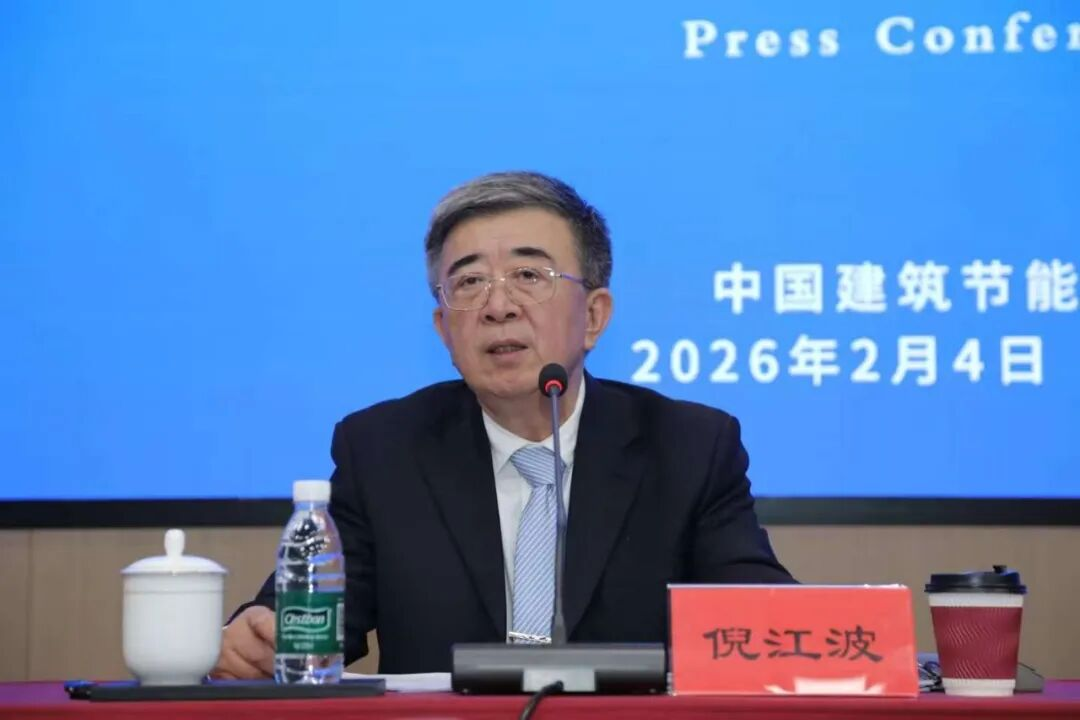
中国建筑节能协会成功发布2025年中国城乡建设领域碳排放报告
Jing Ji Wang· 2026-02-05 08:19
Core Viewpoint - The "Research Report on Carbon Emissions in China's Urban-Rural Construction Sector (2025)" was released, providing a comprehensive analysis of carbon emissions in the construction sector, supporting the goals of carbon peak and carbon neutrality, and promoting high-quality green transformation in the industry [1][3]. Group 1: Carbon Emission Data - In 2024, the total carbon emissions from the construction industry in China (including building materials and construction) reached 2.78 billion tons of CO₂, a decrease of 0.06 billion tons compared to 2023 [6]. - Among these, carbon emissions from residential buildings accounted for approximately two-thirds, totaling 1.81 billion tons of CO₂, while civil engineering emissions were 0.97 billion tons [6]. - During the operational phase, carbon emissions from civil buildings in 2024 were 2.47 billion tons of CO₂, representing 22.1% of national energy consumption [6]. Group 2: Emission Sources and Types - By building type, carbon emissions from public buildings, urban residential buildings, and rural residential buildings accounted for 43%, 39%, and 18% respectively [6]. - In terms of emission sources, electricity accounted for 66.8% of carbon emissions, while fossil energy and thermal energy each contributed 16.6% [6]. Group 3: Research and Methodology Enhancements - The report introduced new topics such as "greenhouse gas emissions from refrigerants in residential buildings" and "dynamic updates of carbon emission factors for core building materials," enhancing the carbon emission research framework [6]. - It also addressed shortcomings in the accounting of non-CO₂ greenhouse gas emissions and the lag in updating carbon emission factors [6]. Group 4: Industry Impact and Future Directions - The release of the report is expected to provide important data support for precise policy-making and efficient emission reduction in the construction sector [3][7]. - The China Building Energy Efficiency Association aims to deepen research on carbon emissions data in the construction sector and establish a technical exchange and cooperation platform to facilitate the implementation of green transformation mechanisms [7].

烟台市举办“筑梦烟台建设 审批聚力起航”增值服务活动
Qi Lu Wan Bao· 2026-02-05 07:30
齐鲁晚报.齐鲁壹点孙淑玉 为持续优化建筑业及房地产领域营商环境,畅通政企沟通渠道,2月4日上午,烟台市行政审批服务局联 合市住房城乡建设局、市人力资源和社会保障局、市应急管理局、莱山区税务局等部门,邀请飞龙集 团、烟建集团、中铁十局等26家市级重点建筑业企业代表,成功举办"筑梦烟台建设.审批聚力起航"增 值服务活动暨全市建筑业企业交流座谈会,精准破解企业在项目审批、要素保障、建筑业企业资质等方 面的堵点难点问题。 活动伊始,在烟台市行政审批服务局副局长刘健、朱珂等陪同下,与会人员观看了《奋进万亿新征程政 务服务当先锋》宣传片,并在工作人员引导讲解下参观了一楼"烟必行"品牌展板、重点产业链沙盘、市 人大常委会立法民意征集点、增值服务专区、政务服务直播间、重点项目会客厅、城市书房、"好房 子"专区、惠民驿站及"一件事"专区等特色功能区域。在好房子专区,烟台市住建局重点介绍了专区设 置、活动部署及万科、蓝天、正大、绿城等"好房子"政策。 在随后召开的全市建筑业企业座谈会上,刘健代表市行政审批服务局,介绍了过去一年烟台市在推 行"一证多地块""四证齐发"等服务模式、助力全市建筑业企业经营发展等方面取得的显著成效及面临 ...
从超4%到1%:俄罗斯经济增速下降,普京怎么说
Di Yi Cai Jing· 2026-02-05 06:49
Economic Growth Outlook - Russia's GDP growth rate for 2025 is projected at 1%, significantly lower than 4.1% in 2023 and 4.3% in 2024, primarily due to measures aimed at reducing inflation [1] - Cumulative growth over the past three years is reported at 9.7% [1] Inflation and Monetary Policy - Inflation in Russia is expected to decrease to 5.6% in 2025, down from 9.5% in 2024, with a current annualized rate of 6.4% [3] - The Central Bank of Russia has adjusted the benchmark interest rate, peaking at 21% in early 2025 to curb inflation expectations, then gradually lowering it to 18% while maintaining a "moderately tight" stance [3][5] - The decline in inflation has created space for a more accommodative monetary policy, despite still being above the Central Bank's target of 4% [3] Economic Challenges - The ongoing Russia-Ukraine conflict has shifted significant funding towards military sectors, limiting investments in production and technology, which hampers economic growth [4] - Long-term impacts of Western sanctions have led to technological blockades, restricting Russia's ability to upgrade its industries [5] - High borrowing costs, reduced demand, and increased military spending have contributed to a tightening fiscal situation [5] Investment Trends - Fixed asset investment in Russia is projected to stagnate, indicating the end of a period of rapid growth driven by state spending and import substitution [6] - The government plans to increase the VAT rate from 20% to 22% starting in 2026, which is expected to impact consumer prices and inflation [7] Future Economic Prospects - The geopolitical uncertainty poses significant challenges for Russia's economic recovery, with energy export conditions deteriorating due to sanctions and falling oil prices [7] - Experts suggest that without resolution to the Ukraine conflict, continued investment decline and economic slowdown are likely [8] - However, there is potential for resilience in the Russian economy if significant progress is made in negotiations and increased funding is directed towards the business sector [8]

回眸十四五 第二期 | “三大市场”齐发力 夯实主业基本盘
Xin Lang Cai Jing· 2026-02-03 12:47
Core Insights - The company is focusing on a three-market development strategy: deepening domestic operations, expanding into foreign markets, and optimizing overseas presence, while adhering to the principle of "market first, profit is key" [2][27] - The company has established a comprehensive market expansion framework, covering 26 provincial-level administrative regions and 10 countries, with new contract amounts exceeding 20 billion yuan for five consecutive years [3][28] Domestic Market Development - The company is actively engaging in local infrastructure upgrades in Xinjiang and the Corps, aligning with the "14th Five-Year Plan" for transportation development [31][34] - In 2024, the company secured the first highway project led by the Corps, with a contract amount of 2.89 billion yuan, setting a record for domestic market expansion [36] - The company has successfully won multiple key projects in Xinjiang, further solidifying its market share and supporting local infrastructure and energy upgrades [36][41] Foreign Market Expansion - The company is leveraging the Belt and Road Initiative to expand its overseas market presence, achieving significant breakthroughs despite market pressures [30][31] - In 2025, the company signed three new projects in Kyrgyzstan and Mongolia, with a total contract value of 166 million yuan, marking a historic milestone in its overseas operations [30] - The company is focusing on collaboration with large state-owned enterprises to enhance resource complementarity and build a stable overseas market development system [30][31] Multi-Industry Collaboration - The company is diversifying its business structure by expanding into mining, renewable energy, and new infrastructure sectors, moving away from traditional road and bridge construction limitations [47][50] - In the renewable energy sector, the company has developed a photovoltaic capacity of 72.78 MWp, integrating transportation and green energy industries [48] - The company has successfully undertaken three mining projects with a total contract value of 1.868 billion yuan, establishing a stable mining business layout [50] Qualification and Capability Enhancement - The company has significantly upgraded its qualification system, now holding 95 various qualifications, a substantial increase from 39 at the beginning of the 14th Five-Year Plan [46] - The company has implemented a closed-loop mechanism for market development, ensuring accountability and performance assessment through various management strategies [20][46] - The company continues to enhance its core competitiveness by obtaining new qualifications and upgrading existing ones, supporting its multi-industry expansion efforts [46][47]


短期压力显化,稳需求政策预期上升
金融街证券· 2026-02-03 11:12
Economic Indicators - The January 2026 PMI index is at 49.3%, down 0.8 percentage points from the end of 2025, indicating a shift from expansion to contraction in manufacturing[3] - The new orders index is at 49.2%, a decrease of 1.6 percentage points, reflecting insufficient total market demand[3] - The new export orders index stands at 47.8%, down 1.2 percentage points, signaling a further slowdown in external demand[3] Supply and Production Dynamics - The production index is at 48.7%, a decline of 2.4 percentage points, while the business activity expectation index is at 52.6%, down 2.9 percentage points[3] - The "production index - new orders index" spread increased by 0.5 percentage points, indicating an expanding supply-demand gap[3] - Finished goods inventory rose from 48.2% to 48.6%, suggesting passive inventory accumulation by firms[3] Price Pressures - The raw material purchase price index is at 56.1%, up 3.0 percentage points, indicating significant cost pressure on businesses[4] - The factory price index is at 50.6%, an increase of 1.7 percentage points, but it lags behind the rise in raw material costs, compressing profit margins[4] Non-Manufacturing Sector - The non-manufacturing PMI for the construction sector is at 48.8%, down 4 percentage points, indicating contraction and nearing historical lower limits[4] - The service sector PMI is at 49.5%, a slight decrease of 0.2 percentage points, reflecting ongoing economic pressures[7] Macro Economic Outlook - There is a risk of evolving into a "stagflation-like" structure due to inflation being driven more by upstream costs rather than demand[5] - The urgency for demand stabilization policies is highlighted to alleviate structural pressures and improve economic expectations[5]
【宏观经济】一周要闻回顾(2026年1月28日-2月3日)
乘联分会· 2026-02-03 10:48
2025年全国财政支出28.74万亿元 2025年全国规模以上文化及相关产业企业营业收入增长7.4% 2026年1月中国采购经理指数运行情况 2025年中国对外投资合作运行情况 点 击 蓝 字 关 注 我 们 本文全文共 2825 字,阅读全文约 10 分钟 2025年全国财政支出28.74万亿元 财政部1月30日发布数据显示, 2025年,全国一般公共预算支出28.74万亿元,同比增长1%。 其中,社会 保障和就业、教育、卫生健康、科学技术、节能环保等支出分别增长6.7%、3.2%、5.7%、4.8%和6.1%,重点 领域支出得到较好保障。 2025年,我国实施了育儿补贴政策,这是新中国成立以来首次大范围、普惠式、直接向群众发放的民生 保障现金补贴。当年,全国各级财政共安排约1000亿元,其中,中央财政安排904亿元。据统计,截至目前, 全国已惠及3000多万名婴幼儿。 针对提振消费,2025年,财政部先后分四批累计下达超长期特别国债资金3000亿元支持消费品以旧换 新,有力释放了消费潜力,助力相关产业加快转型升级。 (来源:财政部 ) 2025年全国规模以上文化及相关产业企业营业收入增长7.4% 2025 ...

资产配置快评:金银巨震,大类资产风波又起——总量创辩第121期
Huachuang Securities· 2026-02-03 03:52
Economic Structure Insights - The "golden crossover" of new and old economies indicates that by 2025, the new economy's GDP share will rise to 20%, surpassing the old economy's 19.7%[11] - By 2026, residents' financial assets are expected to exceed the total value of urban residential properties for the first time, indicating a shift in wealth structure[12] Spending Intentions - Combined spending intentions of residents, government, and overseas sectors are projected to stabilize in 2024 and show a first increase in 2025, driven by strong export performance and increased fiscal counter-cyclical adjustments[13] Market Dynamics - Recent market volatility is attributed to sharp fluctuations in gold and silver prices, with A-share indices experiencing a significant drop of 0.96% on January 30, 2026, primarily due to external factors[15] - The probability of a significant market pullback post-volatility is considered low, as domestic economic recovery is ongoing and supportive policies remain in place[16] Debt Market Outlook - The bond market is experiencing a correction of pessimistic expectations, with a notable recovery in the long-end segment, driven by improved risk appetite and stable funding conditions[20] - The issuance pace of local government bonds is slower than expected, alleviating supply pressure in the bond market[21] Federal Reserve Policy - The Federal Reserve maintained the federal funds rate at 3.5%-3.75% in January 2026, signaling a shift to a "wait-and-see" approach regarding future rate cuts[25] - The Fed's recent statements reflect a more positive outlook on economic growth, with a focus on normalizing monetary policy rather than further rate cuts in the near term[26]
1月制造业PMI重回收缩区间至49.3%
First Capital Securities· 2026-02-02 11:05
Group 1: Manufacturing PMI Overview - January Manufacturing PMI in China is 49.3%, down 0.8 percentage points from the previous month, indicating a shift from expansion to contraction[2] - Large enterprises have a PMI of 50.3%, down 0.5 percentage points; medium enterprises at 48.7%, down 1.1 percentage points; and small enterprises at 47.4%, down 1.2 percentage points, showing a divergence in performance[2] - The production index is at 50.6%, down 1.1 percentage points, remaining above 50% for two consecutive months[7] Group 2: Demand and Supply Dynamics - New orders index is at 49.2%, down 1.6 percentage points, while new export orders are at 47.8%, down 1.2 percentage points, indicating weak demand[2] - The import index is at 47.3%, up 0.3 percentage points, suggesting a slight recovery in imports[2] - The inventory-sales ratio is 1.08, up from 1.05 in December, indicating a slowdown in destocking[3] Group 3: Price and Profitability Indicators - The factory price index is at 50.6%, up 1.7 percentage points, indicating a return to expansion territory[3] - The main raw material purchase price index is at 56.1%, up 3 percentage points, indicating rising input costs[3] - Profitability index is at -5.5%, down 1.3 percentage points, indicating that factory prices are not keeping pace with raw material costs, leading to declining profit levels[19] Group 4: Non-Manufacturing PMI Insights - January Non-Manufacturing PMI is at 49.4%, down 0.8 percentage points, marking a new low for 2023[4] - The services sector PMI is at 49.5%, down 0.2 percentage points, while the construction sector PMI is at 48.8%, down 4 percentage points, indicating significant contraction[4] Group 5: Employment and Logistics - Employment index is at 48.1%, down 0.1 percentage points, indicating a contraction in employment conditions[21] - Supplier delivery time index is at 50.1%, down 0.1 percentage points, but still above the neutral mark, indicating faster delivery times[21]