虚拟货币

Search documents
新华社权威快报丨8部门联合发文进一步防范和处置虚拟货币等相关风险
Xin Hua Wang· 2026-02-06 13:09
新华社权威快报 8部门联合发文 讲 步防范和处置 虚拟货币等相关风险 虚拟货币相关业务活动属于非法金融活动 境内一律严格禁止 未经相关部门依法依规同意 不得在境外发行挂钩人民币的稳定币 境内主体及其控制的境外主体 不得在境外发行虚拟货币 新华社国内部出品 记者2月6日从中国人民银行、中国证监会了解到,中国人民银行等8部门联合发文,明确虚拟货币 相关业务活动属于非法金融活动,境内一律严格禁止。未经相关部门依法依规同意,境内外任何单位和 个人不得在境外发行挂钩人民币的稳定币,境内主体及其控制的境外主体不得在境外发行虚拟货币。 根据8部门发布的《关于进一步防范和处置虚拟货币等相关风险的通知》,在境内开展现实世界资 产代币化活动,以及提供有关中介信息、信息技术服务等,应予以禁止;境外单位和个人不得以任何形 式非法向境内主体提供现实世界资产代币化相关服务。未经相关部门同意、备案等,任何单位和个人不 得赴境外开展现实世界资产代币化业务。 记者:吴雨、刘慧 海报制作:任军 新华社国内部出品 【纠错】 【责任编辑:施歌】 禁止在境内开展现实世界资产代币化活动 ...


Delphi Digital:自 2025 年 1 月以来 97% 山寨币处于下跌,平均回撤 78%
Xin Lang Cai Jing· 2026-02-06 03:29
Core Insights - Approximately 97% of altcoins have been in a downtrend since January 2025, with an average drawdown of about 78% [1] - Among 121 assets analyzed, only 3 have recorded gains: HYPE, SYRUP, and BCH [1] Industry Overview - The altcoin market is experiencing significant declines, indicating a challenging environment for investors [1] - The limited number of gainers suggests a lack of overall market strength and potential investor sentiment issues [1]
币圈浮竹:2.4日比特币创下近15个月新低,能抄底吗?
Sou Hu Cai Jing· 2026-02-04 09:44
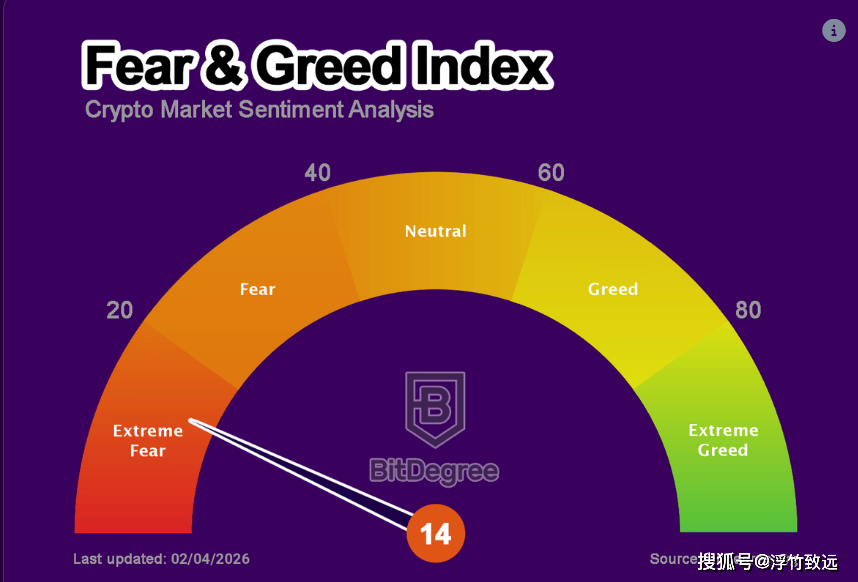
文章编辑时间2026.2.4晚间17:20,所有观点不构成任何投资建议!仅供学习交流。 自律藏着人生的无限可能,其深度亦丈量着人生的高度,每一步深耕都自有回响,越自律者越行越远。我是浮竹,深耕主流币走 势研判,凭专业积淀拆解盘面逻辑,输出务实交易思路。 市场概述 目前加密货币市场持续面临下行压力,继续延续本周早期的抛售趋势。比特币价格一度跌至73000美元以下创下近15个月的低 点,随后小幅反弹至约76000美元附近,但24小时内仍下跌超过4%。整体市场市值约为2.3万亿美元,较上周蒸发约15%,交易量 虽维持高位,但杠杆清算和机构抛售加剧了波动。美联储鹰派立场、地缘政治紧张和ETF资金外流是主要驱动因素,导致比特币 主导率升至约58%。恐慌与贪婪指数继续为14,显示极端恐慌情绪。短期内风险资产退潮仍主导市场。 BNB:价格约753.58-761.20美元,24h跌2.02%。消息面:蓝筹资产,但ETF流出导致熊市;技术面:低于EMA线,RSI~29超 卖,支撑736美元。 走势分析 1.比特币(BTC):触底反弹迹象初现,但风险犹存 比特币本周累计下跌超过15%,从上周高点滑落至73000美元低点,创下自2 ...
比特币价格暴跌,不再被视为“数字黄金”?
日经中文网· 2026-01-23 03:08
Core Viewpoint - Bitcoin has experienced significant volatility, with a notable drop following President Trump's announcement of potential tariffs on European countries, reflecting increased distrust in the cryptocurrency market [2][7]. Group 1: Bitcoin Price Movements - Bitcoin reached a peak price of approximately $97,500 in mid-January, but subsequently fell sharply, nearly negating its early-year gains [2][5]. - Following Trump's tariff announcement on January 16, Bitcoin's price began to decline, dropping to around $87,000 by January 22, which is below the expected price for the end of 2025 [7]. - The price drop was attributed to a decrease in risk appetite among investors, paralleling declines in the stock market, with the Dow Jones Industrial Average falling by 870 points [7]. Group 2: Market Sentiment and Trust Issues - The perception of Bitcoin as "digital gold" is weakening, as indicated by analysts, amidst growing distrust in the cryptocurrency market [7]. - The stablecoin "USDe" experienced a significant drop in value, leading to forced liquidations for investors using it as collateral, further eroding trust in the market [7]. - A hacker incident in early November also contributed to a bleak outlook for the cryptocurrency market, with significant outflows from Bitcoin-related exchange-traded funds (ETFs) [8]. Group 3: Regulatory Developments and Future Outlook - The U.S. Congress has initiated discussions on the "Clarity Act," which could facilitate larger financial institutions' involvement in the cryptocurrency sector, potentially boosting market confidence if passed [8][9]. - The upcoming midterm elections in November may influence the Trump administration to advance policies that support the cryptocurrency industry, which could help alleviate distrust [9]. - For Bitcoin to solidify its status as "digital gold," it would need to see increased holdings by national governments, similar to the demand that supports gold prices [9][10].

政策进一步细化 虚拟货币监管再升级
Jing Ji Ri Bao· 2025-12-25 02:53
Core Viewpoint - The People's Bank of China emphasizes the ongoing crackdown on illegal financial activities related to virtual currencies, asserting that they do not hold the same legal status as fiat currencies and should not circulate in the market [1] Group 1: Regulatory Actions - The recent meeting highlighted the necessity and urgency of continued efforts to combat virtual currency trading and speculation, especially given the persistent volatility and speculative risks associated with major cryptocurrencies like Bitcoin [1] - Regulatory authorities have reiterated that virtual currencies lack transparency in their underlying assets, which can lead to market trust crises [1] Group 2: Financial Risks - Virtual currencies are characterized by anonymity and cross-border capabilities, making them difficult to regulate and susceptible to use in money laundering, fraud, and illegal cross-border fund transfers [2] - The technology and operational mechanisms of virtual currencies contribute to their risks, as they often rely on public chains that lack centralized regulatory oversight, complicating traditional risk management methods [2] Group 3: Investor Protection - The crackdown on virtual currency trading is also a practical measure to protect investors and safeguard public assets, as the market is fraught with high risks and information asymmetry [3] - The global trend is moving towards stricter regulation of virtual currencies, as they pose systemic financial risks and can undermine national monetary policies [3]
孙雪洁:我国虚拟货币监管政策的体系解读
Sou Hu Cai Jing· 2025-12-17 07:58
Core Viewpoint - The article outlines the evolution of China's regulatory framework for virtual currencies from 2013 to 2025, highlighting key regulations and their implications for the financial system and legal risks associated with virtual currencies [3]. Regulatory Framework Overview - In December 2013, the People's Bank of China and other regulatory bodies issued a notice defining Bitcoin as a specific virtual commodity, prohibiting financial institutions from engaging in Bitcoin-related activities, thus establishing a "non-monetary" position for virtual currencies [4]. - In September 2017, the "94 Notice" was released, which banned Initial Coin Offerings (ICOs) and trading platforms, categorizing ICOs as illegal public financing activities and reinforcing the non-monetary status of virtual currencies [5]. - In September 2021, two significant notices were issued: one targeting virtual currency mining as an obsolete industry and the other emphasizing that virtual currency-related activities are illegal financial activities, thereby tightening regulations from mining to trading [6]. - A special meeting in November 2025 reiterated the illegal status of virtual currencies and emphasized ongoing efforts to combat illegal financial activities related to them, indicating a long-term commitment to stringent regulation [7]. Legal Interpretations and Case Studies - Legal interpretations from 2020 to 2022 have clarified the criminal implications of virtual currencies, including their use in gambling and fraud, and established that virtual currencies can be considered property under criminal law [8][9]. - Specific cases have demonstrated the application of these legal interpretations, highlighting the criminal liability associated with the use of virtual currencies in various illegal activities [9]. Conclusion - The legal risks associated with virtual currencies have evolved into a complex regulatory challenge encompassing criminal, financial, and tax issues. Although there is no dedicated "virtual currency law" in China, a robust regulatory system has been established through strong regulatory policies and existing legal frameworks [10].

科技大佬为何难逃“币圈引力”?
Xin Lang Cai Jing· 2025-12-14 10:23
Group 1 - The core viewpoint of the article highlights the rising market value of Moole Thread, often referred to as the "Chinese version of Nvidia," which reached 383 billion yuan, a sixfold increase from its issuance price, amidst the growing interest in AI and computing power [1][13] - The article discusses the complex relationship between tech giants and the cryptocurrency market, illustrating how figures like Elon Musk and Sam Altman have engaged with virtual currencies, reflecting a broader trend of capital intertwining with AI and blockchain technologies [2][3] - The narrative emphasizes the dual strategies of tech leaders like Musk, who leverage their influence to manipulate cryptocurrency markets while maintaining significant holdings in Bitcoin, showcasing a blend of short-term trading and long-term investment approaches [5][6] Group 2 - The article outlines the motivations behind tech leaders' involvement in cryptocurrencies, suggesting that their engagement goes beyond mere profit, as seen in Musk's and Altman's ventures into the crypto space [3][4] - It highlights the energy-intensive nature of both AI and cryptocurrency mining, indicating that the infrastructure supporting these industries is closely linked, leading to a flow of capital and entrepreneurs across both sectors [9][11] - The piece notes the competitive landscape of the computing power sector, driven by the rapid evolution of technology and the need for differentiation, which may lead to a "Matthew effect" where larger players dominate the market [13]


科技大佬为何难逃「币圈引力」?
3 6 Ke· 2025-12-14 02:20
Group 1 - The core point of the article highlights the rising market value of Moole Thread, often referred to as the "Chinese version of Nvidia," which reached 383 billion yuan, a sixfold increase from its initial offering price, amidst the growing interest in AI and computing power [1] - The article discusses the complex relationship between tech giants and the cryptocurrency market, noting that figures like Elon Musk and Sam Altman have engaged with cryptocurrencies, reflecting a broader trend among tech leaders [1][2] - The narrative suggests a metaphorical connection between AI, computing power, and cryptocurrencies, indicating a shared capital link that drives investment and innovation in these sectors [1] Group 2 - Musk's influence in the cryptocurrency space is emphasized, showcasing his ability to manipulate market movements through social media, particularly with Dogecoin and Bitcoin, revealing a dual strategy of leveraging personal influence while maintaining significant cryptocurrency holdings [2] - Altman's involvement in the WorldCoin project illustrates a vision of creating a new cryptocurrency that aims to distribute wealth equitably, highlighting the intersection of AI and cryptocurrency in societal experiments [3] - Nvidia's business model is described as primarily focused on selling hardware for cryptocurrency mining without direct involvement in mining itself, raising questions about the company's transparency regarding the impact of mining on its revenue [4] Group 3 - The article notes that both AI and cryptocurrencies are energy-intensive industries, with a significant demand for computing power and electricity, leading to a convergence of interests among investors and entrepreneurs in these fields [5] - The shift of mining companies towards providing computing power services reflects a strategic pivot in response to market conditions, with companies like CoreWeave and TeraWulf capitalizing on their existing infrastructure [6] - The regulatory environment in the U.S. favors cryptocurrency mining companies due to their established power contracts, allowing them to bypass lengthy approval processes for new AI data centers, thus positioning them as attractive partners for AI firms [7] Group 4 - The article discusses the competitive landscape of the computing power market, highlighting the rapid growth and valuation of companies like Nvidia and Moole Thread, driven by the AI investment boom and domestic strategic needs [8] - The emergence of domestic computing power firms is linked to geopolitical factors, particularly U.S. technology export controls, which have spurred the growth of local companies in response to national strategic demands [8] - The article concludes by noting the uncertainty surrounding policy changes, particularly regarding chip exports to China, which could impact the dynamics of the computing power and cryptocurrency markets [9]
定调啦!如何一口气真正搞懂稳定币?
Sou Hu Cai Jing· 2025-12-13 17:14
Group 1 - The central bank has classified stablecoins as virtual currencies and emphasized that activities related to virtual currencies are illegal financial activities [1][98] - Stablecoins are designed to maintain price stability and are a type of cryptocurrency that utilizes blockchain technology [10][14] - The issuance of stablecoins typically involves backing them with fiat currency, such as the US dollar, to maintain a 1:1 exchange relationship [71][75] Group 2 - Stablecoins can enhance transaction efficiency by enabling peer-to-peer transactions without the need for banks or third-party platforms, but this efficiency comes at the cost of overall financial system security [62][64] - The reliance on stablecoins can create systemic risks, particularly if the issuing institutions do not maintain sufficient reserves to meet redemption demands, leading to liquidity issues [89][91] - The International Bank for Settlements has warned that stablecoins may not be a reliable form of currency without proper regulation, posing risks to financial stability and monetary sovereignty [95]
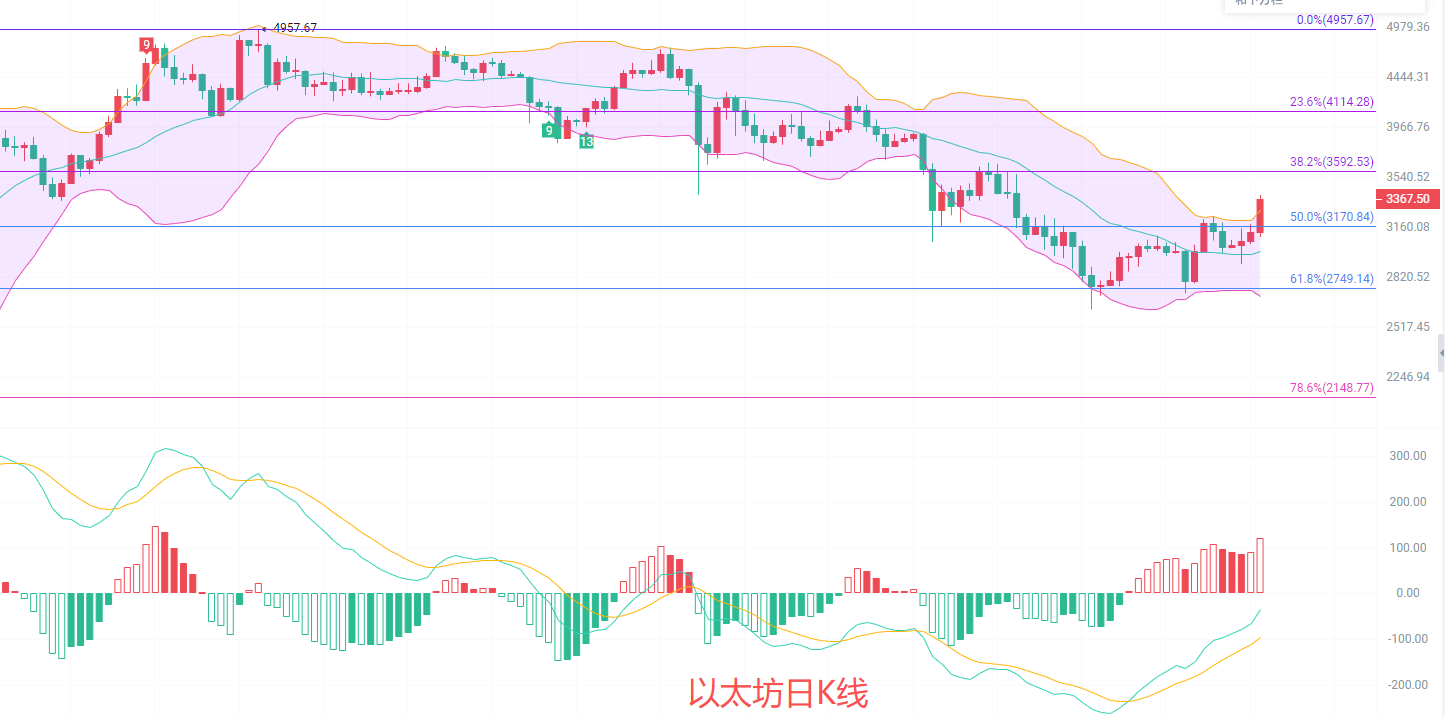
币圈院士:12.10以太坊北上情绪已经点燃?南下被套怎么解?最新行情分析及短线思路参考
Sou Hu Cai Jing· 2025-12-11 10:12
Core Insights - The fundamental principle of trading is survival, followed by profit, emphasizing the importance of a personal trading strategy and risk management [1] - The current price of Ethereum (ETH) is 3365, with a significant upward trend observed, indicating a potential target of 3520 [1] - The analysis suggests that the market is currently in a bullish phase, with key resistance levels identified [3][5] Price Analysis - Ethereum reached a high of 3397 and a low of 3089 before the report, with a daily increase of 9.88% [1][3] - The EMA trend indicator shows a bullish trend, with the K-line breaking the upper Bollinger Band at 3286, indicating upward momentum [3] - The four-hour K-line has broken the 0.5 Fibonacci resistance level at 3170, which can serve as a stop-loss point for upward movement [5] Trading Strategy - For short-term trading, suggested entry points for downward movement are between 3490 and 3540, with a stop-loss at 3590 and targets set at 3440 to 3390 [5] - For upward movement, entry points are recommended between 3290 and 3240, with a stop-loss at 3190 and targets at 3340 to 3390 [5] - The analysis emphasizes the importance of real-time data for trading decisions and encourages investors to manage their positions carefully [5]