山寨币

Search documents
山寨币抛压创五年新高,13 个月净卖出达 2090 亿美元
Xin Lang Cai Jing· 2026-02-18 10:02
Core Viewpoint - The pressure on altcoins has reached a five-year high, indicating a significant shift in market dynamics with a notable outflow of retail investor funds [1] Group 1: Market Dynamics - The cumulative buy-sell difference for altcoins, excluding BTC and ETH, has dropped to -$209 billion, reflecting a substantial net selling pressure [1] - In January 2025, this indicator was close to zero, marking the last balance of supply and demand before a continuous 13-month period of net selling [1] Group 2: Investor Behavior - The market structure shows that retail funds have largely exited, and there is no indication of concentrated buying from institutional investors [1] - The analysis suggests that this situation is not a short-term correction but rather a prolonged period of sustained net selling pressure over more than a year, with a clear lack of buying strength [1]
白宫背书成陷阱?特朗普行情退潮,散户巨额浮亏超7000亿
Sou Hu Cai Jing· 2026-02-06 18:41
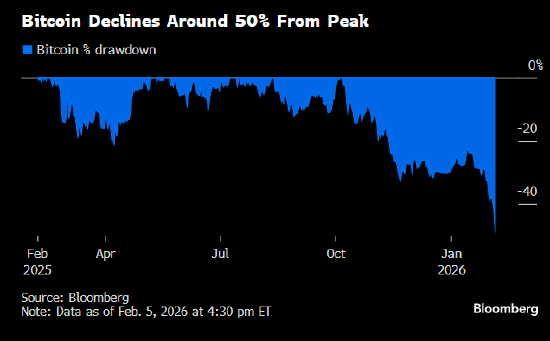
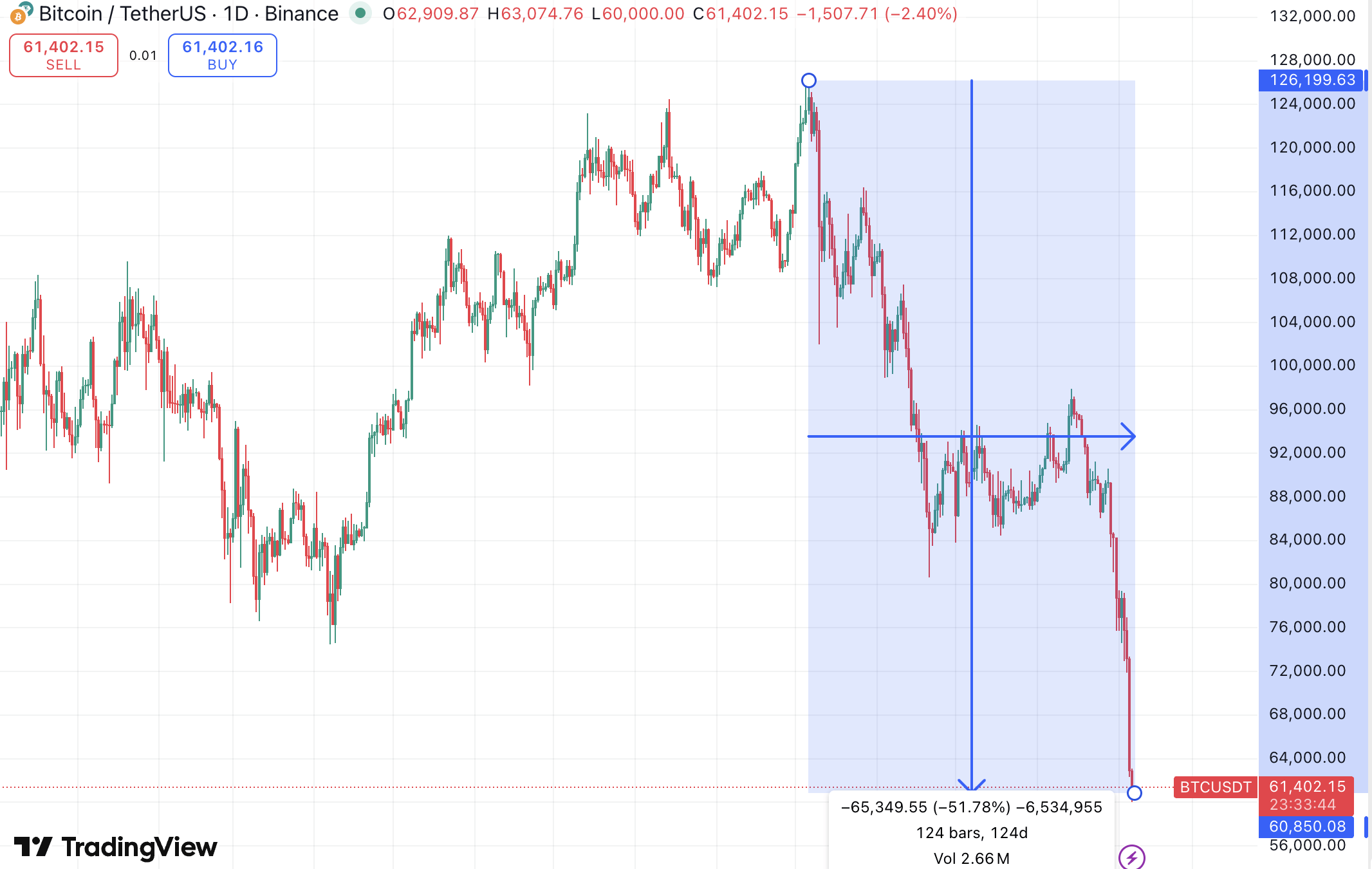
Core Viewpoint - The cryptocurrency market has experienced a significant downturn, with Bitcoin prices dropping over 50% from their peak, leading to substantial losses for investors who entered the market following optimistic political endorsements from President Trump [1][5][18]. Group 1: Policy Support - Following Trump's election, there was unprecedented support for cryptocurrencies, with promises to make the U.S. a global cryptocurrency hub [3]. - Wall Street responded quickly, with regulatory bodies approving a range of exchange-traded products (ETFs) covering both mainstream and high-risk tokens, which fueled optimistic expectations among retail investors [3][5]. - Retail investors believed that political backing and regulatory compliance would reduce volatility and investment risks, leading them to invest heavily in "Wall Street-approved" ETF products [3]. Group 2: Market Crash - The anticipated stability did not materialize, as the inherent volatility of cryptocurrencies persisted, resulting in a rapid sell-off across the market [5]. - Bitcoin's price fell over 50%, settling around $61,000, while other altcoins saw even steeper declines, with a 51% drop in market capitalization compared to last October [5][10]. - A significant outflow of funds occurred, with over $740 million withdrawn from more than 140 cryptocurrency-themed ETFs in a single day, and nearly $4 billion in total over the past three months [7][10]. Group 3: Retail Investor Dilemma - Retail investors, who entered the market through compliant fund products, faced severe losses as these products failed to mitigate risks as expected [9]. - Many new retail investors had anticipated a smoother experience akin to traditional assets, only to be confronted with extreme price fluctuations [9][18]. - The average cost for Bitcoin ETF holders was approximately $84,100, significantly higher than the current market price, leading to widespread unrealized losses and increased pessimism [12][10]. Group 4: Broader Market Impact - The volatility in the cryptocurrency market also affected traditional stock markets, with Trump's policy statements causing significant fluctuations in major indices [14]. - Despite the turmoil, retail investors showed unexpected resilience, becoming the largest buyers, with a notable increase in call options purchases compared to institutional investors [14]. Group 5: Lessons Learned - The sharp decline in cryptocurrency prices highlighted that political support can enhance product availability and market sentiment but does not eliminate the inherent risks associated with high-volatility assets [16][18]. - The market's reaction serves as a reminder that while policies can provide legitimacy, they do not guarantee price stability, leading to a harsh re-evaluation of the speculative nature of cryptocurrency investments [18].

华尔街豪赌加密货币之后 散户投资者交了“高昂学费”
Xin Lang Cai Jing· 2026-02-06 09:43
Core Insights - The cryptocurrency market, particularly Bitcoin and various altcoin ETFs, has experienced a significant downturn, erasing all gains made since Donald Trump's return to the presidential race [1][3][4] - Bitcoin's price has dropped by 50% from its peak, currently around $63,000, while a metric tracking 50 smaller tokens has fallen by 67% from recent highs in October [4][6] - The overall market capitalization of cryptocurrencies has decreased by at least $700 billion in the past week [4][6] Group 1 - The promise of the Trump administration to make the U.S. a global cryptocurrency hub has not materialized, leading to a sharp decline in the market [3][6] - Regulatory support for cryptocurrency ETFs was expected to protect investors, but instead, it has resulted in more pain for retail investors [3][6] - The expectation that a pro-cryptocurrency government could prevent market downturns has proven to be misguided, with significant losses occurring regardless of regulatory backing [3][6]
Delphi Digital:自 2025 年 1 月以来 97% 山寨币处于下跌,平均回撤 78%
Xin Lang Cai Jing· 2026-02-06 03:29
Core Insights - Approximately 97% of altcoins have been in a downtrend since January 2025, with an average drawdown of about 78% [1] - Among 121 assets analyzed, only 3 have recorded gains: HYPE, SYRUP, and BCH [1] Industry Overview - The altcoin market is experiencing significant declines, indicating a challenging environment for investors [1] - The limited number of gainers suggests a lack of overall market strength and potential investor sentiment issues [1]
比特币腰斩、山寨币崩盘,相信“特朗普行情”的散户“买单”
Sou Hu Cai Jing· 2026-02-06 01:00
Core Viewpoint - The cryptocurrency market is experiencing significant declines, with Bitcoin dropping over 50% from its peak, erasing gains made before and after Trump's return to the White House, while altcoins have also seen substantial losses [1][7][9] Market Performance - As of the report, Bitcoin is priced at $61,000, down more than 50% from its peak [1][7] - The market capitalization of altcoins has decreased by 51% from last October's high, with actual price declines being even more significant due to token inflation [1][5] - The overall cryptocurrency market has lost at least $700 billion in value over the past week [1][7] Fund Flows - Over $740 million was withdrawn from more than 140 cryptocurrency-themed ETFs in a single day, with a total net outflow of nearly $4 billion over the past three months [5][8] - The average cost basis for U.S. spot Bitcoin ETF holders is approximately $84,100, indicating that many investors are currently at a loss [5][8] Regulatory Impact - The introduction of "pro-crypto" policies has not led to a decrease in asset volatility, and the anticipated price support from regulatory approval has not materialized [6][9] - The market sentiment suggests that while policies can enhance product supply and improve trading channels, they cannot prevent the cyclical deep declines of high-volatility assets [9] Investor Sentiment - The rapid decline in prices has caught many investors off guard, particularly those who bought at higher levels [8] - Some ETF supporters argue that the current downturn is a normal retracement cycle for cryptocurrencies, emphasizing that ETFs provide regulated access rather than eliminating risk [8]
Delphi Digital:仅 6% 山寨币过去一年录得上涨
Xin Lang Cai Jing· 2026-02-01 03:52
Core Insights - Delphi Digital reports that only about 6% of altcoins have increased in value over the past year, with an average decline of approximately 70% [1] Industry Performance - The overall performance of altcoins has been under pressure, indicating that the past year has been a "difficult year" for most projects [1]
FPG 财盛国际:2026 加密市场展望
Xin Lang Cai Jing· 2026-01-20 15:23
Core Insights - The cryptocurrency market is showing significant signs of recovery, with Bitcoin's price surpassing last year's low, reaching a high of $97,000 and stabilizing around $93,000, reflecting a year-to-date increase of approximately 7% [1][5] - FPG Cai Sheng International believes the current market rebound is not an isolated event but a result of geopolitical uncertainties, macro liquidity excess, and fundamental market structure changes [1][5] - The traditional "four-year halving cycle" theory is facing challenges as the market transitions from speculative frenzy to mature asset allocation, necessitating a reevaluation of crypto asset valuation logic and allocation strategies [1][5] Market Environment Analysis - The surge in global money supply and the rise in precious metals highlight the market's urgent demand for non-sovereign value storage assets, with Bitcoin increasingly aligning with this trend [2][6] - Over the past 12 months, gold prices have risen over 70%, while Bitcoin's rebound in early 2026 shows strong catch-up momentum, although its gains are not as high as gold's [2][6] - The traditional market transmission mechanism of "Bitcoin rises → Ethereum rises → Altcoins rally" has notably broken down in 2025, primarily due to the "walled garden" effect of institutional funds locking capital in major assets, limiting flow to smaller market cap coins [2][6] Halving Cycle Discussion - The effectiveness of the "four-year halving cycle" has been widely questioned after the anticipated rebound in 2025 did not materialize, indicating a shift in market maturity [3][7] - As institutional investors become the dominant force, their investment logic focuses more on long-term asset value and risk management rather than short-term speculative opportunities tied to halving events [3][7] - Historical data shows that the post-halving price increase cycles for Bitcoin are lengthening and experiencing reduced volatility, closely linked to the stable allocation strategies of institutional funds [3][7] Future Outlook - FPG Cai Sheng International identifies three core catalysts that will determine whether the cryptocurrency market can break its current consolidation phase and enter a full bull market in 2026 [4][8] - The expansion of institutional presence, particularly through the approval of more altcoin ETFs, could enhance market liquidity and disrupt the current concentration of funds in major assets [4][8] - The transmission of "wealth effect" requires sustained strong price increases in Bitcoin or Ethereum to generate excess returns that can uplift the entire altcoin market, contingent on macroeconomic conditions and sustained market sentiment [4][8] - A return of retail investor sentiment, indicated by increased stablecoin inflows and a genuine rise in risk appetite, will inject new vitality into the market [4][8]

金丰来:加密市场回暖
Sou Hu Cai Jing· 2026-01-15 12:27
Core Viewpoint - The cryptocurrency market is experiencing a significant recovery, with Bitcoin prices rising strongly and market sentiment quickly improving [1] Group 1: Market Dynamics - The recent price increase is driven by both enhanced spot buying and short covering in derivatives, leading to a rapid price ascent after key levels were effectively breached [3] - The market is not solely focused on Bitcoin; several altcoins have also shown strong performance, indicating a recovery in market sentiment and a reassessment of mid- and small-cap assets [3] Group 2: Macro Perspective - Previous volatility left many digital assets undervalued, but cautious sentiment limited buying interest; as selling pressure eases, the market is responding more directly to positive factors [5] - The effectiveness of key support levels will be crucial for determining the continuation of the current trend; stability above breakout levels could lead to further testing of resistance areas [5] Group 3: Current Market Stage - The cryptocurrency market is at a critical stage of sentiment recovery and trend confirmation, presenting both opportunities and volatility; careful assessment of position structures and key price changes will aid in navigating the new market rhythm [6]

投机资金转向宏观交易,山寨币市场流出逾 400 亿美元
Xin Lang Cai Jing· 2026-01-13 17:46
Core Insights - The cryptocurrency market is experiencing significant capital withdrawal from small-cap tokens as risk appetite declines [1] - The median uptrend cycle for altcoins in 2025 is approximately 20 days, a notable reduction from the previous 40-60 days [1] - Since October, the open interest in altcoin futures has decreased by about 55%, equating to over $40 billion in exposure disappearing [1] - Market participants are increasingly shifting their trading focus towards Bitcoin and Ether, which are more liquid and closely tied to macroeconomic factors [1]
2025年资产格局大逆转:贵金属与美股“吸金”,加密货币跌回高风险阵营
智通财经网· 2025-12-24 02:20
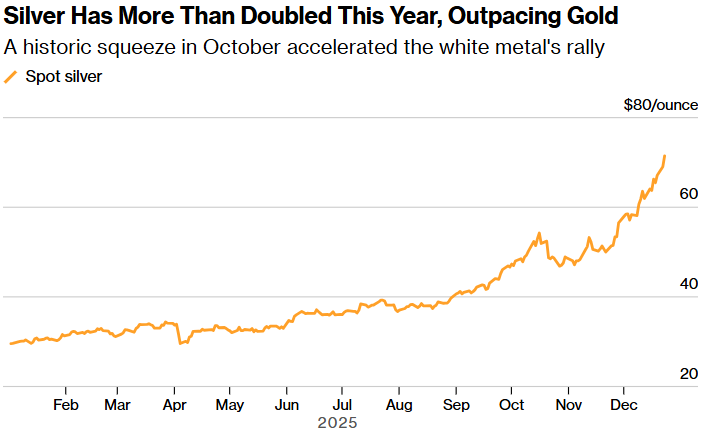
Core Insights - In 2025, cryptocurrencies experienced a significant decline, losing their status as a defensive or alternative asset, while traditional assets like gold and silver thrived, highlighting a shift in investor preferences towards safer, more predictable investments [1][8][16] Group 1: Performance of Assets - Precious metals, particularly silver and gold, saw remarkable gains in 2025, with silver prices rising approximately 140% and gold prices increasing around 70%, both reaching historical highs [1][2] - The U.S. stock indices also performed well, with the Nasdaq up 19%, S&P 500 up 17%, and Russell 2000 up 14%, supported by expectations of easing monetary policy and a focus on artificial intelligence investments [5][8] Group 2: Cryptocurrency Market Dynamics - The cryptocurrency market initially benefited from the launch of the U.S. spot Bitcoin ETF, leading to a surge in Bitcoin prices, but this momentum faded in the second half of the year due to weak liquidity and high regulatory risks [8][12] - Bitcoin ended 2025 with a price around $88,000, reflecting a decline of about 6% from the beginning of the year, indicating that even with the ETF, overall demand for risk assets remained weak [12][9] Group 3: Ethereum and Altcoins - Ethereum struggled to convert its technological advantages into price growth, experiencing a decline of approximately 12% throughout the year, as it lacked strong market demand catalysts compared to Bitcoin [13] - The altcoin market was the weakest segment, with an average value drop of about 42%, as investors shifted focus to more liquid assets, leading to a significant reduction in the total market capitalization of altcoins [14][15] Group 4: Investor Behavior and Market Trends - Investors increasingly favored assets with clear regulatory frameworks and high liquidity, leading to a preference for traditional investments over cryptocurrencies, which are viewed as high-volatility risk assets [1][16] - The initial excitement surrounding ETFs could not sustain ongoing demand, resulting in a market shift towards profit-taking and consolidation, as investor attention moved to more transparent risk profiles [15][16]