风险投资

Search documents
毅达资本,今年收获11个IPO
投资界· 2025-12-29 09:34
Core Viewpoint - The article highlights the successful year for Yida Capital, showcasing its significant achievements in IPOs and investments in high-tech companies, emphasizing the importance of long-term investment strategies and regional focus [2][12][19]. Group 1: IPO Achievements - Yida Capital celebrated its 11th IPO in 2025, with notable companies such as Huaitong Technology and Xian Yicai successfully listed on various stock exchanges [5][6]. - The firm has returned 6 billion to LPs this year, marking a decade-long investment journey with companies like Jingchuang Electric [3][11]. - Xian Yicai's IPO in October reached a market value exceeding 1.6 trillion, demonstrating strong market support for innovative tech firms [6][7]. Group 2: Investment Strategy - Yida Capital's investment strategy is characterized by a dual focus on "industry depth" and "regional depth," allowing it to identify and nurture high-tech companies effectively [12][14]. - The firm has managed a total fund size of 120.9 billion, investing in over 1,068 projects, with 90% being small to medium-sized tech enterprises [12][14]. - The establishment of local teams and funds in Jiangsu has facilitated targeted investments, exemplified by the creation of four funds in Kunshan [16][14]. Group 3: Future Trends and Opportunities - Yida Capital identifies three key investment trends: technological self-reliance, the pervasive impact of AI across industries, and the ongoing consolidation in the economy [19][20]. - The firm aims to leverage its expertise in hard technology while exploring cutting-edge fields like quantum computing and controlled nuclear fusion [19][20]. - The focus is on nurturing innovative companies that can drive significant change, aligning with the broader national strategy for technological advancement [19][20].


对话朱啸虎:培养一个真正的合伙人,学费至少是1亿美元
Xin Lang Cai Jing· 2025-12-29 03:39
Core Insights - The article discusses the evolution of venture capital in China, emphasizing the significance of "dollars" in its history and the challenges faced as the industry moves beyond the dollar era [4][36] - It highlights the need for a new approach to talent development in venture capital, as the traditional methods associated with dollar funds are no longer applicable [5][36] - The conversation features insights from prominent venture capitalist Zhu Xiaohu, who reflects on the lessons learned from past investments and the changing landscape of the industry [6][36] Group 1: Historical Context - Venture capital in China has its roots in the dollar economy, with early investments primarily coming from dollar funds, which played a crucial role in shaping the industry [4][35] - The initial wave of venture capital in China was influenced by the experiences and methodologies of American dollar funds, which served as a learning platform for local investors [4][35] - The current investment themes, such as semiconductors and commercial aerospace, are seen as new challenges for dollar funds, lacking established success stories [36] Group 2: Talent Development and Investment Philosophy - Zhu Xiaohu states that cultivating a true partner in venture capital may require an investment of at least $100 million to assess their capabilities, indicating the high cost of developing talent in the industry [5][21] - The article discusses the shift in investment strategies, with a focus on the importance of financial data and profitability over brand recognition in making investment decisions [47][49] - Zhu emphasizes the need for a clear investment philosophy, prioritizing projects that demonstrate strong financial fundamentals and sustainable business models [47][50] Group 3: Lessons from Past Investments - Zhu shares experiences from past investments, such as the challenges faced with companies like LaShou and the importance of timing in entering markets [21][23] - The article highlights the pitfalls of investing in advanced technologies without considering market readiness and the maturity of the technology [25][23] - Zhu reflects on the significant returns from investments in companies like Ele.me and Didi, noting the importance of understanding user acquisition costs and market dynamics [49][50]


对话朱啸虎:培养一个真正的合伙人,学费至少是1亿美元
投中网· 2025-12-29 03:30
Core Viewpoint - The article discusses the evolution of venture capital in China, particularly the influence of dollar funds and the challenges faced in the current investment landscape as the industry transitions away from the dollar-centric model [3][4]. Group 1: Historical Context of Dollar Funds - Dollar funds have been pivotal in the development of China's venture capital industry, serving as both a starting point and a learning resource for local investors [3]. - The initial wave of venture capital in China was heavily influenced by successful dollar funds, which provided essential knowledge and experience to local entrepreneurs and investors [4]. Group 2: Challenges in the Current Investment Landscape - The current investment environment presents difficulties in nurturing new talent, as the high costs associated with training potential partners (estimated at $100 million) deter firms from investing in human capital [4][22]. - There is a growing concern about the lack of successors in the venture capital space, prompting a need to revisit and redefine investment strategies and philosophies [4]. Group 3: Investment Philosophy and Strategies - The investment philosophy emphasizes the importance of clear viewpoints over brand recognition, suggesting that a strong personal brand can lead to better investment opportunities [15][16]. - The article highlights the significance of understanding financial data and the risks associated with different investment cycles, particularly in the context of technology and hardware investments [17][21]. Group 4: Lessons from Past Investments - Historical investment experiences, such as the early decisions regarding companies like 拉手网 (Lashou) and 宁德时代 (CATL), illustrate the importance of timing and market readiness in investment success [23][25]. - The article reflects on the lessons learned from past failures, emphasizing the need for a balance between technological advancement and market maturity [27][28]. Group 5: Future Outlook and Investment Trends - The current trend in venture capital is to avoid highly concentrated investment areas, advocating for a strategy that diverges slightly from mainstream consensus to find better value opportunities [35]. - The discussion includes the potential for high-return investments in emerging technologies, stressing the importance of understanding customer needs and pricing strategies [36].

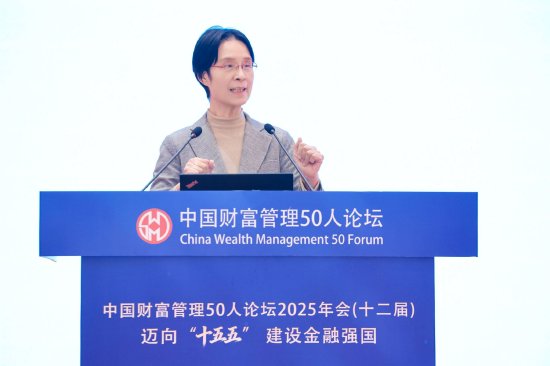
江小涓:科创浪潮下“十五五”金融业迎机遇 以“三化”转型应对挑战
Xin Lang Cai Jing· 2025-12-29 01:03
Core Viewpoint - The 2025 China Wealth Management Forum emphasizes the theme of "Building a Financial Power during the 14th Five-Year Plan," highlighting the importance of technological innovation and the evolving investment landscape in China [1][8]. Group 1: Technological Innovation and Investment Opportunities - China's technological innovation capabilities have established a solid foundation, with a significant surge in new technologies expected during the 14th Five-Year Plan period [3][10]. - The emergence of numerous high-quality tech enterprises is crucial for attracting investment, as the availability of viable projects is essential for capital deployment [3][10]. Group 2: Changing Investment Landscape - Traditional venture capital (VC) and private equity (PE) are experiencing decreased activity, while corporate venture capital (CVC) is becoming a significant force in tech investment [4][11]. - Major tech companies, both domestic (e.g., Alibaba, Ant Group, Tencent) and international (e.g., companies under Elon Musk, Databricks, Anthropic), are actively investing in emerging tech projects [4][11]. - Government venture capital (GVC) is also participating in new project investments, but challenges in project selection remain [4][12]. Group 3: Financing Channels and Global Market Dynamics - Chinese tech companies have diverse global financing options, with about 25% of Chinese tech board companies opting for U.S. listings last year, indicating strong overseas investor confidence in China's tech sector [4][12]. - The influx of new investment forces poses challenges to traditional financial institutions, which must adapt to retain high-quality market participants [4][12]. Group 4: Financial Industry Transformation - The financial sector needs to accelerate its market-oriented, digital, and international transformation to enhance competitiveness [5][14]. - Digital transformation has positioned China's financial industry at a global leading level, supported by government initiatives and a large user base [6][13]. - The rise of generative AI is significantly altering financial services, enabling banks to enhance project evaluation and success forecasting [6][13]. Group 5: Internationalization and Strategic Expansion - There are promising commercial prospects for the financial industry to collaborate with domestic industries in international markets, particularly in developing countries with lower labor costs [7][14]. - The solar photovoltaic industry exemplifies successful international expansion, with significant exports to Africa expected to yield quick returns on investment [7][14]. - The urgency for the financial sector to internationalize is emphasized, as it presents opportunities to stabilize domestic investor returns and mitigate declining profitability [7][14].
一家老牌VC决定申请破产
投中网· 2025-12-27 07:02
Core Viewpoint - The article discusses the unexpected bankruptcy filing of Apple Tree Partners (ATP), a prominent American venture capital firm specializing in life sciences, highlighting the complexities of its financial relationships and operational model [3][4]. Group 1: Bankruptcy Filing - ATP filed for Chapter 11 bankruptcy in Delaware, despite having total assets estimated between $1 billion and $10 billion and minimal liabilities of $100,000 to $500,000, making the situation unusual [3][4]. - The bankruptcy filing occurred shortly after a court ruling requiring ATP's main funding source, Rigmora, to fulfill a $96.9 million investment commitment [3][5]. Group 2: Relationship with Rigmora - Rigmora, backed by Russian billionaire Dmitry Rybolovlev, has been a significant investor in ATP, contributing approximately $2.7 billion, which constitutes 99% of ATP's total fund size [10][11]. - The relationship soured due to the geopolitical implications of the Russia-Ukraine conflict, leading to Rigmora withholding funds and ATP filing a lawsuit against Rigmora for deliberately withholding funds [6][7]. Group 3: Operational Model - ATP's operational model is characterized by a high dependency on a single funding source, which amplifies risks if that source withdraws support [10][11]. - ATP employs a "heavy operational" co-creation model, actively participating in the development of portfolio companies rather than merely providing financial backing [11][12]. Group 4: Strategic Intent of Bankruptcy - The bankruptcy filing is viewed as a strategic move to regain control over funding and operational decisions, rather than a step towards liquidation [8][9]. - ATP aims to ensure that its portfolio companies receive necessary funding and resources to continue their critical missions in developing breakthrough therapies [8]. Group 5: Broader Implications - The situation with ATP reflects the inherent risks in venture capital models that rely heavily on a single investor, raising questions about sustainability and risk management in such structures [13][19]. - The article draws parallels between ATP's model and the emerging "Venture Studio" approach, which emphasizes deep involvement in the companies being funded, highlighting both the potential rewards and risks associated with this investment strategy [15][19].

现代金融如何精准有效支撑生态环境科技创新?
Zhong Guo Huan Jing Bao· 2025-12-26 00:32
Core Viewpoint - The transition to a green and low-carbon economy is an irreversible trend, necessitating significant investment and policy guidance from developed countries, while China aims to leverage ecological innovation to achieve its "dual carbon" goals and establish a new development advantage [1] Group 1: Current State of Green Finance in China - China has established the world's largest green finance system, providing a crucial foundation for supporting ecological innovation [2] - The green loan balance reached 36.6 trillion yuan by the end of 2024, making China the leader globally, with growth rates significantly surpassing average loan growth [2] - The green finance market is thriving, offering diverse financing options such as equity and bonds for technology companies at various stages [2] Group 2: Government Initiatives and Market Dynamics - Government-led platforms like the National Green Development Fund support key technology projects through equity investments, effectively addressing market failures [3] - Despite notable achievements, there are still shortcomings in financial resource allocation, particularly in supporting early-stage technology development compared to developed countries [3] Group 3: Challenges in Financial Support - There is a mismatch between risk and return, with banks favoring established projects over early-stage innovations, leading to financing difficulties for light-asset tech companies [3] - The structure of financing terms is imbalanced, with green bonds typically having shorter maturities that do not align with long R&D cycles [4] Group 4: Professional Capacity and Policy Coordination - Financial institutions in China are still developing their professional assessment capabilities, which hinders effective investment in ecological technologies [4] - Existing policies lack targeted support for early-stage R&D and concept validation projects, and the effectiveness of market mechanisms like carbon markets remains limited [4] Group 5: Recommendations for Improvement - A new financial support framework for ecological innovation should be established, emphasizing a dual-driven approach of policy and market collaboration [5] - Financial products and services need innovation to shift from risk aversion to effective risk management, including the development of specialized funds and new financing tools [6] - Professional capacity building is essential, with a focus on creating specialized departments within financial institutions and establishing standardized technology assessment systems [7] - A supportive ecosystem for innovation should be cultivated, including tax incentives for early-stage investments and enhanced fiscal support for foundational research [7]
投资人眼中的「伟大生意」
投资界· 2025-12-25 08:29
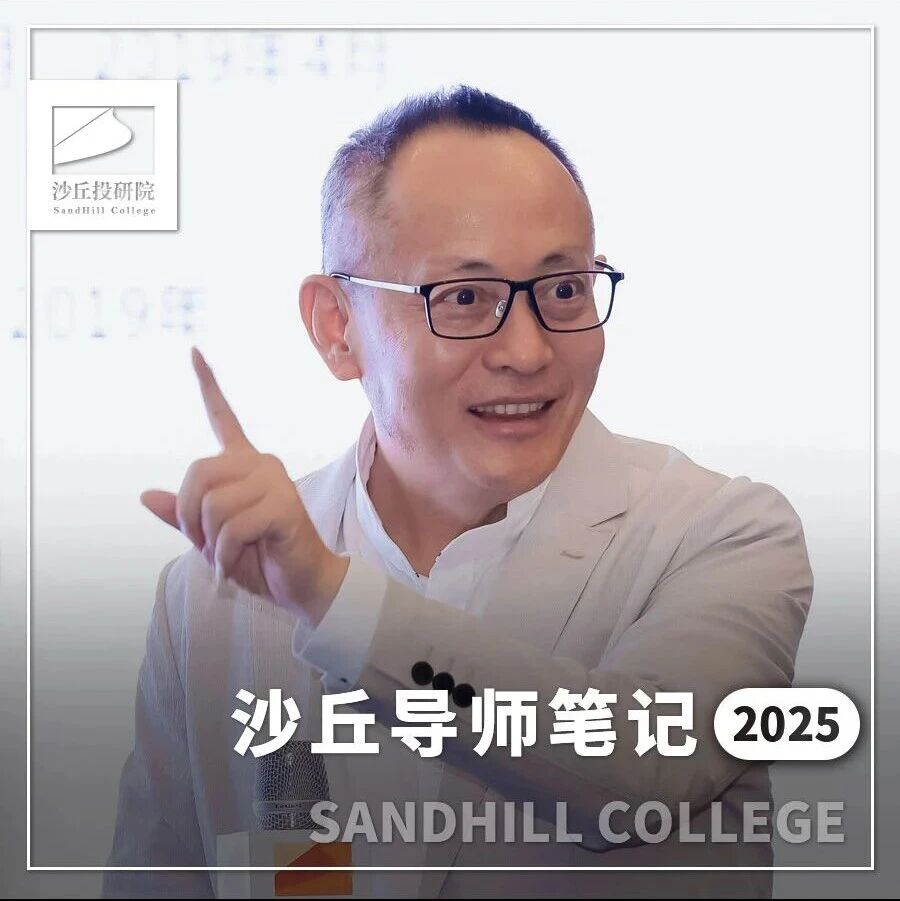
以下文章来源于清科沙丘投研院 ,作者丁宝玉 清科沙丘投研院 . 沙丘投研院——中国投资界的黄埔军校,致力于培育新一代杰出企投家,塑造创投高端人才。我们不仅 分享体系化理论,积极实战,更构筑起"永不毕业"的创投社群,汇聚校友力量,在深度链接与互动中激 发合作,在持续共创与联投中携手向上,一同斩获更大成就。 不同行业,各有其独树一帜的发展脉络与特点。针对该行业的投资策略,也需要随之予以调整。企业 欲在商业世界的激烈角逐中脱颖而出,就必须具备独特的竞争优势,而投资的目标,则是找到这 些"别具一格"的企业。 在沙丘投研院黄埔15期课堂上, 同创伟业管理合伙人 丁宝玉导师 结合过往二十余年的投资经验成 果,分享道:一项投资的成功与否取决于三个关键因素—— 赛道、赛车、赛手 ,并强调 "制定投资 策略的前提,是学会思考底层逻辑" 。其中蕴藏的识人断事之道,往往也是指导经营与投资的关键心 法。 投资决策正确,结果也往往正确吗?什么才是投资人眼中伟大的生意?长期主义的 " 价值投资 " 究竟 要多长?怎样的创始人更容易获得资本青睐? …… 为回答这些问题,本文谨整理摘录 @同创伟业管 理合伙人、沙丘投研院导师 丁宝玉 课堂分 ...
七家欧洲知名机构确认出席第四届达沃斯全球母基金峰会
母基金研究中心· 2025-12-24 09:16
Core Viewpoint - The Fourth Davos Global FOF Summit will take place in Davos, Switzerland from January 19 to January 23, 2026, hosted by the Global FOF Association, aiming to facilitate discussions among leading figures in the global fund of funds industry [2][25]. Group 1: Attendance Confirmation - Seven prominent European institutions have confirmed their attendance at the summit, including Postfinance Venture, LGT Bank, Redalpine Ventures, H Capital Ventures, and EMCORE Asset Management AG [3][6][8][13][19]. - Christian Renner from Postfinance confirmed participation, highlighting Postfinance's significant role in Switzerland's financial landscape with total assets of approximately CHF 102 billion and a net profit of around CHF 164 million for 2023 [4][5]. - Christian Friede from LGT Bank confirmed attendance, emphasizing LGT's focus on wealth management and sustainable investment solutions for high-net-worth individuals and institutions globally [6][7]. Group 2: Summit Highlights - The summit will feature over 100 leading figures from global funds and venture capital cities, discussing strategies for navigating economic cycles and exploring future directions for the fund industry [25][26]. - The Global FOF Association will release the "2025 World's Best FOF Investment Institutions List" during the summit, continuing its tradition of recognizing top investment institutions for six consecutive years [27][28]. - The event will provide a unique opportunity for participants to engage with leading global LPs, discussing investment logic and needs, particularly in the context of RMB and USD funds [29][31]. Group 3: Special Activities - Participants will experience scenic train rides in the Alps and engage in special forums, enhancing networking opportunities in a picturesque setting [33][36]. - The summit aims to foster dialogue between Chinese GPs and international LPs, with previous summits resulting in over USD 1 billion raised by domestic GPs [29][31].


界面新闻发布2025中国顶级风险投资机构榜单:IDG资本、红杉中国、深创投、金沙江创投、经纬创投分列前五
Xin Lang Cai Jing· 2025-12-23 02:20
Core Insights - The 2025 "Top Venture Capital Institutions in China" list highlights IDG Capital as the top firm, followed by Sequoia China and Shenzhen Capital Group, with five new entrants this year, indicating a revitalization in the venture capital sector [1] - The rankings aim to present a true representation of the venture capital ecosystem in China, focusing on institutions that excel in identifying opportunities and providing value to entrepreneurs [1] Investment Institutions - IDG Capital has shown remarkable resilience, shifting its focus towards "hard technology" and "health ecosystem construction," with a distinctive investment style characterized by early-stage focus and long-term support [9] - Sequoia China has established itself as a leader by systematically defining and dominating core sectors, with significant IPOs and exits in AI pharmaceuticals and new energy, reflecting its investment philosophy of "betting on change" [10] - Qiming Venture Partners has built a strong specialization in "technology and medical innovation," with a portfolio that includes industry-defining projects in AI and robotics [11] - Lenovo Capital has adopted a "CVC 2.0" model, focusing on deep industry research to guide its investments, particularly in AI and advanced manufacturing [12] - Yunfeng Fund, co-founded by Jack Ma, has a unique strategy centered around integrating resources within Alibaba's ecosystem, achieving significant exits in technology and healthcare sectors [13] Market Trends - In the fundraising sector, the number of new funds raised in China's equity investment market reached 3,501, a year-on-year increase of 18.3%, with a total scale of 1.16 trillion yuan, reflecting a recovery in the market [14] - The investment landscape has shifted towards core sectors, with hard technology becoming a focal point, as evidenced by a 19.8% increase in investment cases and a significant rise in IPO exits [14] - The Chinese venture capital market is experiencing a "big exit year," particularly with a strong recovery in the Hong Kong capital market facilitating IPOs [15] Policy Influence - The recent policy initiatives from multiple government departments aim to reform the financial supply side, introducing "patient capital" and guiding investments towards early-stage, small, and hard technology ventures [15] - The 2025 policy measures are seen as a new era for venture capital, emphasizing the importance of understanding national strategies and supporting hard technology enterprises [15] Sector Focus - The core sectors for investment in China include hard technology, artificial intelligence, cloud computing, and biomedicine, contrasting with the U.S. focus on AI and defense technology [16] - The AI sector is a key battleground, with Chinese investments emphasizing application and industry integration, while U.S. investments focus on foundational infrastructure and platforms [17] - The demand for computing power driven by AI is becoming a strategic resource, with investments in domestic GPU and AI chip companies to enhance manufacturing capabilities [18] - The energy storage market is evolving, with significant competition and technological advancements in long-duration storage solutions, driven by both domestic and international demand [19] - The pharmaceutical sector is witnessing a milestone year, with Chinese companies making significant strides in global collaborations and high-value transactions in innovative drug development [20]

押注“童年创伤”创始人:这家伦敦早期基金换来10倍回报
3 6 Ke· 2025-12-22 10:35
Core Insights - Hummingbird Ventures, a London-based venture capital firm, focuses on supporting "outlier" founders, which has led to the recognition of its partners Barend Van den Brande and Firat Ileri in Forbes' Midas List Europe [2][3] - The firm successfully led a $15 million Series A funding round for BillionToOne, a medical diagnostics startup, which later went public with a market valuation reaching $4.4 billion [2][3] - Hummingbird's investment strategy emphasizes identifying founders with unique backgrounds and resilience, particularly those who have faced significant challenges in their lives [4][5] Investment Strategy - Hummingbird seeks "outlier" founders who possess a strong desire to succeed despite their unconventional backgrounds [4][5] - The firm has invested in various sectors, including biotechnology, cryptocurrency, artificial intelligence, and gaming, based on the shared traits of resilience among founders [3][4] - Hummingbird's approach diverges from traditional venture capital by focusing on fewer investments, often concentrating a significant portion of their funds into a single startup [9][12] Performance Metrics - Hummingbird's second fund, raised in 2012, has achieved a distribution to paid-in (DPI) ratio of 10x and an internal rate of return (IRR) of 46%, outperforming many peers [11][12] - The firm’s early funds rank among the top 10% of venture capital funds established since 2012, showcasing exceptional performance compared to industry averages [12] - Hummingbird's investment philosophy aligns with the pursuit of "cognitive arbitrage," similar to that of notable investors like Peter Thiel, but with a more aggressive and early-stage investment style [12][13] Team and Operations - Hummingbird's team consists of 14 members who actively search for promising founders globally, with a flexible approach to exploring opportunities in various regions [9][13] - The firm has established a talent team to assist founders in recruiting key management personnel, marking a rare alignment with traditional venture capital practices [11] - Hummingbird's headquarters in London is strategically located near other prominent venture capital firms, enhancing its networking and investment opportunities [13]