
中国科技崛起

Search documents
中国科技三箭齐发:从能源革命到人类起源,改写世界规则!
Sou Hu Cai Jing· 2026-01-12 02:08
Renewable Energy: China's Role as a Global Green Engine - China produces 80% of the world's solar cells, 70% of wind turbines, and 70% of lithium batteries, with renewable energy generation surpassing coal for the first time last year [2] - The largest single photovoltaic power station in the Ningxia Gobi Desert reduces carbon dioxide emissions by 3 million tons annually [2] - Traditional energy giants like Saudi Arabia are beginning to import Chinese photovoltaic technology for future city developments [2] Ancient DNA Decoding: Unraveling Human Origins - The discovery of a 146,000-year-old skull by a Chinese team has rewritten human evolutionary history, confirming it belongs to the mysterious Denisovans [3] - This breakthrough highlights China's disruptive innovation capabilities in fundamental scientific research [3] - While Western scholars search for human origin evidence in Africa, Chinese scientists have unearthed fossils that could change textbooks [3] Food Security: The Global Temperature Gauge of a Seed - The QT12 gene discovered by Huazhong Agricultural University increases rice yield by 78% under high nighttime temperatures, presenting a new direction for agricultural technology [4] - This discovery is crucial as global warming is expected to reduce major grain-producing areas by 10% [4] - The QT12 gene is being applied to improve Thai jasmine rice and Indian Basmati rice, potentially allowing each hectare of rice fields to feed five more people [4]


深圳创投25年:走过坎坷,铸就标杆!如何开启"下一程"?
Zheng Quan Shi Bao· 2025-12-23 16:59
Core Insights - The technology sector in China is experiencing a significant surge, with several prominent tech companies making their debut in the A-share market, igniting market enthusiasm [1] - Shenzhen's venture capital (VC) industry has played a crucial role in this growth, marking its 25th anniversary and reflecting on its past while looking towards the future [2] Group 1: Shenzhen's Venture Capital Development - Shenzhen has pioneered multiple firsts in the national VC industry, including the establishment of the first government-guided, market-oriented state-owned VC institution in 1999 [3] - The city has been recognized as the first pilot city for technology risk investment in China, and it has established the first industry association for venture capital [3] - Shenzhen's VC sector has thrived due to its forward-looking and daring spirit, which has allowed it to adapt and innovate in response to market needs [3][4] Group 2: Government Support and Funding - Since 2015, Shenzhen has established over 13 government investment funds, with a total contribution exceeding 150 billion yuan, leveraging nearly 500 billion yuan in social capital [5][6] - The city has achieved a significant leverage effect, with a total amplification factor of approximately 4.5 times for its government investment funds, indicating effective capital utilization [6] - Shenzhen's government investment funds have supported over 8,000 industry projects and contributed to the growth of more than 1,500 "specialized, refined, unique, and innovative" enterprises [6] Group 3: Innovation and Ecosystem - The number of general partners (GPs) in Shenzhen's VC sector has grown from 1 to 1,500, with total management scale expanding from 700 million yuan to 1.5 trillion yuan, accounting for 10% of the national VC market [7] - The symbiotic relationship between innovative enterprises and venture capital has been emphasized, with both elements mutually reinforcing each other [7][8] - Shenzhen's unique "VC + park" model has fostered a conducive environment for the growth of numerous high-quality enterprises, leading to a significant concentration of listed companies and innovative firms [7] Group 4: Challenges and Future Directions - Despite its achievements, Shenzhen's VC sector faces challenges such as intensified competition and the need for continuous government funding to maintain its leading position [9] - The local VC industry is urged to enhance its internationalization efforts to keep pace with the rapid globalization of Chinese enterprises [9] - There is a call for the next generation of local VC stars to emerge, ensuring the continuity of successful investment philosophies and methodologies [10]
深圳创投25年:走过坎坷,铸就标杆!如何开启“下一程”?
Zheng Quan Shi Bao Wang· 2025-12-23 15:20
Core Insights - The technology sector in China is experiencing a significant resurgence, with several prominent tech companies making their debut on the A-share market, igniting market enthusiasm [1] - Shenzhen's venture capital (VC) industry has played a crucial role in this development, marking its 25th anniversary and reflecting on its past while looking towards the future [2] Group 1: Shenzhen's Venture Capital Evolution - Shenzhen has pioneered multiple firsts in the national VC landscape, including the establishment of the first government-guided, market-oriented state-owned VC institution in 1999 [3] - The city has been recognized as the first pilot city for technology risk investment in China, and it has established the first industry association for VC and the first city to legislate for VC [3] - The success of Shenzhen's VC industry is attributed to its forward-thinking and bold spirit, which has allowed it to adapt and thrive despite challenges such as the 2001 internet bubble [3][4] Group 2: Government Support and Funding - Shenzhen has established a significant government investment fund, with over 150 billion yuan in actual contributions since 2015, leveraging nearly 500 billion yuan in social capital [5][6] - The city’s government investment funds have supported over 8,000 industry projects, contributing to the growth of more than 1,500 "specialized, refined, unique, and innovative" enterprises and nearly 600 companies going public [6] Group 3: Innovation and Investment Synergy - The growth of Shenzhen's VC sector is closely linked to its innovative entrepreneurial environment, with a symbiotic relationship between quality enterprises and effective VC [7] - The "VC + park" model has been instrumental in nurturing numerous high-quality companies, leading to a concentration of listed companies and innovative enterprises in a small area [7][8] Group 4: Challenges and Future Directions - Despite its achievements, Shenzhen's VC industry faces challenges such as increased competition and the need for stable government funding to avoid disruptions in capital flow [9] - There is a call for Shenzhen's VC firms to enhance their internationalization efforts to keep pace with the global expansion of Chinese enterprises [9][10] - The industry must also address succession planning and the cultivation of new VC talent to ensure continued innovation and leadership in the sector [10]
嘉实前沿创新混合基金经理何鸣晓:从产业发展中解码科技资产的“关键变量”
Zheng Quan Ri Bao· 2025-12-08 17:13
Core Viewpoint - The technology sector in China is experiencing unprecedented investment appeal and development potential due to continuous innovation and an improving policy environment [1] Group 1: Key Variables Driving Technology Narrative - Three key variables are identified as driving the deepening of the "technology narrative": 1. Continuous enhancement of China's technological capabilities with significant breakthroughs in areas such as domestic models, computing power, and advanced semiconductor processes [2] 2. Ongoing domestic policy support for the technology sector, including guidance for technological innovation and financing for tech companies [2] 3. Continuous improvement in talent pool, including the maturation of AI algorithm personnel and the engineer dividend accompanying generational technological advancements [2] Group 2: Market Dynamics and Investment Opportunities - Despite solid fundamentals in the technology sector, there has been significant divergence in individual stock performance. Short-term fluctuations should not overly concern investors, as the fundamentals and industry development remain resilient [2] - The market is currently experiencing adjustments due to year-end switching and performance gaps, but this does not affect the long-term investment value in technology [2] Group 3: Identifying New Opportunities Amidst Volatility - To uncover "high-low switching" opportunities in the technology sector, two considerations are emphasized: 1. Analyzing structural differentiation in the industry to enhance investment success rates, focusing on low-priced assets in conjunction with industry changes [4] 2. Evaluating market expectations to identify discrepancies in industry forecasts, with a focus on AI and the rise of Chinese technology, particularly in computing power and storage [4] Group 4: Investment Strategy and Research Framework - The investment strategy in the technology sector should be characterized by high volatility and rapid iteration. A combination of top-down and bottom-up approaches is recommended to capture industry development opportunities [5] - Key factors for stock selection include market space, competitive landscape, business model, management, growth potential, and market expectations [5] - A comprehensive research training system, "3+3+3," is established to enhance research capabilities and investment management efficiency within the company [6] Group 5: Asset Allocation and Product Selection - Investors are advised to assess expected returns and risk tolerance, as the technology sector is inherently high-volatility. Balancing risk and return is crucial [7] - Emphasis is placed on understanding industry changes to improve investment success rates, with a recommendation to consider low-volatility assets for portfolio balance [7] - For product selection, investors should evaluate major holdings, changes, fund manager experience and style, and quarterly reports to align with personal risk-return profiles and industry knowledge [7]
英媒着急:别老盯中国电车和AI啦,再说个“坏消息”…
Guan Cha Zhe Wang· 2025-11-28 03:08
Core Insights - The article discusses China's rapid rise in the fields of autonomous vehicles and pharmaceutical innovation, highlighting the complex emotions in the West regarding China's technological advancements [1][3][4]. Group 1: Autonomous Vehicles - China is emerging as a leader in autonomous vehicle technology, with manufacturing costs for autonomous taxis being one-third of those of US-based Waymo, and has accumulated millions of kilometers in driving experience [1][4]. - Over 50 cities in China have initiated pilot projects for autonomous taxis, supported by local governments that provide cheap credit and infrastructure for sensor technology [4][6]. - The competitive landscape in China is intense, with many companies facing challenges, but the survivors are expected to become strong export champions [4][6]. Group 2: Pharmaceutical Innovation - China has transitioned from a generic drug manufacturing hub to the world's second-largest innovator in drug development, with a focus on various categories including anti-cancer drugs [1][4]. - The number of clinical trials conducted by Chinese companies accounts for one-third of the global total, with significant reductions in approval times for new drugs [4][6]. - The article suggests that China's low-cost innovation in pharmaceuticals could benefit developing countries, while also eyeing the lucrative US market, which accounts for 70% of global pharmaceutical profits [6][8]. Group 3: Regulatory Environment and Innovation - China's flexible regulatory environment has been a key factor in its innovation success, with rapid reforms in drug approval processes and clinical trial regulations [4][7]. - The article argues that Western countries should reassess their innovation models, as their regulatory frameworks may hinder technological advancement compared to China's agile approach [7][8]. - The competition between China and the West could lead to a hollowing out of industries in Western economies if protectionist measures are implemented without valid concerns [6][8].
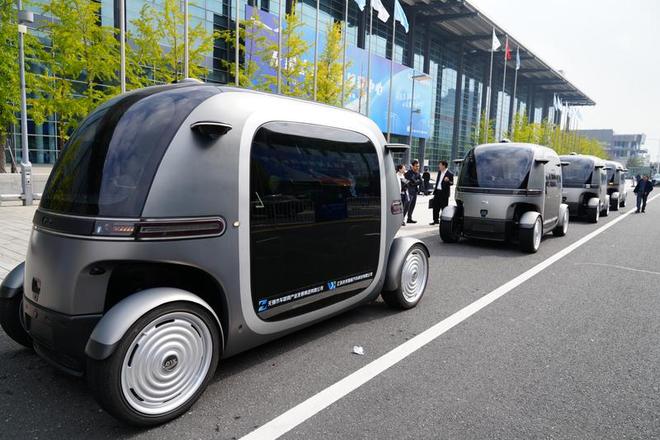
美元LP回来了
投资界· 2025-11-27 07:17
Core Viewpoint - The article highlights a significant resurgence in interest from dollar LPs (Limited Partners) towards Chinese investments, particularly in technology sectors, indicating a shift in market sentiment and investment strategies after a period of stagnation [3][4][7]. Group 1: AGM Season and Market Sentiment - The AGM season has become a critical communication mechanism between investment institutions and LPs, with many dollar funds actively scheduling meetings to engage with LPs [2]. - There is a noticeable increase in the enthusiasm and willingness to communicate among LPs, with many expressing a renewed confidence in the Chinese market [3][5]. Group 2: Investment Trends and Fundraising - Dollar funds are experiencing a revival, with significant fundraising activities reported, such as Monolith raising $488 million and Source Code Capital securing $600 million for new funds [6]. - The successful fundraising efforts signal a shift in investment focus from mere business model innovation to technological breakthroughs, attracting renewed interest from dollar LPs [7]. Group 3: Global Interest in Chinese Technology - Global interest in investing in China is at its highest level in three years, with overseas investors actively seeking information on Chinese tech companies [4][8]. - Notable investments include Singapore's Fong Long Group planning to establish a QFLP fund to invest in China's tech sector, indicating a strategic move towards Chinese innovation [4]. Group 4: Sector-Specific Opportunities - There is a growing recognition of the potential in China's AI and robotics sectors, with investors believing that these areas will lead the next wave of technological advancement [8]. - The resurgence of interest in innovative pharmaceuticals is also evident, with many dollar funds completing new fundraising rounds focused on biotech, reflecting strong market confidence [9].

直播剪腿自证,中国机器人的成功到底让谁不爽了?
2 1 Shi Ji Jing Ji Bao Dao· 2025-11-10 22:59
Group 1 - The core argument highlights the paradox of Chinese technology companies needing to prove their authenticity through extreme measures, reflecting a "self-proof trap" in the industry [1] - China's robotics industry has achieved significant milestones, including being the global leader in industrial robot sales for 12 consecutive years and having over 70% localization rate in core humanoid robot components [1] - Despite the technological advancements, the industry faces challenges related to market trust and brand recognition, with a prevailing stereotype that foreign products are superior [1] Group 2 - The recent "self-proof" incident may serve as a turning point for the industry, revealing the true capabilities of Chinese robotics and challenging existing biases [2] - The focus for the future should shift from self-validation to practical application and user experience, transforming robots from rare exhibition items to everyday assistants in homes and factories [2] - The rise of Chinese technology is driven by genuine innovation rather than attempts to convince skeptics, emphasizing that true strength does not require validation from others [2]

不好美国要捧杀了,新研究:中国正在成为全球科学领导者
3 6 Ke· 2025-10-29 10:26
Core Insights - The article discusses a recent study published in the Proceedings of the National Academy of Sciences, which indicates that China is emerging as a global leader in scientific research, surpassing the United States in certain areas by 2030 [2][4]. Group 1: Research Methodology - The study utilized machine learning models to analyze 6 million research papers, focusing on authorship patterns, corresponding author identities, and institutional influence to assess the "team leader" metric [2][4]. - Researchers defined leadership roles through a three-step process, categorizing scientists into three roles: leaders, direct supporters, and indirect supporters, based on their contributions to research [7][8]. - A scoring system was developed to quantify leadership, assigning scores based on various metrics such as citation counts, publication volume, and institutional ranking [10][11]. Group 2: Key Findings - As of 2023, the proportion of Chinese leaders in Sino-American collaborations has risen to 45%, with predictions indicating that this will equalize with the U.S. by 2027-2028 [14]. - The study predicts that by 2030, China will achieve parity with the U.S. in leadership positions in strategic fields such as AI, semiconductors, energy, and materials science [2][14]. - The research highlights a long-term challenge for China, as it may take until 2087 for China to achieve equal leadership premium compared to the U.S., indicating a disparity in "per capita leadership conversion" [14]. Group 3: Contextual Reactions - The findings have sparked significant discussion in the West, with some commentators expressing concern over the implications for the future of American scientific leadership [16][18]. - The article references recent funding issues faced by prominent scientists in the U.S., suggesting that bureaucratic challenges may hinder innovation and contribute to the shifting landscape of global scientific leadership [18]. Group 4: Author Backgrounds - The study includes contributions from researchers affiliated with Wuhan University and the University of Chicago, indicating a collaborative effort between Chinese and American institutions [19][20][22]. - The authors' research backgrounds span various fields, including information management, regional economic development, and collective knowledge systems, reflecting a diverse expertise in the study [21][22][25].

从撤离美债到押注东方科技创新:全球投资巨擘欲加码中国科技
智通财经网· 2025-07-14 09:30
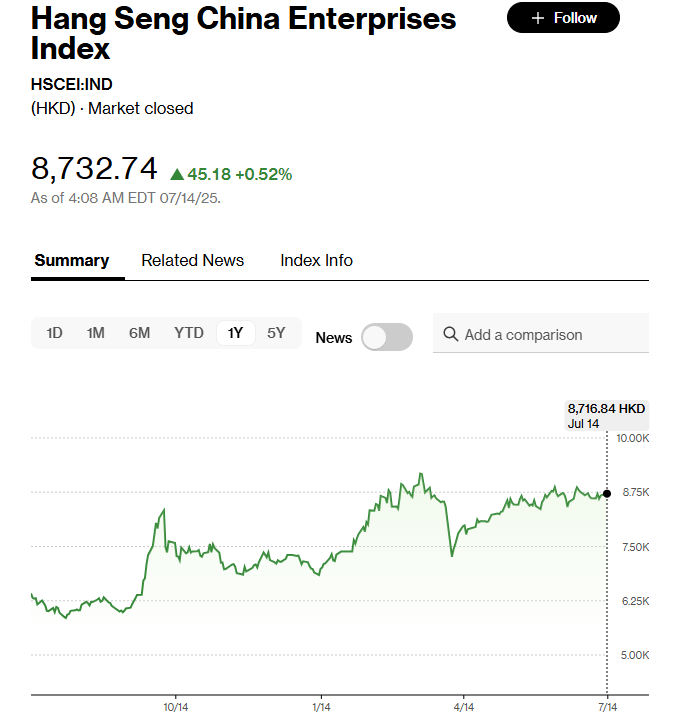
Core Insights - Global sovereign asset management institutions are significantly increasing their interest in Chinese assets, particularly in the technology sector, driven by the rise of AI innovations like DeepSeek and Alibaba's open-source AI model [1][2][6] - The proportion of surveyed sovereign wealth funds viewing China as a "high priority" or "medium priority" investment destination has risen from 44% to 59% over the past year [1][6] - The Hang Seng China Enterprises Index has increased by approximately 20% year-to-date, reflecting a bullish sentiment towards Chinese tech stocks [4][13] Investment Trends - Approximately 78% of surveyed global sovereign asset managers expect China's technology and innovation-driven sectors to rank among the world's top competitive industries [5] - A majority of traditional asset management institutions plan to increase their allocation to Chinese assets over the next five years, with 88% of Asian funds and 73% of North American funds expressing this intention [5][6] - Key sectors attracting investment include digital technology and AI applications, advanced manufacturing and automation, and clean energy and green technology [5] Market Dynamics - Institutional investors, including major sovereign wealth funds from Saudi Arabia and the UAE, are increasingly confident in China's leading position in AI, nuclear fusion, and quantum computing [2][10] - The shift in investment sentiment towards Chinese assets is occurring despite ongoing concerns about the global economic outlook and potential trade conflicts between China and the U.S. [2][6] - Sovereign asset managers are reassessing their exposure to long-term U.S. Treasury assets due to concerns over U.S. fiscal sustainability and policy volatility [9] Strategic Focus - Sovereign wealth funds are developing investment strategies focused on specific technology ecosystems in China, including semiconductors, cloud computing, AI, electric vehicles, and renewable energy infrastructure [9][10] - The emergence of DeepSeek and its low-cost AI model is expected to drive growth across various sectors, including healthcare, finance, and education, enhancing the appeal of Chinese tech stocks [15] - The investment landscape is shifting as funds from the U.S. market are anticipated to flow into the Chinese market, attracted by favorable valuations and growth potential [15]





中国科技崛起的“六大效应”
Xin Hua Wang· 2025-04-28 01:11
Group 1 - China's technological innovation is achieving significant advancements across various fields, establishing itself as a global leader in areas such as AI, quantum computing, and digital technology [1][2] - China is recognized as the global "four crown king" in comprehensive R&D capabilities, leading in international patent applications, top technology clusters, total R&D personnel, and influential academic publications [2] - The "East Data West Calculation" project and other high-tech initiatives are enhancing China's strategic technological frontiers [2] Group 2 - The Chinese technology sector is driving consumption upgrades, with innovations like smart homes and AI-driven products becoming mainstream, thus boosting domestic economic circulation [3] - The rise of domestic alternatives in technology is strengthening China's self-reliance, with companies like BOE achieving a 98% localization rate in OLED screens [3] Group 3 - Foreign investment in China is expected to increase, with predictions that 2025 will be a pivotal year for global investors to reassess China's international competitiveness [4] - Reports from foreign institutions indicate that A-share market valuations are at historical lows, suggesting significant upside potential for investors [4][5] Group 4 - China's innovation ecosystem is becoming more robust, with local governments actively improving the business environment to foster innovation [7] - The Chinese government is providing strong leadership and strategic direction for technological self-reliance and innovation [7] Group 5 - The U.S. attempts to impose technological barriers on China have inadvertently accelerated China's innovation and development in critical technology areas [8][9] - American companies are increasingly concerned about losing access to the Chinese market, which could significantly impact their revenue and R&D investments [8] Group 6 - China's commitment to inclusive technology development is fostering a global "community of shared future," with initiatives aimed at benefiting developing countries [10] - Chinese technological advancements, such as the DeepSeek model, are democratizing AI and breaking the monopoly of advanced computing power [10] Group 7 - The decline of U.S. technological hegemony is evident as Chinese companies emerge as significant players in various sectors, challenging the traditional dominance of American firms [11] - Predictions indicate a decrease in the U.S. manufacturing sector's global market share, highlighting the challenges faced by American industries [11]