黑色金属矿采选业

Search documents
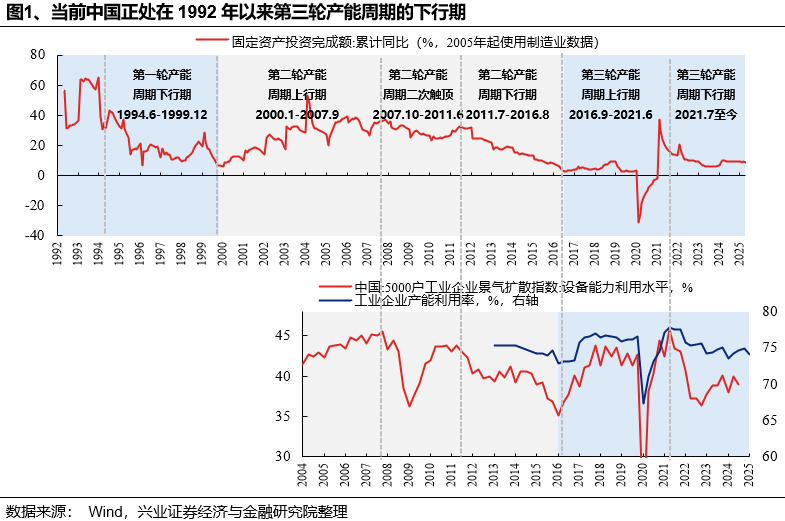
宝地矿业:拟使用不超过22500万元闲置募集资金进行现金管理
Zheng Quan Ri Bao· 2025-08-14 14:12
Group 1 - The company, Baodi Mining, announced plans to use up to RMB 225 million of temporarily idle raised funds for cash management [2] - The investment will focus on high safety, good liquidity, and capital protection agreements [2] - The usage period for these funds is effective for 12 months from the date of approval by the board of directors, with the possibility of rolling use within the specified limit and timeframe [2]


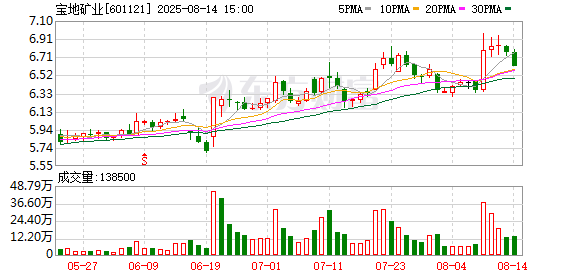
2025年上半年黑色金属矿采选业企业有1532个,同比增长0.59%
Chan Ye Xin Xi Wang· 2025-08-14 03:16
相关报告:智研咨询发布的《2025-2031年中国黑色金属矿采选业行业市场全景调查及投资前景预测报 告》 数据来源:国家统计局,智研咨询整理 2025年上半年,黑色金属矿采选业企业数(以下数据涉及的企业,均为规模以上工业企业,从2011年 起,规模以上工业企业起点标准由原来的年主营业务收入500万元提高到年主营业务收入2000万元)为 1532个,和上年同期相比,增加了9个,同比增长0.59%,占工业总企业的比重为0.29%。 上市公司:中信特钢(000708),河钢股份(000709),中南股份(000717),本钢板材(000761), 新兴铸管(000778),太钢不锈(000825),鞍钢股份(000898),河钢资源(000923),华菱钢铁 (000932),沙钢股份(002075),包钢股份(600010),宝钢股份(600019) 知前沿,问智研。智研咨询是中国一流产业咨询机构,十数年持续深耕产业研究领域,提供深度产业研 究报告、商业计划书、可行性研究报告及定制服务等一站式产业咨询服务。专业的角度、品质化的服 务、敏锐的市场洞察力,专注于提供完善的产业解决方案,为您的投资决策赋能。 ...
云鼎科技(000409)8月13日主力资金净流出3547.92万元
Sou Hu Cai Jing· 2025-08-13 13:36
金融界消息 截至2025年8月13日收盘,云鼎科技(000409)报收于12.62元,下跌0.55%,换手率 6.51%,成交量27.56万手,成交金额3.48亿元。 资金流向方面,今日主力资金净流出3547.92万元,占比成交额10.19%。其中,超大单净流出1382.01万 元、占成交额3.97%,大单净流出2165.91万元、占成交额6.22%,中单净流出流入743.39万元、占成交 额2.13%,小单净流入2804.53万元、占成交额8.05%。 云鼎科技最新一期业绩显示,截至2025一季报,公司营业总收入3.09亿元、同比减少20.55%,归属净利 润3146.54万元,同比减少33.24%,扣非净利润3052.40万元,同比减少30.87%,流动比率2.612、速动比 率2.240、资产负债率31.84%。 天眼查商业履历信息显示,云鼎科技股份有限公司,成立于1993年,位于济南市,是一家以从事黑色金 属矿采选业为主的企业。企业注册资本67799.0505万人民币,实缴资本2211万人民币。公司法定代表人 为刘波。 通过天眼查大数据分析,云鼎科技股份有限公司共对外投资了5家企业,参与招投标项目34 ...

二季度企业经营韧性延续 投资谨慎观望
Sou Hu Cai Jing· 2025-08-11 16:52
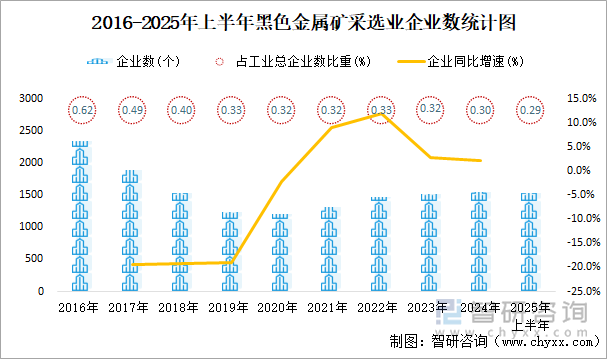
Core Insights - The resilience of Chinese enterprises continues in Q2 2025 despite external pressures from increased tariffs and a cautious domestic economic environment [1][2][3] Group 1: Current Business Conditions - The business condition diffusion index for Q2 2025 is 64, a slight decrease from 66 in the previous quarter, indicating overall resilience in enterprise operations [3][4] - Enterprises show stability with limited fluctuations, maintaining a high level of operational performance despite a slight decline compared to the same period last year (65) [5] - Key industries supporting this stability include coal mining, black metal mining, and water supply, with resource-based industries showing robust performance due to stable demand and pricing [5] - Regional disparities are evident, with provinces like Sichuan, Jilin, and Hunan showing notable resilience, attributed to stable energy and resource sectors as well as infrastructure investments [5] Group 2: Future Expectations - The expected business condition diffusion index rises to 50, up from 49, indicating a cautious optimism among enterprises regarding future operations [6][7] - There remains a significant gap between current operational stability (64) and future expectations, reflecting a slow recovery in confidence [7] - A majority of enterprises express concerns over insufficient domestic and international demand (74.41%) and intense competition (65.99%), which dampen optimism [8] Group 3: Investment Sentiment - The investment timing diffusion index falls to 49, down from 51, indicating a retreat in investment sentiment among enterprises [9] - Only 4% of enterprises view the current investment environment as favorable, a decrease from 9% in the previous quarter, with 89% considering it "average" [9] - Actual investment actions are contracting, with only 10% of enterprises engaging in fixed asset investments, down from 11% [9] Group 4: Supplementary Observations - Production and inventory show cautious recovery, with a production diffusion index of 46 and a finished goods inventory index of 45, indicating slight increases in production and inventory replenishment [10] - Cost pressures are easing, with the cost diffusion index dropping to 59 and price index to 47, reflecting a stabilization in commodity prices and reduced energy and transportation costs [10] - Financing remains cautious, with a high willingness from banks to lend (100), but only 2.8% of enterprises securing new loans, indicating a defensive stance in corporate financing [10] Group 5: Summary and Outlook - The overall sentiment among Chinese enterprises in Q2 2025 is characterized by a defensive and watchful approach, with the BSI index at 54, indicating slight declines in business conditions and cautious optimism for the future [11][12] - Future developments hinge on three key factors: the impact of tariff negotiations, the rollout of major infrastructure projects, and the resonance of domestic demand recovery with policy stimuli [12][13]
二季度企业经营韧性延续,投资谨慎观望
Di Yi Cai Jing· 2025-08-11 12:05
Core Viewpoint - Chinese enterprises are expected to transition from a defensive stance to a tentative offensive approach if external tariff policies, internal mega projects, and consumer stimulus converge [1][20] Group 1: Current Economic Environment - In the second quarter of 2025, the resilience of Chinese enterprises continues, with the operating conditions diffusion index at 64, slightly down from 66 in the previous quarter, indicating overall stability [4][5] - Domestic economic recovery post-Spring Festival has been slower than expected, with the real estate market's adjustment affecting confidence across sectors [2] - The Longjiang Business School's Industry Economic Prosperity Index (BSI) indicates a cautious sentiment among enterprises, characterized by stable yet slightly declining operating conditions [2][4] Group 2: Business Sentiment and Expectations - The expected operating conditions diffusion index rose to 50, indicating a cautious optimism among enterprises regarding future performance [8] - A significant portion of enterprises (74.41%) express concerns over insufficient domestic and international market demand, while 65.99% cite intense competition as a major pressure [9] - Enterprises focused on domestic demand remain relatively optimistic due to supportive policies in infrastructure, green energy, and digital economy [9][10] Group 3: Investment Climate - The investment timing diffusion index fell to 49, reflecting a cautious outlook on the current investment environment [11] - Only 4% of enterprises view the current investment climate as favorable, down from 9% in the previous quarter, indicating a retreat in investment activity [11] - The proportion of enterprises engaging in fixed asset investment decreased to 10%, highlighting a more conservative approach to capital expenditure [11] Group 4: Production and Cost Dynamics - Production volume diffusion index stands at 46, indicating slight production increases, while finished goods inventory diffusion index is at 45, suggesting marginal replenishment [14] - Cost pressures have eased, with the cost diffusion index dropping to 59, and price diffusion index at 47, reflecting a stabilization in commodity prices [14] - Financial institutions maintain a high willingness to lend, but the proportion of enterprises receiving new loans remains low at 2.8% [14] Group 5: Future Outlook - Three key factors will influence whether Chinese enterprises can shift from a defensive to a tentative expansion strategy: tariff negotiations, the implementation of mega projects, and the recovery of domestic demand [19][20] - The commencement of significant infrastructure projects, such as the Yarlung Tsangpo River hydropower station, is expected to provide long-term orders for related industries [19] - Government initiatives aimed at stimulating consumer spending are anticipated to enhance consumer confidence and translate into real consumption growth [19][20]
季节性因素推动7月核心CPI环比上涨0.4%
Ge Lin Qi Huo· 2025-08-11 05:51
Report Industry Investment Rating - Not provided in the given content Core Viewpoints of the Report - In July 2025, China's CPI and core CPI both rose 0.4% month - on - month, mainly due to seasonal factors. The PPI decreased 0.2% month - on - month, and industrial producer prices remained sluggish. China's overall economic activity expectations are in a moderate state, and the inflation level may continue to hover at a low level for some time [5][15]. Summary by Related Content CPI Situation - **Year - on - Year Data**: In July, the national CPI was flat year - on - year, against a market expectation of a 0.1% decline and a previous value of a 0.1% increase. From January to July, the average CPI decreased 0.1% compared with the same period last year. Food prices in July decreased 1.6% year - on - year, pulling down the CPI by about 0.29 percentage points. Non - food prices rose 0.3% year - on - year, core CPI rose 0.8% year - on - year, consumer goods prices decreased 0.4% year - on - year, and service prices rose 0.5% year - on - year [2][6]. - **Month - on - Month Data**: In July, CPI rose 0.4% month - on - month, mainly driven by the rise in service and industrial consumer goods prices. Food prices decreased 0.2% month - on - month, non - food prices rose 0.5% month - on - month, consumer goods prices rose 0.2% month - on - month, and service prices rose 0.6% month - on - month, affecting the CPI to rise by about 0.26 percentage points. Core CPI rose 0.4% month - on - month, mostly due to seasonal factors [3][7]. - **Eight - Category CPI**: In July, food and tobacco prices decreased 0.1% month - on - month, housing prices rose 0.1% month - on - month, transportation and communication prices rose 1.5% month - on - month, medical care prices rose 0.2% month - on - month, education, culture and entertainment prices rose 1.3% month - on - month, clothing prices decreased 0.3% month - on - month, daily necessities and services prices rose 0.8% month - on - month, and other supplies and services rose 0.9% month - on - month [8]. - **Future Outlook**: As of August 10, the agricultural product wholesale price 200 index was 113.96, lower than 126.50 in the same period last year. Agricultural product prices in July hovered at a low level and slightly increased in early August, but the increase rate was much lower than that of the same period last year. Agricultural product prices are unlikely to drive up the CPI in August [3][10]. PPI Situation - **Year - on - Year Data**: In July, the national PPI decreased 3.6% year - on - year, against a market expectation of a 3.4% decline. From January to July, the average PPI decreased 2.9% compared with the same period last year. Production material prices decreased 4.3% year - on - year, and living material prices decreased 1.6% year - on - year [3][11]. - **Month - on - Month Data**: In July, PPI decreased 0.2% month - on - month. Production material prices decreased 0.2% month - on - month, and living material prices decreased 0.2% month - on - month. Some industries with large month - on - month price declines included coal mining and washing, non - metallic mineral products, and ferrous metal ore mining. Industries with relatively large month - on - month price increases included oil and gas extraction, oil, coal and other fuel processing, and non - ferrous metal smelting and rolling [4][13]. - **Industry - Specific Analysis**: The price of the automobile manufacturing industry decreased 0.3% month - on - month, indicating continuous price competition pressure in the automobile industry [4][13]. PMI Situation - In July, the manufacturing PMI was 49.3%, remaining below the boom - bust line for the fourth consecutive month. The new order index was 49.4%, back in the contraction range. The production and operation activity expectation index was 52.6%. The service business activity index was 50.0%, down 0.1 percentage point from the previous month. The new order index was 46.3%, and the business activity expectation index was 56.6% [5][15].
宁波兴阳矿产资源有限公司成立,注册资本500万人民币
Sou Hu Cai Jing· 2025-08-08 02:20
企业名称宁波兴阳矿产资源有限公司法定代表人耿敬宁注册资本500万人民币国标行业采矿业>黑色金 属矿采选业>其他黑色金属矿采选地址浙江省宁波市北仑区大榭街道滨海南路111号东楼A1933-1室(承 诺申报)企业类型有限责任公司(自然人投资或控股的法人独资)营业期限2025-8-7至无固定期限登记 机关宁波市北仑区市场监督管理局 来源:金融界 天眼查显示,近日,宁波兴阳矿产资源有限公司成立,法定代表人为耿敬宁,注册资本500万人民币, 由宁波云枫矿产资源有限公司全资持股。 序号股东名称持股比例1宁波云枫矿产资源有限公司100% 经营范围含煤炭及制品销售;金属矿石销售;有色金属合金销售;高性能有色金属及合金材料销售;金 属材料销售;木材销售;高品质合成橡胶销售;橡胶制品销售;石油制品销售(不含危险化学品);化 工产品销售(不含许可类化工产品);纸制品销售;生物基材料销售;塑料制品销售;机械设备销售; 建筑材料销售;五金产品批发;电子产品销售;汽车零配件批发;仪器仪表销售;电线、电缆经营(除 依法须经批准的项目外,凭营业执照依法自主开展经营活动)。 ...
云鼎科技(000409)8月4日主力资金净流入2.48亿元
Sou Hu Cai Jing· 2025-08-04 07:23
云鼎科技最新一期业绩显示,截至2025一季报,公司营业总收入3.09亿元、同比减少20.55%,归属净利 润3146.54万元,同比减少33.24%,扣非净利润3052.40万元,同比减少30.87%,流动比率2.612、速动比 率2.240、资产负债率31.84%。 天眼查商业履历信息显示,云鼎科技股份有限公司,成立于1993年,位于济南市,是一家以从事黑色金 属矿采选业为主的企业。企业注册资本67799.0505万人民币,实缴资本2211万人民币。公司法定代表人 为刘波。 金融界消息 截至2025年8月4日收盘,云鼎科技(000409)报收于13.11元,上涨5.9%,换手率27.46%, 成交量116.23万手,成交金额15.25亿元。 资金流向方面,今日主力资金净流入2.48亿元,占比成交额16.43%。其中,超大单净流入3.03亿元、占 成交额20.0%,大单净流出5400.99万元、占成交额3.57%,中单净流出流出14533.02万元、占成交额 9.61%,小单净流出10316.97万元、占成交额6.82%。 通过天眼查大数据分析,云鼎科技股份有限公司共对外投资了5家企业,参与招投标项目338次 ...
安宁股份(002978)8月1日主力资金净流出2499.69万元
Sou Hu Cai Jing· 2025-08-01 13:20
Group 1 - The core viewpoint of the news is that Anning Co., Ltd. (安宁股份) has shown a positive performance in its latest financial results, with significant revenue growth and stable profitability [1][3] - As of August 1, 2025, Anning Co., Ltd. reported a closing price of 29.63 yuan, with a slight increase of 0.07% and a trading volume of 3.80 million shares, amounting to a total transaction value of 1.13 billion yuan [1] - The company's latest quarterly report indicates total operating revenue of 550 million yuan, a year-on-year increase of 23.51%, and a net profit attributable to shareholders of 230 million yuan, reflecting a minimal growth of 0.02% [1] Group 2 - The company has a current liquidity ratio of 4.362 and a quick ratio of 4.298, indicating strong short-term financial health, with a debt-to-asset ratio of 23.09% [1] - Anning Co., Ltd. has made investments in 17 enterprises and participated in 51 bidding projects, showcasing its active engagement in business expansion [2] - The company holds 12 trademark registrations and 88 patents, along with 79 administrative licenses, highlighting its focus on intellectual property and regulatory compliance [2]
兴业证券:“反内卷”下 哪些细分行业已经改善?
智通财经网· 2025-08-01 08:33
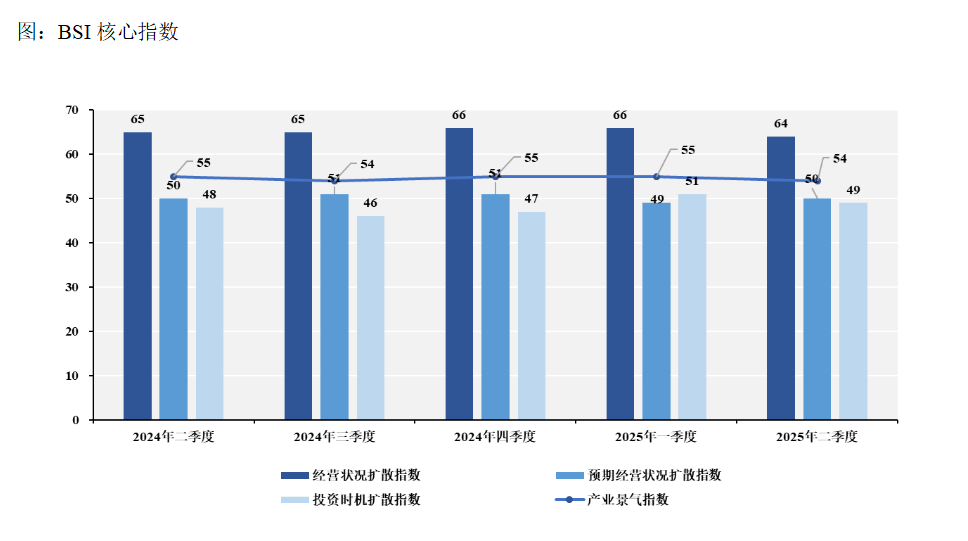
Core Viewpoint - The report from Industrial Securities emphasizes the importance of regulating low-price disorderly competition in enterprises as a key focus of recent "anti-involution" policies, highlighting the negative impact of excessive competition on prices, as evidenced by the persistent negative Producer Price Index (PPI) since October 2022 [1][23]. Group 1: Current Economic Conditions - China's current economic environment is characterized by a third round of capacity cycle downturn, having declined for approximately four years since the previous peak, with significant industry differentiation due to factors such as the pandemic and trade friction [2][8]. - The industrial capacity utilization rate has been on a downward trend since June 2021, reflecting a weakening in fixed asset investment growth in the manufacturing sector [2][8]. Group 2: Price and Capacity Dynamics - The report indicates that the current supply-side state shows clear differentiation among industries, with black metals and non-metallic minerals experiencing low capacity, output, and price levels, while emerging sectors like electrical machinery and automotive manufacturing still maintain relatively high capacity and output levels despite low price indicators [12][20]. - The "anti-involution" policy aims to break the negative cycle of "price for volume" and guide industries back to a normal capacity cycle, with two potential paths: either a slight price increase leading to natural demand decline or significant demand stimulation with substantial price increases [21][23]. Group 3: Recent Price Trends - Recent data shows that low-priced goods below historical median prices have seen significant price increases, particularly in sectors such as black metals (coking coal, steel), new energy (polysilicon, lithium), and chemicals [28][29]. - Specific price changes include coking coal increasing by 36.6% over the past month and polysilicon rising by 23.2%, indicating a recovery in certain sectors [29]. Group 4: Policy Implications - The report outlines recent policy measures aimed at preventing low-cost competition, including the introduction of a price law amendment and the emphasis on market regulation to maintain fair competition and quality standards [25][23]. - The focus on price mechanisms and the establishment of benchmark costs in key industries is expected to support the recovery of prices and stabilize market conditions [23][25].