
纺织服装

Search documents
大行评级丨花旗:微降申洲国际目标价至94港元 维持“买入”评级
Ge Long Hui· 2025-12-05 02:53
Core Viewpoint - Citigroup has lowered the profit forecast for Shenzhou International for 2025 to 2027 by 2%, adjusting the target price from HKD 95 to HKD 94 while maintaining a "Buy" rating, suggesting that the recent stock price decline may reflect management's conservative sales outlook, which presents a buying opportunity due to an expected dividend yield of 4.8% in FY2026 and a projected annual compound growth rate of 12% in earnings per share over the next three years [1] Group 1 - Citigroup has revised its sales growth forecast for Shenzhou International's second half of the year from high single digits to mid-single digits, primarily due to nearly flat sales growth in the third quarter [1] - The two major brands are still in discussions with the group regarding tariff sharing [1] - Observations indicate that delivery volumes in October and November have accelerated to catch up with the lagging progress from the third quarter [1]
内蒙古鄂尔多斯资源股份有限公司关于控股股东为公司2026年度提供财务资助的公告
Shang Hai Zheng Quan Bao· 2025-12-04 19:18
Group 1 - The core announcement is about the financial support of up to 3.8 billion RMB from the controlling shareholder, Inner Mongolia Ordos Cashmere Group Co., Ltd., to Inner Mongolia Ordos Resources Co., Ltd. and its subsidiaries for the year 2026 [2][6] - The loan will have a term determined by actual needs and an interest rate not exceeding the market loan quotation rate, with no collateral or guarantees required from the company or its subsidiaries [2][6] - The board of directors approved the proposal on December 3, 2025, during the 11th meeting of the 10th board session [3][49] Group 2 - The financial support constitutes a related party transaction, but it is exempt from the usual disclosure requirements as it meets the criteria set by the Shanghai Stock Exchange [4] - The transaction is within the board's approval authority and does not require shareholder meeting approval [4][49] - The financial support is expected to meet the company's funding needs and will not affect its normal operations or independence [6][42] Group 3 - The company reported that the actual amount of daily related party transactions with affiliates from January to October 2025 was approximately 1.37 billion RMB [19] - For 2026, the company anticipates daily related party transactions with affiliates to total no more than 2.37 billion RMB [21] - The related party transactions are deemed necessary for the company's normal operations and are conducted on a fair and voluntary basis [11][42]

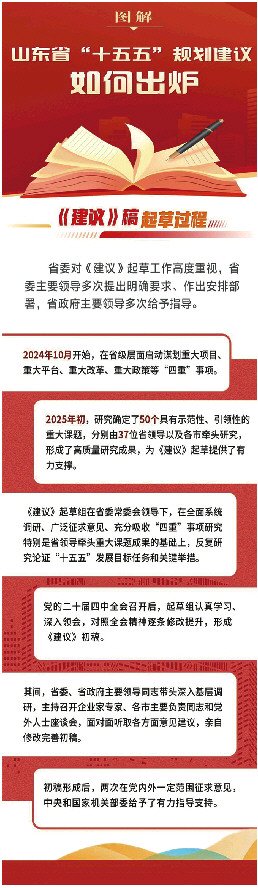
绘就山东“十五五”发展新蓝图
Qi Lu Wan Bao· 2025-12-04 11:25
Core Viewpoint - The Shandong Provincial Committee has approved the "Suggestions" for the 15th Five-Year Plan, emphasizing the need for a modernized economic and social development strategy that aligns with national directives and local characteristics [4][13]. Economic Development - The "14th Five-Year" period has seen significant economic growth in Shandong, with 8 out of 21 key indicators achieved ahead of schedule and 13 meeting expectations, laying a strong foundation for the upcoming "15th Five-Year" period [3][12]. - The "15th Five-Year" period is critical for establishing a modern socialist province, with a focus on economic strength and modernization [3][12]. Strategic Planning - The "Suggestions" consist of three main sections, 14 parts, and 60 articles, aimed at implementing the spirit of the 20th National Congress and addressing the unique challenges and opportunities faced by Shandong [4][13]. - The plan emphasizes the importance of a modern industrial system as the foundation for provincial development, prioritizing the optimization of traditional industries and the cultivation of emerging sectors [6][15]. Innovation and Technology - The plan highlights the necessity of enhancing technological innovation, aiming to establish Shandong as a high-level innovative province and integrate technology with industry [6][15]. - Specific initiatives include the establishment of a regional technology innovation center and the promotion of collaborative innovation between enterprises and research institutions [6][15]. Open Economy - The "Suggestions" call for an optimized open economy framework, enhancing international competitiveness and resource allocation through expanded foreign trade and investment [7][16]. - Shandong aims to leverage international trade agreements and enhance its global economic presence through initiatives like "Ten Thousand Enterprises Going Global" [8][17]. Regional Development - The plan outlines strategies for regional coordination, focusing on the development of urban clusters and enhancing the competitiveness of the Shandong Peninsula city group [8][17]. - It emphasizes the implementation of the Yellow River strategy and the creation of a comprehensive development framework that connects various regions [8][17]. Social Welfare - The plan includes a strong focus on improving living standards, with a commitment to maintaining a high percentage of fiscal spending on social welfare, projected to exceed 1 trillion yuan in 2024 [9][18]. - Employment is prioritized as a key aspect of social welfare, with strategies aimed at supporting job creation and enhancing social security systems [9][18].

浪莎股份:年底前,公司通常会加强对应收货款的回收
Zheng Quan Ri Bao Wang· 2025-12-04 11:10
Core Viewpoint - The company, Langsha Co., Ltd. (600137), anticipates an increase in accounts receivable due to higher sales during the third and fourth quarters, supported by temporary credit limits for distributors [1] Group 1 - The third and fourth quarters are typically the peak sales seasons for the company, leading to an increase in accounts receivable [1] - The company provides temporary credit limits to support distributors, resulting in increased sales on credit [1] - By the end of the year, the company plans to enhance the collection of accounts receivable, which is expected to reduce the risk associated with accounts receivable [1] Group 2 - The net cash flow from operating activities is projected to return to normal levels as the company strengthens its efforts in collecting receivables [1]

波司登(03998):羽绒服业务持续引领增长,期待旺季表现
Guotou Securities· 2025-12-04 08:07
Investment Rating - The report maintains a "Buy" rating for Bosideng with a target price of HKD 6.0 [1][4]. Core Insights - Bosideng's revenue for the first half of FY26 increased by 1.4% year-on-year to RMB 89.28 billion, while net profit rose by 5.3% to RMB 11.89 billion, indicating healthy growth [2][4]. - The brand's down jacket business saw an 8.3% increase in revenue to RMB 65.68 billion, although the gross margin declined by 2.0 percentage points to 59.1% [2][4]. - The OEM business faced challenges, with revenue decreasing by 11.7% to RMB 20.44 billion, but gross margin improved by 0.4 percentage points to 20.5% due to better supply chain management [3][4]. - The women's clothing segment experienced an 18.6% decline in revenue to RMB 2.51 billion, reflecting a tough market environment [3][4]. - The company is focusing on optimizing channel quality and enhancing store operations, with a net increase of 88 down jacket stores to 3,558 [3][4]. Financial Summary - For FY26, the projected earnings per share (EPS) are expected to be RMB 0.35, with a growth forecast of 10.1% for revenue and 11.3% for net profit [4][5]. - The gross margin is expected to stabilize around 57.3% for FY26, with a net profit margin of 13.7% [5][14]. - The company anticipates a steady increase in revenue from RMB 28.51 billion in FY26 to RMB 34.70 billion by FY28, with corresponding net profits rising from RMB 3.91 billion to RMB 4.86 billion [5][14].
消费团队联合展望 - 2026年度策略报告汇报会议
2025-12-04 02:21
Summary of Key Points from Conference Call Records Industry Overview - **Liquor Industry**: Despite facing challenges, the liquor sector shows investment potential due to low inventory, low valuations, and high dividend yields. Some quality companies may have already passed their worst period, focusing on strong brands, stable demand, and refined operations [1][8]. - **Consumer Goods Sector**: The dining chain shows improvement, benefiting frozen food and seasoning companies. Rapid development in snack wholesale stores and new channels, along with new product categories like konjac, brings growth opportunities. Health products are gaining attention due to health trends [1][4]. - **Dairy Industry**: A turning point in the cost cycle is anticipated, with decreasing raw material costs like raw milk and molasses benefiting large dairy companies and alleviating price war pressures, thus restoring profits [1][6]. - **Home Appliance Industry**: The core strategy is "going overseas," with traditional categories like white and black appliances holding high market shares. Emerging categories like pool robots and lawn mowers have significant growth potential, especially in the context of the US interest rate cut cycle and markets in developing countries [1][13]. - **Textile and Apparel Industry**: The strategy is "export first, internal demand accumulation." The US interest rate cut cycle is expected to boost demand, while stable China-US tariffs favor exports. High-end markets and brands with strong aesthetic appeal are more attractive [1][18]. Investment Opportunities - **Consumer Sector**: In 2026, despite a poor performance in 2025, there are investment opportunities in both traditional and new consumption sectors. The liquor index remains low compared to the overall market, indicating potential for recovery [2]. - **Food and Beverage Sector**: Opportunities include the expansion of duty-free policies, which enhance sales potential by attracting more inbound travelers and encouraging domestic consumption [3]. - **Snacks and Health Products**: The snack industry benefits from new channels and low-calorie products, while health products are gaining traction due to increased consumer health awareness [4][5]. - **Cost Cycle Impact**: The decline in raw milk prices is expected to benefit large dairy companies, while the decrease in molasses costs will enhance profit elasticity [6][11]. Challenges and Market Dynamics - **Liquor Industry Challenges**: The liquor sector has seen a decline in demand post-Spring Festival, with some companies reporting revenue drops exceeding 50%. However, the low inventory and high dividend yields suggest that some quality companies may recover in the coming quarters [8]. - **Dining Industry Status**: The dining sector is currently in a marginal profit state, but recent data indicates a recovery trend. The overall environment is improving, providing opportunities for related companies [7]. - **Home Appliance Market**: The domestic market faces pressure, but overseas markets are expected to grow faster. Companies need to adapt to changes and seek transformation to capture growth [13][17]. Future Outlook - **Food and Beverage Investment Strategy**: Focus on quality liquor companies post-cleanup, alongside opportunities in snacks, beverages, and health products driven by new channels and cost cycle benefits [11]. - **Home Appliance Export Opportunities**: Traditional categories have high market shares, while emerging categories like pool robots present significant growth potential. The US market is expected to improve gradually [14][15]. - **Textile and Apparel Export Growth**: The US interest rate cut cycle is likely to boost demand, with companies in the textile sector showing resilience and growth potential [18][19]. Additional Insights - **Duty-Free Policy Impact**: Recent updates to the duty-free policy have expanded the customer base, significantly enhancing sales potential for duty-free products [27][29]. - **Cross-Border E-commerce Trends**: The sector is driven by new product logic, with emerging household necessities like 3D printers and AI applications expected to become significant growth drivers [34]. - **High-End Retail Trends**: The service industry is shifting towards high-quality offerings, with high-end retail and medical aesthetics showing strong performance [35].
江西于都招商引资为纺织服装产业注入新动能
Zhong Guo Zhi Liang Xin Wen Wang· 2025-12-04 01:07
Core Insights - The 2025 Jiangxi Textile and Apparel Week and the 6th Jiangxi (Ganzhou) Textile and Apparel Industry Expo have opened, with a total of over 4 billion yuan in high-quality cooperation projects signed [1] - The signed projects cover the entire textile and apparel industry chain, including women's wear, sportswear, wool sweaters, and key supporting areas such as fabric production, intelligent manufacturing, and washing equipment development [1] - These projects aim to transform the local industry from a traditional "single processing" model to an integrated model of "design + production + support + sales," enhancing the industrial capacity and solidifying Yudu's position as a core hub for the textile and apparel industry in Ganzhou [1] Industry Advantages - The robust development of the textile and apparel industry in Yudu County is supported by multiple advantages, including its strategic location at the intersection of Jiangxi, Fujian, and Guangdong provinces, which facilitates logistics [2] - The county has a labor force of over 300,000 workers in the textile and apparel sector, providing stable employment for enterprises [2] - Yudu has established industrial parks and innovation design centers, along with favorable policies such as tax reductions, factory subsidies, and talent recruitment to support enterprise development [2] Innovative Investment Attraction - Yudu County has adopted an innovative investment attraction model, utilizing a combination of traditional and new methods, including leveraging leading enterprises to attract upstream and downstream supporting companies [3] - The county has sent 13 professional investment teams to key textile and apparel regions, conducting over 20 promotional events and visiting more than 150 companies to attract investment [3] - Local officials emphasize the importance of project tracking services to ensure signed projects are quickly implemented and operational, while also enhancing the functionality of industrial platforms to attract more high-quality resources [3]
刘郴:从缝纫机到智能体:服装企业的智能突围
混沌学园· 2025-12-03 11:57
" 我们生活在一个极其重要的时代,这是一个转折点,我不愿浪费一分一秒。 " " 我们必须做一艘船,而不是做礁石,因为人工智能的水位在不断上升。 " "AI 叙事非常的宏大,但是千万不要把这个宏大的叙事在企业里变成落地的那个点 。 " 当 AI 浪潮席卷全球,时尚产业正站在前所未有的转折点上。 凌迪科技 Style3D 创始人兼 CEO 、中国服装协会副会长刘郴老师 在混沌 2025 应用成果大课上 以 "AI+3D 驱动 " 为切入点,深入解析了 AI 如何重塑时尚产业的创新模式与全球产业链协同。 他从 " 第一 性原理 " 出发,揭示了传统工业软件的智能化重构逻辑,也带领大家思考: 当 AI 进入设计、生产、营销的每一个环节,企业的增长曲线将被重新定义。这不仅是一场工具的革新, 更是一场关于组织能力、人才结构与产业智能化未来的系统重构 。 本文仅为课程部分内容,打开混沌APP,学习完整课程。 模式创新的心智模型: 从 " 锤子钉子 " 到 " 电钻 " 我们先思考第一个问题: 传统产业亟待打破增长天花板? 对于这个问题,首先我们要明确当前行业面临的问题。当前市场竞争激烈,行业已成红海,成本不断上 升,效率却 ...

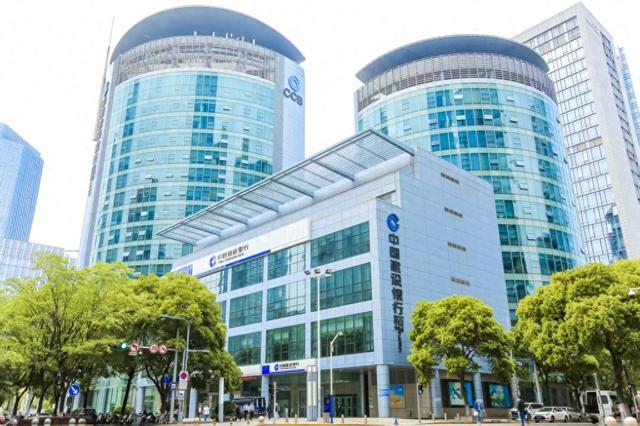
建设银行苏州分行:以“圈链群”破局普惠金融为实体经济注入“活水”
Xin Lang Cai Jing· 2025-12-03 07:30
Core Insights - The article emphasizes the importance of small and micro enterprises as vital components of the market economy and regional economic development, highlighting their persistent challenges in financing [2][11] - Suzhou's Construction Bank has innovatively shifted its financial service model to a "circle-chain-group" approach, effectively addressing the financing needs of various small and micro enterprises [2][11] Group 1: Financing Challenges and Solutions - Small and micro enterprises in Suzhou face significant financing difficulties, including high costs and slow access to funds, which hinder their growth [2][11] - Suzhou Construction Bank has served over 57,000 clients with inclusive loans, achieving a loan balance exceeding 100 billion yuan by October 2025 [2][10] - The bank's approach includes evaluating the future potential of enterprises rather than solely relying on past financial statements, thus facilitating loans for technology-driven companies without traditional collateral [4][5] Group 2: Innovative Financial Products - The "Open Business Upgrade Loan" allows the bank to assess non-financial indicators such as technology potential and team quality, enabling support for companies in different lifecycle stages [4][5] - The "Factory Quick Loan" product has been designed to help manufacturing companies unlock capital tied up in fixed assets, with nearly 1,400 enterprises served and a total loan amount exceeding 27 billion yuan [9][10] Group 3: Ecosystem and Collaborative Financing - The "circle-chain-group" strategy integrates small and micro enterprises into a cohesive ecosystem, enhancing customer identification and risk management [11][12] - By collaborating with industrial park management, the bank can better understand the financing needs of enterprises, leading to tailored financial products that improve service efficiency [5][11] - This model not only addresses financing challenges but also supports regional industrial upgrades and sustainable business development [12]

际华集团股份有限公司 关于股份回购进展公告
Zhong Guo Zheng Quan Bao - Zhong Zheng Wang· 2025-12-03 03:22
Group 1 - The company plans to repurchase its A-shares through centralized bidding, with a total repurchase fund of no less than RMB 100 million and no more than RMB 200 million [1] - As of November 30, 2025, the company has repurchased a total of 30.559001 million shares, accounting for 0.6958% of the total share capital, with a total payment of RMB 100 million [1] - The highest purchase price was RMB 4.02 per share, and the lowest was RMB 2.51 per share [1] Group 2 - The company will strictly adhere to the relevant regulations during the repurchase period and will disclose information timely based on the progress of the repurchase [2]
