
生物制药

Search documents
北海康成 :通過一般授權認購新股份募资约 2.0 亿港元 商業化產品營運資金及註冊維護 現有產...
Xin Lang Cai Jing· 2026-02-15 23:31
Group 1 - The core announcement is that Beihai Kangcheng (stock code: 1228) plans to raise approximately HKD 200 million through the issuance of new shares, specifically 84,033,613 shares at a subscription price of HKD 2.38, which represents a discount of about 14.7% compared to the previous closing price of HKD 2.79 [1][1][1] - The funds raised will be allocated for operational capital for commercialized products, research and development expenses for existing product lines, and settling trade payables of the group [1][1][1] - After the issuance, the new shares will represent approximately 16.4% of the existing issued share capital and about 14.1% of the enlarged share capital [1][1][1] Group 2 - Beihai Kangcheng is focused on the biopharmaceutical sector, indicating its strategic direction and market positioning [1][1][1] - The issuance is conducted under a general authorization granted by the shareholders' meeting, with completion expected on the fifth business day after all conditions of the subscription agreement are met [1][1][1]
Cell重磅:向大脑注射一次溶瘤病毒,可诱导T细胞持久攻击致命脑肿瘤
生物世界· 2026-02-15 04:06
Core Viewpoint - Oncolytic viruses (OV) represent a promising therapy in cancer treatment, particularly for glioblastoma, by selectively replicating in tumor cells and activating immune responses [2][3][5]. Group 1: Clinical Trial Findings - A first-in-human phase 1 clinical trial reported safety data for 41 patients with recurrent glioblastoma (rGBM) treated with a modified oncolytic herpes simplex virus (oHSV), which selectively replicates in glioblastoma cells without harming healthy brain tissue [3]. - The treatment led to enhanced anti-cancer immune responses, with patient survival correlating with immune activation characteristics [3][4]. - Single oncolytic virus treatment resulted in deep and persistent T cell infiltration in glioblastoma, activating T cell-mediated cytotoxic responses associated with longer progression-free survival and overall survival [4][5]. Group 2: Immune Response Mechanisms - The study revealed that a single injection of oncolytic virus could transform the immune cold environment of glioblastoma into a hot environment rich in activated cytotoxic T cells, significantly extending patient survival [5]. - Evidence of early T cell activation and tissue residency was observed, with T cells near tumor cells expressing high levels of activation markers, indicating ongoing recognition of tumor antigens [8]. - The expansion of pre-existing tumor-infiltrating T cell clones was noted, correlating with longer overall survival, suggesting that the treatment amplifies existing immune responses [11]. Group 3: Treatment Challenges and Considerations - Despite strong T cell responses, hypoxic tumor regions exhibited T cell exclusion, potentially due to a suppressive microenvironment, which may contribute to treatment resistance [13]. - Long-term use of dexamethasone, a common medication for brain edema, was associated with reduced T cell clonality post-treatment, indicating a need for careful management of corticosteroids to optimize immune responses [14]. - The study emphasizes the importance of combining oncolytic virus therapy with agents that enhance T cell expansion and persistence, as well as anti-VEGF therapies to overcome hypoxic conditions [17].


康乃德生物研发获进展,融资支持加速药物开发
Xin Lang Cai Jing· 2026-02-14 23:02
Company Progress - The core drug CBP-307, aimed at treating autoimmune diseases such as multiple sclerosis and inflammatory bowel disease, has completed Phase I clinical trials and is set to enter Phase II trials, marking a significant advancement in the company's research pipeline [1] Funding Movements - The company completed a $25 million Series A financing round in early February 2026, led by Qiming Venture Partners, with participation from other institutions like Northern Light Venture Capital. The funds are expected to accelerate the development of innovative drug pipelines, including CBP-307 and CBP-174 [2] Institutional Perspectives - Despite significant stock price volatility, with a fluctuation range of 23.61% from February 5 to 11, institutional ratings maintain a strong buy recommendation, with multiple institutions focusing on the long-term potential of the T cell modulation platform [3]
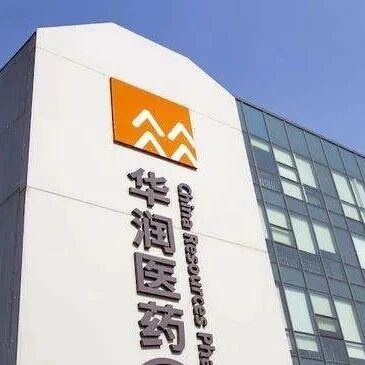
速递|14.2亿元甩卖口服胰岛素梦:华润踩雷十年止损
GLP1减重宝典· 2026-02-14 14:58
Core Viewpoint - The article discusses the divestment of a 17.87% stake in Tianmai Biotechnology by China Resources Pharmaceutical, marking a significant shift in strategy after a decade of investment in oral insulin, which has faced multiple setbacks and challenges in commercialization [5][9]. Group 1: Company Background and Investment History - China Resources Pharmaceutical began its investment in Tianmai Biotechnology in 2016, focusing on the development and commercialization of insulin and its analogs, particularly oral insulin [5]. - The initial optimism surrounding oral insulin was based on its potential to improve patient compliance by replacing injections with oral administration, thus expanding the user base [5][6]. Group 2: Challenges Faced - The development of oral insulin has proven to be extremely challenging due to the instability of insulin in the gastrointestinal tract and the difficulty in achieving stable bioavailability [6]. - Tianmai faced delays in obtaining necessary approvals for injectable insulin, and the introduction of centralized procurement in China significantly altered the market dynamics, leading to price reductions and increased competition from larger players [6][7]. Group 3: Recent Developments and Strategic Shift - In 2023, Oramed's failure to meet primary and secondary endpoints in Phase III trials for ORM-0801 posed a significant setback for the oral insulin narrative, leading to diminished investor confidence and uncertainty regarding future funding [9]. - Following these developments, China Resources Pharmaceutical opted to divest its stake in Tianmai, indicating a strategic pivot towards more certain and commercially viable products, such as a partnership with Borui Pharmaceutical for BGM0504 [10]. Group 4: Market Context and Future Outlook - The divestment reflects a broader trend in the pharmaceutical industry where large companies are increasingly focused on maximizing returns on capital and minimizing exposure to high-risk projects [11]. - Despite the withdrawal from oral insulin, the article suggests that there may still be potential for value in Tianmai, as the company explores new avenues such as GLP-1 analogs, although the competitive landscape has become significantly more challenging [10][11].

智飞生物:积极开展自主产品国际注册认证工作,针对未满足临床需求提供创新产品
Sou Hu Cai Jing· 2026-02-14 08:22
Group 1 - The company is enhancing its business capabilities in diabetes GLP-1, weight loss drug semaglutide, and rare cancer diseases, indicating potential competitiveness against global pharmaceutical giants for overseas market expansion [1] - The company is actively pursuing international registration and certification for its proprietary products, aiming to address unmet clinical needs with innovative offerings, thereby improving the accessibility and affordability of vaccines and therapeutic products [1] - The company encourages stakeholders to monitor its regular reports for updates on overseas sales revenue [1]

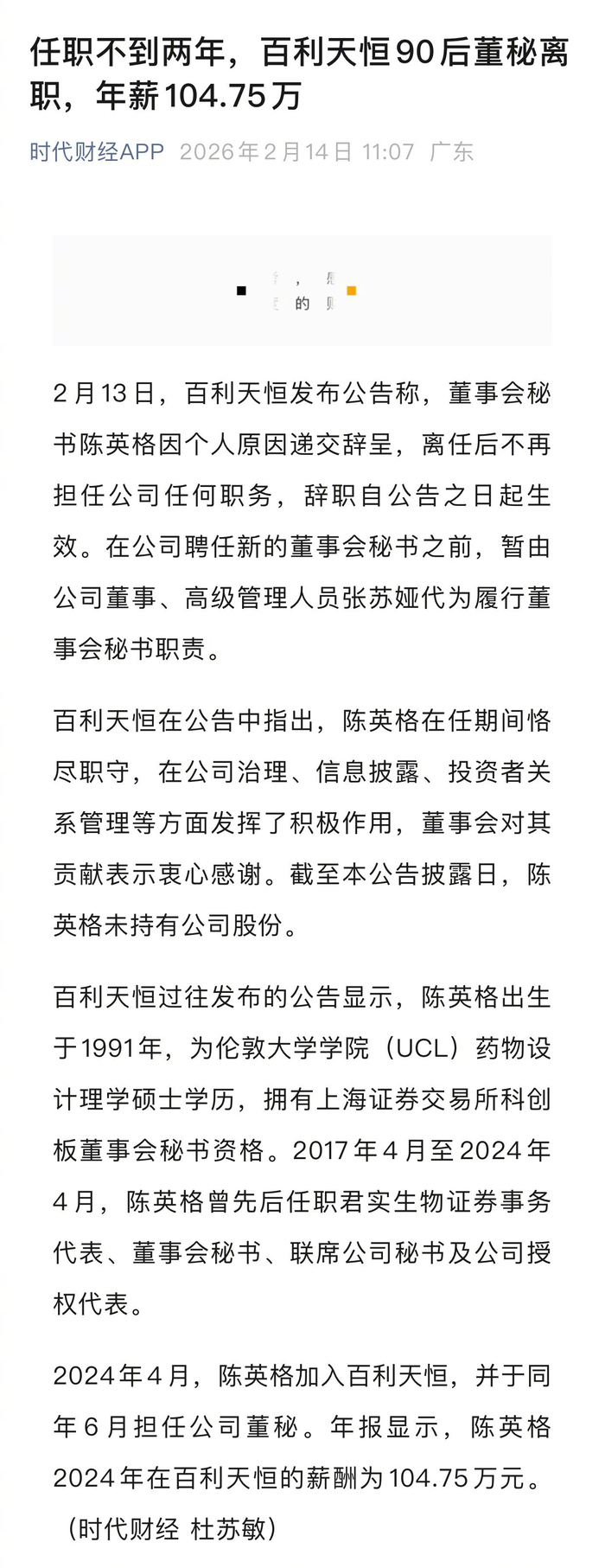
百利天恒90后董秘陈英格离职,年薪104万任职不到两年
Cai Jing Wang· 2026-02-14 06:05
Core Viewpoint - The resignation of Chen Yingge, the Secretary of the Board of Baili Tianheng, is attributed to personal reasons, effective immediately upon the announcement, with Zhang Suya temporarily assuming the role until a new secretary is appointed [1][3]. Group 1: Resignation Details - Chen Yingge submitted his resignation and will no longer hold any position within the company [1]. - The company expressed gratitude for Chen's contributions in governance, information disclosure, and investor relations during his tenure [3]. Group 2: Background Information - Chen Yingge, born in 1991, holds a Master's degree in Drug Design from University College London (UCL) and is qualified as a Secretary of the Board for the Sci-Tech Innovation Board of the Shanghai Stock Exchange [3]. - Prior to joining Baili Tianheng in April 2024, Chen held various positions at Junshi Biosciences from April 2017 to April 2024, including Secretary of the Board and authorized representative [3]. - In 2024, Chen's salary at Baili Tianheng was reported to be 1.0475 million yuan [3].
硕世生物2025年预亏扩大,应收账款回收完成
Jing Ji Guan Cha Wang· 2026-02-14 05:34
Performance Overview - The company expects a net profit attributable to shareholders of the parent company for 2025 to be between -29.4 million and -44 million yuan, indicating an expanded loss compared to the previous year due to intensified industry competition, medical procurement, and VAT rate adjustments [2] Financial Status - The company announced the recovery of an accounts receivable over 5 years old amounting to 6.0994 million yuan, which is expected to have a positive impact on the financial status for 2026 [3] Company Developments - A temporary shareholders' meeting on January 5, 2026, approved the expansion of the business scope and amendments to the company's articles of association, which may involve business expansion [4] Stock Performance - As of February 11, 2026, the stock price was 68.75 yuan per share, down 2.01% for the day, with a net outflow of 4.7948 million yuan in main funds and a trading volume of 39.0139 million yuan. The financing balance as of February 2, 2026, was 392 million yuan, representing a high proportion of the circulating market value, at the 90th percentile level over the past year [5] Future Development - The actual controller renewed the "Joint Action Agreement" in December 2025, and the company's products were included in the World Health Organization's emergency use list, which may support long-term development [6]

三生国健:安沐奇塔单抗新药上市申请获批,丰富自免商业化管线
Cai Jing Wang· 2026-02-14 05:27
Core Viewpoint - The approval of the new drug Anmukita monoclonal antibody injection (trade name: Yisaituo) by the National Medical Products Administration marks a significant advancement for the company in treating moderate to severe plaque psoriasis in adult patients, enhancing its product pipeline and market competitiveness [1] Group 1: Drug Approval and Clinical Results - The company announced that its self-developed anti-IL-17A humanized monoclonal antibody Anmukita has received approval for market launch [1] - In the pivotal Phase III clinical study, all primary efficacy endpoints and key secondary efficacy endpoints were successfully met, particularly showing significant efficacy in achieving complete skin clearance with the PASI100 indicator [1] - The incidence of anti-drug antibodies (ADA) for Anmukita was only 0.7%, indicating good safety and tolerability [1] Group 2: Treatment Flexibility and Market Impact - Anmukita offers flexible dosing options every 4 or 8 weeks, which may reduce the frequency of medication for patients and lower the long-term treatment time costs and psychological burden [1] - The approval of Anmukita will enrich the company's autoimmune commercialization product pipeline and positively impact its operational development [1] - The announcement stated that this approval will not have a significant impact on the company's current financial status and operating results, but it is expected to have a positive effect on future performance [1]

创新驱动自免市场扩容,三生国健迈入价值兑现期
Guo Ji Jin Rong Bao· 2026-02-14 04:14
Core Viewpoint - The approval of the anti-IL-17A monoclonal antibody, Anmucita, by Sanofi is a significant milestone for the domestic innovative drug industry, enhancing the competitive landscape in the treatment of autoimmune diseases like psoriasis [1] Group 1: Market Trends and Competitive Landscape - The market position of anti-IL-17 treatments is gradually increasing, with Novartis's Cosentyx projected to achieve sales of $6.668 billion by 2025, reflecting a 9% year-on-year growth [1] - As imported products approach patent expiration, sales growth is slowing, leading to increased focus on domestic players, including Sanofi's Anmucita, Hengrui's innovative drug, and others [1] - The domestic autoimmune drug market is expected to reach $4.6 billion by 2024, with a compound annual growth rate (CAGR) of 15.9% from 2020 to 2024, and projected to grow to $35.2 billion by 2034 [7] Group 2: Clinical Advantages of Anmucita - Anmucita demonstrates a significantly lower immunogenicity rate of only 0.7%, with no patients developing neutralizing antibodies, which enhances its clinical efficacy [4] - The drug shows rapid onset of action, with symptom relief occurring within two weeks of the first dose, and maintains high response rates (over 92%) for PASI75 and PASI90 at 52 weeks [4] - Anmucita offers a long dosing interval of Q8W (every 8 weeks), improving patient compliance while maintaining stable efficacy [4] Group 3: Company Strengths and Innovation - Sanofi's confidence stems from over 20 years of experience in target discovery, early development, and a comprehensive innovation system, positioning it ahead of many local biotech firms [5] - The company has established a robust antibody drug development platform and talent pool, enabling it to efficiently navigate the drug approval process and commercialize products [8] - Sanofi's extensive experience in the autoimmune sector allows it to leverage its commercial capabilities and channel coverage for seamless product launch and market penetration [8]
维立志博-B获纳入恒生综合指数,核心产品研发获FDA快速通道资格
Jing Ji Guan Cha Wang· 2026-02-14 04:11
Core Viewpoint - Company Vailizhibo-B has been included in the Hang Seng Composite Index and is expected to become a target for the Stock Connect program, attracting attention due to its core product development receiving FDA fast track designation [1][2]. Group 1: Stock Performance - According to the quarterly review results published by the Hang Seng Index Company on February 13, 2026, Vailizhibo-B will be included in the Hang Seng Composite Index, with the change effective after market close on March 6, 2026, and effective from March 9, 2026 [2]. - The inclusion in the index may lead to adjustments in the Stock Connect investment scope, potentially attracting southbound capital [2]. Group 2: Product Development Progress - LBL-024 (PD-L1/4-1BB bispecific antibody) received FDA fast track designation on January 14, 2026, for the treatment of pulmonary neuroendocrine carcinoma, having previously shown potential in Phase II or registrational clinical trials for non-small cell lung cancer and small cell lung cancer [3]. - LBL-034 (GPRC5D/CD3 bispecific antibody) received FDA fast track designation on January 27, 2026, for the treatment of relapsed/refractory multiple myeloma, highlighting the technical advantages of the company's TCE platform [3]. Group 3: Funding Dynamics - The company experienced a lock-up release for cornerstone investors on January 25, 2026, involving nine cornerstone investors (including Zhengxin Valley Capital and Tencent), with a total subscription amount of approximately HKD 542 million [4]. - During the 2025 review period, the company's average daily market capitalization was HKD 9.462 billion, exceeding the threshold of HKD 9.247 billion, meeting the conditions for inclusion in the Stock Connect program, with the final result expected to be confirmed in March 2026 [4].