网约车

Search documents
山西长治:9月23日前,所有合规网约车需张贴统一车辆标识
Jing Ji Guan Cha Bao· 2025-09-23 09:39
据"长治市交通运输局"消息,为进一步规范长治市网约车市场运营秩序,提升行业服务标准化水平,强 化车辆辨识度和乘客安全保障能力,形成良好的社会监督机制,长治市交通运输局发布关于全市网约车 统一车辆标识的通知(以下简称《通知》)。 (原标题:山西长治:9月23日前,所有合规网约车需张贴统一车辆标识) 《通知》提出,在长治市取得《网络预约出租汽车运输证》的网络预约出租汽车,需要统一车辆标识。 标识包括车外标识和车辆二维码标识,车外标识包含长治字标、网约车字标、交通运输服务监督电 话"12328"以及车辆二维码标识,不得添加其他任何文字、图案或广告信息;车辆二维码标识由长治市交 通运输局统一设计。 此外,各网约车平台公司于9月23日前完成车外标识印制及所属车辆张贴工作。后期交通运输执法部门 将对此项工作进行督导检查,对未按要求张贴标识的车辆依规进行处理。 ...
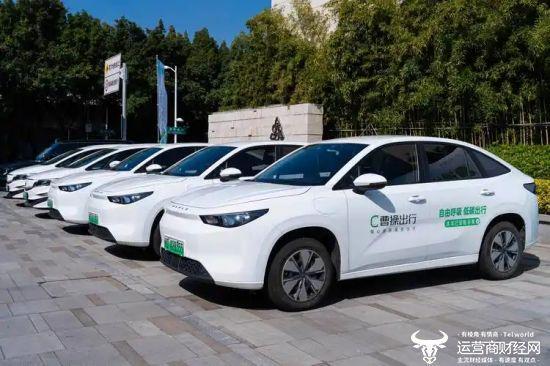
曹操出行CFO柳森森与CEO龚昕都曾在滴滴工作过 以前熟吗?
Xin Lang Cai Jing· 2025-09-23 03:15
Core Viewpoint - Cao Cao Mobility has recently released its first financial report since its listing on the Hong Kong Stock Exchange, indicating a narrowing of losses and significant revenue growth. Financial Performance - The company reported a revenue increase of 53.5% to 9.456 billion RMB, with a gross margin improvement to 8.4% [4] - The net loss for the period narrowed by 39.8% to 468 million RMB [4] - Total transaction volume reached 10.954 billion RMB, with over 3.795 billion orders processed [5] Business Segments - Revenue from mobility services grew by 49.8%, while vehicle sales surged by 137.3% [5] - The expansion into Robotaxi services and lower-tier markets has become a key strategic focus for the company [5] Management Background - Liu Sen Sen, the Executive President and CFO, has a history of working in financial roles at companies like ofo and Didi Chuxing before joining Cao Cao Mobility [3] - Liu participated in the listing ceremony alongside CEO Gong Xin, marking a significant milestone for the company [2][3]

2025年最后100天:如果你熬不下去了,就看看上海住在网约车里的司机
洞见· 2025-09-22 12:35
洞见 ( DJ00123987 ) —— 不一样的观点,不一样的故事, 3000 万人订阅的微信大号。点击标题下蓝字 " 洞见 " 关注,我们将为您提供有价值、有意思的 延伸阅读。 作者:洞见muye 没有谁身上不带伤,没有谁心里不流泪。 ♬ 点上方播放按钮可收听 洞见主播佳音朗读音频 01 在一档街头访谈中,一位上海网约车司机提到,如今许多外地司机为了节省开支,基本上都是以车为家。 他们不租房,每隔几天去价格不高的洗浴中心洗澡、洗衣,生活得很不容易。 这位网约车司机说的是实情。 澎湃新闻采访过一位叫李波的上海网约车司机,他每天都住在车上,睡眠不足7小时。 很多建筑工地都有免费的洗浴间,他给门卫递包烟,每隔两三天去一趟。 无独有偶,北青网也采访过一位叫磊子的网约车司机。 34岁的磊子,后备箱塞满了生活装备:睡觉的被子、牙刷牙膏、洗衣液等。 每天收工后,磊子就找个充电站,趁充电时在车里睡几个小时。 睡车里既节约生活成本,也能随时出车、多挣一些。 车是租来的,每天一睁眼就欠着350元租金,他必须拼命跑,才能勉强为自己攒点钱。 "一天挣到350租车费的话,最少得用8个小时,也就是说,后面8个小时才是给自己挣的。" ...

金台视线丨如何破解“车主喊贵、险企喊亏”
Ren Min Ri Bao· 2025-09-22 11:20
Core Insights - The ride-hailing industry has become a significant mode of transportation with over 500 million users, contributing to convenience and job creation, but faces challenges such as high insurance premiums and difficulties in obtaining coverage [1] Insurance Premium Trends - Insurance premiums for new energy ride-hailing vehicles have been rising significantly, with some drivers reporting increases of up to 30% year-on-year [2][3] - For example, a driver in Nanjing saw his insurance premium rise from 6500 yuan in 2024 to 8500 yuan in 2025, reflecting a 30% increase [2] - Another driver in Beijing experienced a premium increase from 8500 yuan to 9800 yuan, exceeding 15% [3] Challenges in Obtaining Insurance - Many insurance companies are reluctant to insure ride-hailing vehicles, particularly new energy models, due to perceived high risks, leading to limited options for drivers [4] - Some drivers have reported being unable to find alternative insurance providers, resulting in reliance on existing policies despite high costs [2][4] - A significant number of ride-hailing vehicles are reportedly insured under non-operational policies, which can lead to high rejection rates for claims [6] Regulatory and Industry Responses - Regulatory bodies are recognizing the challenges faced by ride-hailing drivers and are pushing for insurance companies to fulfill their social responsibilities [4][8] - Recent guidelines from multiple government departments aim to reform and enhance the insurance landscape for new energy vehicles, including establishing risk-sharing mechanisms and optimizing pricing structures [9] Recommendations for Improvement - Experts suggest developing a multi-dimensional pricing model that incorporates dynamic data such as driving behavior and operational conditions to better match insurance costs with actual risks [10][11] - There is a call for improved collaboration between financial regulators, transportation authorities, and insurance companies to create a comprehensive risk assessment platform [11] - Initiatives to incentivize safe driving behaviors through differentiated insurance rates could promote a safer driving culture among ride-hailing drivers [11]
中金:首予曹操出行“跑赢行业”评级 目标价70港元
Zhi Tong Cai Jing· 2025-09-22 08:26
该行指,曹操出行依托吉利供应链、借助聚合平台流量快速扩张新城,UE优化可期。曹操出行以定制 车构建差异化优势,依托吉利供应链掌控5万多台车队,其低购置与车服成本降低司机TCO,换电模式 提升司机收入,司机时薪和粘性上升。2023年起通过聚合平台获流量,并拓展下沉市场。该行认为未来 曹操出行可通过提升司机抽佣、降低用户补贴、优化合作伙伴返点、扩大规模实现效率提升,来逐步优 化网约车业务的UE水平。 此外,曹操出行拥有丰富的Robotaxi全链条生态,可联动吉利集团覆盖研发、制造、运营等环节。另外 曹操出行拥有现成的派单网络,未来可通过混合模式支撑业务启动与数据积累。目前苏杭已经开展 Robotaxi试点,公司计划2026年底与吉利合作开发L4级Robotaxi定制车型,加速商业化落地。 中金发布研报称,首次覆盖曹操出行(02643),给予"跑赢行业"评级,给予70港元目标价。市场认为中 小网约车平台很难盈利,该行认为供给充裕,平台可降低司乘补贴、提升效率来实现UE优化。 网约车行业迈入规范成熟期,下沉市场需求未充分满足,新能源降本与聚合平台流量推动行业稳健增 长,该行预计2024-2026年网约车行业规模维持高 ...
中金:首予曹操出行(02643)“跑赢行业”评级 目标价70港元
智通财经网· 2025-09-22 08:23
Group 1 - The core viewpoint of the report is that despite market skepticism regarding the profitability of small and medium-sized ride-hailing platforms, the company can optimize user experience (UE) by reducing driver and passenger subsidies and improving efficiency [1] - The ride-hailing industry is entering a phase of regulation and maturity, with unmet demand in lower-tier markets and cost reductions in new energy vehicles driving steady growth; the industry is expected to maintain high single-digit growth from 2024 to 2026 [1] - The company is projected to rank second in gross transaction value (GTV) share with 6% in 2024, leveraging its customized vehicles and service advantages to expand market share [1] Group 2 - The company has a comprehensive Robotaxi ecosystem that connects with Geely Group, covering research and development, manufacturing, and operations [2] - The existing dispatch network allows the company to support business initiation and data accumulation through a hybrid model; pilot Robotaxi operations have already begun in Suzhou and Hangzhou [2] - The company plans to collaborate with Geely to develop L4-level Robotaxi customized models by the end of 2026, accelerating commercialization [2]
研报掘金|中金:首予曹操出行“跑赢行业”评级以及目标价70港元 智驾开拓上行空间
Ge Long Hui· 2025-09-22 07:59
Core Viewpoint - CICC initiates coverage on Cao Cao Mobility with an "outperform industry" rating and a target price of HKD 70, highlighting the potential for growth in autonomous driving [1] Industry Summary - The ride-hailing industry is entering a phase of standardization and maturity, with unmet demand in lower-tier markets. The combination of cost reductions in new energy vehicles and the aggregation of platform traffic is expected to drive steady growth in the industry, with a projected high single-digit growth rate from 2024 to 2026 [1] Company Summary - Cao Cao Mobility is building a differentiated advantage through customized vehicles, leveraging Geely's supply chain to manage a fleet of over 50,000 vehicles. This strategy reduces acquisition and service costs, lowering the total cost of ownership (TCO) for drivers, while the battery swap model enhances driver income and increases hourly wages and retention [1] - The company possesses a comprehensive Robotaxi ecosystem that integrates R&D, manufacturing, and operations through collaboration with Geely Group. Additionally, Cao Cao Mobility has an established dispatch network that can support business initiation and data accumulation through a hybrid model [1] - While the market perceives that small to medium-sized ride-hailing platforms struggle to achieve profitability, CICC believes that with ample supply, platforms can reduce driver and passenger subsidies and enhance efficiency to optimize user experience (UE) [1]
滴滴加码投资巴西外卖,押注中南美
日经中文网· 2025-09-22 05:01
Core Viewpoint - Didi is actively expanding its overseas business, particularly in Latin America, to seek new growth opportunities as its market share in China declines due to intensified competition from rivals like Alibaba and Meituan [2][7][8]. Group 1: Market Expansion and Strategy - Didi has entered 14 countries, focusing on Latin America, with Brazil as a key market for its new food delivery service "99Food" [2][9]. - The company plans to double its investment in the food delivery sector in Brazil to 2 billion Brazilian Reais by June 2026 [4]. - Didi aims to expand its service coverage in Brazil from two cities to 20 by January 2026, collaborating with Yadea Group to develop dedicated electric delivery vehicles [5]. Group 2: Financial Performance - Didi's sales revenue for the period from April to June 2025 increased by 10% year-on-year, reaching 56.4 billion yuan, with overseas sales growing 2.4 times compared to the same period in 2022 [11]. - Overseas business now accounts for 25% of Didi's total transaction volume, surpassing the growth rate of its Chinese ride-hailing business [11]. Group 3: Competitive Landscape - Didi faces fierce competition in the Latin American market, particularly from local players like iFood, which holds an 80% market share in Brazil's food delivery sector [12]. - The company is also contending with regulatory changes in Mexico aimed at protecting the rights of delivery workers, which may increase operational costs [12].

滴滴加码投资巴西外卖,押注中南美
3 6 Ke· 2025-09-22 03:44
Core Viewpoint - Didi is accelerating its overseas expansion, particularly in Latin America, to seek new growth opportunities as its market share in China declines due to intensified competition from rivals like Alibaba and Meituan [2][7]. Group 1: Market Expansion - Didi has entered 14 countries, focusing on Latin America, with Brazil as a key market for its new food delivery service "99Food" [2][7]. - The company plans to double its investment in the food delivery sector in Brazil to 2 billion Brazilian Reais by June 2026 [4]. - Didi aims to expand its service coverage in Brazil from two cities to 20 by January 2026 [5]. Group 2: Competitive Landscape - Didi's market share in China's ride-hailing sector has decreased from 80% at its peak to 70% [2][7]. - The ride-hailing transaction growth rate in China fell from 60% in 2023 to around 10% [7]. - In Brazil, local food delivery app "iFood" holds an 80% market share, while Didi faces competition from other players like Rappi and Meituan [9]. Group 3: Financial Performance - Didi's sales revenue for the second quarter of 2025 reached 564 billion yuan, a year-on-year increase of 10% [9]. - The sales revenue from overseas operations grew 2.4 times compared to the same period in 2022, surpassing the growth rate of its Chinese ride-hailing business [9]. - Overseas transactions now account for 25% of Didi's overall business [9].


如何破解“车主喊贵、险企喊亏”
Ren Min Ri Bao· 2025-09-22 02:26
Core Insights - The ride-hailing industry has become a significant mode of transportation with over 500 million users, contributing to convenience and job creation, but faces challenges such as high insurance premiums and difficulties in obtaining coverage [1] Insurance Premium Trends - Insurance premiums for new energy ride-hailing vehicles have been rising significantly, outpacing the income growth of drivers. For instance, a driver in Hefei reported a premium increase from 8,500 yuan to around 14,000 yuan, while another driver in Nanjing saw a 30% increase from 6,500 yuan to 8,500 yuan for the following year [3][4] - In Beijing, a driver experienced a premium increase from 8,500 yuan to 9,800 yuan, reflecting a rise of over 15% despite no claims made [4] Challenges in Obtaining Insurance - Many insurance companies classify ride-hailing vehicles, especially new energy ones, as high-risk, leading to limited coverage options and high premiums. Some companies have quoted premiums as high as 25,000 yuan, forcing some vehicles to cease operations due to unaffordable insurance costs [4][5] - The insurance market for ride-hailing is concentrated among a few major companies, which have stringent underwriting criteria, often limiting new policies and only allowing renewals for existing customers [4][5] Factors Contributing to High Premiums - The high claim rates and repair costs associated with new energy vehicles contribute to elevated insurance premiums. Industry experts indicate that the current insurance pricing model does not adequately reflect the dynamic risk factors associated with ride-hailing operations [5][6] - Some drivers resort to purchasing non-operational insurance to save costs, which can lead to high rejection rates for claims, creating a cycle of low premiums and high denial of claims [6][7] Recommendations for Improvement - Experts suggest developing a multi-tiered risk-sharing system and optimizing the insurance pricing mechanism to balance the high risks and costs associated with ride-hailing insurance. This includes exploring dynamic pricing models based on real-time driving behavior and risk assessment [8][9] - The establishment of a national ride-hailing risk assessment platform is recommended to enhance the precision of insurance pricing by integrating various data points such as vehicle condition, driver behavior, and road conditions [10]