油气

Search documents
量化周报:市场支撑较强-20251214
Minsheng Securities· 2025-12-14 10:30
Quantitative Models and Construction Methods 1. Model Name: Three-Strategy Fusion ETF Rotation Strategy - **Model Construction Idea**: The strategy integrates three dimensions: fundamental-driven rotation, quality low-volatility style rotation, and distressed reversal industry discovery. It aims to achieve factor and style complementarity while reducing the risk of single-strategy exposure[35][36] - **Model Construction Process**: 1. **Fundamental Rotation Strategy**: Selects industries based on factors such as exceeding expected prosperity, industry leadership effects, momentum, crowding, and inflation beta[36] 2. **Quality Low-Volatility Style Strategy**: Focuses on individual stock quality, momentum, and low volatility to enhance defensiveness[36] 3. **Distressed Reversal Strategy**: Utilizes PB z-score, long-term analyst expectations, and short-term chip exchange to capture valuation recovery and performance reversal opportunities[36] 4. Combines the three strategies equally to form a composite ETF rotation strategy, achieving multi-dimensional industry screening and reducing single-strategy risks[35][36] - **Model Evaluation**: The strategy effectively balances factor complementarity and style adaptation, providing robust performance across different market conditions[35][36] 2. Model Name: Hotspot Trend ETF Strategy - **Model Construction Idea**: This strategy identifies ETFs with strong upward trends and high market attention, constructing a risk-parity portfolio based on support-resistance factors and turnover ratios[30] - **Model Construction Process**: 1. Select ETFs where both the highest and lowest prices exhibit an upward trend[30] 2. Calculate the relative steepness of the regression coefficients for the highest and lowest prices over the past 20 days to construct support-resistance factors[30] 3. Choose the top 10 ETFs with the highest 5-day turnover ratio/20-day turnover ratio from the long group of the support-resistance factor, indicating increased short-term market attention[30] 4. Construct a risk-parity portfolio using these ETFs[30] - **Model Evaluation**: The strategy demonstrates strong performance, achieving significant excess returns compared to the benchmark[30] 3. Model Name: Capital Flow Resonance Strategy - **Model Construction Idea**: This strategy identifies industries with resonant capital flows by combining financing margin and active large-order capital flow factors, aiming to enhance stability and reduce drawdowns[42][44][45] - **Model Construction Process**: 1. Define the financing margin factor as the market-neutralized financing net buy-in minus securities lending net sell-out, calculated as the two-week change in the 50-day moving average[45] 2. Define the active large-order capital flow factor as the market-neutralized net inflow ranking of industry trading volume over the past year, using the 10-day moving average[45] 3. Exclude extreme industries from the active large-order factor and apply a negative exclusion for the financing margin factor to improve strategy stability[45] 4. Perform weekly rebalancing to select industries with resonant capital flows for long positions[45] - **Model Evaluation**: The strategy achieves stable positive excess returns with reduced drawdowns compared to other capital flow strategies[45] --- Model Backtesting Results 1. Three-Strategy Fusion ETF Rotation Strategy - **2025 YTD Performance**: Portfolio return 25.60%, benchmark return 21.83%, excess return 3.77%, Sharpe ratio 0.24, maximum drawdown -7.18%[39][40] - **Overall Performance (2017-2025)**: Annualized excess return 10.28%, Sharpe ratio 1.09, maximum drawdown -24.55%[40] 2. Hotspot Trend ETF Strategy - **2025 YTD Performance**: Portfolio return 34.49%, benchmark (CSI 300) excess return 19.58%[30] 3. Capital Flow Resonance Strategy - **2018-Present Performance**: Annualized excess return 14.3%, IR 1.4, reduced drawdowns compared to Northbound-Large Order Resonance Strategy[45] - **Last Week Performance**: Absolute return -0.27%, excess return 0.37% (relative to industry equal weight)[45] --- Quantitative Factors and Construction Methods 1. Factor Name: Momentum Factor - **Factor Construction Idea**: Captures the continuation of stock price trends over a specific period[53] - **Factor Construction Process**: 1. Calculate the 1-year momentum as the return over the past 12 months, excluding the most recent month[53] 2. Rank stocks based on momentum and form quintile portfolios[53] - **Factor Evaluation**: Demonstrates strong performance, with the 1-year momentum factor achieving a weekly excess return of 1.13%[53] 2. Factor Name: R&D to Total Assets Ratio - **Factor Construction Idea**: Measures the proportion of R&D investment relative to total assets, reflecting innovation capability[56] - **Factor Construction Process**: 1. Calculate the ratio of total R&D expenses to total assets for each stock[56] 2. Rank stocks based on this ratio and form quintile portfolios[56] - **Factor Evaluation**: Performs well in small-cap indices, with an excess return of 20.25% in the CSI 500 index[56] 3. Factor Name: Single-Quarter ROA YoY Change - **Factor Construction Idea**: Tracks the year-over-year change in return on assets (ROA) for a single quarter, reflecting profitability trends[56] - **Factor Construction Process**: 1. Calculate the year-over-year change in ROA for the most recent quarter, considering preliminary and forecasted data[56] 2. Rank stocks based on this change and form quintile portfolios[56] - **Factor Evaluation**: Excels in large-cap indices, with an excess return of 25.52% in the CSI 300 index[56] --- Factor Backtesting Results 1. Momentum Factor - **Weekly Excess Return**: 1.13%[53] 2. R&D to Total Assets Ratio - **Excess Return in CSI 500**: 20.25%[56] 3. Single-Quarter ROA YoY Change - **Excess Return in CSI 300**: 25.52%[56] - **Excess Return in CSI 500**: 10.16%[56] - **Excess Return in CSI 1000**: 21.98%[56]
提气!中国油气产量创历史新高,2030年我国天然气产量将达3000亿立方米
Xin Lang Cai Jing· 2025-12-14 07:51
【提气!#中国油气产量创历史新高#,2030年#我国天然气产量将达3000亿立方米#】《中国油气行 业"十四五"发展成就报告》日前在北京发布,报告显示,中国正加速迈向现代油气产业发展新阶段,能 源结构日趋多元均衡,2030年我国天然气产量将达到3000亿立方米。报告显示,"十四五"期间我国累计 新增探明地质储量石油70亿吨、天然气7万亿立方米,分别较"十三五"增长约43%、40%;油气产量创 历史新高。随着人工智能与新型高载能行业的快速发展,报告预计,到2060年,我国电力需求将突破20 万亿千瓦时,较2025年水平翻一番;终端电气化率将达到62%,年均提升0.9个百分点。 来源:@央视财经微博 ...
现代油气产业发展“加速跑”,我国能源结构多元均衡
Yang Shi Wang· 2025-12-14 07:10
Core Viewpoint - The report on China's oil and gas industry during the "14th Five-Year Plan" period highlights significant advancements in energy structure and production, projecting a substantial increase in natural gas output by 2030 to 300 billion cubic meters [1][4]. Group 1: Production Achievements - During the "14th Five-Year Plan," China added proven geological reserves of 700 million tons of oil and 7 trillion cubic meters of natural gas, representing growth of approximately 43% and 40% compared to the "13th Five-Year Plan" [3]. - Oil production is expected to reach between 215 million and 216 million tons by 2025, with annual increases in domestic natural gas production nearing 13 billion cubic meters [4]. Group 2: Future Energy Structure - The energy structure in the next decade is projected to show a reduction in coal, stability in oil and gas, and an increase in non-fossil energy sources, with fossil energy, hydropower, nuclear power, wind power, and solar power expected to account for 23%, 19%, 25%, and 30% respectively by 2060 [6]. - The integration of fossil and renewable energy is anticipated to foster a healthy, stable, and resilient energy system, with rapid growth in clean energy [8]. Group 3: Electricity Demand and Electrification - By 2060, China's electricity demand is expected to exceed 20 trillion kilowatt-hours, doubling from the 2025 level, with the electrification rate of end-use energy projected to reach 62%, increasing by an average of 0.9 percentage points annually [10].

现代油气产业发展“加速跑” 煤减、油气稳、非化石升 我国能源结构多元均衡
Yang Shi Wang· 2025-12-14 05:30
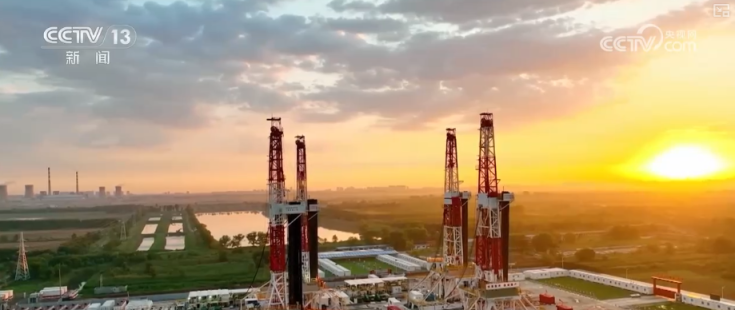
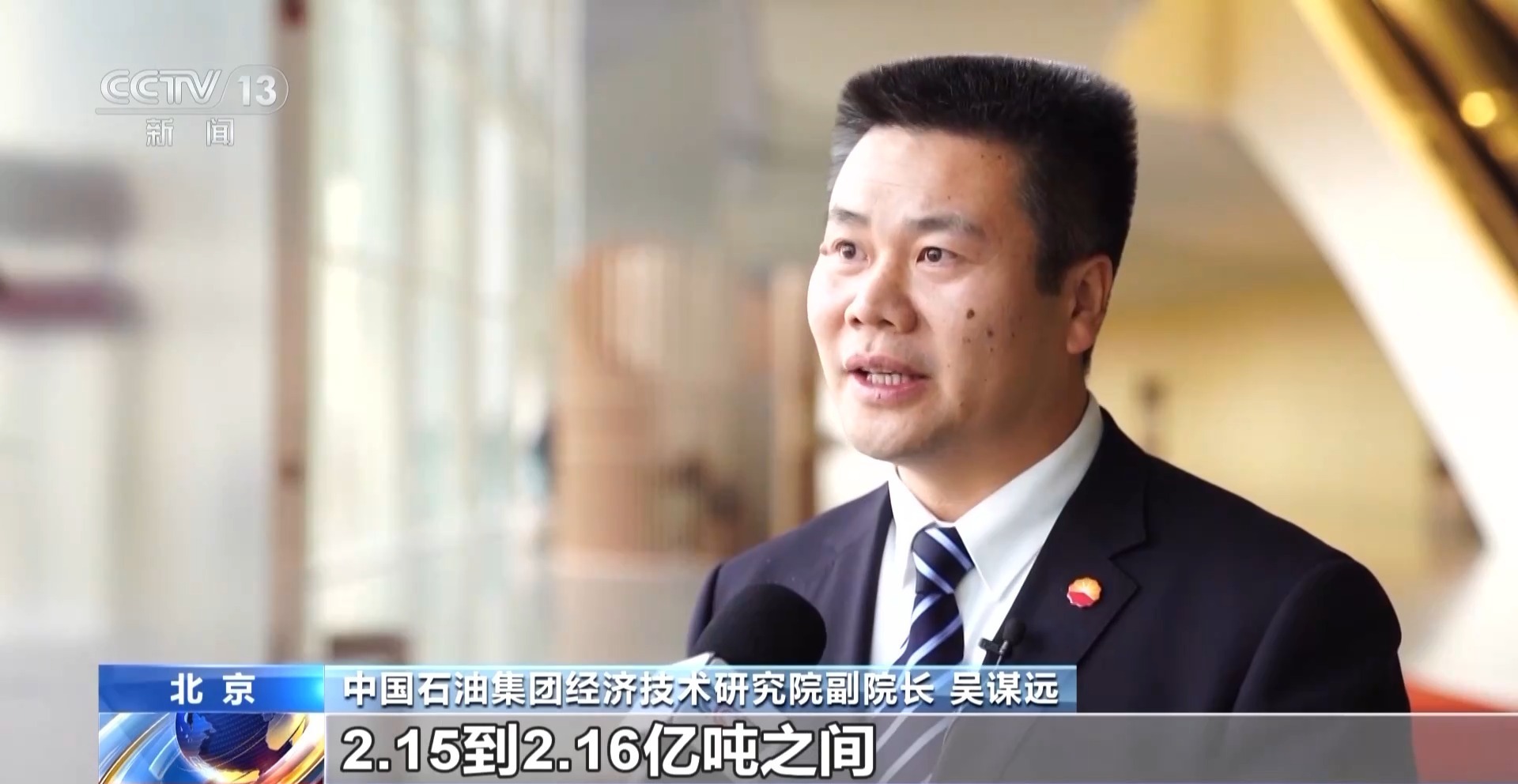
央视网消息:《中国油气行业"十四五"发展成就报告》日前在北京发布。报告显示,中国正加速迈向现代油气产业发展新阶段,能 源结构日趋多元均衡,2030年我国天然气产量将达到3000亿立方米。 吴谋远表示,未来5年,化石能源与可再生能源融合发展,实现整个能源体系的一个健康、稳定、高韧性,整个清洁能源继续保持 快速增长的一个态势。可再生能源90%以上需要通过电力的方式进行消纳,未来整个终端用能的电气化也是一个很重要的转型的一 个大方向。 报告显示,"十四五"期间,我国累计新增探明地质储量石油70亿吨、天然气7万亿立方米,分别较"十三五"增长约43%、40%,油 气产量创历史新高。 中国石油集团经济技术研究院副院长吴谋远介绍,石油产量预计在2025年有可能达到2.15—2.16亿吨之间。天然气整个"十四五"是 一个大发展,每年天然气国内产量新增接近130亿立方米左右。在"十五五"期间,我们预计每年保持100亿立方米新增量,2030年左 右增长到3000亿立方米。 报告预计,未来10年,我国能源结构将呈现"煤减、油气稳、非化石升"的特征。到2060年,我国化石能源、水电核电、风电、光电 占比分别为23%、19%、25%、 ...
视频丨2030年我国天然气产量将达3000亿立方米
Yang Shi Xin Wen· 2025-12-14 00:29
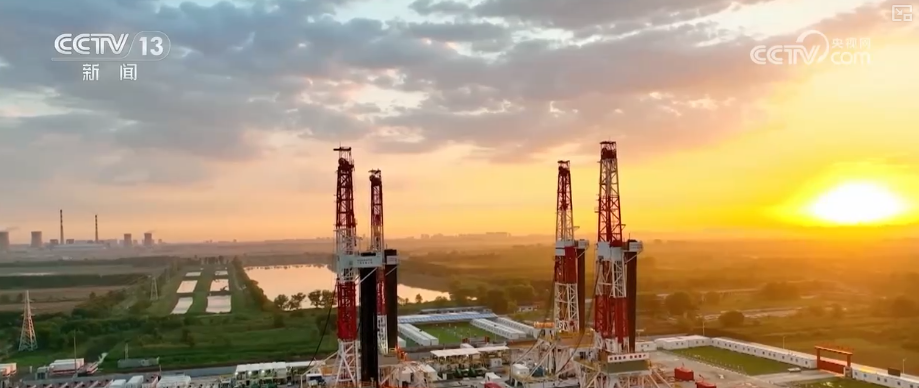
报告预计,未来十年,我国能源结构将呈现"煤减、油气稳、非化石升"的特征。到2060年,我国化石能源、水电核电、风电、光电占比分别为23%、19%、 25%、30%。 中国石油集团经济技术研究院副院长 吴谋远:未来五年,化石能源与可再生能源融合发展,实现整个能源体系的健康、稳定、高韧性,清洁能源继续保持 快速增长态势。可再生能源90%以上需要通过电力的方式进行消纳,未来整个终端用能电气化也是一个很重要的转型大方向。 《中国油气行业"十四五"发展成就报告》显示,中国正加速迈向现代油气产业发展新阶段,能源结构日趋多元均衡,2030年我国天然气产量将达到3000亿立 方米。 报告显示,"十四五"期间我国累计新增探明地质储量石油70亿吨、天然气7万亿立方米,分别较"十三五"增长约43%、40%,油气产量创历史新高。 中国石油集团经济技术研究院副院长吴谋远:石油产量预计在今年有可能达到2.15至2.16亿吨之间,天然气在"十四五"期间是一个大发展,每年天然气的产 量新增130亿立方米左右,在"十五五"期间,预计每年保持100亿立方米以上的新增量,2030年左右增长到3000亿立方米。 随着人工智能与新型高载能行业的快速发 ...
国家能源局负责人会见沙特阿美高级副总裁
国家能源局· 2025-12-12 13:33
何洋表示,能源是两国务实合作的重要领域,基础扎实,合作广泛,联系紧密。沙特阿美是中国企业的重要合作伙伴,希望双方在油气等领域继续 加强合作,不断取得新成果。 胡奈尼表示,中国是世界最大的能源市场,合作潜力巨大,沙特阿美愿与中方伙伴加强沟通,共同发掘更多合作机会。 2025年12月10日,中国国家能源局副局长何洋在京会见来访的沙特阿美高级副总裁艾哈迈德·胡奈尼,双方就沙特阿美在华业务合作现状及未来前 景等议题交换了意见。 中国国家能源局规划司、油气司、国际司相关负责同志参加会见。 ...

2025年中国油气产量有望再创新高,专家:三大因素保障能源安全
Huan Qiu Wang· 2025-12-12 12:46
Core Viewpoint - China aims to enhance its energy security by increasing domestic oil and gas production, with projections indicating record-high outputs by 2025 [1][2]. Group 1: Oil and Gas Production Projections - By 2025, China's oil production is expected to reach 215 million tons, marking the highest level in history, while natural gas production could hit 260 billion cubic meters, solidifying its position as the fourth-largest natural gas producer globally [1][2]. - The average annual investment in oil and gas upstream exploration and development during the 14th Five-Year Plan period is projected to increase by approximately 48% compared to the 13th Five-Year Plan [2]. Group 2: Factors Driving Production Growth - The increase in oil and gas production is attributed to three main factors: enhanced exploration and development efforts, breakthroughs in deep and unconventional oil and gas fields, and technological innovations that expand exploration capabilities [2]. - Significant advancements include the completion of wells exceeding 10,000 meters in depth and the establishment of China's first self-operated ultra-deepwater gas field, "Deep Sea No. 1," marking the entry into the ultra-deepwater oil and gas era [2]. Group 3: International Cooperation - Chinese oil companies have deepened international cooperation, operating over 200 oil and gas investment projects across more than 60 countries and regions, which enhances the scale and quality of China's oil and gas supply [3]. - The estimated overseas oil and gas equity production equivalent for Chinese oil companies is projected to reach 196 million tons this year, providing a solid foundation for national energy security [3].
壳牌与Equinor成立合资公司
Zhong Guo Hua Gong Bao· 2025-12-12 03:56
Core Insights - The joint venture Adura has been established by Shell and Equinor, integrating 12 core oil and gas assets in the UK North Sea, making it the largest independent producer in the region, with an expected production exceeding 140,000 barrels of oil equivalent per day by 2026 [1] Group 1: Joint Venture Formation - The formation of Adura aims to enhance operational efficiency, extend the lifespan of oil fields, and ensure the security of energy supply in the UK [1] - The asset portfolio of Adura includes producing oil fields and development projects such as Mariner, Rosebank, Buzzard, and Shearwater, along with some exploration licenses [1] Group 2: Asset Retention and Strategic Focus - Equinor retains its interests in cross-border oil fields, offshore wind projects, and new energy assets like hydrogen and carbon capture and storage [1] - Shell retains its interests in the UK SEGL gas processing system, Bacton terminal, and some decommissioned oil fields [1] Group 3: Industry Implications - The establishment of Adura signifies a shift towards specialized operations in traditional oil and gas assets in the North Sea, focusing on enhancing the value and sustainability of existing assets amid the energy transition [1]


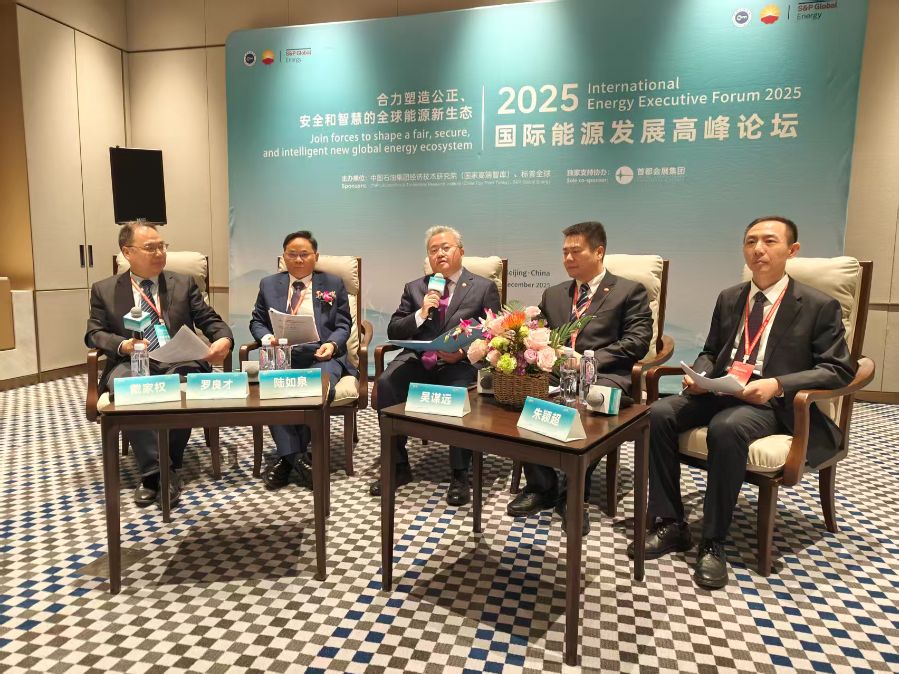
中石油经研院朱颖超:中国能源企业走出去面临四大机遇
2 1 Shi Ji Jing Ji Bao Dao· 2025-12-11 17:47
中国石油 中国石油股份 分时图 日K线 周K线 月K线 9.66 0.06 0.63% 1.46% 0.94% 0.52% 0.00% 0.52% 0.94% 1.46% 9.46 9.51 9.55 9.60 9.65 9.69 9.74 09:30 10:30 11:30/13:00 14:00 15:00 0 270万 539万 809万 南方财经21世纪经济报道记者郑青亭、实习生王馨梓北京报道 12月11日,在2025国际能源发展高峰论坛期间,中国石油(601857)集团经济技术研究院副院长朱颖超向21世纪经济报道记者 表示,尽管当前全球形势复杂多变,但中国能源企业"走出去"仍有广阔空间和巨大机遇。 朱颖超分析道,首先,中国超大规模的市场需求,将继续为油气经贸合作提供坚实基础。根据预测,未来十年中国经济仍将保 持4.5%-5%的中高速增长,显著高于全球约3%的平均水平。今年上半年,我国对共建"一带一路"国家进出口同比增长4.7%。"这 些都表明中国市场的规模与潜力依然是重要支撑。" 不仅如此,朱颖超指出,中长期内,油气在中国能源体系及全球能源结构中仍将保持重要地位,需求空间依然存在。由中石油 经研院发 ...

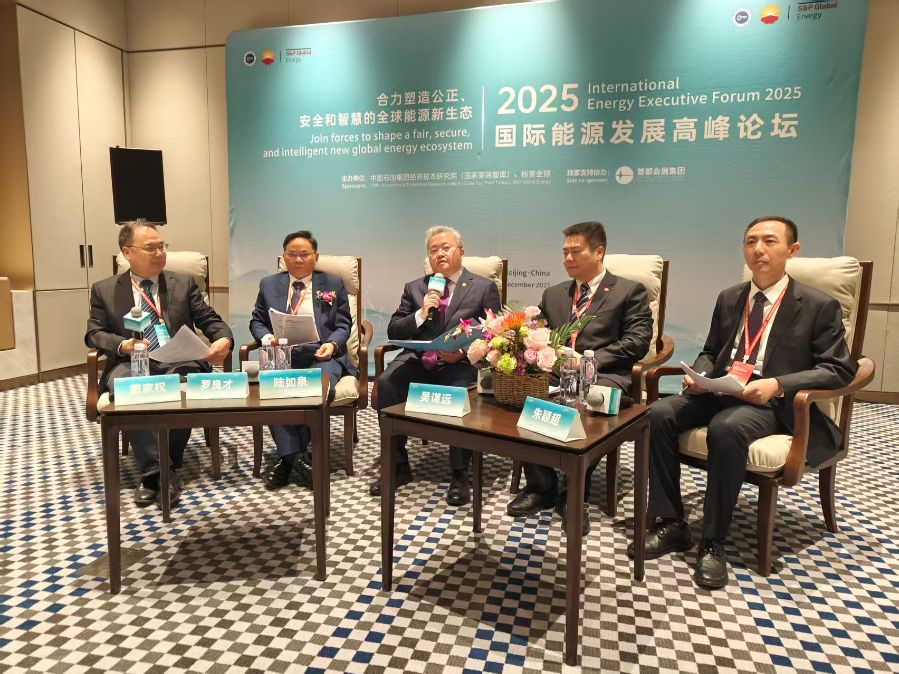
21对话|中石油经研院朱颖超:中国能源企业走出去面临四大机遇
2 1 Shi Ji Jing Ji Bao Dao· 2025-12-11 12:09
不仅如此,朱颖超指出,中长期内,油气在中国能源体系及全球能源结构中仍将保持重要地位,需求空间依然存在。由中石油 经研院发布的《2060年世界与中国能源展望》预测,在基准情景下,到2035年化石能源需求增至127亿吨标油,较2025年增加4 亿吨标油,占一次能源比重仍高于70%。"中国油气企业在30多年积累了丰富的合作经验与创新模式,这将为未来深化合作奠定 良好基础。"他说。 此外,朱颖超强调,科技创新特别是智能化、数字化发展,将为油气行业带来新的增长空间。"人工智能、数字化技术已在油气 勘探开发、炼化、储运等环节广泛应用,显著提升效率、降低成本。同时,深海、极地、页岩油气等领域的技术突破,以及液 化天然气等技术发展,也将创造新的合作机遇。" 最后,朱颖超表示,全球能源转型趋势也将提供新的增长点。"当前能源转型加速推进,中东、非洲等地正积极发展新能源。非 洲在资金与技术方面仍有缺口,而中国在新能源产业链、资金与技术方面具备优势,双方在该领域的合作前景广阔。"他说。 南方财经21世纪经济报道记者郑青亭、实习生王馨梓 北京报道 12月11日,在2025国际能源发展高峰论坛期间,中国石油集团经济技术研究院副院长朱颖超 ...