
石油与天然气

Search documents
今天加油站92号95号汽油价格,8月26日国内油价大幅下调已成定局
Sou Hu Cai Jing· 2025-08-26 19:15
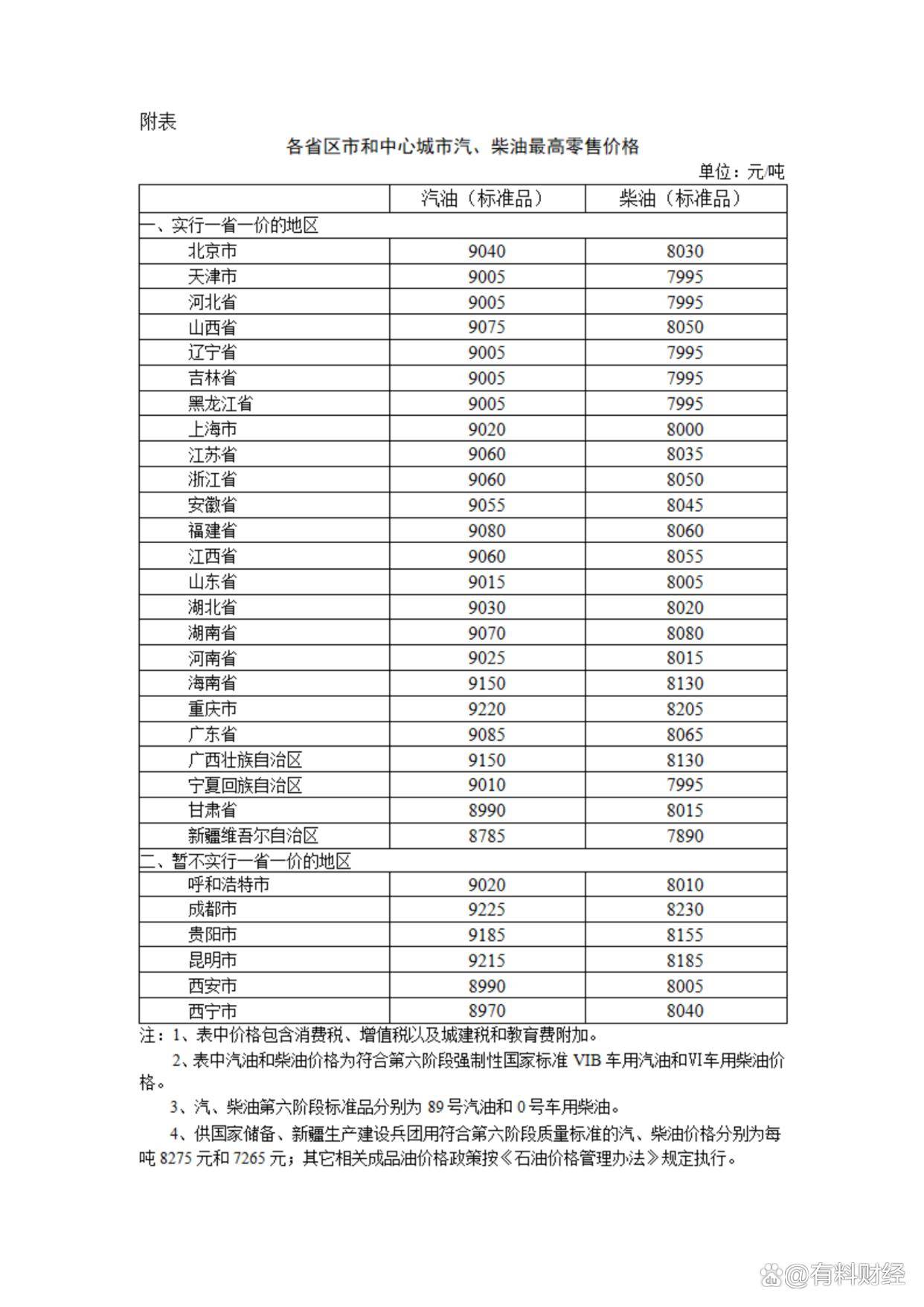
Group 1 - Domestic refined oil prices are set to decrease significantly on August 26, with a reduction of approximately 205 yuan per ton for gasoline and diesel, leading to savings of about 9 yuan for a full tank [2][3] - This marks the third largest single drop in oil prices this year, bringing domestic prices back to the "6 yuan era" [2][3] - The average international crude oil price has dropped by 4% during the current pricing cycle, directly triggering the domestic price reduction [3][7] Group 2 - The decline in oil prices is attributed to multiple factors, including fluctuations in international oil prices, weak U.S. economic data, and changes in global supply and demand dynamics [3][4][7] - Recent U.S. economic data has shown disappointing results, with non-farm payrolls increasing by only 73,000 in July, significantly below market expectations, raising concerns about a potential "stagflation" scenario [4][7] - Major oil-producing countries like Saudi Arabia and Russia have maintained or increased production levels, contributing to a global oversupply of crude oil [7] Group 3 - Financial institutions such as Goldman Sachs, Merrill Lynch, Citibank, and Morgan Stanley have lowered their global oil price targets for 2025, reflecting a bearish outlook on oil prices [7] - The anticipated shift in U.S. Federal Reserve policy, with potential interest rate cuts, has created volatility in the market, but the overall economic outlook remains a key factor influencing oil prices [3][4]

中国石油: 中国石油天然气股份有限公司二零二五年中期业绩公告(半年度报告摘要)
Zheng Quan Zhi Xing· 2025-08-26 16:40
| 中国石油天然气股份有限公司 | | | | | | | --- | --- | --- | --- | --- | --- | | PETROCHINA COMPANY LIMITED | | | | | | | (于中华人民共和国注册成立之股份有限公司) | | | | | | | (于香港联交所股票代码:857;于上海证券交易所股票代码:601857) | | | | | | | 二零二五年中期业绩公告(半年度报告摘要) | | | | | | | ("本公司")二零二五年半年度报告全文,为全面了解本公司的经营成果、财 | | | | | | | 务状况及未来发展规划,投资者应当到上海证券交易所网站(网址 | | | | | | | https://www.sse.com.cn)、香港联合交易所有限公司("香港联交所")"披露易" | | | | | | | 网 站 ( 网 址 https://www.hkexnews.hk ) 及 本 公 司 网 站 ( 网 址 | | | | | | | https://www.petrochina.com.cn)仔细阅读本公司二零二五年半年度报告全文。 | | ...

中国石油股份(00857) - 中国石油天然气股份有限公司2025年半年度报告
2025-08-26 14:01
香港交易及結算所有限公司及香港聯合交易所有限公司對本公告的內容概不負責,對其準確性或完 整性亦不發表任何聲明,並明確表示,概不對因本公告全部或任何部份內容而産生或因倚賴該等內 容而引致的任何損失承擔任何責任。 中國石油天然氣股份有限公司 PETROCHINA COMPANY LIMITED (於中華人民共和國註冊成立之股份有限公司) (股份代號:857) 海外監管公告 本公告乃根據香港聯合交易所有限公司證券上市規則第 13.10B 條作出。 茲載列中國石油天然氣股份有限公司在上海證券交易所網站刊登的《中國石油天然氣股份有限 公司 2025 年半年度報告》,僅供參閱。 特此公告 中國石油天然氣股份有限公司董事會 中國北京 2025 年 8 月 26 日 於本公告日,本公司董事會由戴厚良先生擔任董事長,由段良偉先生及謝軍先生擔任非執行董事, 由黃永章先生、任立新先生及張道偉先生擔任執行董事,由蔣小明先生、何敬麟先生、閻焱先生、 劉曉蕾女士及張玉新先生擔任獨立非執行董事。 中国石油天然气股份有限公司 2025 年半年度报告 (A 股股票代码:601857) 2025 年 8 月 26 日 | | - | | --- ...

中国石油创新驱动高质量发展 上半年经营业绩好于预期
Zhong Guo Jin Rong Xin Xi Wang· 2025-08-26 11:53
Core Viewpoint - China Petroleum and Natural Gas Corporation reported strong mid-year performance with revenue of 1.5 trillion yuan and net profit of 840.1 billion yuan, driven by proactive market strategies and innovation [1][2] Financial Performance - The company achieved a historical high in free cash flow, increasing by 11.5% year-on-year [1] - The board announced an interim dividend of 0.22 yuan per share, totaling 402.7 billion yuan, maintaining a high level compared to previous years [1] Operational Highlights - Despite a 15.1% year-on-year decline in Brent crude oil prices, the company managed to maintain stable production and operational performance [2] - Domestic oil and gas equivalent production increased by 2%, with natural gas production rising by 3.8%, both reaching historical highs [2] - In refining and chemical sectors, the company optimized product structure and maintained high operational loads for high-end products, achieving record processing volumes [2] Sales and Marketing - The company experienced a 0.3% increase in domestic refined oil sales despite a decline in overall market demand, with a significant 213% growth in charging and swapping electricity volumes [2][3] - Non-oil business profits grew by 5.5%, indicating successful diversification strategies [2] Green and Low-Carbon Transition - The company is advancing its green and low-carbon transition with a comprehensive layout of "oil, gas, heat, electricity, and hydrogen," having established a wind and solar power generation capacity of 10.24 million kilowatts [4][5] - Significant projects include large-scale photovoltaic and wind power installations, contributing to a reduction in greenhouse gas emissions [5][6] Technological Innovation - The company has made substantial progress in technology and innovation, including breakthroughs in new materials and digital transformation initiatives [7][8] - The implementation of a new version of Kunlun large model and the establishment of a smart platform have enhanced operational efficiency and decision-making capabilities [8] Future Outlook - The company aims to enhance its integrated advantages and resilience in the energy supply chain while continuing to focus on innovation and sustainable development [8]
中国航油战略投资bp生物航煤合资公司
Sou Hu Cai Jing· 2025-08-26 11:05
Group 1 - BP China announced that its wholly-owned subsidiary, China Aviation Oil Group Investment Co., Ltd., agreed to invest 261 million RMB in Lianyungang Jiaao New Energy Co., Ltd. [1] - Last August, BP signed an equity investment agreement with Lianyungang Jiaao, committing to invest 353 million RMB [1] - In 2022, Zhejiang Jiaao Environmental Protection Technology Co., Ltd. established Lianyungang Jiaao to build the first 500,000-ton sustainable aviation fuel production project in China, utilizing waste oil as raw material and employing the globally leading Ecofining technology [1] Group 2 - The total investment amount for the sustainable aviation fuel project is 4.413 billion RMB [1]
中国石油上半年日赚4.6亿,营收净利双降
Mei Ri Jing Ji Xin Wen· 2025-08-26 10:46
【#中国石油上半年日赚4.6亿#】8月26日下午,中国石油股份在港交所公告,2025年上半年,集团实现 营业收入人民币14500.99亿元,同比下降6.7%;归属于母公司股东净利润人民币840.07亿元,同比下降 5.4%,相当于上半年每日净赚4.6亿元。 中国石油表示,营业收入下滑主要由于集团原油、成品油价格下降及油气产品销量变化综合影响。2025 年上半年,中国石油的平均实现原油价格为66.21美元/桶,比上年同期的77.45美元/桶下降14.5%。(每 经综合,德塔) ...
和顺石油: 和顺石油关于取消监事会并修订《公司章程》及修订、废止相关制度的公告
Zheng Quan Zhi Xing· 2025-08-26 10:24
证券代码:603353 证券简称:和顺石油 公告编号:2025-038 湖南和顺石油股份有限公司 关于取消监事会并修订《公司章程》及修订、废止相关制度的公告 本公司董事会及全体董事保证本公告内容不存在任何虚假记载、误导性陈述 或者重大遗漏,并对其内容的真实性、准确性和完整性承担法律责任。 湖南和顺石油股份有限公司(以下简称"公司")于 2025 年 8 月 26 日召开 第四届董事会第五次审议通过《关于取消监事会并修订 <公司章程> 及配套议事 规则的议案》《关于修订部分公司治理制度的议案》,于同日召开第四届监事会 第五次会议审议通过《关于取消监事会并修订 <公司章程> 及废止 <监事会议事规> 则>的议案》,现将有关情况公告如下: 一、 修订《公司章程》及取消监事会情况 为进一步完善公司治理制度体系,保持与新施行的相关法律法规有关条款的 一致性,根据《中华人民共和国公司法(2023 年修订)》《上市公司章程指引 (2025 年修订)》《上海证券交易所股票上市规则(2025 年修订)》等法律法 规、部门规章、规范性文件的最新规定,并结合公司实际情况,公司将不再设置 监事会,监事会职权由董事会审计委员会行使,同 ...

中国一年进口5亿吨石油,为何宁花万亿买油,国内石油为啥不挖?
Sou Hu Cai Jing· 2025-08-26 09:49
Core Viewpoint - China's high dependence on imported oil is a strategic choice influenced by domestic production challenges and global market dynamics [1][32]. Group 1: Domestic Oil Production Challenges - China consumes over 700 million tons of oil annually, with more than 70% imported, equating to over 10 million barrels per day [1]. - Proven oil reserves in China are approximately 3.8 billion tons, but most high-quality oil fields are aging and have low extraction efficiency [3][4]. - The majority of oil wells in China have a water cut of 95%, meaning only 5% of extracted liquid is oil, leading to high production costs [4][8]. - The geological complexity of Chinese oil fields results in low single-well output and short well lifespans, with over 70% of reserves classified as low or ultra-low permeability [6][8]. Group 2: Cost and Technology Factors - The average cost of extracting a barrel of oil in China is between $50 and $60, significantly higher than in Middle Eastern countries, where it is below $10 [8]. - Advanced extraction techniques such as water injection and CO2 flooding are required to enhance oil recovery, but these methods are costly and technologically demanding [8][9]. Group 3: Strategic Import Decisions - China's oil imports are a result of strategic considerations, including cost-effectiveness and energy security, rather than mere necessity [11][32]. - The country imports oil from over 50 nations, with major suppliers being Saudi Arabia, Russia, and Iraq, allowing for diversified sourcing [13]. - In 2020, China capitalized on low international oil prices by significantly increasing its oil reserves, demonstrating a strategic approach to procurement [14]. Group 4: Risk Management and Supply Chain - Diversifying oil imports helps mitigate supply risks associated with geopolitical tensions and market fluctuations [16]. - China has established a stable global supply chain through long-term contracts and investments in overseas oil fields, while also moving towards RMB settlements to reduce reliance on the US dollar [17][19]. Group 5: Future Energy Strategy - China is actively pursuing a "de-oil" strategy, recognizing the finite nature of fossil fuels and the need for sustainable energy sources [21][22]. - Investments in new oil and gas fields, as well as advancements in deep-sea drilling technologies, indicate ongoing efforts to enhance domestic production capabilities [23][25]. - The country is rapidly developing renewable energy sources, with wind and solar power installations leading globally, and aims for non-fossil energy to account for 25% of consumption by 2030 [27][30]. Group 6: Conclusion on Energy Security - The current high dependence on oil imports is viewed as a rational strategy that allows for a smoother transition to renewable energy, rather than a vulnerability [30][34]. - Balancing traditional and renewable energy sources is essential for ensuring long-term energy security and enhancing international competitiveness [34].
中国石油:上半年净利润840亿元,同比下降5.4%
Hua Er Jie Jian Wen· 2025-08-26 08:54
Core Viewpoint - The article discusses the current trends and developments in the investment banking sector, highlighting the impact of recent economic changes on market dynamics and investment opportunities [1] Group 1: Economic Trends - The investment banking industry is experiencing significant shifts due to rising interest rates and inflation, which are affecting deal-making activities [1] - There is a noted increase in mergers and acquisitions (M&A) as companies seek to consolidate and enhance their market positions amid economic uncertainty [1] Group 2: Market Opportunities - Investment banks are focusing on sectors such as technology and healthcare, which are expected to show resilience and growth potential despite broader economic challenges [1] - The demand for advisory services is increasing as companies navigate complex financial landscapes, creating opportunities for investment banks to expand their service offerings [1] Group 3: Challenges Ahead - Regulatory changes and geopolitical tensions are posing challenges for investment banks, potentially impacting their operational strategies and profitability [1] - Competition among investment banks is intensifying, leading to pressure on fees and margins, which could affect overall industry profitability [1]
中国石油股份(00857) - 2025 Q2 - 电话会议演示
2025-08-26 08:00
BOARD AND MANAGEMENT INTERIM RESULTS PRESENTATION AUGUST 27, 2025 DISCLAIMER This presentation contains forward-looking statements that involve risks and uncertainties. These statements are generally indicated by the use of forward-looking terminology such as "believe", "expect", "anticipate", "estimate", "plan", "project", "target", "may", "will" or other similar words that express an indication of actions or results of actions that may or are expected to occur in the future. You should not place undue rel ...