
建筑

Search documents
在武汉,像造车造船一样造房
Chang Jiang Ri Bao· 2025-11-14 13:07
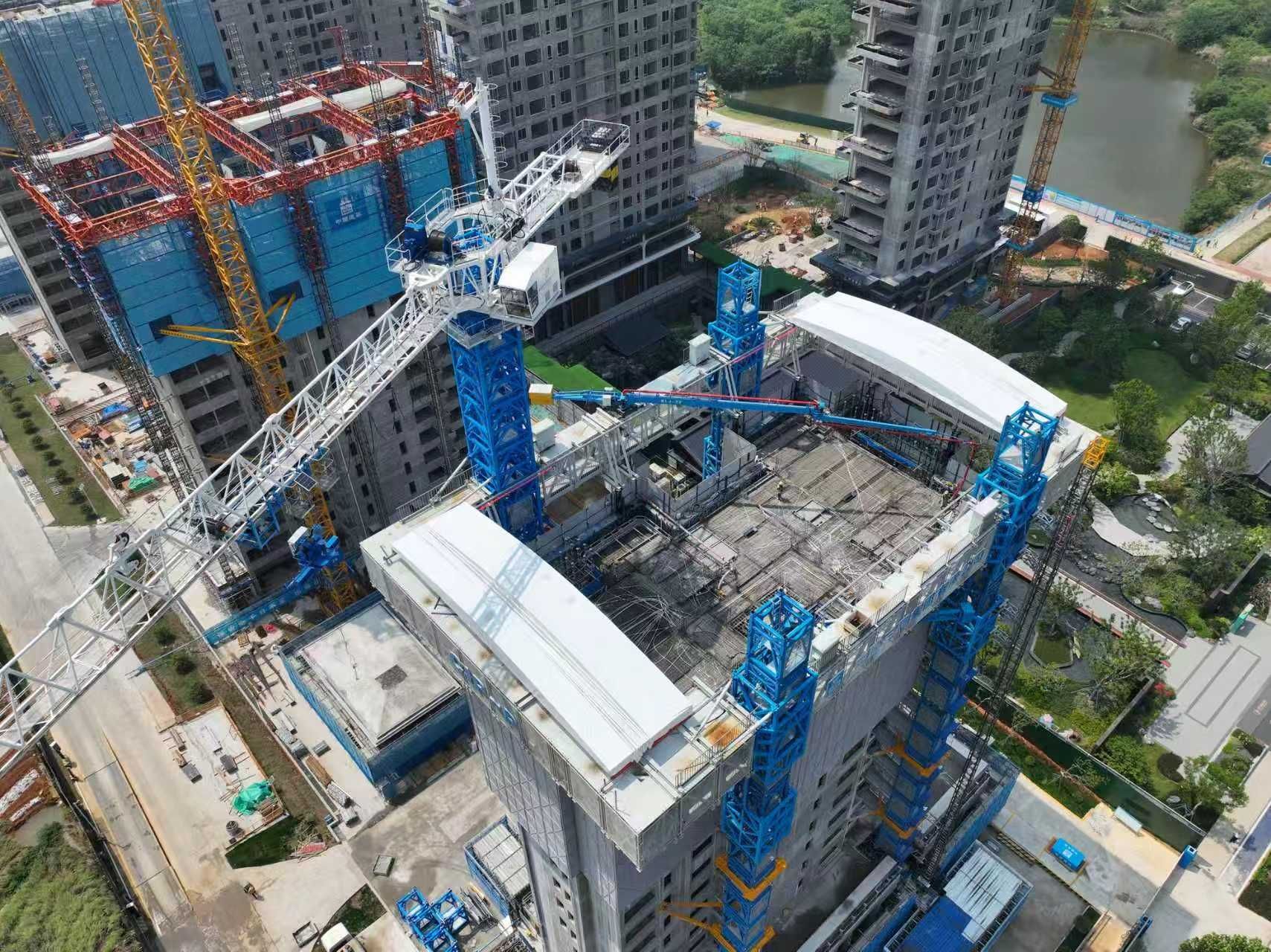
你眼中的好房子是什么样的? 也许每个人的答案不同,但武汉已经开始探索。 作为全国智能建造试点城市之一,武汉利用在造房、造车、造船上的优势,要像造车、造船一样造房。 武汉光谷,中建壹品汉韵公馆即将完工,这是武汉第一个获批备案的第四代住宅。 汉韵公馆。 建造中的住宅楼顶是一座"智能建造工厂",集成了混凝土布料机器人、3D打印机器人等智能装备;塔吊内空无一人却能正常运转,因 为在地面的集控中心,塔机司机在此远程操作,不再需要爬上百米高空。 在看不见的地方,所有的智能装备集群,都依靠"中建万方"平台,实现全工地数据的一网统管、智能装备一端调度,让房屋建造的精 度和效率更高。 除了建造过程和汽车一样实现标准化、智能化,项目的另一个特点是提供全周期的运营维护,这和过去的房产项目交付即结束不同。 汉韵公馆施工现场的智能设备。 "像造车一样造房,不仅是用工业化的方式来建造房屋,更是把房子当成产品,以产品思维来造好房子。"中国建筑智能建造研究院副 院长明磊说。 非标化、碎片化,一直是建筑业的痛点,明磊解释,以工业化方式造房,一方面是把施工现场搬到工厂,让更多建造环节在工厂完成 模块化生产,另一方面是把施工现场变为工厂,通过精细 ...

凌锐控股公布中期业绩 净利31.1万港元 同比减少79.88%
Zhi Tong Cai Jing· 2025-11-14 12:29
Core Viewpoint - Lingrui Holdings (00784) reported a significant decline in both revenue and net profit for the six months ending September 30, 2025, primarily due to the ongoing economic downturn in the construction industry and a strategic focus on clients with a strong track record of timely payment [1] Financial Performance - Revenue for the period was HKD 91.406 million, representing a year-on-year decrease of 24.2% [1] - Net profit was HKD 3.11 million, reflecting a substantial year-on-year decline of 79.88% [1] - Earnings per share stood at HKD 0.04 [1] Strategic Focus - The company has adopted a strategy to concentrate on clients with a good track record of timely settlement of receivables [1] - This approach aims to enhance credit control and mitigate risks in a challenging business environment [1]
凌锐控股(00784)公布中期业绩 净利31.1万港元 同比减少79.88%
智通财经网· 2025-11-14 12:29
Core Viewpoint - Lingrui Holdings (00784) reported a significant decline in both revenue and net profit for the six months ending September 30, 2025, primarily due to the ongoing economic downturn in the construction industry and a strategic focus on clients with a strong track record of timely payment collection [1] Financial Performance - Revenue for the period was HKD 91.406 million, representing a year-on-year decrease of 24.2% [1] - Net profit stood at HKD 0.311 million, reflecting a substantial year-on-year decline of 79.88% [1] - Earnings per share were reported at HKD 0.0004 [1] Strategic Focus - The company has adopted a strategy to concentrate on clients with a good history of timely settlement of receivables [1] - This approach aims to enhance credit control and mitigate risks in a challenging business environment [1]
【环球财经】欧盟统计局:三季度欧盟企业注册量与破产数均创2019年第一季度以来新高
Xin Hua Cai Jing· 2025-11-14 12:03
Core Insights - The EU's business activity in Q3 2025 shows a complex situation with a simultaneous increase in new business registrations and bankruptcy filings, both reaching their highest levels since Q1 2019 [1] - New business registrations in the EU increased by 4.0% compared to Q2 2025, continuing a growth trend of 5.0% from the previous quarter, while bankruptcy filings rose by 4.4%, surpassing the 3.4% increase in Q2 [1] - The Eurozone exhibited a more pronounced divergence, with business registrations up by 3.6% but bankruptcy filings increasing significantly by 5.1% [1] Group 1: Business Registrations - Ireland saw the most significant increase in business registrations at 82.0%, followed by Luxembourg at 44.4% and Romania at 32.3%, indicating strong entrepreneurial activity [2] - Conversely, Cyprus, Austria, and Finland experienced declines in business registrations, with decreases of 6.7%, 6.6%, and 3.6% respectively [2] - All economic sectors in the EU reported an increase in business registrations, particularly in information and communication, construction, transportation, and financial services, with nearly all sectors exceeding pre-pandemic levels, except for the trade sector [2] Group 2: Bankruptcy Filings - Greece reported the highest increase in bankruptcy filings at 47.8%, followed by Poland at 17.3% and the Czech Republic at 17.2%, indicating rising operational pressures in these regions [2] - In contrast, Cyprus, Romania, and Estonia saw significant decreases in bankruptcy filings, with reductions of 50.0%, 45.9%, and 21.0% respectively [2] - Bankruptcy numbers continued to rise in five sectors, including accommodation and food services, transportation, and finance, while the industrial sector remained stable, and the information and communication and construction sectors saw a decline in bankruptcy filings [2]
8连板*ST正平:股价短期涨幅严重脱离基本面 存在终止上市风险
Jing Ji Guan Cha Wang· 2025-11-14 10:08
Core Points - The stock of *ST Zhengping (603843)* has experienced a cumulative increase of 192.19% from September 1 to November 14, 2025, significantly deviating from the Shanghai Composite Index and the construction industry during the same period [1] - The company received an audit report with a disclaimer of opinion for its 2024 annual report, leading to a delisting risk warning for its stock [1] - There are instances of illegal guarantees and a negative opinion on internal controls, indicating significant uncertainty regarding the company's ability to continue as a going concern [1] - If the issues related to the non-standard opinions are not resolved in the 2025 fiscal year, the company's stock will be terminated from listing [1]

英智库:中国已成为海湾国家最大贸易伙伴
Xin Hua Wang· 2025-11-14 09:23
报告指出,美国政府的关税举措可能促使亚洲生产商加倍向非美国市场倾斜。中国目前占海湾国家 与新兴亚洲经济体全部贸易额的47%。双方在可再生能源、建筑业等非油气领域的合作不断深化,将推 动海湾国家与中国进一步拓展贸易合作。 报告提到,阿联酋与中国的非油气贸易持续增长,2025年上半年阿联酋对华非油气贸易额同比增长 15%。 【纠错】 【责任编辑:施歌】 新华社伦敦11月14日电(记者郑博非)位于英国伦敦的独立智库"亚洲之家"13日发布最新研究报告 说,中国已超越美国、英国和欧元区国家,成为海湾国家最大的贸易伙伴。 报告援引国际货币基金组织数据说,2024年阿联酋、沙特阿拉伯、卡塔尔、科威特、阿曼和巴林等 六个海湾国家对华贸易额达2570亿美元,超过这六个国家与美国、英国和欧元区国家合计2560亿美元的 贸易总额。报告预计,到2028年,海湾国家与中国的贸易总额将增至3750亿美元。 ...
东吴证券:基建地产链25三季度盈利持续承压 经营性现金流表现改善
智通财经网· 2025-11-14 09:22
现金流与资产负债方面,经营性现金流表现改善,杠杆率基本稳定 (1)2025Q3基建地产链样本上市公司经营活动产生的现金流量净额为926.9 亿元,同比+143.8%,其中建 筑、建材行业经营活动产生的现金流量净额分别为754.8、172.1亿元,同比分别+278.4%、-4.8%,其中 基建房建、国际工程子行业明显改善,反映现金流管控的成效。 智通财经APP获悉,东吴证券发布研报称,2025年Q3基建地产链需求依然疲弱,行业整体盈利持续承 压。尽管营业收入降幅有所收窄,且经营性现金流显著改善,但归母净利润下滑幅度扩大,销售净率仍 处于低位,反映出终端需求不足下的激烈市场竞争。大宗周期类子行业(如水泥、玻璃玻纤)受益于价格 因素有所回暖,而建筑及部分工程类子行业则成为主要拖累。同时,应收账款周转效率放缓,表明资金 回笼压力仍在。 东吴证券主要观点如下: 利润方面营收降幅收窄,但盈利仍然承压 (1)基建地产链需求持续承压下,上市公司 2025Q3 营收延续下降态势,但降幅收窄。2025Q3基建地产 链样本上市公司整体营业收入同比 4.5%,增速环比2025Q2 变动+1.1pct。其中建筑、建材行业2025Q3 ...

三场展会看科技如何打造"好房子"
Jing Ji Ri Bao· 2025-11-14 00:13
Core Insights - The construction industry is increasingly integrating advanced technology, transforming the perception of building homes from a labor-intensive process to a tech-driven one [1] Group 1: Standards and Design - The implementation of the national standard "Residential Project Specification" on May 1 has introduced 14 new standards aimed at improving housing quality, including enhanced sound insulation requirements [2] - The exhibition showcased 18 model homes, including a 30-square-meter affordable rental unit designed to maximize space efficiency and adaptability for families [2] - There is a growing demand for the renovation of old homes, with 15 provinces reporting higher transaction volumes for second-hand homes compared to new ones, highlighting the importance of good design [2] Group 2: Materials Innovation - New construction materials are being developed, such as light-sensitive concrete that improves energy efficiency and self-healing concrete that can repair cracks autonomously [3] - The introduction of innovative materials like photovoltaic building glass and aerogel insulation is expected to enhance building performance, reduce carbon emissions, and lower maintenance costs [3] Group 3: Construction Techniques and Maintenance - The exhibition featured advanced construction equipment, including a domestically developed building machine that offers integrated, lightweight, and intelligent features for efficient construction [4][5] - A new integrated housing inspection platform was presented, capable of assessing indoor air quality and structural integrity, ensuring timely maintenance and health records for buildings [5] - The integration of AI, big data, IoT, and cloud computing is driving the evolution of the residential and urban construction sectors, enhancing living conditions through technological advancements [5]
基建蓄力消费加码 年末经济韧性足
Zheng Quan Shi Bao· 2025-11-13 17:48
Economic Resilience - China's economy is expected to maintain resilience towards the end of the year, despite export growth facing temporary pressure due to weak external demand and high base effects [1] - Infrastructure investment is gaining momentum as local governments actively push project construction and allocate new funds [1] Infrastructure Investment - Major construction projects are entering a "sprint phase," with significant projects like the Dalian Changhai Bridge receiving 790 million yuan in new policy financing support [2] - Various regions, including Jiangsu and Guangxi, are holding mobilization meetings to accelerate major project construction, emphasizing the need for rapid project advancement [2] - A total of 500 billion yuan in new policy financing tools has been quickly allocated in October, which is expected to improve fixed asset investment and boost local investment willingness [2] Construction Activity Indicators - The "excavator index," a leading indicator for infrastructure construction, showed a recovery in October, with excavator sales increasing by 7.77% year-on-year [3] - However, high-frequency data for November indicates a general decline in demand for construction materials like rebar and cement [3] Export Challenges - The Shanghai Export Container Freight Index fell by 3.6%, reflecting weak external demand and the impact of base effects from last year's export surge [4] - The forecast for North American import growth is low, with an expected annual growth rate of only 1.6% from 2025 to 2026, the lowest among global regions [4] - Despite easing trade tensions between China and the U.S., the export growth may be supported by China's direct investment in Africa and Latin America [4] Consumer Market Activity - The recent "Double 11" shopping festival has energized year-end consumption efforts, with the Ministry of Commerce launching a nationwide consumption promotion campaign [5] - Local governments are implementing various promotional activities, including consumption vouchers and trade-in policies, to stimulate consumer spending [6] - The winter tourism and ice-snow economy are gaining traction, with significant increases in related content and planned distribution of consumption vouchers in regions like Jilin [6]
A股公告精选 | 中芯国际(688981.SH)三季报出炉!Q3实现净利超15亿元
智通财经网· 2025-11-13 12:51
Group 1: Company Performance - SMIC reported a revenue of 17.162 billion yuan in Q3 2025, a year-on-year increase of 9.9%, with a net profit of 1.51 billion yuan, up 43.1% year-on-year. For the first three quarters, revenue reached 49.51 billion yuan, growing 18.2%, and net profit was 3.81 billion yuan, an increase of 41.1% year-on-year, driven by increased wafer sales and product mix changes [1] - Huasheng Lithium reported a revenue of 538.5553 million yuan for the first three quarters of 2025, a year-on-year increase of 62.29%, but still incurred a net loss of 102.9745 million yuan [5] Group 2: Stock Performance and Risks - Aofeng China announced that its stock price has significantly deviated from its fundamentals, with a cumulative increase of 230.84% over 13 trading days, leading to potential risks for investors if the stock continues to rise abnormally [2] - Renmin Tongtai's stock experienced a cumulative increase of 46.43% over four consecutive trading days, with the company warning of potential rapid declines due to market sentiment and irrational speculation [4] Group 3: Mergers and Acquisitions - Guotai Group announced the acquisition of 100% equity in Beikuan Baomao for 110 million yuan through a public bidding process [3] Group 4: New Projects and Contracts - Lichong Group's subsidiaries received project confirmations for aluminum alloy wheels, with expected total sales of approximately 1.135 billion yuan over the project lifecycles [15] - Anhui Construction's subsidiary won a bid for a project worth 1.753 billion yuan, including two major contracts with a total construction cost of approximately 1.215 billion yuan and 538 million yuan respectively [16] Group 5: Clinical Trials and Innovations - Haishi Science received approval for clinical trials of HSK39297 tablets for age-related macular degeneration, indicating strong development potential and a favorable benefit/risk ratio [6]
