
教育

Search documents
政策市场双轮驱动,婴童产品“智能化”提速,Babycare等品牌已起跑
Sou Hu Cai Jing· 2025-12-02 07:06
Group 1 - The core viewpoint of the news is that the Chinese government has issued a policy document aimed at enhancing the supply-demand adaptability of consumer goods, particularly focusing on the intelligent development of baby and child products, which is expected to drive structural changes in consumption [1] - The policy document, titled "Implementation Plan for Enhancing the Adaptability of Supply and Demand in Consumer Goods," emphasizes the need for improved supply capabilities in categories such as feeding care, travel equipment, outdoor sports, and educational toys, while accelerating the research and development of environmentally friendly and safe materials [1] - The market has already shown enthusiasm for intelligent baby products, with significant growth reported in AI toy sales on platforms like JD.com, where sales increased over sixfold in the first half of 2025 [1] Group 2 - Leading brands in the baby and child sector, such as Babycare, are rapidly expanding their product offerings in response to favorable policies and market demand, exemplified by the successful launch of the "AI Genius Clown Duck," which achieved sales of over 2 million in its first month [2] - Babycare has invested heavily in intelligent products, launching various items including "smart electric rocking chairs" and "smart milk formula dispensers," positioning itself at the forefront of the industry [4] - The intelligent baby product sector is undergoing transformation, with companies from various industries, including home appliances and education, accelerating their entry into this market, as seen in the strategic partnership between Songyan Power and programming education leader "Programming Cat" [6]


以进一步深化改革融通江苏发展新动能
Xin Hua Ri Bao· 2025-12-02 05:48
Group 1 - The core viewpoint emphasizes that Jiangsu must leverage reform as a key driver for high-quality development, focusing on "integration" to break down institutional barriers and enhance the flow of critical elements such as talent, technology, capital, and data [1] - The "14th Five-Year Plan" period requires Jiangsu to address existing barriers between technology, education, and talent through reform practices, enhancing their interaction to support industrial upgrades and future development [2] - Establishing a dual-channel mechanism for industry professors and technology vice presidents aims to integrate academic and industry expertise, enhancing the practical application of research in enterprises [3] Group 2 - The emphasis on regional collaboration highlights the need for Jiangsu to create a complementary and high-quality regional economic layout, leveraging its strategic position in the Yangtze River Delta [5] - The "1+3" functional area reform is identified as a key strategy to address development imbalances and enhance overall competitiveness within Jiangsu [5] - The proposal to optimize the "flying economy" and establish a shared benefits mechanism aims to stimulate cooperation between regions and enhance innovation [6] Group 3 - The focus on market system construction aims to eliminate obstacles to the establishment of a unified national market, enhancing supply and demand dynamics through institutional reforms [8] - Jiangsu's strong supply capacity for intermediate products necessitates reforms to elevate its position in the value chain, promoting high-value-added segments [8] - The introduction of a public demand-driven technology iteration mechanism aims to address challenges in urban governance, healthcare, and environmental protection [9] Group 4 - Jiangsu's large population of 85 million presents an opportunity to convert its market potential into effective demand, driving high-quality supply [10] - The exploration of new consumption incentives linked to sustainable behaviors aims to create a circular consumption market [10] - The establishment of a skills-based compensation guideline is intended to ensure that skill enhancements directly reflect in income growth [10] Group 5 - The need for a platform-driven approach to enhance the market-oriented allocation of factors is emphasized, promoting the integration of technology, data, and governance [11] - The establishment of a data aggregation hub aims to clarify rights and responsibilities in data development and usage, ensuring equitable benefit sharing [11] - The introduction of a collaborative and efficient system for assessment will shift focus from GDP to indicators of factor integration, linking results to resource allocation [12]
午评:三大指数早盘集体下跌 医药商业板块领涨
Zhong Guo Jing Ji Wang· 2025-12-02 03:42
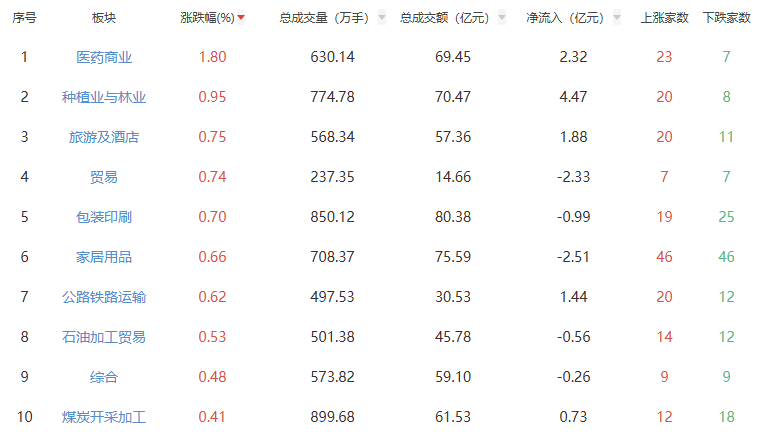
Core Viewpoint - The A-share market experienced a collective decline in the morning session, with all three major indices falling, indicating a bearish sentiment in the market [1] Market Performance - The Shanghai Composite Index closed at 3892.55 points, down 0.55% - The Shenzhen Component Index closed at 13045.95 points, down 0.77% - The ChiNext Index closed at 3065.15 points, down 0.88% [1] Sector Performance Gaining Sectors - Pharmaceutical Commerce: Increased by 1.80%, with a total trading volume of 630.14 million hands and a total transaction amount of 6.945 billion [2] - Planting and Forestry: Increased by 0.95%, with a total trading volume of 774.78 million hands and a total transaction amount of 7.047 billion [2] - Tourism and Hotels: Increased by 0.75%, with a total trading volume of 568.34 million hands and a total transaction amount of 5.736 billion [2] Declining Sectors - Education: Decreased by 1.73%, with a total trading volume of 248.33 million hands and a total transaction amount of 2.214 billion [2] - Energy Metals: Decreased by 1.71%, with a total trading volume of 205.39 million hands and a total transaction amount of 8.229 billion [2] - Gaming: Decreased by 1.53%, with a total trading volume of 537.75 million hands and a total transaction amount of 7.834 billion [2]
“封关”是为了更高水平的“开放”
人民网-国际频道 原创稿· 2025-12-02 02:00
Core Insights - The "closure" policy in Hainan is not about isolation but is a crucial step towards deeper and higher-level openness, integrating Hainan into the global economy [1][3] Education Sector - The closure operation has led to new educational models, attracting high-quality educational resources to Hainan, creating an international learning environment akin to studying abroad [2] Healthcare Sector - Companies in the healthcare sector are leveraging policy benefits to reduce operational costs and expand into international markets, facilitating the introduction of technology and resources [2] Cultural and Tourism Sector - The closure policy enhances the efficiency of cross-border data flow, aiding Chinese digital cultural products like games and short dramas in entering global markets [2] - The tourism sector is thriving, with innovative systems transforming cultural and ecological advantages into development momentum, while duty-free cities attract international brands and promote local products [2] Talent Attraction - Hainan has implemented a visa exemption policy for citizens from 59 countries and streamlined work permit applications, significantly simplifying the process for foreign talent [2] - The "Double 15%" tax policy sets corporate and personal income tax rates at 15%, alleviating tax burdens for high-end talent and encouraging them to settle in Hainan [2] Overall Impact - The initiatives reflect Hainan's commitment to attracting international talent, positioning it as a preferred destination for foreign entrepreneurs and professionals [3] - The ongoing institutional innovations and practical measures are aimed at establishing Hainan as a "new gateway" for China's high-level openness, facilitating efficient flows of data, talent, and capital in international markets [3]

中国企业出海高峰论坛在天津大学成功举办 共商全球布局与人才国际化新路径
Sou Hu Cai Jing· 2025-12-01 16:06
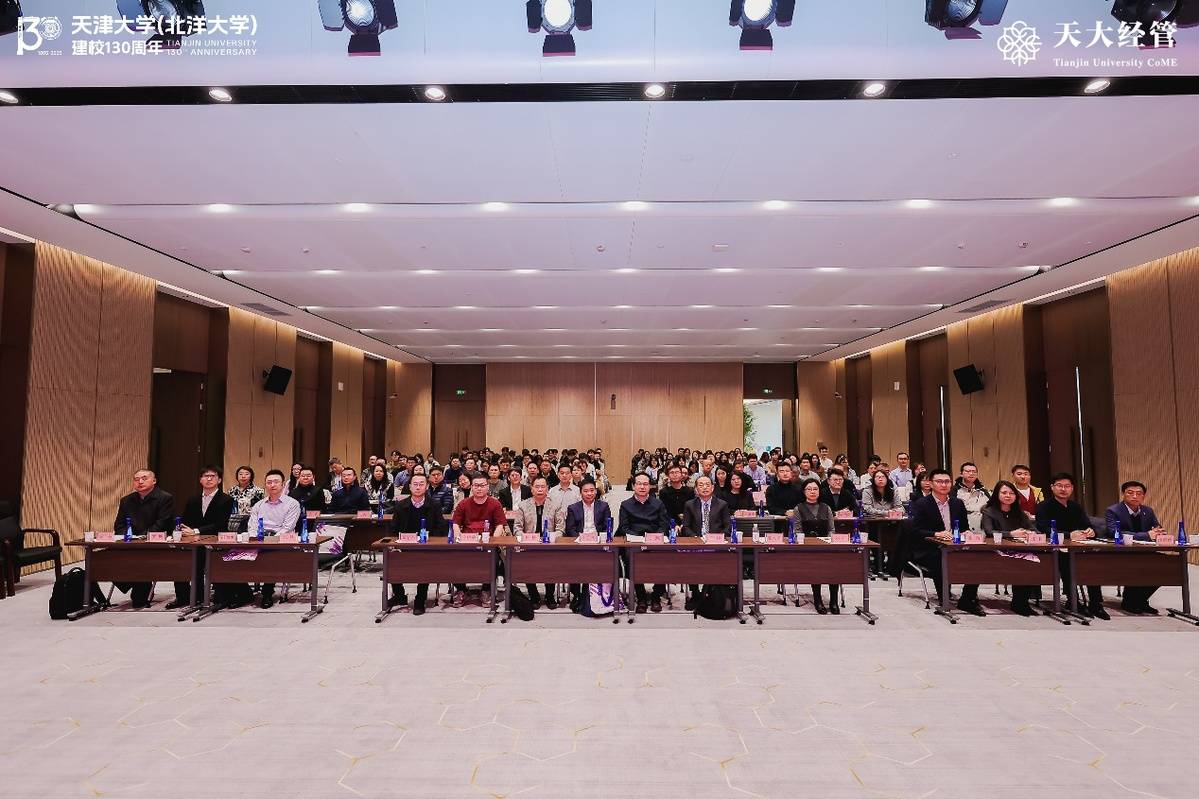
Core Insights - The forum titled "China Enterprises Going Global Summit: Global Layout and International Talent Cultivation for 'Belt and Road' Development" was successfully held in Tianjin, focusing on strategic upgrades in global layout and innovative training of international talents [2][3] Group 1: Forum Overview - The event was organized by Tianjin University’s School of Management and Economics, in collaboration with the Tianjin State-owned Assets Supervision and Administration Commission, attracting over 200 participants from various sectors [2] - The opening speech emphasized the integration of the school's mission with the "Belt and Road" initiative, aiming to cultivate international management talents who can connect China with partner countries [2] Group 2: Key Presentations and Discussions - The forum featured a session where representatives from various companies shared insights on their overseas operations and industry development, including executives from Lenovo, Chery, and CCCC [3] - A roundtable discussion included experts from Alibaba, Xunying Group, and Tianjin University, focusing on cross-border e-commerce, platform expansion, and global project collaboration [3] Group 3: Educational Initiatives and Future Directions - The forum highlighted the integration of industry, academia, and research, addressing challenges and opportunities faced by Chinese enterprises in their global ventures [4] - The School of Management and Economics is advancing a collaborative model with enterprises, aiming to enhance the training of international talents supported by digitalization and artificial intelligence [4]
卓越教育集团(03978):受托人根据受限制股份单位计划购买合共20.2万股
智通财经网· 2025-12-01 09:38
智通财经APP讯,卓越教育集团(03978)发布公告,于2025年12月1日,受限制股份单位计划受托人依据 受限制股份单位计划于公开市场上购买合共20.2万股股份。 ...
卓越教育集团:受托人根据受限制股份单位计划购买合共20.2万股
Zhi Tong Cai Jing· 2025-12-01 09:33
卓越教育集团(03978)发布公告,于2025年12月1日,受限制股份单位计划受托人依据受限制股份单位计 划于公开市场上购买合共20.2万股股份。 ...
卓越教育集(03978.HK):根据受限制股份单位计划购买20.2万股
Ge Long Hui· 2025-12-01 09:29
格隆汇12月1日丨卓越教育集团(03978.HK)发布公告,2025年12月1日,受限制股份单位计划受托人依据 受限制股份单位计划于公开市场上购买合共20.2万股股份,总代价94.94万港元。 ...
第七届金麒麟零售和社会服务业最佳分析师第一名长江证券赵刚最新行研观点:六大细分行业投资机遇梳理
Xin Lang Zheng Quan· 2025-12-01 07:11
Core Insights - The overall revenue of the social service industry increased by 1.8% year-on-year in the first three quarters of 2025, with all sub-sectors except duty-free and hotels showing positive growth [2] - The industry experienced a decline in net profit, with a year-on-year decrease of 6.51%, while the hotel and human resources sectors saw increases of 13.51% and 5.41% respectively [2] - The third quarter showed a marginal improvement, with revenue growth of 3.64% year-on-year, although net profit still declined by 4.28% [2] Industry Breakdown - **Education**: High entry barriers in K12 education lead to accelerated growth for top institutions with compliance, brand influence, and quality content. AI applications in education are expected to enhance revenue and profit margins [3] - **Human Resources**: The job market is showing structural recovery, supported by employment policies and increased demand in sectors like transportation and hospitality. AI is expected to reduce reliance on human labor and improve efficiency [3] - **Hotels**: The RevPAR (Revenue per Available Room) is showing signs of improvement, with major hotel groups resuming rapid expansion. The overall RevPAR for hotels in September showed positive year-on-year growth [3] - **Duty-Free**: Sales in the offshore duty-free sector are stabilizing, with a year-on-year increase of 3.4% in September, marking the first positive growth in 18 months. New policies are expected to enhance consumption and attract foreign visitors [4] - **Dining**: The "ban on alcohol" has negatively impacted the dining sector, with significant revenue declines for larger enterprises. However, some companies like Guangzhou Restaurant are showing stable growth through cost reduction [4] - **Tourism**: Domestic tourism continues to grow, with an 18% increase in travel numbers year-on-year. Rural residents are showing significant potential for travel and spending, with a 25% increase in travel numbers [4]

最近48小时内,工商银行、农业银行、中国燃气等18家港股上市公司公告分红预案!
Mei Ri Jing Ji Xin Wen· 2025-12-01 06:40
Group 1: Dividend Indices - The China Securities Hong Kong Stock Connect Central Enterprises Dividend Index (931233.CSI) includes 50 stable dividend-paying stocks with high dividend yields, achieving a 1-year dividend yield of 5.70%, surpassing the 10-year government bond yield of 3.85 [1] - The Hang Seng Mainland Enterprises High Dividend Yield Index (HSMCHYI.HI) consists of high dividend stocks listed in Hong Kong, with a 1-year dividend yield of 5.34%, also higher than the 10-year government bond yield of 3.49 [1] - The Non-Standard S&P Hong Kong Stock Connect Low Volatility Dividend Index (SPAHLVHP.SPI) includes 50 high dividend low volatility stocks, with the Hong Kong Stock Connect Dividend Low Volatility ETF (159118) being the lowest fee ETF tracking this index [1] Group 2: Company Dividend Announcements - Agricultural Bank of China announced a dividend of RMB 0.1195 per share, with an ex-dividend date of December 5, 2025, and a payment date of January 26, 2026 [2] - Industrial and Commercial Bank of China declared a dividend of RMB 0.1414 per share, with an ex-dividend date of December 4, 2025, and a payment date of January 26, 2026 [2] - Changan Minsheng Logistics announced a dividend of HKD 0.05493 per share, with an ex-dividend date of December 2, 2025, and a payment date of January 30, 2026 [2] Group 3: Additional Company Dividends - Perfect Medical announced a dividend of HKD 0.076 per share, with an ex-dividend date of December 12, 2025, and a payment date of December 31, 2025 [3] - Chongqing Bank declared a dividend of HKD 0.185075283 per share, with an ex-dividend date of December 2, 2025, and a payment date of January 16, 2026 [3] - Yihe Holdings announced a dividend of HKD 0.15 per share, with an ex-dividend date of December 12, 2025, and a payment date of December 31, 2025 [3] Group 4: Other Company Dividends - Huaxin Handbag International Holdings declared an interim dividend of HKD 0.04 and a special dividend of HKD 0.02 per share, with an ex-dividend date of December 15, 2025, and a payment date of January 9, 2026 [4] - Tianli International Holdings announced a dividend of HKD 0.0429 per share, with an ex-dividend date of February 4, 2026, and a payment date of February 27, 2026 [4] - China Keyway announced a dividend of HKD 0.06 per share, with an ex-dividend date of July 31, 2026, and a payment date of August 21, 2026 [4]

