量子科技

Search documents
国富量子早盘涨超6% 量子计算在资本市场大热 公司为港股量子科技第一股
Zhi Tong Cai Jing· 2025-10-14 02:18
国富量子(00290)早盘涨超6%,截至发稿,涨4.31%,报2.18港元,成交额989.98万港元。 公开资料显示,国富量子是港股量子科技第一股,也是唯一纯正的标的。从最近动作来看,今年5月, 国富量子与夸密量子(创始人张文卓博士)成立合资公司,实际开展量子科技领域软硬件业务;6月拟设 立"量子比特机遇基金",加速量子科技与数字资产生态的融合。值得注意的是,公司近期发布的全球首 款"真随机数"量子加密硬件钱包,将量子科技与数字资产保护深度融合,为数字货币以及RWA交易带 来安全保障。 消息面上,摩根大通宣布启动一项规模高达1.5万亿美元的宏大计划,旨在未来十年内为重振美国工业 基地提供资金。该计划将聚焦四大核心领域:供应链与先进制造、国防与航空航天、能源独立,以及包 括人工智能和量子计算在内的前沿科技。此外,"量子力学"三人获诺贝尔奖,其成果为新一代量子技术 的发展打开了大门,包括量子密码、量子计算机以及量子传感器等领域的创新应用。 ...
港股异动 | 国富量子(00290)早盘涨超6% 量子计算在资本市场大热 公司为港股量子科技第一股
智通财经网· 2025-10-14 02:17
公开资料显示,国富量子是港股量子科技第一股,也是唯一纯正的标的。从最近动作来看,今年5月, 国富量子与夸密量子(创始人张文卓博士)成立合资公司,实际开展量子科技领域软硬件业务;6月拟 设立"量子比特机遇基金",加速量子科技与数字资产生态的融合。值得注意的是,公司近期发布的全球 首款"真随机数"量子加密硬件钱包,将量子科技与数字资产保护深度融合,为数字货币以及RWA交易 带来安全保障。 智通财经APP获悉,国富量子(00290)早盘涨超6%,截至发稿,涨4.31%,报2.18港元,成交额989.98万 港元。 消息面上,摩根大通宣布启动一项规模高达1.5万亿美元的宏大计划,旨在未来十年内为重振美国工业 基地提供资金。该计划将聚焦四大核心领域:供应链与先进制造、国防与航空航天、能源独立,以及包 括人工智能和量子计算在内的前沿科技。此外,"量子力学"三人获诺贝尔奖,其成果为新一代量子技术 的发展打开了大门,包括量子密码、量子计算机以及量子传感器等领域的创新应用。 ...
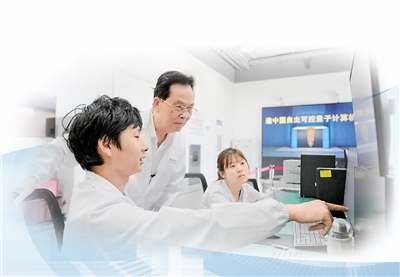
中国科学院院士、中国科学技术大学教授郭光灿—— 四十余载追寻量子之光(弘扬科学家精神)
Ren Min Ri Bao· 2025-10-13 22:25
Core Insights - The article highlights the significant contributions of Guo Guangcan in the field of quantum optics and quantum information science in China, emphasizing his role in establishing and promoting these fields domestically [1][2][4]. Group 1: Development of Quantum Optics - Quantum optics, a frontier discipline studying the quantum properties of light and its interaction with matter, was virtually non-existent in China until the early 1980s [2]. - Guo Guangcan, after studying abroad, was determined to initiate quantum optics research in China, leading to the first national quantum optics conference in 1984, which has been held biennially ever since, growing from dozens of attendees to over 800 by 2024 [2][3]. Group 2: Transition to Quantum Information - In the early 1990s, Guo identified quantum information as a promising research direction, which integrates quantum mechanics principles to process and transmit information, thus surpassing classical information technology [4]. - The establishment of the first national laboratory for quantum information in 1999 marked a significant milestone, supported by the Chinese Academy of Sciences, and led to the formation of a research team that produced numerous results and trained a new generation of researchers [5][6]. Group 3: Advancements in Quantum Computing - Guo's team undertook the "solid-state quantum chip" project in 2011, which was crucial for developing China's own quantum chips, with a focus on empowering younger researchers to lead these efforts [7]. - The team achieved significant milestones, including a record-breaking quantum logic gate operation in 2013, and founded the first quantum computing company in China, aiming to create a user-interactive quantum computer [7][8]. Group 4: Impact and Future Directions - The third-generation superconducting quantum computer, "Benyuan Wukong," has been accessed over 25 million times by users from 139 countries, completing over 380,000 quantum computing tasks across various industries [8]. - Guo continues to engage in educational outreach, emphasizing the importance of nurturing young talent in quantum computing to ensure the field's future development [8].
四十余载追寻量子之光(弘扬科学家精神)
Ren Min Ri Bao· 2025-10-13 22:20
Core Insights - The article highlights the significant contributions of Guo Guangcan in the field of quantum optics and quantum information science in China, emphasizing his role in establishing foundational research and education in these areas [2][3][6]. Group 1: Contributions to Quantum Optics - Guo Guangcan introduced quantum optics theory to China in the 1980s, leading to the establishment of the first national quantum optics academic conference in 1984, which has grown from a few dozen participants to over 800 by 2024 [3][6]. - He developed the first quantum optics course in China, which has educated many researchers who became key figures in the field [4][5]. Group 2: Development of Quantum Information - In the early 1990s, Guo recognized the potential of quantum information as a valuable research area, which integrates quantum mechanics principles to process and transmit information [6][7]. - He established the first provincial-level key laboratory for quantum information in China, which has been pivotal in advancing research and development in quantum communication and quantum computing [7][8]. Group 3: Advancements in Quantum Computing - Guo's team successfully developed China's first quantum chip under the "solid-state quantum chip" project, significantly enhancing the capabilities of quantum computing [8][9]. - The third generation of China's superconducting quantum computer, "Benyuan Wukong," has been accessed over 25 million times by users from 139 countries and regions, completing over 380,000 quantum computing tasks across various industries [9]. Group 4: Educational Initiatives and Future Vision - Guo continues to engage in educational activities, including public lectures and competitions, to inspire the next generation of quantum researchers [10]. - He emphasizes the importance of nurturing young talent in quantum computing, stating that the research in this field cannot be completed by one generation alone [8][10].

量子隧穿荣获诺奖,量子计算产业持续演进
Changjiang Securities· 2025-10-13 08:47
Investment Rating - The industry investment rating is "Positive" and maintained [7] Core Viewpoints - The Nobel Prize in Physics 2025 was awarded to John Clarke, Michel H. Devoret, and John M. Martinis for their contributions to achieving macroscopic quantum tunneling effects and energy quantization in circuits, which lays a solid theoretical foundation for the development of superconducting quantum computing [2][5] - The Nobel Prize results are expected to have a positive and profound impact on the ecosystem of superconducting quantum computing, reducing uncertainties in investment decisions and attracting more strategic capital into the quantum computing sector [10] - The current focus of quantum computing is shifting from principle verification to large-scale engineering expansion, with significant advancements in quantum bit quality and control [10] Summary by Sections Event Description - The Nobel Prize in Physics 2025 was awarded on October 7, recognizing the achievements in quantum tunneling and energy quantization [5] Event Commentary - The award is anticipated to accelerate the development of the quantum computing industry, promoting the entire quantum technology supply chain, including core components for quantum communication and quantum systems platforms [10] - The report suggests paying attention to the entire quantum technology supply chain, particularly leading companies in quantum computing and quantum communication [10]
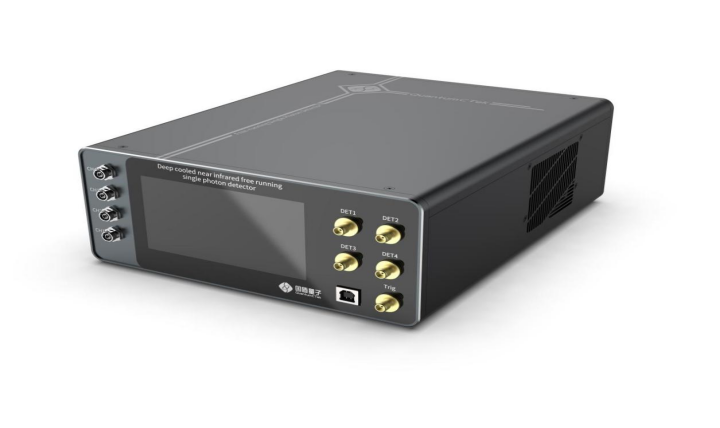
全球首款四通道超低噪声半导体“单光子探测器”量产
Shang Hai Zheng Quan Bao· 2025-10-13 03:51
Core Viewpoint - The world's first four-channel ultra-low noise semiconductor single-photon detector has been mass-produced in Hefei, marking a significant advancement in quantum information technology and positioning China as a leader in this field [1][3][6]. Group 1: Product Development - The single-photon detector is likened to an "eye" with extraordinary vision, capable of accurately capturing and identifying individual photons, essential for quantum key distribution, fluorescence lifetime imaging, and laser radar systems [1][3]. - The device has set world records in detection efficiency, dark noise levels, and integration, indicating a leap in China's single-photon detection technology [3][6]. - The development team, including the leading quantum technology company GuoDun Quantum, overcame significant technical challenges over three years, achieving a minimum operating temperature of -120°C and reducing dark noise levels by approximately 90% to about 100Hz [4][5]. Group 2: Technical Innovations - The innovative four-channel integrated architecture allows the new detector to be one-ninth the size of international single-channel products, enabling complex detection tasks previously requiring multiple devices to be performed by a single unit [5][6]. - The maximum detection efficiency has been increased from 25% to 35%, enhancing sensitivity to extremely weak light [5]. Group 3: Market Impact and Future Prospects - The new product has already been adopted by top domestic research institutions and is ready for mass production and delivery [6]. - GuoDun Quantum plans to continue developing products along the lines of miniaturization, chip integration, and scalability for applications in next-generation quantum communication networks, high-precision laser radar, and deep space exploration [6]. - Following the announcement of the 2025 Nobel Prize in Physics for contributions to quantum mechanics, quantum technology stocks have seen significant market activity, with GuoDun Quantum's shares rising by as much as 17.91% [7][8].

全球首款四通道超低噪声半导体“单光子探测器”!量产
Shang Hai Zheng Quan Bao· 2025-10-12 21:33
Core Insights - The world's first four-channel ultra-low noise semiconductor single-photon detector has been mass-produced in Hefei, marking a significant advancement in quantum detection technology [1][3]. Company Developments - The single-photon detector is developed by GuoDun Quantum, a leading company in quantum technology, and represents a breakthrough in the field, as it surpasses existing single-channel products [4][6]. - The new detector's design allows for a compact size, being only 1/9 the volume of international single-channel products, thus enabling complex detection tasks previously requiring multiple devices [5][6]. Technical Achievements - The new detector achieves a maximum detection efficiency increase from 25% to 35%, with a significant reduction in dark noise levels by approximately 90%, reaching about 100Hz [4][5]. - The development team overcame several technical challenges, including miniaturization of the cryogenic system and suppression of crosstalk between channels, achieving a lowest operating temperature of -120°C [4][6]. Market Impact - The new single-photon detector is already serving top domestic research institutions and has the capability for mass production and delivery [6]. - Following the announcement of the Nobel Prize in Physics awarded for contributions to quantum mechanics, quantum technology stocks, including GuoDun Quantum, saw significant market activity, with GuoDun Quantum's stock rising by 17.91% [8].
全球首款!量产
Shang Hai Zheng Quan Bao· 2025-10-12 15:08
Core Viewpoint - The world's first four-channel ultra-low noise semiconductor single-photon detector has been mass-produced in Hefei, marking a significant advancement in quantum information technology and positioning China as a leader in this field [1][3]. Group 1: Product Development and Features - The single-photon detector is likened to an "eye" with extraordinary vision, capable of accurately capturing and identifying individual photons, essential for quantum key distribution, fluorescence lifetime imaging, and laser radar systems [1]. - The device has set world records in detection efficiency, dark noise levels, and integration, indicating a leap in China's single-photon detection technology [3]. - The development team, including the leading quantum technology company Guoshield Quantum, overcame significant technical challenges, achieving a minimum operating temperature of -120°C and reducing dark noise levels by approximately 90% to about 100Hz [5][6]. Group 2: Market Implications and Future Applications - The new single-photon detector is already serving top domestic research institutions and has the capability for mass production and delivery [7]. - Guoshield Quantum plans to continue developing products along the lines of miniaturization, chip integration, and high integration for applications in next-generation quantum communication networks, high-precision laser radar, and deep space exploration [7]. - Following the announcement of the Nobel Prize in Physics for quantum mechanics, quantum technology stocks, including Guoshield Quantum, saw significant market activity, with Guoshield Quantum's stock rising by as much as 17.91% [10].
科技当自立,聚焦三大主线
Tianfeng Securities· 2025-10-12 14:12
Investment Rating - Industry rating is maintained at "Outperform the Market" [5] Core Viewpoints - The report emphasizes the acceleration of domestic software localization in response to global technology competition and supply chain security demands, indicating that domestic software has the capability to replace foreign counterparts [1][2] - The ecosystem for basic software is rapidly improving, with significant advancements in operating systems and application software localization rates, particularly in ERP software, which has reached a localization rate of 70% [2] - Quantum technology is highlighted as a critical area for national strategic development, with significant investments and policy support from the government, positioning it as a key future industry [3] Summary by Sections Domestic Software Localization - The report notes that key basic software is becoming increasingly self-sufficient, with domestic software showing strong potential for rapid localization [1] - As of 2022, the number of adaptations for operating systems like Tongxin Software and Kirin Software has reached over 530,000 and 440,000 respectively [2] Application Software Localization - The report identifies that while the localization rate for management software (ERP) is at 70%, there is still room for improvement in other areas such as manufacturing software (50%) and R&D design software (10%) [2] Quantum Technology - The report discusses the implications of quantum computing advancements, particularly in relation to national security and information safety, as major companies like Google and IBM are making significant strides in this field [3] - The Chinese government has initiated over 100 supporting policies to promote the development of quantum technology, indicating its strategic importance [3] Investment Opportunities - The report suggests focusing on companies involved in self-sufficiency in software and hardware, including operating systems, chips, industrial software, and quantum technology [4]
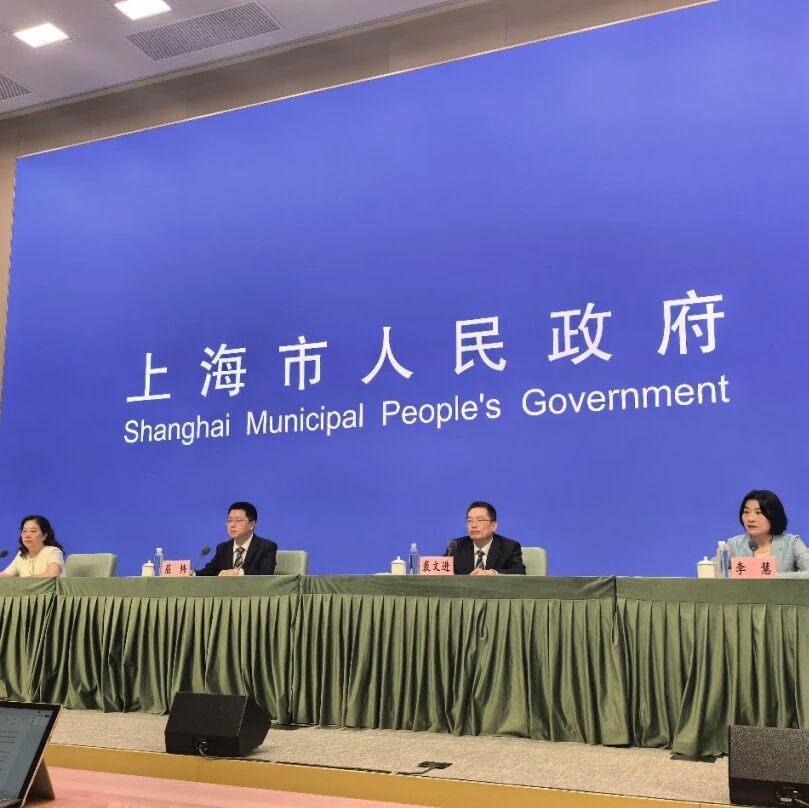
上海,重磅发布!
证券时报· 2025-10-11 04:50
Core Viewpoint - Shanghai aims to accelerate the cultivation of future industries and breakthrough disruptive technologies by 2027, with a goal of establishing around 20 leading enterprises in future industry ecosystems by 2030 [1][3]. Summary by Relevant Sections Future Industry Development - Shanghai will focus on developing fields such as cell and gene therapy, brain-machine interfaces, biomanufacturing, and embodied intelligence, while also accelerating the cultivation of fourth-generation semiconductors, silicon photonics, 6G, and brain-like intelligence [3][7]. - The city plans to systematically layout and build future industry clusters, with a focus on six major directions: future manufacturing, future information, future materials, future energy, future space, and future health [7]. Measures and Support - The "Several Measures" document outlines 15 initiatives across six areas to enhance future industry cultivation, including financial support for innovative products and scene construction tasks, with funding up to 30% of contract amounts and a maximum of 2 million yuan [7][9]. - Shanghai has already launched several cultivation plans in areas like brain-machine interfaces and quantum computing, establishing high-quality incubators and a future industry fund with a total scale of approximately 15 billion yuan [9][14]. Investment and Financial Ecosystem - The future industry fund aims to create a multi-source investment system led by government funding, supported by enterprises and financial institutions, with a focus on early-stage quality projects and long-term value [14][15]. - As of October 10, 2023, the future industry fund has made investment decisions on 18 strategic sub-funds, with a proposed investment amount of 2.215 billion yuan, and has focused on nine key strategic projects with an investment of 399 million yuan [15]. Cluster Development - Shanghai is planning to create national-level future industry pilot zones and has initiated the construction of several future industry clusters in areas like Pudong and Minhang, with support of up to 2 million yuan for qualifying cluster construction entities [11][12]. - The brain-machine interface future industry cluster is being developed to become a global innovation hub, focusing on clinical trials and incubation of disruptive technologies [12].