
核能

Search documents
中核科技:四代堆山东项目今年预计完成交付
Ge Long Hui· 2025-09-05 10:28
Group 1 - The core viewpoint of the article indicates that China Nuclear Technology (000777.SZ) has announced that the fourth-generation reactor project in Shandong is expected to be delivered this year, while there are no delivery plans for the Lianyungang project this year [1]

中核科技(000777.SZ):四代堆山东项目今年预计完成交付
Ge Long Hui· 2025-09-05 09:43
Group 1 - The core viewpoint of the article indicates that China Nuclear Technology (000777.SZ) has announced that the fourth-generation reactor project in Shandong is expected to be delivered this year, while there are no delivery plans for the Lianyungang project this year [1]
中核科技(000777.SZ):公司产能利用率整体表现良好
Ge Long Hui· 2025-09-05 09:09
Core Viewpoint - The company, China Nuclear Technology (000777.SZ), is currently experiencing good overall capacity utilization and is focusing on expanding its production capacity in several key areas to meet upcoming strategic opportunities in the nuclear power sector [1] Group 1: Capacity Expansion Focus - The company aims to accelerate capacity expansion and automation in the nuclear sector to address challenges related to capacity matching during the strategic development phase of nuclear power [1] - In the oil and petrochemical sector, the company is focusing on intelligent upgrades and equipment renewal as a core strategy [1] - In the energy and utilities sector, the company plans to implement phased construction of facilities and equipment investment to actively develop conventional and new product capacities [1]
原子能法草案拟提请三审
Yang Shi Xin Wen· 2025-09-05 07:25
Core Points - The National People's Congress Standing Committee is set to conduct a third review of the draft Atomic Energy Law [1] - The draft aims to support the peaceful use of atomic energy and enhance international nuclear safety cooperation [2] Legislative Provisions - The draft includes provisions for state support of peaceful atomic energy use and the promotion of shared benefits from its peaceful applications [2] - It emphasizes the need for a robust standard system in the atomic energy sector and participation in international standardization activities [2] - Regulations regarding the site selection, design, construction, commissioning, operation, and management of nuclear reactors must comply with relevant laws and regulations [2] - Nuclear facility operators are required to implement necessary measures to prevent cyber attacks and ensure the safe and stable operation of nuclear facilities [2] - Exporters of nuclear and dual-use items will face legal consequences for violations of the law [2]
中国核能行业协会:预计2030年我国核电在运装机将达1.1亿千瓦
Xin Hua Cai Jing· 2025-09-05 02:53
Core Viewpoint - The Chinese nuclear energy industry is experiencing a significant development opportunity since the 18th National Congress of the Communist Party, with expectations that installed nuclear power capacity will reach 110 million kilowatts by 2030 [1] Industry Summary - The Chinese nuclear energy sector has entered a favorable period for growth, driven by government policies and strategic initiatives [1] - The projected installed capacity of nuclear power by 2030 is 110 million kilowatts, indicating a strong commitment to expanding nuclear energy infrastructure [1]
美国最大SMR项目落地:TVA联手NuScale(SMR.US)开发6吉瓦核能
智通财经网· 2025-09-03 06:17
Core Insights - The Tennessee Valley Authority (TVA) has signed an agreement with ENTRA1 Energy to develop a total capacity of 6 gigawatts (GW) of small modular reactor (SMR) projects in TVA's service area, marking the largest SMR deployment plan in the U.S. to date [1] - ENTRA1 Energy will deploy NuScale's SMR technology, which is expected to provide power for 4.5 million households or 60 new data centers, with all generated electricity to be sold to TVA under future power purchase agreements [1] - TVA is accelerating its nuclear energy initiatives, collaborating with Google and Kairos Power to integrate 50 megawatts (MW) of SMR capacity into the grid by 2030 and plans to build its own SMR facility at the Clinch River Nuclear Site in Tennessee [1] Company and Industry Developments - TVA's CEO, Don Morrow, emphasized the importance of public-private partnerships in advancing next-generation nuclear technology, which is crucial for energy security [1] - The project signifies significant progress in the commercialization of small modular reactors in the U.S., as this technology is viewed as a complementary solution to traditional nuclear energy due to its flexibility, safety, and scalability potential [1] - Following the announcement, NuScale Power's stock price increased by 7.6%, closing at $37.24 [1]

要放弃石油人民币?沙特王储竟把中国当底牌,中方14个字说明一切
Sou Hu Cai Jing· 2025-09-03 04:47
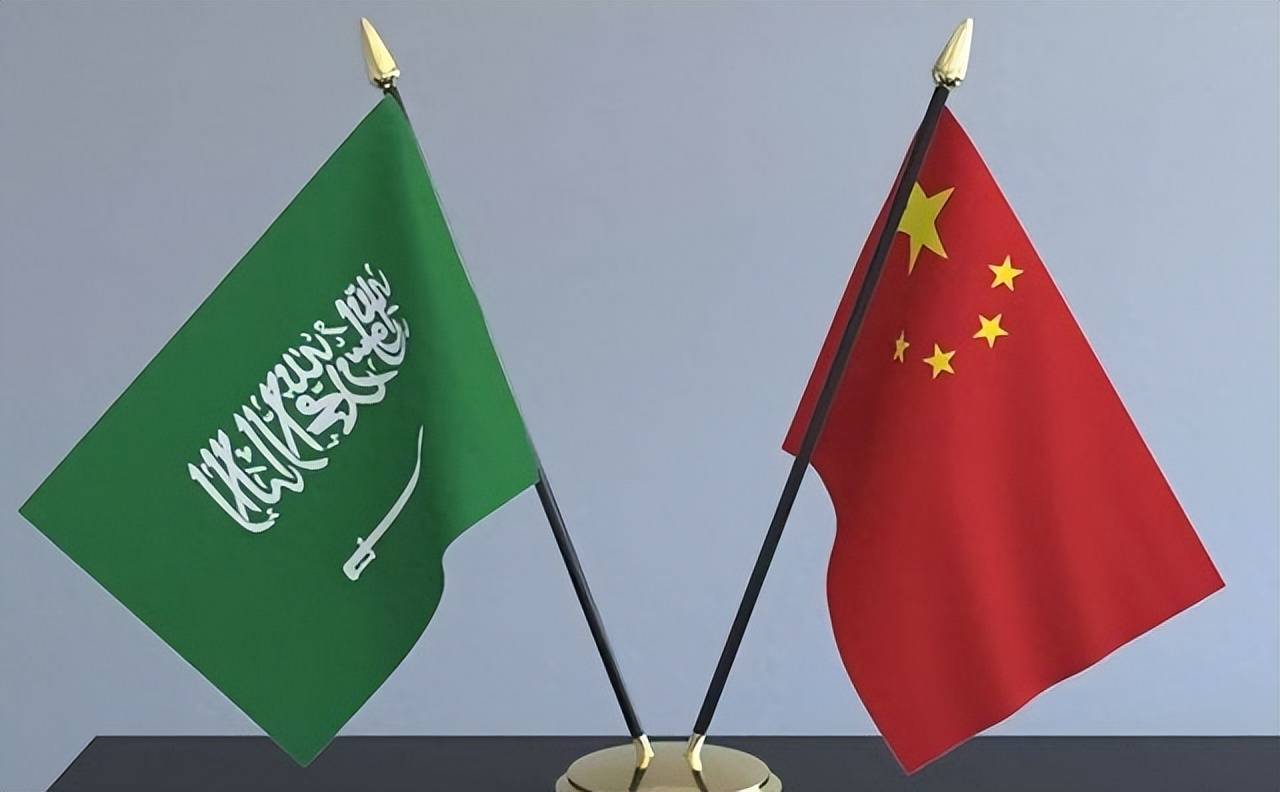
Core Insights - Saudi Arabia, under Crown Prince Mohammed bin Salman, is actively seeking economic diversification away from oil dependency, focusing on nuclear energy and other emerging sectors [1][10] - The negotiations between Saudi Arabia and the United States regarding nuclear energy cooperation have drawn significant attention, particularly due to the U.S. insistence on maintaining the dollar as the currency for oil trade settlements [1][3] - Saudi Arabia is considering collaboration with China in nuclear energy, indicating a strategic shift in its international partnerships [5][10] Summary by Sections Saudi Arabia's Strategic Shift - Saudi Arabia aims to diversify its economy and reduce reliance on oil, with a particular focus on nuclear energy development [1][10] - The country has been in discussions with the U.S. for several years regarding nuclear technology, but has faced stringent conditions that it finds unacceptable [3][5] U.S.-Saudi Negotiations - The U.S. has proposed five additional conditions for nuclear cooperation, including a ban on uranium enrichment and maintaining the dollar for oil transactions, which Saudi Arabia views as an attempt to preserve U.S. hegemony [3][5] - Following the 2023 BRICS summit, Saudi Arabia signaled its openness to invite Chinese companies for nuclear power plant construction [3][5] China's Role and Response - China has expressed a clear stance on the matter, emphasizing the importance of mutual benefit and respect for sovereign choices in development [8][12] - The signing of a nuclear cooperation memorandum between Saudi Arabia and China marks a significant step forward in their collaboration [8][12] Future Developments - By 2025, Saudi Arabia's nuclear energy plans are expected to make significant progress, with a focus on uranium enrichment and establishing a comprehensive nuclear energy framework [6][10] - The shift towards using the yuan for oil transactions is becoming increasingly evident, with over 40% of oil exports to China expected to be settled in yuan by March 2025 [6][10] Geopolitical Implications - The evolving international landscape is witnessing a decline in U.S. influence, creating opportunities for China to engage more deeply in the Middle East energy transition [12] - Saudi Arabia's balancing act between the U.S. and China reflects a broader trend of regional powers gaining strategic leverage amid changing global dynamics [12]

Uranium Energy(UEC.US)成立美国精炼子公司,助力提升核燃料安全
智通财经网· 2025-09-02 11:37
Core Viewpoint - Uranium Energy Corporation (UEC) has established a new subsidiary, United States Uranium Refining & Conversion Corp (UR&C), to explore the feasibility of building a modern uranium refining and conversion facility in the United States [1] Group 1: Company Developments - UEC aims to become the only vertically integrated company in the U.S. with capabilities in uranium mining, processing, refining, and conversion, presenting a significant business opportunity and a strategic necessity for the country [1] - The establishment of UR&C is intended to advance this plan in a financially optimal manner, including strategic partnerships and direct investments [1] Group 2: Project Evaluation - The company has initiated discussions regarding potential site locations, evaluating factors such as logistics, labor supply, public acceptance, local incentive policies, and synergies with other nuclear fuel cycle facilities [1]

国际产业新闻早知道:美国“对等关税”被裁定违法,瑞典拟解除采铀禁令
Chan Ye Xin Xi Wang· 2025-09-02 05:29
Group 1 - The 80th anniversary of the victory in the Chinese People's Anti-Japanese War and the World Anti-Fascist War will be commemorated on September 3 in Beijing, with a significant speech by President Xi Jinping [1][2][3] Group 2 - The U.S. government has been ruled to have acted unlawfully in imposing tariffs under the International Emergency Economic Powers Act, which poses a significant setback to Trump's aggressive trade policies [4][5][6] - The ruling maintains that tariffs are a core power of Congress, and the president does not have the authority to impose tariffs through executive orders without congressional approval [5][6] - The decision is set to take effect after October 14, allowing the Trump administration to appeal to the Supreme Court [6] Group 3 - U.S. Treasury and State Department officials have warned that the ruling could lead to "devastating" consequences for international trade negotiations and U.S. economic standing [7][8] - The ruling may also impact ongoing trade negotiations with various countries, as it raises questions about the legality of previously established trade agreements [8] Group 4 - Japan's manufacturing sector continues to shrink, with the August PMI at 49.7, indicating ongoing contraction due to declining overseas orders and investment cuts [11][12] - Japanese manufacturers' pre-tax profits fell by 11.5% year-on-year, primarily due to the impact of U.S. tariffs on the automotive sector [13] - Concerns are growing that the focus on a $550 billion investment mechanism in the U.S.-Japan trade agreement may lead Japanese companies to prioritize investments in the U.S. over domestic development [14] Group 5 - The U.S. has revoked the fast-track compliance status for South Korean chip manufacturers, which will require them to obtain licenses for certain U.S. chip manufacturing equipment exports to China [34][35] - This decision is part of the ongoing tech competition between the U.S. and China, despite a temporary easing of trade tensions [35] Group 6 - India's Prime Minister Modi's visit to Japan highlights the growing semiconductor cooperation between the two nations, aiming to reduce reliance on imports and enhance manufacturing capabilities [37][40] - The collaboration is expected to strengthen India's position in the global semiconductor supply chain while leveraging Japan's advanced technology [40] Group 7 - Tesla's sales in Europe have continued to decline, with significant drops in new car registrations reported in France, Sweden, and Denmark, attributed to increased competition and a lack of new models [60][61][66] - The brand's loyalty is reportedly declining due to CEO Elon Musk's political affiliations, which have alienated some consumers [67][69] - The used car market for Tesla vehicles has seen a surge in sales, negatively impacting new car sales and brand perception [71][70]

中国聚变公司董事长确定
Xin Lang Cai Jing· 2025-09-01 13:27
据公开信息,刘叶于2021年11月任核工业西南物理研究院(下称西物院)院长、院党委副书记,2023年 12月任西物院党委书记。西物院隶属于中国核工业集团有限公司,是中国最早致力于可控核聚变和等离 子体物理研究的专业科研院所。 今年7月22日,中国聚变能源有限公司在上海挂牌成立,目前为中国核工业集团有限公司(下称中核集 团)全资子公司,法定代表人现为刘叶。其经营范围涵盖新兴能源技术研发、核电设备成套及工程技术 研发、能量回收系统研发、发电技术服务等领域。 责任编辑:何俊熹 近日,公开信息显示,中国聚变能源有限公司高层人事发生调整,刘叶由董事变更为董事长,并新增多 位主要管理人员。 ...