
新能源发电

Search documents
中广核新能源(01811.HK)10月完成发电量1546.6吉瓦时 同比减少7.4%
Ge Long Hui· 2025-11-11 08:40
Core Viewpoint - China General Nuclear Power Corporation (CGN) New Energy reported a decrease in power generation for 2025 compared to 2024, with specific changes across various energy sources [1] Group 1: Power Generation Data - For the year ending October 2025, the total power generation is projected to be 1,546.6 billion kilowatt-hours, a decrease of 7.4% year-on-year from 2024 [1] - Cumulative power generation for the ten months ending October 31, 2025, is 15,753.4 billion kilowatt-hours, reflecting a 3.5% decrease compared to the same period in 2024 [1] Group 2: Breakdown by Energy Source - Chinese wind power projects are expected to decrease by 8.3% in 2025, while solar projects are anticipated to increase by 43.0% [1] - Water power projects in China are projected to increase by 3.6%, whereas projects in South Korea are expected to decrease by 16.1% [1] - For the ten months ending October 31, 2025, Chinese wind power projects decreased by 2.8%, solar projects increased by 27.6%, gas projects increased by 9.4%, while water projects decreased by 10.9% and South Korean projects decreased by 11.9% [1]
中广核新能源(01811)前10个月累计完成发电量约1.575万吉瓦时 同比减少3.5%
Zhi Tong Cai Jing· 2025-11-11 08:40
Core Insights - China General Nuclear Power Corporation (CGN) New Energy reported a total electricity generation of approximately 15,753.4 GWh for the first ten months of 2025, representing a year-on-year decrease of 3.5% [1] - The company's wind power projects in China saw a reduction of 2.8%, while solar power projects increased by 27.6% [1] - The overall generation for 2025 is projected to be 1,546.6 GWh, which is a 7.4% decrease compared to 2024 [1] Generation Breakdown - Wind power projects in China decreased by 8.3% in 2025 [1] - Solar power projects in China increased significantly by 43.0% [1] - Hydropower projects in China increased by 3.6%, while projects in South Korea decreased by 16.1% [1] Year-on-Year Comparison - For the first ten months of 2025, the generation from gas projects in China increased by 9.4% [1] - Hydropower projects in China experienced a decrease of 10.9% [1] - South Korean projects also saw a decline of 11.9% [1]

中广核新能源前10个月累计完成发电量约1.575万吉瓦时 同比减少3.5%
Zhi Tong Cai Jing· 2025-11-11 08:38
Core Insights - China General Nuclear Power Corporation (CGN) New Energy reported a decrease in total power generation for October 2025, amounting to 1,546.6 GWh, which is a 7.4% decline compared to 2024 [1] Summary by Category Power Generation Performance - The total power generation for the first ten months ending October 31, 2025, reached 15,753.4 GWh, reflecting a 3.5% decrease year-on-year compared to 2024 [1] - Breakdown of power generation changes includes: - Chinese wind power projects decreased by 2.8% [1] - Chinese solar power projects increased by 27.6% [1] - Chinese gas projects increased by 9.4% [1] - Chinese hydropower projects decreased by 10.9% [1] - Korean projects decreased by 11.9% [1] Project-Specific Changes - For October 2025, the changes in specific projects were: - Chinese wind power projects decreased by 8.3% [1] - Chinese solar power projects increased significantly by 43.0% [1] - Chinese hydropower projects increased by 3.6% [1] - Korean projects decreased by 16.1% [1]
每日投资策略-20251111
Zhao Yin Guo Ji· 2025-11-11 03:50
Core Insights - The report highlights a structural upturn in the global PCB and CCL industries driven by AI infrastructure investment, with a projected 12.8% rebound in the PCB market by 2025 and an 18% growth in the CCL sector in 2024, indicating strong pricing power [4] - Pfizer is positioned as a leader in the pharmaceutical industry, with a forecasted 12% growth in non-COVID revenue in 2024, despite facing a patent cliff from 2025 to 2028 [6][7] - The semiconductor industry is experiencing a demand surge due to AI, with significant growth expected in high-performance products, benefiting leading manufacturers [4] Market Performance - The Hang Seng Index closed at 26,649, up 1.55% for the day and 32.85% year-to-date, while the Hang Seng Tech Index rose 1.34% [1] - Southbound capital saw a net inflow of HKD 6.65 billion, with notable purchases in China National Offshore Oil Corporation and Pop Mart, while Alibaba and SMIC saw the most significant net sell-offs [3] Company Analysis - Pfizer's aggressive cost-cutting plan aims to save USD 7.2 billion from 2024 to 2027, with an expected operating profit margin increase to 26.2% in 2024 from 9.6% in 2023 [5] - The report anticipates that Pfizer's revenue will begin to recover in 2029, driven by new product contributions, with a target price set at USD 36.16 [7] - Beike's revenue for Q3 2025 grew by 2.1% year-on-year, with a focus on improving profitability in its core real estate transaction business [8] Industry Trends - The report notes a shift in investment focus towards energy, chemicals, and consumer stocks in the Chinese market, with chemical sector valuations at historical lows, suggesting a potential buying opportunity [3] - Japan's new government is expected to implement expansive fiscal policies, focusing on key sectors such as semiconductors and defense, which may lead to a decline in government bond prices [3]


我国建设多层次新能源消纳调控体系
Ren Min Wang· 2025-11-11 03:43
Core Viewpoint - By 2030, the demand for new electricity consumption will primarily be met by newly added renewable energy generation, with a significant enhancement in the adaptability of the new power system [2] Group 1: Policy and Guidelines - The National Development and Reform Commission and the National Energy Administration have issued guidelines to establish a multi-level renewable energy consumption and regulation system by 2030 [2] - The new power system is expected to significantly improve its adjustment capabilities to meet the annual demand for the reasonable consumption of over 200 million kilowatts of new energy [2] Group 2: Current Status and Growth - As of the end of August this year, the installed capacity of wind and solar power has exceeded 1.69 billion kilowatts, more than three times that of 2020, contributing to approximately 80% of the new power installations since 2020 [2] - Despite the rapid growth in renewable energy scale and proportion, the pressure for consumption continues to increase [2] Group 3: Proposed Measures - The guidelines propose several measures, including categorizing and guiding renewable energy development and consumption, promoting innovative new models and business formats for renewable energy consumption, enhancing the adaptability of the new power system to renewable energy, improving the national unified electricity market system for renewable energy consumption, and strengthening technological innovation support for renewable energy consumption [2]
人民日报︱建设多层次新能源消纳调控体系 到2030年新增用电量需求主要由新增新能源发电满足
国家能源局· 2025-11-11 03:34
Core Viewpoint - The article emphasizes the establishment of a multi-level renewable energy consumption and regulation system by 2030, with new electricity demand primarily met by newly added renewable energy generation [3]. Group 1: Policy and Guidelines - The National Development and Reform Commission and the National Energy Administration have issued guidelines to promote renewable energy consumption and regulation [3]. - By 2030, a collaborative and efficient multi-level renewable energy consumption regulation system is expected to be fundamentally established, enhancing the adaptability of the new power system [3]. - The new power system is projected to significantly improve its regulation capacity to meet the annual renewable energy consumption demand of over 200 million kilowatts [3]. Group 2: Current Status and Growth - As of August this year, the installed capacity of wind and solar power has exceeded 1.69 billion kilowatts, more than three times that of 2020, contributing approximately 80% of the new power installations since 2020 [3]. - Despite the rapid growth in renewable energy scale and proportion, the pressure for consumption continues to increase [3]. Group 3: Proposed Measures - The guidelines propose several measures, including categorizing and guiding renewable energy development and consumption, promoting innovative new models and business formats for renewable energy consumption, and enhancing the adaptability of the new power system to renewable energy [3]. - The establishment of a unified national electricity market system to facilitate renewable energy consumption is also highlighted [3]. - Strengthening technological innovation support for renewable energy consumption is emphasized as a critical component of the proposed measures [3].
人民日报︱五年规划首提“建设能源强国”,有何深意
国家能源局· 2025-11-11 01:54
Core Viewpoint - The article emphasizes the significance of building an energy powerhouse as part of China's "14th Five-Year Plan," highlighting its role in modernizing the country and ensuring energy security [2][3][6]. Group 1: Economic and Social Development - The construction of an energy powerhouse is essential for providing a material foundation for modernizing the country, as energy is crucial for daily life and economic operations. During the "14th Five-Year Plan" period, energy consumption is expected to grow rigidly, with an estimated annual increase of approximately 600 billion kilowatt-hours [3]. - The energy industry is characterized by a long supply chain and strong innovation, which can support the development of a modern industrial system. During the "14th Five-Year Plan," China accounted for over 40% of global new energy patents and led the world in new energy storage capacity [5]. Group 2: Energy Security and Strategic Autonomy - Energy issues are a priority in national security for many countries, and controlling energy resources can lead to significant development opportunities. Building an energy powerhouse aims to create a robust energy supply chain and innovation system, enhancing China's strategic position in global power dynamics [6][7]. Group 3: Green and Low-Carbon Transition - The transition to a green and low-carbon economy is crucial for addressing global challenges like climate change. China has established the world's largest and fastest-growing renewable energy system, with one-third of electricity consumption coming from green energy. The goal is to increase the share of renewable energy and facilitate the orderly replacement of fossil fuels [8][9]. - By contributing to global low-carbon transitions, such as reducing carbon emissions by approximately 4.1 billion tons through wind and solar exports during the "14th Five-Year Plan," China aims to enhance its leadership in global energy transformation [9]. Group 4: Current Energy Landscape - China has a diversified energy supply system, maintaining over 20% of global energy production and an energy self-sufficiency rate of over 80%. The country is also the world's largest producer of renewable energy, with installed capacities in hydropower, wind, and solar energy leading globally [9]. - The reliance on foreign oil and gas is a shortcoming, but as fossil fuel consumption peaks, this dependency is expected to decrease to a more reasonable level [9].
两部门:建设多层次新能源消纳调控体系
Ren Min Ri Bao· 2025-11-11 00:23
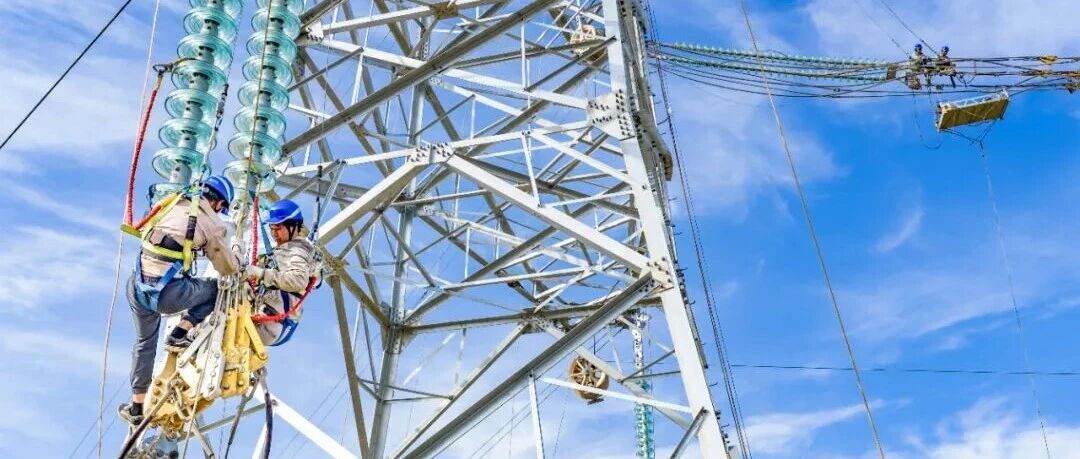
Core Viewpoint - The National Development and Reform Commission and the National Energy Administration have issued guidelines to establish a multi-level renewable energy consumption and regulation system by 2030, aiming to meet the increasing electricity demand primarily through renewable energy sources [1] Group 1: Renewable Energy Growth - As of August 2023, the installed capacity of wind and solar power has exceeded 1.69 billion kilowatts, more than three times the level in 2020, contributing to approximately 80% of the new power installations since 2020 [1] Group 2: Consumption Pressure - Despite the rapid growth in renewable energy capacity, the pressure for consumption continues to increase, necessitating the development of effective consumption strategies [1] Group 3: Proposed Measures - The guidelines propose several measures, including: - Classifying and guiding renewable energy development and consumption - Promoting innovative new models and business formats for renewable energy consumption - Enhancing the adaptability of the new power system to renewable energy - Improving the national unified electricity market system to facilitate renewable energy consumption - Strengthening technological innovation support for renewable energy consumption [1]
两部门发文分类引导新能源消纳和调控,储能、海上风电、光伏等领域或受益(附概念股)
Zhi Tong Cai Jing· 2025-11-11 00:01
Core Insights - The recent policy guidance from the National Development and Reform Commission and the National Energy Administration aims to promote high-quality development in the renewable energy sector in China [1][2] - The guidance outlines key tasks such as enhancing the adaptability of new power systems to renewable energy and improving the national unified electricity market system [1][2] - By 2030, a multi-level renewable energy consumption and regulation system is expected to be established, with a focus on meeting the annual demand for 200 million kilowatts of new renewable energy [1][3] Offshore Wind Power - The guidance emphasizes the orderly development and consumption of offshore wind power, including the construction of deep-sea wind power bases and pilot projects for ultra-large deep-sea wind turbines [2] - The central government has elevated the marine economy to a strategic level, with expectations for China's marine production value to exceed 10 trillion yuan in 2024, reflecting a year-on-year growth of 5.9% [2] Solar and Hydropower - Solar and hydropower are highlighted as the most mature forms of renewable energy, with a focus on enhancing efficient and low-cost technology development [2] - The guidance suggests optimizing the configuration of renewable energy based on the characteristics of hydropower, particularly in the southwestern regions [2] Energy Storage Technology - The guidance stresses the importance of advancing new energy storage technologies, including liquid flow batteries and compressed air storage, to enhance the adaptability of new power systems [2] - There is a push to explore the potential of energy storage in conjunction with renewable energy generation [2] Market Outlook - The increasing pressure for renewable energy consumption is noted, with a shift in focus from insufficient installed capacity to systemic consumption and market survival capabilities [3] - Analysts express optimism about the steady increase in China's electrification rate, which is expected to drive demand for new power systems and related infrastructure [3] Related Companies - Huadian International Power (01071) reported a total revenue of 59.953 billion yuan for the first half of 2025, a decrease of 8.98% year-on-year, while net profit increased by 13.15% to 3.904 billion yuan [4] - Datang Power (00991) reported a revenue of 89.345 billion yuan for the first three quarters of 2025, a decline of 1.82%, but net profit rose by 51.48% to 6.712 billion yuan [5] - Huaneng International Power (00902) maintained a "outperform" rating, with a third-quarter revenue of 60.94 billion yuan, down 7.1%, but net profit surged by 89% to 5.58 billion yuan [5] - Xinyi Energy (00968) achieved a revenue of 1.21 billion yuan in the first half of 2025, a year-on-year increase of 7.67%, with net profit rising by 23.43% to 450 million yuan [6]
深夜全线狂飙!纳指涨超2%,中国资产大爆发;闪迪NAND涨价50%!国务院办公厅:引导民间资本有序参与商业航天等建设——《投资早参》
Mei Ri Jing Ji Xin Wen· 2025-11-10 23:55
Market News - The three major US stock indices closed higher, with the Dow Jones up 0.81%, S&P 500 up 1.54%, and Nasdaq up 2.27% [1] - Major tech stocks saw significant gains, with Nvidia rising 5.8%, adding approximately $26.487 billion (about 188.57 billion RMB) to its market value [1] - International gold prices surged, with spot gold up 2.81% at $4,113.26 per ounce, and WTI crude oil futures rising 0.67% to $60.15 per barrel [1] - European stock indices also closed higher, with the Euro Stoxx 50 up 1.72% and the FTSE 100 up 1.09% [1] Industry Insights - The State Council issued measures to promote private investment, encouraging private capital participation in key sectors like railways and nuclear power, and supporting private enterprises in major technological tasks [2] - The global space economy is projected to exceed $1 trillion by 2030, with increasing participation from private capital in areas like satellite communication and space tourism [2] - The National Development and Reform Commission and the National Energy Administration released guidelines to enhance renewable energy consumption, emphasizing the integration of AI, big data, and cloud computing in energy management [3] - The storage industry is experiencing a price surge, with SanDisk raising NAND flash contract prices by 50%, driven by AI data center demand and limited wafer supply [4][5] - The demand for storage solutions is expected to rise significantly, benefiting companies in the NAND flash supply chain as major cloud providers increase orders [5]


