充换电

Search documents
引领高可靠超充!深圳科华获评“广东省制造业单项冠军”
Xin Lang Cai Jing· 2026-02-04 11:15
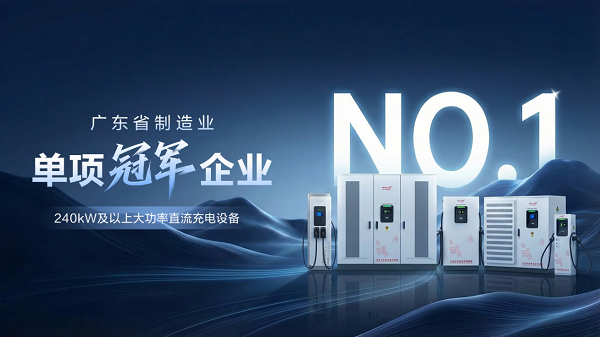
Core Viewpoint - The manufacturing industry is crucial for the national economy, and Guangdong is accelerating the transformation of its manufacturing sector towards high-end, intelligent, and green development [1]. Group 1: Recognition and Achievements - Shenzhen Kehua has been recognized as the only company in Guangdong to be awarded for its "240kW and above high-power DC charging equipment," highlighting its leadership in the charging industry [3]. - The selection criteria for the "champion enterprise" honor are stringent, requiring companies to have over five years of experience in their niche, lead or participate in technical standard formulation, and hold a top market share [3]. Group 2: Innovation and Technology - Kehua has invested over 37 years in power electronics and has focused on the charging and swapping industry for over a decade, developing over 200 safety protection technologies and achieving industry-leading power density for heavy-duty charging [5]. - The company has established three R&D centers and six manufacturing bases, ensuring self-research and production across its product range, which includes charging modules and intelligent cloud platforms [6]. Group 3: Market Application and Impact - Kehua emphasizes high reliability and has launched various products and smart transportation energy solutions that meet the industry's demand for efficient and reliable charging [7]. - The company collaborates with over 1,000 partners globally, facilitating large-scale applications in diverse settings such as cities, towns, highways, mines, and ports, thereby supporting green travel [8]. Group 4: Future Commitment - The recognition as a champion enterprise is seen as both an acknowledgment and motivation for Kehua to continue its focus on high-power charging, technological innovation, and quality development [10].

全球最大电动汽车充电网络持续升级(大数据观察)
Ren Min Ri Bao· 2026-01-29 02:00
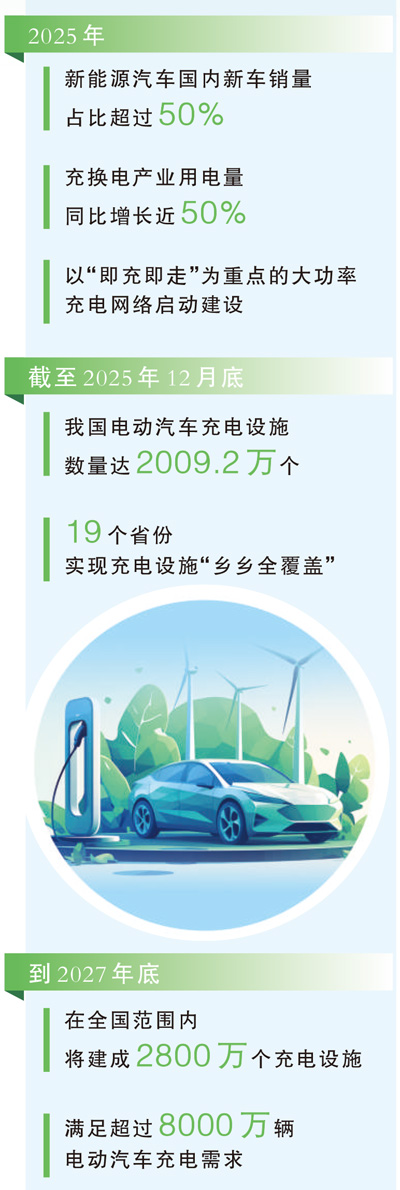
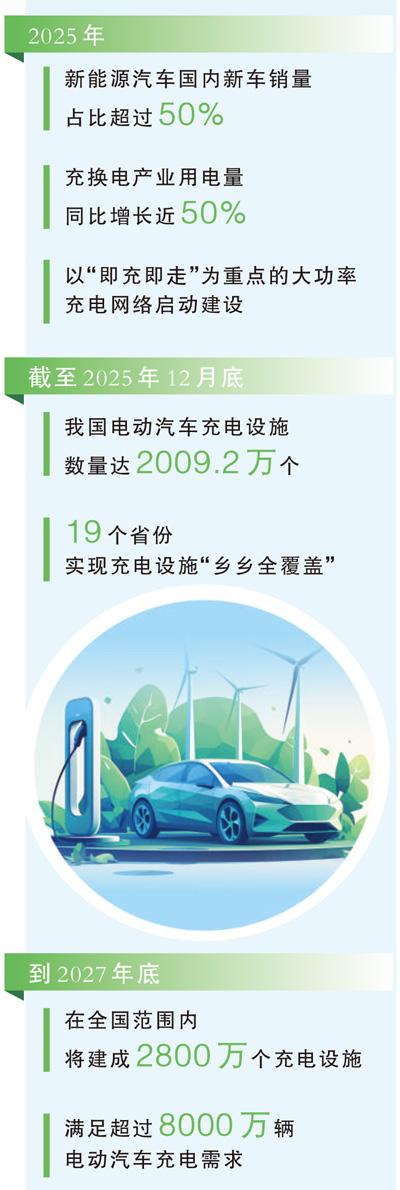
Core Viewpoint - The rapid expansion of electric vehicle (EV) charging infrastructure in China is set to support the increasing adoption of new energy vehicles, with projections indicating that by the end of 2025, over 50% of new car sales will be electric, and the number of charging facilities will reach 20.092 million [1][3]. Group 1: Charging Infrastructure Development - By December 2025, the number of electric vehicle charging facilities in China is expected to reach 20.092 million, supporting over 43 million new energy vehicles [3]. - The "Three-Year Doubling Action Plan" aims to establish 28 million charging facilities by the end of 2027, providing over 300 million kilowatts of public charging capacity to meet the needs of over 80 million electric vehicles [3]. - The construction of high-power charging networks focusing on "instant charging and departure" is underway, with significant upgrades to public charging facilities across various regions [1][3]. Group 2: Case Studies of Charging Stations - The Taihu Service Area in Suzhou has implemented a "dual-gun" charging system, allowing for rapid charging of heavy-duty electric trucks, achieving a maximum output power of 480 kilowatts, which is nearly four times faster than traditional fast charging [4][5]. - The average daily service at the Taihu Service Area's supercharging station is 173 vehicles, with an average charging time of 20 minutes [5]. - In rural areas, such as Dongguo Village in Shanxi, the establishment of charging stations has significantly alleviated "range anxiety" for residents, with plans to cover 65% of villages with charging facilities by 2027 [7][8]. Group 3: Community Charging Solutions - In Chengdu, the "Unified Construction and Service" model is being promoted to address charging difficulties in residential areas, allowing for centralized planning and management of charging facilities [9][10]. - The community has successfully implemented charging points in residential areas, with plans for 40 charging stations based on the number of electric vehicles in the vicinity [9][10]. - The initiative aims to enhance the convenience of charging for residents, particularly in areas where private charging stations are not feasible [9][10].
全球最大电动汽车充电网络持续升级
Ren Min Ri Bao· 2026-01-28 23:15
Core Insights - By 2025, domestic new energy vehicle sales are expected to exceed 50% of total new car sales in China, with charging infrastructure projected to reach 20.092 million units by the end of 2025, supporting over 43 million new energy vehicles [1][4] - The "Three-Year Doubling Action Plan" aims to build 28 million charging facilities by the end of 2027, providing over 300 million kilowatts of public charging capacity to meet the needs of over 80 million electric vehicles [4] Charging Infrastructure Development - The construction of a high-power charging network focusing on "instant charging and departure" is underway, with significant improvements in public charging facilities across various regions [4] - Jiangsu's Taihu service area has introduced ultra-fast charging stations capable of delivering up to 480 kilowatts, significantly enhancing charging efficiency compared to traditional fast charging [5][6] - Longzi County has initiated a pilot project to improve charging infrastructure in rural areas, with plans to cover 65% of villages with charging stations by 2027 [9] Community Charging Solutions - In Chengdu, the "Unified Construction and Service" model is being implemented to address charging difficulties in residential areas, allowing for centralized planning and management of charging facilities [10][11] - The community has successfully established charging points in residential areas, significantly reducing the time residents spend on charging their electric vehicles [10]
全社会用电量首破10万亿千瓦时说明什么?
Bei Jing Qing Nian Bao· 2026-01-19 05:57
Group 1 - In 2025, China's total electricity consumption is projected to exceed 10 trillion kilowatt-hours for the first time, reaching 10.4 trillion kilowatt-hours, marking a 5% year-on-year increase, which is unprecedented for a single country globally [1][2] - The growth in electricity consumption reflects the active state of economic activities, with significant contributions from high-tech industries, digital economy, and green energy sectors, indicating a profound transformation in the structure of electricity consumption [2][3] - The electricity consumption in the manufacturing sector continues to rise, demonstrating the resilience and expansion of China's manufacturing capabilities, while the electricity demand from computing centers is expected to outpace overall electricity consumption growth [3] Group 2 - By the end of October 2025, China's renewable energy capacity is expected to reach 2.22 billion kilowatts, accounting for 59.2% of the total power generation capacity, with hydropower, wind, and solar power leading globally [4] - The increasing electricity consumption is supported by the rapid growth of high-tech and equipment manufacturing, as well as the deepening of green development concepts, showcasing China's commitment to economic transformation and sustainable growth [4]
10万亿度电“点亮”中国:单年用电首破全球纪录,新质生产力成增长主引擎
Sou Hu Cai Jing· 2026-01-18 00:15
Core Insights - China's total electricity consumption is projected to exceed 10 trillion kilowatt-hours by 2025, reaching 10.4 trillion kilowatt-hours, marking a 5% year-on-year increase, which is unprecedented for a single country globally [1][6] - This milestone reflects China's robust economic resilience and profound transformation, with the total electricity consumption doubling from 5 trillion kilowatt-hours in just over a decade [1][3] Economic and Structural Drivers - The growth in electricity consumption is supported by a stable macroeconomic foundation and increased demand due to high temperatures and the rising electrification of daily life, including household appliances and electric vehicles [1][3] - High-end manufacturing sectors, such as new energy vehicles and wind power equipment manufacturing, are expected to see electricity consumption growth rates exceeding 20% and 30%, respectively, becoming key drivers of this growth [3] Emerging Industries - The rapid development of the digital economy is evident, with the internet services and charging industries experiencing electricity consumption growth rates of over 30% and nearly 50%, respectively, indicating a shift towards high-tech and high-value-added economic activities [3][4] - The contrast between the rising electricity consumption in high-tech industries and the declining growth in high-energy-consuming sectors, such as black metal smelting, highlights China's structural adjustments and transformation efforts [4] Power Supply and Stability - Ensuring the safe and stable supply of 10 trillion kilowatt-hours is a significant achievement, supported by a modern power supply system that coordinates efforts across power generation, grid management, and demand-side management [3][4] - Coal power continues to play a stabilizing role, while renewable energy sources like wind and solar are becoming the main contributors to incremental growth, complemented by energy storage solutions [3] Conclusion - The unprecedented figure of 10.4 trillion kilowatt-hours not only demonstrates China's strength as a global manufacturing powerhouse but also showcases its progress towards high-quality development and the establishment of a new power system [6] - This data reflects the vigorous pace of industrial structure upgrades, the commitment to green and low-carbon transitions, and the strong resilience of the Chinese economy in a complex environment [6]
2025年全社会用电量首超10万亿千瓦时
Ren Min Ri Bao· 2026-01-17 22:23
Core Insights - By 2025, China's total electricity consumption is expected to exceed 10 trillion kilowatt-hours for the first time, reaching 10,368.2 billion kilowatt-hours, with a year-on-year growth of 5.0% [1] Industry Analysis - Electricity consumption by sector shows that the primary industry will consume 149.4 billion kilowatt-hours, growing by 9.9% year-on-year; the secondary industry will consume 6,636.6 billion kilowatt-hours, with a growth of 3.7%; the tertiary industry will consume 199.4 billion kilowatt-hours, increasing by 8.2%; and urban and rural residential electricity consumption will reach 158.8 billion kilowatt-hours, up by 6.3% [1] - The contribution of the tertiary industry and urban-rural residential electricity consumption to the overall growth of electricity consumption is 50% [1] Future Trends - The electricity consumption scale of China remains the largest globally, with total electricity consumption surpassing 1 trillion kilowatt-hours in July and August 2025 for two consecutive months, marking a global first [1] - The rapid growth in electricity demand is driven by advancements in new production capacities, high-end manufacturing, digital economy, and emerging technologies, with electricity consumption in wind power equipment manufacturing, internet, and related services increasing by over 30%, and the charging and swapping industry nearing a 50% growth rate [1] - Changes in electricity consumption structure and new consumption scenarios reflect a shift in industrial structure towards high technology and high added value, indicating the release of vitality in emerging industries and providing momentum for economic growth [1]
2025年全社会用电量突破10万亿千瓦时
Yang Shi Wang· 2026-01-17 12:08
Group 1 - The core viewpoint of the news is that China's total electricity consumption is projected to exceed 10 trillion kilowatt-hours in 2025, maintaining its position as the world's largest electricity consumer [1] - In 2025, China's total electricity consumption is expected to reach 10,368.2 billion kilowatt-hours, representing a year-on-year growth of 5.0% [1] - China's annual electricity consumption is more than double that of the United States and exceeds the combined total of the EU, Russia, India, and Japan's 2024 consumption [1] - The electricity consumption of 10 trillion kilowatt-hours is approximately double that of China's total consumption in 2015 [1] Group 2 - The secondary industry is the main electricity consumer, accounting for 64% of total consumption, with high-end manufacturing becoming a new growth point [1] - The electricity consumption in the new energy vehicle and wind power equipment manufacturing sectors has seen year-on-year growth rates exceeding 20% and 30%, respectively [1] - The tertiary industry and urban-rural residential electricity consumption are expected to grow rapidly, contributing 50% to the overall electricity consumption growth [1] - The electricity consumption in the internet and related services sector is projected to grow by over 30%, while the charging and swapping industry is expected to see nearly 50% growth [1] Group 3 - The increase in electricity consumption is supported by a clean and efficient energy supply system, with non-fossil energy accounting for over 60% of installed capacity by 2025 [2] - China is accelerating the construction of nine major clean energy bases and plans to complete four ultra-high voltage transmission lines, enhancing cross-regional and cross-provincial transmission capacity to 370 million kilowatts [2] - The national energy transmission network is being further strengthened with initiatives like "West-to-East Power Transmission" and "North-to-South Power Supply" [2]
调研速递|上海能辉科技接待西部证券调研 重卡换电签千万级合同 储能海外落子350MWh项目
Xin Lang Zheng Quan· 2025-12-28 15:49
Group 1 - The company is focusing on the heavy-duty truck battery swapping business, positioning it as a key component for integrating green electricity and comprehensive energy systems, with an initial focus on the technically challenging AGV battery swapping robot route [2] - The company has developed the "Little Ant" trackless intelligent charging and swapping robot (AGV2.31), which is the first domestically developed product with independent intellectual property rights and commercial application, covering heavy-load scenarios such as mines, ports, and large logistics parks [2] - A contract for a new energy power battery assembly was signed in November 2025, with a total estimated price of 100.1463 million yuan (including tax), expected to enhance the company's market competitiveness in the battery swapping field [2] Group 2 - The company has been upgrading its overseas energy storage product line and focusing on the European and Middle Eastern markets, particularly in large-scale energy storage, commercial energy storage, and solar-storage microgrid sectors [3] - A framework contract for 350MWh of energy storage was signed in November 2025, with the first batch of orders already placed and a prepayment received, indicating a strategic breakthrough in the overseas energy storage market [3] - The company has established a subsidiary in Amsterdam to support its overseas business, enhancing local operational capabilities [3]


2025年能源重点项目预计完成投资3.54万亿元
Ren Min Ri Bao· 2025-12-25 08:40
Core Insights - The energy investment in China is expected to show strong growth and transition towards greener and newer sources, with a projected completion investment of 3.54 trillion yuan in key energy projects for the year, representing an 11% year-on-year increase [1] Investment Trends - Significant investments are noted in nuclear power, onshore wind power, distributed photovoltaic, and power grids, while new energy storage, charging and swapping infrastructure, and hydrogen investments are growing rapidly [1] - Private enterprises are actively participating in energy investments, with a year-on-year increase of 15% in completed investments [1] Policy and Mechanisms - The National Energy Administration and relevant departments are establishing and improving mechanisms for private enterprises to participate in nuclear power projects, with all 10 newly approved nuclear power units in 2025 expected to attract private capital, with a maximum shareholding of 20% [1] - Initiatives are being taken to encourage private investment in hydropower projects like Danba and to support market-oriented participation in oil and gas pipeline projects, along with the approval of four large private coal mine projects [1]
媒体报道丨今年能源重点项目预计完成投资3.54万亿元
国家能源局· 2025-12-22 01:40
Core Viewpoint - Energy investment in China has shown strong growth this year, focusing on safety and transformation, with a projected completion investment of 3.54 trillion yuan, representing an 11% year-on-year increase [2] Investment Trends - Significant investments are observed in nuclear power, onshore wind power, distributed photovoltaic, and power grids, with rapid growth in new energy storage, charging infrastructure, and hydrogen energy [2] - Private enterprises have actively participated, with their investment completion amount increasing by 15% year-on-year [2] Policy and Mechanisms - The National Energy Administration has established mechanisms to facilitate private enterprise participation in nuclear power projects, with all 10 newly approved nuclear units this year involving private capital, with the highest share reaching 20% [2] - Support for private enterprises to invest in hydropower projects and oil and gas pipeline projects is being promoted under market principles, along with the approval of four large private coal mine projects [2]