
软件和信息技术服务

Search documents
3.8%↑!广州上半年GDP超1.5万亿元,这些领域跑出“加速度”
Sou Hu Cai Jing· 2025-07-31 11:37
Economic Overview - Guangzhou's GDP for the first half of 2025 reached 15080.99 billion yuan, with a year-on-year growth of 3.8% [1] - The primary industry increased by 4.2%, the secondary industry by 2.1%, and the tertiary industry by 4.3% [1] Agriculture - The total output value of agriculture, forestry, animal husbandry, and fishery was 236.01 billion yuan, growing by 4.4% [1] - Key agricultural products saw significant increases, with fruit production rising by 8.3% and fishery output by 2.7% [1] Industrial Production - The industrial added value for large-scale enterprises grew by 0.7% year-on-year [2] - The automotive manufacturing sector faced challenges, with a decline of 5.7%, although new energy vehicle production increased by 9.5% [2] - The electronics and petrochemical manufacturing sectors showed stable growth, with increases of 1.6% and 6.3% respectively [2] - The integrated circuit manufacturing sector experienced a remarkable growth of 30.0% [2] Service Sector - The profit-making service sector's revenue grew by 9.2% from January to May [2] - The internet, software, and information technology services saw an increase of 8.7%, with internet platforms growing by 13.3% [2] - The sports industry benefited from the upcoming 15th National Games, achieving a revenue growth of 16.7% [2] Consumer Market - The total retail sales of consumer goods reached 5611.22 billion yuan, with a year-on-year growth of 5.9% [3] - Significant growth was observed in categories such as home appliances (27.6%) and sports and entertainment products (33.0%) [3] - Online retail sales increased by 16.4%, indicating a shift towards e-commerce [3] Fixed Asset Investment - Fixed asset investment grew by 0.8%, with infrastructure investment increasing by 4.2% [4] - Industrial investment rose by 12.0%, supported by a 15.5% increase in industrial technological transformation investment [4] - High-tech service industry investment surged by 17.6%, with information service investment growing by 28.2% [4] Transportation - The transportation sector showed positive growth, with passenger volume reaching 1.63 billion, a 0.9% increase [4] - The cargo transport volume was 4.50 billion tons, growing by 2.4% [4] Financial Market - By the end of June, the total balance of deposits and loans in financial institutions was 176.9 trillion yuan, a year-on-year increase of 4.8% [4] - The loan balance for the manufacturing sector grew by 4.7%, indicating strong credit support for industrial development [4] Social Welfare - The per capita disposable income for urban residents was 46310 yuan, growing by 3.4% [5] - Significant increases in fiscal spending for social security and education were noted, with growth rates of 12.0% and 3.0% respectively [5]
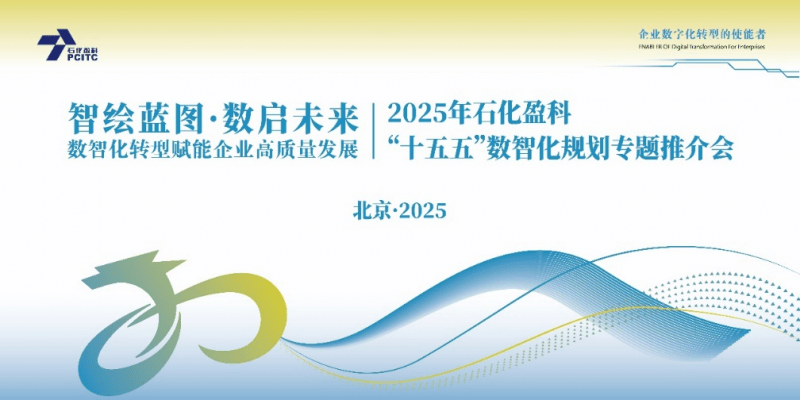
石化盈科:“智绘蓝图 数启未来”数智化转型赋能企业高质量发展
Sou Hu Cai Jing· 2025-07-31 08:17
当前,新一轮科技革命与产业变革交汇激荡,AI大模型从"可用"走向"好用",工业互联网从"连接"走向"赋能", 数据要素从"资源"走向"资产"。"十五五"作为数字化转型向纵深推进、数智化价值全面释放的关键五年,智能化 将是企业抢占国际竞争优势的新赛道。我国明确提出以智能制造为主攻方向推动产业技术变革和优化升级,推动 制造业产业模式和企业形态根本性转变。如何锚定战略支点擘画数智化发展蓝图、如何确保蓝图规划落地见效, 成为企业共同面临的核心课题。 站在新起点,数智化转型已非"选择题",而是企业打造新质生产力,实现高端化、智能化、绿色化发展的"必答 题",更是关乎高质量发展与一流企业建设的"生存题"。科学的谋划、细致的布局,是"生存题"变为"制胜题"的关 键。企业数智化转型应"以实为基、以新破局",摸清系统底数,结合技术趋势,对标最佳实践,做好顶层设计, 完善保障措施,紧密围绕企业战略目标和场景需求,搭建信息化基础架构,逐步开展平台建设、应用开发和持续 优化。"十五五"数智化规划必须与企业战略对齐,构建通用的业务、技术、数据服务能力,打造更敏捷、高效、 安全的信息架构,解决信息孤岛、重复建设、应用分散等问题,形成可执 ...

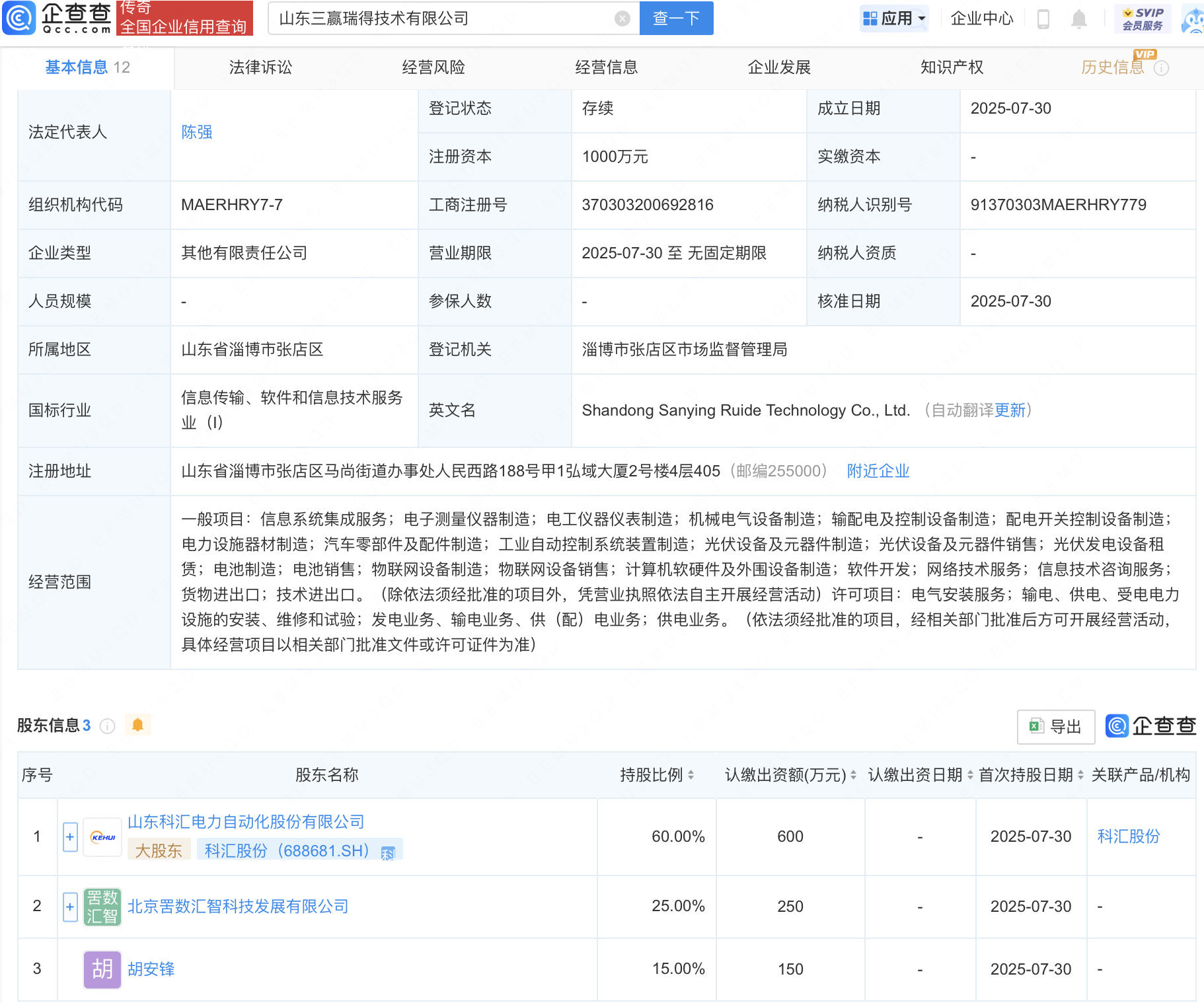
科汇股份等成立新公司,含电池制造业务
Qi Cha Cha· 2025-07-31 04:50
| 序号 | | | 股东名称 | 持股比例 ⇒ | | --- | --- | --- | --- | --- | | 1 | + | (KEHUI | 山东科汇电力自动化股份有限公司 | 60.00% | | | | | 大股东 科汇股份(688681.SH) 图 | | | 2 | + | 品牌 | 北京罢数汇智科技发展有限公司 | 25.00% | | 3 | | 期 | 胡安锋 | 15.00% | 企查查APP显示,近日,山东三赢瑞得技术有限公司成立,法定代表人为陈强,经营范围包含:电池制造;电池销售;物联网设备制造;物联网设备销售 等。企查查股权穿透显示,该公司由科汇股份(688681)等共同持股。 | 全国企业信用查询 | 山东三赢瑞得技术有限公司 | 查一下 | | --- | --- | --- | | 基本信息 12 | 法律诉讼 经营风险 | 经营信息 | | 陈强 法定代表人 | 登记状态 | 存续 | | | 注册资本 | 1000万元 | | 组织机构代码 | MAERHRY7-7 工商注册号 | 370303200692816 | | 企业类型 | 其他有限责任公司 营业期限 ...

达索析统(南京)信息技术服务有限公司揭牌
Nan Jing Ri Bao· 2025-07-31 01:51
Core Points - Dassault Systèmes has officially launched its industrial software project in Nanjing, marking a significant step in the city's industrial software sector development [1] - The project includes the establishment of four major centers: New Industrialization Empowerment Center, Industry Solutions Center, Industrial Equipment Manufacturing Development Center, and Excellence Center, aiming to create a headquarters for intelligent manufacturing in China [1] - Nanjing's collaboration with Dassault is seen as a strategic choice to promote the digital transformation of the manufacturing industry and deepen cooperation with French enterprises [1] Company Insights - Dassault Systèmes is recognized as a leader in the 3D software and innovation design sector, with its technology and industrial ecosystem being crucial for Nanjing's industrial software landscape [1] - The company plans to leverage its technological and ecological resources to enhance cooperation with Nanjing, focusing on innovation that meets local market demands [1] Industry Context - Nanjing aims to lead the construction of a strong industrial city through new industrialization, with a commitment to support enterprises in driving industrial development and building an industrial ecosystem [1] - The city is positioned to create a trillion-level software and information service industry cluster, emphasizing its solid industrial foundation, rich talent resources, and favorable innovation ecosystem [1]
同比增长9.3%!信息通信业稳健前行
Zhong Guo Chan Ye Jing Ji Xin Xi Wang· 2025-07-31 00:32
Core Insights - The telecommunications industry in China has shown resilience with a year-on-year growth of 9.3% in total business volume, while the electronic information manufacturing industry increased by 11.1% and software business revenue grew by 11.2% [1][4]. Infrastructure Development - The construction of information infrastructure has accelerated, with a total of 4.55 million 5G base stations and 1.118 billion 5G mobile phone users by the end of June, achieving a user penetration rate of over 79% [1]. - Over 300 cities have deployed 5G-A networks, enhancing network technology and services, which has led to the emergence of new application scenarios such as low-altitude economy and smart manufacturing [1]. Digital Economy Growth - The "dual-gigabit" network development and the rapid advancement of intelligent computing have laid a solid foundation for the sustained growth of the information and communication industry, with 30.22 million gigabit network service ports and 226 million gigabit broadband users [2]. - The national computing resource layout has been optimized, with 10.43 million standard computing racks in use and an intelligent computing scale of 748 EFLOPS, ranking among the world's top [2]. Application of Digital Technologies - The application of digital technologies, particularly 5G and artificial intelligence, has deepened, with 5G applications integrated into 86 out of 97 major categories of the national economy, and over 138,000 5G application cases [3]. - The "5G + Industrial Internet" projects have surpassed 18,500, significantly driving the digital transformation of industries [3]. Information Consumption Trends - New applications such as 5G new calls, live streaming, and cloud gaming have rapidly emerged, leading to a continuous double-digit growth in mobile internet traffic for six consecutive months [4]. - The digital industry achieved a business revenue growth of 9.3% in the first half of the year, with electronic information manufacturing and software services playing a crucial role in this growth [4][5]. Software and IT Services Performance - The software and information technology service industry has shown stable growth, with software business revenue reaching 557.88 billion yuan, a year-on-year increase of 11.2% [5]. - The cloud computing and big data services generated 58.55 billion yuan in revenue, also reflecting an 11.2% growth [5]. Hardware Innovations - Several domestic companies have launched key products in high-growth areas such as security chips and AI-integrated devices, with over 100 AI terminal devices developed [6]. - The sales volume of AI glasses on JD.com increased sevenfold during the "618" shopping festival, indicating a growing consumer interest in AI smart terminal devices [6]. Social Impact and Accessibility - The telecommunications industry has focused on improving public services, achieving over 90% coverage of 5G in administrative villages, thus narrowing the digital divide [6]. - Initiatives to enhance digital accessibility for the elderly have included the adaptation of over 3,000 websites and apps, as well as the organization of over 400,000 digital literacy classes [6]. Future Outlook - The information and communication industry is positioned to inject continuous new momentum into high-quality economic and social development as it enters the planning phase for the 15th Five-Year Plan [7].
市场消息:甲骨文(ORCL.N)支持白宫关于医疗数据互操作性的愿景。
news flash· 2025-07-30 17:21
市场消息:甲骨文(ORCL.N)支持白宫关于医疗数据互操作性的愿景。 ...
18322.26亿元!今天,深圳最新公布
Nan Fang Du Shi Bao· 2025-07-30 11:52
Economic Overview - Shenzhen's GDP for the first half of 2025 reached 18322.26 billion yuan, with a year-on-year growth of 5.1% [1] - The primary industry added value was 10.33 billion yuan, growing by 2.8%; the secondary industry added value was 6505.56 billion yuan, growing by 3.3%; and the tertiary industry added value was 11806.37 billion yuan, growing by 6.1% [1] Industrial Production - The industrial added value for large-scale enterprises increased by 4.3% year-on-year, with a 0.1 percentage point acceleration compared to the first quarter [2] - The manufacturing sector grew by 4.2%, while the electricity, heat, gas, and water production and supply sector grew by 11.8% [2] - High-tech product output saw significant growth, with civil drones, industrial robots, and 3D printing equipment increasing by 59.0%, 38.0%, and 35.8% respectively [2] Service Sector - The added value of the service industry was 11806.37 billion yuan, with a year-on-year growth of 6.1%, also accelerating by 0.1 percentage points from the first quarter [3] - Key sectors such as finance, transportation, and information technology services grew by 10.9%, 9.0%, and 8.1% respectively [3] - From January to May, the revenue of large-scale service enterprises increased by 8.4%, with transportation and information services growing by 12.3% and 9.4% respectively [3] Fixed Asset Investment - Fixed asset investment decreased by 10.9% year-on-year, with real estate development investment down by 15.1% [4] - Infrastructure investment grew by 7.7%, while industrial technology renovation investment surged by 47.1% [4] - Investment in information transmission and technology services increased by 47.7% [4] Market Sales - The total retail sales of consumer goods reached 4948.68 billion yuan, with a year-on-year growth of 3.5%, accelerating by 0.4 percentage points from the first quarter [5] - Retail sales of daily necessities and food increased by 10.7% and 9.1% respectively [5] - Online retail sales through the internet grew by 19.4% [5] Trade and Exports - The total import and export volume was 21675.45 billion yuan, a year-on-year decrease of 1.1%, with exports at 13086.81 billion yuan, down by 7.0% [6] - High-tech product exports increased by 8.0% [6] Financial Sector - By the end of June, the total deposits of financial institutions reached 141600.14 billion yuan, growing by 5.7% year-on-year [7] - The total loans from financial institutions amounted to 98469.91 billion yuan, with a year-on-year growth of 3.5% [7]
稳!深圳刚刚官宣:18322.26亿元
Zhong Guo Ji Jin Bao· 2025-07-30 10:34
Economic Overview - Shenzhen's GDP for the first half of 2025 reached 1832.226 billion yuan, with a year-on-year growth of 5.1% at constant prices [1][10] - The primary industry added value was 1.033 billion yuan, growing by 2.8%; the secondary industry added value was 650.556 billion yuan, growing by 3.3%; and the tertiary industry added value was 1180.637 billion yuan, growing by 6.1% [1] Industrial Production - The industrial added value for large-scale enterprises increased by 4.3% year-on-year, with a slight acceleration of 0.1 percentage points compared to the first quarter [2] - The manufacturing sector grew by 4.2%, while the electricity, heat, gas, and water production and supply industry saw an increase of 11.8% [2] - High-tech product output continued to grow rapidly, with civil drones, industrial robots, and 3D printing equipment seeing production increases of 59.0%, 38.0%, and 35.8% respectively [2] Service Sector - The added value of the service industry was 1180.637 billion yuan, with a year-on-year growth of 6.1%, also accelerating by 0.1 percentage points from the first quarter [3] - Key sectors such as finance, transportation, and information technology services grew by 10.9%, 9.0%, and 8.1% respectively [3] - From January to May, the revenue of large-scale service enterprises increased by 8.4%, with transportation and information technology services growing by 12.3% and 9.4% respectively [3] Fixed Asset Investment - Fixed asset investment decreased by 10.9% year-on-year, with real estate development investment down by 15.1% [4] - Infrastructure investment grew by 7.7%, while industrial technological transformation investment surged by 47.1% [4] - Investment in information transmission and technology services increased by 47.7%, and transportation and postal services saw a growth of 32.5% [4] Market Sales - The total retail sales of consumer goods reached 494.868 billion yuan, with a year-on-year growth of 3.5%, accelerating by 0.4 percentage points from the first quarter [5] - Retail sales of essential goods showed strong growth, with daily necessities and grain and oil products increasing by 10.7% and 9.1% respectively [5] - Online retail sales continued to rise, with a growth of 19.4% for large-scale enterprises through the internet [5] Trade and Exports - The total import and export volume was 2167.545 billion yuan, with a year-on-year decline of 1.1%, but the decline narrowed by 1.7 percentage points compared to the first quarter [6] - Exports amounted to 1308.681 billion yuan, down by 7.0%, while imports increased by 9.5% to 858.864 billion yuan [6] - High-tech product exports grew by 8.0% [6] Financial Sector - By the end of June, the balance of deposits in financial institutions (including foreign capital) was 14160.014 billion yuan, with a year-on-year growth of 5.7% [7] - The balance of loans in financial institutions (including foreign capital) was 9846.991 billion yuan, growing by 3.5% year-on-year [7] Consumer Prices - The consumer price index rose by 0.1% year-on-year, with food and beverage prices increasing by 0.5% and clothing prices by 1.3% [8][21] - Prices for transportation and communication decreased by 2.4%, while medical care prices rose by 1.2% [8][21]

稳!深圳刚刚官宣:18322.26亿元
中国基金报· 2025-07-30 10:26
Core Viewpoint - Shenzhen's economy showed steady growth in the first half of 2025, with a GDP of 18,322.26 billion yuan, reflecting a year-on-year increase of 5.1% at constant prices [2][12]. Group 1: Industrial Production - The industrial added value of large-scale enterprises in Shenzhen increased by 4.3% year-on-year, with a slight acceleration of 0.1 percentage points compared to the first quarter [3]. - The manufacturing sector grew by 4.2%, while the electricity, heat, gas, and water production and supply industry saw an increase of 11.8% [3]. - High-tech product output experienced rapid growth, with civil drones, industrial robots, and 3D printing equipment increasing by 59.0%, 38.0%, and 35.8% respectively [3]. Group 2: Service Industry - The added value of the service industry reached 11,806.37 billion yuan, growing by 6.1% year-on-year, with a 0.1 percentage point increase from the first quarter [4]. - Key sectors such as finance, transportation, and information technology services reported growth rates of 10.9%, 9.0%, and 8.1% respectively [4][5]. Group 3: Fixed Asset Investment - Fixed asset investment in Shenzhen decreased by 10.9% year-on-year, with real estate development investment dropping by 15.1% [6]. - However, infrastructure investment grew by 7.7%, and industrial technological transformation investment surged by 47.1% [6]. Group 4: Market Sales - The total retail sales of consumer goods reached 4,948.68 billion yuan, with a year-on-year growth of 3.5%, marking a 0.4 percentage point acceleration from the first quarter [7]. - Significant growth was observed in the sales of home appliances and audio-visual equipment, which increased by 55.7%, and cultural office supplies, which rose by 32.9% [7][19]. Group 5: Trade - The total import and export volume was 21,675.45 billion yuan, showing a year-on-year decline of 1.1%, but the decline was narrower by 1.7 percentage points compared to the first quarter [8]. - Exports amounted to 13,086.81 billion yuan, down by 7.0%, while imports increased by 9.5% to 8,588.64 billion yuan [8]. Group 6: Financial Sector - By the end of June, the balance of deposits in financial institutions (including foreign capital) reached 141,600.14 billion yuan, a year-on-year increase of 5.7% [9]. - The balance of loans in financial institutions (including foreign capital) was 98,469.91 billion yuan, reflecting a year-on-year growth of 3.5% [9].

腾讯申请一种资源处理方法、装置、设备及存储介质专利,提升资源展示速度
Jin Rong Jie· 2025-07-30 07:34
天眼查资料显示,腾讯科技(深圳)有限公司,成立于2000年,位于深圳市,是一家以从事软件和信息 技术服务业为主的企业。企业注册资本200万美元。通过天眼查大数据分析,腾讯科技(深圳)有限公 司共对外投资了15家企业,参与招投标项目260次,财产线索方面有商标信息5000条,专利信息5000 条,此外企业还拥有行政许可501个。 本文源自:金融界 专利摘要显示,本申请公开了一种资源处理方法、装置、设备及存储介质。本发明实施例可应用于云技 术、人工智能等各种场景,该方法包括:响应于目标对象针对程序入口展示区域的展示指令,基于获取 的目标对象的操作关联数据,对目标对象进行待操作程序预测,得到多个程序中待操作程序对应的程序 指示信息;向资源提供终端发送携带有程序指示信息的资源预加载请求;将从资源提供终端获取的与待 操作程序对应的目标资源预加载至本地存储区域;响应于目标对象基于待操作程序对应的入口信息触发 的程序操作指令,在待操作程序的操作界面中展示来自本地存储区域的目标资源。利用本申请的方案可 以在有效降低资源消耗的基础上,提升资源展示速度和点击率,减少等待时长。 金融界2025年7月30日消息,国家知识产权局信息显 ...
