
互联网金融

Search documents
影响市场重大事件:马斯克确认SpaceX明年IPO,估值约1.5万亿美元;华为、支付宝、中移互联网合作布局AI+5G新通话DC生态
Mei Ri Jing Ji Xin Wen· 2025-12-11 22:33
Group 1 - Huawei, Alipay, and China Mobile Internet signed a cooperation agreement to launch an intelligent communication era with "call as a service" [1] - The collaboration aims to innovate the AI + 5G new call DC ecosystem, transitioning traditional calls to intelligent and service-oriented solutions [1] - China Mobile Internet will leverage its extensive 5G network and user base for reliable communication support, while Alipay will integrate its digital ecosystem capabilities [1] Group 2 - Elon Musk confirmed that SpaceX plans to go public next year, aiming to raise over $30 billion with an estimated valuation of $1.5 trillion [2] - The IPO could potentially break the record for the largest fundraising in history, surpassing Saudi Aramco's $29 billion in 2019 [2] - SpaceX intends to use part of the IPO proceeds to develop a space data center [2] Group 3 - The Zhejiang Province is launching a major technology initiative for brain-computer interfaces, aiming to create a competitive industry cluster [3] - An international standard for brain-computer interface technology is being established to promote healthy and orderly development in the field [3] Group 4 - The China Internet Finance Association held a meeting to discuss self-regulation in supply chain finance, focusing on improving market monitoring and management [4] - The association aims to guide the industry towards reasonable control of financing costs and orderly exit of weaker platforms [4] Group 5 - The Ministry of Commerce plans to introduce policies to accelerate innovation and transformation in the retail sector during the 14th Five-Year Plan [5] - The focus will be on enhancing product and service quality and promoting fair competition between online and offline channels [5] Group 6 - The Xi'an Chida Aircraft's "Jiutian" drone successfully completed its maiden flight, showcasing versatility for both military and civilian applications [6] - The drone can be used for logistics, emergency rescue, and various surveying services, covering multiple sectors of the national economy [6] Group 7 - The National Development and Reform Commission and the National Energy Administration issued guidelines for centralized pricing of renewable energy generation [7] - The new rules restrict centralized pricing to renewable energy companies within the same group and province, preventing cross-group and cross-province pricing [7] Group 8 - Goldman Sachs predicts that gold prices could rise to $4,900 per ounce by the end of 2026, driven by increased investment in gold ETFs [8] - The current allocation of gold in U.S. financial portfolios is low, suggesting significant potential for price increases with higher ETF investments [8] Group 9 - Liaoning Province is soliciting opinions on a three-year action plan for high-quality development of ice and snow tourism [9] - The plan aims to enhance the province's ice and snow tourism brand and develop multiple tourism routes and resorts [9] Group 10 - In November, China's automobile exports reached 728,000 units, marking a 9.3% month-on-month increase and a 48.5% year-on-year increase [10] - The total exports for the first eleven months of 2025 reached 6.343 million units, with expectations to reach 7 million units for the entire year [10]

中国互联网金融协会发声
Xin Hua She· 2025-12-11 12:46
本文来源:中国互联网金融协会 责编:刘暑冰 编辑:关乔 原标题:中国互联网金融协会:供应链金融业务合规整改仍是首要任务,绝不能"带病"盲目扩张发展 为落实《关于规范供应链金融业务引导供应链信息服务机构更好服务中小企业融资有关事宜的通知》要 求,切实做好账款凭证业务自律管理工作,中国互联网金融协会在北京组织召开供应链金融业务会员座 谈会。 中国互联网金融协会秘书长马超表示,协会按照《通知》要求积极推进自律管理各项工作,目前基本实 现对账款凭证主要从业机构的自律管理触达,初步建立业务统计监测机制,基本摸清市场底数,持续宣 贯先规范再发展的指导思想,助推凭证期限合理控制、融资成本持续下行,引导弱小平台有序退出,及 时处理相关风险事件。一是合规整改仍是当前的首要任务,绝不能"带病"盲目扩张发展;二是协会会员 单位要成为优等生,发挥模范带头作用,尽快完成合规整改、申请备案;三是协会将以自律备案为抓 手,用好自律检查、惩戒等手段,让合规者受益、违规者出局,逐步推动行业优胜劣汰。 中国互联网金融协会秘书长马超表示,协会将以自律备案为抓手,用好自律检查、惩戒等手段,让合规 者受益、违规者出局,逐步推动行业优胜劣汰。 ...
互金中概股三季报:头部公司成本下行 11月新贷款质量优化
2 1 Shi Ji Jing Ji Bao Dao· 2025-12-11 12:10
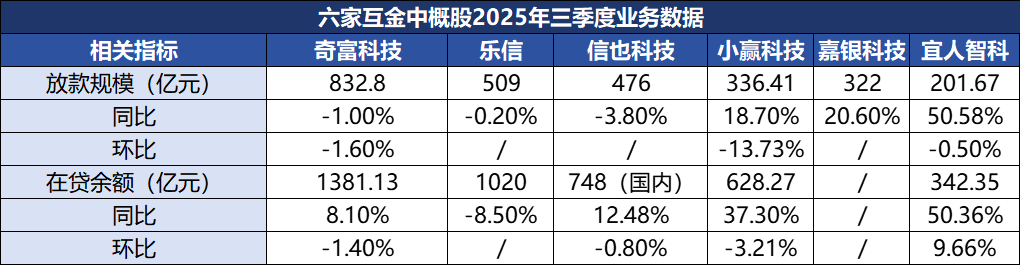
近期,六家互金中概股均对外披露了2025年三季度财务报告。 作为10月1日《关于加强商业银行互联网助贷业务管理提升金融服务质效的通知》(以下简称"助贷新规")正式落地前的最后一个季度,三季度 是助贷产品整改、客户风险分层调整最为集中的阶段。通过六家互金中概股披露的数据与业务动态,一方面可以窥见新规落地前后的业务动向, 另一方面也可以反映四季度及2026年互联网消费信贷市场的变化趋势,特别是在监管环境动态变化的背景下,有更重要的价值。 整体来看,在助贷新规正式实施后,平台分化进一步加剧,头部机构在融资成本、获客成本、商业模式等方面均有一定优势。但与此同时,随着 产品利率下行,平台拒接高风险客户,部分客群风险暴露引发资产质量波动,四季度规模收缩与风险结构调整将成为一大趋势。 产品利率整改落地,重资本模式回归 助贷新规对助贷平台的影响是从持牌金融机构端传导而来的。 在综合年化利率不超过24%的"红线"下,一方面要求持牌金融机构通过"白名单"制度将合作方置于"阳光下",另一方面也要求助贷平台产品整 改,全面收缩利率在24%以上贷款产品,强化金融消费者权益保护。 从多家互金中概股披露信息与投资者交流内容来看,10月1日 ...

中国互联网金融协会:供应链金融业务合规整改仍是首要任务,绝不能“带病”盲目扩张发展
Zhong Zheng Wang· 2025-12-11 06:28
"中国互联网金融协会"微信公众号12月11日消息,为落实《关于规范供应链金融业务引导供应链信息服 务机构更好服务中小企业融资有关事宜的通知》要求,切实做好账款凭证业务自律管理工作,中国互联 网金融协会在北京组织召开供应链金融业务会员座谈会。 中国互联网金融协会秘书长马超表示,协会按照《通知》要求积极推进自律管理各项工作,目前基本实 现对账款凭证主要从业机构的自律管理触达,初步建立业务统计监测机制,基本摸清市场底数,持续宣 贯先规范再发展的指导思想,助推凭证期限合理控制、融资成本持续下行,引导弱小平台有序退出,及 时处理相关风险事件。一是合规整改仍是当前的首要任务,绝不能"带病"盲目扩张发展;二是协会会员 单位要成为优等生,发挥模范带头作用,尽快完成合规整改、申请备案;三是协会将以自律备案为抓 手,用好自律检查、惩戒等手段,让合规者受益、违规者出局,逐步推动行业优胜劣汰。 ...
把企业事当“家事”来办,普陀将企业服务效能转化为发展动能
Zhong Guo Zheng Quan Bao· 2025-12-10 08:50
在普陀,一场跑步比赛,也能成为汇聚发展机遇的"会客厅"。 前不久,"2025新金环上海Top Run 10公里精英赛"在普陀举行。赛前,区投促办召开6次招商推进会, 建立70人保障团队,精准对接"13家重点增量企业与30家重点存量企业";赛事期间,区领导与奇富科技 等企业高管在赛道边展开"零距离"交流,企业诉求现场交办、责任当场明确,让"事事有回音"成为现 实。 据了解,目前已形成近10条重点招商线索,促成多个项目深入洽谈。区投促办负责人表示,将通过建立 台账持续跟进,"把赛事'流量'真正转化为发展'增量'"。 "体育+招商"的创新模式并非一时兴起,其背后是普陀区今年以来推动招商引资与企业服务深度融合的 系统布局——从成立一体化专班、建立三级服务专员走访制度,到践行"三习""十聊""五赋能"工作法, 即走访前预习企业背景、调研中学习行业动态、走访后实践解决问题;围绕企业发展、行业生态、区域 环境,与企业开展十个细分维度的深度对话;从体系、能力、场景、流程、生态五大方面为企业发展赋 能。 这套机制有效聚焦企业需求,也让"服务即招商、解难即发展"成为普陀最鲜明的企业服务宗旨。 从"解决一件事"到"赋能一类事",服 ...
七家协会联合发布虚拟货币风险提示
Qi Huo Ri Bao Wang· 2025-12-07 16:50
Core Viewpoint - The China Internet Finance Association and six other associations issued a risk warning regarding illegal activities related to virtual currencies, emphasizing the illegality of certain financial activities involving virtual currencies and token issuance within the country [1] Summary by Relevant Categories Regulatory Actions - Domestic institutions and individuals engaging in the exchange of legal currency for virtual currencies, issuance of tokens, and financing activities are suspected of illegal financial activities such as illegal token sales, illegal fundraising, unauthorized public securities issuance, and illegal futures operations [1] International Implications - Foreign virtual currency service providers conducting business activities in China, either directly or indirectly, are also considered to be engaging in illegal financial activities [1] Accountability Measures - Domestic staff of foreign virtual currency service providers, as well as domestic institutions and individuals who knowingly provide services related to virtual currencies, will be held legally accountable [1] Public Awareness - The public is urged to enhance their risk awareness and ability to identify potential risks, and to avoid participating in activities related to virtual currencies and token issuance, as well as illegal fundraising and securities issuance disguised as virtual currency mining [1]
七家协会联合发布关于防范涉虚拟货币等非法活动的风险提示|政策与监管
清华金融评论· 2025-12-06 10:28
Core Viewpoint - The article emphasizes the risks associated with virtual currencies and related activities, highlighting that they are not recognized as legal tender in China and warning against illegal financial activities linked to them [1][3][4]. Group 1: Nature of Virtual Currencies - Virtual currencies are not issued by monetary authorities and do not hold the same legal status as national legal tender, thus cannot be circulated as currency within China [1][3]. - Certain virtual currencies, such as "air coins" (e.g., π coin), lack substantial technological innovation and clear commercial applications, leading to significant fraud and market manipulation issues [3][5]. - Stablecoins currently fail to meet customer identification and anti-money laundering requirements, posing risks of being used for money laundering and fraudulent fundraising [3][5]. Group 2: Prohibited Activities - Domestic institutions and individuals engaging in the exchange of legal currency for virtual currencies or issuing and financing real-world asset tokens are involved in illegal financial activities [4][5]. - Member institutions are prohibited from participating in the issuance and trading of virtual currencies and real-world asset tokens, and must not provide any related services [5]. - Financial institutions must conduct thorough customer due diligence to identify potential risks related to virtual currencies and report any suspicious activities to relevant authorities [5]. Group 3: Public Awareness and Caution - The public is urged to remain vigilant against various forms of virtual currency and real-world asset token activities, which are often linked to speculation and fraud [5]. - Individuals should enhance their risk awareness and avoid participating in virtual currency-related activities, including illegal fundraising under the guise of "mining" [5]. - Any suspicious activities related to virtual currencies should be reported to regulatory authorities or law enforcement [5].

毛利率超茅台,量化派为何不惜代价上市?
Sou Hu Cai Jing· 2025-12-06 03:17
Core Viewpoint - Quantitative Technology Co., Ltd. has successfully listed on the Hong Kong Stock Exchange, marking a significant transformation from its previous lending business to a focus on e-commerce and consumer services [2][7]. Group 1: Business Transformation - The company has completely terminated its lending business, shifting its focus to "commodity trading empowerment" [2]. - The new business model is centered around the "Yang Xiaomei" platform, which has achieved a gross profit margin of 97.1% in the first five months of 2025, significantly higher than major e-commerce players like Alibaba and JD.com [2][8]. - The revenue from the Yang Xiaomei platform accounted for 93.2% of the company's total revenue in 2024, increasing to 98.1% in the first five months of 2025 [8]. Group 2: Historical Context - Founded in 2014 as "Quantum Data Science," the company initially focused on a cash loan platform called "Credit Wallet," leveraging big data and AI for loan matching [3][5]. - The company faced regulatory challenges in 2017, leading to a suspension of its IPO application in the U.S. and a subsequent restructuring [5][7]. Group 3: Financial Insights - The company raised approximately HKD 131 million in its IPO, but after expenses, the net amount was only about HKD 12.37 million, with listing costs accounting for 90.56% of the total raised [11][12]. - The company has a significant financial obligation related to preferred shares, amounting to approximately RMB 1.839 billion (around HKD 2 billion), which could be converted to common shares upon successful listing [12][13]. Group 4: Market Position and User Behavior - Despite higher prices on the Yang Xiaomei platform, the company maintains a monthly active user base of 937,000 and an average consumer spending of RMB 25,600 [9]. - The platform has been linked to consumer finance platforms, allowing users to utilize shopping credits for purchases, indicating a complex relationship between e-commerce and financial services [10][11].

防范涉虚拟货币等非法活动 七家协会联合发布风险提示
Xin Hua She· 2025-12-05 12:43
Core Viewpoint - The China Internet Finance Association and six other associations issued a risk warning against participation in virtual currency and real-world asset token issuance and trading activities within the country, urging the public to recognize risks and avoid illegal activities [1][2] Group 1: Risk Warning - The warning highlights that virtual currencies are not issued by monetary authorities and do not have the same legal status as legal tender, thus cannot be circulated as currency within China [1] - Financial regulatory authorities in China have not approved any activities related to the tokenization of real-world assets [1] - Member units are prohibited from directly or indirectly providing services for the issuance and trading of virtual currencies and real-world asset tokens within the country [1] Group 2: Public Awareness - The public is advised to remain vigilant regarding various forms of virtual currency and real-world asset token business activities [2] - Any leads related to virtual currency or real-world asset token activities should be reported to regulatory authorities, and suspected illegal activities should be reported to law enforcement [2]
七家协会联合发布风险提示!
Zhong Guo Zheng Quan Bao - Zhong Zheng Wang· 2025-12-05 12:24
Core Viewpoint - The China Internet Finance Association and other financial organizations have issued a risk warning regarding illegal activities related to virtual currencies, highlighting the rapid rise in related concepts and the exploitation by criminals for illegal fundraising and scams [1][6]. Group 1: Nature of Virtual Currencies - Virtual currencies are not issued by monetary authorities and do not have the same legal status as fiat currencies, making them illegal for circulation in China [2][7]. - Air coins like π coin lack substantial technological innovation and clear commercial applications, with opaque issuance and operational mechanisms, leading to significant fraud and market manipulation issues [2][7]. - Stablecoins currently fail to meet customer identity verification and anti-money laundering requirements, posing risks of being used for money laundering and illegal fundraising [2][7]. Group 2: Illegal Activities and Regulations - Domestic institutions and individuals engaging in the exchange of fiat currency for virtual currencies or issuing and financing real-world asset tokens are involved in illegal financial activities [3][8]. - Foreign virtual currency service providers offering services to domestic entities are also considered illegal, and those providing such services will be held accountable [3][8]. - Member institutions are prohibited from participating in the issuance and trading of virtual currencies and real-world asset tokens, and must not provide any related services [9]. Group 3: Public Awareness and Education - Member units are encouraged to conduct risk awareness and educational campaigns regarding virtual currencies and real-world asset tokens to help the public discern risks and avoid illegal activities [10]. - The public is urged to be vigilant against various forms of virtual currency activities, as their prices are highly volatile and often associated with speculation and scams [5][10].