
功率半导体

Search documents
一家科企科创“马拉松”背后的 多维金融“伴跑”
Jin Rong Shi Bao· 2025-12-18 02:03
由车企为弥补模块缺失孵化出的瑞迪微,发展至今的业务特征比较鲜明——其业务基本盘、也是占比八成的 业务来自新能源车规级客户。这一特征决定了瑞迪微既有长期投资需求,也要承担在现金流上的压力。 据了解,像瑞迪微这样的功率半导体模块企业有两种生产模式,一种是IDM(垂直整合制造),即覆盖芯片 设计、制造、封装测试及销售全产业链的运营模式,另一种是Fabless(无晶圆厂模式),即企业做好设计后将芯 片制造环节外包给专业代工厂,其中,前者仅基建投资就不少于10亿美元。瑞迪微选择了无晶圆厂模式,除了前 端设计研发外,出于对产品上市周期、提升产品可靠性、促进设计与工艺协同等考虑,该公司还自建了产品交付 前的封装测试产线。尽管如此,对于这样一家未实现盈亏平衡的初创企业而言,前期投入仍是很高的。刘康伦告 诉记者,该公司在封装测试产线上的投入已有近2个亿元,设计研发的长周期更加重了前期投入负担,"由于研发 相对领先,我们将设计研发周期缩短到了半年至一年时间,不过在晶圆厂代工前,还有一到一年半时间的产品认 证导入期,这进一步拉长了我们的投入产出周期。" 保持长期投入的同时,有足够的现金流保证一批批产品交付和企业经营,也是刘康伦等管 ...

这公司IPO!报告期业绩持续增长,经营活动产生的现金流量净额却持续下降
梧桐树下V· 2025-12-17 12:23
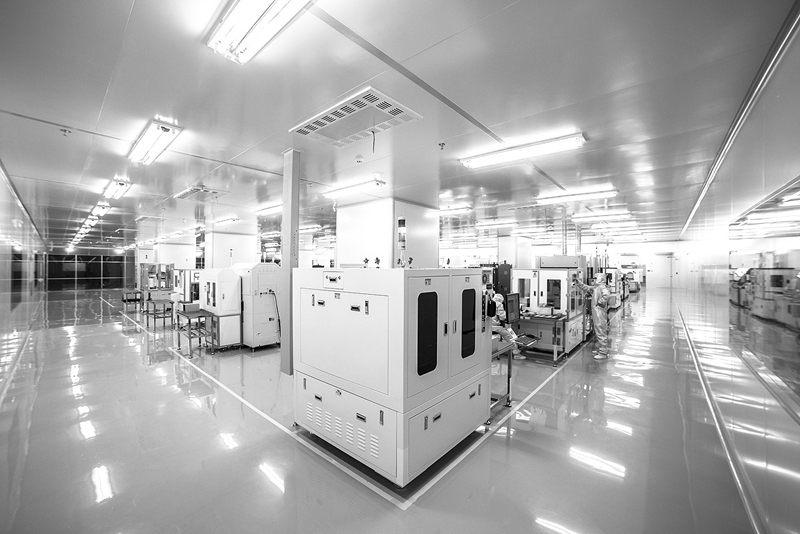
文 /Ronald 江阴市赛英电子股份有限公司( 874558)申报北交所IPO于2025年6月27日获得受理,现已完成两轮 问询。公司是一家专业从事陶瓷管壳、封装散热基板等功率半导体器件关键部件研发、制造和销售的高 新技术企业,是国家级专精特新"小巨人"企业。公司前身有限公司成立于2002年11月,2016年1月整 体变更为股份公司,2025年4月14日挂牌新三板。目前公司注册资本3240万元。 一、报告期营收、净利润持续增长,但经营活动产生的现金流量净额持续下降,最近一年半为负数 2022年、2023年、2024年,公司实现营业收入分别为2.190亿元、3.206亿元、4.573亿元,扣非归 母净利润分别为0.429亿元、0.554亿元、0.737亿元。 虽然报告期营收、净利润同比增长,但经营活动产生的现金流量净额却出现了不良变化。 2022年、 2023年,公司经营活动产生的现金流量净额分别为0.237亿元、0.172亿元,到2024年在营收增长 42.65%的情况下,经营活动产生的现金流量净额却为-0.077亿元,同比下降145%。2025年上半 年,公司经营活动产生的现金流量净额为-0.075亿元, ...
IPO研究丨本周6家上会,特斯拉供应商固德电材待审
Sou Hu Cai Jing· 2025-12-15 01:47
Group 1 - This week, 5 new stocks will be available for subscription, including 2 from the Shenzhen main board, 2 from the Sci-Tech Innovation Board, and 1 from the Beijing Stock Exchange [2] - The IPO of Jianxin Superconducting, which specializes in MRI equipment core components, aims to raise a total of 779 million yuan, with an issue price of 18.58 yuan per share and a P/E ratio of 61.97 [2] - Jianxin Superconducting is projected to hold the fifth position globally and the second position domestically in the market share of superconducting magnets for MRI devices in 2024 [2] Group 2 - Six companies are scheduled for IPO review this week, including Guode Electric Materials and Shangshui Intelligent from the Shenzhen Stock Exchange, and Saiying Electronics and Chuangda New Materials from the Beijing Stock Exchange [4] - Shangshui Intelligent plans to raise 587 million yuan, focusing on micro-nano powder processing and precision measurement, with projected revenues of 397 million yuan, 601 million yuan, and 637 million yuan from 2022 to 2024 [4][5] - Guode Electric Materials aims to raise 1.176 billion yuan, specializing in thermal runaway protection components for electric vehicle batteries, with revenues expected to grow from 475 million yuan in 2022 to 908 million yuan in 2024 [5][6] Group 3 - Saiying Electronics, if successfully listed, will become the first power semiconductor component company on the Beijing Stock Exchange, with revenues projected to grow from 219 million yuan in 2022 to 321 million yuan in 2023, marking a 46.37% increase [6] - Three companies are undergoing refinancing reviews this week, including Haitian Shares, Boshi Glasses, and Changgao Electric [6]
降价换量带动业绩增长提速,尚鼎芯产品结构单一错失第三代半导体浪潮
Zhi Tong Cai Jing· 2025-12-09 03:20
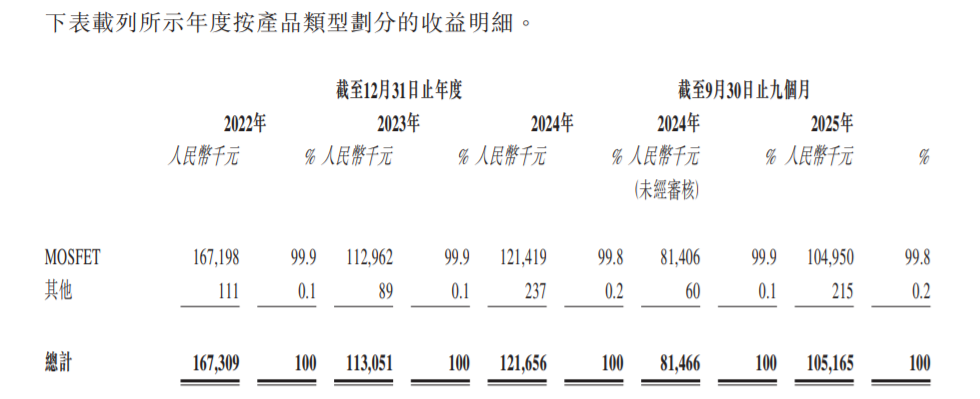
Core Viewpoint - Shangdingxin, a power semiconductor supplier, is preparing for its IPO in Hong Kong after experiencing significant revenue fluctuations, with a focus on customized power devices for various applications, primarily in consumer electronics and industrial control sectors [1][2][5]. Financial Performance - Shangdingxin's revenue for 2022 was 167.3 million RMB, which dropped to 113.1 million RMB in 2023, a decline of 32.34%. The net profit also fell by 42.14% to 31.01 million RMB [8][9]. - In 2024, revenue is projected to recover slightly to 121.7 million RMB, with a net profit of 35.11 million RMB [2][4]. - By the first three quarters of 2025, revenue reached 105.2 million RMB, showing a year-on-year growth of 29.09%, and net profit increased by 27.17% to 30.32 million RMB [2][4]. Product Offering - Shangdingxin specializes in customized power devices, with MOSFETs accounting for 99.8% of total revenue in 2024. Other products like IGBT, GaN MOSFET, and SiC MOSFET contribute negligibly [3][10]. - The company’s products are widely used in applications such as power converters, battery management systems, and various consumer electronics [4][5]. Market Position and Strategy - The company has a diverse customer base of over 500 clients across various sectors, with a retention rate increasing from 68.3% in 2022 to 71.5% in 2024 [6][7]. - Shangdingxin's revenue is predominantly generated from the domestic market, with over 96% of sales occurring in China from 2020 to 2024 [8]. Competitive Landscape - The Chinese MOSFET market is highly competitive, with the top five manufacturers holding approximately 49.3% of the market share, while Shangdingxin's market share is only 0.3% [11][14]. - The company has adopted a "price-for-volume" strategy to boost sales, which has led to increased penetration in various applications but raises concerns about long-term sustainability [9][11]. Challenges and Concerns - Shangdingxin's reliance on the low-growth MOSFET market and the lack of diversification into higher-growth segments like IGBT and SiC/GaN products may limit future growth opportunities [15]. - The company has faced criticism for its significant dividend payouts, which totaled over 80 million RMB in recent years, and for reducing R&D expenditures, which are below industry averages [12][15].
中国功率半导体,逆袭
3 6 Ke· 2025-12-08 00:07
Core Viewpoint - The collaboration between global semiconductor giants and Chinese technology leaders signifies a profound industrial transformation, with Chinese companies rapidly advancing in the power semiconductor sector, moving from the periphery to the center of the global stage [1][2][3] Group 1: Collaborations and Partnerships - Onsemi and Innoscience have formed a deep collaboration to develop next-generation efficient power devices based on Innoscience's 8-inch silicon-based GaN technology, targeting markets such as industrial, automotive, telecommunications, consumer electronics, and AI data centers [1][3] - STMicroelectronics and Sanan Optoelectronics are jointly building a silicon carbide (SiC) manufacturing plant in Chongqing, with an expected annual capacity of hundreds of thousands of wafers, marking a significant investment of approximately 230 billion RMB [4][5] - Infineon has established long-term supply agreements with domestic companies for high-quality SiC substrates, ensuring a stable supply of materials for SiC semiconductor production [6][7] Group 2: Market Dynamics and Growth - The global power semiconductor market is projected to see GaN technology capture approximately $2.9 billion (11%) by 2030, with a compound annual growth rate of 42% from 2024 to 2030 [3] - China's power semiconductor industry is expected to reach a market size of 105.775 billion RMB in 2024, maintaining its position as the largest consumer market globally, with a domestic production rate exceeding 80% for low-end power devices [10][11] - Innoscience has achieved a global market share of over 42.4% in 2024, with cumulative shipments exceeding 2 billion chips, highlighting its significant position in the global semiconductor landscape [11] Group 3: Industry Trends and Future Outlook - The shift from passive following to active selection by international giants indicates a recognition of China's capabilities in core technology breakthroughs and market potential [8][9] - The rise of domestic companies in the power semiconductor sector is characterized by a combination of integrated device manufacturing (IDM) and specialized divisions, enhancing self-sufficiency and competitiveness [9][10] - The future landscape will require Chinese companies to focus on technological innovation, global expansion, and collaborative industry chain development to maintain their competitive edge [14][15]


芯片供应链,中美合作!安森美将采购英诺赛科GaN晶圆!
Xin Lang Cai Jing· 2025-12-07 15:04
Core Insights - Ansemone has announced a collaboration with China's Innosec to accelerate the global deployment of Gallium Nitride (GaN) products, leveraging Innosec's large-scale manufacturing capabilities and Ansemone's packaging technology, with samples expected to be delivered to customers in the first half of 2026 [1][4][5] Group 1: Collaboration Details - The partnership will focus on wafer procurement and broader collaboration, exploring the use of Innosec's mature 8-inch GaN-on-silicon process to expand the production of GaN power components [1][4] - The collaboration aims to combine Ansemone's expertise in system integration, drivers, and packaging with Innosec's strengths in GaN wafers and large-scale manufacturing to accelerate the market introduction of cost-effective and energy-efficient solutions [1][4] Group 2: Market Potential - Ansemone anticipates that this collaboration will expand its low-voltage and medium-voltage (40V to 200V) GaN power component product portfolio and increase global production scale, targeting a market expected to reach $2.9 billion by 2030 across various sectors including industrial, automotive, telecommunications infrastructure, consumer electronics, and AI data centers [5][6] Group 3: GaN Technology Advantages - GaN technology offers higher switching speeds, smaller sizes, and lower energy losses, enabling greater power delivery in smaller spaces [2][5] - The collaboration aims to overcome previous limitations in product variety and capacity that restricted GaN's application in low-voltage and medium-voltage sectors, facilitating rapid global deployment of mainstream GaN solutions [5][6] Group 4: Innosec's Role - Innosec is a high-tech enterprise focused on the research and manufacturing of third-generation semiconductor GaN, possessing the world's largest GaN power semiconductor production base, with applications spanning consumer electronics, data centers, automotive electronics, renewable energy, and industrial sectors [3][6][7] - GaN is seen as a crucial upgrade from traditional silicon materials, addressing limitations in frequency, power, power consumption, thermal management, and device size, positioning it as a significant development direction for the future electronics industry [7]

中国功率半导体,逆袭!
半导体行业观察· 2025-12-07 02:33
Core Viewpoint - The article highlights the significant transformation in the global semiconductor industry, particularly in the power semiconductor sector, where Chinese companies are rapidly advancing from a position of dependency to becoming key players in the global market [1][2][3]. Group 1: Industry Dynamics - Onsemi and Innoscience have formed a deep collaboration to develop next-generation efficient power devices based on Innoscience's 8-inch silicon-based GaN technology, indicating a shift in global partnerships towards Chinese technology leaders [1][3]. - The global power semiconductor giants are increasingly engaging in comprehensive collaborations with Chinese firms, including joint R&D and supply chain integration, reflecting a recognition of China's industrial strength [2][8]. - The power semiconductor sector is identified as a leading area for China's semiconductor industry to achieve breakthroughs, supported by a growing number of domestic companies emerging in this field [2][9]. Group 2: Market Opportunities - The global market for GaN power semiconductors is projected to reach approximately $2.9 billion by 2030, with a compound annual growth rate of 42% from 2024 to 2030, highlighting the growth potential in this segment [3][12]. - The Chinese power semiconductor market is expected to reach 105.775 billion yuan in 2024, maintaining its position as the largest consumer market globally, with a significant increase in domestic production rates [11][12]. - The domestic market for low-end power devices has surpassed 80% in localization, with expectations for SiC manufacturers' market share to increase by 10-15 percentage points this year [11][12]. Group 3: Technological Advancements - Innoscience has become the first global company to achieve mass production of 8-inch GaN wafers, with a market share exceeding 42.4% in 2024, showcasing its technological and production capabilities [12]. - Chinese companies have made significant advancements in SiC substrate and epitaxial wafer technologies, with Tianyu Semiconductor leading in market share for carbon silicon epitaxial wafers [11][12]. - The collaboration between international firms and Chinese manufacturers is evolving from technology licensing to joint R&D and supply chain binding, indicating a deeper integration of Chinese firms into the global semiconductor ecosystem [8][9]. Group 4: Strategic Collaborations - STMicroelectronics and Sanan Optoelectronics are collaborating to build a SiC manufacturing facility in Chongqing, with an expected investment of approximately 23 billion yuan, marking a significant step in localizing SiC production [5][6]. - Infineon has established long-term supply agreements with domestic SiC substrate manufacturers to secure competitive materials for its semiconductor production, further integrating Chinese suppliers into its supply chain [6][7]. - Other international companies, such as ROHM and Panasonic, are also forming strategic partnerships with Chinese firms to enhance their product offerings and market reach in the power semiconductor sector [7][8]. Group 5: Future Outlook - The article emphasizes that the rise of China's power semiconductor industry is not coincidental but a result of multiple factors, including strong market demand, strategic opportunities in third-generation semiconductors, and supportive policies [12][13][14]. - The industry is transitioning from a focus on domestic market replacement to actively participating in global competition, with Chinese firms expanding their international presence and capabilities [14][15]. - The future competition in the power semiconductor sector will hinge on technological endurance, ecosystem development, and global operational capabilities, as Chinese companies aim to lead in key areas like SiC and GaN [15][16].


龙腾半导体赴港“借壳”的背后:失去军品红利后再陷亏损 行业上行期却打“价格战”竞争力何存?
Xin Lang Cai Jing· 2025-12-05 10:29
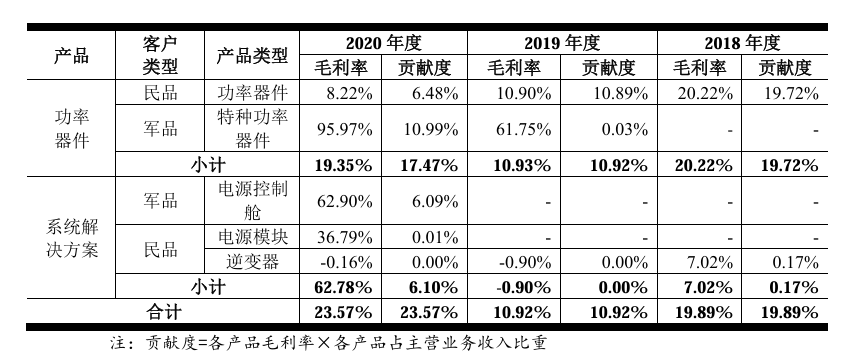
Core Viewpoint - Zhonglian Development Holdings plans to acquire up to 100% of Longteng Semiconductor for a price between HKD 4.5 billion and HKD 9 billion, marking a reverse takeover (RTO) transaction [1][17] Group 1: Acquisition Details - The acquisition is characterized as a reverse takeover, where an unlisted company gains control over a listed company by injecting assets [1][17] - Longteng Semiconductor previously attempted to go public on the STAR Market in June 2021 but withdrew its application in December 2021 after two rounds of inquiries, primarily due to concerns over its small scale and weak financial data [1][17] Group 2: Market Reaction - Prior to the announcement, Zhonglian Development's stock price increased from HKD 2.05 to HKD 2.53, a 23% rise over 14 trading days [1][17] - The market's reaction to the acquisition has been relatively muted, possibly due to concerns regarding Longteng Semiconductor's fundamentals [2][18] Group 3: Longteng Semiconductor's Financial Performance - Longteng Semiconductor's revenue from military products was minimal from 2018 to 2020, but the company shifted focus to military markets due to changes in international trade policies [3][19] - In 2020, the company's gross profit reached HKD 40.69 million, a nearly 300% increase from the previous year, with military clients contributing over 70% of this profit [4][20] - The gross margin for military power devices was significantly higher at 95.97% compared to 8.22% for civilian products in 2020 [4][20] Group 4: Accounts Receivable and Profitability - Longteng Semiconductor's accounts receivable grew to HKD 71.96 million in 2020, a nearly 150% increase year-on-year, indicating longer payment cycles from military clients [7][22] - The company transitioned from a low-profit, fast-turnover model to a high-profit, slow-turnover model, which introduces liquidity risks but also potential for better profit growth [7][22] - The net profit for Longteng Semiconductor improved from a loss of HKD 13.2 million in 2019 to a profit of HKD 24.53 million in 2020, but the company faced significant challenges in subsequent years [8][23] Group 5: Industry Context and Challenges - The military electronics sector entered a downturn after reaching a peak in 2022, with many companies facing declining revenues and profits [8][24] - Longteng Semiconductor reported revenues of HKD 614 million in the first three quarters of 2025, but incurred a net loss of HKD 58.69 million, highlighting ongoing profitability issues despite revenue growth [8][24] - The company’s R&D expenditures were significantly lower than its peers, raising concerns about its competitive position in the market [9][25] Group 6: Future Prospects - Longteng Semiconductor's planned investment in an 8-inch power semiconductor manufacturing project is underway, with the first phase already in production [16][29] - The company faces ongoing pressure from operational costs and depreciation associated with its manufacturing facilities, which could impact profitability [16][29] - The collaboration between Zhonglian Development and Longteng Semiconductor is currently based on a non-binding memorandum of understanding, indicating that the restructuring process is still in its early stages [16][29]
尚鼎芯递表港交所 金联资本为独家保荐人
Zheng Quan Shi Bao Wang· 2025-12-03 00:46
Core Viewpoint - Shangding Semiconductor has submitted a listing application to the Hong Kong Stock Exchange, with Jinhui Capital as the sole sponsor [1] Group 1: Company Overview - Shangding Semiconductor is a fabless power semiconductor supplier focused on the development and supply of customized power device products [1] - The main products include MOSFETs, followed by IGBTs, GaN MOSFETs, and SiC MOSFETs, which are tailored to customer specifications by the company's technical experts [1] Group 2: Product Applications - The products are widely used in power converters and battery management systems, with applications spanning consumer electronics, industrial control, automotive electronics, new energy and storage, and medical devices [1] - Specific products include robotic vacuum cleaners, handheld power tools, drones, various consumer electronic adapters, LED lighting, and outdoor energy storage [1]
IPO折戟3年后,半导体新星“借壳”港股皮革商
2 1 Shi Ji Jing Ji Bao Dao· 2025-11-29 08:44
Core Viewpoint - The recent acquisition announcement by Zhonglian Development Holdings to acquire up to 100% of Longteng Semiconductor for a maximum price of 9 billion HKD highlights the structural trends in the capital market, where traditional companies seek to transform through high-tech acquisitions amid stricter IPO regulations and market volatility [1][2]. Group 1: Zhonglian Development Holdings - Zhonglian Development is facing significant operational challenges, with a reported revenue of 22.25 million HKD for 2024, a 27% decline year-on-year, and a loss of 27.91 million HKD in 2023 [2]. - The company has a negative cash flow of -6.44 million HKD as of the end of 2024, indicating a lack of self-sustaining financial capability [2]. - The acquisition aims for a complete transformation from traditional leather and fashion sectors to the high-growth semiconductor industry, marking a strategic shift for Zhonglian Development [2]. Group 2: Longteng Semiconductor - Longteng Semiconductor, established in 2009, is a leading player in the power semiconductor sector in Shaanxi Province, with products used in high-demand areas like renewable energy and automotive electronics [3]. - The company reported revenue growth from 89.09 million HKD in 2018 to 173 million HKD in 2020, achieving profitability with a net profit of 24.53 million HKD in 2020 [3]. - Despite its technological advancements, Longteng faced challenges in capitalizing on its growth, having withdrawn its IPO application in 2022 after two rounds of inquiries [3][4]. Group 3: Strategic Implications of the Acquisition - The acquisition allows Longteng to bypass complex IPO processes and quickly access capital for expansion and R&D, addressing the pressure from institutional investors seeking exits [4]. - The preliminary valuation range for the transaction is set between 4.5 billion and 9 billion HKD, reflecting the early stage of negotiations and the potential for performance-based adjustments [5]. - Successful completion of the acquisition could significantly alter Zhonglian's financial trajectory, shifting from a negative earnings scenario to aligning with high-growth technology stocks [6]. Group 4: Challenges Ahead - The final valuation will depend on thorough due diligence and the actual financial health of Longteng, which could influence whether the price aligns closer to 4.5 billion or 9 billion HKD [6]. - Zhonglian's long-standing cash flow issues raise concerns about its ability to finance the acquisition without diluting existing shareholders' equity [6]. - The integration of Longteng's technology and management into Zhonglian's operations will be critical for realizing the anticipated synergies and achieving revenue growth [6][7].