支付清算

Search documents
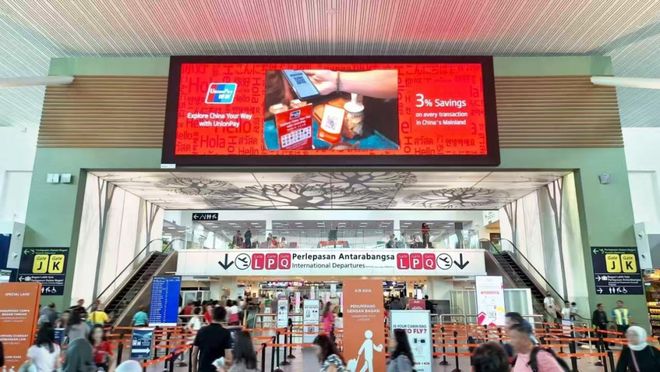
银联升级跨境支付服务,促进中欧双向交流 支付便利化助力跨境畅游
Ren Min Ri Bao· 2025-10-13 22:57
Core Viewpoint - UnionPay International has signed a comprehensive acceptance cooperation agreement with Portugal's national airline, marking a significant expansion of its presence in Europe [1] Group 1: Market Expansion and Partnerships - The agreement with Portugal's national airline is part of UnionPay's strategy to deepen its market presence in Europe, coinciding with the 50th anniversary of diplomatic relations between China and the EU [1] - UnionPay has established a robust payment network in Europe over the past 20 years, with over 90% of countries and regions in Europe now offering UnionPay services [1] - The company has created a multi-faceted payment system that integrates card, code, and mobile payment options, with over 6 million merchants supporting mobile payments through UnionPay [1] Group 2: Consumer Experience and Payment Solutions - The rise of mobile payments has been significant, with UnionPay mobile transactions in Europe doubling since 2025, becoming the mainstream choice for Chinese tourists [1] - UnionPay offers various advantages for cardholders, including favorable exchange rates and cashback offers, enhancing the consumer experience for outbound Chinese tourists [2] - The tax refund process has been optimized, allowing for real-time refunds through the Cloud Flash Payment app at major international airports in Germany, Spain, Portugal, and Italy [2] Group 3: Product Offerings and Global Reach - UnionPay, in collaboration with the Bank of China Frankfurt branch, has launched the "Jinxiu China Card" in Europe, with over one million UnionPay cards issued across 13 European countries [3] - The global acceptance network of UnionPay has expanded to 183 countries and regions, covering over 74 million merchants and issuing more than 200 million UnionPay cards abroad [3]
支付便利化助力跨境畅游
Ren Min Ri Bao· 2025-10-13 22:20
Core Insights - UnionPay International has signed a comprehensive acceptance cooperation agreement with Portugal's national airline, marking a significant expansion in Europe [1] - The year 2025 marks the 50th anniversary of diplomatic relations between China and the EU, highlighting the deepening economic and cultural exchanges [1] - UnionPay's mobile payment services have seen a doubling in transaction volume since 2025, becoming the mainstream choice for Chinese tourists in Europe [1] Group 1 - UnionPay has established a robust payment network in Europe over the past 20 years, with over 90% of countries and regions in Europe now offering UnionPay services [1] - Approximately 80% of merchants' POS terminals in Europe support UnionPay card transactions, with over 6 million merchants accepting mobile payments via UnionPay [1] - UnionPay's services are integrated into various high-frequency consumption scenarios in Europe, enhancing the travel experience for tourists [1] Group 2 - With the resurgence of outbound tourism from China, the importance of a comprehensive payment network has increased, with a projected 30% year-on-year growth in Chinese citizens' outbound spending in 2024 [2] - UnionPay continues to offer advantages such as multiple discounts, favorable exchange rates, and high cashback for cardholders in several European countries [2] - The tax refund process has been optimized, allowing for real-time refunds through the Cloud Flash Payment app at major international airports in Germany, Spain, Portugal, and Italy [2] Group 3 - UnionPay, in collaboration with the Bank of China Frankfurt branch, has launched the "Jinxiu China Card" in Europe, with over one million UnionPay cards issued across 13 European countries [3] - European Economic Area residents can apply for UnionPay virtual and physical cards via mobile apps, facilitating seamless transactions both locally and in China [3] - UnionPay's global acceptance network now spans 183 countries and regions, covering over 74 million merchants and issuing more than 200 million UnionPay cards abroad [3]
书写“养老金融”大文章!中国银联助力银发经济高质量发展
Qi Lu Wan Bao· 2025-10-13 01:38
Core Insights - China UnionPay actively responds to the national strategy of addressing population aging, collaborating with banks, institutions, and merchants to enhance the quality of the "silver economy" and inject new momentum into pension finance [1] Payment Security Assurance - On October 10, the Ministry of Civil Affairs announced the first batch of pension service consumption subsidy funds amounting to 1.16 billion yuan, marking the first nationwide subsidy project for elderly individuals with moderate to severe disabilities [2] - China UnionPay ensures smooth usage of consumption vouchers in elderly care scenarios by establishing a comprehensive risk control system and implementing fee reductions, thereby safeguarding the financial interests of the elderly and alleviating operational pressures on care institutions [2] - Various payment methods, including QR codes, social security cards, bank cards, and facial recognition, are supported, particularly retaining card payments familiar to the elderly, effectively bridging the digital divide [2] Warm-hearted Meal Assistance Program - In the community elderly care sector, meal assistance is a key component of the "six assistance" services, with China UnionPay facilitating the distribution of over 280 million yuan in meal subsidies [3] - In Qingdao, nearly 130,000 elderly individuals benefit daily from the meal assistance system supported by UnionPay, experiencing both nutritional meals and government care [3] - By the end of 2025, UnionPay aims to establish meal assistance points in 36 regions across China, ensuring convenient access to affordable and nutritious dining services for the elderly [3] Improved Service System - The "Vitality Life Card," launched by UnionPay in collaboration with multiple banks, integrates 12 exclusive benefits covering travel, health, and transportation, enhancing the experience for elderly users [4] - Over 80% of tertiary hospitals, more than 2,600 4A5A scenic spots, and 85,000 hotels nationwide support UnionPay card payments, facilitating seamless transactions for elderly individuals [4] - The "Caring Version" of the Cloud Flash Payment APP includes features like voice search and facial recognition prompts, making it easier for elderly users unfamiliar with smartphones to operate [4] - UnionPay is committed to building a comprehensive pension financial system, optimizing the elderly experience from community dining to travel and hospital payments, while continuing to deepen collaboration with government departments and industry partners [4]
国庆中秋假期银联、网联共处理支付交易13.26万亿元
Xin Hua Wang· 2025-10-09 08:51
Core Insights - During the National Day and Mid-Autumn Festival holiday from October 1 to 8, UnionPay and Wanglian processed a total of 41.552 billion payment transactions, an increase of 9.523 billion transactions compared to the same holiday period last year [1] - The total payment transaction amount reached 13.26 trillion yuan, which is an increase of 1.86 trillion yuan compared to the same holiday period last year [1] Transaction Volume - The number of payment transactions processed was 41.552 billion, reflecting a significant year-on-year increase [1] - The increase in transaction volume was 95.23 million transactions compared to the previous year [1] Transaction Value - The total transaction value amounted to 13.26 trillion yuan, indicating a robust growth in payment activity [1] - The increase in transaction value was 1.86 trillion yuan compared to the same holiday period last year [1]
国庆中秋假期银联、网联共处理支付交易金额13.26万亿元
Yang Shi Xin Wen· 2025-10-09 08:34
Core Insights - The People's Bank of China reported that during the 2025 National Day and Mid-Autumn Festival holiday, UnionPay and Wanglian processed a total of 41.552 billion payment transactions, an increase of 9.523 billion transactions compared to the previous year [1] - The total payment transaction amount reached 13.26 trillion yuan, which is an increase of 1.86 trillion yuan from the last year's holiday [1] Transaction Volume - Total payment transactions processed: 41.552 billion [1] - Year-on-year increase in transaction volume: 9.523 billion [1] Transaction Value - Total payment transaction amount: 13.26 trillion yuan [1] - Year-on-year increase in transaction value: 1.86 trillion yuan [1]
【首席观察】CIPS十年一跃:在世界金融坐标中的落点
经济观察报· 2025-10-01 04:30
Core Viewpoint - The development of CIPS represents both the maturity of the RMB cross-border payment technology and a significant leap in the design of financial openness systems [1][19]. Group 1: RMB's Role Transformation - The RMB is transitioning from a wholesale market to a retail market, expanding its role from a settlement tool to a complete currency function [2][4]. - The launch of the cross-border QR code unified gateway signifies a natural extension aimed at enhancing the penetration of RMB in cross-border circulation [4][5]. Group 2: CIPS Development and Expansion - CIPS has seen a nearly eightfold increase in total participants over the past decade, growing from 19 direct participants and 176 indirect participants at its inception to 176 direct and 1,552 indirect participants by August 2025 [8][17]. - The establishment of a RMB clearing bank in Turkey marks a substantial breakthrough for the RMB clearing system in the Eurasian region, enhancing the network's coverage and operational flexibility [7][13]. Group 3: Regulatory Framework and Upgrades - The release of the "RMB Cross-Border Payment System Business Rules (Draft for Comments)" represents a significant institutional upgrade for CIPS, covering all aspects from account management to risk management [10][11]. - The new rules reflect a shift from initial access guidelines to compliance norms, providing a standardized and compliant foundation for the RMB cross-border settlement system [11][14]. Group 4: Financial Infrastructure and Global Integration - CIPS is positioned as a crucial financial infrastructure that aligns with international regulatory standards, facilitating the internationalization of the RMB [14][18]. - The system's capabilities are being enhanced to support a broader range of cross-border transactions, including trade, investment, and personal remittances, thereby solidifying its role as the main channel for RMB payments [10][17].


关注支付安全 双节消费更安心
Xin Hua Wang· 2025-10-01 02:11
Core Points - The article emphasizes the importance of card security during the peak travel and shopping season of the National Day and Mid-Autumn Festival in China [1][2] - China UnionPay has issued safety tips to cardholders to prevent fraud and ensure secure transactions [1][2] Group 1: Security Tips - Cardholders are advised to be cautious of SMS link risks and to avoid disclosing sensitive information such as card numbers and verification codes [1] - Users should be wary of fraudulent apps and verify any requests from individuals claiming to be customer service representatives [1] - It is recommended to monitor for unusual transactions and report any unauthorized activity immediately to the bank [2]
【首席观察】CIPS十年一跃:在世界金融坐标中的落点
Jing Ji Guan Cha Wang· 2025-09-30 06:00
Core Viewpoint - The internationalization of the Renminbi (RMB) is gaining depth and resilience as it transitions from a wholesale currency for large-scale trade to a retail currency for everyday transactions [1] Group 1: RMB Cross-Border Payment System (CIPS) - The CIPS has evolved over ten years, transitioning from a technical launch to a mature institutional framework, facilitating cross-border RMB payments [2][6] - As of August 2025, CIPS has 176 direct participants and 1,552 indirect participants, marking an increase of nearly eight times since its initial launch in 2015 [4][11] - The CIPS system processed RMB cross-border payment transactions amounting to 175 trillion yuan in 2024, a 43% year-on-year increase, highlighting the growing use of RMB in cross-border transactions [12] Group 2: Global Expansion and Institutional Upgrades - The establishment of a RMB clearing bank in Turkey represents a significant breakthrough in the RMB clearing system, enhancing its presence in the Eurasian region [3][8] - The release of the draft rules for the RMB cross-border payment system signifies a major institutional upgrade, providing a standardized and compliant framework for CIPS operations [6][7] - CIPS is now aligned with international standards, aiming to enhance its global network and facilitate the use of RMB in international trade and finance [12][13] Group 3: Strategic Importance and Future Prospects - CIPS is positioned as a key financial infrastructure supporting China's "going out" strategy, facilitating the internationalization of the RMB [11][13] - The system's modular and internationalized design allows for greater flexibility and adaptability in the global financial landscape [7][10] - The ongoing development of CIPS is expected to further enhance its influence and market share in the international payment system [10]
人民币跨境支付系统业务覆盖189个国家和地区
Ren Min Ri Bao· 2025-09-29 21:59
Core Insights - The cross-border payment system for the Renminbi has expanded its coverage to 189 countries and regions, processing 4.0295 million transactions worth 90.19 trillion yuan in the first half of the year, highlighting its role in the internationalization of the Renminbi [1] Group 1 - The People's Bank of China (PBOC) is facilitating payment services for foreign personnel in China by guiding the establishment of a unified cross-border QR code gateway, addressing issues related to multiple connections for "foreign use within China" [1] - The unified gateway, as a cross-border payment infrastructure, adheres to principles of publicness, inclusiveness, and accessibility, allowing eligible market entities to engage in cross-border QR code payment services [1] - As of September 11, the unified gateway has processed 1.981 million transactions amounting to 427 million yuan [1] Group 2 - China UnionPay and the National Internet Finance Association of China are actively promoting interconnection with QR code networks in countries such as Thailand, Vietnam, and Indonesia, enhancing cross-border payment cooperation to benefit both Chinese and foreign citizens [1]
中国银联坚持新“四方模式” 创新探索跨境互联互通合作
2 1 Shi Ji Jing Ji Bao Dao· 2025-09-27 02:31
Core Viewpoint - The launch of the cross-border QR code unified gateway, guided by the People's Bank of China and developed by the China Payment and Clearing Association in collaboration with China UnionPay, aims to streamline cross-border QR code payments by addressing the issue of multiple connections in the industry [1][3]. Group 1: Unified Gateway and Cross-Border Payment Models - The unified gateway features a "one-point connection" interface to resolve previous issues in cross-border QR code payments [1]. - China UnionPay has introduced diverse cross-border connectivity models, including "Government to Government (G2G)" and "Network to Network (N2N)" under the guidance of the People's Bank of China [3]. - The G2G model involves central banks of two countries establishing a framework, with UnionPay acting as the external interface for business connections [3]. Group 2: Implementation and Partnerships - The G2G model has already facilitated projects in Vietnam and Indonesia, with a pilot program for cross-border QR code connectivity between China and Indonesia launched in September [3]. - In the N2N model, UnionPay directly collaborates with overseas QR code network operators, successfully implemented in markets like Malaysia, Singapore, Japan, and South Korea [5]. - In Malaysia, UnionPay partnered with PayNet to enable QR code cross-border payment connectivity, allowing Chinese tourists to use UnionPay apps at 2.5 million merchants [5]. Group 3: Expansion and Ecosystem Development - UnionPay has established partnerships in 19 countries and regions, leading to over 10 million overseas QR code acceptance merchants, with expectations to reach tens of millions by the end of the year [5]. - The company has integrated over 170 overseas QR code payment wallets into its network, covering 30 countries and regions [5]. - UnionPay is collaborating with various industry players to create a new "four-party model" for smoother participation in the cross-border payment ecosystem [7]. Group 4: Infrastructure and Standards - UnionPay's exploration of cross-border payments has evolved from "hard connectivity" to "soft connectivity" focusing on rules and standards [7]. - The company has assisted Laos in building its national payment system using UnionPay standards and technology [7]. - In Thailand, UnionPay has collaborated with other card brands to launch a local QR code payment standard, which is recommended by the central bank to local financial institutions and merchants [8]. Group 5: Future Directions - With the unified gateway now operational, UnionPay plans to continue exploring new cross-border connectivity models and collaborate with more domestic and international partners to enhance payment service interoperability [10].