虚拟资产

Search documents
方向、措施、监管明确,香港数字资产发展 “路线图” 来了 !
第一财经· 2025-06-26 13:12
Core Viewpoint - The Hong Kong government aims to establish the region as a global innovation center for digital assets through the release of the "Hong Kong Digital Asset Development Policy Declaration 2.0," which emphasizes a comprehensive regulatory framework and the expansion of tokenized products [1][13]. Group 1: Regulatory Framework - The new policy declaration introduces a "LEAP" framework focusing on legal and regulatory streamlining, expanding tokenized product categories, advancing use cases and cross-sector collaboration, and talent and partnership development [1]. - The Hong Kong Securities and Futures Commission (SFC) will oversee the licensing of digital asset trading and custody services, with a comprehensive review of existing laws to facilitate the tokenization of real-world assets [2][5]. - The regulatory framework aims to enhance market credibility, support effective risk management, and provide liquidity, thereby fostering a balanced ecosystem for market innovation and investor protection [6][12]. Group 2: Tokenization and Product Expansion - The government has issued tokenized green bonds totaling approximately HKD 6.8 billion, showcasing the benefits of tokenization, and plans to regularize the issuance of tokenized government bonds [10]. - Tax exemptions for tokenized ETFs will be clarified, encouraging market participants to explore the advantages of tokenizing ETFs, including money market ETFs [10]. - The government will promote broader asset and financial instrument tokenization across various sectors, including precious metals and renewable energy [10]. Group 3: Application Scenarios and Talent Development - A licensing mechanism for stablecoin issuers will be implemented on August 1, aimed at fostering practical application scenarios [11]. - The government will enhance collaboration among regulatory bodies, law enforcement, and technology providers to develop digital asset infrastructure [11]. - Initiatives will be taken to cultivate talent in the digital asset sector through partnerships with industry and academia, positioning Hong Kong as a center for knowledge sharing and international cooperation [11].


方向、措施、监管明确,香港数字资产发展 “路线图” 来了 !
Di Yi Cai Jing· 2025-06-26 09:53
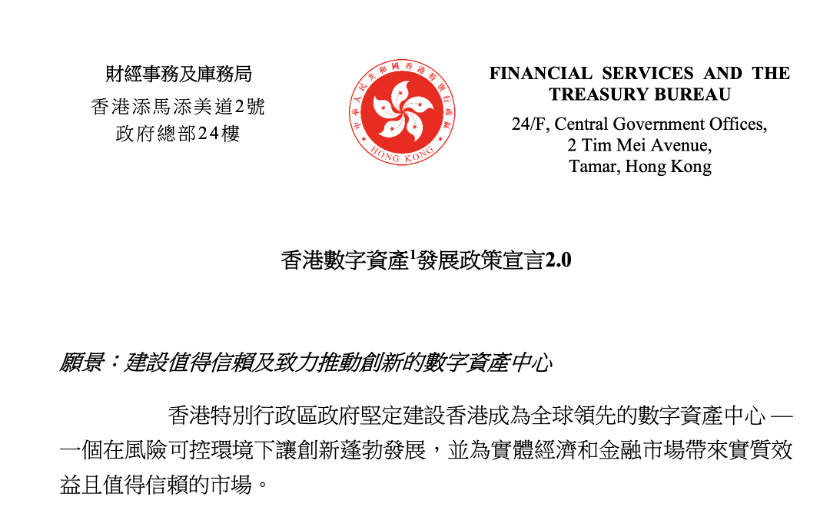
Core Viewpoint - The Hong Kong government aims to establish the region as a global innovation hub for digital assets through the release of the "Hong Kong Digital Asset Development Policy Declaration 2.0" which introduces the "LEAP" framework focusing on legal and regulatory optimization, expanding tokenized product varieties, advancing use cases and cross-sector collaboration, and talent and partnership development [1][10] Group 1: Legal and Regulatory Optimization - The policy declaration outlines a comprehensive regulatory framework for digital asset service providers, including trading platforms, stablecoin issuers, and custodians, with the Hong Kong Securities and Futures Commission (SFC) as the main regulatory body [3][5] - The government will conduct a thorough review of existing laws to facilitate the tokenization of real-world assets and financial instruments, including the issuance and trading of tokenized bonds [3][11] - Hong Kong will continue to implement international standards related to digital assets, aligning with recommendations from various global financial regulatory bodies [3][4] Group 2: Expansion of Tokenized Products - The government has issued tokenized green bonds totaling approximately HKD 6.8 billion, showcasing the benefits of tokenization and plans to regularize the issuance of tokenized government bonds [8] - Tax exemptions for tokenized ETFs will be clarified to encourage market development, with proposals for tax relief expected to take effect in the 2025/2026 tax year [8] - The government aims to promote broader tokenization of assets and financial instruments across various sectors, including precious metals and renewable energy [8] Group 3: Advancing Use Cases and Cross-Sector Collaboration - A licensing mechanism for stablecoin issuers will be implemented on August 1, aimed at fostering practical applications of digital assets [9] - The government will enhance collaboration among regulatory bodies, law enforcement, and technology providers to develop digital asset infrastructure [9] - Initiatives such as the Digital Port's blockchain and digital asset pilot funding program will support projects with significant market impact [9] Group 4: Talent and Partnership Development - The government is committed to collaborating with industry and academia to foster talent development in the digital asset space [9] - Hong Kong aims to position itself as a center for knowledge sharing in digital assets and promote international cooperation through joint research initiatives [9][12]
新财观 | 虚拟资产监管创新与深化:强化稳定币双重角色 香港数字金融生态将步入新阶段
Xin Hua Cai Jing· 2025-06-25 11:47
Group 1 - The global virtual asset market is expected to exceed $3 trillion by 2024, with stablecoins serving as a bridge between traditional finance and the crypto world [1] - Hong Kong's Legislative Council has passed the "Stablecoin Bill," marking a significant step in virtual asset regulation and enhancing Hong Kong's attractiveness in the global Web3.0 and virtual asset competition [1] - Stablecoins play a dual role in the virtual asset market, acting as both a value stabilizer and an ecosystem connector, facilitating DeFi lending and cross-border payments [1] Group 2 - As of April 2025, Hong Kong has 10 licensed virtual asset trading platforms, with HashKey being the largest, managing assets worth HKD 10 billion and facilitating over HKD 600 billion in trading volume [2] - The Hong Kong Monetary Authority is actively promoting fintech platform development through sandbox initiatives, with the Ensemble project focusing on wholesale wCBDC based on blockchain technology [2] Group 3 - The first three issuers in the stablecoin sandbox include JD Coin Chain Technology, Yuan Coin Innovation Technology, and a joint application from Standard Chartered Bank, ANZ Group, and Hong Kong Telecom, all planning to launch HKD-pegged stablecoins [3] - JD stablecoin (JD-HKD) is in the second phase of sandbox testing, targeting retail and institutional applications for cross-border payments and investment transactions [3] Group 4 - Hong Kong's regulatory framework for stablecoins allows for multi-currency pegging, aligning with its status as an international financial center and facilitating the internationalization of the Renminbi [4] - Compared to the EU's MiCA, Hong Kong's principle-based regulatory approach is more flexible, focusing on risk characteristics and allowing for greater technological innovation [5] Group 5 - The credibility and safety of stablecoins are essential for market acceptance, with credit rating agencies potentially playing a role in assessing licensed stablecoin issuers [5] - Establishing globally recognized stablecoin rating standards can enhance market transparency and investor confidence [5]
专家访谈汇总:香港《稳定币条例》将于8月1日生效
阿尔法工场研究院· 2025-06-24 08:35
Group 1: Stablecoin Regulation in Hong Kong - The Hong Kong Stablecoin Regulation will take effect on August 1, 2025, marking a significant step in the virtual asset regulatory framework [3] - The regulation sets high entry barriers, requiring issuers to meet regulatory standards similar to banks and e-wallets, including asset reserves and anti-money laundering measures [3] - Investors should focus on local licensed virtual asset platforms and fintech companies with strong regulatory compliance experience, such as OSL and HashKey, which may be among the first to receive approval [3] - The Hong Kong Monetary Authority emphasizes that stablecoin issuers without clear application scenarios will struggle to gain market traction and approval, indicating a shift towards stablecoins as practical financial tools rather than mere investment vehicles [3] - Companies with existing operations in B2B cross-border payments, corporate settlements, and digital trade, like Airwallex and PingPong, are likely to have higher chances of integrating stablecoins into real-world applications [3] Group 2: Coinbase and USDC Market Dynamics - Coinbase's trading commission rate has decreased from 2.5% to 1.4%, primarily due to competition from decentralized exchanges and low-cost channels [2] - Despite short-term volatility recovery, the trading business has lost its "compliance moat" advantage, making future profitability highly dependent on lower fees, higher trading volumes, or innovative products [2] - USDC's market share remains significantly lower than USDT, with approximately 75% market share for USDT, and the compliance benefits of USDC are weakened by partnerships with Tether [4] - USDC is a cash cow but not a growth driver, and Coinbase is not a direct substitute for Circle, indicating that USDC's popularity does not directly translate into Coinbase's valuation logic [4] Group 3: Global Regulatory Trends and Implications for China - Multiple securities firms, including CICC and CITIC, have released reports focusing on the impact of stablecoins on the international monetary system, financial regulation, and cross-border payment ecosystems [5] - Hong Kong is expected to become a testing ground for the RMB stablecoin, with a recommendation to focus on licensed virtual asset platforms and cross-border e-commerce/payment service providers [5] - As regulations become clearer, stablecoins are anticipated to transition from trading tools to mainstream payment methods, facilitating the mapping of Real World Assets (RWA) and B2B settlement scenarios [5] Group 4: Oil Market Dynamics and Investment Opportunities - The Middle East situation has escalated, with increased military tensions between the US and Iran, raising concerns about oil supply risks and providing dual support for oil prices [6] - It is recommended to consider gold investments after adjustments, focusing on leading companies with strong cost control like Zhongjin Gold and Shandong Gold, while also looking at upstream oil and gas resources like CNOOC [6] - The rare earth sector is benefiting from stricter export policies and high demand in the new energy industry, suggesting opportunities in companies with resource control like Northern Rare Earth [6] - The US active drilling rig count has declined for three consecutive weeks, indicating a cautious sentiment in the oil market as companies reduce capital expenditures amid price volatility [6] - Despite the overall high US crude oil production, the decline in completion crews suggests a slowdown in short-term new capacity release, which may provide price support [6]
海外2025中期策略:稳定币跑步入场,虚拟资产趋势已成
SINOLINK SECURITIES· 2025-06-23 05:24
Group 1: Virtual Assets and Stablecoins - The trend of virtual assets is continuously improving due to the enhancement of regulatory frameworks and increased institutional participation, with expectations of liquidity easing [2][18][25] - The global stablecoin market is projected to grow significantly, from approximately $5 billion in 2020 to around $200 billion by the end of 2024, indicating a clear expansion path for trading scenarios [25][26] - Various regions are implementing stablecoin policies, such as the U.S. passing the "Genius Act" and Hong Kong enacting the "Stablecoin Ordinance," which will take effect on August 1, 2025 [25][29] Group 2: Streaming Platforms - Music streaming platforms are identified as high-quality internet assets driven by domestic demand, with continuous scale effects driving profit leverage [2] - The market for music subscriptions is expected to grow, with major players like Spotify and Tencent Music holding significant market shares [33] Group 3: O2O Service Platforms - The trend of strong players becoming stronger is evident, with major platforms like Beike and Tuhu expected to increase market share amid a shrinking real estate and automotive aftermarket demand [2][39] - The used housing transaction volume in key cities showed a month-on-month decline, indicating a buyer's market, which may benefit established platforms [39] Group 4: Coffee, Tea, and E-commerce Delivery Platforms - The online retail sales of physical goods grew by 6.3% year-on-year from January to May 2025, indicating a competitive landscape where marketing expenses are rising [2][56] - The coffee and tea segment is highlighted as a key beneficiary in the delivery battle, with significant growth in order volumes and city coverage [68][75] Group 5: K12 Education and Training - The K12 education sector is experiencing a resurgence in non-subject training demand, with a significant reduction in subject-based training institutions, leading to a scarcity of quality compliant products [2][86] - Major players in the K12 sector, such as New Oriental and TAL Education, are showing strong performance with revenue growth exceeding 20% year-on-year [91]


传媒互联网产业行业周报:法律框架逐步完善,虚拟资产趋势向上-20250622
SINOLINK SECURITIES· 2025-06-22 12:00
Investment Rating - The report maintains an optimistic outlook on the Hong Kong stock market and virtual assets, indicating a positive investment rating for these sectors [3][10]. Core Insights - The report highlights the gradual improvement of legal frameworks for virtual assets, suggesting an upward trend in this sector. It emphasizes the strong performance of the Hong Kong stock market, driven by the long-term undervaluation of assets and the influx of quality mainland assets through IPOs [3][10]. - The report also notes the increasing interest from traditional internet and financial institutions in virtual assets and stablecoins, indicating a broader acceptance and potential for growth in this area [3][10]. Industry Summaries 1. Education - The Chinese education index fell by 2.66% from June 16 to June 20, underperforming compared to major indices. Notable performances included 51talk, which rose by 8.06% [12][22]. - Companies like TAL Education and others are launching AI-driven educational products, indicating a shift towards technology in education [21][25]. 2. Luxury Goods - The luxury goods market is experiencing a slowdown, with a projected decline of 1-3% in Q1 2025. The core markets of the US and China are stagnating, while emerging markets show potential growth [22][26]. - Notable stock performances included Samsonite, which fell by 2.41%, while Prada rose by 1.71% during the same period [22][26]. 3. Coffee and Tea - The coffee sector remains robust, with net increases in store numbers and positive same-store growth for leading brands. However, the tea segment is facing challenges, with a decline in same-store growth and a net decrease in store numbers [27][30]. - Luckin Coffee continues to expand, with significant new store openings and international growth plans [30]. 4. E-commerce - The e-commerce sector is under pressure, with a slight decline in the Hang Seng Internet Technology Index. However, platforms like Tmall and JD.com reported strong sales during the 618 shopping festival, with Tmall's GMV growing by 10% [31][35]. - JD.com is also expanding into the travel sector, offering zero-commission hotel bookings [35][36]. 5. Streaming Platforms - The streaming sector is showing resilience, with the Hang Seng Media Index outperforming other indices. Key players like Netflix and Tencent Music have shown positive growth [38][40]. - The report highlights the success of specific content on platforms like iQIYI, indicating strong viewer engagement [38]. 6. Virtual Assets and Trading Platforms - The global cryptocurrency market capitalization decreased by 7.2%, with Bitcoin and Ethereum prices also declining. However, the report remains optimistic about the long-term potential of virtual assets [39][42]. - Regulatory developments, such as the passage of the Genius Act in the US, are expected to enhance the framework for stablecoins and virtual assets [3][10]. 7. Automotive Services - The automotive aftermarket is facing challenges, with various companies adjusting strategies to attract customers. Notable price adjustments in the tire industry are also highlighted [30][48].
大华国际交易咨询服务部董事总经理马志坚:香港对虚拟资产投资的包容性强,吸引更多高净值人士移民
Mei Ri Jing Ji Xin Wen· 2025-06-19 10:42
Core Viewpoint - Hong Kong's inclusion of virtual assets in its investment immigration program is attracting high-net-worth individuals, positioning the city as a favorable destination compared to other regions like Singapore [1] Group 1: Virtual Asset Policy - Hong Kong's virtual asset policy is more inclusive compared to Singapore, which has not clearly recognized virtual assets for investment immigration [5][6] - The unique advantages of virtual assets include ease of asset evaluation and transparency, allowing for quick estimation based on market prices without extensive research [5] Group 2: Investment Immigration Requirements - The investment immigration framework in Hong Kong allows for daily asset valuation, requiring a minimum of HKD 30 million to be maintained over the past six months, accommodating fluctuations in asset value [7] - Hong Kong's investment immigration policy is clearer and more lenient than Singapore's, which has stricter anti-money laundering and anti-terrorism financing regulations [6][9] Group 3: Compliance and Verification - The verification process for converting on-chain assets into compliant exchange certificates is streamlined in Hong Kong, contrasting with Singapore's rigorous initial scrutiny of fund sources [9] - The focus of compliance checks in Hong Kong occurs during the investment phase, rather than at the application stage, simplifying the process for applicants [9]

币圈归来?香港稳定币激活跨境支付,内地资产赴港RWA潮起
经济观察报· 2025-06-18 08:54
Core Viewpoint - The article discusses the growing interest and feasibility of issuing Real World Assets (RWA) in Hong Kong using stablecoins, particularly in the context of recent regulatory developments in Hong Kong that support this initiative [1][13][14]. Group 1: RWA and Stablecoins - RWA refers to the tokenization of real-world asset income rights on blockchain networks for fundraising, trading, and asset circulation [5]. - The recent passing of the Stablecoin Ordinance in Hong Kong is expected to accelerate the development of RWA, providing a compliant pathway and enhancing infrastructure for RWA transactions [13][14]. - Many domestic WEB3 development institutions are exploring the operation of mainland assets being tokenized and issued as RWA in Hong Kong, with some already identifying operational pathways [8][16]. Group 2: Cross-Border Payment Applications - The application of stablecoins in cross-border payments is gaining attention, with significant advantages in transaction speed and cost compared to traditional banking methods [10][20]. - Stablecoins can facilitate T+0 settlement for cross-border payments, significantly reducing the time required for transactions [10]. - The integration of stablecoins into cross-border payment systems is seen as a way to enhance user trust and expand the reach of payment platforms [11][21]. Group 3: Challenges and Compliance - Despite the potential, there are significant challenges related to compliance, particularly concerning anti-money laundering (AML) and Know Your Customer (KYC) regulations [9][22]. - The successful implementation of stablecoins in cross-border payments will depend on the ability to meet regulatory requirements while ensuring efficient operations [23]. - The need for a robust compliance framework is critical for the widespread adoption of stablecoins in the financial ecosystem [22][23].

香港第二份数字资产宣言将至,概念股应声狂欢
Jin Rong Jie· 2025-06-16 06:19
6月16日,香港稳定币概念股再度迎来狂欢,板块个股全线上涨。截至发稿,连连数字(02598.HK)涨近 15%,联易融科技(09959.HK)和众安在线(06060.HK)涨幅均超12%,其他多股也纷纷跟涨。 稳定币概念股集体飙升的背后,是香港即将释放的又一波数字资产政策红利! 6月15日,香港特区财政司司长陈茂波发表标题是提速前进 扬帆稳航;的随笔。他表示,香港在数字金 融、绿色金融及离岸人民币市场方面有长足发展,带动了金融机构相关的业务。例如,去年本地银行数 字资产和相关产品交易总额达172亿港元;去年底,在银行托管的数字资产总额达51亿港元。 陈茂波进一步表示,因应最新的发展和形势变化,我们即将就数字资产的发展发表第二份政策宣言,阐 述下一步的政策愿景和方向,一系列具体的措施包括让传统金融服务的优势与数字资产领域的技术创新 有更好的结合、提高数字资产在实体经济活动的安全性和灵活性,以及鼓励本地和国际企业探索数字资 产技术的创新及应用。; 香港财经事务及库务局局长许正宇近日也表示,香港积极发展虚拟资产生态圈,政府即将发布第二份虚 拟资产政策宣言,探索传统金融与虚拟资产的融合,并将于年內就场外交易及托管服务 ...

香港证监会核准无纸证券市场收费限额;优乐赛二次递表港交所丨港交所早参
Mei Ri Jing Ji Xin Wen· 2025-06-15 23:12
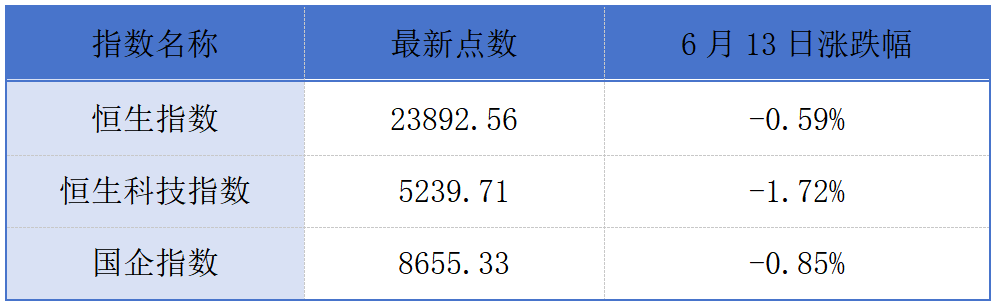
Group 1: Regulatory Developments - The Hong Kong Securities and Futures Commission (SFC) is actively building a virtual asset ecosystem that is compliant, risk-controlled, and sustainable, aiming to seize new opportunities for investors [1] - The SFC supports the listing of virtual asset spot ETFs and is promoting the application of blockchain technology for the tokenization of securities [1] - The approval of fee limits for securities registration institutions in the paperless securities market is seen as a significant milestone, establishing a fair and transparent fee structure that protects minority shareholders [4] Group 2: Company Listings - Suzhou Youlesai Shared Service Co., Ltd. has submitted its second listing application to the Hong Kong Stock Exchange, indicating its determination to pursue capital market opportunities [2] - Youlesai's projected revenues for 2022, 2023, and 2024 are approximately 648 million, 794 million, and 838 million yuan, with net profits of about 31 million, 64 million, and 51 million yuan respectively [2] - Jinye International has submitted its initial prospectus to the Hong Kong Stock Exchange, with projected revenues of approximately 123 million and 155 million HKD for the fiscal years 2023/24 and 2024/25 [3] - The revenue growth of Jinye International over the next two fiscal years indicates a solid market position and good prospects in Hong Kong, which may attract investor interest [3] Group 3: Market Performance - The Hang Seng Index closed at 23892.56, down 0.59% on June 13 [5] - The Hang Seng Tech Index and the National Enterprises Index also experienced declines of 1.72% and 0.85% respectively [5]