电信运营

Search documents
工信部部长:加快5G工厂建设,加强6G与工业融合的前瞻研究
Guan Cha Zhe Wang· 2025-11-22 09:58
Core Insights - The 2025 China 5G + Industrial Internet Conference opened in Wuhan, emphasizing the integration of the digital economy and the real economy as a key direction for industrial internet development [1][2][4] Group 1: Government Initiatives - The Ministry of Industry and Information Technology (MIIT) aims to promote high-quality development of the industrial internet, focusing on intelligent, green, and integrated approaches [2] - MIIT plans to implement actions that integrate industrial internet with artificial intelligence, optimize the industrial internet architecture, and enhance the "platform + intelligent body" services [2] - The conference highlighted the importance of new infrastructure, including the deployment of networks, platforms, and data security systems, to support industrial internet growth [2] Group 2: Regional Development - Hubei province is positioning itself as a leader in high-quality development driven by digital and intelligent technologies, with a focus on building a modern industrial system [4] - The province aims to accelerate the deployment of 5G-A and the research and validation of 6G technologies, establishing itself as a national demonstration zone for industrial internet innovation [4] - Hubei's strategy includes enhancing traditional industries through digital transformation and fostering emerging industries like quantum technology and brain-computer interfaces [4] Group 3: Conference Activities - The conference featured a showcase of "5G + Industrial Internet Innovation Achievements" and included keynote speeches from leaders of major telecommunications companies and banks [6] - MIIT launched a commercial trial for satellite IoT services, aimed at enriching the satellite communication market and supporting emerging industries [6] - Collaborative agreements were signed between Hubei government and major telecom companies, as well as a memorandum for regional cooperation among Jiangxi, Hubei, and Hunan provinces [6]


2025中国5G+工业互联网大会在武汉开幕
Xin Lang Cai Jing· 2025-11-22 05:41
Core Viewpoint - The 2025 China 5G + Industrial Internet Conference was inaugurated in Wuhan, marking a significant step in the development of satellite IoT business trials, which will enhance the satellite communication market supply and support the growth of emerging industries such as commercial aerospace and low-altitude economy [1] Group 1 - The Ministry of Industry and Information Technology officially launched commercial trials for satellite IoT services during the conference [1] - The commercial trials aim to enrich the supply in the satellite communication market and support the safe and healthy development of new industries [1] - A cooperation memorandum was signed between the Hubei Provincial Government and major telecom companies including China Telecom, China Unicom, China Mobile, China Information Communication Technologies, and China Tower [1] Group 2 - The industrial and information technology departments of Jiangxi, Hubei, and Hunan provinces signed a memorandum for collaborative development of the industrial internet in the Yangtze River Middle Reaches urban agglomeration [1]




新华网:2025移动通信高质量发展论坛武汉举办 5G-A深耕与6G布局共绘产业新蓝图
Xin Hua Wang· 2025-11-22 04:00
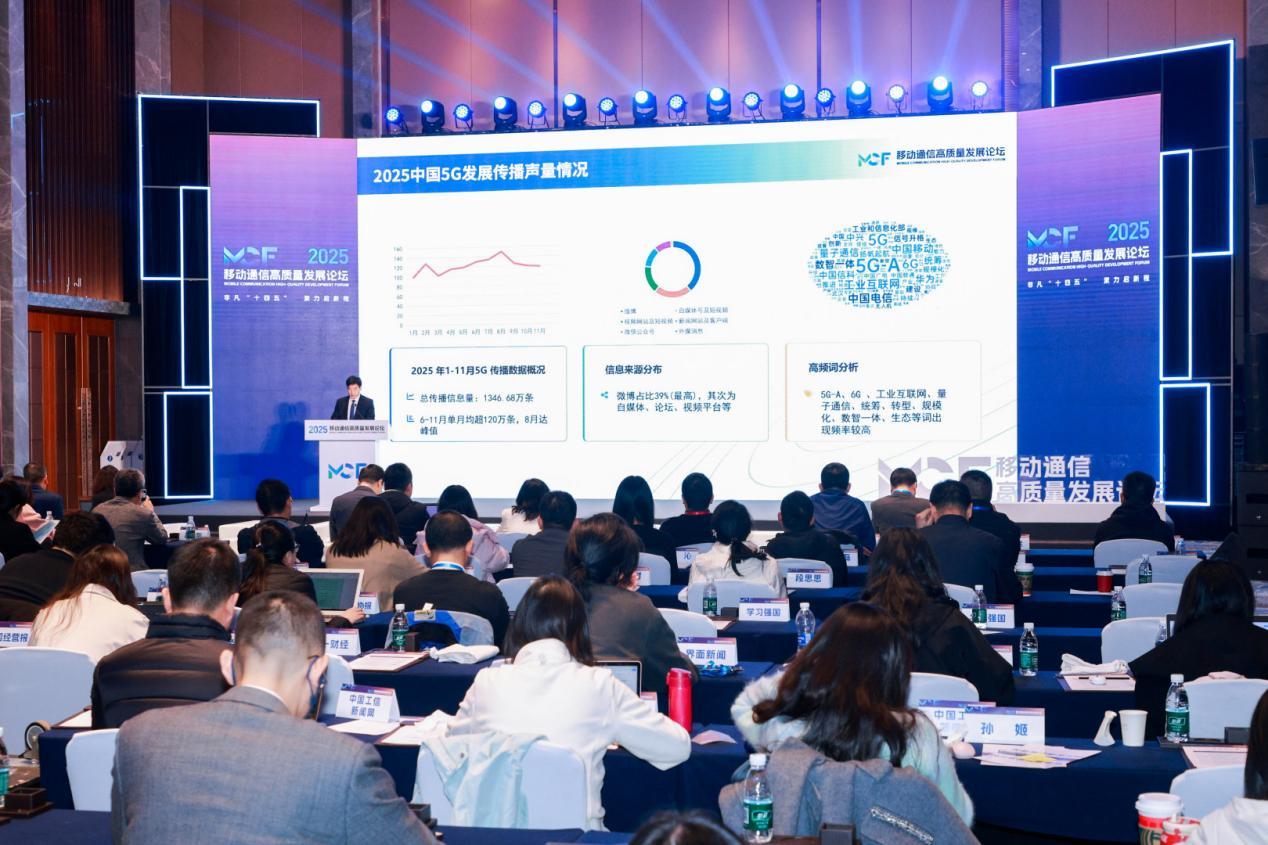
Core Insights - The 2025 Mobile Communication High-Quality Development Forum was held in Wuhan, focusing on 5G applications, 5G-A technology breakthroughs, 6G planning, and integrated network construction [2] - The forum highlighted the transition of China's 5G industry from "technology leadership" to "value empowerment" [2] Group 1: Technological Advancements - 5G-A and 6G are key focal points, with major telecom operators showcasing their technological innovations and breakthroughs [3] - China Mobile is advancing a "hexagonal" technology framework for 6G, focusing on ten innovation areas, including high-performance networks and integrated sensing [3] - China Telecom is conducting outdoor trials for millimeter-wave sensing and has established over 300 low-altitude sensing stations across 18 provinces [4] - China Unicom has achieved full commercial use of 5G-A, with download speeds reaching 5Gbps outdoors and 5.7Gbps indoors [4] Group 2: Industry Applications - 5G applications are now in a phase of large-scale deployment, significantly driving the digital transformation of various industries [6] - China Mobile has integrated 5G into industrial production, while China Unicom has served over 20,000 industry-specific clients with more than 50,000 large-scale application projects [6] - China Telecom's low-altitude economy and satellite internet initiatives are emerging as new growth areas, with direct satellite services covering 25 million mobile devices [6] Group 3: Communication and Public Perception - The "2025 China 5G Development Communication Power Analysis" report indicates a shift in public perception from technical parameters to actual value [8] - From January to November 2025, there were 13.47 million online news reports related to 5G development, with a peak in August [8] - Key provinces leading in 5G communication include Beijing, Shanghai, and Guangdong, with major telecom companies acting as core communicators of 5G value [8] Group 4: Emerging Trends - Five major trends in communication were identified, including the mainstreaming of application results and the economic and social value of large-scale deployments [9] - The integration of 5G with AI is creating a new paradigm for intelligent communication networks [9] - The forum emphasized the importance of collaboration among telecom operators and industry players to build a synergistic ecosystem for innovation and value creation [9]

积极布局6G技术演进,多家运营商明确发展思路
Di Yi Cai Jing· 2025-11-22 02:07
专家预计,6G将催生一个十万亿级别的庞大产业。 面向"十五五",网络强国是现代化产业体系的重要一环,第六代移动通信(6G)等未来产业将成为新的增长点。 21日在武汉举办的2025移动通信高质量发展论坛上,6G成为业内讨论的焦点话题。 中国移动研究院院长黄宇红表示,"十五五"是5G-A发展以及6G走向成功的关键五年,要把6G从实验室技术构想推进到商用,有三大关键点,包括要确保6G 成为新基建的核心基座;实现多要素融合发展,即通信、感知、计算与AI的深度融合;全方位赋能商业发展、实现商业可闭环。 黄宇红透露,下一步中国移动将在技术、标准、产业、应用四方面全面发力,以需求和场景为导向,一体贯通5G-A与6G的发展,引领万物智联新时代发展 方向。 6G是以"全域覆盖、通感一体、内生智能"为核心特征,在连接性能和多要素融合方面提出了更高要求。在6G创新研究方面,中国电信创新提出"6G全域智惠 网络"技术体系,牵头3GPP首个6G计费标准立项以及6G网络架构、通智融合、通感融合等多个关键领域国家项目,围绕语义通信、天地一体、通感一体、 智能超表面等方向率先完成了一系列业界试验,协同产业链完成技术体制突破,加速6G产业化进 ...

非法经营罪的辩护突围:类型化梳理与精细化辩护路径
Sou Hu Cai Jing· 2025-11-22 00:53
Core Viewpoint - The evolution of the crime of illegal business operations reflects the complexity of economic and social development, transforming from a specific economic regulatory tool into a "catch-all" crime in market economic activities, posing unprecedented challenges for criminal defense [1]. Summary by Sections Legislative Evolution and Normative Structure - The regulatory framework of illegal business operations has evolved from specific to abstract, initially defined in 1997 with three specific scenarios, including unauthorized operation of exclusive goods and serious disruption of market order. This design reflected a clear delineation of economic regulation at that time [2]. - The scope of application has expanded through amendments and judicial interpretations, now encompassing over ten specific types, including illegal payment settlement and telecommunications operations, alongside a catch-all clause for "other serious disruptions to market order" [2]. - The crime's constitutive elements include three key factors: violation of national regulations, engagement in illegal business activities, and severity of circumstances, providing multiple layers of operational space for defense [2]. Typological Analysis: Main Behavior Patterns and Defense Points 1. **Unauthorized Operation of Specific Business Types** - Cases involve sectors like finance and telecommunications, with defense focusing on the scope and validity of administrative licenses. For instance, in illegal payment settlement cases, it is crucial to distinguish between mere fund transfers and professional payment services [3]. - In the publishing sector, the defense should differentiate between content legality and procedural legality, arguing that minor procedural flaws do not warrant criminal penalties [3]. 2. **Use of Prohibited Business Methods** - This category includes behaviors like cashing out via POS machines and pyramid schemes. The defense should accurately determine the nature of the actions and assess the social harm of the methods used [4]. - In credit card cash-out cases, distinguishing between legitimate promotions and illegal cash-outs is essential, while in pyramid scheme cases, the focus should be on the legitimacy of the profit sources [4]. 3. **Application of Other Catch-All Clauses** - For cases invoking the catch-all clause, a cautious approach is necessary, emphasizing the need to assess whether the actions reach a level of social harm comparable to explicitly defined types [5]. Multi-layered Defense Strategies 1. **Legality Level Defense** - Defense should scrutinize the "national regulations" cited in accusations, as only laws and administrative regulations can serve as bases for criminal liability, excluding departmental or local regulations [6]. - It is vital to check if the national regulations explicitly set criminal liability; if only administrative responsibility is mentioned, the principle of "no crime without a clear law" should be invoked [6]. 2. **Business Behavior Level Defense** - The core issue is distinguishing between "unlicensed operation" and "exceeding operational scope," requiring a review of business licenses and administrative permits [7]. - For technical service cases, the defense should argue the legitimate uses of the technology provided, demonstrating that the individual did not specifically support illegal activities [7]. 3. **Subjective Intent Level Defense** - The recognition of subjective intent is crucial, with defense focusing on the individual's professional background and understanding of the legality of their actions [8]. - In cases of joint crime, it is important to differentiate the subjective awareness of each participant, particularly those providing ancillary services [8]. 4. **Circumstantial Recognition Level Defense** - The determination of severity directly impacts the distinction between crime and non-crime, necessitating a detailed examination of quantitative indicators like business revenue and illegal gains [9]. - The defense should also evaluate the social harm of the actions, especially in emerging industries, to argue that exploratory mistakes in business development should not be criminalized [9]. Evidence Examination: Key Strategies - Evidence examination is a critical defense stage, focusing on the completeness of financial materials and the appropriateness of auditing methods [10]. - For electronic evidence, the legality of its extraction and the integrity of the data chain must be scrutinized, as it often plays a key role in determining business models and amounts [10]. - The analysis of testimonial evidence should identify contradictions and doubts to construct a favorable narrative for the defendant [10]. Policy Understanding: Application of Criminal Policy in Defense - Understanding the impact of criminal policy on the application of illegal business operations is essential, particularly in cases involving private enterprises [11]. - The defense should leverage policies encouraging innovation to argue for caution in criminal intervention, presenting industry analysis and expert opinions to highlight the unique nature of the business [11]. - Attention should be paid to established judicial practices and precedents that can support the defense's arguments, especially in contentious areas like the application of catch-all clauses [11]. Conclusion: Balancing Order and Innovation - The defense of illegal business operations fundamentally seeks to balance the maintenance of economic order with the development of market innovation, requiring a deep understanding of social and economic trends [17]. - Successful defense strategies must adhere to the principle of legality while limiting the expansion of catch-all clauses, ensuring that criminal prosecutions do not become overly broad [17]. - Through a typological analysis and refined defense strategies, each case can find the most suitable defense path, achieving a balance between individual justice and legal integrity [17].

Ookla:越南移动网速升至东盟第三
Shang Wu Bu Wang Zhan· 2025-11-21 15:21
越南互联网中心最新数据显示,越南5G网络平均下载速度447.03 Mb/s,上传速度99.26 Mb/s,平均 延迟仅0.024秒。越南5G网络在下载速度、上传速度和延迟方面创下新纪录,标志着国内运营商在提升 5G网络质量和稳定性方面取得积极进展。 越南移动网络速度的改善得益于电信基础设施发展政策和运营商的持续投入。以越南军队电信工业 集团(Viettel)为例,截至目前,该企业已完成全国34个省市共7000个5G基站的部署。Viettel计划2025 年底前建成超过20000个5G基站,力求到2030年其5G网络覆盖99%人口。 (原标题:Ookla:越南移动网速升至东盟第三) 越通社11月19日报道,美国网速测试公司Ookla发布的最新报告显示,越南移动网速东盟排名已从 第四位升至第三。具体而言,新加坡移动网速约为163.29 Mbps,马来西亚163.00 Mbps,越南146.64 Mbps,泰国、印尼、菲律宾等国移动网速均低于越南。 ...
人事丨中国移动50余个关键岗位调整,正加速驶向AI时代
Sou Hu Cai Jing· 2025-11-21 13:30
Core Insights - China Mobile has undergone a significant leadership restructuring, affecting over 50 key positions, including the chairman and provincial company executives, highlighting a strategic focus on technological innovation and digital transformation [2][3] - The appointment of Chen Zhongyue as the new chairman marks the end of an era under former chairman Yang Jie, who led the company through a period of rapid expansion and innovation [2][4] Leadership Changes - The restructuring includes the promotion of technology-oriented executives, emphasizing the company's commitment to enhancing its capabilities in AI and digital services [2][3] - Key appointments include Chen Huai Da as vice president and party committee member, and Zhu Han Wu as vice president of China Unicom, indicating a shift towards a more technology-driven management team [3] Financial Performance - As of the first three quarters of 2025, China Mobile reported revenues nearing 800 billion yuan and a net profit of 115.4 billion yuan, leading among the three major telecom operators [4] - However, the company's non-recurring net profit growth of 6.6% lags behind China Unicom's 10.9%, signaling potential challenges in sustaining growth in a saturated market [4] Strategic Direction - China Mobile is planning a major organizational reform across its 25 subsidiaries, focusing on strategic restructuring, market separation, and the establishment of a centralized digital intelligence department [4][5] - The company aims to streamline its subsidiaries to fewer than 10 core enterprises, indicating a shift towards a more efficient operational model [5] Future Initiatives - By 2028, China Mobile plans to double its investment in AI and digital infrastructure, aiming to build the largest and most technologically advanced intelligent computing facilities in China [5] - The introduction of the new international brand CMobile reflects the company's global strategy, emphasizing customer cooperation, creation, and connection [5]
全国通信“账单”出炉,这些数据出乎意料
3 6 Ke· 2025-11-21 10:53
Core Insights - The Ministry of Industry and Information Technology released the "2024 Annual Statistical Data of the Telecommunications Industry," providing a comprehensive overview of the development status of China's telecommunications industry across various dimensions such as telecom users, service usage, communication capacity construction, and service levels [1] Mobile Communication - As of the end of 2024, the total number of mobile phone users in China reached 1.79 billion, with a penetration rate of 127.1 mobile phones per 100 people, indicating a highly saturated mobile communication market [2] - Among the 1.79 billion mobile users, 1.01 billion are 5G users, while 670 million are 4G users, leaving 110 million users still on 2G/3G networks [2] - The net increase in 5G users in 2024 was 192 million, significantly lower than the previous year's increase of 256 million, while 4G users decreased by 113 million, also less than the prior year's decline of 164 million [2] Provincial Insights - Shanghai has the highest mobile phone penetration rate at 193.7 per 100 people, followed by Beijing (189.9) and Zhejiang (144.5), while Tibet has the lowest at 95.5 per 100 people [3] - The average national proportion of 5G users is 56.7%, with 14 provinces above this average, including Ningxia (63.6%), Hainan (62.1%), Qinghai (61.9%), and Tibet (60.5%); Shanghai has the lowest proportion at 47.8% [3] Fixed Broadband - The household internet broadband access penetration rate in China reached 115.9%, indicating saturation in the market [5] - The trend of "100M users decreasing while 1000M users increasing" has slowed down, with a net decrease of 9.22 million users in the 100M to 1000M category in 2024, and a net increase of 43.55 million users in the 1000M category, which is only 60% of the previous year's growth [5] - Guangdong, Jiangsu, Shandong, Henan, and Sichuan lead in the number of gigabit users, while Guizhou has the highest proportion of gigabit users in its overall user base, exceeding 40% [6] Internet TV and Fixed Line - Internet TV user growth shows significant regional differences, with eastern regions experiencing a decline while central and western regions continue to grow [8] - Fixed-line telephone users remain at 166.7 million, with Qinghai and Tibet having the highest penetration rates at 27.2 and 26.3 per 100 people, respectively [8] Business Usage - In 2024, the national mobile internet access traffic grew by 11.6%, with the northeastern region showing the highest growth at 19.1% [10] - Beijing leads in SMS business volume with 281.3 billion messages sent, followed by Guangdong (227.9 billion) and Henan (134.8 billion) [13] Infrastructure Development - As of the end of 2024, China had 12.645 million mobile phone base stations, with 7.112 million being 4G and 4.251 million being 5G [15] - The net increase in 4G and 5G base stations in 2024 was nearly equal, with 817,000 4G stations and 874,000 5G stations added [15]

中国移动咪咕社区化升级落地 “十百千亿”计划赋能体育生态协同发展
Zheng Quan Shi Bao Wang· 2025-11-21 10:09
Core Viewpoint - The Chinese government has issued a policy document aimed at enhancing the integration of the sports industry with the digital economy, which presents significant opportunities for companies like China Mobile's Migu to develop a digital sports content ecosystem [1][3]. Group 1: Policy and Industry Trends - The "31 Document" encourages the deep integration of the sports industry with the digital economy and the establishment of digital sports service platforms [1]. - The trend towards community-based digital sports content ecosystems is seen as a response to policy directives and a way to expand the potential of the sports industry [1][3]. Group 2: Migu's Initiatives - Migu has launched a new community system called "Migu Number" to connect creators, organizations, and clubs, shifting from pure traffic operations to fostering user engagement and identity [1]. - Migu's "Ten-Hundred-Thousand-Billion" plan aims to create a new digital sports ecosystem by leveraging a large consumer base, substantial resources, and traffic, focusing on nurturing sports content creators [3]. Group 3: Industry Collaborations and Expectations - Industry leaders express optimism about Migu's rich content offerings and its potential for innovation in sports IP, which could enhance fan engagement and content monetization [2]. - The upgrade of Migu's platform is viewed as a win-win for various stakeholders in the sports industry, enhancing content diversity and user engagement [2].
新质生产力系列之十:5G-A全民看全运,粤近粤精彩
Huan Qiu Wang· 2025-11-21 09:56
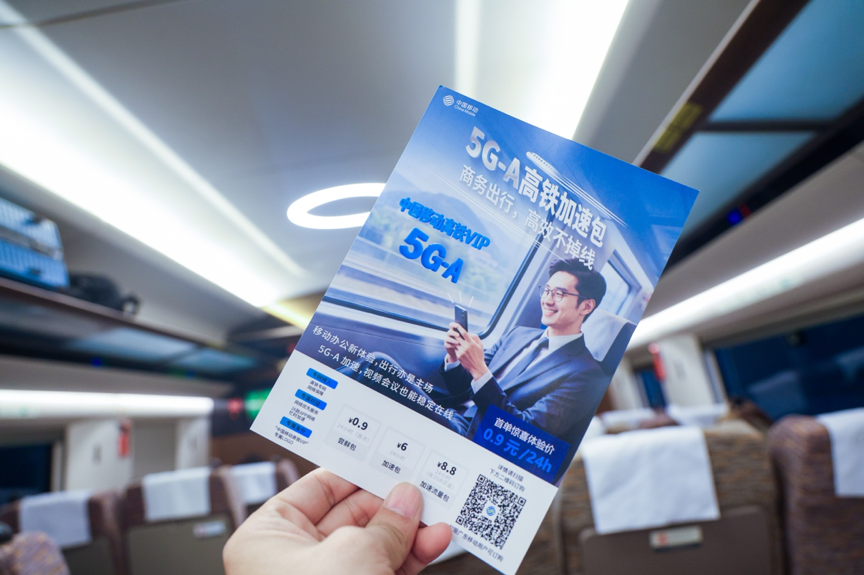
Core Viewpoint - Guangdong Mobile has established the world's largest wireless network, utilizing 5G-A technology to enhance user experiences across various scenarios, including high-speed trains, sports venues, and daily life, thereby setting a benchmark for digital infrastructure and public welfare in the region [1][2][10] Group 1: 5G-A Network Deployment - Guangdong is characterized by its dense population, active economy, and complex urban landscape, making it a challenging environment for wireless network deployment [2] - By 2025, Guangdong Mobile plans to cover 26 typical scenarios with 5G-A networks, including transportation hubs, subways, high-rise buildings, industrial parks, commercial complexes, and sports venues [2][3] - The deployment strategy focuses on "precise coverage" and "intelligent scheduling" rather than merely expanding the number of base stations [2][3] Group 2: Enhanced User Experiences - The introduction of 5G-A has transformed the travel experience on high-speed trains, eliminating previous connectivity issues and allowing for seamless video calls and online gaming [3][5] - Users can purchase a "5G-A high-speed train acceleration package," which provides enhanced network speed and priority access to popular apps [5][7] - In large sports venues, 5G-A enables thousands of spectators to share real-time updates and engage in video calls without network congestion, showcasing its capability to handle high-density and high-concurrency scenarios [5][7] Group 3: Integration of AI and 5G-A - Guangdong Mobile has launched the first 5G-A × AI flagship experience space, allowing users to explore innovative features such as AI call summaries and digital assistants [9] - The "Global通AI Rights Service Package" combines various premium services, reflecting the market demand for integrated technology and service offerings [9] - The capabilities demonstrated during the National Games highlight the potential of 5G-A as a foundational element for future smart cities, emphasizing its role in enhancing everyday digital experiences [9][10]