
种植业

Search documents
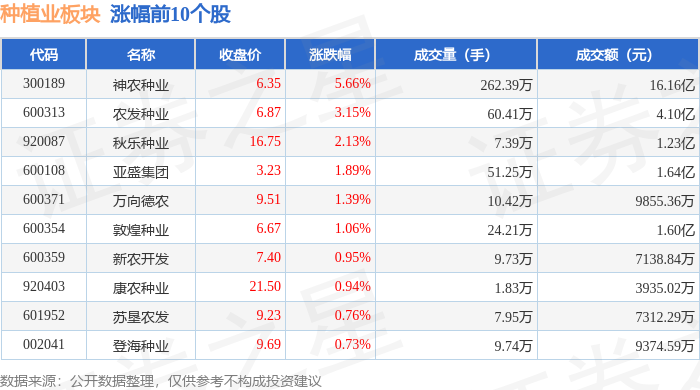
种植业板块12月2日涨0.74%,神农种业领涨,主力资金净流入753.78万元
Zheng Xing Xing Ye Ri Bao· 2025-12-02 09:05
Core Insights - The planting industry sector rose by 0.74% on December 2, with Shennong Seed Industry leading the gains [1] - The Shanghai Composite Index closed at 3897.71, down 0.42%, while the Shenzhen Component Index closed at 13056.7, down 0.68% [1] Sector Performance - Shennong Seed Industry (300189) closed at 6.35, up 5.66% with a trading volume of 2.6239 million shares and a transaction value of 1.616 billion [1] - Other notable performers included Nongfa Seed Industry (600313) with a 3.15% increase, and Qiule Seed Industry (920087) with a 2.13% increase [1] - The overall trading volume and transaction values for various companies in the planting sector were detailed, indicating active market participation [1] Capital Flow - The planting industry sector saw a net inflow of 7.5378 million from institutional investors, while retail investors experienced a net outflow of 111 million [2] - The capital flow data highlighted the contrasting behaviors of different investor types, with institutional investors showing a positive trend [2][3] Individual Stock Capital Flow - Shennong Seed Industry experienced a net outflow of 98.4703 million from institutional investors, despite a net inflow of 20.8824 million from speculative investors [3] - Other companies like Qiule Seed Industry and Nongfa Seed Industry showed varying degrees of net inflow and outflow, reflecting investor sentiment [3]


我国冬小麦、冬油菜播种基本结束 田间管理正有序展开
Ren Min Wang· 2025-12-02 03:01
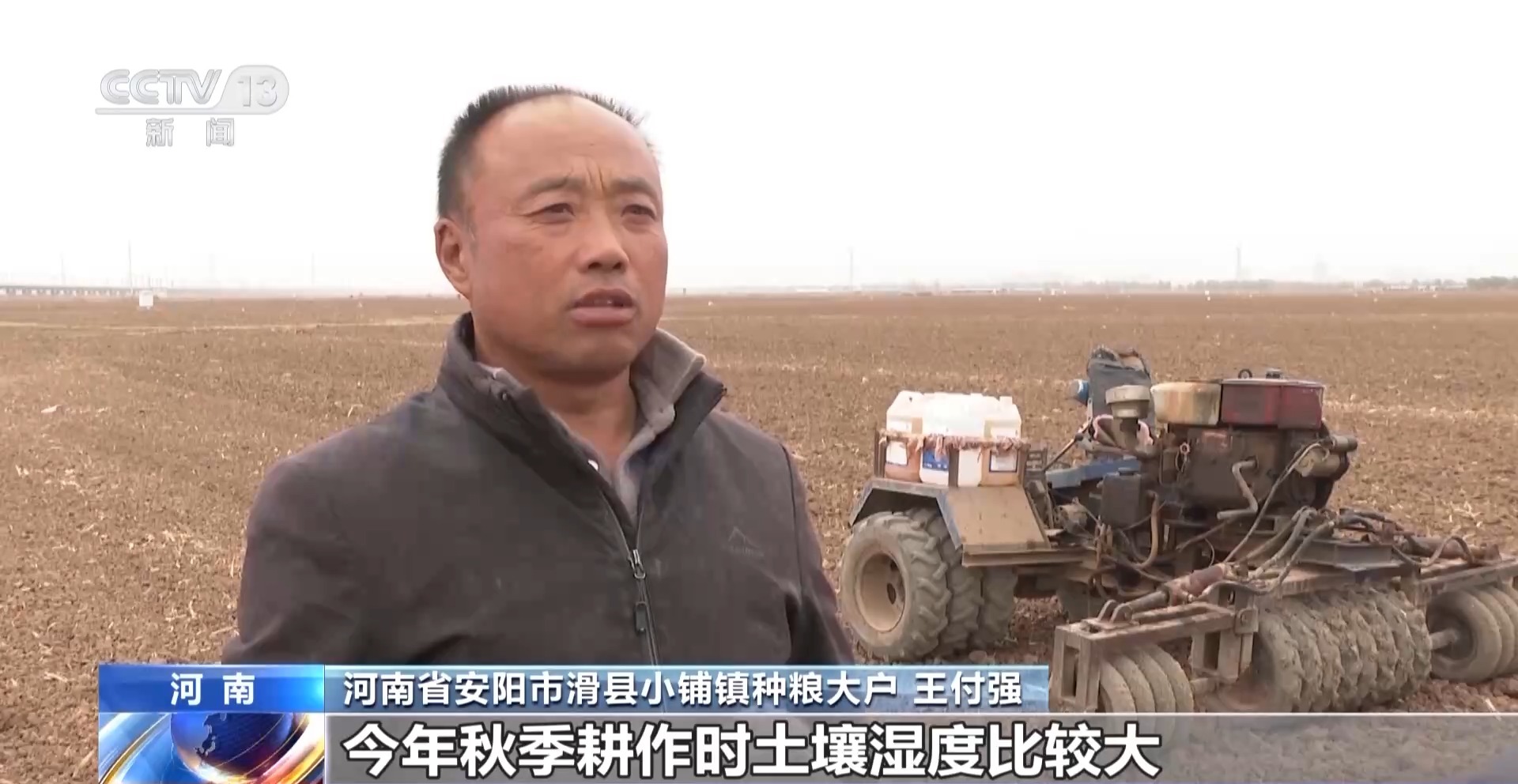
Core Insights - The Ministry of Agriculture and Rural Affairs reports that winter wheat and winter rapeseed sowing in China is nearly complete, with field management progressing smoothly [1][3] - The autumn and winter sowing season is crucial for next year's grain production, as summer grain accounts for about one-fifth of the total annual grain output, with over 90% being winter wheat [1] Group 1: Winter Wheat Sowing - The Huang-Huai-Hai region, which includes Henan, Shandong, Hebei, Jiangsu, and Anhui, accounts for over 70% of the national winter wheat area and nearly 80% of the production [1] - In Shandong, over 60 million acres of winter wheat have been sown, with 18,000 agricultural technicians deployed to assist farmers with post-sowing management [1] - In Hebei, the winter wheat sowing area remains stable at over 33 million acres, with efforts to irrigate and promote strong seedling growth [2] Group 2: Winter Rapeseed Management - In Hunan, over 22 million acres of winter rapeseed are showing growth comparable to previous years, with 85% classified as first and second-class seedlings [3] - The Ministry of Agriculture is actively promoting measures to ensure the quality of sowing and the safety of wintering crops, including the establishment of 12 technical guidance teams to support key provinces [3] - The "Promoting Strong Seedlings Agricultural Technology 100-Day Campaign" has been initiated to enhance seedling growth and ensure the implementation of critical agricultural measures [3]
提颜值增产值 让乡村一直美下去
Liao Ning Ri Bao· 2025-12-02 00:54
Core Points - The article highlights the transformation of He Dong Village into a vibrant community with improved living conditions and cultural activities, reflecting the implementation of the national rural development strategy [1][2] - The village has been recognized as a National Civilized Village, emphasizing the importance of maintaining both aesthetic and functional improvements for sustainable development [2] - Future plans include enhancing local industries, particularly through the cultivation of seasonal cherries and the promotion of Liao Yan stone products, to boost economic growth [2][3] Group 1 - He Dong Village has become a cultural and entertainment hub with regular fitness activities and community events, showcasing the positive impact of rural development initiatives [1] - The village has seen significant infrastructure improvements, including solar streetlights, upgraded sanitation facilities, and better waste management practices [1] - Local leaders are focused on maintaining these improvements through regular maintenance and community engagement to ensure residents feel a sense of ownership and satisfaction [2] Group 2 - The village is developing its tourism potential by converting idle properties into guesthouses and creating diverse recreational activities, such as fishing and camping [3] - Plans are in place to establish a green agricultural base for year-round fruit and vegetable picking, enhancing the village's appeal as a tourist destination [2][3] - The promotion of Liao Yan stone products through e-commerce and marketing strategies aims to elevate the local economy and attract more visitors [2][3]
把农业建成现代化大产业
Jing Ji Ri Bao· 2025-12-01 22:21
Core Insights - The Chinese government emphasizes modernizing agriculture as a key industry, reflecting an accurate understanding of agricultural development trends and providing direction for future modernization efforts [1] Group 1: Agricultural Modernization - The "15th Five-Year Plan" presents a rare opportunity for agricultural development, with experts noting the deepening urban-rural integration and the increasing multifunctionality of agriculture [1] - The application of modern technologies such as information and biotechnology is accelerating the transformation and upgrading of traditional agriculture, leading to a redefinition of the agricultural industry [1] Group 2: Food Supply System - From 2013 to 2023, per capita consumption of grains decreased by 13.2%, while consumption of eggs, fresh fruits, meat, aquatic products, and vegetables increased significantly [2] - Despite projected grain production exceeding 1.4 trillion jin in 2024, constraints on arable land and water resources, along with extreme weather events, will keep food supply and demand in a tight balance [2] - The concept of a diversified food supply system is essential to adapt to changing consumer demands, ensuring stability in essential food supplies [2] Group 3: Fisheries and Mushroom Industry - There is a growing demand for marine products, necessitating the development of deep-sea aquaculture and marine ranching to enhance the diversified food supply system [3] - The edible mushroom industry has rapidly developed, becoming the fifth largest planting industry with an output value exceeding 300 billion yuan [3] Group 4: Rural Industry Integration - During the "14th Five-Year Plan" period, significant progress has been made in rural industrial integration, with over 100,000 large-scale agricultural processing enterprises and a processing conversion rate of 75% for major agricultural products by 2024 [5] - New industries and business models such as rural e-commerce and leisure agriculture are emerging, transforming the rural industrial landscape [5][6] Group 5: Technological Empowerment - China has established a comprehensive agricultural technology innovation system with over 800 agricultural research institutions and approximately 120,000 researchers [7] - The modernization of agriculture is seen as crucial for ensuring food security and enhancing the competitiveness of the agricultural industry, emphasizing the need for a technology-driven, high-efficiency production system [7]
我国粮食主产区秋冬种基本结束 田间管理正有序展开
Ren Min Ri Bao· 2025-12-01 22:05
Core Insights - The Ministry of Agriculture and Rural Affairs reports that the sowing of winter wheat and winter rapeseed in China has been largely completed, with field management progressing in an orderly manner [1] Group 1: Agricultural Production - The Huang-Huai-Hai region accounts for approximately 90% of the national wheat production [1] - Continuous overcast and rainy weather in the early period has delayed sowing and slowed progress, posing challenges for the safe overwintering of winter wheat [1] Group 2: Agricultural Management Strategies - Local authorities are seizing the autumn and early winter sowing window to enhance wet-resistant sowing, implement the "Four Supplements and One Promotion" strategy, and focus on pest and disease control [1] - Key tasks include ensuring sufficient and quality sowing of wheat and nurturing strong seedlings for safe overwintering [1]
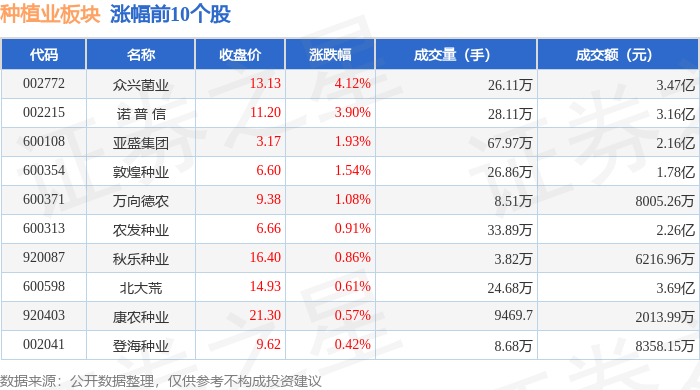
种植业板块12月1日涨0.07%,众兴菌业领涨,主力资金净流出2.36亿元
Zheng Xing Xing Ye Ri Bao· 2025-12-01 09:01
Core Insights - The planting industry sector experienced a slight increase of 0.07% on December 1, with Zhongxing Junye leading the gains [1] - The Shanghai Composite Index closed at 3914.01, up 0.65%, while the Shenzhen Component Index closed at 13146.72, up 1.25% [1] Sector Performance - Zhongxing Junye (002772) closed at 13.13, up 4.12% with a trading volume of 261,100 shares and a transaction value of 347 million yuan [1] - Nuofushin (002215) closed at 11.20, up 3.90% with a trading volume of 281,100 shares and a transaction value of 316 million yuan [1] - Yasheng Group (600108) closed at 3.17, up 1.93% with a trading volume of 679,700 shares and a transaction value of 216 million yuan [1] - Dunhuang Seed Industry (600354) closed at 6.60, up 1.54% with a trading volume of 126,860 shares and a transaction value of 178 million yuan [1] Capital Flow - The planting industry sector saw a net outflow of 236 million yuan from main funds, while retail investors contributed a net inflow of 175 million yuan [2] - The main funds showed a net inflow in Nuofushin (317.72 million yuan) and a net outflow in Zhongxing Junye (-33.90 million yuan) [3] - Retail investors showed significant net inflows in several stocks, including Zhongxing Junye (221.98 million yuan) and Dunhuang Seed Industry (1589.02 million yuan) [3]


行业轮动ETF策略周报-20251201
金融街证券· 2025-12-01 06:44
Core Insights - The report emphasizes the construction of a strategy portfolio based on industry and thematic ETFs, leveraging insights from previous strategy reports on industry rotation and ETF market overview [2][3]. Strategy Update - The strategy has seen a cumulative net return of approximately 4.59% during the period from November 24 to November 28, 2025, with an excess return of about 3.03% compared to the CSI 300 ETF [3][12]. - Since October 14, 2024, the cumulative return of the strategy sample has reached approximately 23.58%, with an excess return of about 4.05% relative to the CSI 300 ETF [3][4]. ETF Holdings and Performance - The report lists various ETFs with their respective market values and holdings, indicating adjustments in positions such as the addition of real estate, grain, petrochemical, chemical, and tourism ETFs, while continuing to hold the electric grid equipment ETF [3][12]. - The weekly performance of the ETF portfolio shows an average return of 4.59%, with specific ETFs like the electric grid equipment ETF maintaining a strong position [3][12]. Recommended Sectors and Products - For the upcoming week, the strategy recommends increasing holdings in sectors such as real estate development, agriculture, refining and trading, and tourism, while continuing to hold the electric grid equipment ETF [12].
我国粮食主产区秋冬种基本结束 田管有序展开
Yang Shi Xin Wen· 2025-11-30 23:48
Core Insights - The Ministry of Agriculture and Rural Affairs reports that winter wheat and winter rapeseed sowing in China is nearly complete, with field management underway [1] - Adverse weather conditions, particularly continuous rain in the autumn, have delayed sowing and pose challenges for the safe overwintering of winter wheat [1] - Various regions are implementing targeted measures to ensure robust seedling growth and safe overwintering of crops [1][3] Winter Wheat Management - The Huang-Huai-Hai region accounts for approximately 80% of the national winter wheat area, with 85 million acres sown in Henan, where over 10 million acres have not yet germinated [1][3] - In Shandong, over 60 million acres of winter wheat have been sown, with 18,000 agricultural technicians deployed to assist farmers with post-sowing management [3] - Hebei maintains a stable winter wheat area of over 33 million acres, utilizing precision irrigation techniques to enhance cold resistance [5] Winter Rapeseed Management - Winter rapeseed, the largest oilseed crop in China, is currently undergoing field management in the Yangtze River basin [5] - In Hunan, over 22 million acres of winter rapeseed show growth comparable to previous years, with 85% classified as first and second-class seedlings [5] - Jiangxi has over 9 million acres of rapeseed in the seedling stage, with uneven distribution of strong and weak seedlings, prompting the formation of service teams to guide farmers [7] Technical Guidance and Support - The Ministry of Agriculture has organized 12 technical guidance teams to assist key provinces, providing advice on winter management, frost prevention, and pest control [7] - A series of technical opinions have been released to enhance seedling management and ensure safe overwintering of crops [7]
绘就笃行致远新图景——11月全国各地经济社会发展观察
Xin Hua Wang· 2025-11-30 23:43
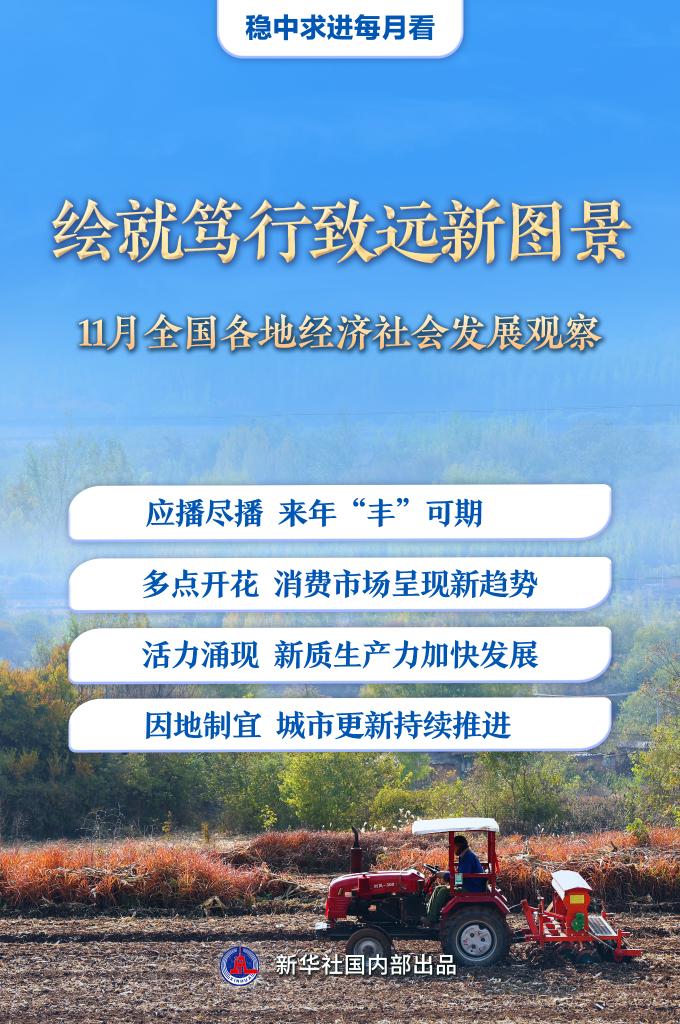
Group 1: Agricultural Development - The importance of timely agricultural practices is emphasized, particularly in the context of winter wheat planting, which is crucial for next year's summer grain production [5][8] - As of November 20, over 95% of the national winter wheat planting has been completed, with various regions adopting advanced agricultural technologies to enhance planting quality and efficiency [8] - Local governments are actively promoting agricultural innovations, such as mechanized planting and organic fertilizers, to mitigate the impact of adverse weather conditions on grain production [7][8] Group 2: Consumer Market Trends - The consumer market is evolving towards personalization, quality, and scenario-based consumption, driven by technological empowerment and innovative supply-demand matching [11][14] - The implementation of new policies and technologies is fostering a dynamic ecosystem for consumption, with over 1,200 scenario projects launched in Hefei to enhance consumer experiences [13][14] - Major e-commerce platforms are leveraging AI and algorithm optimization to improve consumer engagement and support small businesses, reflecting a trend towards more efficient market operations [14] Group 3: New Productive Forces - New productive forces are identified as a core engine for developing competitive advantages and seizing future opportunities, with a focus on integrating technological and industrial innovations [16][19] - The World Internet Conference showcased significant advancements in AI and flexible production technologies, highlighting China's rapid innovation in various sectors [18] - Local initiatives are promoting the fusion of manufacturing and service industries, with significant new products and technologies being introduced at major trade events [18][19] Group 4: Urban Renewal - Urban renewal is recognized as a systematic project that requires a people-centered approach, with ongoing efforts to enhance living conditions in cities [21][25] - Nationwide, over 240,000 old urban communities have been renovated during the 14th Five-Year Plan, focusing on infrastructure improvements and community amenities [24] - Local governments are implementing tailored urban renewal strategies, addressing specific challenges and enhancing urban functionality through innovative planning and execution [24][25]
践行大食物观的福建实践和经验启示(深学笃行阐释习近平经济思想)
Ren Min Ri Bao· 2025-11-30 22:20
Core Viewpoint - The article emphasizes the importance of food security in China, highlighting the "big food concept" proposed by Xi Jinping, which integrates various agricultural resources to ensure a stable food supply for the large population of over 1.4 billion people [1][3][10]. Background - Fujian province is characterized by limited arable land, with per capita farmland only one-fourth of the national average. In the 1980s, the region faced food shortages and a lack of diverse agricultural products, relying heavily on imports from other provinces [2]. Development of the Big Food Concept - Xi Jinping introduced the "big food concept" in 1988, advocating for comprehensive agricultural development. This concept has evolved under the leadership of the central government, emphasizing the need to utilize various resources, including land, sea, and forests, to enhance food production [3][4][10]. Achievements in Fujian - Over 30 years, Fujian has successfully implemented the big food concept, leading to significant increases in food production and diversity. For instance, meat production reached 3.14 million tons in 2024, a 2.5-fold increase since the early 1990s, with poultry meat production increasing 13 times [4][5]. - The province has also become a leading producer of aquatic products, with a per capita consumption of over 220 kg, the highest in the country. The cultivation of edible fungi has expanded significantly, with over 50 species cultivated commercially [4][5]. Key Practices and Results - Fujian has developed a diversified food supply system by integrating marine, forest, and facility agriculture. This includes the establishment of "marine granaries" to enhance seafood supply and "forest granaries" to tap into forest resources for food production [5][7][8]. - The province has also focused on facility agriculture, with over 2.4 million acres dedicated to modern agricultural practices, significantly boosting the supply of key agricultural products [8]. Quality and Safety Assurance - The province has implemented stringent measures to ensure food safety, including a comprehensive traceability system for agricultural products. The overall compliance rate for major agricultural product inspections has remained above 99% [9]. Lessons Learned - The experience in Fujian highlights the importance of a systematic approach to agricultural development, leveraging local resources to enhance food security. It underscores the need for technological innovation, market orientation, and sustainable practices to achieve a balance between ecological and economic benefits [10][11][12].