电信运营

Search documents
河北联通深入开展“民有所呼我必有应”主题服务活动
Xin Hua She· 2025-11-21 08:46
Core Viewpoint - Hebei Unicom is actively implementing the "Responding to Public Needs" service initiative, focusing on enhancing customer service through thoughtful and practical measures, thereby building a strong communication bridge with the community [1] Group 1: Service Improvement Initiatives - Hebei Unicom has launched a "micro-transformation" initiative to enhance service quality in 28 pilot service centers in Shijiazhuang, introducing comfortable seating and standardized service boxes to address customer needs during wait times [2] - The service boxes are equipped with basic items like sewing kits and reading glasses, as well as emergency medical supplies in collaboration with local health centers, demonstrating a commitment to customer care [2] Group 2: Community Engagement and Education - A "micro-popularization" program is being conducted in rural areas to educate the elderly about digital safety, using localized and situational methods to bridge the digital divide [3] - Volunteers are providing training on recognizing scams and assisting seniors in installing anti-fraud applications, ensuring a dual layer of protection for their financial security [3] Group 3: Infrastructure and Safety Improvements - In Xingtai's Xiniu County, Hebei Unicom's team has coordinated resources to repair damaged road slopes, enhancing safety for local residents and addressing community concerns [4] - The company emphasizes practical actions in response to public needs, showcasing its commitment to community welfare through service upgrades and infrastructure improvements [4]

主题论坛预告丨中国联通护航企业出海主题论坛即将亮相2025全球数商大会
Di Yi Cai Jing Zi Xun· 2025-11-21 07:39
酸联全球 SAN CONTEMENCE CONFERENCE 商通未来 2025全球数商大会 Global Data Ecosystem Conference 2025 乘数无 . Suite in a dically and STERNET A 2000 2025年11月26日上午,上海国际会议中心将迎来一场聚焦企业出海的行业盛会——2025全球数商大 会"联接世界 通链全球"中国联通护航企业出海主题论坛。 核心亮点: 论坛主题 "联接世界 通链全球" 中国联通护航企业出海 政企大咖共探企业出海新路径 论坛将邀请全球专家、政府、业界代表和企业负责人,围绕企业如何探寻出海有效路径、构建多元化市 场格局进行研讨,共同解码中国企业出海战略,为出海企业提供更完善的服务及保障。 论坛信息: 关键细节抢先看 事项 举办时间 上海市数商协会 上海智慧城市发展研究院 上海市数字企业出海服务协会 2025年11月26日 上午 9:00-11:55 论坛地点 上海国际会议中心上海厅Ⅰ(上海市浦东新区滨江大道2727号) 中国联合网络通信有限公司上海市分公司 中国联通国际有限公司 协办单位 上海数据集团有限公司 支持单位 即刻报 ...


主题论坛预告丨中国联通护航企业出海主题论坛即将亮相2025全球数商大会
第一财经· 2025-11-21 07:31
Core Insights - The forum titled "Connecting the World, Linking the Global" will focus on strategies for Chinese enterprises to expand internationally, supported by China Unicom [1][2] - The event will feature discussions among global experts, government officials, industry representatives, and business leaders to explore effective pathways for overseas expansion and to build a diversified market landscape [2] Event Details - **Forum Theme**: "Connecting the World, Linking the Global" with a focus on China Unicom's support for enterprises going abroad [3] - **Date and Time**: November 26, 2025, from 9:00 AM to 11:55 AM [3] - **Location**: Shanghai International Conference Center, Hall I, 2727 Binjiang Avenue, Pudong New District, Shanghai [3] - **Organizers**: China United Network Communications Limited Shanghai Branch and China Unicom International Limited [3] - **Co-organizers**: Shanghai Data Group Co., Ltd. [3] - **Supporting Organizations**: Shanghai Digital Business Association, Shanghai Smart City Development Research Institute, Shanghai Digital Enterprises Going Abroad Service Association [3] Registration Information - The forum is open for registration to leaders of overseas enterprises, decision-makers in digital transformation, and industry researchers [3] - Attendees are encouraged to register promptly due to limited seating [5]

启明星辰信息技术集团股份有限公司 关于2026年度日常关联交易预计 的公告
Zhong Guo Zheng Quan Bao - Zhong Zheng Wang· 2025-11-21 00:35
Group 1 - The company expects to engage in daily related transactions with China Mobile Group and its controlled enterprises, with a total amount not exceeding 2.2 billion RMB for the year 2026 [1][2] - The company anticipates a maximum daily deposit limit of 800 million RMB with China Mobile Financial Company for financial services in 2026 [2][3] - The board of directors has approved the expected related transactions, which will be submitted for shareholder approval, with related shareholders abstaining from voting [2][12] Group 2 - The expected related transactions include sales of products and services related to information and communication technology, as well as network security products and services [7][12] - The pricing principles for these transactions will follow fair and reasonable market practices, ensuring compliance with market standards [7][12] - The company aims to strengthen its strategic cooperation with China Mobile Group through these transactions, promoting high-quality development and resource sharing [12][14] Group 3 - The company has a good relationship with China Mobile Group, which is a major telecommunications operator with strong financial capabilities [7][12] - The financial services provided by China Mobile Financial Company are expected to enhance the company's financial management and optimize cash flow [12][14] - The independent directors have reviewed and approved the expected related transactions, confirming that they do not harm the interests of the company or its shareholders [13][49]


中国移动有限公司 关于日常关联交易的公告
Zhong Guo Zheng Quan Bao - Zhong Zheng Wang· 2025-11-21 00:33
Core Viewpoint - China Mobile Limited has announced the approval of daily related transactions with China Mobile Communications Group and China Tower Corporation for the year 2026, which do not require shareholder meeting approval, emphasizing that these transactions are essential for normal business operations and do not harm the interests of either party [2][3][15]. Group 1: Daily Related Transactions Overview - The daily related transactions have been approved by the company's board of directors, with independent non-executive directors confirming that these transactions are mutually beneficial and based on fair market principles [3][15]. - The expected transaction limits for 2026 with China Mobile Communications Group and China Tower exceed 0.1% of the company's latest audited total assets and are below 5% of the latest audited net assets, requiring board approval but not shareholder meeting approval [4]. Group 2: Transaction Details and Pricing Principles - Transactions with China Mobile Communications Group include communication facility construction services, network asset leasing, and telecommunication services, with pricing based on market rates determined through public bidding or similar standards [9][11][13]. - Transactions with China Tower involve engineering services, property leasing, and telecommunications services, with pricing also based on market rates or comparable services provided to third parties [13][14]. Group 3: Impact on the Company - The daily related transactions are designed to maximize efficiency and enhance the company's competitive edge, ensuring that they do not adversely affect the company's financial status or operational results [15].
筑牢安全底座 承接万卡算力 中国电信内蒙古分公司实现两大技术突破
Zhong Guo Chan Ye Jing Ji Xin Xi Wang· 2025-11-21 00:07
Core Insights - China Telecom Inner Mongolia Branch has made significant breakthroughs in quantum secure transmission and computing power capacity, aligning with the national strategy of "East Data West Computing" [1][2] Group 1: Quantum Secure Transmission - The first nationwide 400G quantum secure OTN line has been successfully launched, connecting data centers in Anhui and Inner Mongolia, marking a key step in the industrial application of quantum communication [2] - The line integrates OTN optical transmission technology with quantum encryption, achieving a product that combines high bandwidth transmission with quantum-level security [2] - The technology features include a super-converged architecture, full-stack domestic production, and cross-domain scheduling capabilities, providing a scalable solution for high-security industries [2] Group 2: Power System Upgrade - China Telecom's Inner Mongolia Information Park has upgraded its power supply capacity to 32MW to meet the urgent demands of national-level computing tasks [3] - The introduction of the integrated power module 3.0 solution has saved 40% of distribution space and reduced installation time to two weeks, significantly enhancing deployment efficiency [3] - The system operates with a link efficiency of 97.8% under the S-ECO model, demonstrating a dual enhancement of power supply capacity and energy efficiency [3] Group 3: Future Outlook - The company plans to continue driving technological innovation and enhancing its layout in core nodes of the "East Data West Computing" strategy, contributing to the construction of a digital Inner Mongolia and the national integrated computing network [4]

中国电信董事长柯瑞文:量子密话密信用户超过600万
Zhong Zheng Wang· 2025-11-20 13:13
Group 1 - China Telecom has integrated quantum technology into its strategic framework, achieving significant breakthroughs such as the world's largest quantum metropolitan network and over 6 million users of quantum secure communication [1] - The company has developed a distributed encryption system that combines Quantum Key Distribution (QKD) and Post-Quantum Cryptography (PQC) [1] - Under national laboratory guidance, China Telecom has established the "Tianyan-287" superconducting quantum computer, which is the most powerful in the country [1] Group 2 - The establishment of the "Central Enterprise Quantum Talent Innovation Space" is a major strategic initiative aimed at promoting quantum technology and industrial development [2] - The initiative focuses on collaborative innovation among state-owned enterprises, aiming to share research tasks, resources, and innovation outcomes [2] - The company plans to accelerate the transformation of research results into practical applications, creating a globally competitive open ecosystem for quantum technology [2] - A new talent mechanism will be implemented to enhance collaboration and establish a high-level quantum talent research zone [2]
太辰光(300570):2025年三季报点评:交付节奏波动,关注MDC业务推进
GUOTAI HAITONG SECURITIES· 2025-11-20 13:06
Investment Rating - The report maintains a "Buy" rating for the company [5][11]. Core Views - The report indicates a downward revision of profit forecasts and target price, while overall performance aligns with expectations despite fluctuations in delivery pace. The industry demand remains strong, with a focus on the advancement of the MDC business [2][11]. Financial Summary - Total revenue for 2023 is projected at 885 million, with a growth forecast of 55.7% for 2024, reaching 1,378 million. By 2025, revenue is expected to be 1,817 million, reflecting a 31.9% increase [4]. - Net profit attributable to the parent company is estimated at 155 million for 2023, with a significant increase of 68.5% to 261 million in 2024, and further growth to 390 million in 2025, marking a 49.1% rise [4]. - Earnings per share (EPS) is projected to be 0.68 yuan in 2023, increasing to 1.15 yuan in 2024 and 1.72 yuan in 2025 [4]. - The return on equity (ROE) is expected to rise from 11.4% in 2023 to 22.0% in 2025, and further to 41.8% by 2027 [4]. Market Data - The current stock price is 90.56 yuan, with a target price set at 149.21 yuan [5][6]. - The market capitalization stands at 20,569 million yuan, with a 52-week price range of 62.04 to 142.15 yuan [6]. Business Outlook - The report highlights the stable gross margin of 36.15% in Q3, with a net profit margin of 22.83%, indicating robust profitability despite seasonal fluctuations in orders [11]. - The MDC business is expected to gain traction with the introduction of ultra-large-scale clusters and rack-scale servers, positioning the company for better growth in high-density optical connections [11].

清朗网络空间,中国移动全力打击电信网络诈骗
Jiang Nan Shi Bao· 2025-11-20 10:46
Core Viewpoint - Telecom network fraud using "GOIP" devices has become a significant threat to social stability and online safety, prompting proactive measures from companies like China Mobile's Taizhou branch to combat this issue through technology and collaboration with law enforcement [1][2]. Group 1: Company Actions - Taizhou Mobile has actively engaged in the "cat-catching action" to combat telecom fraud, leveraging its technological advantages to build a robust defense against scams [1]. - A special task force was established by Taizhou Mobile to monitor network traffic 24/7, utilizing big data to identify high-risk communication patterns [1]. - In a recent operation, Taizhou Mobile collaborated with local police to dismantle three criminal dens, seizing five "GOIP" devices and 34 SIM cards, effectively disrupting local communication channels used by foreign fraud groups [1]. Group 2: Industry Response - The company emphasizes the importance of safeguarding network security and public financial safety as part of its corporate mission [2]. - Taizhou Mobile plans to continuously upgrade its technological countermeasures and maintain a high-pressure stance against new types of fraud [2]. - The company encourages citizens to enhance their awareness of fraud prevention and avoid renting or lending personal phone cards and bank accounts to help maintain a clear online environment [2].
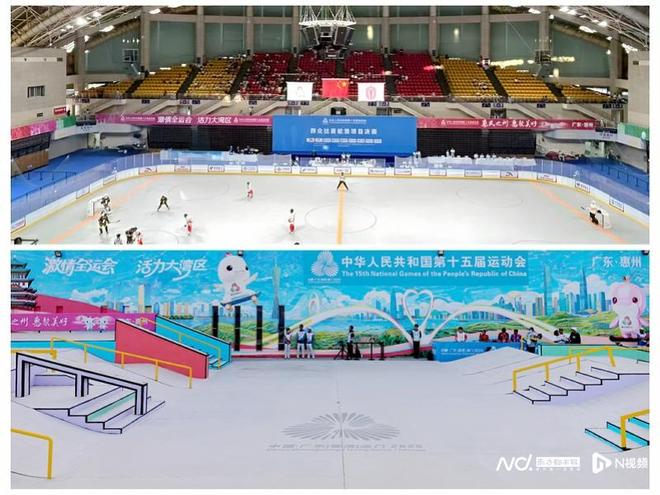
科技赋能,护航精彩!惠州电信硬核保障十五运会赛事通信
Nan Fang Du Shi Bao· 2025-11-20 08:25
Core Viewpoint - The article highlights the comprehensive communication support provided by China Telecom Huizhou for the 15th National Games, ensuring stable and efficient network services for various sporting events, particularly the skateboarding competition. Group 1: Event Overview - The 15th National Games opened on November 9, with skateboarding competitions held on November 10-11 in Huizhou [1] - Huizhou is a key city in the Guangdong-Hong Kong-Macao Greater Bay Area, hosting multiple events including taekwondo and roller skating [3] Group 2: Communication Infrastructure - China Telecom Huizhou established a professional support team to enhance 5G network coverage and ensure reliable communication for media and event operations [1][3] - Significant investments were made in infrastructure, including the expansion of 5G networks and the installation of new equipment to improve network security and performance [4][6] Group 3: Technological Innovations - The implementation of an all-optical high-speed base achieved ultra-low latency connectivity, ensuring stable data transmission during peak traffic [6] - A dedicated event-specific network was created to physically isolate event data from public internet traffic, enhancing security [6] - Upgraded network management platforms allowed for real-time monitoring and quick recovery from issues, ensuring a seamless communication experience [6] Group 4: On-Site Support and Services - The communication support team was present at key locations, conducting regular inspections and optimizations to maintain network performance [7] - China Telecom Huizhou provided high-speed broadband services at ticket sales points to facilitate easier access for the public, particularly for the elderly [8] Group 5: Community Engagement and Social Responsibility - The company collaborated with local volunteer organizations to offer services such as fraud prevention and broadband testing during the event [10] - Efforts were made to extend support beyond the event, contributing to community welfare and enhancing public engagement [10] Group 6: Future Implications - The experiences and infrastructure developed during the National Games will contribute to the ongoing construction of a smart Huizhou, enhancing digital connectivity for residents [11] - The innovations tested during the event are expected to set a benchmark for future digital applications and urban management [11]