通信网络

Search documents
阿治曼政府媒体办公室访问华为深圳总部
Shang Wu Bu Wang Zhan· 2026-02-05 08:20
Group 1 - The core focus of the visit by the Ajman government media office delegation to Huawei's headquarters in Shenzhen was to explore digital storage, communication networks, and smart media solutions [1] - Discussions centered around potential collaboration to enhance media work efficiency, information flow, and content quality, reflecting the proactive stance of the UAE local government towards digitalization and smart media development [1]
午评:通信独秀 vs 有色雪崩,后市怎么看?
Sou Hu Cai Jing· 2026-01-30 04:18
Core Viewpoint - The A-share market is experiencing significant structural differentiation, with major indices generally declining while the ChiNext index shows a slight increase, indicating a preference for technology growth sectors like telecommunications and a rejection of cyclical sectors such as non-ferrous metals [1][2]. Market Performance - The Shanghai Composite Index fell by 1.19%, and the Shenzhen Component Index decreased by 0.96%, while the ChiNext Index rose by 0.80, demonstrating relative resilience [1]. - The total trading volume for the day was 19.329 trillion yuan, maintaining a high level despite a slight decrease compared to previous sessions, reflecting active market participation and clear directional choices [1]. Sector Analysis - The telecommunications sector led the market with a gain of 2.58%, supported by strong demand driven by AI and infrastructure investments, indicating a clear preference for sectors with tangible growth prospects [2]. - In contrast, the non-ferrous metals sector experienced a sharp decline of 8.39%, influenced by external macroeconomic factors and a crowded trading environment, leading to significant profit-taking and technical adjustments [2]. Future Outlook - The current market structure is expected to persist, characterized by growth sectors outperforming while cyclical sectors face pressure. The technology sector, particularly telecommunications and computing power, is likely to remain active [3]. - Non-ferrous metals and other cyclical sectors may require stabilization of the strong dollar and improvement in internal trading structures for recovery [3]. - Investors are advised to focus on sectors with clear industrial logic and solid support, while being cautious with volatile assets [3].
低调炸场!任正非官宣:华为五年砸1000亿美金重构全球网络
Sou Hu Cai Jing· 2026-01-27 14:50
Core Insights - Huawei's founder Ren Zhengfei acknowledged the company's contributions to society are still lacking and announced a significant investment of $100 billion over the next five years to advance global network architecture restructuring [1][10]. Group 1: Company Commitment and Strategy - As a leader in the global communications industry, Huawei has transformed the communication landscape, providing services to over 3 billion people across more than 170 countries [3]. - Despite its achievements, Ren emphasized the need for Huawei to enhance its contributions to society and humanity, reflecting a humble yet determined approach [3][10]. Group 2: Investment and Innovation Focus - The $100 billion investment aims to address critical industry challenges such as global network security, architectural redundancy, and privacy protection, targeting four main goals: simplified network architecture, simplified transaction models, extreme security and trust, and strict compliance with GDPR [5][7]. - This investment will be directed towards core areas including software architecture, chip design, and network security, while also attracting top global talent to build a robust R&D team [7]. Group 3: Industry Impact - The network restructuring initiative is not merely a technical upgrade but aims to break traditional performance constraints, providing users with more efficient, secure, and inclusive communication services [5][8]. - Huawei's long-term commitment to tackling foundational technology issues sets a benchmark for innovation in the industry, showcasing the strength of Chinese technology enterprises [10].


建银国际首席策略师赵文利:企业出海如何“融进去”
21世纪经济报道· 2026-01-21 06:27
Core Viewpoint - Chinese enterprises are transitioning from merely capturing market share in overseas markets to playing a significant role in global economic governance, particularly in sectors like new energy and digital technology, where they are becoming rule-makers rather than just followers [1][4]. Group 1: Evolution of Overseas Expansion - By 2025, the mode of overseas expansion for Chinese enterprises has shifted from "cost-driven" to "value-driven," focusing on technological innovation and brand premium rather than low prices [3]. - The competitive focus has expanded from merely exporting products to also including brands, technological standards, ecosystems, and business models, significantly increasing profitability [3]. - The destinations for overseas expansion have diversified due to geopolitical tensions and global supply chain restructuring, marking a transition to a 2.0 phase of globalization for Chinese enterprises [3][4]. Group 2: Belt and Road Initiative - The Belt and Road Initiative provides a systematic cooperation framework that facilitates the transition from "product export" to "full industrial capability export" for Chinese enterprises [6]. - In the green energy sector, Chinese companies can export not only equipment but also participate in local investment and operational management, establishing complete renewable energy industry systems in host countries [6][7]. - In the digital technology sector, the "Digital Silk Road" initiative allows Chinese high-tech firms to provide comprehensive digital solutions, enhancing infrastructure and industry upgrades in partner countries [7]. Group 3: Financial Infrastructure and Risk Management - Increasing the use of the Renminbi in cross-border settlements can reduce reliance on the US dollar, mitigating exchange rate fluctuations and liquidity risks for Chinese enterprises operating abroad [8]. - The pilot program for digital Renminbi in cross-border payments can enhance efficiency and reduce costs for enterprises engaged in international trade, although it requires regulatory cooperation from other countries [8]. Group 4: Localization and Cultural Integration - High-quality local operations require enterprises to enhance their cross-cultural management capabilities, understanding local laws, customs, and building localized management teams [10]. - Financial capital plays a crucial role by providing stable funding and risk management tools, enabling enterprises to invest patiently and mitigate various operational risks [10]. Group 5: Systemic Solutions and Global Competitiveness - China's experience in digital governance and new energy systems offers systemic solutions that are more competitive globally compared to single product exports, addressing complex challenges in developing countries [11][12]. - Successful implementation of these systemic solutions abroad requires adaptation to local regulations and building trust with local governments and users [12]. Group 6: Strategic Recommendations for Enterprises - Conduct thorough market research and strategic planning to understand the legal, regulatory, and competitive landscape of target countries before expanding [12]. - Focus on deepening local integration by respecting local cultures and hiring local talent to create a diverse management team [12]. - Utilize digital management tools and financial resources to mitigate risks and enhance operational efficiency in overseas markets [13].

专访建银国际首席策略师赵文利:企业出海如何“融进去”?
2 1 Shi Ji Jing Ji Bao Dao· 2026-01-20 17:12
Core Insights - Chinese companies are transitioning from merely capturing market share in developed countries to playing a significant role in global economic governance, particularly in sectors like renewable energy and digital technology [1][4] - The globalization of Chinese enterprises is evolving into a "2.0 phase," characterized by a focus on "technology + brand," emphasizing innovation and high-end branding to establish a competitive edge in both developed and emerging markets [2][3] Group 1: Globalization Trends - The shift in Chinese companies' overseas strategy is moving from "cost-driven" to "value-driven," focusing on technology innovation and brand premium rather than low prices [2][4] - The competitive focus is expanding from merely exporting products to also including brands, technology standards, and business models, significantly increasing profitability [2][4] - The diversification of overseas markets is driven by geopolitical tensions and the restructuring of global supply chains, necessitating deeper integration into host countries [2][4] Group 2: Local Integration and Management - High-quality local operations are crucial for success in overseas markets, requiring companies to enhance their cross-cultural management capabilities [1][12] - Companies must respect local cultures and business practices, hire and train local talent, and adapt products and marketing strategies to meet local consumer preferences [1][12] - Financial capital plays a vital role in supporting local operations by providing stable funding and risk management tools [12] Group 3: Financial Infrastructure and Support - The Shanghai Pudong New Area's action plan emphasizes diverse financing services and cross-border capital flow facilitation to support companies going global [6][8] - The plan allows companies to use RMB for cross-border transactions, mitigating exchange rate risks and enhancing financial security [6][8] - Addressing challenges such as complex cross-border funding processes and legal risks is essential for transforming financial support into competitive advantages for companies [7][8] Group 4: Belt and Road Initiative - The Belt and Road Initiative creates a systematic cooperation framework that facilitates the transition of Chinese companies from "product export" to "full industry capability export" [9][10] - This initiative enables Chinese companies to provide complete industry chain solutions, particularly in green energy and digital technology, enhancing their global competitiveness [9][10] Group 5: Recommendations for Companies - Companies should conduct thorough market research and strategic planning to understand local laws, business environments, and market demands before entering new markets [15] - Emphasizing local integration and team building is essential for long-term success in overseas markets [15] - Utilizing digital management tools and financial resources effectively can help mitigate risks associated with international expansion [15]
Sanmina Corporation (SANM) Presents at Bank of America Leveraged Finance Conference Transcript
Seeking Alpha· 2025-12-02 22:13
Core Insights - Sanmina is a global leader in the design and manufacturing solutions business, focusing on heavily regulated markets and complex products, differentiating itself from peers that operate in the consumer space [1] Business Focus - The company operates across multiple end markets, providing services in communication networks, cloud infrastructure, medical, aerospace and defense, industrial, and energy sectors, showcasing a well-diversified portfolio [1]


清朗网络空间,中国移动全力打击电信网络诈骗
Jiang Nan Shi Bao· 2025-11-20 10:46
Core Viewpoint - Telecom network fraud using "GOIP" devices has become a significant threat to social stability and online safety, prompting proactive measures from companies like China Mobile's Taizhou branch to combat this issue through technology and collaboration with law enforcement [1][2]. Group 1: Company Actions - Taizhou Mobile has actively engaged in the "cat-catching action" to combat telecom fraud, leveraging its technological advantages to build a robust defense against scams [1]. - A special task force was established by Taizhou Mobile to monitor network traffic 24/7, utilizing big data to identify high-risk communication patterns [1]. - In a recent operation, Taizhou Mobile collaborated with local police to dismantle three criminal dens, seizing five "GOIP" devices and 34 SIM cards, effectively disrupting local communication channels used by foreign fraud groups [1]. Group 2: Industry Response - The company emphasizes the importance of safeguarding network security and public financial safety as part of its corporate mission [2]. - Taizhou Mobile plans to continuously upgrade its technological countermeasures and maintain a high-pressure stance against new types of fraud [2]. - The company encourages citizens to enhance their awareness of fraud prevention and avoid renting or lending personal phone cards and bank accounts to help maintain a clear online environment [2].

电费预付费管理系统
Sou Hu Cai Jing· 2025-09-21 04:47
Core Concept - The article discusses the prepaid electricity management system, which allows users to pay for electricity in advance and provides real-time monitoring and cost calculation for a convenient electricity usage experience [1][3]. Group 1: System Overview - The prepaid electricity management system includes components such as smart meters, data collectors, communication networks, and backend management systems, which work together to ensure stable operation [1][4]. - Users purchase a certain amount of electricity in advance, and the system deducts costs based on actual usage, sending reminders when the balance is low and cutting off supply when the balance is exhausted [1][4]. Group 2: Advantages - Compared to traditional postpaid systems, prepaid systems allow users to control their electricity usage flexibly, avoiding late fees and reducing costs associated with manual meter reading and bill delivery [3][4]. - For electricity providers, prepaid systems lower the risk of non-payment and operational costs [3]. Group 3: User Experience - Common user queries include checking remaining balance and restoring power after recharging, which can be done through local displays or remote services [4]. - The system supports various recharge methods, including offline payment points and self-service terminals, enhancing user convenience [4]. Group 4: Security and Future Developments - Security is a key consideration, with encryption technology used to protect user data and transactions from unauthorized access [4]. - Future advancements may include smart features like electricity usage analysis and energy-saving suggestions, as well as more payment options to meet evolving user needs [6].
华为:2035年全社会的算力总量将增长10万倍|首席资讯日报
首席商业评论· 2025-09-18 04:45
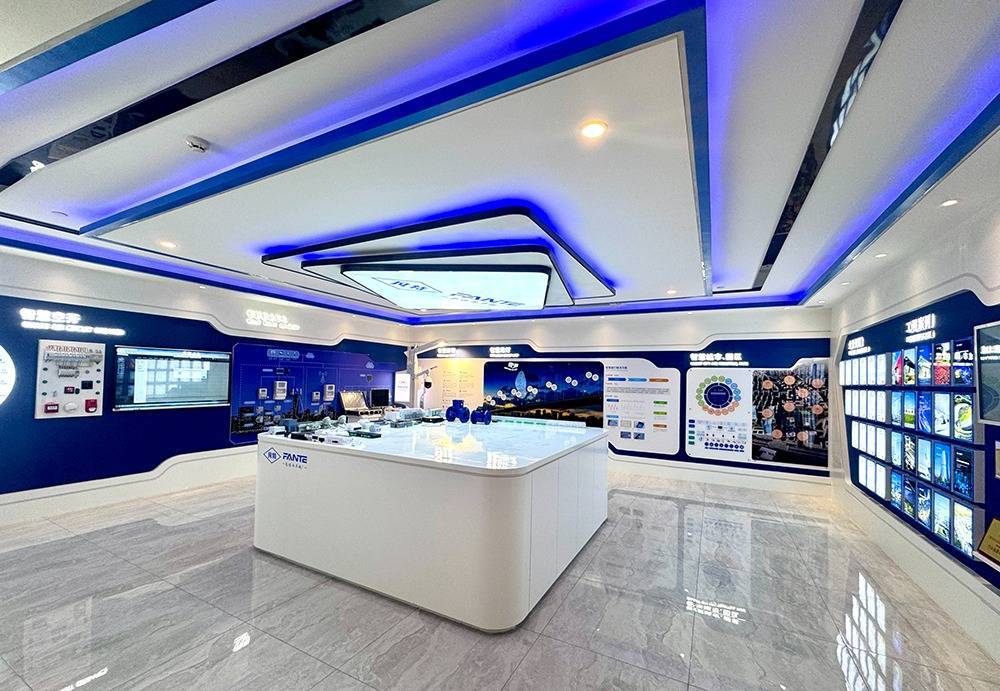
Group 1 - Huawei predicts that by 2035, the total computing power in society will increase by 100,000 times, leading to disruptive innovations in computing architecture, materials, engineering processes, and paradigms [2] - The demand for AI storage capacity is expected to grow by 500 times compared to 2025, with AI storage accounting for over 70% of total storage needs [2] - The number of connected devices is projected to expand from 9 billion people to 900 billion intelligent entities, marking a transition from mobile internet to intelligent internet [2] Group 2 - JD Group founder Liu Qiangdong re-engaged with users through a live cooking session, emphasizing transparency and openness to media criticism [3] - The Chongqing government is actively seeking funding to support the construction of affordable housing and the renovation of urban villages and dilapidated rural houses [3] Group 3 - The China Cybersecurity Association released an initiative focused on protecting minors' personal information in the smart toy industry, outlining eight core principles for compliance and user respect [4][5] - State-owned enterprises' market capitalization has exceeded 22 trillion yuan, with cash dividends totaling 2.5 trillion yuan since the start of the 14th Five-Year Plan [6] Group 4 - Geely's subsidiary, Fengsheng Automotive, has been executed for over 200 million yuan due to a private lending dispute, highlighting potential financial risks within the company [7] - Changchun has adjusted its public rental housing income standards, allowing families with a per capita monthly income below 3,000 yuan to qualify [8] Group 5 - Jack Ma was seen at Alibaba's campus, indicating a significant return to the company and increased involvement in business operations, particularly in AI [9] - The Chinese government has invested 850.5 billion yuan in poverty alleviation efforts during the 14th Five-Year Plan, demonstrating a commitment to rural development [10] Group 6 - Shanghai Zhangjiang announced a 2 billion yuan AI seed fund to support the development of AI startups, collaborating with over 20 investment institutions [11] - Chinese scientists have made breakthroughs in understanding plant cell totipotency, revealing the developmental process of a complete plant from a single cell [12]


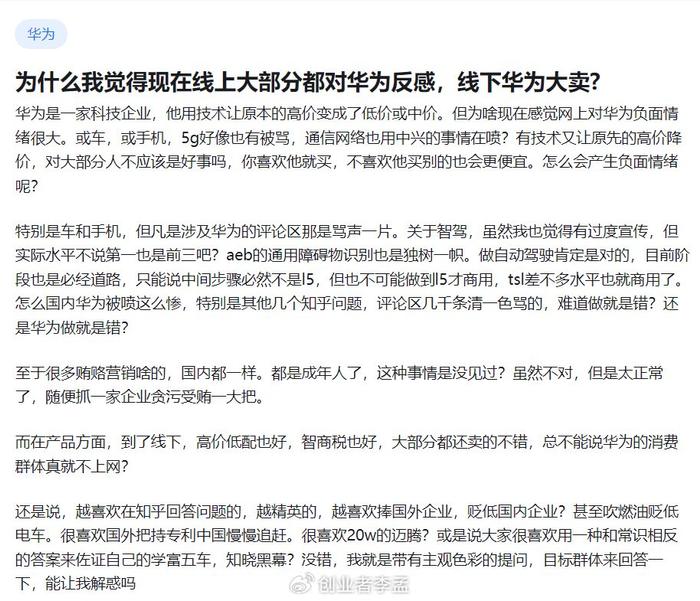
为什么我发现网上大部分都对华为反感,华为线下却依旧大卖?
Xin Lang Cai Jing· 2025-09-03 21:15
Group 1 - The negative sentiment towards Huawei online contrasts with its strong sales offline, indicating a disconnect between public perception and market performance [1][3] - The phenomenon of information bubbles is highlighted, where users are exposed to content that reinforces their existing views, leading to polarized opinions about Huawei [2][12] - Competition among brands, particularly between domestic and foreign products, contributes to negative perceptions of Huawei, as fans of rival brands may express disdain based on personal experiences or brand loyalty [3][5] Group 2 - The influence of fan culture is evident, where groups of consumers rally around their preferred brands, creating a social dynamic similar to fandoms in entertainment [7] - There are external factors at play, including potential organized efforts by certain countries or companies to undermine Huawei's reputation, possibly through paid campaigns or social media manipulation [9][11] - The impact of social media algorithms is significant, as repeated exposure to negative content can shape user perceptions and lead to collective negative sentiment towards Huawei [12][14]