物业管理

Search documents
博裕投资“扫货”高端商场和物业公司
Di Yi Cai Jing· 2025-11-26 03:01
作者 | 第一财经 马一凡 以40亿美元拿下星巴克中国控股权的博裕投资又一次站到了市场的聚光灯下。 除了收购星巴克中国股权,这家仅成立14年的另类资产管理公司,还是中国规模第一大物业企业万物云 的第二大股东,同时也是管理面积超2亿平方米的金科服务的控股股东,并且博裕正在寻求私有化金科 服务。 在房地产领域,博裕投资偏好运营型、服务型的资产,涉足高端商业、物业管理、物流仓储、数据中心 等多个板块,实践其"逆周期控股、顺周期退出"的PE打法。 一笔耗时四年的收购 不久前,金科服务(09666.HK)发布公告称,其控股股东及要约人博裕投资提出经修订的无条件强制 性现金要约,拟收购公司全部要约股份,并建议撤销上市地位。若相关退市决议获通过且条件达成,金 科服务将从香港联交所除牌,成为博裕投资旗下的私人公司,其5年港股上市历程或将宣告终止。 2025.11.26 本文字 数:2360,阅读时长大约4分钟 金科服务是一家物业管理服务公司,原本属于渝系房企金科股份旗下,自2021年引入博裕投资作为战略 投资者后,博裕一步步"吃下"金科服务,目前已经是其第一大股东。 截至目前,金科服务全国管理面积超过2亿平方米。2024年该 ...

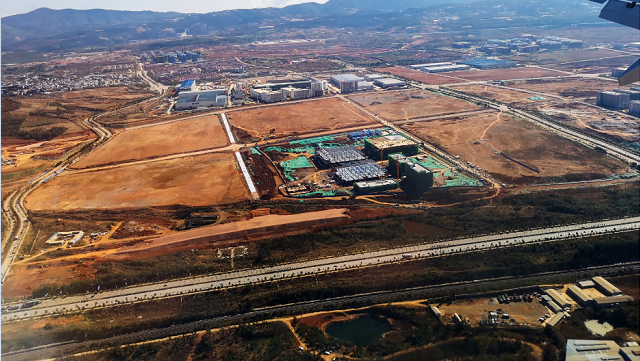
博裕投资“扫货”高端商场和物业公司
第一财经· 2025-11-26 02:54
2025.11. 26 本文字数:2360,阅读时长大约4分钟 作者 | 第一财经 马一凡 以40亿美元拿下星巴克中国控股权的博裕投资又一次站到了市场的聚光灯下。 除了收购星巴克中国股权,这家仅成立14年的另类资产管理公司,还是中国规模第一大物业企业万 物云的第二大股东,同时也是管理面积超2亿平方米的金科服务的控股股东,并且博裕正在寻求私有 化金科服务。 在房地产领域,博裕投资偏好运营型、服务型的资产,涉足高端商业、物业管理、物流仓储、数据中 心等多个板块,实践其"逆周期控股、顺周期退出"的PE打法。 一笔耗时四年的收购 不久前,金科服务(09666.HK)发布公告称,其控股股东及要约人博裕投资提出经修订的无条件强 制性现金要约,拟收购公司全部要约股份,并建议撤销上市地位。若相关退市决议获通过且条件达 成,金科服务将从香港联交所除牌,成为博裕投资旗下的私人公司,其5年港股上市历程或将宣告终 止。 金科服务是一家物业管理服务公司,原本属于渝系房企金科股份旗下,自2021年引入博裕投资作为 战略投资者后,博裕一步步"吃下"金科服务,目前已经是其第一大股东。 截至目前,金科服务全国管理面积超过2亿平方米。2024年 ...
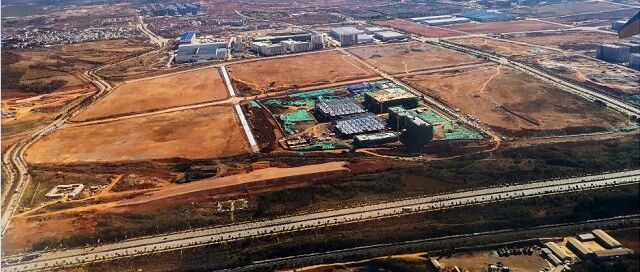
资本棋局下的物管行业转型:博裕资本高价私有化金科服务背后
Xin Lang Zheng Quan· 2025-11-26 02:04
Core Viewpoint - The stock price of Kinko Service (09666.HK) surged over 17% after a nearly month-long suspension, reflecting investor optimism towards the latest acquisition offer from Boyu Capital, which aims for privatization and delisting [1][2] Group 1: Acquisition Offer Details - Boyu Capital proposed a dual-tier pricing structure for the privatization of Kinko Service, with a base offer price of HKD 6.67 per share and an increased offer price of HKD 8.69 per share, representing a 30% price difference [2][3] - To receive the higher price, shareholders must approve the delisting resolution with at least 75% of independent shareholders voting in favor and no more than 10% opposing, while Boyu Capital needs to secure acceptance from at least 90% of unrelated shares [2] - Boyu Capital and its concerted parties currently hold approximately 378 million shares, accounting for about 63.29% of Kinko Service's total issued shares, indicating a need for an additional 32.3% of unrelated shares to meet delisting conditions [2] Group 2: Investment Logic and Strategy - Boyu Capital's investment in Kinko Service is a result of long-term strategic planning, having gradually increased its stake since becoming the largest shareholder in December 2021 [4] - The total investment by Boyu Capital and its concerted parties in Kinko Service has exceeded HKD 40 billion, with potential total expenditures reaching HKD 77 billion if the privatization is successful [4][6] - Boyu Capital's approach aligns with its long-term value investment strategy, focusing on acquiring quality assets during industry downturns and aiming for business restructuring and value enhancement [6] Group 3: Kinko Service's Financial Performance - Kinko Service, once the largest property management company in Southwest China, has seen its stock price decline over 90% from its peak of HKD 85 per share, reflecting significant market challenges [7] - The company reported revenues of approximately HKD 50 billion, HKD 49.8 billion, and HKD 45.9 billion from 2022 to 2024, with cumulative losses nearing HKD 34 billion [7] - However, in the first half of 2025, Kinko Service showed signs of recovery with revenues of about HKD 23.4 billion and a net profit of approximately HKD 65 million, indicating potential for future growth [7][8] Group 4: Industry Context and Trends - The privatization of Kinko Service is indicative of broader adjustments within the Hong Kong property management sector, which has faced significant valuation declines amid a challenging real estate market [9] - Boyu Capital's move to privatize aims to escape regulatory constraints and market pressures associated with being a public company, allowing for more efficient decision-making and reduced compliance costs [9] - The transaction highlights a potential trend of similar privatization efforts among undervalued property management firms in the current market environment [10][11]
“扫货”高端商场和物业公司,博裕投资加码扩张地产版图
Di Yi Cai Jing· 2025-11-26 02:01
除了收购星巴克中国股权,这家仅成立14年的另类资产管理公司,还是中国规模第一大物业企业万物云 的第二大股东,同时也是管理面积超2亿平方米的金科服务的控股股东,并且博裕正在寻求私有化金科 服务。 在房地产领域,博裕投资偏好运营型、服务型的资产,涉足高端商业、物业管理、物流仓储、数据中心 等多个板块,实践其"逆周期控股、顺周期退出"的PE打法。 一笔耗时四年的收购 不久前,金科服务(09666.HK)发布公告称,其控股股东及要约人博裕投资提出经修订的无条件强制 性现金要约,拟收购公司全部要约股份,并建议撤销上市地位。若相关退市决议获通过且条件达成,金 科服务将从香港联交所除牌,成为博裕投资旗下的私人公司,其5年港股上市历程或将宣告终止。 金科服务是一家物业管理服务公司,原本属于渝系房企金科股份旗下,自2021年引入博裕投资作为战略 投资者后,博裕一步步"吃下"金科服务,目前已经是其第一大股东。 截至目前,金科服务全国管理面积超过2亿平方米。2024年该公司营收超过45亿元,但是归母净利润亏 损接近6亿元。 根据房地产研究机构克而瑞发布的中国物业服务企业在管规模榜单,截至2024年末,金科服务的管理规 模在全国物企 ...
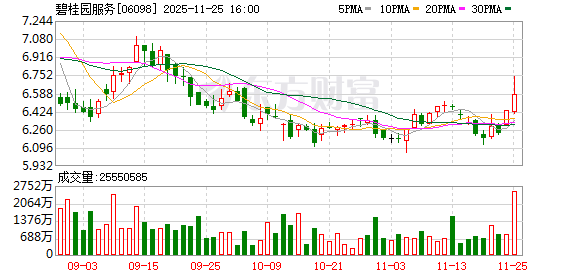
碧桂园服务(06098.HK)11月25日回购328.20万港元,已连续6日回购
Zheng Quan Shi Bao Wang· 2025-11-25 15:11
(文章来源:证券时报网) 碧桂园服务回购明细 | 日期 | 回购股数(万股) | 回购最高价(港元) | 回购最低价(港元) | 回购金额(万港元) | | --- | --- | --- | --- | --- | | 2025.11.25 | 50.00 | 6.570 | 6.560 | 328.20 | | 2025.11.24 | 47.00 | 6.400 | 6.400 | 300.80 | | 2025.11.21 | 179.20 | 6.250 | 6.230 | 1118.72 | | 2025.11.20 | 110.00 | 6.190 | 6.180 | 680.70 | | 2025.11.19 | 100.00 | 6.200 | 6.150 | 617.40 | | 2025.11.18 | 90.00 | 6.300 | 6.220 | 563.65 | | 2025.11.14 | 30.00 | 6.380 | 6.370 | 191.25 | | 2025.11.05 | 23.90 | 6.200 | 6.150 | 147.95 | | 2025.11.04 | ...

空港股份:11月25日召开董事会会议
Mei Ri Jing Ji Xin Wen· 2025-11-25 09:53
Group 1 - The core viewpoint of the article highlights that Konggang Co., Ltd. (SH 600463) announced a board meeting to discuss the change of accounting firm and provided a breakdown of its revenue composition for 2024 [1] - The revenue composition for Konggang Co., Ltd. in 2024 is as follows: construction industry accounts for 71.5%, leasing for 21.76%, property management and others for 7.76%, and other businesses at -1.02% [1] - As of the report, Konggang Co., Ltd. has a market capitalization of 3.4 billion yuan [1] Group 2 - The article also mentions that another company, which recently went public, is under investigation by the China Securities Regulatory Commission due to a significant loss exceeding 100 million yuan and a major client reducing purchases [1]

物业“撤退潮”来了!业主们该何去何从?
商业洞察· 2025-11-25 09:30
Core Viewpoint - The article discusses the increasing trend of property management companies voluntarily withdrawing from residential projects due to financial losses and rising operational costs, leading to a significant impact on homeowners and the property management industry as a whole [6][7][12]. Group 1: Reasons for Property Management Withdrawal - The withdrawal trend is attributed to a cost-revenue imbalance, with property fees being reduced by 20%-35% in over 100 residential communities, causing many companies to incur losses [12][13]. - Operational costs, particularly labor and maintenance, have risen significantly, leading to unsustainable profit margins for property management companies [15][16]. - Homeowner delinquency in fee payments has worsened, with the average collection rate dropping from 83.7% in 2018 to 76.2% in 2023, further straining property management finances [20][21]. Group 2: Impact on Homeowners - Some homeowners express relief at the withdrawal of property management, believing they will no longer have to pay fees, while others worry about the implications for community services and safety [9][10]. - The article highlights a growing divide between well-managed properties and those lacking management, with the former likely to retain or increase property values, while the latter may see significant declines [32][36]. Group 3: Potential Solutions and Innovations - The article suggests that the current crisis could lead to innovative service models, such as flexible pricing and performance-based payment systems, which could foster better relationships between property management and homeowners [40][41][42]. - Examples include a "first service, then pay" model and a tiered fee structure that has successfully improved payment rates and service quality in various communities [48][56]. - Transparency in financial dealings and open communication between property management and homeowners is emphasized as a crucial step towards rebuilding trust and ensuring sustainable operations [60][61].

普陀区全面铺开物业服务“质价双提升” 探索阶梯式、动态型、整合式等调价模式
Jie Fang Ri Bao· 2025-11-25 01:33
Core Insights - The transformation of Hengli Jincang Garden reflects the broader initiative in Putuo District to enhance property services through a dual improvement in quality and pricing [2] - The district has implemented various pricing models, including tiered, dynamic, and integrated pricing, to establish a market-oriented property fee system and improve service quality [2][11] Group 1: Tiered Pricing Model - Wanli Mingxuan, a 26-year-old residential complex, adopted a tiered pricing model to gradually increase property fees over three years, making it more acceptable to residents [4] - The initial property fee was 1.89 yuan per square meter, which was significantly lower than the recommended fee of 3.11 yuan per square meter, leading to a phased increase to 2.38 yuan per square meter [4] - The property fee collection rate exceeded 98% after the implementation of the tiered pricing model, which included community engagement and transparency in the fee allocation [5] Group 2: Dynamic Pricing Model - Macau Xinyuan adopted a dynamic pricing model linked to changes in the local minimum wage, ensuring that property fees adjust in line with market conditions [6][7] - For every 100 yuan increase in the minimum wage, the property fee would increase by 0.08 yuan per square meter, with a clear communication strategy to gain resident support [7][8] - The model was well-received due to its transparency and the involvement of community volunteers in communicating the changes to residents [8] Group 3: Integrated Pricing Model - Nonglin Community, built in the 1980s, faced challenges with multiple property management models and security issues, prompting a unified approach to property management [9][10] - The new property management strategy involved resource sharing and a smart self-management model, which included upgrading security systems and community engagement [10] - The community has begun to establish a maintenance fund and is working on parking management regulations, indicating a move towards a more organized property management structure [11] Group 4: Overall Impact and Future Trends - The various pricing strategies implemented in Putuo District aim to create a market-oriented property service fee system, promoting a cycle of quality and value in property services [11] - The district's approach emphasizes transparency and community involvement, shifting the perception of property fees from a burden to a means of enhancing service quality [11] - The successful models of tiered and dynamic pricing are expected to be replicated in other communities, contributing to the overall stability and sustainability of property management in the region [11]
房地产:2026行业展望及投资策略更新
2025-11-25 01:19
Summary of Real Estate Industry and Company Insights Industry Overview - The Chinese real estate market has cooled since Q2 2023, with housing prices reverting to levels seen before September 2024. New home transaction volumes have seen a year-on-year decline, while second-hand home transactions have weakened on a month-on-month basis. The land market's premium rate is below 5% [1][2]. - A recovery in the market requires addressing high housing price-to-income ratios and excessive inventory, alongside a supportive monetary policy [1]. Key Insights and Arguments - In a neutral scenario, total housing transaction volumes are expected to contract further by approximately 5%, with new construction area declining by 16% year-on-year and real estate investment dropping by about 15% [1][6]. - The current real estate market is in a bottoming phase, with per capita transaction volumes for both new and second-hand homes reaching a low point. A slight decline is anticipated over the next 1-2 years [1][7]. - Urban renovation has potential to stimulate demand, but its effectiveness is uncertain due to land market liquidity constraints [1][8]. - Major real estate companies are trading at over a 40% discount to their net liquidation value, indicating a deep discount level. Price assumptions for 2026 and 2027 suggest a conservative expectation of a double-digit decline [1][9]. Market Conditions and Future Outlook - The real estate cycle's upward shift depends on systemic repairs to existing issues, including a healthy housing price-to-income ratio and stable leverage conditions [3][4]. - The market faces two main challenges: high housing price-to-income ratios in major cities and excessive inventory, which can be addressed through fiscal expansion policies [5][6]. - If policies can effectively address these issues, a more positive market development scenario may emerge, with total housing transaction volumes and new home transaction volumes expected to decline only slightly in 2026 [8][10]. Short-term and Long-term Projections - Short-term caution is advised for real estate stocks, with a potential turning point expected in Q2 2024 as macroeconomic conditions improve [11]. - The commercial real estate sector is projected to perform well in 2025, benefiting from strong same-store sales growth and long-term capital seeking high dividend returns [12]. Commercial Real Estate Insights - The commercial real estate sector is expected to see good performance in 2025, driven by strong same-store sales growth and favorable financing conditions [12][13]. - The market share is increasingly concentrated among leading companies, with significant growth in same-store sales for top operators [13]. - The luxury goods market is expected to recover gradually, with a moderate growth outlook for 2026 [14][15]. Investment Recommendations - For real estate stocks, a cautious approach is recommended, focusing on companies with sustainable rental income and dividend yields, such as Swire Properties and China Resources Land, which are expected to achieve 5-10% rental profit growth alongside a 5-6% dividend yield [19][20]. - The property management sector is projected to grow at a rate similar to 2025, with specific companies like Greentown Service and Poly Property recommended for their strong performance and stable cash flow [20]. Hong Kong Real Estate Market - The Hong Kong real estate market is currently stabilizing, with transaction volumes around 5,000 units. A significant increase in transactions could signal a recovery phase [21][22]. - The market requires strong macroeconomic trends to catalyze further growth, particularly in light of potential interest rate cuts by the Federal Reserve [22].
2025W47房地产周报:政策预期再起,方向节奏如何展望?-20251124
NORTHEAST SECURITIES· 2025-11-24 15:23
Investment Rating - The report maintains an "Outperform" rating for the real estate industry [6] Core Insights - The real estate market is experiencing significant downward pressure on both volume and price, necessitating new policy measures to boost confidence [16][20] - Short-term policies such as mortgage interest subsidies and personal income tax deductions are expected to be implemented to alleviate the current market downturn [39] - The report highlights a potential for structural recovery in the housing market, particularly in first-tier cities, if purchasing restrictions are fully lifted [39] Summary by Sections 1. Market Overview - The real estate market is facing increased downward pressure, with sales volume and prices declining significantly. In October 2025, cumulative sales area decreased by 6.8% year-on-year, and sales value dropped by 9.6% [16] - The report notes that the sales area for new homes in 45 cities totaled 2.72 million square meters, with first-tier cities experiencing a year-on-year decline of 43.19% [5] 2. Policy Directions - The report anticipates policy measures focusing on loosening purchase restrictions, providing mortgage interest subsidies, and implementing personal income tax deductions to stimulate demand [28][31] - There is a growing expectation for the central government to engage in large-scale market-oriented housing stockpiling to stabilize the market [37] 3. Stock Market and Credit Bonds - The A-share real estate sector underperformed the market, with a decline of 5.83%, while the Hong Kong real estate sector outperformed with a decline of 4.94% [41][53] - As of November 21, 2025, the cumulative issuance of real estate credit bonds reached 3,815.39 billion, with a net financing amount of -421.33 billion [41] 4. REITs Market - The REITs index experienced a decline of 1.12% this week, with transaction volumes decreasing by 8.80% [3][12] 5. Land Market - The report indicates a significant increase in land supply and transaction area across major cities, with a 92.79% increase in supply and a 24.37% increase in transaction area [4] 6. Investment Recommendations - The report suggests focusing on three areas within the real estate sector: commercial real estate (e.g., New Town Holdings, China Resources), property management (e.g., Greentown Service), and real estate brokerage (e.g., Beike, Wo Ai Wo Jia) [40]