
房贷贴息

Search documents
宏观专题分析报告:房地产市场政策底已现
SINOLINK SECURITIES· 2026-03-28 12:13
Group 1: Market Overview - The real estate market is expected to return to valuation bottom by 2026, with rental yields in most cities reaching reasonable levels, indicating that the benefits of new real estate policies will match or exceed their costs[2] - Shanghai leads national real estate policies, with initiatives like the acquisition of "old and dilapidated" properties in core urban areas, significantly boosting the second-hand housing market[2] Group 2: Expected Policies - Key policies anticipated to boost the real estate market include enhanced urban renewal efforts, with a focus on transforming urban villages and dilapidated housing, supported by recent government articles emphasizing the importance of urban renewal[10] - The introduction of acquisition policies for second-hand homes is becoming more feasible as rental yields in core areas stabilize, with cities like Ningbo and Shaoxing announcing acquisition plans for older properties[12] - Nearly 20 cities, including Nanjing and Dongguan, have introduced mortgage interest subsidies to facilitate the transition between first and second-hand homes, with more cities expected to follow suit[13] Group 3: Financial Support Measures - Purchase subsidies are being offered in various cities, with Huai'an providing 2%-6% differentiated subsidies for eligible new home buyers, while Hangzhou has introduced "home purchase + consumption vouchers" policies[13] - The increase in housing provident fund loan limits is expected to alleviate home buying pressure, with Shanghai raising its limit to 2.4 million yuan, which has led to increased transactions in the second-hand market[14]
南京-贴息-新政背景及影响展望
2026-03-26 13:20
Summary of Nanjing Real Estate Market Conference Call Industry Overview - The Nanjing real estate market is experiencing significant contraction, with new home sales projected to be only 20,000 units in 2025, averaging less than 2,000 units per month, a sharp decline from the peak of 117,000 units in November 2016 [1][2] - There is a severe price discrepancy between new and second-hand homes, with new homes averaging 27,000 CNY/sqm compared to 18,000 CNY/sqm for second-hand homes, leading to a shift in demand towards the latter [1][3] - The inventory pressure is substantial, with a visible inventory depleting over approximately 2 years, while hidden inventory, including undeveloped land, is estimated at around 200,000 units, requiring about 9 years to deplete at current sales rates [1][3] Key Policy Insights - The recently introduced mortgage interest subsidy policy aims to stimulate the new home market by encouraging "sell old, buy new" transactions. The government has set up a 100 million CNY fund, providing a one-time subsidy of 1% of the commercial loan amount for eligible buyers [2][3] - The policy is effective from March to October 2026, but its impact is seen as limited due to the small subsidy pool and ongoing price declines in the housing market [2][3] Market Dynamics - The Nanjing real estate market is characterized by a stable demand for second-hand homes, maintaining an annual transaction volume of around 100,000 units even during downturns [7][8] - The average total price for second-hand homes in 2025 is reported at 1.17 million CNY, significantly down from 2.3 million CNY in 2021, with a notable increase in the proportion of transactions for homes priced below 1.5 million CNY [7][8] - The market is witnessing a shift in buyer preferences, with a focus on low-priced, high-convenience "old and broken" homes, which have shown better rental yields of 3% to 5% in core areas [9][12] Inventory and Sales Pressure - The new home market faces greater inventory pressure compared to the second-hand market, with a visible inventory of 48,000 units and a hidden inventory of 200,000 units, leading to a potential 9-year depleting period [12][13] - The fourth-generation residential projects are struggling with sales due to high pricing compared to second-hand homes, with a market acceptance threshold for premium pricing now below 20% [13][14] Future Outlook - The market is expected to see a temporary boost in transactions due to seasonal factors and the new subsidy policy, with predictions of a 20% to 30% increase in second-hand home sales in the short term [15] - However, the sustainability of this policy's impact remains uncertain, with potential for diminishing effects after 6 months unless further measures are introduced [15][16] Conclusion - The Nanjing real estate market is currently in a challenging phase, with significant inventory issues, price discrepancies, and a need for effective policy measures to stimulate demand and stabilize prices. The focus on affordable housing and rental yields indicates a shift in market dynamics that could shape future investment opportunities.
若政府房贷贴息政策实施,效果如何?
Soochow Securities· 2026-02-25 09:30
1. Report Industry Investment Rating No information provided in the content. 2. Core Viewpoints of the Report - The mortgage interest subsidy policy can activate demand in the short term, but its overall effectiveness in boosting sales highly depends on the local market fundamentals and policy coordination environment [3][23]. - The mortgage interest subsidy policy is a tactical tool effective in a specific stage, and its ultimate effectiveness depends on whether it can form a synergy with supply - side reforms and macro - income improvement policies to jointly promote the market towards a new balance [24]. - In 2026, the possibility of a unified national standard and full - coverage mortgage interest subsidy policy is low. It is more likely to be gradually promoted in a top - down manner with local governments implementing policies according to the city's situation [36]. 3. Summary According to the Directory 2. Mortgage Interest Subsidy Policy's Main Forms and Burden - Reduction Effect Calculation - **Fixed - ratio subsidy model**: It is the most widely used mainstream model. Local governments calculate the total financial subsidy based on a certain fixed ratio of the initial loan principal for eligible first - home purchase loans within the policy window period. For example, Nanjing, Changchun, and Wuhan have different fixed - ratio subsidy policies [16]. - **Interest - ratio subsidy model**: Some regions use the method of subsidizing a percentage of the loan interest. It is usually applied in scenarios that require long - term incentives or refined support for specific groups, such as Yuncheng's policy for high - level talents [17]. - **Real - estate enterprise - oriented subsidy model**: It is a market - based supplementary behavior. Real - estate developers initiate and bear all costs to promote the sales of specific properties. In some cases, it can cooperate with local government policies [21]. - **Burden - reduction effect calculation**: Assuming a loan of 1 million yuan, a 30 - year term, and an estimated interest rate of 3.2%, different cities' policies have different monthly payment reduction effects, with the total subsidy amount and equivalent actual interest rates varying [22]. 3. Evaluation of Policy Effects in Pilot Cities: Impact on Real Estate Sales - **Tracking the effects of major pilot cities**: There are significant regional differences in policy effects. Nanjing Yuhuatai District had a significant short - term stimulation effect, with a 28.6% year - on - year increase in commercial residential sales area from June to December 2024, far exceeding the 4.9% increase in Nanjing city. Other regions had limited improvements [3][23]. - **Analysis and limitations of mortgage interest subsidy policy effects**: The policy can activate market demand and stabilize market expectations in the short term, but it has short - term and volatile characteristics. It cannot fundamentally reverse the market trend determined by long - term factors and cannot solve structural contradictions in the market [24]. 4. Prediction of Fiscal Fund Requirements if the Mortgage Interest Subsidy Policy is Implemented Nationwide in 2026 - **Prediction of new mortgage loan scale in 2026**: It is predicted that the total sales of new residential properties in 2026 will be about 6.2 trillion yuan, and that of second - hand residential properties will be about 8.8 trillion yuan. The new mortgage loan scale for new commercial residential properties is about 1.95 trillion yuan, and that for second - hand residential properties is about 2.75 trillion yuan [26][29]. - **Analysis of fiscal feasibility and the possibility of nationwide implementation**: The mortgage interest subsidy policy can achieve multiple policy goals, but it cannot solve deep - seated contradictions in the real estate market alone. Fiscal cost is a basic factor for policy promotion. A unified national policy is neither realistic nor sustainable. It is more likely to be gradually promoted in a top - down manner with local governments implementing policies according to the city's situation [35][36].
楼市王炸福利!春节后1% 房贷贴息来袭,所有买房人月供要降了!
Xin Lang Cai Jing· 2026-02-10 04:37
Core Viewpoint - The introduction of a 1% mortgage interest subsidy policy is expected to significantly reduce monthly payments for over 150 million households with mortgages, providing a substantial financial relief and stabilizing the real estate market while boosting domestic demand [1][12]. Policy Essence - The 1% mortgage subsidy is not merely a reduction in interest rates but a three-way win involving fiscal support, bank lending, and benefits for homebuyers [3][4]. - The policy is designed to alleviate the pressure on banks' profit margins while providing financial relief to borrowers, ensuring banks maintain their existing interest rates [4] Applicable Scope - The policy targets three main groups: first-time homebuyers with new commercial loans issued between September 1, 2025, and August 31, 2026; eligible users of commercial-to-public loans; and families taking out renovation loans within one year of purchasing a home [10][11]. - Certain exclusions apply, such as commercial properties and investment purchases, to ensure the policy's sustainability and effectiveness [11]. Multi-Dimensional Impact - The policy aims to stimulate the real estate market by lowering the actual repayment costs for homebuyers, thus encouraging demand and stabilizing the market [12]. - It also helps banks by reducing the likelihood of early loan repayments, which can disrupt their financial stability [12]. - On a macroeconomic level, the reduction in mortgage pressure is expected to enhance consumer spending, thereby supporting economic recovery and creating a positive cycle of housing affordability, increased consumption, and economic growth [13]. Financial Relief Calculations - For first-time homebuyers, a loan of 1 million yuan at a 3.06% interest rate would see monthly payments drop from 3,860 yuan to 3,410 yuan, saving approximately 1.62 million yuan in interest over three years [8]. - For improving families with a loan of 200 million yuan at 3.8%, monthly payments would decrease from 8,993 yuan to 7,839 yuan, saving over 13,800 yuan annually [9]. Conclusion - The 1% mortgage subsidy policy is a significant initiative aimed at enhancing the living conditions of homebuyers while promoting a stable and healthy real estate market, with the potential to positively impact the broader economy as it rolls out [14].

楼市重磅福利!1% 房贷贴息将要来袭,所有房贷族坐等月供降!
Sou Hu Cai Jing· 2026-02-06 13:34
Core Viewpoint - The 1% mortgage interest subsidy policy is a significant initiative aimed at reducing the financial burden on home loan borrowers, promoting stability in the real estate market, and enhancing consumer spending, thereby contributing to economic recovery [1][9]. Group 1: Policy Overview - The 1% mortgage interest subsidy is not a simple reduction in mortgage rates but a joint financial contribution from central and local governments to cover 1% of the annual mortgage interest, allowing banks to maintain their existing interest rates [3][4]. - The policy has been developed through multiple local trials since 2024, with cities like Changchun, Wuhan, and Nanjing implementing various models that cater to local market conditions [4][9]. Group 2: Financial Impact on Borrowers - For first-time homebuyers with a loan of 1 million yuan over 30 years at an average interest rate of 3.06%, the monthly payment would decrease from approximately 3,860 yuan to 3,410 yuan, saving about 450 yuan per month [6]. - For families looking to upgrade, a loan of 2 million yuan at an interest rate of 3.8% would see monthly payments drop from 8,993 yuan to 7,839 yuan, saving over 1.38 million yuan annually [6]. Group 3: Eligibility and Application Process - The policy targets specific groups, including first-time homebuyers who secure loans between September 1, 2025, and August 31, 2026, and those transitioning from commercial to public loans [8][10]. - The application process is streamlined into four steps: confirming eligibility, preparing necessary documents, submitting the application, and waiting for the subsidy to be credited to the repayment account [10]. Group 4: Broader Economic Implications - The policy is expected to stimulate demand in the real estate market by lowering the effective repayment costs for borrowers, thus encouraging home purchases and stabilizing the market [9][14]. - It also aims to alleviate pressure on banks by maintaining their profit margins while supporting consumer spending, contributing to a positive cycle of housing affordability, increased consumption, and economic recovery [9][14].
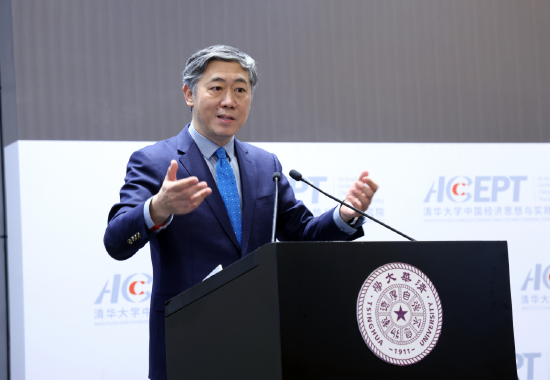
李稻葵:房地产不光有金融属性,还有民生属性
Xin Lang Cai Jing· 2026-01-13 07:08
Core Viewpoint - The 50th Tsinghua University China and World Economy Forum emphasizes the need for a housing loan interest subsidy policy to reverse residents' home buying expectations and stabilize housing prices in the short term [1][3]. Group 1: Economic Recommendations - The report suggests implementing a housing loan interest subsidy to stimulate the housing market, leveraging a small financial input to unlock a significantly larger market potential [1][3]. - The maximum potential for the "old-for-new" policy is estimated at 10 trillion, primarily involving durable consumer goods like refrigerators and cars [1][3]. Group 2: Real Estate Market Insights - The total value of the real estate market is approximately 500 trillion, with 70% (280 trillion) owned by residents, highlighting its importance beyond just financial attributes to a matter of livelihood [1][4]. - The issue of negative equity among young homeowners is framed as a significant social concern, affecting consumer confidence and behavior [1][4].
楼市再添“猛料”!事关买房人的钱袋子!真能落地吗?
Sou Hu Cai Jing· 2025-12-30 03:17
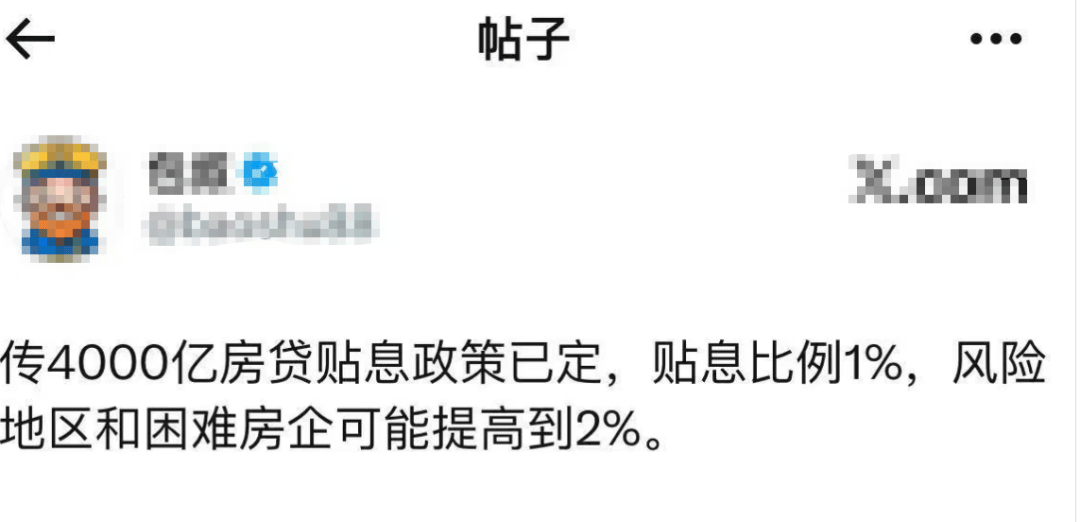
Core Viewpoint - The discussion around "mortgage interest subsidies" has intensified online, with rumors suggesting that the government may implement a 1% subsidy on mortgage interest for homebuyers to address the current downturn in the real estate market. However, this information has not been officially confirmed yet [1]. Group 1: Mortgage Interest Subsidy Details - There are various interpretations of the rumored subsidy, with some suggesting it may apply only to new mortgages, while others propose it could also benefit high-risk areas or struggling real estate companies [3]. - The concept of mortgage interest subsidies can be understood as a government supplement to the existing mortgage interest rates. For instance, a 1% subsidy would reduce the current first mortgage rate of 3.05% (LPR minus 45 basis points) to approximately 2.05%, significantly lowering costs for homebuyers [3]. - An example illustrates that for a property priced at 3 million, a 1% reduction in interest rates could save around 500,000 over 30 years, which could encourage hesitant buyers to enter the market and stimulate domestic consumption [3]. Group 2: Previous Implementations and Variations - The concept of mortgage interest subsidies is not new, as cities like Hangzhou, Nanjing, and Wuhan have previously implemented similar measures. For example, in December 2023, Hangzhou's Linping District announced a policy providing 1-3% interest subsidies for eligible loans on new residential properties for a period of 36 months [4]. - These differentiated subsidy policies, targeting specific regions and properties, differ from a unified national or local government subsidy approach [5]. Group 3: Broader Economic Context - The Loan Prime Rate (LPR), closely related to mortgages, has remained unchanged for seven months, with only a single reduction of 0.1% in May 2023. The current LPR for five years and above stands at 3.5%, with market speculation suggesting a potential reduction in the first quarter of 2026 [5]. - The anticipation of mortgage interest subsidies reflects a broader hope for new policies to stimulate the struggling real estate market, which is seen as a crucial pillar of the national economy [8]. - In contrast to mortgage interest subsidies, a consumption loan subsidy policy has already been initiated, aiming to lower consumer credit costs and stimulate spending across various sectors, including automotive and education [7].
网传!房贷贴息真要来了!
Sou Hu Cai Jing· 2025-12-16 18:38
Group 1 - The core viewpoint of the article is that there is a significant shift in the real estate market, with discussions around mortgage interest subsidies gaining traction as a potential nationwide policy to support the housing sector [1][3] - The proposed measures include nationwide personal housing loan interest subsidies, an increase in the special additional deduction for housing loan interest from 1,000 yuan to 2,000 yuan per month, and a reduction in transaction taxes related to housing sales [1][3] - These measures aim to reduce the financial burden across the entire "buying-loaning-holding" chain, signaling a comprehensive approach rather than isolated stimuli [3] Group 2 - The potential impact of mortgage interest subsidies is substantial, as they would lower the cost of funds, making home purchases more accessible and potentially increasing transaction activity in the market [3][4] - According to estimates, if the average down payment ratio is 50%, the loan scale could reach approximately 7 trillion yuan, and a 1% subsidy could result in a subsidy scale close to 700 billion yuan [4][5] - For an individual borrower with a loan of 2 million yuan over 30 years at an interest rate of 3.1%, a 1% subsidy could reduce monthly payments by about 1,048 yuan, equating to an annual savings of approximately 12,570 yuan [6][7] Group 3 - Local markets have begun to take proactive measures, with some properties in Guangzhou offering mortgage subsidy promotions, providing 1,000 yuan per month for 30 years, totaling a maximum subsidy of 360,000 yuan per unit [9] - Price adjustments in Guangzhou have also been noted, with significant reductions in property prices, indicating a strategic move to stimulate market interest [10] - The luxury property market in Shanghai continues to lead, with a notable percentage of high-value transactions, suggesting that if supportive policies are implemented, confidence in the real estate market could strengthen, particularly in the luxury segment [12][13]
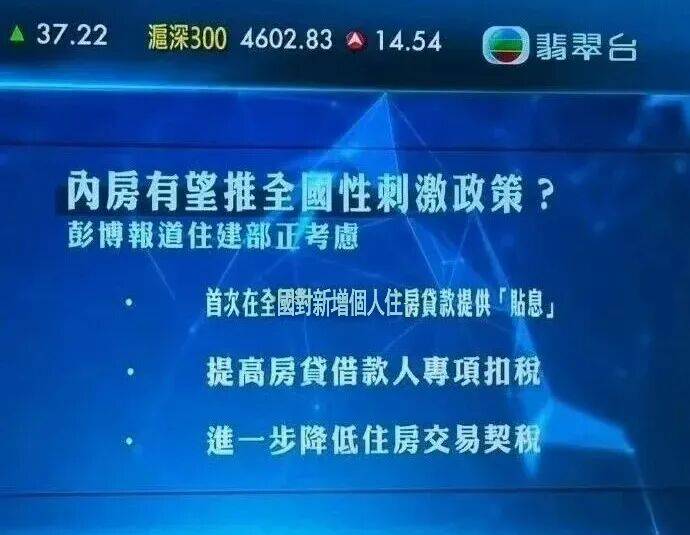
房贷贴息缘何引发热议
Bei Jing Shang Bao· 2025-12-15 14:40
Core Viewpoint - The discussion around mortgage interest subsidies is gaining momentum as pilot programs in certain regions have sparked expectations for a nationwide policy rollout, aimed at reducing the financial burden on homebuyers and stimulating housing demand [1][3]. Group 1: Policy Implementation - The mortgage interest subsidy policy is being piloted in various regions, with common features such as regional limitations, prioritization of first-time homebuyers, capped amounts, and defined timeframes [3]. - Wuhan has announced a subsidy of 1% on the initial loan amount for first-time homebuyers in specific districts, with a maximum subsidy of 20,000 yuan, distributed over two years [3]. - Changchun's policy is more extensive, offering a 1% subsidy for up to 10,000 yuan per year for three years, applicable to both public and commercial loans [4]. Group 2: Economic Impact - The 1% mortgage interest subsidy effectively acts as an "invisible interest rate cut," creating a win-win situation where fiscal subsidies support banks while reducing costs for homebuyers [4]. - For a 1 million yuan loan over 30 years at an average interest rate of 3.06%, the monthly payment would decrease from 3,860 yuan to 3,410 yuan with the subsidy, saving approximately 16,200 yuan in interest over three years [4]. - The policy is expected to alleviate cash flow pressures for existing homeowners and lower entry barriers for potential buyers, thereby stimulating housing demand [4][6]. Group 3: Banking Sector Implications - Banks are crucial in executing the subsidy process and ensuring fund distribution, facing challenges from narrowing net interest margins due to market rate reforms and economic support measures [5]. - The average net interest margin for banks has dropped to 1.42%, with state-owned banks at 1.31%, indicating ongoing profitability pressures [5]. - The subsidy model allows banks to maintain their interest rates while the fiscal subsidy covers the difference, thus protecting their profit margins [7]. Group 4: Regional Variations and Fiscal Considerations - The implementation of the subsidy policy may vary significantly across regions due to differing economic strengths and housing market conditions, potentially leading to uneven fiscal impacts [8]. - Core cities with high housing prices and loan volumes will face greater fiscal burdens compared to smaller cities, which may struggle to allocate funds for subsidies [8].

【西街观察】理想和现实之间的房贷贴息
Bei Jing Shang Bao· 2025-12-15 14:20
Group 1 - The core viewpoint of the news is the increasing discussion around the mortgage interest subsidy policy, which aims to alleviate the financial burden on homebuyers and stimulate consumption [1] - The mortgage interest subsidy policy is not new, as cities like Hangzhou, Nanjing, and Wuhan have already implemented regional trials since the end of 2023, providing interest subsidies to reduce monthly payments for homebuyers [1] - The policy is expected to enhance residents' purchasing power and release consumption space that has been squeezed by mortgage payments, aligning with the broader goal of expanding domestic demand [1] Group 2 - The mortgage interest subsidy can help stabilize the real estate market by lowering home purchase costs, thereby stimulating both rigid and improved housing demand [1] - There are concerns regarding the sustainability of fiscal policies, as large-scale subsidies could increase local government debt, necessitating careful coordination of financial resources between central and local governments [2] - The implementation of the subsidy should be time-bound and gradually phased out to avoid long-term market distortions, and the intensity of the subsidies must be carefully managed to prevent excessive risk in the banking sector [2]