私募

Search documents
北上广浙主观私募近一年10强揭晓!正收益占比95%!同犇、北京禧悦、优波分别夺冠
私募排排网· 2025-07-30 10:00
本文首发于公众号"私募排排网"。 (点击↑↑ 上图查看详情 ) 近一年以来,A股市场经历"9.24"行情的转折后,市场活跃度大幅提升。今年7月,沪指更是接连突破3500点、3600点两大平台,再度强化了市 场赚钱效应。 在此期间,不少主观私募抓住新题材的机会,业绩实现大幅跃升,主观私募的排名迎来大洗牌 。私募排排网数据显示,近1年至少有3只产品符 合排名规则的主观私募共有269家,占私募总数的51.63%,比量化私募(156家)和混合型私募(96家)数量更多。从业绩 来看, 269家主观私 募近1年收益均值、中位数分别为31.43%、22.9%,正收益占比95.54%。 按照办公城市所在地区划分,在广东地区、上海地区、浙江地区、北京地区以及其他地区的私募中, 广东地区的主观私募数量最多,共有 81 家,近1年平均收益为36.12%,位居第2,仅次于浙江地区(36.75%)。 | 属地区 | 办公城市所 至少有3只产品符合 排名规则的公司数 | 近1年平均收益 | 近1年收益中位数 | 正收益占比 | | --- | --- | --- | --- | --- | | 广东 | 81 | 36.12% | 28 ...


新趋势?量化私募开始“卷”调研,电子、医药生物、机械设备居前三
Xin Lang Cai Jing· 2025-07-30 03:01
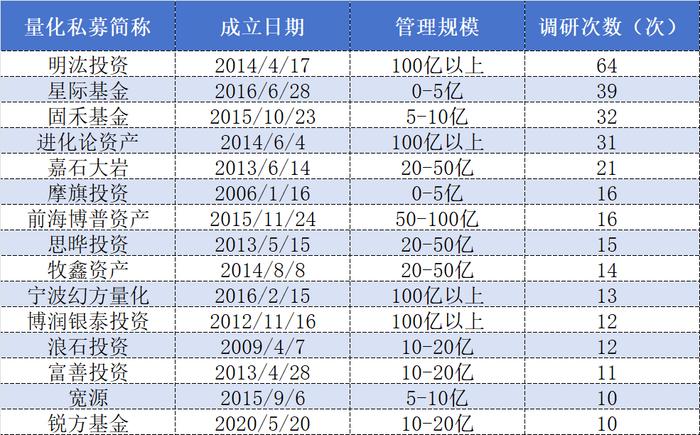
智通财经记者 | 龙力 量化私募开始"卷调研"了? 私募排排网数据显示,截至7月24日,今年以来一共有137家量化私募累计调研达581次,涉及到29个申 万一级行业中的408只个股。其中,有15家量化私募今年以来的调研总次数不少于10次。 | 表 | | --- | 格:今年以来调研总次数不少于10次的量化私募名单(截至7月24日)数据来源:私募排排网、智通财 经整理 排排网集团旗下融智投资FOF基金经理李春瑜对智通财经表示,量化私募机构对上市公司的调研活动明 显升温,这一现象主要受两大因素推动:其一,部分头部量化机构正着手组建主观投研团队,以丰富其 多策略投资体系,增强收益的多元化;其二,在行业管理规模快速扩张的背景下,传统量价因子的超额 收益持续衰减,促使量化私募转向更深入的基本面研究,而上市公司调研正是获取高质量基本面数据的 关键环节。 "量化私募调研升温的核心动因是策略收益来源的多元化需求和市场环境与监管驱动的范式转型。" 尚 艺投资总经理王峥对智通财经表示。 王峥进一步对智通财经解释称,首先传统量价因子因策略同质化与市场有效性提升,超额收益持续衰 减,量化私募可以通过组建主观研究团队,将基本面分析融 ...
私募募资端潮涌 多路活水交汇推高市场信心
Zhong Guo Zheng Quan Bao· 2025-07-29 22:09
Core Viewpoint - The private equity fundraising sector is experiencing a significant resurgence, with various indicators suggesting a strong influx of capital into the market, driven by diverse funding sources and robust performance from established firms [1][2][4]. Fundraising Trends - A notable foreign private equity firm in Shanghai reported a rapid increase in fundraising, projecting to reach 50 billion by year-end, driven by high demand from banks and wealth management companies [2]. - The average position of domestic stock private equity has risen to 77.4%, with top-tier firms reaching 83.3%, indicating a strong recovery in fundraising activities [3]. Market Dynamics - The private equity industry is undergoing a "threefold recovery," characterized by net capital inflows, active product issuance, and increasing positions [2][3]. - There is a growing interest in "fixed income plus" strategies among conservative clients, reflecting a shift in perception towards equity assets [4]. Capital Inflows - Various factors are contributing to increased capital inflows, including declining deposit rates, limited returns on fixed income assets, and a strong performance in the stock market [5]. - The active participation of individual investors and the steady inflow of foreign capital are creating a new dynamic in the market [5][6]. Market Outlook - The market sentiment towards A-shares is optimistic, with expectations of significant price elasticity and a potential structural bull market [7]. - The overall valuation of A-shares is considered low, with substantial room for revaluation, particularly if economic fundamentals continue to improve [7][8].
私募募资端潮涌多路活水交汇推高市场信心
Zhong Guo Zheng Quan Bao· 2025-07-29 21:07
Core Insights - The private equity fundraising sector is experiencing a significant resurgence, with various indicators showing a strong influx of capital into the market [1][2][3] - Major private equity firms are optimistic about the current market dynamics, expecting this momentum to inject substantial vitality into the market [1][2] Fundraising Trends - A notable foreign private equity firm in Shanghai reported a rapid increase in fundraising, projecting a rise from 20 billion to potentially 50 billion by year-end, driven by high demand from banks and wealth management companies [1] - The private equity market is undergoing a "threefold recovery," characterized by net capital inflows, active product issuance, and increasing positions [2] - Recent data indicates that the average position level of domestic stock private equity has surged to 77.4%, with top-tier firms reaching an impressive 83.3% [2] Market Dynamics - There is a noticeable shift in client preferences, with conservative investors showing renewed interest in equity assets, reflecting a significant change in sentiment compared to previous years [3] - External factors, such as declining deposit rates and limited returns on fixed-income assets, are driving retail investors to allocate more towards A-shares [4] - The influx of various funding sources, including long-term institutional investors and active retail participants, is creating a robust support system for the market [4][5] Future Outlook - The market sentiment towards A-shares is increasingly optimistic, with many private equity firms predicting that market elasticity may exceed expectations [5][6] - The current low valuation of A-shares presents substantial revaluation potential, with expectations of a structural bull market in the second half of the year [6][7] - The alignment of improved macroeconomic conditions with potential valuation increases is creating a rare resonance, suggesting a promising outlook for future market performance [7]
持有香港9号牌的私募最新全名单、业绩曝光!黑翼等3家头部量化今年出海!
私募排排网· 2025-07-28 03:54
Core Viewpoint - The article discusses the trend of private equity firms in China seeking overseas assets, particularly through obtaining the Hong Kong 9 license, which allows them to establish asset management subsidiaries in Hong Kong and manage USD funds directly, reflecting a strategic internationalization effort [2][3]. Group 1: Overview of Licensed Private Equity Firms - As of July 21, 2025, there are 88 private equity firms that have obtained the Hong Kong 9 license and are in good standing [2]. - Among these licensed firms, 58 are subjective private equity firms, 21 are quantitative firms, and 9 are hybrid firms [2]. - In terms of scale, 38 licensed firms manage over 5 billion RMB, accounting for approximately 10% of the total, while 50 firms managing below this threshold represent only 0.66% [3]. Group 2: Geographic Distribution - The majority of licensed private equity firms are located in major coastal cities, with Shanghai having 30 firms, Shenzhen 21, and Beijing 14 [3]. Group 3: Recent License Acquisitions - In 2025, three leading quantitative private equity firms, namely Pansong Asset, Blackwing Asset, and Qianhai Bopu Asset, obtained the Hong Kong 9 license [4]. - Blackwing Asset, which received its license on March 24, 2025, is noted for its strong performance across various time frames [4][5]. Group 4: Performance Rankings - For the first half of 2025, the top-performing private equity firms include Jinhua Asset, Tianyan Capital, Longqi Technology, Ningbo Huansong Quantitative, and Jinge Liangrui, all of which are quantitative firms [6][10]. - Tianyan Capital achieved the highest returns over the past year, followed by Longqi Technology and Blackwing Asset [10][11]. - In the last three years, the top firms include Shenhui Investment, Tianyan Capital, and Baizhi Capital, with Shenhui Investment leading the rankings [14][15]. Group 5: Investment Strategies and Focus - Blackwing Asset, established in 2014, has developed a comprehensive AI-driven quantitative investment strategy, covering various approaches such as quantitative stock selection and market-neutral strategies [5]. - Tianyan Capital, founded in 2014, focuses on a pure quantitative and objective investment philosophy, managing approximately 26 billion RMB [11][12]. - The article highlights the shift in investment strategies among firms like Dongfang Gangwan, which has begun to focus on global markets and AI-related sectors [17][18].
监管层出手 推动私募业正本清源
news flash· 2025-07-27 22:38
监管层出手 推动私募业正本清源 智通财经7月28日电,海南、四川、深圳等多个证监局近日频频出手,对违规私募采取行政监督管理措 施。据统计,截至7月25日,今年以来各证监局"点名"了上百家私募的违规行为,中基协发布的纪律处 分书超过200张,注销登记的私募超600家。业内人士表示,今年以来监管部门进一步引导私募规范发 展,行业优胜劣汰显著加速,未来私募管理人不仅要提升专业水平,还要严守合规底线。 ...
灵均投资36.79%领跑!量化1000指增策略碾压300指增,中小盘风格主导私募业绩分化
Sou Hu Cai Jing· 2025-07-26 16:41
Core Insights - Quantitative private equity has shown significant performance differentiation in the market this year, with small and mid-cap strategies outperforming large-cap strategies, reflecting structural changes in the market that deeply impact different investment strategies [1] Group 1: Performance of Quantitative Strategies - As of July 11, the Quantitative 1000 index enhancement strategy has performed the best, with Lingjun Investment leading at a 36.79% year-to-date return, while other institutions like Xinhong Tianhe, Longqi, and Qilin also surpassed the 30% mark [3] - The Quantitative 500 index enhancement strategy also performed well, with Xinhong Tianhe and Abama's related products achieving over 30% year-to-date returns [3] - In contrast, the Quantitative 300 index enhancement strategy lagged, with the highest year-to-date return at only 19.13% [3] - The Quantitative stock selection strategy demonstrated the strongest profitability, with Xiaoyong's strategy leading the market at 46.26% year-to-date return, and other institutions like Ruishengming and Ziwuyou also exceeding 40% [3] Group 2: Market Trends and Structural Changes - The market this year has clearly favored small and mid-cap stocks, providing abundant sources of excess returns for related quantitative strategies [4] - The CSI 1000 index, primarily composed of small and mid-cap stocks, has significantly outperformed the CSI 300 index, benefiting from policies favoring specialized and innovative enterprises [4] - The lower research coverage of small and mid-cap stocks leads to more pricing discrepancies, creating opportunities for quantitative strategies to capture excess returns [4] - Increased market volatility has also created a favorable environment for quantitative strategies, as small and mid-cap stocks typically exhibit higher volatility, allowing strategies to profit from capturing liquidity premiums [4] Group 3: Scale Effects and Strategy Differentiation - Billion-yuan private equity firms exhibit clear scale advantages in index enhancement strategies, dominating the top 20 in both the Quantitative 1000 and 500 index enhancement strategies [5] - Large institutions, with assets under management exceeding 5 billion, achieved an average return of 18.30% in their index enhancement products, with a staggering 99.25% of products generating positive excess returns [5] - Medium-sized private equity firms had an average return of 17.30%, while small firms saw their average return drop to 16.41% [5] - The performance differentiation among quantitative private equity firms is increasingly evident, with over a 15 percentage point difference between the highest and the 20th return in the Quantitative 1000 index enhancement strategy [5]

7.25犀牛财经晚报:债券基金或遭遇较大赎回压力 金饰价格跌破1000元/克
Xi Niu Cai Jing· 2025-07-25 11:30
Group 1: Regulatory Developments - The China Securities Regulatory Commission (CSRC) has approved the registration of monthly average futures for linear low-density polyethylene, polyvinyl chloride, and polypropylene at the Dalian Commodity Exchange [1] - The Guangzhou Futures Exchange is actively promoting the research and listing of platinum, palladium, and lithium hydroxide futures, expected to launch this year [1] Group 2: Market Trends - The number of ETFs with over 10 billion yuan in assets has surpassed 90, with the total ETF scale exceeding 4.6 trillion yuan, driven by thematic products in technology, dividends, and innovative pharmaceuticals [1] - Bond funds are facing significant redemption pressure, with over 200 billion yuan in bond sales in the first four days of the week, including nearly 100 billion yuan in a single day [2] Group 3: Insurance Sector - The preset interest rate for traditional life insurance products has been lowered by 50 basis points to 2.0%, while the guaranteed interest rate cap for participating insurance has been reduced to 1.75% [3] Group 4: Company Performance - IMAX China reported a record 25 million moviegoers in the first half of 2025, generating approximately 416 million yuan in revenue, doubling the box office compared to the same period last year [4] - LVMH's net profit for the first half of 2025 fell by 22% to 5.7 billion euros, with a significant decline in sales in Japan due to currency appreciation [4] - Vanke has successfully sold the Shanghai Jinqiao Wanchuang Center project, with market speculation suggesting a transaction price of around 1.4 billion yuan [5] - China Communications Construction Company signed new contracts worth 991.05 billion yuan in the first half of the year, a year-on-year increase of 3.14% [5] - Fudan Fuhua terminated the transfer of a 28% stake in a subsidiary due to a lack of interested buyers [6] - Feima International received 437 million yuan in performance compensation from its controlling shareholder [7] - Shanghai Construction Group reported a net profit of 710 million yuan in the first half of the year, a decrease of 14.04% [8] - Funi Co., Ltd. achieved a net profit of 1.337 billion yuan in the first half of the year, an increase of 12.48% [10] - Western Mining reported a net profit of 1.869 billion yuan in the first half of the year, a growth of 15% [11] - Bomaike's net profit dropped by 80.42% to 12.39 million yuan in the first half of the year [12]





半年度百强量化私募榜揭晓!量创、云起夺冠亚军!稳博、阿巴马等领衔百亿!
私募排排网· 2025-07-25 10:47
Core Viewpoint - In the first half of the year, quantitative strategies outperformed discretionary strategies, benefiting from ample market liquidity, active trading, and a strong small-cap style, with quantitative long strategies achieving an average return of 17.54% [2][3]. Summary by Sections Performance of Quantitative Strategies - The average return for 592 quantitative long products was 17.54%, with a positive return ratio of 96.11%, significantly outperforming other quantitative secondary strategies [2][3]. - In contrast, 329 quantitative CTA products had an average return of only 3.66%, ranking just above convertible bond and options strategies [2][3]. Performance of Various Secondary Strategies - The performance of different quantitative strategies in the first half of the year is as follows: - Quantitative Long: 592 products, 17.54% average return, 96.11% positive return ratio - Convertible Bond Trading: 37 products, 9.13% average return, 94.59% positive return ratio - Stock Long-Short: 20 products, 8.23% average return, 95.00% positive return ratio - Composite Strategy: 136 products, 8.14% average return, 92.65% positive return ratio - Bond Composite: 14 products, 6.64% average return, 100.00% positive return ratio - Stock Market Neutral: 179 products, 6.08% average return, 95.53% positive return ratio - Bond Enhanced: 3 products, 5.77% average return, 100.00% positive return ratio - FOF: 16 products, 5.24% average return, 81.25% positive return ratio - Macro Strategy: 24 products, 4.15% average return, 66.67% positive return ratio - Arbitrage Strategy: 38 products, 4.09% average return, 92.11% positive return ratio - Quantitative CTA: 329 products, 3.66% average return, 72.34% positive return ratio - Pure Bond Strategy: 7 products, 3.66% average return, 100.00% positive return ratio - Options Strategy: 49 products, 2.13% average return, 75.51% positive return ratio - Total: 1444 products, 10.28% average return, 88.85% positive return ratio [3]. Top Performing Quantitative Private Equity Firms - The top five quantitative private equity firms in the first half of the year were: 1. Liang Chuang Investment 2. Yunqi Quantitative 3. Stable Investment 4. Oak Asset 5. Evolutionary Asset [6][12]. Recent Trends in Quantitative Private Equity - As of June 2025, the top 100 quantitative private equity firms had a total of 648 products with a combined scale of approximately 685.01 billion, achieving an average return of 13.72% in the recent half-year [4][5]. - Among these, 30 firms managed over 100 billion, while 22 firms managed between 20-50 billion [5]. Long-Term Performance - Over the past year, the top five quantitative private equity firms were: 1. Shanghai Zijie Private Equity 2. Jingqi Investment 3. Yunqi Quantitative 4. Oak Asset 5. Guangzhou Shouzheng Yiqi [13][20]. - Over the past three years, the top five were: 1. Guangzhou Shouzheng Yiqi 2. Oak Asset 3. Abama Investment 4. Tianyan Capital 5. Jingqi Investment [21][20]. Consistency in Performance - A total of 19 quantitative private equity firms appeared in the top rankings for the first half, past year, and past three years, with 13 of them managing over 100 billion, indicating their ability to achieve stable returns over the long term [25].

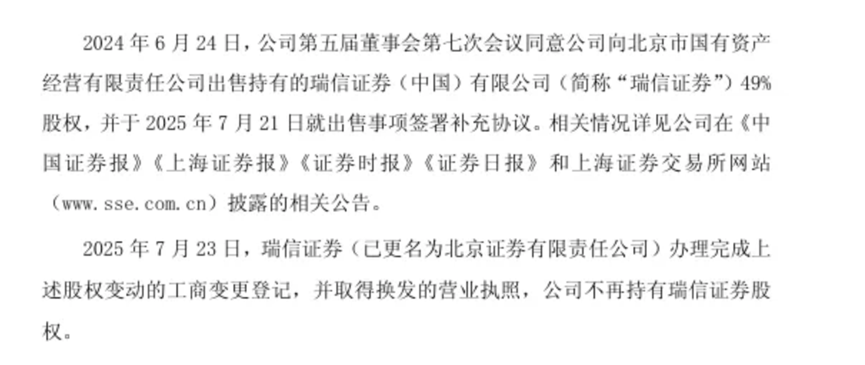
揭榜!谁是最强私募?2025上半年有16家私募新晋百亿规模;第一创业证券原董事长吴礼顺升迁后离任,国泰海通将于8月22日实施法人切换、客户及业务迁移 | 私募透视镜
Sou Hu Cai Jing· 2025-07-25 09:46
Group 1: Private Equity Performance - The top 10 subjective private equity firms have been announced, with notable institutions betting on sectors like DeepSeek, robotics, innovative pharmaceuticals, and new consumption [1] - Among the subjective private equity firms, 9 firms had at least 3 products that met ranking criteria and achieved positive average returns in the first half of the year [1] - Fusheng Asset topped the list with an average return of 45.5%, focusing on new consumption trends where consumers prioritize "quality-price ratio" [1] Group 2: Quantitative Private Equity Growth - The number of quantitative private equity firms has increased to 41, surpassing subjective private equity firms for the first time, leading to a total of 89 billion private equity firms [2] - The top 10 quantitative private equity firms achieved average returns exceeding 15.99%, with Stable Investment leading at 27.2% [2] - The industry is characterized by "scale expansion, performance differentiation, and deepening research and investment," with quantitative firms solidifying their market position through technological innovation [2] Group 3: Market Outlook and Trends - The market showed resilience in the first half of 2025, with a consensus forming around an upward trend for the second half [5][6] - The stock market experienced strong rebounds after significant declines, indicating robust market resilience [5] - Key sectors identified for investment opportunities include innovative pharmaceuticals, new consumption, smart robotics, and precious metals, with innovative pharmaceuticals highlighted as having historical opportunities [7][8] Group 4: Corporate Developments - Credit Suisse Securities has been renamed Beijing Securities following a change in ownership [9][10] - Shenyang Securities has received approval to establish a subsidiary for private investment fund operations, expanding the broker-dealer's private equity footprint [16] - Administrative measures have been taken against Chengdu Fukun Yingchuang for multiple violations, including inadequate employee numbers and failure to fulfill investor suitability management obligations [18]