
保险业

Search documents
最高法:2025年司法建议对应的信用卡和保证保险纠纷的增幅 分别低于民商事案件增幅的10%和13%
Xin Lang Cai Jing· 2026-02-24 03:05
Group 1 - The Supreme People's Court emphasizes the implementation of judicial recommendations No. 2 and No. 4, focusing on financial services for the real economy and enhancing consumer rights protection in finance [1] - There is a notable improvement in the governance of financial disputes and diversified resolution methods [1] - By 2025, the increase in credit card disputes and guarantee insurance disputes is projected to be below 10% and 13% respectively, compared to the increase in civil and commercial cases [1]
每日债市速递 | 特朗普政府全球关税政策违法影响持续扩散
Sou Hu Cai Jing· 2026-02-23 23:21
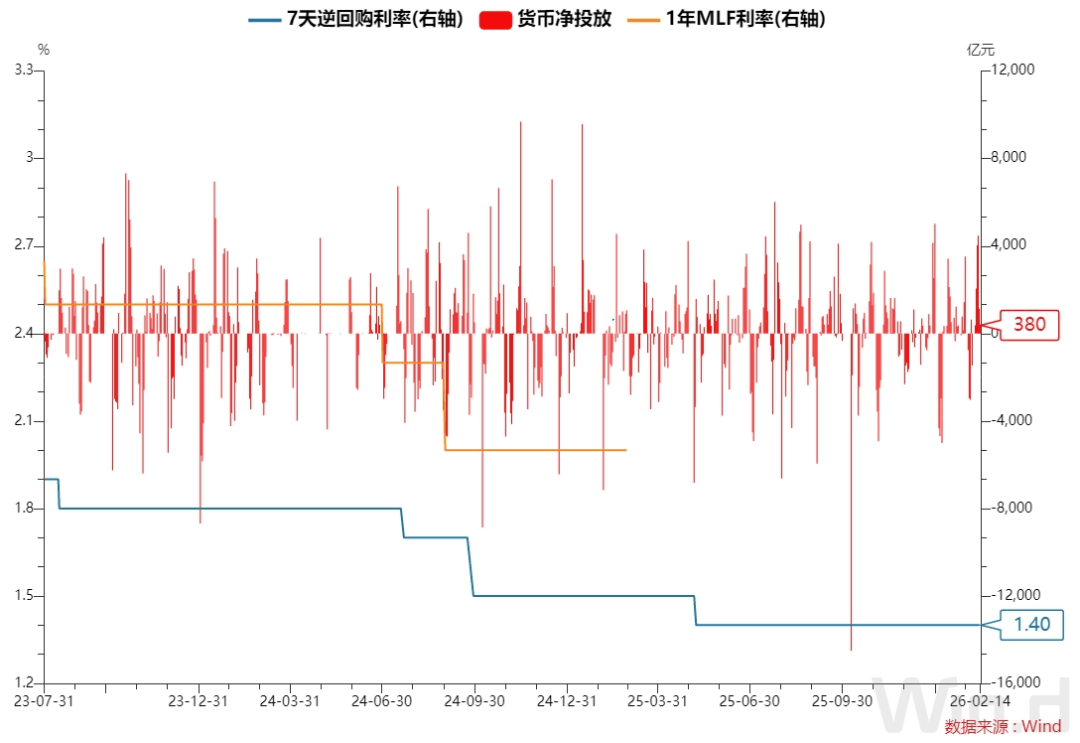
Market Overview - The People's Bank of China conducted a 7-day reverse repurchase operation of 38 billion yuan at a fixed rate of 1.40%, resulting in a net injection of 38 billion yuan for the day and a total net injection of 12,469 billion yuan for the week [1][3] - The interbank market remains stable with the DR001 weighted average interest rate rising nearly 5 basis points to above 1.3%, while the DR007 and DR014 rates fell by over 10 basis points [3] Bond Market Developments - The latest transaction rate for one-year interbank certificates of deposit is around 1.58%, showing little change from the previous day [5] - Major interest rate bonds in the interbank market have seen little change due to low trading volumes before the holiday [7] Key News - A joint opinion was released by several Chinese financial authorities to enhance financial support mechanisms aimed at preventing poverty and promoting rural revitalization, encouraging local financial institutions to issue special bonds for small and micro enterprises and agriculture [10] - The Ministry of Finance will conduct market support operations for government bonds on February 24, including competitive bidding for specific bonds [10] - A report from the U.S. Treasury indicated that 14 major countries reduced their holdings of U.S. Treasury bonds by a total of $88.4 billion in December, with Japan, the UK, and China being the largest sellers [10] - Japan's Ministry of Finance forecasts that bond issuance costs will rise, potentially leading to a bond issuance scale of 38 trillion yen for the fiscal year 2029, a 28% increase from the fiscal year 2026 [11] Global Macro Insights - The U.S. Treasury Secretary declined to speculate on whether companies could receive tax refunds related to previously invalidated tariffs, as lawsuits from hundreds of companies are ongoing [12] - A paradigm shift in global markets is noted, with a movement of funds from Wall Street elites to Main Street, favoring small-cap value stocks while tech giants face pressure [12] Bond Issuance Plans - Gansu Province plans to issue 54.682 billion yuan in local bonds in March [14] - Banks increased their bond holdings by over 1 trillion yuan in January, indicating a recovery in the bond market [15] Risk Monitoring - Several non-standard asset risks have been disclosed, including defaults and rating downgrades for various entities, highlighting ongoing concerns in the bond market [16]

三部门联合发文,推动低空保险高质量发展
Mei Ri Jing Ji Xin Wen· 2026-02-23 12:02
Core Viewpoint - The implementation of the "Implementation Opinions" marks a significant step in establishing a systematic low-altitude insurance development policy in China, addressing the increasing need for risk management in the rapidly growing low-altitude economy [1][2]. Group 1: Policy Development - The "Implementation Opinions" was jointly issued by the National Development and Reform Commission, the Financial Regulatory Administration, and the Civil Aviation Administration of China on February 12 [1]. - The document outlines a phased development goal for low-altitude insurance, aiming to establish a mandatory insurance system for unmanned aerial vehicles (UAVs) by 2027 and a comprehensive policy framework by 2030 [3]. Group 2: Industry Growth and Economic Impact - The low-altitude economy in China reached a scale of 505.95 billion yuan in 2023, with a growth rate of 33.8% [2]. - The development of low-altitude insurance is seen as a crucial support mechanism for the low-altitude economy, enhancing investor confidence and activity in the sector [4]. Group 3: Specific Measures and Goals - The "Implementation Opinions" proposes nine specific measures across four areas: policy system, institutional construction, product services, and foundational capabilities [3]. - It emphasizes the need to strengthen the support of low-altitude economic development plans for low-altitude insurance and encourages various operators in the low-altitude economy to effectively utilize insurance mechanisms [3]. Group 4: Service and Sustainability - The document calls for the establishment of a comprehensive insurance product system covering the entire low-altitude industry chain, enhancing the supply and service capabilities for both UAVs and traditional manned aircraft [3]. - It also highlights the importance of building a low-altitude insurance information platform to improve the operational capabilities of insurance institutions and related entities [4].
春节保险出镜率升高,护航宠物、车旅与压岁钱,理赔暗礁需留意
Bei Jing Shang Bao· 2026-02-23 11:58
Core Insights - The Spring Festival has become a peak period for various insurance products, with a notable increase in insurance offerings related to travel, pets, and children's financial management [1][5] - The insurance industry is transitioning from reactive compensation to proactive risk management, enhancing services to meet specific consumer needs during the holiday season [4][6] Group 1: Insurance Product Offerings - The introduction of pet transportation insurance by railway services includes coverage for pet loss and death, highlighting the integration of insurance into everyday travel scenarios [3][6] - Various insurance products are emerging to cater to specific needs such as overseas travel insurance, which covers flight cancellations, medical transport, and theft, thus addressing the complexities of international travel [4][5] - Children's savings insurance is gaining popularity as a way to manage and protect the traditional red envelope money given during the festival, transforming it into a long-term financial plan [4][5] Group 2: Consumer Awareness and Risk Management - Consumers are encouraged to maintain a rational understanding of insurance terms and conditions, especially regarding exclusions and coverage limits, to ensure they are adequately protected [6][7] - The importance of verifying the coverage of travel insurance products is emphasized, particularly regarding high-risk activities and the duration of coverage [7] - Parents are advised to scrutinize the terms of children's savings insurance, focusing on payment terms, return rules, and the uncertainty of dividends, to select suitable products for their children [7]

中国十大最具发展潜力城市
泽平宏观· 2026-02-20 16:05
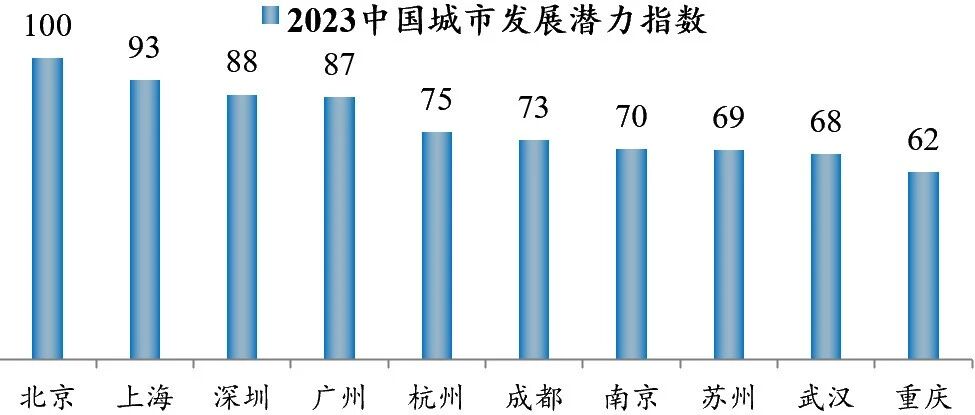
Core Viewpoint - The article discusses the competitive landscape of Chinese cities, highlighting the rapid urbanization and the emergence of new economic centers, while ranking the development potential of 337 cities in China, with Beijing, Shanghai, Shenzhen, and others leading the list [2]. Group 1: Beijing - Beijing is positioned as the political, cultural, international exchange, and technological innovation center of China, with a GDP exceeding 4.1 trillion yuan in 2022, making it the second-largest city after Shanghai [9][10]. - The service sector accounts for 84% of Beijing's economy, with finance, headquarters economy, and technological innovation as key pillars [10]. - Future plans include transforming Beijing into a world-class harmonious city while optimizing population distribution to enhance urban vitality [11][13]. Group 2: Shanghai - Shanghai has established itself as an international economic center, with a GDP of approximately 4.5 trillion yuan in 2022, and aims to rival New York in global economic influence [16][24]. - The city’s industrial structure is supported by the automotive, electronics, and financial sectors, with finance contributing 19.3% to the GDP [17][19]. - Shanghai plans to continue its open policies and develop into a globally competitive city, enhancing the Yangtze River Delta region [24]. Group 3: Shenzhen - Shenzhen's GDP surpassed 3.2 trillion yuan in 2022, marking it as the third-largest city in China, with a significant annual population increase of around 600,000 [25][26]. - The city is recognized as a leading innovation hub, with strategic emerging industries accounting for over 41% of its GDP [26]. - Future initiatives focus on enhancing collaboration within the Guangdong-Hong Kong-Macau Greater Bay Area to solidify its status as a global innovation city [29]. Group 4: Guangzhou - Guangzhou's GDP reached approximately 2.9 trillion yuan in 2022, ranking fifth nationally, with a strong manufacturing base in automotive and electronics [30][31]. - The city faces challenges in innovation capacity and financial sector development, with financial services contributing only 9.2% to the GDP [33]. - Future goals include enhancing its role as a national center city and participating in global economic cooperation [34]. Group 5: Hangzhou - Hangzhou's economy has shown robust growth, with a GDP of around 1.9 trillion yuan in 2022, driven by a vibrant private and digital economy [36][37]. - The city is recognized for its strong digital economy, with core digital industries contributing 27.1% to the GDP [37]. - Plans for the future include improving transportation infrastructure and fostering a more open and innovative business environment [41][42]. Group 6: Chengdu - Chengdu's GDP exceeded 2 trillion yuan in 2022, accounting for 36.7% of Sichuan province's economy, and it is recognized as a key economic hub in Western China [43][44]. - The electronics sector is a major contributor, with a significant portion of the industrial output [44]. - Future strategies involve enhancing its role as a national center city and collaborating with Chongqing to develop the Western economic highland [49]. Group 7: Nanjing - Nanjing's GDP approached 1.7 trillion yuan in 2022, with a per capita GDP of 179,000 yuan, ranking fifth among major cities [50][51]. - The city is focusing on developing its automotive, steel, electronics, and petrochemical industries while nurturing emerging sectors [51]. - Future aspirations include becoming an "innovation city" and enhancing its influence in the Yangtze River Delta region [54]. Group 8: Suzhou - Suzhou's GDP reached nearly 2.4 trillion yuan in 2022, making it the top city among prefecture-level cities in China [56]. - The city is recognized as a global industrial powerhouse, with significant contributions from electronics and manufacturing sectors [56]. - Future plans emphasize its role in the Yangtze River Delta urban cluster and advancing towards a high-tech manufacturing base [59].
港股20日跌1.1% 收报26413.35点
Xin Hua She· 2026-02-20 09:42
Market Performance - The Hang Seng Index fell by 292.59 points, a decline of 1.1%, closing at 26,413.35 points [1] - The National Enterprises Index decreased by 110.76 points, closing at 8,959.56 points, a drop of 1.22% [1] - The Hang Seng Tech Index dropped by 156.02 points, closing at 5,211.5 points, a decline of 2.91% [1] Blue-Chip Stocks - Tencent Holdings decreased by 2.06%, closing at 522 HKD [1] - Hong Kong Exchanges and Clearing fell by 0.24%, closing at 407.8 HKD [1] - China Mobile increased by 0.13%, closing at 78.5 HKD [1] - HSBC Holdings rose by 0.07%, closing at 134.3 HKD [1] Local Hong Kong Stocks - Cheung Kong Holdings declined by 0.93%, closing at 46.8 HKD [1] - Sun Hung Kai Properties increased by 0.74%, closing at 135.7 HKD [1] - Henderson Land Development rose by 3%, closing at 33.68 HKD [1] Chinese Financial Stocks - Bank of China increased by 0.21%, closing at 4.67 HKD [1] - China Construction Bank rose by 0.37%, closing at 8.04 HKD [1] - Industrial and Commercial Bank of China increased by 0.16%, closing at 6.41 HKD [1] - Ping An Insurance decreased by 0.14%, closing at 70.55 HKD [1] - China Life Insurance fell by 0.47%, closing at 33.56 HKD [1] Oil and Petrochemical Stocks - Sinopec fell by 0.55%, closing at 5.41 HKD [1] - PetroChina increased by 3.7%, closing at 9.52 HKD [1] - CNOOC rose by 2.23%, closing at 25.7 HKD [1]
香港2025年11月至2026年1月经季节性调整的失业率为3.9% 就业不足率维持1.7%
Zhi Tong Cai Jing· 2026-02-20 09:07
Group 1 - The seasonally adjusted unemployment rate in Hong Kong increased from 3.8% in the period of October to December 2025 to 3.9% in the period of November 2025 to January 2026 [1] - The total employment decreased slightly from 3,667,000 in the previous period to 3,665,900 in the latest period, a reduction of approximately 1,100 individuals [1] - The total labor force remained relatively stable, with 3,804,300 in the latest period compared to 3,805,200 in the previous period [1] Group 2 - The number of unemployed individuals (not seasonally adjusted) was approximately 138,400 in the latest period, which is similar to the 138,200 reported in the previous period [2] - The number of underemployed individuals was about 65,100 in the latest period, compared to 64,800 in the previous period, indicating little change [2] Group 3 - The Secretary for Labour and Welfare commented that the slight increase in the unemployment rate reflects ongoing economic challenges, while the overall labor market remains supported by economic growth [3] - Future employment conditions may continue to face pressure in certain industries due to operational challenges [3]
连平:金融强国建设需要强势人民币| 马年大咖谈
Di Yi Cai Jing· 2026-02-19 03:32
Core Viewpoint - The future strength of the Renminbi (RMB) is essential for its development into a powerful currency, which is a key element for building a strong financial nation [1][2]. Group 1: Importance of a Strong Currency - A strong currency is crucial for a financial power, characterized by its widespread use in international trade, investment, and as a global reserve currency [2]. - The RMB's moderate strength will facilitate its broader use in global trade and encourage international capital to hold RMB for investments [2]. - A weak currency may lead countries to reduce their holdings of that currency in foreign exchange reserves, while a strong RMB could increase its share in global reserves [2]. Group 2: Financial Institutions - Strong financial institutions are necessary for a financial power, defined by their comprehensive services, high operational efficiency, and strong risk management capabilities [3]. - The current global competitiveness of Chinese financial institutions is relatively weak, partly due to the low global usage of the RMB [3]. - Sustained moderate strength of the RMB could enhance the international competitiveness of Chinese financial institutions by increasing their RMB-denominated assets and liabilities abroad [3]. Group 3: International Financial Centers - A strong international financial center is vital for a financial power, capable of attracting global investors and influencing international pricing systems [4]. - Shanghai's international financial center has not yet reached the level of New York or London, partly due to insufficient foreign participation and the RMB's weaker valuation [4][5]. - Historical evidence suggests that a currency must maintain strength over time to support the development of a leading international financial center [5]. Group 4: Central Banks - A strong central bank is essential for effective monetary policy and macro-prudential management, which helps prevent systemic risks [6]. - A weak currency can hinder the internationalization of the RMB and reduce its acceptance and influence globally [6]. - A relatively strong RMB supports the central bank's functions and enhances the credibility of the currency [6]. Group 5: Future Outlook - There are sufficient reasons for the RMB to appreciate moderately, despite pressures from external factors [7]. - The RMB's exchange rate should be based on supply and demand, but policy considerations are also necessary to achieve favorable economic and financial development [7].
宏观调控精准施策 护航经济高质量发展|宏观经济
清华金融评论· 2026-02-18 08:42
Core Viewpoint - The article discusses the current economic transition in China, highlighting the balance between economic resilience and challenges such as domestic demand, real estate market adjustments, and bank net interest margins [2][3]. Group 1: Economic Policy and Coordination - The 2025 Central Economic Work Conference emphasizes the need for policy support and reform innovation, focusing on maximizing economic potential and ensuring effective coordination between fiscal and monetary policies [3]. - A "gradual reduction in reserve requirement and interest rates" is anticipated over the next two years, with a preference for reserve requirement cuts over interest rate reductions due to the current low net interest margins of commercial banks [5][6]. - The Chinese monetary policy framework differs from Western countries, as it relies more on reserve requirements rather than interest rates, allowing for significant room for reserve requirement cuts [7]. Group 2: Real Estate Market Stabilization - Recent policies aimed at stabilizing the real estate market have shown some effectiveness, with a narrowing decline in key indicators such as new housing sales and funding availability [10][11]. - The key to stabilizing expectations in the real estate market lies in improving liquidity and addressing employment and income expectations among residents [11][12]. Group 3: Investment in Human Capital - The article stresses the importance of investing in human capital to drive high-quality economic growth, advocating for increased fiscal spending on education, healthcare, and social services [13][14]. - The current financial structure in China, dominated by indirect financing through banks, needs to evolve towards a more direct financing model to better support innovation and new economic drivers [13]. Group 4: Consumer Demand Activation - Short-term fiscal measures, such as targeted transfer payments and consumption vouchers, are deemed more urgent and effective in boosting consumer spending compared to long-term tax reforms [16][17]. - Specific measures to guide demand towards service consumption in areas like elder care and childcare include government procurement and tax incentives for related services [18][19]. Group 5: Macro-Control Policies - The article suggests optimizing consumer subsidy policies and increasing support for service consumption in the aging population and childcare sectors to stimulate demand [21][22].
2月15日晚间央视新闻联播要闻集锦
Yang Shi Xin Wen Ke Hu Duan· 2026-02-15 12:43
Group 1 - The core message emphasizes the importance of ensuring a happy life for the people as a top priority, with a series of reports titled "Emotional Chinese New Year" being launched to convey warmth and strength from the central government [4][5] - Xi Jinping's important speech at the Spring Festival gathering has inspired widespread enthusiasm, encouraging unity around the central leadership for national development and rejuvenation [5][6] - The festive atmosphere is palpable across the country as people prepare for the New Year, engaging in traditional activities such as purchasing goods and enjoying decorations [6][7] Group 2 - On the first day of the Spring Festival holiday, the expected cross-regional movement of people is projected to exceed 285 million, marking a year-on-year increase of 10.5% [7] - The upgraded "National Subsidy" policy has been fully implemented this Spring Festival, enhancing the variety of goods available for consumers and contributing to an upgrade in rural consumption [9]