
芯片设计

Search documents
美芯晟拟并购鑫雁微:深耕智能感知 拓宽产品矩阵
Zheng Quan Ri Bao Wang· 2026-01-29 11:10
鑫雁微在磁传感器领域具备成熟技术积累与产品布局,作为聚焦传感控制领域的高新技术企业,其核心 团队可跨工艺平台开展芯片设计,产品谱系完整,覆盖霍尔、角度及齿轮传感器等五大系列,车规级产 品已切入汽车底盘控制、发动机控制、智能座舱电动系统三大核心领域并实现量产,在工业与汽车磁传 感应用领域形成了稳定的技术与市场基础。 并购后,美芯晟有望在三个层面实现价值跃升。首先在产品技术层面,将直接推动美芯晟形成"环境感 知(光学+1D/3D ToF)+多模态融合感知(多模态视觉传感)+运动感知(磁传感器)"的完整技术体系。感知闭 环的形成,让美芯晟可向各类智能终端厂商提供从环境感知到运动控制的一站式、系统级感知解决方 案,大幅降低客户跨供应商技术整合的难度与成本,同时提升公司产品附加值与技术壁垒。 其次在市场与客户层面,双方渠道形成高度互补,为整合后的市场拓展奠定基础。美芯晟已成功切入全 球顶级品牌供应链,在通信终端、智能穿戴及机器人等高端价值领域构筑先发优势;磁传感业务的纳 入,将进一步强化客户黏性、提升渠道渗透能力,依托双方渠道共享与客户资源互导,实现新兴赛道的 突破与成熟场景的深度耕耘,驱动双重增长。 1月28日,美芯 ...

阿里自研高端AI芯片正式上线,科创芯片设计ETF易方达(589030)最新单日净流入近8300万元
Xin Lang Cai Jing· 2026-01-29 03:10
Group 1 - The core viewpoint of the news highlights the active trading and significant inflow of funds into the E Fund Sci-Tech Chip Design ETF (589030), with a turnover of 10.97% and a transaction volume of 46.7362 million yuan as of January 29, 2026 [1] - As of January 28, the latest scale and share of the E Fund Sci-Tech Chip Design ETF reached a new high since its establishment, with a net inflow of 82.7062 million yuan [1] - Over the past five trading days, there have been net inflows on four days, totaling 141 million yuan, indicating strong investor interest [1] Group 2 - Alibaba has launched its self-developed high-end AI chip "Zhenwu 810E," marking a significant step in its vertical integration strategy, with the chip featuring 96G HBM2e memory and already deployed in multiple clusters for over 400 clients, including State Grid and the Chinese Academy of Sciences [1] - The emergence of super node server clusters is accelerating the penetration of domestic AI infrastructure, with the Huawei Atlas 900 A3 SuperPoD cluster achieving 1.7 times the total performance of NVL72 and a memory capacity 3.6 times greater, with over 300 sets deployed by September 2025 [2] - The newly released Atlas 950 and 960 SuperCluster have achieved scales of over 500,000 and 1 million cards respectively, indicating a systemic leap in domestic AI computing capabilities [2]
资源狂潮后,下一个领军方向是谁?帮主郑重:答案藏在“老树新芽”里
Sou Hu Cai Jing· 2026-01-29 00:13
Core Viewpoint - The next leading direction for investment will be in high-end manufacturing and hard technology driven by "new productive forces," as traditional sectors undergo significant transformations [1][5]. Group 1: Industry Trends - The current market is shifting from a focus on "model innovation" and "traffic stories" in technology to hard technology that addresses critical issues and enhances industrial capabilities [3]. - There is a notable demand for high-end products in sectors such as new energy and aerospace, indicating a real and urgent need for industrial upgrades [3][4]. Group 2: Key Areas of Focus - The first area to watch is the progression of "domestic substitution," moving from chip design to deeper levels such as industrial software, advanced materials, and precision manufacturing equipment [4]. - The second area involves identifying "demand resonance" in high-growth industries like new energy vehicles and aerospace, which require advanced composite materials, more efficient batteries, and precise sensors [4]. - The third area emphasizes the importance of "performance visibility," focusing on companies with solid order backlogs, real expansion plans, and steadily improving profit margins [4]. Group 3: Strategic Recommendations - Companies should shift their analytical lens to evaluate whether they are engaged in simple assembly or tackling critical processes, assessing if their products enhance the resilience of the industrial system [5]. - Conducting in-depth research along the industrial chain is crucial, looking beyond end products to find opportunities in battery materials, integrated die-casting, and high-end connectors [5]. - Maintaining strategic patience and implementing a phased investment approach is recommended, as this sector is expected to show gradual trends rather than explosive growth [5].

英国200人团访华藏杀招!50家科技企业,要撕了美国“脱钩”网?
Sou Hu Cai Jing· 2026-01-28 14:42
Group 1 - The UK delegation's visit to China is characterized by a focus on business collaboration rather than political issues, with a large contingent of 200 members including 50 tech companies and 30 financial institutions [1][3] - The UK aims to capitalize on the growing demand for renewable energy products, with exports to China reaching £34 billion in 2023, of which 35% are renewable products, marking an 18% increase since 2020 [3][4] - The UK government has strategically chosen to avoid political conditions in its discussions, contrasting with other countries that have included human rights issues in their diplomatic engagements [4][5] Group 2 - The visit is timed strategically before the US elections and following the EU's announcement of tariffs on Chinese electric vehicles, positioning the UK as a counter-narrative to US policies [4] - The potential for signing £10 billion in renewable energy orders could significantly disrupt the US's efforts to decouple from China, showcasing a pragmatic approach to international relations [5] - The UK delegation's focus on business rather than political rhetoric is seen as a way to enhance its economic standing and avoid the pitfalls faced by other Western nations [5]

Counterpoint:博通(AVGO.US)将领跑AI ASIC设计市场,预计2027年市占率达60%
智通财经网· 2026-01-28 07:10
Group 1 - Broadcom (AVGO.US) is expected to maintain its leading position in the AI server ASIC design partnership field, with a market share projected to reach 60% by 2027 [1] - The shipment volume of AI server ASICs is anticipated to double by 2027, driven by the demand for Google's TPU infrastructure, Amazon's Trainium clusters, and the capacity enhancements from Meta's MTIA and Microsoft's Maia chips [1][2] - By 2028, the shipment volume of AI server ASICs is expected to exceed 15 million units, surpassing the shipment volume of data center GPUs [2] Group 2 - The market for AI server ASICs is diversifying, with Google and Amazon still leading in 2024, but their market shares are projected to decline by 2027, with Google's share dropping from 64% to 52% and Amazon's from 36% to 29% [3] - The top ten AI hyperscale data center operators are expected to deploy over 40 million AI server ASIC chips from 2024 to 2028, supported by large-scale AI infrastructure built on their technology stacks [2][3] - Broadcom and Alchip are projected to capture a significant portion of the ASIC design services market for hyperscale data centers, with shares of 60% and 18% respectively by 2027 [3] Group 3 - Marvell Technology (MRVL.US) is strengthening its end-to-end custom chip product portfolio, benefiting from innovations in custom silicon technology and the acquisition of Celestial AI, which could lead to significant revenue growth [4] - The acquisition of Celestial AI is expected to potentially position Marvell as a leader in the optical scaling connectivity market in the coming years [4]

27000点!MINIMAX-WP涨近27%
Zhong Guo Ji Jin Bao· 2026-01-27 10:32
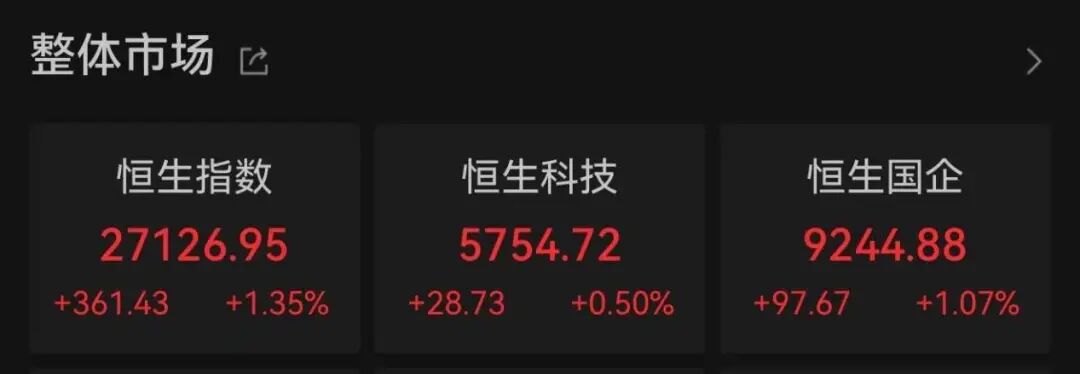
Group 1: Market Overview - The Hong Kong stock market showed signs of recovery, with the Hang Seng Index rising back above 27,000 points, closing at 27,126.95, up 1.35% [2] - The Hang Seng Technology Index increased by 0.50% to 5,754.72, while the Hang Seng China Enterprises Index rose by 1.07% to 9,244.88 [2] - The banking and insurance sectors were particularly active, contributing to the overall market strength, while large tech stocks exhibited mixed performance [2] Group 2: AI Application Stocks - MINIMAX-WP led the AI application sector, surging by 26.48% to a closing price of 488.20, with a trading volume of 1.613 billion [4][5] - The launch of MiniMax's AI-native workbench, Agent 2.0, is a key driver, featuring components like Desktop App for task execution and Expert Agents for business scenario understanding [4] Group 3: Semiconductor Sector - The semiconductor sector experienced gains, with notable increases in stocks such as Naxin Micro (up 5.61%), Shanghai Fudan (up 5.12%), and others [6][7] - Price adjustments in wafer foundry and packaging services are anticipated, with MediaTek indicating a strategic price adjustment to reflect rising manufacturing costs [6] Group 4: Insurance Sector - The insurance sector showed strong performance, with China Life rising nearly 6%, and other companies like New China Life and China Pacific Insurance also reporting gains [8][9] - A report from Huachuang Securities suggests that the insurance sector is expected to see performance improvements by 2025, driven by better investment conditions and a recovery in liabilities [8] Group 5: Corporate Acquisitions - Anta Sports announced the acquisition of a 29.06% stake in Puma for €1.5 billion (approximately 12.278 billion RMB), with shares rising by 2.03% [10] - Zijin Mining's stock rose by 2.89% following the announcement of a deal to acquire Allied Gold Corporation for approximately 5.5 billion CAD (around 28 billion RMB), expanding its gold mining operations in Africa [12][13]
科创芯片设计ETF易方达(589030)涨超2.9%,连续3天净流入,合计“吸金”超8000万元
Xin Lang Cai Jing· 2026-01-27 07:09
份额方面,科创芯片设计ETF易方达最新份额达3.34亿份,创成立以来新高。(数据来源:Wind) 截至2026年1月27日 14:43,上证科创板芯片设计主题指数(950162)强势上涨3.19%,成分股东芯股份上 涨20.00%,盛科通信上涨20.00%,普冉股份上涨14.66%,思瑞浦,力芯微等个股跟涨。科创芯片设计 ETF易方达(589030)上涨2.91%,最新价报1.1元。拉长时间看,截至2026年1月26日,科创芯片设计ETF 易方达近1周累计上涨5.56%。(以上所列股票仅为指数成份股,无特定推荐之意) 流动性方面,科创芯片设计ETF易方达盘中换手20.66%,成交7407.59万元,市场交投活跃。拉长时间 看,截至1月26日,科创芯片设计ETF易方达近1年日均成交9154.08万元。 规模方面,科创芯片设计ETF易方达最新规模达3.54亿元,创成立以来新高。(数据来源:Wind) 从资金净流入方面来看,科创芯片设计ETF易方达近3天获得连续资金净流入,最高单日获得6136.00万 元净流入,合计"吸金"8063.71万元,日均净流入达2687.90万元。(数据来源:Wind) 科创芯片设计ET ...
聚辰股份正式递表港交所,是中国唯一全系列车规级EEPROM芯片供应商
Ju Chao Zi Xun· 2026-01-27 02:47
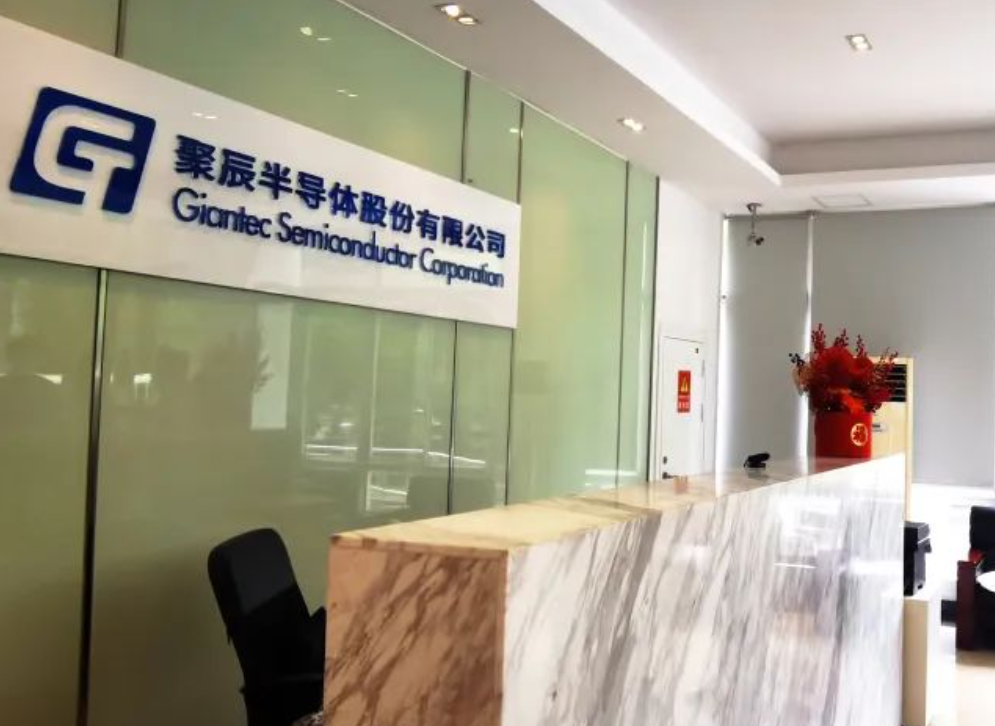
Group 1 - The company, Juchen Semiconductor Co., Ltd., has officially submitted its application to the Hong Kong Stock Exchange, with CICC as the joint sponsor [2] - Juchen Semiconductor is a leading global designer of high-performance non-volatile storage chips, focusing on meeting the storage demands of the AI era with products such as SPD chips, EEPROM, NOR Flash, and mixed-signal chips [2] - According to Frost & Sullivan, Juchen Semiconductor is the number one EEPROM supplier in China and the second largest DDR5 SPD chip supplier globally by revenue for 2023 and 2024 [2][3] Group 2 - The company has a strong R&D capability and market position in various product segments, being the third largest EEPROM supplier globally and the first in China for 2023 and 2024 [3] - Juchen Semiconductor has established deep cooperation with a leading global memory interconnect chip supplier for DDR5 memory interface solutions, positioning itself as a core supplier for major memory companies [3] - The company is set to become the only Chinese supplier offering a full range of automotive-grade EEPROM chips by the end of 2025 [3] Group 3 - Juchen Semiconductor is actively expanding its product lines, including the development of VPD chips for next-generation high-performance storage devices, collaborating with leading storage manufacturers [4] - The company's automotive-grade storage chips meet AEC-Q100 A1-A2 standards and are widely used in various automotive systems, including visual perception and intelligent cockpit applications [4] - The deep cooperation model established by the company creates natural customer barriers and long-term binding advantages, as automotive-grade certification typically requires a lengthy verification process [4]

电科芯片涨停!低轨卫星芯片实现量产,携手荣耀布局卫星通信,半导体景气度提升预期强化
Jin Rong Jie· 2026-01-27 02:29
Group 1 - The latest price of Electric Science Chip is 24.78 yuan, with a price increase of 9.99%, and a trading volume of 294,500 hands, resulting in a transaction amount of 714 million yuan [1] - Electric Science Chip focuses on the design and development of wireless RF chips, with mass production achieved for Ka-band phased array T/R chip sets used in low Earth orbit satellite constellations [1] - The company is a key partner for Honor in the development of satellite communication SoC chips, providing support for dual-mode voice satellite communication and Beidou short message SoC chips [1] Group 2 - The global low Earth orbit satellite network is entering a phase of intensive construction, drawing attention to the satellite communication industry chain, with several companies achieving technological breakthroughs and large-scale shipments in low Earth orbit satellite chips [1] - Microsoft has launched the next-generation AI chip, Maia 200, which utilizes TSMC's 3nm process technology, offering 30% higher performance than competing products at the same price point [1] - The global PCB market is expected to exceed 100 billion USD by 2026, driven by the increasing demand for AI servers and high-performance computing, pushing the PCB industry towards higher value and advanced development [1]

微软升级推出其第二代AI芯片,科创芯片设计ETF易方达(589030)近3天获得连续资金净流入
Xin Lang Cai Jing· 2026-01-27 02:15
消息面上,日前,微软公司推出其第二代人工智能(AI)芯片——"Maia 200"。这是该公司努力提高服 务效率、并提供英伟达硬件替代方案的核心举措。这是该科技巨头推动以更高能效比与性价比算力路径 为其云端AI训练/推理算力资源服务提供的至关重要自研AI算力集群硬件,并为售价昂贵的英伟达AI GPU系列人工智能算力集群提供替代型AI算力基础设施解决方案的核心举措。 微软表示,这款新推出的云计算专属AI芯片在大部分AI推理任务上的性能优于谷歌和亚马逊云计算服 务的同类半导体设备。Maia 200 也是微软迄今部署过的最高效人工智能推理系统。同时,微软透露已 在设计Maia 200的后续产品Maia 300。 科创芯片设计ETF易方达(589030)紧密跟踪上证科创板芯片设计主题指数,上证科创板芯片设计主题指 数选取科创板内业务涉及芯片设计领域的上市公司证券作为指数样本,以反映科创板芯片设计领域上市 公司证券的整体表现。 截至2026年1月27日 09:38,上证科创板芯片设计主题指数(950162)上涨0.39%,科创芯片设计ETF易方 达(589030)盘中换手2.26%,成交迅速走阔。 截至1月26日,科创芯 ...
